
Category: MxM JOURNALISM REVIEW

  • Ranjona Banerji: IPL, drought and extreme hypocrisy

    By Ranjona Banerji


    If we were not facing impending doom, the outrage of English news channels over the IPL tournament and drought in India would be nothing short of amusing. It is true that drought conditions in Maharashtra are much worse than in earlier years. It is also true that at least nine other states are suffering from drought conditions. But it is also true that this drought has nothing to do with the IPL tournament.


    The connection itself has only occurred to the television media because a public interest litigation asking for the tournament to be shifted out of Maharashtra came up for hearing in the Mumbai High Court. Long before that though water supply has been restricted, Section 144 has been imposed to prevent water riots and farmers have been complaining. How many years ago was it that Ajit Pawar of the NCP made that disgusting remark about urinating into dams of there was no water? Has the situation improved since then? Could TV journalists have ventured into the hinterland to find out what’s been happening since? The IPL after all is held every year at exactly the same time.


    At the same time as TV anchors are spitting fire at this evil IPL that is stealing water from desperate people, their channels are running long happy, inspirational ads about the IPL and how it is India’s tournament. What is this but hypocrisy and a cynical manipulation of a very real and very frightening problem? Barring NDTV, I cannot recall any other English news channel doing any stories at all on the problems of farmers, rural India, water, wild life and anything that is not some political hoopla over which you can have a panel slugfest.


    I can guarantee you that once the IPL tournament begins these same anchors will turn into simpering, fawning, skin-crawling fans if they ever come across a real-life cricketer in the IPL. They will also very easily forget about water, drought and everything else when they want to watch a match live or even when they have a shower or brush their teeth with running water. The problem though will not go away.


    I suppose though one must be grateful at least that thanks to the PIL and the courts, drought and water-scarcity has got some attention before matters became even more horrific. I have some free editorial suggestions for TV journalists, even as they continue fulminating against the IPL for perhaps one more day.


    They can speak to agricultural experts about the exchanging sugarcane for sugarbeet, which apparently will reduce water use drastically as well as allow multi-crop land use. They can question the sugar lobby on what they have done about better irrigation methods in their cooperatives. They can question the government of Maharashtra at least on what action they have taken about expected drought, given the experience of the last few years. They can ask about Maharashtra’s irrigation scam and what is going on there. They can ask people who have studied India and the world’s water problems to shed some light on what has happened so far and what can be done.


    It is not enough to have some city-bred BJP spokesperson to tell us that the government is “grippling” with the crisis and that the BCCI should be “magnamous” or that the Maharashtra government so sensibly and conscientiously advised that people not waste water while celebrating Holi. We need someone less absurd to be questioned by our fearless fire-breathing TV anchors. We need to hear from people who know a little more about the problem than former cricketers.


    The issue is not cricket and it is not the IPL. It is negligence and apathy and lack of understanding. And it is journalists showing complete lack of responsibility.


    I have no cause to be sanctimonious here. We have all been guilty of such behaviour at one time or another. It’s just that this time, it sticks in the throat.
     

  • Ranjona Banerji: I have written this content without either an adviser or a mentor. Weep!

    By Ranjona Banerji


    There have been changes at DNA, the last newspaper that I worked at. Since I quit in 2010, there have been several changes of editors and owners and managements. But the newest changes are intriguing. A news item put out by afaqs says that “Shreyasi Goenka who has been “mentoring the content at DNA will now take over as content advisor and will guide all functions at DNA”.


    There will also be a new “editor-in-chief”, Rohit Gandhi.

    An editor in chief, I understand. It is a job function and a lovely high-flown title.


    But what is a content advisor? Several decades at a newsroom have left me stumped. I asked a few whiskered journalist friends who are even older than me and they were equally clueless. Those younger seemed baffled as well.


    So what is a “content advisor” to do? Does it mean making a decision like which story is more important than another on a page? Like a news editor in the olden days? Or is it about how a story is written like a sub-editor or a rewrite desk? Or is about which stories make it to the front page like the editor, even, perchance, an editor-in-chief?


    Or is a content advisor just the new thing in town in newsrooms now dominated by management jargon? A meaningless designation meant to either disrupt or remain cosmetic as a newsroom goes about its business as usual?


    Are news reports, investigations, features, edits, diary items in a newspaper now to be known as “content”? I think websites use that term but for news websites, it seems likely that they also rely on the old terms.


    Having been out of a newsroom for almost six years now – yes the same DNA — I find this mildly amusing. However, when you consider the turbulent times that I saw at DNA, perhaps I am less amused. Perhaps content needs to be mentored as it tries to figure what on earth was happening around it. Can you hear the content crying, “No no, I am not a front page story. I am a simple feature. You are confusing me. I am in desperate need of mentoring.”


    The old style evil sub would have just dumped the story or cut it down ruthlessly. The new caring content mentor might take it out for coffee?


    **


    Meanwhile, the news cycle has turned and not surprisingly, the terrible fire at a temple in Kerala is dominating headlines. The water crisis and IPL have not died down completely but nightly outrage has, on television at least. Temples have taken centre stage. The saviour of India Arnab Goswami told us last night that “believe you me”, thanks to Times Now’s campaign and the support of its viewers, women of all ages will now be allowed into the Sabarimala temple, the Haji Ali dargah and so on. I would not bet against him since I don’t have the courage.


    Newspapers have shifted from anti-IPL outrage to suggesting solutions like other crops instead of sugarcane and pointing to decades of bad irrigation policies. (My father by the way wants to know why no one is considering his ideas of sugarbeet and sometimes throws newspapers around in disgust.) It is not likely that TV will take this up so we have to be satisfied with what we have.


    I must also apologise for mentioning in my last column that only NDTV bothers to cover droughts and rural issues. TS Sudhir’s Up South show on India Today TV packs a real punch into its half hour with solid journalism and yes, has been covering the problems of farmers and people who do not live in big cities.


    **


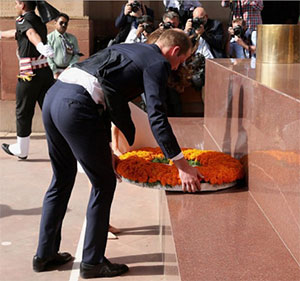
    The British Royals as in Duke and Duchess of Cambridge, as in Wills and Kate as in son and daughter-in-law of Prince Charles and the late Diana, Princess of Wales are in India. Twitter on Tuesday morning is all abuzz with skirts and suits flying in the breeze and different sorts of “Marilyn Monroe” moments (not singing Happy Birthday Mr President or wanting a diamond ring from Cartier but skirts flying in Seven Year Itch).


     

    So there’s this photograph of William, taken from the Twitter page of Buzzfeed’s inimitable Rega Jha, which no one talked about:


    And this, which many more talked about:

    http://www.mirror.co.uk/news/uk-news/kate-middleton-marilyn-monroe-moment-7732766


    Because maybe sometimes we all need our content to be mentored?


    Ranjona Banerji is a senior journalist and commentator. She is also Consulting Editor, MxMIndia. The views expressed here are her own.


  • Ranjona Banerji: Does media fuel horror stories?

    By Ranjona Banerji


    When I was a child, I hated carrots. I would do anything to avoid eating them. My parents and grandparents were great believers in the “no fuss” principles of life. If you went on and on about something trivial that was bothering you, they would either say “mind over matter” or “ignore it and it will go away”. So I apparently stared at the carrots on my plate, aged about 5, and plaintively asked my parents, “If I ignore them, will they go away?”


    What do you think happened?

    The reason for this little personal sidestep is that people often rant and rave that if the media ignored some unpleasant person or some unpleasant happenings, those people or things would go away. Is this true? Does the media feed into the horrors of society by publicising them and giving them more attention than they deserve?


    Sadly, I cannot offer you an answer. My instinct as a journalist is that part of our job is to unveil those very horrors of society so that society can confront them, deal with them and acknowledge that they exist. As a collective, society usually tries to bury – or like my carrots, ignore – its unappealing side, hoping that if they ignore these issues, they will go away. Most discriminations and prejudices have got strength from this sort of thinking. The problems of women, of the underprivileged, of race, of sexual abuse, of assault, of hatred, of the differently-abled, of mental health are some of the many unpleasant aspects of society that people preferred not to mention. As a result, abuse, discrimination and cruelty went on unhindered and victims suffered without recourse.


    A peruse of newspapers from the last century will make that clear: men’s issues, crime, war and politics dominated. What were the odds that you would read about the rights of transgenders in a newspaper even 50 years ago?


    I am not crediting the media with exposing these problems. But the media has played its role in increasing awareness. And on that basis alone, the “ignore it and it will go away” principle can be deemed faulty.


    This question of media exposure seems heightened by the times in which we live. Some people feel that this whole story about women marching on temples and mosques for free access is a non-story. Others feel that constantly airing the archaic and unpalatable for the 21st century views of some old Hindu priest, no matter how senior, serves no purpose. Others however acknowledge that just by pegging the cricket tournament IPL to drought as the media has done, the issue of water shortages and its attendant problems have been taken seriously.


    This also brings up the issue of “good news”. Many argue that the media never focuses on the better part of humanity and only focuses on the dregs. For one, this is not wholly correct. The media does cover humanity’s progress and its achievers. And sadly, this can become dangerous. There are enough instances of the media making heroes and heroines out of people without adequate research. And often, these personalities grow like balloons as generation after generation of journalists picks them up and pumps them up further. They are lucky as long as their feet of clays and feats of horror remain hidden. Because when the balloon bursts and the media discovers those flaws, even god cannot help them!


    On the whole though, every “good news” experiment by the media has failed mainly because we, as humans, prefer to know what’s wrong rather than what’s right despite any sanctimonious proclamations to the contrary. Take a look at fiction – whether movies or TV serials or books and see for yourself how many commercial and critical successes portray the “goodie-goodie” from start to finish without any conflict whatsoever.
    I have personal knowledge of one instance where the newspaper I worked for decided not to give any more publicity to a particularly vicious person. And when we and others stopped doing that, his star diminished. It became clear that the more publicity he got, the more dangerous he became. He is still around, but circumstances have defanged him for the most part.


    This one instance aside I would go for the bad news angle any day. You can put it down to my childhood. Those damn carrots did not go away!


  • Two views on CNN-News18


    Underwhelming relaunch of a channel in turmoil


    By Ranjona Banerji


    One unspoken rule in print journalism is that when you want to do a relaunch or launch a new paper, never ever bite off more than you can chew. That is, keep the readers’ expectations low and do not make your launch or re-launch so fabulous that you can never keep up to the standards you have set. It sounds cynical but it works. The most famous example of how not to do it was in the 1980s, when advertisements for the Metropolitan outdid the newspaper to such an extent that the paper sank without a trace. What copywriters wish a newspaper would be and what journalists can deliver are obviously parallel lines never to meet!


    It is possible that someone at Network 18 was aware of this rule and that is why the re-launch of CNN-IBN as CNN-News18 is somewhat underwhelming. I suppose in keeping with today’s rubbish management jargon I should call it a “re-branding” though heck knows I could be outdated on that too!


    The channel has gone through plenty of turmoil in the last few years. Even before Raghav Bahl sold out to the Ambanis, we had all sorts of stories of political pressure, of Congress versus BJP, of its two main faces Rajdeep Sardesai and Sagorika Ghose being eased out. In fact since Sardesai’s departure, the channel has been struggling to claim attention in an arena where it was once top choice.


    A re-configuration was therefore essential. And there is some thought at work here – getting a panel of in-house talking heads for instance. So we have Ayaz Memon, Ajoy Bose, Vir Sanghvi and Swapan Dasgupta as resident commentators, who will appear as experts on politics, sports, social trends and perhaps some will have their own shows. Until then, they have appeared on all or various news channels, now the viewer knows to expect them on CNN-News18.


    Features like Bhupendra Chaubey’s “Five headlines in five minutes” sounds a lot like something Headlines Today used to do years ago when its tagline was “smart news for smart people”, before it became India Today TV. All Hindi news channels offer a variation of this which is far superior: 700 headlines in 20 seconds.


    A quick survey of English news channels on Tuesday night showed a variety of stories on offer: the Kohinoor diamond and the government’s flip-flops on it, a Union minister’s comment that celebrities should be jailed for endorsing bad products, changing stances on the Samjhauta blasts case and the drought situation in the government. CNN-News18 decided that the late TV star Pratyusha Banerjee’s pregnancy and abortion was newsworthy during the same time slots. Also, comedian Kapil Sharma’s new show.


    (In other news, how on earth is one supposed to tell Times Now and NewsX apart if Arnab Goswami is not on air?)


    This is a quote of a firstpost.com report on the changes (firstpost.com is part of the Network 18 group):

    “Enlarged reporting teams equipped with cutting edge technology tools to deliver news from the ground fastest, new studios designed by the best in the world and a deeper leveraging of the CNN global news resources, form the core of this brand refresh. While continuing with its emphasis on engaging viewers in ways that are intelligent as well as innovative, the channel will focus more on immersive journalism. It means more in-depth reporting of news stories and covering angles in news developments generally left unexplored.”


    One hopes that the unbearable jargon aside (“immersive journalism”?), some of these features will soon be visible. An in-depth feature on grains rotting on the roadsides in Rohtak was however on the menu, which is an excellent story to cover. One assumes that immersive journalism could also look at submersible pumps and the damage they cause to the water table during drought conditions?


    So is CNN-News18 a Times Now-killer?


    By Pradyuman Maheshwari


    I know the headline is unfair. But that’s what every English news channel should aspire to do, right? Displace the leader.


    So the answer to the question is: No.

    Not yet?

    No.

    Why?


    Because the channel bosses haven’t done enough to effect a turnaround.


    It’s old wine in a new bottle.  So let me whine about it a little bit.


    Whine because Network 18 – given that it’s owned by Mukesh Ambani – has enough resources at its disposal. And in terms of top deck, it’s got some of the brightest brains. Rahul Joshi, President – News, is one of the best newsrooms managers in the country.  It’s also got some sharpshooters within its ranks.


    So what do we have? A credo that says it’s got no agenda. Heck, if there’s one business group that’s said to set all the agendas in the world it’s the Ambanis, but guess the owners don’t have much of a role… and one is being uncharitable towards the professional managers running it.


    One can interpret it as a comment on Times Now.  But let’s get to my instant view on CNN-News18.


    [] The look is neat and clean. Brighter… looks much better on a screen of at least 32 inches or more. Has some shades of India Today (after it switched from Headlines Today), but betters it.

    []Zakka Jacob is still the best amongst Tier 2b anchors in the country (Tier 1 being Arnab, Rajdeep, Barkha and you can add Prannoy Roy of course, Tier 2a being Vikram Chandra, Rahul Shivshankar, Rahul Kanwal and etc and Tier 2b has Ndhi Razdan and the likes and now Zakka Jacob.)

    [] The CNN-IBN reporting team is still top class, though post-retrenchment of the last few years, many bright hands have exited

    [] Bhupendra Chaubey is still around, albeit at 10pm. He is just about tolerable

    [] Getting Cyrus Broacha to do more than his weekly bit was a good idea

    [] Good to see Ayaz Memon on the primetime panel. Cricket rules, and we don’t too many observers of the game who can match him


    While getting Ayaz was a good idea, but why Swapan Dasgupta and Ajoy Bose? Both can speak on everything under the sun, but we could’ve got some better folk. Say Siddharth Varadarajan. A Hartosh Singh Bal would’ve been better than Bose.


    And Vir Sanghvi? One of the most stylish journalists in the country, he is past his prime (or as they say: sell-by-date).  The Niira Radia controversy didn’t too much for his rep, but he doesn’t make for good television any longer. Even a Suhel Seth would’ve been better.


    One would’ve expected an entertainment specialist to be also on the show, and getting inhouse resource Rajeev Masand on board would’ve been good. Or the many specialists on the subject in Mumbai and Delhi.


    Will the new look earn better ratings for the channel?

    I haven’t seen Mumbai roads plastered with hoardings on the channel, but am sure some work has been done on distribution. I don’t think we will see CNN-News18 upstaging Times Now the way India Today did on launch week, but perhaps the idea is do it slow and steady.


  • Ranjona Banerji: The Mumbai Press Club has done the media proud with tonight’s RedInk Awards

    By Ranjona Banerji


    Tonight, the Mumbai Press Club holds its sixth annual RedInk Awards. In its short life, this has become one of India’s more prestigious media awards. It is an award given by your peers, which makes it extra special. And it is an award away from and out of the stranglehold of Delhi. Not only that, it happens in Mumbai which is remarkable in itself.


    Until the advent of television news, newspapers clustered around cities. The Times of India was a Bombay newspaper, the Hindu was Madras, the Hindustan Times was Delhi, the Statesman was Calcutta and so on. These are just a few examples of a vibrant newspaper scene in a number of languages were available across India. Think local act global was the credo long before some maven or the other invented it.


    But the media in Delhi had long decided that it was supreme because it lived in the heart of Indian politics that is Delhi. Of course, every journalist knows that is hogwash because politics exists everywhere and the Delhi media’s claim to supremacy is only that it works in the city that it hosts the Central government. The logic may be specious but the link is real. And that is why for years Delhi newspapers were third grade at local, civic and crime news because newsrooms could not see beyond North Block or South Block or whatever those places are called.


    There has always been a distinct difference however in the way Mumbai sees politics and the rest of India does. I realised this firsthand only when I moved to Ahmedabad for a few years. The chief minister of the state apparently routinely visited newspaper offices for a courtesy call to the editor. This includes the current prime minister who I met for the first time in my resident editor’s office soon after he became chief minister of Gujarat in 2001. Since then I have learnt this is routine in smaller cities.


    But not in Mumbai. Most people in Mumbai cannot even tell you who the chief secretary of the state is or probably for some even who the chief minister is, because they are not at the top of everyone’s society guest list. I could trot out the commercial capital, cricket capital and Hindi film capital excuses and I would be correct. Mumbai has other things on its mind and our politicians and bureaucrats must know their place.


    In light of which, the Mumbai Press Club provides an excellent and refreshing alternative to the Delhi hegemony. Its scrutiny systems and its eye on new happenings in the media have been commendable. It has opened eyes in the media to issues beyond politics. It has not been bound by the politics of the day in either its selection of winners or the issues discussed. It has made the Mumbai media proud.


    This evening, the RedInk awards will present a posthumous Veer Patrakar Puraskar (Bravery) Award to Jagendra Singh, the journalist who was murdered in Shahjahanpur UP, for exposing the links between the local MLA and the mining mafia. The award will be given to his daughter Diksha Singh, 18.


    There will be 25 other awards given out in various categories at the evening event, including the lifetime achievement award to TN Ninan and startup of the year to thewire.in.


    A panel discussion, chaired by Shobhaa De, will debate on the topic “Who Shot the Messenger?”, with journalists Sucheta Dalal, Siddharth Varadajaran and Ravish Kumar participating.


    I wish the Mumbai Press Club and all my friends there many congratulations for this fine event and the effort that goes into it. They do all us journalists proud.


    I would like to end this with a sad, personal story.


    Many years ago, in the late 1980s, I was sent by Bombay magazine to do a “city directory” in the Fort and VT areas of Bombay. This was a tedious process – good for the reader – where you trudged from establishment to establishment and took down every detail about it. The Bombay Press Club fell to me. I walked in one hot afternoon and saw a bunch of grey-haired old men (my excuse for this bigotry is that I was young at the time) chatting on black chairs. Then one of them got up and the chair turned white as all the flies flew off. I will never join this place I said to myself. And I didn’t until much later.


    The flies have gone. My hair is grey enough for me to qualify as one of the oldies. And I’m proud to be a member! Sigh. Youth!


  • Platinum executes outdoor innovation for Tiago with a twist

    By A Correspondent


    Tiago, the new hatchback from Tata Motors with new design, technology and driving dynamics was recently launched with a clutter breaking OOH campaign. Platinum Outdoor, the AOR for Tata Motors planned and executed the entire campaign across 70+ cities/towns in metros, Tier II and Tier III cities.


    The campaign had two phases with the first phase announcing bookings for the hatchback in key markets, followed by the launch phase in all markets. Traditional outdoor formats, key mall facades and airports were used to enable the consumers to experience the car.


    On the day of the launch, the agency conceptualized a clutter-breaking idea to highlight different features of the car through larger than life installations at multiple locations.  Some of these include, blinking headlamps of the car, highlighting the car name, emphasis on Messi with Messi’s cut-out and a Tiago Zone at one of the busiest junction in Mumbai.


    Dipankar Sanyal, CEO, Platinum Outdoor said, “Tiago launch was the first major launch campaign undertaken by Platinum. True to the product, the campaign focused on the features through innovations. With the use of our planning tools, we were able to deploy quality sites at the right places which delivered high visibility in all markets”.


  • Ranjona Banerji: Women at the receiving end on social media

    By Ranjona Banerji


    The abuse that journalists receive on social media is constantly documented. And there is enough evidence that women receive more abuse, more vicious abuse and more threatening abuse than men.


    One part of you says “suck it up and move on”. But two Chicago-based sports journalists hit upon a better idea. Sarah Spain and Julia diCaro together with Just Not Sports put together a video of men reading out the tweets they had received just for doing their jobs. The men were not those who had sent out the tweets. They were just friends of the producers.

    This Powerful Video Shows Just How Violent Online Harassment Is for Women in Sports


    You can see that the men start by thinking this was a funny sort of endeavour but as the tweets start threatening rape, murder and so on, the men get very affected. They are reluctant to read these out, they find it hard to make eye contact with the woman sitting in front of them at whom the tweets are directed, they apologise for something they have not said, they look appalled at what is directed at these women. The women, after all, have seen these tweets and many more that they get in the course of a day. To the men, it’s a reality check on the horror in store for any woman on Twitter, not just journalists. Not surprisingly, it has gone viral on the internet, with the hashtag #MoreThanMean.


    The video ends by saying do not type what you would not say.


    But is it as easy as that? Powerful as this video is and difficult as it is to watch, we have created this wonderful online world where people are constantly emboldened by their anonymity. Sometimes you can call them on it, sometimes you can shame them but most times you just block them. It is not just about sports journalism though that is a male bastion that many men cannot countenance women entering and hence the extra viciousness.


    In India, perhaps, the abuse is more to do with your political moorings.


    When journalist Priya Ramani wrote this piece for Mint on why everyone loves to hate TV journalist Barkha Dutt, she received more than her usual share of abuse. So by the way did every female who shared it or retweeted it or commented on it. Because obviously if you are a woman with an opinion, you are fair game. Also, you are personally to blame for every transgression that Dutt may have made in her life. This apparently justifies all the attacks.

    http://www.livemint.com/Leisure/C3zY1Y1ycBJYDNRmNPCmHK/Why-everybody-loves-to-hate-Barkha-Dutt.html


    Sometimes the abuse is deliberate, an attempt to degraded and diminish women. Sometimes it shows a real lack of any logical ability to distinguish between an opinion and the human who voices it. And most of all, it proves once more – like the #MoreThanMean video, that the anonymity of the internet has given birth to a new kind of violence.


    Sadly, in India at least, other journalists and some politicians encourage this sort of abuse. When journalists call others “presstitutes”, mimicking prime ministers and Union ministers, it is only natural that others will follow suit. There are certain websites and internet celebrities who also specialise in these insults, claiming victimhood if called out about it. To make this gender neutral I must emphasise that some of these abusers are women but it is clear from their ideology that they subscribe to patriarchy in some form or the other.


    More than mean, would you say such behaviour is despicable and unacceptable? I would.


  • Ranjona Banerji: Wrong to say media has ignored Uttarakhand fires (+Why damn Shobhaa De?)

    By Ranjona Banerji


    There is a very moving Facebook post doing the rounds about the fires in Uttarakhand. There are dramatic pictures of forests burning. The text is an impassioned and angry plea about how the media is ignoring these fires. It has been sent to me innumerable times by well-meaning people because I live in Uttarakhand. I suppose they assume that I can neither look out of the window and see what’s happening for myself, nor can I read newspapers or watch television.


    As is so often true in such matters, the media gets the blame for nothing. I do not know the situation in Nainital, where the Facebook post originates from, but I can quite firmly declare that here in Dehradun, the media has been on the ball from day 1. I read the Garhwal Post, The Tribune, The Indian Express, The Times of India and The Hindu and the Asian Age in newspaper form every day. The Post is a local paper while The Tribune and TOI have strong Uttarakhand bureaus. All these papers have reported on the fires, starting with the devastating fire at Corbett and then moving closer to my home at least.


    Although I spend much of my time in this column slamming the media or aspects of the media, I must also stand up for what I know. That it is a downright lie that “the media” – which is a bizarre classification in the sense that it is not one entity – has ignored these fires. I suppose by “the media” many people think only of television – alas! But even television news has covered the Uttarakhand fires very comprehensively.


    It is true that no newspaper or news channels or news website has a reporter in every village in India so that it can immediately get every bit of information as it happens. I do not know if there is any institution in the world that has such a network. Perhaps people who post on Facebook and moan on Twitter work with or for such marvellous omnipresent and omniscient organisations. They should share their secrets with the world so that we can all benefit.


    This is not to suggest that the newsrooms are never slow to pick up a story or that they do not sometimes ignore something that is at odds with a particular thought process or something that puts the owners’ friends in a bad light. This happens and not all editors can fight it. But does it not seem idiotic, even to someone who sees “the media” as the devil incarnate, that journalists would wilfully ignore forest fires? For what reason? How does it benefit them or anyone? I can understand if the same allegations were made about the Agusta Westland case or the Malegaon blasts case – both in the news right now – but I’m afraid I cannot understand the logic behind such an accusation. I use the word logic loosely.


    But I know the source of such thought. It is the scourge of all good sense – the well-meaning person in the frenzy of self-righteous rage.


    **


    The other story doing the rounds on social media is a piece by an Indian-American journalist taking potshots at a column by Shobhaa De. Now it has long been fashionable to attack Shobhaa De, for all kinds of things. And let us establish that De is a columnist and columnists expect all kinds of reactions to their opinions. That is usually why you put them out there.


    But rather than merely disagree with De’s opinion – something about how Kate Middleton now Duchess of Something or the Other would not look good in a sari – this impassioned piece by the Indian-American journalist launches into a diatribe about how Indian journalists have it easy.


    The writer’s contention is that every article she writes is checked for facts and suppositions by at least three editors in America whereas in India reporters can get away with whatever they write – like De has. Are you laughing yet? Because I am. While it is true that we can do with more fact-checking in India, this writer has missed a very basic point. De is not a reporter. She is a columnist. How is anyone to fact-check her opinions?


    I see sour grapes and ignorance at work: which is all the more tragic, because it comes from a journalist who evidently does not know the difference between a reporter and a columnist. I really had more hopes from America.


  • Maruti stresses need for road safety via new campaign

    By A Correspondent


    India features as one of the countries with the highest rate of road accidents in the world. And Maruti Suzuki, being a leader in the Indian automotive industry, has, for long, been going that extra mile to spread road safety awareness and bring about change. As part of its efforts in the same direction, Maruti Suzuki has come out with its latest communication campaign on road safety – a series of 8 films that take on the challenge of positively impacting people’s attitude towards road safety.


    The films are not so much about educating road users and creating road safety awareness amongst them, as they are about changing their attitude of apathy towards road safety. It is this apathy that Indian road users can sometimes have towards traffic rule violations, which has dire consequences for them and fellow road users. The campaign aims to stir their conscience and make them reflect on their apathy.


    More than spreading awareness, Maruti Suzuki is hoping for an attitude change amongst road users, as an impact of the campaign. Road users are generally aware of rules in case of the most common traffic rule violations, such as not wearing seatbelt/helmet, not stopping before zebra crossings etc. What they lack is an attitude of concern towards the grave consequences that may arise owing to their violations. Hence, the intent is to create a conscience for road safety rules, which are otherwise most commonly neglected.


    The films cover subjects which are integral to our everyday living – giving way to ambulances, saying no to drunk driving, always wearing a seatbelt, lane driving, avoiding phone calls while driving etc. The plot of each film lets you pause and ponder about your own behavior.   The campaign features 8 TVCs on road safety, conceptualised by Dentsu Creative Impact, Gurgaon, addressing the issues of non-adherence to the road safety rules and norms. The thought behind the communication is “If we know it’s wrong, why do we still do it?”


    Speaking on the films Vinay Pant, AVP, Marketing, Maruti Suzuki India Ltd., said “It’s a Hard-hitting campaign, rooted in on-road insights. Our desired impact would be that people are moved to think and reflect on their attitude. Intent is that every time people are breaking a traffic rule out of apathy, they should be reminded of these films, hopefully have a change of heart and start making the roads safer.”


    Mahesh Rajoria, AVP, Driving Training, Maruti Suzuki India Ltd., said “Being a leader in the Indian automotive industry, Maruti Suzuki, has always gone beyond providing people with mobility solutions. We always go an extra mile to ensure the well-being of our society. We believe that it is our responsibility to work towards making the Indian roads safer and our teams work tirelessly to spread awareness about safe driving and traffic regulations.”   Amit Wadhwa, Branch Head & SVP, Dentsu Creative Impact, adds “Since the start, the intention was to look out for new and unconventional ways to communicate a simple message of road safety. With a strong insight, we feel we can reach out to those who may not always break the rules because they want to, but because they are so used to it by now that it has become a part of them. And our honest effort, is to at least make them think before they act.”


    Soumitra Karnik, NCD, Dentsu Creative Impact, said “We believe in developing strong campaigns using consumer insights as a base, so that the message reaches the right segment. With the core insight of ‘If we know it’s wrong, why do we still do it?’, the expectation is to touch base with each individual.”


  • Ranjona Banerji: Much fire about Uttarakhand

    By Ranjona Banerji


    The Uttarakhand forest fires have largely died out and we have had some much welcome rain. And the media coverage of the forest fires have not stopped or reduced. We have had reports, special features, opinions, data, human interest stories about how the fires start, who’s responsible, what can be done, which political party to blame, the environmental impact, the future – just about every angle covered. I think I saw some TV person on TV flying over fires in a helicopter. Or did the smoke get in my eyes?


    So while armchair activists and well-meaning people are fulminating on social media about the lack of media coverage on the Uttarakhand fires, newspaper reports in Uttarakhand say that the tourism industry is furious with the media for over-reporting and exaggerating the fires. People have cancelled their hotel bookings because they are frightened of the fires. One hotelier is quoted as saying that this reaction is like refusing to go to Delhi because there was a fire in Mandi House.


    Do I have to spell out the irony for you or have you managed to figure it out for yourself? Please do share this with your armchair activist hysterical social media posting friends. And of course, we can collectively lament the fact the media cannot win one way or another!


    **


    There is a discussion going on in this country about the priorities of the media. Of course, usually when they say this, they are talking about television. And specifically Times Now and I imagine NewsX which for days do not seem to have moved beyond the Agusta Westland VVIP helicopter deal and charges of bribery. The problem is that there is not enough evidence as far as India is concerned, yet, so most discussions go round and round, rising to that usual crescendo of cross-party yelling matches. What purpose has been served no one knows, as no one ever has.


    Although to be fair, the other English news channels like NDTV, the new CNN-News18, some shows on India Today TV have realised the horrors of drought, forest fires (oh my did I really mention something which “the media” has not covered?), the problems of farmers, the hinterland of India and other compelling problems. Which is small mercies, I suppose.


    Newspapers however have covered almost everything as usual. As have news websites. I mean real news websites run by journalists; not those run by people pretending to be journalists and funded by political parties.


    Those interested in such matters beyond hysterics about helicopters, would do well to read Harsh Mander in the Indian Express on drought: (http://indianexpress.com/article/opinion/columns/mgnrega-india-drought-budget-narendra-modi-arun-jaitley-2784711/)


    This might provide a fair understanding of what India is going through. Ten states have been declared drought-ridden. The situation on the dry parched ground remains critical. But have governments been called out on this? And why have their justifications and excuses, going back to colonial times, been accepted. People, animals, crops in India are dying. But some possible bribes paid in a helicopter deal are more important? The Nation, does indeed, demand an answer. And deserves one.


    The other opinion piece which explains the conditions of drought and government policy and inaction is this one by Yogendra Yadav in The Hindu:

    http://www.thehindu.com/opinion/lead/the-season-of-scorching-ironies/article8557168.ece utm_source=MostPopular&utm_medium=Opinion&utm_campaign=WidgetPromo


  • Ranjona Banerji: Sports channels blank out tennis yet again

    By Ranjona Banerji


    Once again, as an anniversary of the Narendra Modi government at the Centre looms, India Today TV has interviewed former Union minister, former journalist and former BJP leader, Arun Shourie. Or, one should clarify that, Karan Thapar interviewed Shourie. After last year’s interview, it is clear that Shourie is going to attack the Modi government. This is especially intriguing because this is India Today TV, where between some of India Today TV’s best-known news anchors, India Today’s journalists and Mail Today’s editors, you have some of the most nationalistic, pro-government journalists available in India.


    Perhaps, though, India Today is also a “federal structure” like Bennett Coleman, where there is no one party line and different outlets within the organisation speak in different tongues. In Bennett Coleman, however, the differences are extreme – that is, no one in any of the newspapers quite speaks in the same tone or news sense of Arnab Goswami and Times Now. At India Today TV, shifts are may be more subtle. It is important to note that Karan Thapar is not an employee per se and he just picked up his very successful show from what was CNN-IBN and moved to what was Headlines Today. Some time after Thapar, once part-owner CNN-IBN and another of India’s best known TV anchors, Rajdeep Sardesai also made the shift to Headlines Today.


    India Today TV is therefore an intriguing mix of Thapar, Sardesai, Rahul Kanwal and Gaurav Sawant, among others, all of whom have very different styles and sensibilities. I name these because they are the most prominent, although Preeti Choudhury, Shiv Aroor and TS Sudhir are also names that stand out.


    **


    For sheer entertainment, though, nothing is quite like the new English news channel News 9. Karnataka-based, it gives you all the inside dope on what’s happening in Karnataka. It has a very “masala” style to all news is presented in an upbeat and tabloid-ish manner. There are long entertainment segments where you learn interesting things like there’s an Independence Day part 2 coming up in a world where disaster films are a “dime a doze”.


    **


    As an avid tennis viewer, I am now ready to retire hurt. How much can one complain about India’s half-baked sports channels? Sony’s recent marriage to ESPN has meant that none of ESPN’s sports properties see the light of day. Because only IPL matches see the light of day. Sometimes IPL travels across all Sony’s channels. Earlier, when ESPN was married to Star, there was some possible tennis on show. In fact, between Ten and Star, tennis followers got spoilt. We had so much to watch.


    But now with this plethora of sports channels in India (Star, Ten, Sony, Neo), we in fact feel deprived. This year, 2016, is one of the first that I can recall in years, where so many important tennis tournaments have been blanked out. Women’s tennis is hardly to be seen and on the ATP tours, almost none of the Masters 1000 have been on air. Ten struggles along with some WTA tournaments and some small ATP tournaments. Star has the most channels but two of them show reruns of old cricket matches, old kabaddi matches and random old programming. The other two show football. One Sony channel has started showing the ongoing Rome Masters for two hours in the afternoon. Most important matches will happen after that time frame but who cares, right?


    Sigh. To the internet we go. Television has no one to blame but itself for this.


  • Ranjona Banerji: TV stories on Christian Michel and Dawood Ibrahim show lack of news sense and urgency

    By Ranjona Banerji

    The name Christian Michel is not a new one in relation to the Agusta Westland helicopter deal. It was there when details of possible kickbacks began. It was there in a Times of India story about some sort of shady deal with Pawan Hans by Josy Joseph in 2013. It was there in between all the details about the cousins of former Air Force chief SP “Bundle” Tyagi emerged.


    Most recently, there was a story on Christian Michel’s alllegations by Josy Joseph, now with the Hindu, dated April 27, 2016 followed by an interview with Michel by Joseph and Suhasini Haider, in the Hindu of April 28, 2016. This interview was after an Italian court made observations in an ongoing case of financial irregularities in the helicopter deal.


    Yet, our industrious and intrepid news channels only managed to find Michel almost a week after the Italian court’s verdict on May 4. First he was there as an “exclusive” on India Today TV. Then Barkha Dutt flew off to Dubai to meet him. And soon, undoubtedly, everyone else will follow.


    And yet, Michel is not saying anything substantially different from what he said to Haider and Joseph in April, which largely trying to save his own skin. He also appears to absolving Sonia Gandhi, Manmohan Singh and AK Anthony of any wrongdoing in the deal.


    But the question here is: where is the homework and hard work of the news channels? Just from the face of it, they had to wait for a political storm to brew in India before they started some kneejerk work? If the Hindu had the story last month, then what excuse is possible? Judging from what one read of Michel in the Hindu and what he said on TV, he is quite willing to talk and seems to enjoy the attention.


    Not only that the questions put to Michel do not seem to go further than today’s political context. The main allegation that he made in the Hindu was that the prime minister of India recently tried to make a deal with the Italian prime minister over the case – if Italy gave India information about Sonia Gandhi’s involvement in the Agusta Westland deal then India would let the Italian marines, on trial for killing Indian fishermen, go free. There is no evidence for this allegation but it is explosive nonetheless. Yet it does not appear to be the focus of TV interviews with Michel.
    This is Michel’s interview to The Hindu:
    http://www.thehindu.com/opinion/interview/interview-with-james-christian-michel-alleged-middleman-in-vvip-chopper-deal/article8524561.ece


    For some historical context, this is commentator and strategic affairs expert Mohan Guruswamy in The Asian Age. This column refers to material too far back for our TV journalists to apparently comprehend?
    http://www.asianage.com/columnists/agusta-hawala-unsigned-notes-206


    **


    The biggest non-story on television news remains the bogey of Dawood Ibrahim. Since he left India in 1984, an enormous romantic mythology has built up around someone who is nothing more than a criminal. Almost no working journalist today has any first-hand knowledge of Ibrahim and most of what today’s crime reporters know comes third-hand from people who knew people who know or knew of Dawood and from movies and books.


    The world of TV news is even more far removed from Dawood Ibrahim. But every time the political climate gets too hot to handle, we are faced with the same old stories about how Ibrahim lives in Pakistan and Pakistan won’t admit that he does. Nothing has changed here and as a result the viewer gets a re-hashed story with a mishmash of information.


    Though I have to admit that it is not just TV news that is at fault here; newspapers also fall prey to this “let’s go with Dawood Ibrahim since we don’t have a story” mindset.


    Everyone by now should know that Ibrahim lives in Pakistan and Pakistan lets him live there. He has also lived in Dubai and was often seen at cricket matches in Sharjah. He has links within Mumbai’s film industry. He and his gang of criminals are known to have a hand in the 1993 serial bomb blasts in Bombay. His daughter married Pakistani cricketer Javed Miandad’s son.


    I for one would be interested in the Dawood story if any journalist had anything new to tell me. Otherwise, it’s the same old same old showing only lack of both news sense and imagination.