Category: MxM JOURNALISM REVIEW

  • [MJR] A button to mute screeching panelists, please

    By Ranjona Banerji


    I make this plea on behalf of the ear drums of the nation. As the broadcasters’ association is worried about offensive content and the government is worried about sex, no one has the time to discuss our national loss of hearing. Even noise pollution activists, so worried about every tiny Diwali cracker, are silent on this one.


    Yet every night, guests on TV panel discussions yell at each other, sometimes all at the same time. This is not just confusing, but it is also painful. (And, it must be admitted, a bit embarrassing.)


    The answer I don’t think can be in teaching better manners to the panellists. We can’t now go back to their mummy-daddy and TV channels caught up in the non-stop cycle of breaking news barely have time activate their brains let alone start teaching etiquette.


    Instead, we need technology to come to our rescue. Instead of pleading with their guests to allow everyone to speak and not hog all the allotted time or politely trying to control a posse of middle-aged delinquents, TV anchors should just cut trouble-makers off. The worst offenders will be silenced mid-scream. To amuse viewers, their faces should still be on screen, so we can see them though not hear them screeching away. There is no guarantee that the screamers and yellers will ever learn and those who plead “give me 30 seconds more please” – how do they claim 30 seconds when they take many minutes? – will most likely start yelling “don’t cut me off”. But that doesn’t mean anyone has to listen to them. Anyway, you can barely hear what they’re saying.


    Also, our TV remotes could come with selective mute buttons so that we can filter out the sound from some sources while continuing to listen to others. This feature can be sold as a fun family game, as an alternative to birds killing pigs.


    And what about when the TV anchors annoy you? Now, that, dear viewer, is what the existing mute button is all about!


  • Press Freedom Day | ‘The free press can also lie’

    By Alain Gresh


    It was at the end of the 1980s, when Perestroika was in full swing. The Soviet Union was opening up towards pluralistic news coverage; discussions were raging in Moscow or in Leningrad. A delegation of Soviet journalists was invited to the US to study ‘freedom of the press’. They were brought around all the main media, travelled through various states and, at the end of the journey, received by journalists who asked them for their impressions. “It’s strange”, one of the Soviet delegation replied. “You don’t have a censor here, but still everyone thinks the same.”


    Apocryphal or not, this anecdote is revealing. It shows that the freedom of the media as well as of journalists is an issue, not just in the countries that officially limit press freedom, but also in democracies. In 2002-2003, when the US was preparing to go to war against Iraq, even such highly prestigious newspapers as the New York Times or the Washington Post uncritically published the lies of the Bush administration, thus acting as a carrier of propaganda – something which gave rise to self-criticism several months later.


    Already during the 1990-1991 war, many in the European and US media got caught up in the fabrications of the Allies’ propaganda: how Iraq had the ‘fourth-largest army in the world’, or how Iraqi soldiers unplugged incubators at a maternity hospital in Kuwait.


    These examples show that the situation of the media in the democratic world is far from simple. Two obstacles oppose their capacity to inform public opinion. Firstly, the question of ownership; some belong to private groups (Lagardere in France, General Electric in the US), others to weapons manufacturing companies. When I spoke to a colleague from Europe 1 radio about the repression of the Kurdish people under Saddam Hussein in Iraq, he answered that I must have forgotten who owns the radio station: Lagardere, a supplier of weapons to the Iraqi regime.


    The other obstacle is related to how the media operates in a ‘sensationalist society’, where nothing counts more than presentation, i.e. everything must be spectacular. How is it possible to explain, without images, in one minute on TV the crisis in Mali or the repression in Bahrain? How to generate understanding of the complex developments in Asia or the Near East when, for economic reasons, most daily newspapers are cutting their numbers of foreign correspondents?


    The question of the freedom of the press and of journalists throughout the world is important, especially in countries where colleagues are arrested, imprisoned, or even killed. But it must not distract from the fact that these questions arise, in different forms, in democracies and that they are also vital for the future of our societies.


    Footnote to the article:

    WAN-IFRA or the World Association of Newspapers and News Publishers shared with the media an editorial package of articles, analyses, photographs, cartoons and advertisements. This article by Alain Gresh, Deputy Director, Le Monde diplomatique and host of the blog ‘Nouvelles d’Orient’ is part of the package.

    Mr Gresh has published several books, including Les Cent clés du Proche-Orient, Fayard, 2011, and De quoi la Palestine est-elle le nom?, Les liens qui libèrent, 2010.

    MxMIndia stands committed to the freedom of the media and will do whatever it takes to combat any intrusion.


  • Possible for ethics & profit-making to co-exist: Paranjoy Guha Thakurta (Text & Video)


    By Shruti Pushkarna


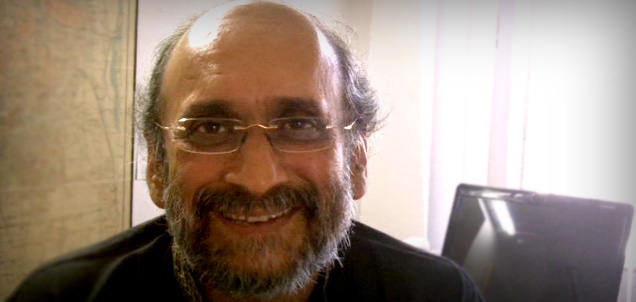
    As he launched the second expanded edition of his book, ‘Media Ethics: Truth, Fairness and Objectivity’,  in the capital last week, MxMIndia caught up with veteran independent journalist and educator,  Paranjoy Guha Thakurta for an exclusive interaction. In this candid one-on-one, Mr Guha Thakurta spoke at length about ethics in media today, self-regulation vs. regulation; the debate on the freedom of expression on the internet and the need for media to be ethically and socially responsible.


    Mr Guha Thakurta’s experience spanning nearly 35 years, cuts across different media: print, radio, television and documentary cinema. He is a writer, speaker, anchor, interviewer, teacher and commentator in three languages, English, Bengali and Hindi. His main areas of interest are the working ofIndia’s political economy and the media, on which he has authored/co-authored books and produced documentary films. He lectures on these subjects to general audiences and also trains aspiring and working media professionals.


    Mr Guha Thakurta has served as a member of the Press Council of India nominated by the University Grants Commission between January 2008 and January 2011. In April 2010, as a member of a two-member sub-committee of the Council, he co-authored a 36,000-word report entitled ‘Paid News: How Corruption in the Indian Media Undermines Democracy’.


    Does an expanded edition mean a lot more to discuss in media ethics?

    The first edition of this book came out more than three years ago, since then a lot has happened. Moreover, after the book came out, there were a lot of people who came up with suggestions on how this book could be improved. So this book is about 40 per cent bigger and thicker than the earlier edition. There are new chapters – there is an entirely new chapter on corruption in the media based quite a bit on my experience as a member of the sub-committee of the PCI, which inquired into corruption in media and how it undermines democracy, the entire phenomenon of paid news. There’s also a new chapter on reality television and some of the existing chapters have been drastically rewritten and revamped, notably the chapter on the internet because a lot has been happening in the internet space; also the chapter on advertising, which was particularly weak in the first edition – I think it has been strengthened substantially in the new edition.


    Also a whole lot of major developments have taken place concerning the media in the recent past; these have all been incorporated in the new edition. Among these would be the News of the World and Rupert Murdoch controversy in UK, the entire Wikileaks and Julian Assange phenomenon and back home here in India, the entire Niira Radia conversations; all of these have raised significant questions pertaining to media ethics and these have been incorporated in the new edition of the book.


    How important is the ‘code of ethics’ in today’s commercialized scheme of things?

    Ethics is very important in every sphere, particularly so in the case of media, because you are dealing with information which is akin to a public good. The problem essentially arises because this information is being disseminated by privately owned corporate bodies with an important goal to maximize profit; therein lies the conflicts of interest. The problem arises because there are sections of the media that are interested in profit maximization to the exclusion of other goals.


    It’s become a bit of a cliche – once upon a time it used to be said, ‘journalism is a mission’, today journalists work only for a commission. We are seeing the corporatization and commercialization of the media having an impact on the kind of content that is being produced. The viewers of television channels, the readers of newspapers, and the listeners of radio stations are being perceived more as ‘consumers’ rather as citizens. They are ‘consumers’ of products and services which are being provided by companies which advertise.


    Can journalistic ethics and profit-making can co-exist?

    I do believe it can, it’s not easy but it is possible for ethics and profit-making to co-exist.


    What is your view on the issue of regulation v/s self-regulation? What works for you?

    In an ideal world, self-regulation is the best form of regulation. But what do you do with those who cross that proverbial ‘lakshman rekha’, what do you do with those who don’t follow the code of conduct which is supposed to be self-regulatory in nature. I’ll give you an example, in the US, when Janet Jackson had a wardrobe malfunction in the middle of a live broadcast, the channel was fined immediately by the Federal Communications Commission because the wardrobe malfunction happened during a live broadcast, it happened during primetime and the channel had to first pay the fine and then appeal against the decision in a court of law.


    What happens in India? Not very long ago, there was a series of incidents involving Bhanwari Devi Maderna episode in Rajasthan and content was put out during the day on television, which many considered to be pornographic in nature. When the Ministry of Information and Broadcasting issued show cause notices against these TV channels, all of them came to Shastri Bhawan saying, ‘we apologize and we won’t do it again’. That’s the nature of self regulation in this country.


    As far as print is concerned, we have a Press Council of India which has no powers to punish anybody, it cannot impose a fine, leave alone put a person behind bars, and its recommendations are not even binding on the government. We don’t have statutory organizations which are empowered in the manner in which say the Federal Communications Commission is, or the Office of Communications in the UK is. So it’s fine to talk about self regulation but what do you do when somebody doesn’t listen to you, do you have the wherewithal to punish them?


    Do you think we need an independent official regulatory authority for television news channels as against one set up by the channels?

    Yes, I do personally believe that it is possible and desirable to have an independent regulatory authority which is independent of the government as well as the media. Such a regulatory authority can be funded by the government, but it can nevertheless be autonomous and independent of the government, in the manner in which bodies like the Supreme Court of India, or CAG or Election Commission of India function.


    So, I do believe it is possible to have such a communications commission. The problem is that for the last decade we have been debating the need for such a commission and the joke is that every time the government proposes to form such a commission, the government collapses. There have been 10 or 12 avatars of a Bill to set up such a commission; time alone will tell when and if such a commission is established in India.


    Your view on Dirty Picture not being allowed to air during the day on Sony?

    The whole Dirty Picture episode has thrown up a number of issues pertaining to censorship, pertaining to what content is appropriate or not, and if adult content can be shown on television, if so when. I think these issues are contentious and debatable and they are going to be debated for quite some time to come.


    Would you agree with Justice Katju’s view when he says people in media are of poor intellect?

    I think Justice Katju is exaggerating. There are journalists who are dumb and there are journalists who are not dumb. I think Justice Katju is not being fair to the media fraternity but that’s his personal point of view, he also thinks 90 per cent of Indians are fools, I beg to disagree with him.


    There’s a belief that the Indian media doesn’t take too kindly to criticism. Agree?

    Who among us are willingly going to accept criticism? All of us have our egos, in that sense, I don’t think the media is unique. I think there is neither any individual nor any group who likes criticism but the point is if you do believe in democracy, if you believe in fairness, and if you are in the public eye, then you better get used to criticism otherwise you’ll end up like Ms Mamata Banerjee who could not take being lampooned online. This shows not only lack of tolerance on part of individuals, especially public figures, but I think it fails to appreciate the nature of freedom of expression.


    Isn’t it upsetting that all the journalists’ organizations like Press Club, Editors Guild are tightlipped about Paid News?

    I won’t entirely go along with you on that, I mean there was a conspiracy of silence about corruption in media and paid news, even the report of the subcommittee that was prepared by me and my colleague for the PCI, was sought to be suppressed by a powerful lobby of publishers within the PCI. Finally in October 2011, the PCI was literally forced to make that report official, place it on their website with a disclaimer saying that entire council had not approved of its content. But I won’t say all journalists’ organizations conspired to put under wraps this report. There have been sections of the media who have been reticent of highlighting corruption within the media fraternity, but I don’t think it’s true for the entire media.


    Do you think that Public Relations has adversely impacted the quality of journalism?

    No, why blame the PR person…she or he is doing his or her job. You can also say the government has bribed the media, you can say that corporate captains have bribed the media. So I don’t think we need to look for excuses, I think journalists have to look within if they have to introspect about why there is corruption in the media. You can always hold somebody or the other responsible for your sins but at the end of the day, you are yourself responsible I believe.


    Your views on the ongoing debate on the freedom of expression in the internet age

    I think this is a huge debate. The internet is not just the newest medium of mass communication, it’s also a form of personalized communication, and it’s difficult to control. Issues relating to freedom of expression on the internet have acquired many new dimensions and these are very contentious and not easy to resolve. And we’ve seen this debate been going on for a while…the ‘infamous’ Danish cartoons on the prophet Mohammed were all drawn ostensibly to generate a debate on freedom of expression. Yes, that cartoon was widely circulated on the internet, as was the gruesome video showing Daniel Pearl getting beheaded. But it’s also worth remembering and underlining the fact that the mainstream media were restrained in reprinting, publicizing either the Danish cartoon or Daniel Pearl’s beheading.


    The point is, sometimes in the name of freedom of expression, you want to generate a debate but you end up generating one huge controversy which goes out of control. It was the Danish PM who argued that the cartoon controversy was the biggest crisis that small Scandinavian country faced after the Second World War and he was particularly worried because it even had an impact on the economy of Denmark because countries of West Asia stopped buying dairy products made inDenmark.


    So very often we might want to start a debate without realising its wider ramifications. But the bigger question of what constitutes the right to offend, what is freedom of expression and the new dimensions these issues have acquired in the day and age of internet, these are very important, they are being debated and I think these debates are going to go on for quite some time.


    And given all of this, your view on the future of news media in India?

    The future of news media in India is very bright. Unlike many countries in the world, all media in India continue to expand, whether it’s print, radio, TV or internet. According to 2011 census, one out of four persons in India still cannot read or write her or his name, so as more and more people become literate I think all sections of media are going to expand. At the same time, media has to become more responsible, not just socially responsible but also more ethical if it indeed has to contribute to building democracy, to building a better country.


    If you were still a kid getting out of college, would you get into journalism given the ethical standards followed?

    That’s a difficult question…when I became a journalist 35 years ago, the Emergency had just got over. That was a unique 19 month period in the history of the country where for the first and so far the only time in politically independent India, the government of the day sought to abridge freedom of expression. For 19 months, during the Emergency, freedom of expression was sought to be curbed. I don’t think that will happen again, but the very fact that I was a student during that period did influence my decision to become a journalist. If I was born 35 years later, I don’t know if I would have preferred to become a rock star, or an airline pilot or a heart surgeon instead of a journalist.

     

  • [MJR] Jingoist of the year award to Times Now

    By Ranjona Banerji


    For some reason best known only to Times Now, the channel decided to huff and puff over a Barack Obama campaign ad, which said that not only did Republican presidential candidate hopeful Mitt Romney outsource jobs to Mexico and China as a CEO, but as governor he also outsourced a task to a call centre in India.


    My god, the insult – Obama has spent, said Times Now, a million dollars to “trash India”. This news played over and over again on the channel all evening, even as it had to compete with the other “big story which we are tracking” – the release of Sukma district collector Alex Paul Menon by the Maoists (that’s another example of a TV extravaganza).


    On the Newshour last night, there was Goswami, filled with nationalistic pride, surrounded by Chidananda Rajghatta of The Times of India looking a bit embarrassed, Pramit Pal Chaudhuri of Hindustan Times looking smug and embarrassed, Mohandas Pai, once of Infosys, looking amused and not sure if he could tap sufficiently into his inner jingoist and a few other guests.


    Goswami launched full steam into his heartfelt anguish at this perfidy by Obama – when the facts said that Indian companies contributed millions of jobs and billions of dollars to the US economy (a few gazillions and who knows, India might solve all the US’s economic problems). But guest after guest pointed out that all this was election rhetoric and that anger with outsourcing was now normal campaign guff and that whoever won would do little to change US policy.


    Goswami, as he watched his argument crumble, smiled wryly and changed tack. He was not, he said, talking about the inner workings of the US election process. He was bothered about perception and stereotyping. Luckily he found one guest who weakly agreed, sorta kinda.


    After 15 minutes of sound and fury signifying nothing, and guaranteeing a good laugh for all viewers, the debate petered out as everyone just repeated the same thing. Goswami ended by asking why the Indian government could not spend some money to issue a counter ad. Indian pride, one can only hope, was restored amongst those viewers who spend their time picking up stones and weeds everywhere, hoping to find an insult to India and then demand reparation.


    On Friday morning, interestingly, only The Times of India was interested in this story.

    (An aside: the other fight for Indian pride was on the internet over Hollywood star Ashton Kutcher and some chips ad where he mimics an Indian. The Indians won because on the internet, power operates differently!)


    * * *


    Stewart by the way, took on the sex scandals in the US secret service, hardly guffaw-inducing stuff compared to Goswami.


    * * *


    Meanwhile, the collector: all day TV told us that the kidnapped by Maoists collector Alex Paul Menon was about to be released. We were treated to some pictures of some bush and scrub with very bad communication lines and no collector. Then in the evening an exhausted man appeared, only to be mobbed by eager reporters. This is one of the fault lines of modern journalism and you have to feel for both parties. The media needs the story and the collector needed some rest. He looked as he himself said, “shattered”.


    Since Zee had most of the pictures, everyone had to credit it. Headlines Today and NDTV, instead of showing the bush and scrub, showed us Menon’s father-in-law. The CNN-IBN website told us that the collector was freed hours before he appeared out of the wilderness.

    No explained whether that was inside information or a false start to the race.


    Jai Hind!


  • [MJR] The mighty Murdoch empire wobbles

    By Ranjona Banerji


    The cycle of life and death is such a wicked thing, sparing no one, especially not the high and mighty (Thank god, really, for us who are not only low and but are also tiny – I’m speaking metaphorically here). And so the mighty Murdoch empire wobbles.


    The Leveson inquiry into media ethics last month and the British parliamentary committee report after an inquiry into Rupert Murdoch’s companies released last week after last year’s inquiry commission both highlight that fall. The parliamentary report indeed calls Murdoch senior “unfit” to run his companies, although the Conservative party members of the commission would not endorse that. The irony for British politicians is that both the Labour and Conservative parties can be accused of getting too close to the Murdochs and their editors.


    From the time he bought the Sun and then venerable Times, Murdoch has been a figure of controversy. His disdain for journalists and senior editors was applauded by media moghuls elsewhere as a fine way to treat employees (India’s journalists have also suffered from the Murdoch effect). Murdoch sacked, moved and reduced journalists everywhere to paid hacks, only capable of doing what he assigned them.


    At the end, that became hacking into the voice mails of a murdered child’s mobile phone in order to sell more copies of a newspaper.


    Murdoch has said he is sorry – inasmuch as he remembers anything at all. Although he does appear to recall a bit more than his son who saw and heard (and read) apparently almost nothing all the while that he ran the European branch of daddy’s company.


    At a time when the Indian media is grappling with all sorts of issues and allegations, the Murdoch saga presents an interesting contrast. That Murdoch’s editors bent the rules and ignored media ethics is a certainty but it presents almost the exact opposite of the way that the Indian media operates. Can you imagine any Indian reporter – especially one involved in the glamour world – going to such depths to get a story? Hiring private investigators, bribing police officers – all this shows a commitment to newsgathering that most Indian newspapers had given up and many journalists would faint at the idea of so much hard work. (So much easier to let the PR person write the story which his client has paid the marketing department for.) I am not sure how many would object to the ethical problems raised since we have our own monsters to deal with.


    Meanwhile it’ll be interesting to watch as the vultures start circling around.


  • [MJR] The Modi merry-go-round continues

    By Ranjona Banerji


    As expected, the release of the report by lawyer Raju Ramachandran into Gujarat chief minister Narendra Modi’s role in the 2002 riots got TV channels into a frenzy. Having whipped themselves up over the “clean chit” given to Modi by the Special Investigation Team, the indictment of the chief minister by the “friend of the court” provided just the kind of contradiction that Indian TV thrives on.


    However, the arguments for and against Narendra Modi and his “crimes” or his “achievements” have become old and tired. As have the panellists. There on NDTV was Jainarayan Vyas putting up a stout defence of Modi. And, of course, a short while later he was on Times Now. Kumar Ketkar, editor of Divya Marathi provided the objective line – while slamming Modi for his well-documented anti-minorities stance – also appeared on both.


    But at the end of the day, little is achieved with such debates. The BJP and Modi’s fan club spew their spiel. Modi’s detractors have their own. The debate moves along predictable lines. The events have become so far away that the details have been forgotten which leads to even more chaos. Both Nidhi Razdan and Arnab Goswami had a tough time controlling some of their panellists who as usual forget all rules of civilised behaviour once a TV camera is turned on them. Smriti Irani of the BJP, for instance, gave us ample proof of how she can now graduate to the “saas” role in a poisonous soap – if they still have them on TV that is.


    (A disclaimer: I was deputy resident editor of The Times of India, Ahmedabad, from 2001 to 2004 and have a fairly good idea of what happened during the riots. Watching people who were nowhere around in those dark days holding forth can be both a frustrating and amusing experience.)


    * * *


    The big TV event of the week is of course the first episode of actor Aamir Khan’s Satyameva Jayate on the Star channels and DD. He dealt with the contentious and emotional issue of female foeticide and India’s skewed gender ratio. It was a well-researched show, with the subject presented from various angles and certainly struck a chord with the audience. The cyber world went gaga, judging from the number of tweets about the programme. Newspapers the next day were also congratulatory.


    If there was criticism – especially on Twitter, the home of manufactured outrage – it was about whether female foeticide was such an unknown problem after all as well as whether any change would happen as a result of the show.


    It is amazing to hear journalists talking about whether social change can result from media efforts, since we know from our own experience what a slow and pain-staking experience that can be. Your 140-character aphorism may take seconds to go out to the world; change on the ground takes a tiny bit longer than that.


    * * *


    An evening at the Mumbai Press Club was a great opportunity to meet up with former colleagues and old friends. The now annual awards for journalists in categories from crime and cricket to politics and the environment is a very good idea. Giving the lifetime achievement award to Vinod Mehta was a winner – since he promptly said that working in Bombay (as it was then) were the best years of his life!


    Applause all around.


  • [MJR] The missing ‘outrage’ gene

    Ranjona Banerji

    By Ranjona Banerji


    It is well-known that your parents are to blame for everything that is wrong with you. I, therefore, emphatically blame my parents for this severe shortcoming of mine – a weak and badly functioning “outrage” gene. This gene is a must if you want to effectively follow and understand the Indian media.


    The world comes to an end on television and micro-blogging sites like Twitter everyday and then, inevitably, restarts again. This resurgence of life on earth as we know it is mysteriously missed by our outraged colleagues, possibly because they were so caught up in the “shocking incident that has just come to light where a dog bit a man”. Following the shocking incident is a demand that the chief minister of the state where this happened do something about it. Invariably, these chief ministers did not even know that this “shocking incident” had taken place. Woe betide (now you can see how old I am) any chief minister who says “well, often dogs will bite men”. This is the wrong reaction and will haul you over hot coals before you can finish the sentence. The correct reaction is to catch the dog, incarcerate it and then order an inquiry into why dogs bite and if indeed they would rather bite men than women or trees, cows and whatever else dogs might bite.


    In the world of Indian television news, it is against the ethos to have prior knowledge that canines have teeth (or even that canines are teeth) and do sometimes bite. Being privy to this information is detrimental to the proper functioning of the “outrage” gene.


    On Twitter, however, the outrage gene works a little differently: “We need an RTI inquiry: why does the prime minister @PMO… have two eyes? Did Sonia Gandhi pay for them?” This can get re-tweeted over and over again until someone does file an RTI inquiry. Before that it will descend to “The @PMO… is not so bad, look at how your man behaved when he was PM”, “You are a %$$& whose mother was a &%$@”. Also there will be many short forms and these: ####.


    As the outrage grows, we will reach this one: “Information commissioner stonewalls inquiry on status of prime minister’s binary visual system. #PM’s eyes”. And voila, we’re on our way to our own Arab Spring.


    Newspapers are often afflicted like me. All day yesterday TV channels ran clips of the shocking (really) remark by an Uttar Pradesh deputy inspector general of police that if his young sister (or maybe daughter or both) had eloped or been abducted he would have killed her or himself. Newspapers dismissed this story in a couple of columns.


    So maybe while my parents are responsible for my problem, they are not the only transgressors.


  • [MJR] Holier than thou Hindu takes on the Times


    Ranjona Banerji

    By Ranjona Banerji


    The Hindu has published a massive “expose” on paid news in The Times of India. According to painstaking research done by veteran journalist P Sainath, the Nagpur edition in 2008 carried a special feature about how farmers in Vidarbha had benefited from using Bt cotton seeds. This went against all other evidence that it was the use of Bt cotton which had led to falling yield, depleting the land, increasing debt burden and consequently the large number of suicides in the region.


    The TOI team spoke to farmers who said they were making much more money than they thought and were very happy. The villagers spoken to said no one had committed suicide. The trip was sponsored by the manufacturers of the Bt cotton seed – Mahyco Monsanto Biotech. The newspaper added this as a disclaimer, maintaining however that the journalists had done their own research.


    According to Sainath, in 2011, the same feature was dredged up and re-printed, this time as an advertising feature – paid for by Mahyco Monsanto Biotech – and published in all editions of The Times of India except the Nagpur edition.


    Yet, the same villagers, when they spoke to a Parliamentary Standing Committee in March this year, Sainath points out, said that 14 people had committed suicide since Bt cotton had been introduced and that their financial plight was pitiable. The enormous amounts of money being made – as claimed in the TOI report – were untenable and were also contradicted by figures provided by Union agriculture minister Sharad Pawar.

    So what do we have here? A cynical manipulation of events to help a giant corporation out of a PR disaster? Or exploitation of journalists to further the commercial interests of the newspaper? Or complete contempt for the reader and disregard for the newspaper’s credibility?


    I would say the worst sin is number 3. The first two lead to the third. The fact that Bt cotton has aggravated rather than alleviated farmers’ problems ought to be a fact universally acknowledged. It is also well-known that Monsanto has an extremely aggressive public relations department. Further, the government has also pushed farmers to opt for Bt cotton and thereby helped Mahyco Monsanto Biotech.


    However, it has to be pointed out that The Times of India is not the only practitioner of paid news. This menace is prevalent through the media, both print and television. The ways in which it is done can be subtle or brazen – here TOI seems to have opted for the latter. It is also not clear if this deal with Monsanto was limited to the Nagpur marketing department which then shared it with headquarters or whether the entire editorial team was aware of what was going on.


    Either way, though, both the initial report and the use of that report as an ad are highly questionable. Cynicism on the part of journalists will only make life worse for them more than anyone else.


    There is one more question here as well. Holding the media up for scrutiny is necessary and important. But The Hindu’s tendency to take this holier than thou line is bound to boomerang at some time. It now has to keep its house cleaner than everyone else’s.


    The link to Sainath’s column in The Hindu: http://www.thehindu.com/opinion/columns/sainath/article3401466.ece?homepage=true#.T6tjbKDv3XQ.email


  • [MJR] Pity the Poor Politician!

    Ranjona Banerji

    By Ranjona Banerji


    This week’s candidate for Noosemaker is our favourite whipping boy – the politician, both in India and abroad.


    This poor soul puts every bit of work he or she can into working for the people, but the people are ungrateful sods and show little appreciation. Take for instance, the politicians’ campaign to save the “father of the Indian Constitution” – Dr BR Ambedkar from a cartoonist. Instead of applauding politicians for this act of bravery – in the pursuit of which they even showed the courage to go against the freedom of expression which Ambedkar enshrined in the Constitution – our politicians had to face ridicule.


    Instead of congratulating them, people started pulling out facts about Ambedkar’s life, sense of humour, the importance of not disrupting Parliament, the Constitution and irrelevant stuff like that. What on earth, said these beleaguered politicians, have facts got to do with anything. We are saving Dr Ambedkar from a cartoon by Shankar which is part of a textbook. We don’t care if Ambedkar himself saw the cartoon when it first appeared in 1949 or not. We don’t care if Shankar was a famous cartoonist. We are only bothered that Ambedkar’s reputation has been damaged and for that, we’re willing to damage anything and anybody. Including, of course, the offices of one of the academics who decided to include the cartoon in the textbook.


    Meanwhile, other politicians got so bothered by the ruckus that the government just banned the textbook. This is probably a wise move as Class XI students will now have no political science textbooks, so if any of those students want to enter politics, they will be suitably ignorant about Ambedkar, the Constitution and so on. This is a necessary prerequisite for politicians.


    I would also advise young people to think carefully about becoming cartoonists. Dead or alive, cartoonists are public enemy number one for politicians, a dangerous breed giving to fostering humour, laughter and other subversive tendencies.


    * * *


    The other politicians in the spotlight are in the UK. They must now be careful when they send text messages to editors of newspaper. Because if those editors get involved in phone-hacking scandals and then get questioned by a media ethics inquiry, they can reveal damaging stuff. Now we know, for instance, that British prime minister David Cameron of the Conservative Party did not know the meaning of the short form “LOL”. He kept sending it to Rebekkah Brookes, former editor of The Sun and News of the World and boss of News Corp and now just a formidable person, thinking it meant “Lots of love”. She had to point out to him that it meant “Laugh Out Loud.”


    This has almost completely destroyed Cameron’s street cred and it is possible that because of his good friend and neighbour Brookes, he may lose his premiership.

    The Labour Party, by the way, cannot send anyone messages saying “ROFL” because they were well known for cosying up to News Corp as well.


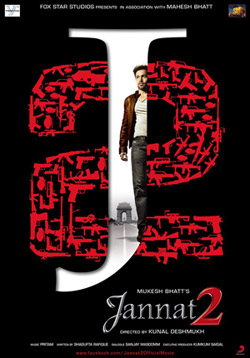
  • Reviewing the Reviews: Jannat 2

    Jannat 2


    Directed by-Kunal Deshmukh


    Produced by-Mahesh Bhatt, Mukesh Bhatt


    Story by-Shagufta Rafique


    Starring-Emraan Hashmi, Esha Gupta, Randeep Hooda Kunal Deshmukh’s Jannat 2, follows the Bhatt Brothers formula pretty faithfully. Crime, Sex, angst, Emraan Hashmi, in no particuar order of preference.


    Critics were divided on this one with ratings going from 1 to 4. It has opened well proving that Hashmi has a fan following among those who don’t go by film reviews.


    Sudhish Kamath of The Hindu titled it “Hardly Heaven” and wrote, “The fact that this is called Jannat 2 though it has no connection with Jannat except for the leading man and director only shows that the Bhatts are not ashamed to admit that they keep making the same film again and again (with Murder 2 or Raaz 3 coming up). Liked Murder? Then you’ll probably watch Murder 2.  Liked Jannat? Okay, here’s more of the same thing. The Bhatts have perfected this mass production with blatant disregard for originality or art by ripping off entire movies (like Murder 2 from The Chaser) or key moments here in Jannat 2 (from The Departed).”


    Raja Sen of rediff.com was left cold too. He gave it one star and cribbed, “A lot would have been forgiven – as it often is with these producers – if the film had either a meatier plot or a more gripping narrative, but this one’s just tiresome as the obvious story drags on. A couple of chase sequences, particularly one through the arteries of a Dargah, are slickly shot, but even these lose their charm as they get needlessly long-winded. And finally, telling a bad actress she looks like Angelina Jolie is just cruel – to both her and to the audience forced to sit there while she tries to smile coyly through a silly pout.”


    Rajeev Masand was kinder with 2.5 stars. “Jannat 2 isn’t all bad; in fact there are portions that are eminently watchable. Hashmi and Hooda play off nicely against each other, and their scenes together are particularly strong, occasionally laced with humour. The film also has at least two thrilling foot chase scenes, including one in the first half between two sets of cops and criminals that’s almost comical. The second chase, filmed in the crowded lanes of a dargah has an urgent breathless feel to it. If the film suffers, it’s because the material’s too slim. There just isn’t very much here apart from the obvious shades of The Departed, and some over-familiar scenarios of inter-gang rivalry. The film fully exploits its ‘Adult’ certification, peppering every scene with colourful Hindi cusswords, but after a while the graphic expletives seem excessive.”


    Anupama Chopra gave it 2.5 too, but was not too impressed. “Logic isn’t a priority here. Deshmukh is creating an old-school Bollywood film with high drama, punchy dialogue, thunderous background music and villains who glare and maim with aplomb. Some sequences are nicely done, including a chase sequence in a dargah. Emraan Hashmi and Randeep Hooda are also extremely watchable. But there are no surprises here and by the second half, Jannat 2 starts to feel like an endurance test with your head being bludgeoned by the violence and incessant Hindi swear words.”


    DNA’s Aakanksha Naval-Shetye & Chaya Unnikrishnan thought it worth 3 stars. “The action chase sequences in the dargah and the climax have been brilliantly executed and are worth a mention. Also unlike most films, the second half is actually better than the first. Kunal shows his tight grip on the film throughout and doesn’t let the film get neither preachy nor light-hearted, balancing finely between the serious nature of the topic and entertainment. The music is in tandem with the film. Emraan’s chemistry with his leading ladies has always been the talking point in all his films. But in this one, it’s clearly his chemistry with Randeep that steals the limelight and it’s this ‘jugalbandi’ between the cop and the criminal that makes the film worth a one time watch for sure.”


    Taran Adarsh of bollywoodhungama.com was one of the small 4 star clan. “Jannat 2 is a compelling account of a conflicted man who ultimately faces the effects of his deeds. The movie advocates that firearms and cartridges are the actual perpetrators accountable for the fatalities and killings of blameless people. Jannat 2 is ingeniously fashioned and skillfully filmed, while the characters are pertinent and compelling. On the whole, Jannat 2 is an engaging film with tremendous appeal for the masses. An absorbing story, a swift and coherent narrative, exemplary direction, fantastic action, soothing music and stellar performances summarize the highlights of this triumphant franchise.”


    Shubhra Gupta of The Indian Express isn’t half as gushy. “Don’t be fooled. This is not a sequel to ‘Jannat’, in which match-fixing shenanigans in high profile cricket matches gave Emran Hashmi and Kunal Deshmukh a fertile hunting ground, and us a watchable film. ‘Jannat 2’ is, for the most part, a badly-done, badly-acted enterprise, lifted only a notch by a couple of performances.”


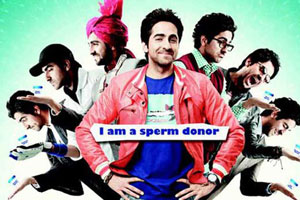
  • Reviewing the Reviews: Vicky Donor

    Vicky Donor


    Starring: Ayushmann Khurrana, Yami Gautam, Annu Kapoor


    Directed by: Shoojit Sircar


    Produced by: John Abraham


    Written by: Juhi Chaturvedi


    Critics are often so happy to report the release of an entertaining film that easy rah-rahs follow.  Vicky Donor is one such film—funny, with quirky characters, smart dialogue, and such a sense of joie de vivre, that hardly anyone was even willing to look at the improbable side of it– that sperm donation can hardly be a career for healthy young men with no other skills.  And nobody, but nobody can make a fortune out of it.  Plus there are moral and emotional angles to it that the film doesn’t even touch upon.


    Still it can’t be denied that the film is entertaining, and deserves the 3 and above stars that it got from all reviewers.


    Anupama Chopra of Hindustan Times gave it 3.5 and commented: “Vicky Donor is one of those rare Hindi films that work purely on the strength of writing and performances. There are no crutches here of stars, sets, styling or foreign locations. But director Shoojit Sircar and writer Juhi Chaturvedi create a heart-felt, keenly observed comic-drama. Sadly, Vicky Donor derails in the second half – the climax is flat-out foolish – but until then, it’s great fun.”


    Aakanksha Naval-Shetye & Chaya Unnikrishnan writing in DNA, felt: “Sure the film is not without it’s flaws. There are parts when the editing could’ve been tighter and the climax does seem a tad bit far fetched too, but in the bigger picture, these are minor chips that one can overlook in favour of the entertainment the film otherwise provides. Overall, it’s absolutely worth your money, so go for it!”


    Ritu V Singh of IBN Live writes: “Shoojit Sircar proves himself as a director with ‘Vicky Donor’. The film which starts with ‘Sperm bhi koi donate karne ki chiz hai’, ends with a positive message without too much of preaching. Good effort by producer John Abraham who also turned an item boy for the film. It seems, John has worked hard on his dancing skills. Overall, ‘Vicky Donor’ is a lighthearted fun film, which meets expectations. It definitely deserves a watch.”


    Kunal Guha of yahoo movies gave it a rare 4-star rave: “Movies that try to cleanse socially disreputable professions tend to get preachy and subsequently boring. But donating one’s seed to enable the seedless garden a happy family is a cause that cannot be covered in a classroom. So director Shoojit Sircar takes us to downtown old Delhi where we breeze through this hilarious adventure that ends in just 122 minutes, leaving you craving for more. While the very mention of sperm donation makes many cringe, this film manages to make the noble deed seem respectable without  compromising on the hilarity that one associates with the process of donation.”


    Sukanya Varma of rediff.com, writes: “Often, sex and everything it entails is a matter of prudence, provocation or parody. On a few occasions, however, it’s treated as a perfectly healthy science with its share of hiccups and humour. Like Shoojit Sircar’s latest film, Vicky Donor. As its cheeky title suggests, the part rom, part com dwells on how there’s no need to get all queasy over a little round thing with a tail just because it’s outsourced without really dwelling too much on the sensitive nature of infertility.”


    Madhureeta Mukherjee of the Times Of India, gave it  3.5 stars, which seems less for the paper that is usually generous: “Director Shoojit Sircar is back with a bold, first-of-its-kind concept that’s taboo. He makes this sperm of an idea swim all the way. He intelligently uses comedy to break mindsets, without embarrassing moments.”


    Komal Nahata looking at it from a trade point of view and a little cautious with praise was still 3 star optimistic: “What does not work, to a certain extent, is the latter part of the second half, which starts to play out like a regular love drama. Ashima’s estrangement, Vicky’s despair and the ‘happy ending’ climax are just not predictable but also boring to a certain extent. The crucial scene in which Ashima questions Vicky as to why he has not undergone tests to clear the fact that is he not infertile, stands out like a sore thumb. The drama lacks scenes that might bring tears to the viewer’s eyes. Besides, Vicky’s character endears himself to the audience but they do not necessarily root for him. The orthodox among the audiences will also enjoy the film to an extent, but they might not like the basic plot, which deals with a social taboo.”


    Shubhra Gupta of the Indian Express, always a votary of the offbeat writes: “Sircar’s film, a morality tale wrapped up as a fun bon-bon, delivers enough sparkles to make us overlook the sagging bits. And that’s got to do with the perky writing, which leads to fresh characters who speak as they ought to, in flavourful, authentic settings.” From all accounts, the film is a safe bet at the box office. John Abraham can justifiably be proud of backing a dark horse in Shoojit Sircar.


  • Reviewing the Reviews: Agent Vinod

    Agent Vinod

    Key Cast: Saif Ali Khan, Kareena Kapoor, Ravi Kishan, Adil Hussain, Ram Kapoor and Prem Chopra, Special Appearance – Gulshan Grover

    Directed By: Sriram Raghavan

    Produced By: Saif Ali Khan & Dinesh Vijan


    Of late, it has been seen that more often than not critics are united in their praise or pan of a film. It used to be rare to get such a consensus but Agent Vinod has done it again. Except for one 4 star and one 4, the highest rating the film has received is 2.5.


    Opinion of reviewers as well as the public match in that the film’s plot does not match its high production values. Sriram Raghavan had acquired a kind of following after Ek Haseena Thi and Johnny Gaddar, which is why expectations from the film were high. The jokes are already out, a few of them calling it ‘Travel Agent Vinod’ taking potshots at the fact that it was shot on several foreign locations.


    Hindustan Times’s Anupama Chopra gave it 2.5 stars and wrote, “Agent Vinod is also attempting to be too many things – a slick thriller to match Hollywood but also a cheeky homage to cheesy Bollywood movies. So the film has gloss and fast-paced action but the villains are a throwback to the 1980s – after all, how seriously can you take Gulshan Grover in a white suit or Prem Chopra with a ponytail or Shahbaz Khan with one glass eye? The result is that Agent Vinod never becomes more than the sum of its parts and even though it picks up speed in the second half, it leaves you both exhausted and unsatisfied. But I enjoyed the character of Agent Vinod. If he does get a sequel, I hope he has a better narrative to romp in.”


    Akanksha Naval Shetye’s DNA review, one of the few 3 stars goes, “On the downside, what doesn’t work is the weak plot and it is that weak chink in the armour that fails to hold all the strong elements together that could make it a riveting watch. The script should’ve been crisper, to do justice to its ambitious, high production value. With predictable twists and forced uncomplicated sub-plots and not so required elements and characters, you know it’s time to send logic out early on and you see yourself lose interest at some points. The stereotypical characters fail to make it interesting too.”


    Raja Sen writing in rediff.com was left cold too and went with 2.5. “The essential problem lies in the characterisation of Saif Ali Khan’s titular protagonist, an unconvincing secret agent suffering from mood swings, saucy and wink-filled in one shot, dour and stony in the next. He’s both nonsense and no-nonsense, a flawless leading man morally incapable of doing wrong and sartorially incapable of a hair out of place. So cool for school is he, for example, that even when drugged and being slapped around with his head shoved in a pool, his white shirt stays firmly tucked into his trousers. So much of the film is sadly compromised by making the leads look good – but perhaps that’s the price we pay for actor-producers.”


    Writing in Mid-day, Shaheen Parkar sticks with 2.5 too. “Though there is an earnest attempt to make a thriller considering that the director (Sriram Raghavan) is known for this genre of films -Ek Hasina Thi and Johnny Gaddar — this time the makers have tried to make a masala thriller stirring in too many ingredients making it difficult to digest. Its long running time (over two and a half hours) proves tedious for the viewer. Instead of incorporating item numbers, there should have been more focus only on the agent’s mission. Also, the plot criss-crosses from Afghanistan to Morocco to Russia and even Somalia, but just everyone either knows Hindi or understands it. If only the locals in the various destinations of Agent Vinod spoke in the local languages (with subtitles) would have lend more credence to the plot. The Agent’s every move is explained leaving little suspense for the viewer, as by then you know the end.”


    Sonia Chopra of sify.com also gave it 2.5. “A story traversing multiple locations can be fun, if it can avoid getting convoluted. But this film overstays its invite. All spy thrillers find their inspiration in the James Bond series. Most recent Bond films have had less plot; more style. But they get away with it, because the brand is so established. But an Agent Vinod is a rookie in that respect and needs solid support.”


    Rajeev Masand of ibnlive, who is usually kind, gave Agent Vinod 2 stars. “For a large portion of Agent Vinod, you don’t know where things are going… and then it all stretches on so needlessly that you stop caring. Given that this is a film that sees itself as a desi-style Bond, it has glaring loopholes that are embarrassing. Like a tacky scene in which Vinod spots a familiar scorpion tattoo on a doctor’s wrist that helps him deduce that he’s actually an assassin. Or the ridiculous pre-climax portion in which a grievously injured character is gasping out a password to our hero, as he frantically tries to disarm a bomb while flying a helicopter.”


    Shubhra Gupta of the Indian Express also went with 2, writing, “There’s nothing to warn us that we are in for strictly bits-and-pieces of fun. But that is the film’s trajectory, split between speeding and slowing down to re-create familiar scenes. This results in a repetitive loop : fast-paced Bond-style bang-bangs interspersed with two good-looking spies criss-crossing each other, as corpses pile up. It doesn’t help that the plot is overly busy, scurrying from one point to another, and going on and on, much after the story is over. Even the camp is not high enough, and some of the humour is clunky.”


    Mumbai Mirror’s Karan Anshuman matched the majority with a 2.5. “In between the mayhem you’ve bomb-carrying helicopters, the Trans-Siberian Express, Russian mafia, Indian industrialists, Afghan warlords, gay flight pursers, Moroccan camels, Pakistani generals … and one man to sort it all out. Agent Vinod is the kind of film with a lot of breadth, but very little depth. The sentimental bits especially, islands on their own, just don’t cut it.”


    The Times of India, always rates a film higher than the rest and very rarely goes below 3 stars, which is hardly a compliment to a film. Madhureeta Mukherjee writes, “Director Sriram Raghavan, who’s made fine mind-twisters (Ek Haseena Thi, Johnny Gaddaar), attempts a spy-thriller this time. His obsession for retro reflects here again, whether it’s casting Prem Chopra and Gulshan Grover, references to classics, or infusing soundtracks from the bygone era. Aaah! Nostalgia! Agent Vinod is slick and visually stylized, but loses steam at times. The movie is a tad long and often creatively compromised – for style over substance. With well-designed stunts and car chases, there are very few high points or shock value. One being the background score (Daniel B George) that changes beautifully with the locations. Otherwise, Agent Vinod is cool. But not steamy enough to win a license to thrill.”


    Bollywoodhungama.com’s high 4-star rating by Taran Adarsh goes with the comment, “A hi-octane espionage thriller with a heart. It is not just brawny and dynamic, but witty and crazy too. Ultra slick and stylish, this desi Bond movie adheres to the formula and succeeds in meeting the humungous expectations.”


    The lowest 1-star rating is by yahoo’s Kunal Guha, who quips, “The best way to defuse a bum is through butt crunches. Unless one is referring to the Hinglisized word for a bomb. And the much-awaited dhamaka that this thriller hoped to detonate at the box office might just be defused once you read this review. Despite miraculous leaps in production values, spy thrillers in Bollywood end up looking like Chinese equivalents of western products. And here, the characters are even stereotyped to the extent of detectives wearing trench coats and moles being obvious, shifty-eyed and literally uncomfortable in their own skin. So let’s just say foreign locales, weapons to annihilate the world, designer suits and not-so-excruciating interrogations don’t cumulatively justify Agent Vinod as a thrilling movie-watching experience.”