Category: TV

  • KBC takes Sony ahead of SAB in Week 36

    By A Correspondent


    With TVTs of 8950 and 8460 on the Saturday and Sunday of Week 36 of the TAM ratings, Sony Entertainment Television scored 346122 GVT versus that of SAB being 322392. Last week it was 291074 (Sony) and 319158 (SAB).


    Meanwhile, TAM has expaned its universe from 205396 to 205749.


    The rest of the GVT roster hasn’t changed very much for Week 36 of 2013. The figures in brackets indicate numbers for Week 35.


    Star Plus 494732 (495509)

    Colors 452851 (452921)

    Zee TV 410774 (395024)

    Sony   346122 (291074)

    SAB 322392(319158)

    Life OK 276290 (269927)

    Star Utsav 100093 (109333)

    Sahara One 28742(29645)


    We haven’t received the GVT score for Zee Anmol in this week.


    Important: It may be noted that TAM does not share GVT and TVT numbers with the media. What you see here is info shared by one of the subscribers. Though not authenticated by TAM, so we would urge our readers to base their decisions on authenticated data only.


  • Zee Entertainment appoints Romil Ramgarhia as Commercial Head

    By A Correspondent


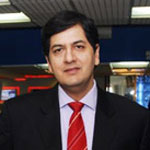
    Romil Ramgarhia

    Zee Entertainment Enterprises Ltd (ZEEL) has announced the appointment of Romil Ramgarhia as Commercial Head. He will report to Punit Goenka, MD and CEO, ZEEL, and the entire commercial team at ZEEL will report to Mr Ramgarhia.


    Speaking on his appointment, Mr Goenka said: “I am glad to have Romil join the Zee family, and I am confident that his rich experience will bring in immense value to the organization”.


    Commenting on his new role, Mr Ramgarhia said: “It is always an honour to join a global brand like Zee. I have personally been an admirer of the pioneering steps taken by this organization in the last 20 years.”


    Mr Ramgarhia, who joined Zee on September 13, was until recently Commercial Head, Colors and other than Viacom 18, he has worked with Bharti Airtel, Asian Paints and ACC Ltd.


  • Jaldi 5 with Rajesh iyer, Marketing Head, Colors: Bigg Boss has become a cult show on Indian television

    As a programming property, Bigg Boss has become huge for Hindi GEC Colors. Not just in terms of the efforts to put it together and bring in celeb guests, but the push on marketing and promotions. Season 7 of the show which is being aired for the sixth consecutive year on the channel took off on Sunday, September 15 with much fanfare. MxMIndia posed a few questions to Rajesh Iyer, Head of Marketing at the channel on the format of this year’s edition and Bigg Boss’s role as a buzz creator for his channel
     

    01: This year sees some interesting twists to the Bigg Boss format. In fact, the division of contestants makes it for ‘alag chhe’ as against ‘Saath 7’?

    Last year’s theme was ‘Alag Che’ because there were a lot of new elements introduced whether it was the talking parakeet or the Talking fish. This year’s theme is truly Saath 7. It acknowledges the co-existence of Good and Evil inside of each one of us  – that none of us are  entirely good or evil, but it is the circumstances that bring out the best or the worst in us.


    The division of the Bigg Boss House into 2 parts aims to drive this concept further by making it a part of the product


    1a: The 9PM slot would of course mean that the family values would be maintained in what we see on the tube?

    We brought Bigg Boss back to the 9PM slot last year to family audiences and were successful in making the show an integral part of dinner-table conversations. This season, even with the Heaven and Hell format, we are catering to family audiences – something that becomes evident with us including a husband-wife duo within the list of contestants who have entered the house.


    02. Do you see it generating a greater buzz and consequently ratings for you?

    Bigg Boss is a huge property for us when it comes to generating buzz. In fact, the launch episode which aired on Sunday, 15th September saw Bigg Boss trending on Twitter at the #1 spot. With regard to ratings, the show’s fan following has been growing by leaps and bounds season-upon-season. We are certain that the incredible mix of contestants that have been roped in for Bigg Boss Season Saath 7 will be received really well by audiences.


    2a: Any target for TVTs?

    A: Bigg Boss has become a cult show on Indian television. Ratings are just one by-product of the show. The buzz that the show generates amongst audiences is too huge to measure. Also let’s not forget the unending discussions on radio stations and news channels – regional and national – once the show gets into its element.


    2b: Any specific reasons why the Salman Khan episodes have been moved to Saturdays and Sundays instead of Fridays and Saturdays?

    A: With the success of Jhalak Dikhhla Jaa and Comedy Nights With Kapil, we have realized that there exists a huge audience group that tunes in to watch their favourite shows and artists on television on Saturdays and Sundays, owing to which we have introduced ‘Wow Weekends with Salman Khan’.


    03: The competition from rival channels in buzz-creating shows is a lot more this year. There’s Mahabharat on Star Plus, Sanjeev Kapoor on Sony… Too much to watch on the Hindi GECs?

    Yes. There are a lot of options for audiences and that is always a good thing. But Good content always prevails. The Bigg Boss franchise has done well for so many years now and we are confident that this year too it will triumph.


    3a: Jhalak Dikhhla Jaa has just completed, Bigg Boss has just started and 24 very soon… In fact we, in the media, have received an invite for the launch presser on Thursday (Sept 19). Plus some interesting movies. For COLORS, the season’s more than just busy. Any more action expected?

    The last quarter of the year is always a busy quarter for us with the launch of Bigg Boss. This year, we have the added bonus of 24 launching as well and India’s Got Talent will be launching later this year.


    Bigg Boss 7 has a fairly high voltage digital presence? Is that the way to go for big budget Hindi shows?

    The Bigg Boss content has always found favour with the digitally savvy audiences.. This is primarily because the show caters to a voyeuristic audience giving them something new to discuss every day for the period of 104 days thereby making it viral and keeping them engaged throughout the duration of the show.


    05. One is aware of Bigg Boss’s role as a buzz generator for Colors. So do you’ll internally see the spends on it as a marketing cost or a content/programming cost?

    This is one of those shows which delivers both on buzz and ratings.


  • Tata Sky gets Mohanlal for Onam

    By A Correspondent


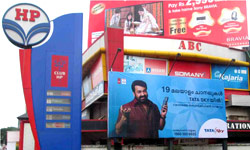
    Tata Sky roped in southern superstar Mohanlal as its brand ambassador for Kerala for the Onam festive season. Ads of posters of the DTH service were seen across the state. The Lulu Mall in Kochi had a 35 feet poster of the superstar. Ditto with petrol pumps and highways giving out the message of Tata Sky now offering 19 Malayalam channels along with a special offer for the festive season.
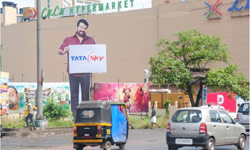


    Tata Sky and Mohanlal received adulations even on Social media by their followers on Twitter, Facebook and similar forum, reports a communique adding that the marketing campaign has been the biggest ever for Tata Sky in South India since its launch.
     

  • Anil Kapoor’s ’24’ to launch on Colors on Oct 4

    By Nandini Raghavendra


    The race for the weekend eyeballs gets keener from October as General Entertainment Channel (GEC) Colors announces the launch of its most ambitious drama series-24. Beginning October 4, the show, an adaptation from the cult American series, will ride on the already popular Bigg Boss (BB) show with a 10 am slot, Friday and Saturday for 12 weeks in 24 episodes.


    Raj Nayak

    Both the time slot and days are important, as these are the two days that host, Salman Khan visits the BB show. “You get to see both Salman Khan and Anil Kapoor on the same day!” says Colors CEO, Raj Nayak.


    Since it is a new genre, the GEC is hoping to build the show and funnel in viewers riding on the immense draw of both Khan and the show.


    Colors has been building both its non-fiction as well as weekend programming.  Pre-Jhalak, the dancing reality show, their non-fiction contributed only about 10 % to their overall ratings while in the last four weeks this percentage has increased to as much as 30%. This has also increased their ratings by at least 25%.


    The show which catapulated them to top slot in non-fiction in the last few weeks, was Comedy Nights With Kapil which will now be moved to once a week on a Sunday slot.


    Mounted like a film, 24 is an expensive show which has approximately cost Colors, close to Rs 150 crore in rights bought from actor producer Anil Kapoor who acted in the original series and also plays the lead, Jai Singh Rathod in the Indian adaptation. While sponsor revenues are said to have brought in close to Rs 80 crore, they are also looking at raising the 10-second slot to approximately, Rs 3.5-4 lakh keeping in mind the 12 minute ad cap to be implemented from October.


    Mr Nayak had said in May that they would be left with no choice but to raise their prices by at least 30%.  Title sponsor Tata Motors feels the show shares the same values of speed, strength and absolute power. “As Anil Kapoor runs against time, the Safari Storme is the perfect vehicle that supports his agility and total control. It made sense to tie up with a show which has all the characteristics of our SUV,” said President PVBU Tata Motors, Ranjit Yadav.


    Yet, a lot rides on whether this new genre will work across audiences or not and if so to what extent.  Shooting in real time, split screens, are all new for the Indian audiences.


    With a stellar cast like Shabana Azmi, Anupam Kher, Mandira Bedi and Tisca Chopra among others, helmed by director Abhinay Deo and a writing team led by Rensil D’Silva, a lot of production houses are betting on this genre working as it opens a huge library on content to adapt and produce from.  While Mr Nayak is sure this will be a game changer for the entertainment channel, he is also confident of recovering his investment. “With 24, we are introducing the Indian audiences to a new hybrid genre of entertainment that sees an interesting amalgamation of fiction and reality. The never-seen-before action, thrill, suspense, drama and the exhilaration of solving complex cases real-time within a span of 24 hours, should draw in the eyeballs,” said Manisha Sharma, weekend programming head, Colors, who is excited to be the first-ever network to produce and air the local adaptation of the international series outside the United States.


    The award-winning American TV series ran for eight seasons and aired its last episode in May 2010. It had unprecedented success across 43 countries in eight languages. Actor producer Anil Kapoor holds the rights of the 192 episodes for a period of four years extendable to another ten, in what his lawyers, Naik and Naik says is definitely one of the highest licensee deals for a fiction-format show on Indian TV. “I couldn’t have asked for a better team of actors than the ones on 24. Everybody is a hero on the show and the precision and technique that each one of them use to portray their individual characters is unique. Their never-say-die attitude and the passion and enthusiasm put in by each one of them makes me want to strive harder and perform better and better,” said Mr Kapoor who plays Jack Bauer and makes his small screen debut with this show.


    Equally excited is director Abhinay Deo about the show. “We have shot ’24’ like a feature film. It is more like cinema on television. Creating a body of work such as 24, is a lifetime opportunity where I could use my craft to the fullest. I have attempted to create a visual medley of powerful characters led by Jai Singh Rathod,” said Mr Deo.


    Source:The Economic Times

    Copyright © 2013, Bennett, Coleman & Co. Ltd. All Rights Reserved

    Licensed to republish


  • Romedy Now to launch on September 22

    By A Correspondent

    Times Television Network has announced that it will launch its English entertainment channel Romedy Now on Sunday, September 22 at 7 am.

    It is learnt that initially the channel is scheduled to only air back-to-back movies, but that will change with TV series and sitcoms in the near future.

  • NDTV appoints Soli Sorabjee as ombudsman. Now will he clear air on Barkha Dutt episode?

    By A Correspondent


    It’s a welcome move, but one wonders what would have been the impact had this appoinment been before the entire Niira Radia episode was raging where the channel’s star editor and anchor Barkha Dutt was embroiled in a controversy over unethical practices.


    Be that as it may, NDTV has now announced the appointment of former Attorney-General of India and eminent jurist Soli Sorabjee as its Ombudsman who will provide an independent perspective on our coverage and investigate any viewers’ complaints regarding NDTV.


    In his honorary position, Mr Sorabjee will be entirely independent from NDTV and will investigate any complaints viewers may have about NDTV’s coverage.


    Sonia Singh, NDTV’s Editorial Director and President of the Ethics Committee said, “Every day, we in the media face new editorial challenges regarding journalistic boundaries and we are delighted that Mr Sorabjee will, with his unchallenged integrity, be able to provide much needed insight and advice.”


    Vikram Chandra

    Added Vikram Chandra, NDTV Group CEO and Executive Director: “NDTV has always been committed to the highest standards of integrity and balance in its news coverage and we have now decided to take that one step further by appointing an independent ombudsman who can adjudicate on any issues that may come up in the future.”


    KVL Narayan Rao

    Speaking on his appointment, KVL Narayan Rao, Vice Chairperson, NDTV Group said, “Mr Soli Sorabjee is an independent, highly respected, highly regarded legal luminary, with years of experience in handling issues relating to freedom of expression and freedom of the press and censorship. We are delighted he has agreed to be the ombudsman for NDTV.”


    Viewers can send in complaints and questions to http://www.ndtv.com/soli


    MxM View: We do not know whether Mr Sorabjee will examine the Barkha Dutt-Niira Radia episode, but since the ‘case’ hasn’t closed yet, it would be interesting to have his views on the issue. It may well clear Ms Dutt’s name once and for all or we could well have Mr Sorabjee aver that by doing what she did, Ms Dutt has brought disrepute to the profession and the NDTV group.


  • Zoom Review Show completes 200 episodes

    By A Correspondent


    His peers on other channels gave ‘Rowdy Rathore’ and ‘Bol Bachchan’ a thumbs-down, but he rated them ‘Very Good’. Omar Qureshi, editor-in-chief of Bollywood channel Zoom senses the pulse of the masses like few others. The two films grossed over Rs 100 crore and helped cement the statuses of its protagonists Akshay Kumar and Abhishek Bachchan in a big way.


    Omar’s ‘The zoom Review show’ celebrates 200 airings this week and, according to a communique, becomes the longest running movie review show on Indian television. Leading stars like Hrithik Roshan, Ajay Devgn and Sonakshi Sinha and Ileana D’Cruz have sent congratulatory messages to the show and its host.


    Omar is a senior film journalist, having edited Stardust for many years and later worked with Filmfare and the entertainment wing of Times Internet.


  • TRAI notifies amendments to DAS interconnection regulations

    By A Correspondent


    The Telecom Regulatory Authority of India (TRAI) has today notified amendments to the interconnection regulations applicable for digital addressable cable TV systems (DAS) and tariff order applicable for addressable systems.


    The amendments in the tariff order modify the ‘twin conditions’ that regulate the a la carte rate of channels vis-à-vis the bouquet rates at retail level, protecting the interests of the subscribers. It also clarifies the position that subscribers can either opt for channels on a-la-caret basis or bouquet or combination of both, as per their choice.


    Considering that adequate provisions/safeguards are already available in the Interconnection Regulations applicable for DAS, certain provisions have been omitted from these regulations. These pertain to prescription of a minimum channel carrying capacity of 500 channels for MSOs and prohibition regarding charging of placement fee by the MSOs. A proviso has been added to specifically bring in clarity that the MSOs cannot seek a channel from the broadcaster and seek carriage fee at the same time.


    The full text of the amendments is available on the TRAI website – www.trai.gov.in.


  • Shailesh Kapoor: Mahabharat at home, Grand Masti outside home!

    By Shailesh Kapoor


    Two weeks ago, Grand Masti, an adult comedy packed with double entendre jokes (the kind where there you get only the “second meaning”), opened to phenomenal box-office, registering Rs 400 million on its first weekend. This huge opening made Grand Masti the fourth highest Bollywood opener of 2013, ahead of several A-list starrers.


    There was little doubt that Grand Masti will open well, but I was personally caught off-guard by the degree of its wellness. Evidently, a population of youth came out in big numbers to watch “sexy jokes”. It’s safe to say that many of them are not even regular moviegoers: The idea of watching verbal porn got them to the theatres as an exception.


    Three days after Grand Masti released, Star Plus launched Mahabharat at 8.30pm. The show has opened to very good ratings, with the first week’s average of 3.1 TVR making it in the first instance of any fiction launch crossing the 3-TVR mark in its first week since (at least) 2011.


    It’s well-known that TV viewing is largely a family affair in India, and the youth are involved, actively or passively, too. I’m, thus, intrigued by a 19-year something young boy from somewhere in Chandigarh or Indore, who watches Grand Masti on Friday with his bunch of college friends, laughing his heart out at every joke, and then joins his parents to watch Mahabharat on Monday. And probably enjoys that too!


    Several media observers and social commentators will label this behaviour as hypocritical. It’s been argued for ages that there is a cultural hypocrisy in India, where we, the second most populous country in the world, can’t just get ourselves to talk about sex comfortably. In turn, it leads to a sexually suppressed population, especially the teenagers and the youth, an audience Grand Masti instantly caters to.


    But there’s more to it than just the sexual suppression. The more we study the youth, the more we realize that there home v/s outside separation is a well thought-out one. It has been created by their generation as a legitimate method of functioning in a society where family values are still paramount. And it goes beyond just sexual expression.


    For example, more than 80% Indian youth who smoke would hide it from their parents. The number is equally high for those who consume alcohol. And I suspect the number doesn’t change much even when you enter your late 20s and the 30s. Parents, after all, shall always remain parents.


    From the appropriateness of language to dressing to habits, everything has a home-version and an outside-version (or friends-version). The former is designed to run the institution of family smoothly (and not grudgingly so, at all) and the latter to have some legitimate fun at the right age.


    Now one would expect that as these youngsters grow up and became parents, this dichotomy would perish, as they will be more “open-minded” and “approachable” as parents. No, it won’t. Because it’s not about approachability anyway. It’s about the voluntary adoption of family values, when in a family context. It’s an inbuilt mechanism that triggers off at the right situation, like it does when they are with their family even today. And it will trigger off in its full glory when they get married themselves.


    Most of the television success stories (fiction) over the last decade have been created around the importance of the institution of family in India. When Grand Masti is telecast on TV, it will be censored beyond recognition, and then rate poorly. But even if they allowed it to be telecast uncensored, it would have rated poorly anyway. Because the big television rule remains: When at home, do as the home-members do!


    Shailesh Kapoor is founder and CEO of media insights firm Ormax Media. He spent nine years in the television industry before turning entrepreneur. The views expressed here are his own. He can be reached at his Twitter handle @shaileshkapoor


  • BARC close to final decision on measurement vendor

    By A Correspondent


    The Indian media industry’s Broadcast Audience Research Council (BARC) is now close to the award of the contract of television viewership measurement in the country.


    The BARC board met on Friday and a spokesperson issued a press release saying it was recognized that “BARC has the opportunity to change the paradigm and the solution should last for the next 15 to 20 years.”


    Added the communiqué: “The Board agrees that there is a quantum jump in technology that is being envisaged. Considerable progress has been made in identifying suitable cutting edge technologies available for measurement of present and future Broadcast distribution platforms. The Board decided to authorize the BARC Technical Committee and the Management to initiate pilots with these solutions to assess the suitability in Indian conditions.”


    It is learnt that BARC has asked three vendors to initiate these technology feasibility pilots, and one among these three will finally be awarded the contract.


  • Vijay Mukhi: Why can’t we use tech to increasing voting percentages?

    By Vijay Mukhi


    This is the time of the year where TV channel after TV channel, newspaper after newspaper, celebrity after celebrity would ask you to go out there and vote. And guess as it happens all the time, a large population of Indians simply does not vote. And who is to blame for this, not the people who do not vote, but all of us for not using technology to make it easier for us to vote.


    Why can I not vote in the 2014 general elections either sitting on my computer at home or in the office and vote or voting from anywhere in the world using my mobile, not necessarily my smartphone. We allow Indians to use the phone for online banking, to buy stuff, but would not allow an Indian to use his or her phone for casting a vote. But wait, I am as always running too fast, let me rewind a little.


    Most of you would not know of a Mr Chand Goel, IAS who was Additional Chief Secretary, State Election Commission (SEC) , till he retired some months ago. A year before the last BMC elections took place, he created a committee under the SEC to look into the feasibility  of allowing us to vote for the BMC elections using a computer or a mobile phone. I was a member of this committee. We met a zillion times and were also about to award a pilot project when things went awry. What I am placing before you is my journey in the use of technology in the political process. For the uninitiated, the SEC is a state body that conducts all elections other than the Lok Sabha and the Assembly elections which are conducted by the Centre.


    Let’s start at the end and not the beginning. We all complain about people not voting, but not asking ourselves why do we make it so difficult for them to vote. I have not missed voting at an election to date but I have not enjoyed the process. The first problem is checking whether I am yet a voter, then finding out where the venue for polling is, the venue is a moving target at Parel at least. Then finding the actual polling booth is very easy, that booth that has the smallest line is where I vote because the rich and famous in my area do not come out and vote. The largest queue is where the poor reside, it’s a very stark contrast at Parel. Its great castigating the rich and famous for not voting, deriding them on TV, the fact is that they do not vote and if we need to give them one less reason for not voting, they will vote.


    Let me start by making it very clear that I am not saying  anywhere that we only have people voting by phone or computer, we allow anyone to vote either by a phone/computer or by the old way using a EVM, which by the way is state-of-the-art technology. Once you chose one method, you would have to stand on your head to use the other method. This means we have two voting lists, one for the EVM or physical vote, one using technology, the safer cyber way.


    My gameplan at the SEC committee was as follows. The computer/laptop was dead and the mobile phone rules. If we had to allow only one device to be used to cast a vote, my vote would go to the phone. I have yet to see an Indian who does not carry a phone at least in a city, in villages the rules would change but we are fooling ourselves if we believe that rural India does not use technology. We are also fortunate that Android and oOS take up a bulk of the phone market, the other two yet in the fray are Windows and Blackberry. Thus to cover nearly 99% of the phones, the Election Commissioner has to create just four Apps. We have Apps that do everything the human mind has not thought off and it would cost under Rs 10 lakh to create such an App. For using a laptop or a computer you can use a website instead of an App or download programs and install them on your computer.


    I, as a person who would want to vote using a technology solution, would simply have to go once to a voting centre and get myself removed from the physical voters list and get myself electronically registered. If we had a technology savvy state, this process could have been undertaken at the same time I applied for an Aadhaar card. My biggest problem with the Aadhaar card is that it does not use technology, I would want it to use a chip, it instead uses a piece of paper and hence it really needs to be renamed to an Aadhaar paper than a card. The state already has my eye scan and my fingerprints, you need no more biometrics. At the voting centre all that they do is take my fingerprints and eye scan and Computerji will identify me as Vijay Mukhi, remove my name from the physical voters’ list and add my name to the electronic voters’ list along with my current constituency. All this should take less than a second if the voters list was computerised. I forget to mention that before I went to the centre, I had already downloaded the App on my mobile and now to activate it, I simply use my Aadhaar card number or another number the system gives me or my biometrics. This is simply a question of detail. For using a laptop, I would visit a website, download a program for my OS, the rest would be the same.


    Come voting day, when I activate my App, it simply goes to the master server owned by the EC, finds out my constituency and then displays the candidates, I use touch to select the candidate and my vote is cast. No finding voting booths, no standing in short or long queues, no summer heat or winter cold, no finding time to vote, etc, etc. Now if I refuse to cast my vote, the state can put me behind bars for life and throw away the key. There would be teething troubles like me losing my phone, the App would not start, if it does start, no network connectivity etc. Lots of such problems would arise, all of them solvable. The physical voting list would be smaller in size and hence boothcapturing would also come down as a large percentage of the population would not use the present form of voting.


    I spoke to a large number of people from all walks of life. The political class had lots of issues. The main one was that a large mass of people who did not vote would now vote. The uncertainty there was who would they vote for. Because of this not a single political party came out and supported what we were planning to do. The second issue was of secrecy of your vote. In the present system, no one knows or can ever know who you voted for. In the new system, a political party can insist that unless you vote for me in front of my eyes, I will not pay you for your vote. If I want to sell my vote, no law can stop me. By using technology, you can only vote once. The political class should be happy with this as voters cannot commit their vote to more than one political party. The biggest unknown for politicians was that some political party would hijack the entire process by using a virus and hence win the elections. My only answer was that if this was possible, then the banking system would have already crumbled. Why use a virus to win a vote in a country, I would use technology to rob the entire banking system. This way I would not have to govern nations, I could buy them all.


    Another area that needs reforms is the creation of election rolls. I keep seeing ads asking me to check physically whether I am on the rolls or not. It is only recently that I could check the voters rolls online. Once I am on the rolls, why should my name ever be removed. The day I die, my family registers my death and automatically my name gets removed. If I move from one place to another, I should fill up an online form, get authenticated and my name moves from one roll to another. Every political party I spoke to was worried that as the election rolls have not been updated the right way, election malpractice is very common. We can use the Aadhaar card as starting point for cleaning up the voting lists.  After all maintaining a database of a billion people is a very easy job to do in the world of big data.


    We all need to vote otherwise democracy does not survive. At the same time we need to make sure that we must use technology to make it easier to get people to vote. There was a huge hue and cry when we shifted to the EVM from paper ballots, there will be a high hue and cry when we take the next step and allow people to vote from the device they choose. Take the case of the old and infirm, how do we get them to vote. We are also being very elitist because I can take a week off to vote, the daily wage earner cannot take time off to vote, he/she needs technology more than the rich. If we do not make voting easier, then people will not vote and society would lose. We trust technology with our lives – robotic surgery, to drive our cars, our money, everything important that we do. Then why do we not use technology to help us cast our vote. It great seeing our idols, coming out and asking us to vote, time has proved that we turn a deaf ear to what they say to us.


    Ideally, the Election Commission of India should be everywhere asking people to remove their names from the physical voters list. After all we are a country that runs technology for the advanced world. Knowing our EC, and I am not being a cynic and I am not yet a senior citizen, but it is highly improbable that I would ever cast my vote using my mobile phone.


    Instead of banning exit polls, opinion polls, etc, our EC must use more technology and not less technology in our entire election process.