Category: TV

  • Bundesliga brings benefactors on board for Neo

    By A Correspondent


    Neo Sports Broadcast has made rich pickings for German Football League Bundesliga’s 51st season in 2013-14. The associate sponsors are Airtel, Lava, Loreal, Bose and Nike and more brands are in the process of signing up, notes a communique.


    The number of sponsors announced is amongst the highest for any football league broadcast in the country, the release adds. Said Sudip Roy, Senior Vice President, Advertising Revenue: “Football viewership is on the rise in India, and among the top European football leagues in the last season, the Bundesliga had the highest growth in reach on the digital cable platform. Sponsors have recognized this and we are delighted with their support.”


    Live coverage of the current Bundesliga season on NEO runs from August 2013 to May 2014.

  • KBC innovates for new season starting Sept 7

    By A Correspondent


    Sony Entertainment Television has launched the iconic Kaun Banega Crorepati 2013 with some innovations. While Amitabh Bachchan will continue to host the show and it will indeed by produced by Siddhartha Basu’s Big Synergy Media, KBC 2013 will have a 360-degree multimedia stage and a jackpot prize of Rs 7 crore.


    The following changes have been implemented:

    • The Money Tree will now consist of 15 questions
    • There will be four questions in the ‘Sapta Koti Sandook’ a brand new feature, that will give the contestants a chance to win from Rs 1 crore to 3 crore, 5 crore and ultimately 7 crore
    •  ‘Fastest Finger First’ round now becomes a ‘Best out of three’ and the winner at the end enters the Hot Seat
    • More choice of lifelines – ‘Flip the question’ (Alat Palat) returns in place of ‘Ask the expert’ and ’50:50′ comes back in place of ‘Double Dip’
    • A new lifeline called ‘Power Paplu’ has been introduced. This lifeline will aid those who seek to revive any already used lifeline
    • In the entire gameplay however, a hot seat contestant may use only 4 of the 5 lifelines on offer
    • Yet another feature is the ‘Play SAlong’ for the ‘Fastest Finger First’ contestants who do not make it to the hot seat. These contestants can now play along with the hot seat contestant and the one who answers the maximum number of questions in the minimum amount of time gets to win Rs 1 lakh at the end of the episode


    The Ghar Baithe Jeeto Jackpot feature continues to engage home viewers. The central theme of KBC this year is ‘Seekhna Bandh Toh Jeetna Bandh’ thereby reinforcing the need for the continuous process of learning in life.


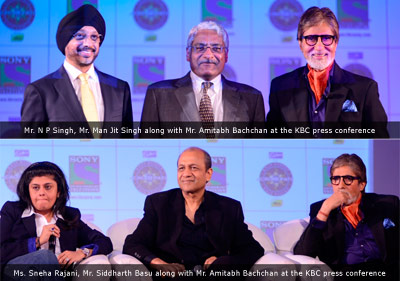
    Speaking on the launch, N.P Singh, COO, Multi Screen Media said: “There are brand new elements in KBC this year that will thrill viewers across India. This year’s theme encourages a renewed outlook towards learning.”


    SnehaRajani, Senior EVP and Business Head added:, “The new features will make the journey to become a crorepati even more exciting. The magic of Mr. Bachchan takes the show to another level altogether and will surely entertain the nation for the next 13 weekends.”


  • Shailesh Kapoor: Care For A Drink? No We Are On TV

    By Shailesh Kapoor


    The anti-smoking infomercial that precedes film screenings is now an in-joke in the media industry. It can be argued that the government’s obsession with smoking shots in films, however passing, is not entirely misplaced. But the banal and utterly ineffective execution of the now-infamous Mukesh infomercial kills the idea.


    Television has no such problems. I just don’t remember when I last saw anyone smoking in an originally-produced Indian programme, fiction or non-fiction. Everyone is clean to the bone. Even when a teenage character goes astray and takes two puff of a cigarette to “try it out”, it happens off-camera, though the ensuing conflict may stretch over two weeks.


    Television’s take on alcohol is not very different. Yes, there have been shows where key negative characters are portrayed as alcoholics (including a sisters’ trio in Colors’ now-off-air Laagi Tujhse Lagan). But the stereotyping is striking. They are meant to be bad people because they consume alcohol. Or maybe they consume alcohol because they are bad people!


    Except Ram Kapoor and Sakshi Tanwar enjoying their drink in a couple of (and some of the best) episodes of Bade Achhe Lagte Hain, all heroes and heroines squirm at the idea of a bottle being anywhere in their vicinity.


    Television’s aversion to all things alcohol is a symptom of the traditional mindset the medium targets at large. And indeed, there may be merit in arguing for their case. In our research across markets, especially non-metros, discussions on alcoholism can touch raw nerves in the housewives community. Many of them face it as a real issue in their lives, where the husband, the father-in-law or the brother-in-law are spending disproportionate share of the household income on booze. And there is a direct linkage between alcoholism and domestic violence, as we all know.


    Of course, there is the other side of the argument too, which says that all television is not supposed to cater to middle-class housewives who face such real issues in their day-to-day lives. There is an audience beyond that: The urban elite, the youth, men and women in professional jobs, etc. But these characters are conspicuous by their absence in our serials anyway.


    Back in the early ’90s, Amita Nangia played the beer-guzzling Sheena in the much-popular Zee TV weekly Tara. But that was an era of less than 10 million C&S households, with most of them being upmarket metro audiences who were early adopters with a progressive mindset towards new ideas. As television has penetrated deeper, this audience segment has become far too miniscule to interest the broadcaster community. Even niche channels today are targeting SEC BC audiences in towns like Lucknow, Bhopal, Jaipur and Kolhapur.


    There are 41 alcohol scenes in Yeh Jawani Hai Deewani. But that did not deter the theatre-going Indians from making it one of the biggest box-office grossers in recent times. In fact, the casual presence of alcohol, albeit a bit overdone, made the film modern and cool in its own way, and that went well with the grammar of the film at large.


    I am most interested in seeing how the Indian version of 24, and the upcoming Amitabh Bachchan fiction show on Sony, handle “liquor” as an idea. In a country where having a glass of red wine can get someone to be labeled as a “sharaabi”, it will be good to see mass television influencing a few minds in the right direction.


    Shailesh Kapoor is founder and CEO of media insights firm Ormax Media. He spent nine years in the television industry before turning entrepreneur. The views expressed here are his own. He can be reached at his Twitter handle @shaileshkapoor


  • Future-ready Alliance


    By Johnson Napier


    It was a first for any distribution network in India when The One Alliance announced that it had bagged an ISO 9001:2008 certification a few days ago. What the new certification has done is enabled the network to bag the tag of being an ‘organized’ one especially at a time when there’s much that’s being written and said of the unorganized state of the industry.


    In fact the milestone also coincided with the completion of 11 years of operations of The One Alliance in India.


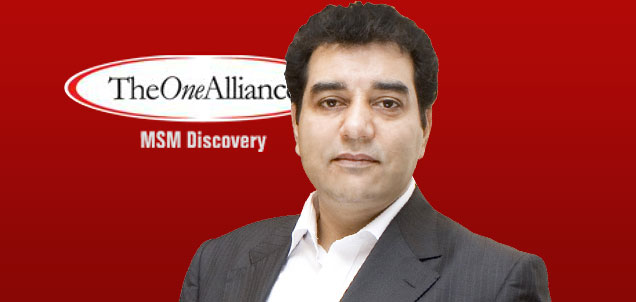
    For Mr Rajesh Kaul, President – The One Alliance, there is a lot that has been achieved in the past eleven years and also a lot more to be done what with the digitization exercise currently underway in India. He tells MxMIndia on what the distribution market seems like in India and what’s to be expected out of the DAS rollout for distribution networks in India. Excerpts…


    As a distribution network, what is the significance of getting an ISO 9001:2008 certification in India?

    We are an unorganized sector atleast that’s what people believe, so it’s important that we take this initiative of being organized than the rest. To that extent this is significant because we insure that we follow a particular pattern and process so that we don’t deviate.


    How does this achievement separate you from other distribution networks in the country? Do you think it is essential that the other players should try and get a similar certification?

    The certification is only a means to get a little more organized in life, to ensure that you have proper systems to follow, so it is good to have such kind of a certification.


    The occasion also marks completion of 11 years of your existence in India. How has the broadcast distribution ecosystem evolved since the 11 years you’ve been operating here?

    I can actually write a book on this. If I had to cut it really short, in the past 11 years a lot of new channels which have come in. Eleven years ago, we had just 150-200 channels and today there are 700 channels. A lot of consolidation has happened on the ground. Maybe at that point of time, you had 50,000 to 60,000 cable MSOs, today we have just five to seven thousand. A lot of consolidation has happened within the channels too. Aggregative businesses, aggregates have started coming in and now is the era of digitization. So, we have moved from a complete analog to complete digitized world in recent case. So a lot has changed.


    How would you summarize The One Alliance’s growth story post the digitization exercise in India?

    There is no big story as of now in the growth aspect. Post digitization, we have a goal in mind and now we have to go all out to achieve that goal, which we deserve in terms of distribution revenue. We are hopeful that we will have a story from that.


    What are the advantages that a distribution network can savour from the digitization rollout exercise that’s in its second phase as yet?

    We are hopeful that we’ll be able to get desired results, it has not happened but slowly it is showing the impact. We have supported the entire industry so far. In the best interest of the industry and for the smooth roll-out of DAS, we’ve toned down our expectations for the smooth future functioning. Initially, that is what was desired from TRAI as well as the MIB but we are hopeful that with digitization overall revenues will get multiplied and the carriage fee which has been a big part of the broadcaster becomes negligible. This is what we are anticipating.


    Do you think digitization has managed to deal with the numerous challenges facing distribution networks in India? Or is there still a long way to go?

    I think we have come a long way but still a long way to go. So I would say both. It was a mammoth task. Digitization of a country like India with so many households, so many towns and so many different socio-economic backgrounds is a huge deal. I think we really have come a long way, by converting so many households into digitized households. But we still have a long way to go in terms of getting the systems right, getting transparency, getting the revenue share allocation proper. But yes we are on the right track. So we are happy with the progress.


    It’s been 11 years since you launched. How do you see The One Alliance stacking up against the other players in the space? What is the roadmap you seek to chart in the immediate future?

    We are ready for the future, our channels are doing well. We have exceedingly premium channels in our bouquet, we are completely ready and the roadmap is also prepare, with digitization taking place we just have to correct the overall revenue share allocation on the ground. Broadcasters should get 35-40 % of the overall revenue; we are hopeful that should happen soon. The roadmap is ready we just have to implement it.


  • Neo’s Prasana Krishnan joins Sony Six as Business Head

    By A Correspondent


    Prasana Krishnan

    Multi Screen Media (MSM has appointed Prasana Krishnan as Business Head of sports entertainment channel Sony Six. Mr Krishnan comes in with over 17 years of experience in media and consulting sectors.  In his previous role, he was Chief Operating Officer of Neo Sports Broadcast Pvt Ltd.  His other previous stints include Nimbus Media, The Times of India Group and Arthur Andersen.


    Commenting on the development N P Singh, COO, MSM India said, “We are delighted to have Prasana join the team at this important juncture and we are certain that his experience and understanding of the business and our audience will help us achieve our objective of becoming the leading player in the genre. We are optimistic that Prasana’s appointmentwill further strengthen and grow SIX’s position in what can be called as one of the most competitive broadcasting markets in the world. We look forward to a long and fruitful working association with him.”


    On joining MSM, Mr Krishnan said, “I am delighted to have become a part of this prestigious group. As India’s Premier Sports

    Entertainment Channel, Six has uniquely positioned itself showcasing some of the world’s finest international sporting properties like Pepsi IPL, UFC, NBA, TNA& UEFA EURO. ”


  • Big Magic spreads reach with DD Direct+

    By A Correspondent


    Big Magic, the general entertainment channel from the Reliance Broadcast Network stable, has inked a carriage deal with free DTH player DD Direct+. This comes close on the heels of a distribution alliance with Videocon d2h.


    Sunil Kumaran

    Speaking on the occasion, Sunil Kumaran, Business Head, Big Magic said: “We are happy to add DD Direct+ to our distribution bouquet.  Since DD Direct+ penetrates into the deeper pockets where even cable TV finds it difficult to reach, the alliances allows us to take this content to newer audiences, otherwise difficult to reach.”


  • Bloomberg TV’s Pitch Season 3 moves to second phase

    By  A Correspondent


    Business news channel Bloomberg TV India has announced that its popular show The Pitch has moved into its second phase. The first phase, which was a nationwide call-for-entries, saw the channel receive close to 5000 entries.


    Subsequently the jury, comprising of successful entrepreneurs Mahesh Murthy, Vishal Gondal and Neeraj Roy, have identified the Top 25 contenders. These 25 contenders will present their Elevator Pitches to the jury for a place in the Top 10. The jury will evaluate these aspirants on the brilliance of their business pitches and their individual excellence.


    Starting September 6, the show will air on Bloomberg TV India at 10.30 pm on Fridays and 5 pm on Sundays.


  • Special to MxM: TV volumes grow 16%, print up 13%


    By A Correspondent


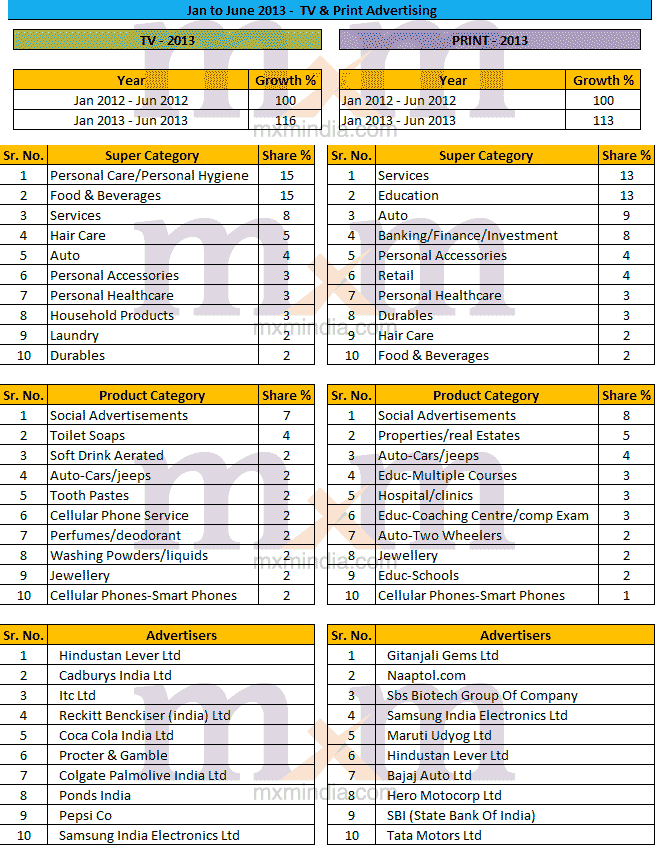
    The skies may be overcast for the Indian media, but here’s room for some cheer on this last Friday of August 2013. Television spends grew 16 percent and Print spends grew 13 percent – from January to June 2013, over the half-year of 2012.


    The numbers are from TAM Media Research whose AdEx India division painstakingly computes data for ad volumes for the television and print sectors, amongst others.


    Note: the analysis is based on ad duration in seconds for television and CCMs for print.


    The tables are fairly explanatory, so we’ll restrict the prose.


  • Shailesh Kapoor: The Big GEC Quarter: What’s In Store?

    By Shailesh Kapoor


    Going by the first eight months, 2013 has not been the most exciting year for Hindi GEC content. An overview of the year so far will look like this:


    Most launches have been fairly ‘routine’ in nature, and no new show except Comedy Nights With Kapil has really stood out. At a genre level, the consolidation of ‘period dramas’, led by Jodhaa-Akbar and Maharana Pratap, has been an interesting development. The most hyped fiction launch of the year, Saraswatichandra, has not made a lasting impact on the GEC category.


    Those are the only worth-mentioning parts on the content side. All the action has happened on the non-content front, with digitization and TRAI orders keeping all broadcasters, including GECs, busy.


    But this festive season, September to November, this shall change. And how! Here’s what each Hindi GEC is set for:


    Star Plus

    Mahabharat, the ambitious Star Plus project, launches on September 16 in the weekdays 8.30pm slot. No fiction show opens higher than 2.5 TVR these days, so Mahabharat will have to build inch-by-inch over the first few weeks, if it has to emerge successful. Its fate would entirely hinge on how consumers take to Star Plus’ tone and treatment of the epic. An acceptance can widen the gap between Star Plus and competition, while a rejection can potentially allow Colors to overtake Star Plus.


    Colors

    Between Bigg Boss and 24, Colors will have its hands full this season. Bigg Boss will give the channel a boost, as it will replace two under-performing dailies. With the mood of the nation increasingly moving towards male-inclusive programming, a well-executed season holds potential to become an unqualified success.


    All eyes will be on 24 this October. There are no meaningful benchmarks on how well a show of nature can do among the mainstream audience. But we can be rest assured that Colors will leave no marketing stone unturned to give 24 a fair chance with the viewers. The promos look slick and truly International. Even if it is a moderate success in the first season, 24 can open doors to GECs pushing the envelope by breaking away from homogenous, housewife-targeted content.


    Zee TV

    ZEEL’s focus seems more on launching new channels, and there isn’t much striking content lined up on Zee TV, beyond the routine fiction and seasonal non-fiction launches. Sunday morning show Buddha is unlikely to create any ripples, given the weak slot. Currently, Zee TV occupies a No. 3 spot with a sizeable gap on either side, but Sony may be eyeing that spot with the new KBC season.


    Sony

    KBC 7 launches tonight, with a new set and a 7cr grand prize. KBC has proven that it has long legs, and those who said Sony is flogging a dead horse by investing in the format have already eaten and digested their humble pie about three years ago. The new look and format should create some freshness that the previous season lacked. And with a host who gets younger with each season, KBC 7 should be on a solid wicket.


    Sony’s other fiction launch Desh Ki Beti Nandini seems to explore the political drama space, with a female leader as its protagonist. It’s a genre waiting to be tapped, but a lot will depend on the casting and the narrative style. If the show manages to strike a fine balance between the conventional and the innovative, it should do well.


    SAB & Life OK

    Even as the other four channels lock horns with big-budget shows, SAB and Life OK will be consolidating their fiction line-ups to build on the recent momentum both have seen. At much lower content budgets, touching 140-150 GRPs is more than admirable. Life OK will experiment with high-end non-fiction, with Bachelorette India with Mallika Sherawat. Will she get married on TV? Your guess is as good as mine.


    PS: This column will be on a two-week break. When I write again on Sep 27, a lot of this action would have unfolded already, and it would be fun to take stock of the proceedings!


    Shailesh Kapoor is founder and CEO of media insights firm Ormax Media. He spent nine years in the television industry before turning entrepreneur. The views expressed here are his own. He can be reached at his Twitter handle @shaileshkapoor


  • TV viewership maximization tool Ormax Brand Matrix launched

    By A Correspondent


    Media insights firm Ormax Media announced the launch of Ormax Brand Matrix (OBM), a viewership maximization tool. Broadcasters across categories can use OBM to identify a focused plan to increase viewership by upto 20% within six months, notes a communique, adding: The tool has been created using Ormax Media’s expertise in the area of television insights, built over more than five years, with an experience of working across 55 television channels in India.


    Said Shailesh Kapoor, CEO, Ormax Media: “Channels make huge investments, both in terms of time and money, to increase their viewership. But it is well-known how difficult getting new viewers, or more time-spent from existing viewers, can be. Traditionally, viewers have been segmented by age, gender, markets, SEC and intensity of viewing, such as heavy and light viewers. In Ormax Brand Matrix, we have turned the idea of viewer segmentation on its head, and used a radically different approach – one that’s simple, intuitive and effective in equal measure.”


    Mr Kapoor believes the real power of OBM lies in its construct. He added: “Brand research can be very high on good-to-know value but poor on actionability. While developing OBM, we were very conscious that the tool had to be completely action-oriented, with only one goal – viewership maximization. If an information need or data point is not going to help a channel increase their viewership, it’s not a part of OBM.”


  • TRAI recommendations on guidelines for TV rating agencies

    The Telecom Regulatory Authority of India (TRAI) has released its guidelines for television rating agencies.


    The Ministry of Information and Broadcasting (MIB) had asked requested TRAI to provide its recommendations on issues related to guidelines/ accreditation mechanism for accreditation of television rating agencies in the country.


    Accordingly, TRAI issued a Consultation Paper on “Guidelines/Accreditation Mechanism for Television Rating Agencies in India” on April 17, 2013, seeking comments/views of the stakeholders. Open House discussions were also held on July 1, 2013. Based on comments received in the consultation process and its own analysis, the Authority has finalised its recommendations. The salient features of the recommendations are:


    i. The Authority supports self-regulation of television ratings through an industry-led body like Broadcast Audience Research Council (BARC).

    ii. To ensure that the shortcomings of the present system are addressed guidelines have been recommended.

    iii. Any agency meeting the eligibility conditions can apply and get registered with MIB for doing the rating work.

    iv. MIB to notify the guidelines for regulating the television rating agencies based on TRAI’s recommendations, within two months.

    v. All rating agencies are required to comply with the guidelines.

    vi. Guidelines to cover registration, eligibility norms, cross-holding, methodology, complaint redressal, sale & use of ratings, audit, disclosure, reporting requirements and penal provisions.

    vii. The number of panel homes for collecting television viewership data will be a minimum of 20,000; to be set up within 6 months of the guidelines coming into force. Thereafter, the number of panel homes shall be increased by 10,000 every year until panel size reaches 50,000.

    viii. The panel homes to be selected from a pool of households, selected through an establishment survey which shall be at least 10 times the number of panel homes for audience measurement.

    ix. Voluntary code of conduct by the industry for maintaining secrecy and privacy of the panel homes.

    x. Restrictions on ‘substantial equity holding of 10% or more’ between rating agencies and broadcasters/advertisers/ advertising agencies.

    xi. The rating agency to set up an effective complaint redressal system.

    xii. Data/reports generated by the rating agency to be made available, on paid basis, to all interested stakeholders in a transparent and equitable manner.

    xiii. The rating agency to get its entire methodology/processes audited internally on quarterly basis and through an independent auditor annually. All audit reports to be put on the website of the rating agency.

    xiv. Penal provisions for non-compliance of guidelines including financial penalty from Rs 10 lakh to Rs1 crore and cancellation of registration.

    xv. Six months time given to the existing rating agency to comply with the guidelines.


    Notes a communiqué: “Since 2008, the authority has been giving its recommendations/ clarifications on implementing a reliable and transparent television rating system. For over four years little to no progress has been made by the industry and MIB, in implementing the Authority’s recommendations aimed at institutionalizing a credible and transparent rating system. Since policy intent has not been translated into action for too long, the timeframe for implementation has now become a critical factor. Guidelines are designed to correct the aberrations in the existing system and prevent it from deteriorating further. Early implementation of guidelines, therefore, has become a necessity. As sector regulator responsible for overall development of the sector, the Authority cannot be a mute spectator to continued inaction and may suo motu intervene in larger public interest.”


    The full text of the recommendations is available on TRAI’s website at: http://www.trai.gov.in/WriteReadData/Recommendation/ Documents/FINALReco%2011Sept2013.pdf
     

  • Fox Traveller goes interactive with Brandscope

    Brandscope India, the outdoor arm of Aegis Media’s Posterscope, has undertaken an interactive digitally-led campaign to promote a new music-based travel show ‘SoundTrek’ on Fox Traveller.  The campaign happened in Mumbai and Delhi malls and was supported a flash mob, where a group of youngsters composed fun loving music by dancing over the virtual keys of piano in the mall.


    Debarpita Banerjee

    Said Debarpita Banerjee, Vice President – Marketing, Fox International Channels “With the increasing clutter in media and communication, there is also a rise in innovative ways of reaching out to one’s desired TG.  Our show promises to be a visual and melodious treat for music and travel buffs alike. It is this value proposition that we thought of bringing alive through the activation and flash mob. Instead of a simple information dissemination, such initiatives compel involvement from the TG, and make for a more memorable message.”


    Haresh Nayak

    On the innovation, Haresh Nayak, Managing Director, Posterscope Group commented,”The changing out of home landscape calls for innovative ways of connecting with the consumer, as an agency that is at the forefront of innovation and technology we are glad to be associated with clients like Fox Traveler who understand and are willing to use technology in the OOH space to connect with consumers digitally & interestingly.”