Category: TV

  • Amit Chopra new sales head at STAR, Kevin Vaz is now GM Eng and Bangla channels

    Kevin Vaz

    By Meghna Sharma


    Kevin Vaz, responsible for revenue generation for the entire bouquet of Hindi, English and niche genres under the STAR umbrella will now be incharge of Star Jalsha, Jalsha Movies and the English cluster of the network. He is the new GM of the channels.


    Meanwhile, Amit Chopra who joined Star from Hindustan Media Ventures Limited (HMVL) to handle sports telecast business will be heading the to revenue function.


    Mr Chopra began his career in 1993 with Hindustan Unilever.


    While MxMIndia has confirmed the news, the official Star spokesperson was tightlipped on the development.


    With close to 20 years of experience, Kevin Vaz has spent almost 16 years with Star India. He started his career at the Times of India as assistant manager, where he handled advertising and marketing functions. He joined Star in 1996.


  • Digitization Phase II: Deadline round the corner

    L to R: Christopher Slaughter, Supriya Sahu, Sameer Manchanda, Man Jit Singh, Chad Dunavant, Ravi Mansukhani, Anuj Gandhi


    By Ananya Saha


    With the deadline for Phase II of digitization approaching on March 31, the stakeholders are implementing the learning of Phase I for smoother and seamless adoption of technology. Supriya Sahu, Secretary, MIB announced at the CASBAA forum recently that the government would soon bring change in the digitization policy that would make it mandatory to switch off the channels in phased manner. “We did not make it mandatory in Phase I but it will be regulated in Phase II so the consumer understands that they need to switch to digital platform,” she elaborated.


    Ms Sahu seemed positive about the progress of Phase II. She said, “According to the data we have, which has been collated from industry feedback. We were not as comfortable so close to deadline in Phase I, as we are in Phase II now. There was a huge uptake of set-top-boxes (STBs), close to 2-3 lakhs, in 10 days before deadline and 15 days post deadline. We expect the same situation this time as well. We collect data every week and the taskforce meets every 15 days, and according to the data we are confident of meeting the deadline.” She also said that all stakeholders need to sit and sign an agreement so that it does not derail the deadline, as it happened in Phase I. “Our biggest challenge is how to convince different stakeholders to understand that their profit margins will decrease but only for a short while. It was difficult to get the different aggregators to sign the agreement last time, and it is happening this time as well. This was one of the reasons that deadline was extended.” She also pointed out that availability of STBs and the price points of STBs is also posing a challenge in the 38 cities where Phase II of digitization is nearing deadline.


    Ms Sahu also asserted that customer acquisition form has been made mandatory, and notices are being issued to operators who yet to comply with this policy.


    Man Jit Singh, President of the Indian Broadcasting Federation (IBF) and CEO, Multi Screen Media, echoed Ms Sahu’s views and said, “As broadcasters, we are aware that there will be a short-term reduction in our profitability. But there will be two streams of revenue going forward, and hopefully digitization will enable us to get 50:50 revenues from advertising and subscription.” Anuj Gandhi, Group CEO, IndiaCast pointed out the challenge of reaching the last-mile consumer. “Of course, each phase will be a bigger challenge because geographies differ,” he said.


    Ravi Mansukhani, MD, IMCL talked about the challenges that the recent budget has brought. “We do not understand why the cost of STBs had to be hiked. If you want to promote the local manufacturing, which is definitely a good move, the government should have given incentives to the local manufacturers. This has acted a dampener. We might have wanted to enter new geographies, but since we have to spend much more on existing geographies for STBs, we are not looking at new markets,” he said.


    Mr Mansukhani also emphasized that going forward, prepaid would gain more acceptance in Phase II. He also said that as digitization becomes a habit, ARPUs would go up drastically.


    Ms Sahu insisted that government is pushing digitization for the consumer, and not to get taxes. “It is not the entertainment revenue or central tax that we are pushing for digitization, which is not huge any way. The entertainment tax that Delhi govt gets is only Rs 78 lakh per month. With digitization, it will go up to Rs 5 crore. But even that is not a very huge amount. The profit margin of govt is very low,” she elaborated and asked the industry to keep the focus on consumer.


    Talking to MxM India about digitization in India, John Medeiros, CASBAA’s Chief Policy Officer said, “The stakeholders seem quite eager to implement digitization. There is of course a competitive dynamic between DTH and cable operators but given the stance of stakeholders now, and what it was three years ago, we see a more positive dynamic at work.”


    Easing India’s Capacity Crunch

    CASBAA’s report on assessment of demand and supply for television satellite transponders, developed with knowledge support from PwC India was released at the CASBAA India Forum 2013. Excerpts:


    TV channels need to be transmitted over satellites to distribution intermediaries (e.g. Multi-System Operators, DTH operator head-ends) and end-consumers (through the DTH platform). This needs adequate satellite capacities (in terms of spectrum / transponders).


    However, there has been a perception of shortages in satellite spectrum/transponders made available to Indian TV industry players. This is attributable to an overall shortage of spectrum that is available to India/ISRO. Although ISRO has been working hard to get additional spectrum, the process is long-drawn and the needs of TV industry players have grown manifold, raising the possibility of even the additional spectrum not meeting the needs.


    India had 821 licensed TV channels in 2012, double the number in 2008. By 2017, India is expected to have about 1,600 licensed channels of which ~1,300 channels are expected to be operational. Furthermore, the number of high-definition (HD) channels is also expected to increase in line with international trends and is expected to increase to ~130 by 2017. The high growth in the number of HD channels is expected to be fuelled by growth in digital platforms such as direct-to-home (DTH) and digital cable. The rising sales of high-end TV sets that support HD viewing experiences are also likely to contribute to the growth. A key indicator of the latent demand is the large number of pending requests for new TV channel licenses which stood at 348 in January 2012 as per the Ministry of Information & Broadcasting. In the C-band, only ~160 channels out of the estimated 660 operational channels were carried by transponders on Indian satellites8. This represents only ~25% of total operational channels. The rest of the channels (~500) are being transmitted through foreign satellites.


    In the Ku-band, out of the total ~73 transponders used by Indian DTH operators, only 18 transponders (~25% of total) belong to Indian satellites. The remaining ~55 transponders (~75% of total) are on foreign satellites.


    Future increased demand for satellite transponder capacities is unlikely to be met by Indian satellites (supplied by ISRO). For DTH operators, it is critical to have adequate backup or redundant satellite capacity such that in case of a failure in their primary satellite(s), transmission can be switched to another satellite to avoid black-out.


    In India, since there is already a shortage of Kuband transponders for regular transmission of TV channels on DTH, currently none of the DTH operators are able to make provision for such redundancy needs.


    Supply of satellite services is also threatened by proposals to utilize frequencies currently devoted to satellite services for terrestrial wireless systems. There are also challenges that place practical restrictions on leasing transponder capacities from foreign satellite operators by Indian players.


    Short contract durations between Antrix and foreign satellite operators bring in uncertainty for Indian players and raise the possibility of increased prices.


    Need of DTH operators to procure incremental capacity at specific orbital slots further emphasizes the need for long-term contracts with satellite operators.


    Shortage of satellite capacity can hamper growth of the Indian television ecosystem


    Shortage of satellite capacity can lead to many adverse effects such as the curtailment of consumer choice, slowdown in industry revenues, losses to the government exchequer and under-achievement on India’s stated aim to be a teleport hub. It is also likely to lead to a distortion of the competitive balance for DTH operators and broadcasters. These effects can be detrimental to the development of India as a knowledge society.


    Satellite capacity constraints can impede not just the growth momentum of the Indian TV sector but also have wider impact on the ecosystem of the industry.


    Shortage of transponder capacity in Ku-band can also lead to distortion of competitive balances:


    :: DTH players would be unable to match the channel counts of digital cable operators.

    :: Delays in satellite launches favour a few DTH operators who benefit from allocation of transponders while disadvantaging others that are behind in the capacity request queue.

    :: With DTH capacity constrained, many channels would not be carried by DTH operators, weakening their business cases.

    :: The demand-supply gap also acts against new broadcasters as existing large broadcasters may have greater bargaining power to push their channels on various bouquets.


    Suggestions for improvement

    To overcome the challenges stated above, the following suggestions are being made for improving the current demand-supply gap:


    :: Long-term contracts spanning 10-15 years should be encouraged instead of 3-year short-term contracts. This will provide price protection over longer terms for Indian DTH operators as well as broadcasters and eliminate uncertainty on price escalations at the time of contract expiry or renewal. In the case of DTH services, this will also help avoid disruptions of television services for Indian consumers and their associated costs since there will be no need to re-point satellite receiver dishes periodically, due to the longer term contracts.

    :: The process to allow DTH operators to enter into contracts with international satellite operators should be simplified.

    :: Industry players, including DTH operators, should be allowed to procure capacity on international satellites already coordinated and approved with the INSAT system without any additional approval from ISRO.

    :: Similarly, DTH operators should be allowed to add transponders on satellites where they are already present (and hence approved by ISRO) without seeking additional approvals.

    :: ISRO should be encouraged to share its plans for launching transponders meant for private broadcasters and DTH operators over the medium-to-longer term so that the industry players can make necessary business decisions.

    :: The Indian government should formulate and drive policies as well as processes to spur growth in satellite services which will thereby help in the growth of the Indian television sector. For instance, specific three-to-five year targets for launching satellites designed for use by private broadcasters and DTH operators can be set, with allocation of the necessary funding, apart from facilitating private satellite operators to provide necessary transponders to Indian broadcasters and DTH operators. Future decisions on spectrum allocation should take into full account the importance of satellite communications – especially in the C- and Ku-Bands – to a country as large as India. Spectrum currently available for satellite services should not be reduced or deteriorated by allowing interference from terrestrial wireless systems of any kind.

    :: Access to additional Ku-band frequencies currently allocated to satellite services should be allowed, such as the Fixed Satellite Service (FSS) and Broadcasting Satellite Service (BSS) Planned Band frequencies. Given the congestion in the conventional “unplanned” Ku-band, opening up access to the mostly unutilised Planned Band spectrum would further address the shortage of capacity, leveraging on existing in-orbit and planned future satellites carrying such spectrum.


    These initiatives will help the Indian TV sector to continue its forward momentum and achieve the scale for which it has the potential. This will also help take India to the next level in its drive towards becoming an information-based economy.


     

  • Star launches sixth sports channel – Star Sports 2

    By A Correspondent


    ESPN Star Sports has expanded the sports bouquet with the addition of a new channel – Star Sports 2. The new channel is being launched especially for the Indian sub-continent today (March 11). Star Sports 2 will be the sixth channel to be launched by ESPN Star Sports in India after Star Sports, Star Cricket, Star Cricket HD, ESPN & ESPN HD. Meanwhile, the fate of the new identity for ESPN and ESPN HD is not known after NewsCorp’s acquisition of ESPN in the region. An MxMIndia report that the channel may be rechristened Fox Sports and Fox Plus was denied by the ESPN spokesperson. However, the PR team at ESPN was in denial mode on Star Sports 2 too, so the rechristening to Fox Sports cannot be ruled out.


    Star Sports 2 will showcase live and non-live events across sporting categories like Cricket, Soccer, Tennis, Motor Racing and golf. The new channel promises to offer more sports, more action, more excitement, more passion, more emotions, more exhilaration and more heroes to follow for sports fans across the country.


    Sanjay Gupta

    Speaking on Star India’s strategy for sports business, Sanjay Gupta, Chief Operating Officer, STAR India, said in a communique, “Our vision is to expand the sports viewership in the country. Star network has acquired some of the best sporting properties in every genre and is committed to taking sports broadcasting to a new level. These include broadcast rights to the BCCI national and domestic Cricket for 6 years; broadcast rights of Spanish La Liga, Italian Serie A and English FA Cup and England international matches.”


    Apart from exciting live content, we are also innovating in the way we present sports, Mr Gupta added. “Our brand new Hindi presentation on the live cricket broadcast allows audiences to enjoy the game in their preferred language, which was very well received by viewers. Similarly our recent launch- www.starsports.com- enables us to engage with passionate cricket fans like never before, and we are delighted with the site’s ramp up in the last 2 months. The launch of our new channel – Star Sports 2- is an extension of the same strategy. It allows us to broadcast a wide array of sports content across channels, and cater to multiple live events simultaneously. Star Sports 2 will further our commitment towards continued, effective and unprecedented coverage of all major events which are of interest to a diverse set of audience across the country.”


    The sports broadcaster has launched a high decibel on-air campaign to promote Star Sports 2. This campaign is running across the Star India network. In the first month of its launch, Star Sports 2 will cover tournaments like Serie A and La Liga soccer, BPL action, Nascar racing and prime tennis from the Men’s ATP Tour amongst others. It may be recalled that many tennis fans were upset with the coverage of the Australian Open (see link: http://www.mxmindia.com/2013/01/ranjona-banerji-an-open-letter-to-espn-star-sports/). One hopes that with the entry of the sixth channel of the bouquet, sports lovers will not feel slighted.


  • MxM Mondays: Stakeholders’ view on Phase II


    By Ananya Saha


    The data from DTH operators and MSOs indicates that more than 87.7 lakh Set Top Boxes (STBs) have been installed in Phase II cities against the target of 1.60 crore, registering an achievement of over 55 percent digitization. Out of 87.7 lakh, DTH connections accounted for 40.7 lakh, whereas cable STBs accounted for 47.0 lakh. A release from the Ministry of Information and Broadcasting said that it has been constantly monitoring preparedness for the implementation of digital addressable cable TV system in the 38 cities of Phase II. We speak to a cross-section of stakeholders for their views (in alphabetical order of their last names):


    Phase II: 38 Cities that need to be digitized by March 31, 2013
     

    1. Bangalore

    2. Hyderabad

    3. Ahmedabad

    4. Pune

    5. Surat

    6. Kanpur

    7. Jaipur

    8. Lucknow

    9. Nagpur

    10. Patna

    11. Indore

    12. Bhopal

    13. Thane

    14. Ludhiana

    15. Agra

    16. Pimpri Chinchwad

    17. Nashik

    18. Vadodara

    19. Faridabad

    20. Ghaziabad

    21. Rajkot

    22. Meerut

    23. Kalyan-Dombivli

    24. Varanasi

    25. Amritsar

    26. Navi Mumbai

    27. Aurangabad

    28. Solapur

    29. Allahabad

    30. Jabalpur

    31. Srinagar

    32. Vizag

    33. Ranchi

    34. Howrah

    35. Chandigarh

    36. Coimbatore

    37. Mysore

    38. Jodhpur


    Anuj Gandhi, CEO, IndiaCast

    All stakeholders are playing their role efficiently. We are playing our role and getting the deals done. We are using the learnings of Phase I when it comes to the issue of carriage fees. None of the MSOs are complaining this time. In Phase I, we did not have a refence point and now we have the signed deals of Phase I. This time it is a lot easier.


    Joydip Kapadia, Executive Vice President, What’s On India Media
    It will happen but in a phased manner. My logic is based on the fact that MSOs who are present in the metros are also present in these 38 towns. MIB has an upper hand now, and industry is prepared that Phase II has to happen unlike the Phase I where in the Delhi and Mumbai people thought that deadline would be extended. The towns like Ludhiana, Chandigarh, Pune etc are almost on track to become digitized while towns like Nagpur might take more time.


    Ashok Mansukhani, President, MSO Alliance

    Digitization has become a habit, and that is definitely good news. The consumers want the STB, doesn’t matter if it belongs to MSO or DTH operator. Of course, the markets in Phase II cities are more price sensitive than the Phase I cities. One also needs to understand that in the 42 cities that will be digitized by the end of Phase I and Phase II, a lot of people live in the slum areas. Hence, new packages will have to be announced on three price points: 100-150 Rs, 200-250 Rs and 300-350 Rs. The packages need to be tolerable to broadcaster, consumer and MSOs.


    My only request would be let us not bother too much about the date; we have achieved a big task. I am sure that out of 38 cities, 25 cities will meet the deadline but switch off pay channels in the cities that do not meet the deadline if you want faster progress. MIB has taken stricter stock of progress this time around.


    We MSOs have taken loan of about Rs 500 crore; no matter what we cannot afford to let digitization fail. I foresee that in the coming months, prepaid will gain more prominence as mode of payment.


    P Mohan, President, Karnataka Cable TV Chamber of Commerce

    I do not agree with the figures. The digitized homes are close to 35-40 percent in Bangalore. The national MSOs are focusing on meeting the supply for Phase I, only then would they concentrate on Phase II. We have been asking for boxes for more than four months, and even if they offer us STBs now, installation takes time. How are we supposed to install, offer packages, explain the packages to each customer is so less time when the deadline is approaching fast?


    We are not against digitization. It was in 2002 that we had proposed DAS. Today, MSOs, broadcasters and DTH operators have formed one group. And LCOs are not even asked or consulted.


    Bangalore has many additional TV homes. And the homes which installed digital boxes 4-5 years ago are today asking for replacements. The quality of STBs and the technology they support is also a concern.


    Mukund Babaji Pednekar, Distributor, Hathway cable at Thakurli, Dombivli & Kopar
    Digitization is happening at a smooth pace in our area, and we are positive of meeting the deadline. We have no problems or concerns regarding digitization. The consumer is aware and knows how they will benefit with digitization. Yes, the prices of STBs was Rs 600 when we ordered it two months ago and now it has increased to Rs 999. But thankfully, we do not need boxes as of now.


    Man Jit Singh, President, IBF

    The consumers are aware, the communication is reaching them. As broadcaster, we are aware that there will be a short-term reduction in profitability but we are positive that going forward, thanks to digitization, the ratio of our revenues from advertisements and subscription will be 50:50. The stakeholders have worked together, and are facilitating dialogue all across. With transparent systems in place, the industry will only progress. The numbers are impressive, and hopefully we will meet the deadline.


    Uday Kumar Varma, Secretary, Ministry of Information and Broadcasting
    We stand by our figures. The figures have been collated with industry feedback. We have not come across any negatives regarding meeting the deadline. Yes, some issues will obviously crop up but are sure to get resolved as well. Of course one issue leads to another: complete opaqueness, incomplete subscriber data etc will a little time to solve.


    My own understanding is that digital cable is a better platform than DTH as it can provide other services as well. In the long run, common sense suggests that digital cable will see a bigger comeback.


    Regarding the carrying capacity of STB, I am sure that domestic industry associations will step up to meet demands.


  • KBC is ‘Kon Hoeel Marathi Crorepati’ on ETV Marathi

    By A Correspondent


    ETV Marathi has announced the launch of ‘Kon Hoeel Marathi Crorepati’ – a regional version of Who Wants to be a Millionaire, best known in India as Kaun Banega Crorepati. The channel has secured the production and broadcast rights from format owner Sony Pictures Television and has partnered with Big Synergy to produce it for Marathi viewers.
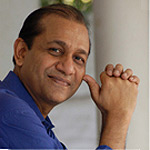
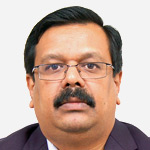
     

    Kon Hoeel Marathi Crorepati, set to go on air in summer 2013, is dedicated to the Marathi Manoos who are educated and up-to-date on the latest happenings in India and the world. The show draws inspiration from Kaun Banega Crorepati and stands for power of knowledge and education. It will offer the opportunity for every Marathi-speaking person to exercise their vast knowledge and possibly change their destiny through their participation in what has been called the most successful game show ever.


    Speaking on the show, Amit Phalke – Non Fiction Head, ETV Marathi said, “I am delighted to announce Kon Hoeel Marathi Crorepati, the world’s most popular format show, especially for Marathi Manoos. The show is a game changer, as it goes beyond the realm of entertainment and enters into a space that changes people’s destiny. We invite all Marathi viewers to the biggest and the most powerful game show so that they can put their knowledge to the test and have a fair chance to win the grand prize of rupees one crore.”


    Siddhartha Basu

    Siddhartha Basu from Big Synergy further added, saying, “We are very optimistic and excited about our foray into Maharashtra with Kon Hoeel Marathi Crorepati. This is a culturally rich region, with its own history and highly developed literature, and people thirsting to prove themselves – which makes it a fertile ground for this life-changing knowledge game. Having broken ground in the southern and eastern regional markets of India with multilingual productions of ‘Kaun Banega Crorepati’, we are now looking forward to creating the same magic on ETV Marathi.”


  • Hathway’s Jayaraman joins Zee

    By A Correspondent


    K Jayaraman

    K Jayaraman, erstwhile CEO and MD of Hathway Cable and Datacom and a veteran of the broadcast business, has joined the Zee group to head distribution and placement business. He will report to Punit Goenka, MD and CEO, ZEEL.


    Mr Jayaraman had spent close to 15 years at Hathway group of companies. At Hathway Cable and Datacom, he was instrumental in the company foraying into the broadband, digital cable and HD service segments. In December 2012, he was appointed as Vice-Chairman of the company. However, in January this year, Mr Jayaraman quit the organisation.


    With digitization phase II reaching the deadline, this move may also help MediaPro – a joint venture between Star Den and Zee Turner.


    Despite repeated attempts, Mr Jayaraman was not reachable.


  • MTV’s new reality shows takes a dig at reality shows

    By A Correspondent


    With reality shows becoming norm on every channel, MTV has launched a brand new TV series, MTV Reality Stars. The theme is that everyone knows and sees reality shows but no one knows the comedy and chaos of what goes on behind the scenes.
     

    So from the makers of reality shows like Roadies and Splitvilla, comes a series which apart from other things takes a healthy dig at MTV and the madness that goes into creating these block buster reality shows. MTV Reality Stars will premiere on March 16, 2013.


    Aditya Swamy, EVP and Business Head, MTV India, says, “MTV brought reality to India and today it’s everywhere. You can love it or hate it, but you can’t run away from it. In this show, we take healthy digs at our biggest shows and the ability to laugh at ourselves has always made us more endearing to our audience. Unlike daily soaps, this is a finite series that is built around a tight script, a truly delightful cast and film level production standards. This is the future of Indian television and this is a genre we are committed to building.”


    Reality Stars is a 12 episode, 22-minute comedy TV series based on the lives of four crazy friends – Krish, Kuldeep, Zameer and Tania, who get caught in the world of reality television.


    The campaign for the show will see 360 degree marketing promotion through various media verticals, including on-air promotions, digital activations, and on ground activities. The campaign will also see a contest run across 200 plus colleges in the country where selected students will get a chance to be a part of the new show.


  • It’s the time to Cisco

    By A Correspondent


    Cisco recently participated at the Cable TV Show 2013 and showcased its digital pay TV solutions. The solutions are designed keeping in mind operator’s fundamental need for rapid and cost-effective digitalization; and demonstrated market-leading, easy-to-deploy solutions that will enable both small and medium-sized pay TV operators to provide an improved user experience and generate additional revenues.


    More than 20 million homes and 100 million viewers in India are currently enjoying an enhanced TV-viewing experience through Cisco’s customers’ platforms including Tata Sky, Airtel, Hathway and Den. Smaller cable operators are also now selecting Cisco as a cost-effective digital TV solution.


    At the show, Cisco demonstrated how it is optimizing its technologies to provide a hosted, managed service for small and medium sized cable TV operators looking to migrate from analogue to digital with limited CAPEX budget. The solution is scalable, with a fully managed, end-to-end cable system which significantly reduces upfront software, hardware and integration costs.


    Cisco has designed a new Electronic Program Guide (EPG) solution for smaller operators that will enable them to customize their look and feel. This unique solution is designed for Indian cable operators who not only want a cost-effective technology to quickly digitalize their network but also brand identity with a customized EPG design. The Cisco designed EPG is intuitive and easy-to-use. It will enable subscribers to easily navigate TV content and services such as catch-up TV, Video-on-Demand (VOD), DVR programming and interactive applications including games and informational services. 


  • ‘Live the Story’ with BBC’s new brand campaign

    By A Correspondent
    The BBC has announced that BBC World News and BBC.com will launch ‘Live the Story,’ a new brand positioning and major global marketing campaign. The activity will include television, press, online, radio, Out of Home and experiential media. The campaign will span consumer and trade media with particular focus on Germany, Singapore, Hong Kong and additional activity across other European markets and the US.


    Chris Davies, Sales and Marketing Director, BBC Global News Ltd said: “Our correspondents and presenters live through the most amazing, terrifying, and sometimes life-changing moments so that they can bring these experiences directly to our audiences. Who better then to be the focus of both our brand campaign and of our marketing efforts. Our journalists often put themselves in danger to tell us the real story and as they live the story, so do we”.


    The campaign creative includes television ads featuring BBC correspondents narrating a news story, telling the audience what it feels like to experience a particular news story, giving insight that only a BBC journalist can share. Focus on Africa presenter Komla Dumor tells of the pride surrounding African football and chief international correspondent Lyse Doucet talks about the immediate aftermath of a car bomb. US correspondent Laura Trevelyan describes nature’s force during hurricanes and science editor David Shukman speaks of the majesty of a shuttle launch after experiencing it up close. There is also a substantial digital element to the campaign that follows the lead of the television creative and offers users an added layer of interactivity. In addition there will also be interactive press ads, digital out of home ads and experiential activity.


    In January, BBC World News had re-launched from Broadcasting House in central London, with new studios, new programmes and a refreshed line-up of presenters including Jon Sopel and Yalda Hakim alongside BBC World News on air personalities such as Komla Dumor, Mishal Husain, Lyse Doucet and Stephen Sackur.


  • Digitization to facilitate transparency: Manish Tewari

    Manish Tewari

    By A Correspondent


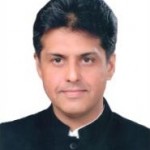
    Minister for Information & Broadcasting Manish Tewari has said that the ongoing digitization process would help in building transparency in the system. As a mechanism it would also enable the growth of revenue models in the Broadcasting industry leading to the overall growth of the media and entertainment industry in the country. The process would also help broadcasters in identifying a balanced growth model through the increased share from the subscription revenues. 


    The minister stated this while delivering the keynote address at the Seema Nazareth Award function for excellence in print media.


    Elaborating further, the minister said that there was an urgent need for key stakeholders within the media to introspect in view of the trends that had emerged as a result of corrosive discourse on one side and responsible discourse on the other. Referring to the challenges that have emerged due to the social media, the minister said these tools had created an unprecedented potential to connect with target audience for the dissemination of news and information. The impact of this medium was so profound that it had also integrated with the print media in the dissemination mechanism. The changing paradigm in the media landscape had resulted in creating opportunities for the journalistic fraternity.


    Referring to the Seema Nazareth Award, Mr Tewari said that the institution of the award had provided an ideal platform to encourage and inspire young journalists in the print media. The minister conferred the award on Sushmi Dey and also gave two awards as a special mention to Shelly Walia and Debolina Sengupta. The Seema Nazareth Award has been instituted by Business Standard.


  • Bolt Media’s ‘boni’ with ad films for food brand

    By A Correspondent


    Bolt Media Limited, a wholly owned subsidiary of Balaji Telefilms Limited (BTL) has completed the production of eight brand customization ad films for a leading food brand. The films have begun telecast at various prime times on Zee TV, one of India’s leading General Entertainment channels. This is Bolt’s first project since its incorporation in November 2012.


    Bolt has been incorporated to independently create and produce cutting-edge TV concepts across mainstream and regional television. The firm proposes to cover genres like youth, humour, neo-mythology, reality, scripted reality and factual entertainment, besides exploring branded content like digital brand solutions and short form programming. It will also look at creating IP in the space of formats, events and digital content. In addition, it will offer creative or line production expertise to other production houses including regional content. Additionally, it proposes to explore partnerships with international format owners.


    Vaibhav Modi, CEO, Bolt Media Ltd. said, “Bolt is a young production house with a highly experienced and capable team. Our focus is on identifying and executing new concepts and formats across the television media spectrum. In just a short time since our incorporation, we have already completed work with a leading food brand. With some more programmes being planned and a few more under negotiations we are confident of soon having a diverse content pipeline across various shows.”


    Bolt is also working on two fiction shows, one mythological and the other a historical documentary drama.


  • Nimbus Sport seals SFL production deal

    By A Correspondent


    Nimbus Sport has bagged the television production rights for the new season of the Super Fight League (SFL) starting March 29. The deal with India’s only professional Mixed Martial Arts (MMA) property, SFL, is for a period of five years.


    The Fight League has had a successful run across four seasons of stadium events and an MMA reality show with a focus on developing world-class Indian fighters and giving them a platform to showcase their skills.


    The plan is to bring fans closer to the action and to this effect, the league will be produced in high definition with a significant upgrade in the camera setup. Innovations will include a super slow motion HD camera that will vividly capture the fights and bring action replays to life.


    Raj Kundra, Chairman of SFL, said, “We are delighted to partner with Nimbus Sport to produce the live feed of the Super Fight League (SFL). We can’t wait to bring to our fans some of the biggest MMA stars in an innovative, slickly produced new season.”


    Sunil Manocha, COO of Nimbus Sport, said, “Our legacy of producing top-notch live feeds for sports events continues with the signing of this new deal and the SFL is a worthy addition to our bouquet. Through the commitment of its organizers, SFL has quickly established itself as the pre-eminent pro Fight League in India. We are thrilled to have the opportunity to present this action packed property in a manner that befits the best global standards of production for the sport.”


    Nimbus Sport is the full service sports marketing division of Nimbus Communications Ltd, specializing in television rights distribution and management, television production, sponsor services, event management, new media content and on-air advertising sales.