Category: TV

  • Jaldi 5 with Geetha Shiv: Family content can add to Bigg Boss eyeballs

    Over the weeks, media agency MEC has been forecasting how key television properties would fare with ratings. Last weekend, MEC announced that Season 6 of Bigg Boss, the flagship reality show on Colors, would see a growth over last year. We asked Geetha Shiv, National Director, Analytics & Insight why and whether the forecast stays now that we know who is in the house.


    01. MEC has estimated the opening TVR for this season to be at 3.9 among All Adults, 15 years+, SEC ABC, All India which is 30 percent higher compared to the opening TVR of 3 in the last season. What are the main reasons for this? How do you think Bigg Boss’s opening episode will compare with other reality shows this season?

    Bigg Boss has moved into the peak of primetime with a 9-10 pm slot in this season compared to 1030-1130 pm slot last season. Also the fact is that KBC clashing in this timeslot has not had a negative impact on Colors channel share. Viewer sampling for the initial episodes of any new programme and particularly reality shows will be typically high and over period the viewership will stabilize.


    2. Now that the participants have been revealed, do you think the show will be able to grab enough eyeballs?

    While there are some popular celebrities like Navjot Singh Sidhu in this season, Bigg Boss’ participants have never been mainstream celebrities. It all depends on how the plot develops and what happens in the house. Additionally, the fact that the content this year will be more suitable for family viewing can add to eyeballs.


    3. What are your expectations from the Bigg Boss season 6?

    Overall it should deliver better than last season, it is a better time slot.


    4. With numerous reality shows on TV, what is the reason for them working?

    Reality as a format has seen success in India. It is all around talent or bites of reality as in the case of KBC or Bigg Boss. There is always some winning-losing that happens between real people which brings in viewer interest.


    5. How much of the Salman Khan factor will be a pull on television?

    Salman Khan’s popularity has not declined since the last season. We will have to see how much and how he is being used to trigger viewership.


  • Interest in KBC is greater than IPL: MEC

    By A Correspondent


    MEC, leading media and planning agency and a founding partner of Group M, (www.mecglobal.com), has announced the launch of its global research study – Partnership Intelligence. The study is an innovative research and online analysis tool that enables in-depth analysis of consumer interest, media consumption and attitudes towards partnership platforms including Sport, TV programming, Art, Entertainment and other global properties.


    Some of the key findings from the research include:

    * Among cricketing properties, ODI World Cup and T20 World Cup were considered the most preferred with ‘love’ and ‘like’ score of 80-81%. IPL only came third with a 71% ‘love’ and ‘like’ score

    * FIFA World Cup had the highest interest among non-cricket properties with 66% ‘love’ and ‘like’ score whereas Formula1 is far below in the 7th position with a score of only 51%.

    * Loyalty towards teams was translated with the National cricket team scoring the highest at 75% ‘love’ and ‘like’ score, followed by the National Hockey and Olympics teams at 59% and 54% respectively

    * Within the entertainment segment KBC dominated television reality shows cutting across age groups. Other than KBC, Dance India Dance (62%), Indian Idol & Sa Re Ga Ma (59%) and India’s Got Talent (56%) are among the Top 5 properties.


    Despite India being a cricket-crazy nation, the interest in KBC is greater than IPL as per the study. KBC is the only non-cricket property with a ‘love’ and ‘like’ score of 74%, which made it to top five properties in MEC’s Partnership Intelligenceâ„¢ study.


    Geetha Shiv, National Director, Analytics & Insight, MEC says, “Partnership Intelligence provides insights that help in deciding the most effective partnerships for brands based on how engaged their Target Audience is with different properties. It also helps select properties based on image profiles that fit with brand values.”


    The Partnership Intelligence global research has been conducted via an online survey across 17 markets including India, with a sample size of 1500 in each market. Besides delivering an analysis of property attributes the tool also provides comprehensive assessment of the potential fit of a property with a brand’s own values.


    Speaking about the research, T Gangadhar, Managing Director, MEC India says, “This is unique, never-done-before study that helps advertisers make choices between seemingly disparate opportunities. It offers an intelligent view on how one can go about choosing the right partnership or association for a specific brand. The study offers terrific insights based on people’s motivations and choices.”


  • History TV18 @ 1: Factual, eclectic, successful


    By Meghna Sharma


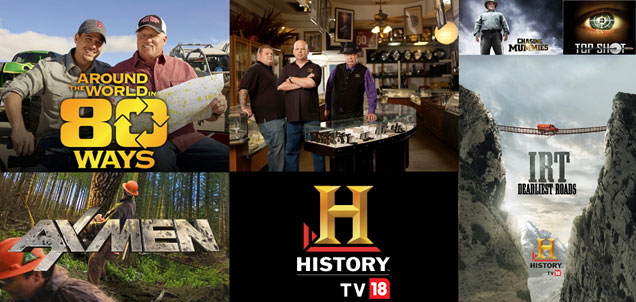
    A year ago, it may have seen like yet another big bang launch of an all-new channel crowding the Indian satellite space. The niche offering, History TV18, a joint venture between TV18 and A+E Networks, aimed to redefine the factual entertainment genre through an eclectic mix of local and international shows.


    Ajay Chacko

    “As we stand at this first anniversary milestone, I believe we have challenged some of the established rules of the game in this genre. Our consistent leadership in time spent per viewer and our phenomenal contribution to the genre growth is a testament of our success,” CEO Ajay Chacko told MxMIndia. “This is just the beginning. Now that we’ve carved a niche for ourselves in the genre, we look forward to replicating our global leadership in the factual entertainment space in India.”


    As the channel broadens its horizons and carves a niche for itself with its edgy and differentiated programming mix featuring shows with greater emphasis on creating fact-based entertainment, thrill and action formats that appeal to a much wider audience, Sangeetha Aiyer, the Channel’s General Manager (Marketing) says, “The journey has been quite interesting so far. When we launched our intent was to make a distinct change in the factual entertainment genre and after one year of completion, we are honoured to have achieved this. Immediately after the launch, History TV18 accelerated growth for the entire genre from 2 percent and 15 percent in ’10 and ’11 to a whopping 29 percent post-launch.”


    Sangeetha Aiyer

    The channel boasts of delivering content which is vividly different. “Our content is contemporary; full of action and adventure. It has lot to do with achievement. It is about people making history every day. Also our objective has been to grow the factual entertainment genre and not just compete within the genre. We also got overwhelming response for our The Greatest Indian initiative. It was History TV18’s first local production in India and successfully garnered amazing response over the three month period with over 2 crore votes coming through missed calls and online. The campaign also sustained a healthy engagement on social media platforms reaching over 20 lakh Facebook users through viral content,” adds Ms Aiyer.


    The channel differentiates itself from the rest in the genre and claims that History TV18 is a factual entertainment channel, emphasizing that its content is based on ‘facts’ and has a heavy dose of ‘entertainment’, whereas other channels in this genre are more of factual knowledge. The USP of the channel lies in its programming mix and the target audience of the channel is CS 15+ AB market. However, another reason what makes it different from the rest is the fact that it is available in six languages (English, Hindi, Tamil, Telugu, Bengali & Marathi) in full HD across all major markets in India. “This has helped us enormously to broad-base and grows the entire genre,” says Ms Aiyer.


    The marketing budgets in the launch year of the channel was in the range of Rs 8-10 crore, but in the subsequent years the channel plans to consolidated and leverage network synergies.


    Dhruv Jha

    In terms of ratings, the channel accelerated growth for the entire genre from 2 percent and 15 percent in ’10 and ’11 to a generous 29 percent post-launch. But how is the genre doing?


    According to Dhruv Jha, business head, Lodestar UM Content and Experiences, there is definitely a market and audience for the genre, but it will always remain a niche. “Viewers of such channels are a sub-set of a larger audience which are very loyal to it and seek more and more of it. And as time progresses, we’ll see an increase in the number of viewers too but it will never to able to attain the appeal/popularity of a mass-consumed channel.”


    Janardhan Pandey

    Agreeing with Mr Jha, Janardhan Pandey, associate VP, DDB Mudra expands, “I see this genre picking up audience consistently with increased mass appeal. The channels have done quite well in attracting audiences. I see a good amount of viewership addition to this segment in coming years and I am sure these players have been doing exactly what the audiences want to experience, ie the right mix of world-class programming aligned locally.”


    The channel promises to continue to push the envelope in terms of a differentiated, clutter-breaking, world-class programming mix; and thus grow the genre. “In the process we plan to consolidate our leadership in 6 metros, 1 mn+ towns and finally all India. One of our great successes this year was the phenomenal success of our first local production ‘The Greatest Indian’. We plan to replicate this through similar innovative, path-breaking concepts,” concludes Ms Aiyer.


  • Cable operators seek protection

    By A Correspondent


    In letters addressed to Ministry of I&B and Home Ministry, the West Delhi Cable Operators Association has put forth its apprehensions regarding switching off the analogue signals in the move towards digitization. The letter says that since consumers are not aware of the process leading up to digitization, including switching off the analogue signals, the last mile operators might have to face the wrath of consumers, who might also damage the offices of the LCOs.


    The letter says:

    a) No a-la-carte rates have been announced.

    b) STBs forced upon the consumers are basic ones of the cheapest variety without any features of video –on-demand, internet, games etc. that you have been promoting.

    c) No testing/ repair/ maintenance facilities exist for STBs.

    d) In spite of the consumer paying Rs 800 for an STB, ownership of it remains with the MSOs. The charges are termed as ‘Activation Charges’.

    e) MSOs are asking to pay more for the STBs now. Some of them are selling the STBs for Rs 2000. For HD STBs, Rs 6000 is being demanded.

    f) These STBs are not subsidised as reported by the media.

    g) Millions of poor consumers do not have good quality TV sets to support digital feed. They cannot use STB unless they spend more on a new TV set which they are resisting.

    h) Many areas of the metros do not have digital feed from any MSO.

    i) Increase in electricity bills of consumers.

    j) Rs 20 or more entertainment tax and 12.5 percent service tax on the cable TV bills for each STB.

    k) Consumer does not have any choice. He is being forced to buy the bouquets that an MSO gives.


    “We all are willing to co-operate with the government for the good of the consumers but we fear that since the consumers don’t know that they would not get all their choice in a single package of MSO and they would have to pay much more for the cable service, they are likely to react and cause damage to the life and property of cable operators,” said the letter.


  • Digitization in Delhi crosses 66%, 99% in Mumbai: MIB

    By A Correspondent


    As per the data made available to the government by the multi system operators (MSO), the level of cable TV digitization in Delhi has increased to 66 percent. It has been reported by the six private DTH operators that 9.45 lakh households have got DTH connections in Delhi as onOctober 9, 2012. This implies that 19.94 lakh households have cable TV connections. Adding a provision of 20 percent to account for multiple TV homes and TV sets in offices etc., it is implied that about 23.93 lakh subscribers require set top boxes (STBs). As per the data made available by the MSOs, 15.88 lakh STBs have already been installed in Delhi.


    Taking into consideration that the fact that figures given by the ministry have been questioned, a press release from the ministry said, “During the initial stage of planning, the data was collated by the Ministry based on the information supplied by the MSOs. On perusal of the data, it was observed that there were grave discrepancies in data, particularly number of cable TV subscribers in four metro cities furnished by the MSOs.” The ministry has thus undertaken the exercise to base the data on Census of India 2011, released by Office of Registrar General & Census Commissioner, India, which gives authentic figures relating to households and TV penetration in Delhi, Mumbai, Kolkata and Chennai.


    The analysis of data received from four metro cities reveals that overall 77 percent of cable TV digitization has already been achieved. City-wise data shows that the achievement of cable digitization in Mumbai is 99 percent, followed by Kolkata (73 percent), Delhi (66 percent) and Chennai (59 percent). Taking into consideration the progress made by DTH in this sector, the level of digitization goes upto 84 percent in the four metros.


  • Paritosh Joshi: Can we do without TV ratings from time to time?

    By Paritosh Joshi


    By now the trade is probably abuzz with concerns about how the suspension of TAM reporting is going to play havoc with the lives of broadcasters, agencies and advertisers. Must this be so?


    Broadcasters and agencies have got accustomed to trading in television inventory using the ratings as currency. However, here’s the simple truth: what the trading system prices is not what the advertiser buys.


    Peoplemeter markets represent not just a minority of the overall population, they represent a minority of the television household population too. Indeed, thanks to the rapid growth of DTH in rural India, they represent a minority of digital households.


    Here’s the truth hiding in plain sight. There is a study that covers 30 times as many households as TAM does which also picks up who watches what. And this study is possibly far better suited to picking up the ever lengthening ‘long tail’ of television channels better than the ~9000 TAM Peoplemeter homes. It is called Indian Readership Survey.


    The IRS, which everyone sees as a readership measure- and it does this role with commendable certitude- is actually a comprehensive study of all media, new and old. In addition, it picks up the household’s consumption of a very wide range of goods and services that enable strategists to develop a sharper understanding of how media consumption and product /category usage correlate with one another.


    While TAM takes a monadic view of television channel consumption and deals with nothing else, the IRS sees both sides of the picture: input (as represented by media consumed) and output (goods and services). IRS picks up demographic information in much more detail and actually takes a dynamic view of how different segments are changing in size and composition while TAM ratings have a population grid that stays unchanged for long periods of time- running into years. This, in a country that is experiencing change at unprecedented pace. Finally, IRS is based on a simple random sample, each home showing up in the study only once and not on a panel where familiarity may breed contempt.


    Today, instead of worrying about the absence of TAM in the weeks to come, use the opportunity to understand TV in IRS.


    Paritosh Joshi has been a marketer, a mediaperson and a key officebearer on industry bodies. He is developing an independent media advisory practice. He can reached via his Twitter handle @paritoshZero


  • Sanjay Prabhu: How Big B’s brand endorsement yatra began with the BPL ad

    By Sanjay Prabhu


    Those were the early days post-liberalization, and India was witnessing the entry of foreign brands which were jostling with Indian brands for shelf exposure. We at BPL were faced with the challenge of creating the image that we were in the big league, way ahead of the various existing local brands. We also had an edge as we used to export lot of our products to the US and the UK market. So now the question was, how do we communicate this superior edge of BPL to the consumers?


    That’s when the idea came about to rope in a reclusive superstar like Amitabh Bachchan. He had taken a break from movies and was in fact off press and was putting his energies into building his company ABCL. We managed to reach him through Rauf Ahmed, the Former Editor of Filmfare. Filmfare and Rauf shared good relations with AB and we decided to go via the good offices of Rauf to approach Mr Bachchan to be the brand ambassador for BPL. For him brand endorsement was the last thing on his mind. In fact, our negotiations went back and forth and must have taken close to 8-9 months to actually bring him on board. The challenge was not just to convince him to endorse the brand but also to agree on a remuneration that would be affordable and justifiable.


    I think the figure that we paid him finally could easily be termed as the most expensive deal at that point of time to be paid to any artist in Asia.


    The ad was conceptualized by Dhar & Hoon and the idea was simple – believe in the best – BPL. When it came to the execution part, Mr Bachchan who is a great entertainer with great comic timing was keen on following the same. While we were of the opinion that comic element gets boring after a few repetition and that is sure to happen in TV commercials. In fact, we do believe that Mr Bachchan’s best movies are those where his acting was intense. So we took the route where he talks to himself. We were sure that we didn’t want him to say that he owns only BPL products at home, that would be so fake. So we got him talking about how BPL approached him to endorse their products and he justifiably asks why. We did a few ads with different takes, like one where he is trying to recall the name BPL which is clearly being displayed on a panel behind him.


    As for the success of those ads, it was phenomenal. We won many awards for innovative marketing. It was a first for AB to a endorse a brand so it did create a lot of buzz. However, the real reason for its success can be attributed to the fact that we recognized the buzz that Mr Bachchan’s presence in an ad would create, but we also sustained this with events and associations with the superstar that proved very successful for both BPL and Mr Bachchan.


    It would not be wrong to say that BPL in many ways opened up the path for the future of brand endorsements, especially celebrity brand endorsement. It also brought to the world a new Amitabh Bachchan who would only emerge later as the biggest celebrity brand ambassador.


    I do believe that what we did with BPL and Amitabh Bachchan was truly ahead of its time. It has played a significant role in redefining the way brands advertised themselves.


    Sanjay Prabhu is Executive Director & Publisher at Asianet News Private Limited & Managing Director Radio Indigo. He was earlier Vice President – Brand Management with BPL Limited from 1990-2005.


  • Arise, awake… and care for the girl child!


    By Fatema Rajkotwala


    Jaldi 5 with Dr A L Sharada: More ads must say: Yes, she can
     

    Population First has been at the forefront of the initiative on the way the girl child has been projected in the media. Dr A L Sharada, Director, Population First, spoke to MxMIndia on the girl child and the media and how we can prevent the celebration of the International Day of the Girl Child from being mere tokenism.


    01.  It’s good to see that the first ever International Day of the Girl Child is being celebrated. How do we prevent it from being mere tokenism?

    I welcome the UN, as a global body declaring October11, as the International Day of the Girl Child. This gives us an opportunity to take stock of the work that we have done so far, look further into what needs to be done and how we could take the issue at hand, forward. However the fear that it may turn out to be yet another gesture of tokenism is a valid one. The only way we can stop it from becoming yet another international day celebrated as a formality every year, is through concerted efforts to work on some of the major issues regarding the girl child.


    There are many issues concerning girls such as child marriages, low enrolment in schools and neglect of their health and nutrition needs. We need to advocate and lobby for more focused policies and programmes to improve the status of the girl child. We need to use the opportunity provided by the International Day of the Girl Child, every year to reflect upon achievements, fine tune our policies and redesign our programme, if required.


    Do you see that Population First’s efforts have had an impact on the media?


    I see lot of positivity and openness from the media towards these issues and a willingness to approach them differently. In the current media scenario, many of these issues are being addressed but more need attention. We, at Population First believe that we have to start a dialogue with all stakeholders, media being a primary stakeholder. We, as a nation have internalised, and have deeply ingrained patriarchal values to an extent that unless someone points it out, at times we are unaware of a possible patriarchal tone in our public communications. We need to initiate dialogues with all groups of society, so that together we can build a more gender-sensitive society.


    02, In your experience interacting with marketers and advertising agency professionals, do you think they are sincere in their attempts to appreciate the responsibility towards the girl child in a society like ours?

    Our experience with the advertising professionals has been very positive. We found them to be open-minded, willing to look at our standpoints and revise their current approach. From the time we began interacting with professionals in the advertising industry in 2008 up to today, we find a much greater presence of girls in advertising and many advertisements that are now projecting positive and non-stereotypical images of girls.


    03.  Do you think self-regulation bodies like ASCI, Advertising Club and AAAI should also take it upon themselves to promote the cause?

    Yes, definitely. It is important that activists working on gender issues and the regulatory bodies of media and advertising work together to ensure that the media does not project demeaning and negative images of girls. It is also imperative that  media does not consciously or otherwise, support or promote negative social attitudes and practices such as eve-teasing, commodification, objectification of women and violence.


    04.  What are your views on gender biases in today’s advertising?

    In 2008, during our analysis of advertisements showing girl children, we found that girls had a lesser presence and were often presented in a stereotypical fashion, for example mostly endorsing products that have been promoted by their mothers too. It was also observed that an ideal family is always shown as mother-father with one daughter and one son, or two sons. Rarely did we find ads showing two daughters. While a lot has changed in the last few years, in terms of projection of girls in advertisements, it is still rare to find an advertisement where two daughters are shown in a family setting. This, I believe, promotes the perception that a son is a must in the family. In a context where the country’s sex ratio is declining, this is a very disturbing trend.


    Television serials, television and print media content also further aggravate this image of women. What are your views here?


    Yes, it is true that the portrayal of women in print and electronic media is regressive and voyeuristic in flavour and we have to work on changing this. This is why we have instituted Laadli Media Awards for Gender Sensitivity. We have received 1500 entries this year and the quality of the content is improving. There is a lot of potential for change. The most pertinent example here is that of the popular show, Satyamev Jayate, which has suddenly got numerous issues into our drawing rooms. It shows the effect of one strong programme with a potent combination of Aamir Khan, an industry giant like Reliance and a media tool like Star TV. This shows that there is potential to bring social change. New media and its various options are also democratizing the way news now reaches out and has gained momentum with youth across the country as tools for creating public opinion. It is an exciting time to be, in terms of working with media on social issues


    05.  One view of marketers is that they need to sell to consumers, given the prevailing behavioural patterns, and that they are not in a position to correct these attitudes. How do we bring about a change in this view?

    I would like to highlight two ads here. For instance, an HDFC investment plan ad shows a father investing for his daughter’s education instead of a more common notion, such as saving for her marriage. This is a positive and refreshing approach to the product and in no way undermines the value of the product. The other ad I would like to mention is the Tata Nano ad where a small girl hugs the car, and the father gives her the car keys. This shows that the father is proud of his daughter. Giving visibility to girls in ads, is by itself crucial. We need to see more such instances where girls have to be shown in a capable light and in diverse concepts while selling a product. After all, communication is all about conveying the message effectively, is it not?

    (Interviewed by Fatema Rajkotwala)


    Last December, the United Nations declared that it would annually observe the International Day of the Girl Child, starting from October 11, 2012. Supported by the United Nations Population Fund (UNFPA), in partnership with Whisper, leading non-government social welfare organization Population First will celebrate the first International Day of the Girl Child today (October 11) at Mumbai’s Y B Chavan Centre (*see disclosure below).


    The first ever International Day of the Girl Child is marked to help prioritize girls’ rights as the salient issue in the coming decades. ‘Laadli‘ is Population First’s Girl Child campaign against sex selection and falling sex ratio. It focuses on creating a positive image of the Girl Child in society.


    Veteran adperson Bobby Sista is Executive Trustee, of Population First. Mr Sista spoke to MxMIndia about the positive response from the advertising world towards the issue, “The response from the advertising world has been encouraging. We, at Population First are absolutely delighted that at last a global body has recognised that the girl child is a special category that needs special, global attention. One of our primary focuses is to eradicate the horrible practice of pre-birth sex selection. I have been highlighting and propagating the economic value of the woman as a homemaker in our society and her contribution to the country’s GDP. A woman is at least four times better at being a manager, or doing any job today. Why always talk about the girl child in a suppressed context? What is it that a woman cannot do today, that a man can do?”


    Dr A L Sharada, Director, Population First spoke about the need for activists and media bodies to work together to bring about social change, “It is important that activists working on gender issues and the regulatory bodies of media and advertising work together to ensure that the media does not project demeaning and negative images of girls. There is a lot of potential for change. New media and its various options are also democratizing the way news now reaches out and has gained momentum with youth across the country as tools for creating public opinion. It is an exciting time to be, in terms of working with media on social issues.”


    Part of the multi-stage campaign, ‘Question Everything’ was a two-day workshop on Creative Thinking, Communication and Gender. Organized by ‘Laadli’ Changemakers Club of Population First, the workshop engaged students from Mass Media colleges across Mumbai, with an aim to involve the youth in a dialogue on gender issues, with a focus on enhancing the image of the girl child. Highly experienced advertising and media professionals such as Gautam Rakshit, Gopi Kukde, K V Sridhar (eka Pops), Dolly Thakore and Zoya Akhtar shared their expertise and guidance with students. The event will see the launch of 1MM, one-minute movies made by college students questioning gender inequality and injustice.


    Says Mr Sridhar, National Creative Director, Leo Burnett , “We have realised that at times, lack of knowledge and sensitivity tend to be the reason for negative content. But when you’re creating something, you have a white paper in front of you, you can create anything. We need to influence content creators first, then clients, then people themselves to come out of years of reinforced images of family planning. When you sensitise teens and youngsters, power to impact is higher. The new mantra for communication in the digital era is- Play, Buy and then Share. Young minds involved in making a one minute movie raise issues without fear to express and once you get involved, you think about it, play it with experience, then you buy into the philosophy, then you share it. Youth sharing via mass media tool such as Facebook or Twitter have a far reaching impact. This is a process that has been initiated. That is how social revolutions were made, religions and value were spread.”


    Part of the event’s agenda is to recognise young women achievers such as the female fire-fighters of the Mumbai Fire Brigade. The event will also felicitate celebrity parents and daughters who have made a mark for themselves in media, corporate and political circles.


    Population First has also introduced the Laadli Media Awards for Gender Sensitivity to encourage and recognise media content that has positive social messages for the girl child.


    Disclosure: MxMIndia has published for Population First a special volume on the First International Day of the Girl Child that will be released at an event in Mumbai this evening (October 11). Also, we strongly believe in the cause and feel that media and entertainment can play a key role in changing gender perceptions. – Ed.


  • From BPL to Zen Mobiles: Brand Amitabh Bachchan’s TVCs over the years


    BPL

    [youtube width=”300″ height=”200″]http://www.youtube.com/watch?v=PCMRhXAsdMo[/youtube]

    1996


    Eveready

    [youtube width=”300″ height=”200″]http://www.youtube.com/watch?v=GWD_6317vlg[/youtube]

    May 2005


    Pepsi – Political Twist

    [youtube width=”300″ height=”200″]http://www.youtube.com/watch?v=hTEqOj4fkro[/youtube]

    Sep 2006


    Lead India

    [youtube width=”300″ height=”200″]http://www.youtube.com/watch?v=z9seKn9ovHA[/youtube]

    Dec 2007


    Navratna Oil

    [youtube width=”300″ height=”200″]http://www.youtube.com/watch?v=YHwOQkiTLwY[/youtube]

    June 2007


    Pepsi (with Sachin Tendulkar)

    [youtube width=”300″ height=”200″]http://www.youtube.com/watch?v=CDdYfwbDgK8[/youtube]

    Mar 2007


    Reliance ADAG Group

    [youtube width=”300″ height=”200″]http://www.youtube.com/watch?v=ueWgSbYlLuU[/youtube]

    March 2007


    The New India (TOI)

    [youtube width=”300″ height=”200″]http://www.youtube.com/watch?v=KNomFKB8sgk[/youtube]

    Jan 2007


    The Times of India – India Poised anthem.

    [youtube width=”300″ height=”200″]http://www.youtube.com/watch?v=wP-TwHwLc98[/youtube]

    January 2007


    Parker Pen

    [youtube width=”300″ height=”200″]http://www.youtube.com/watch?v=22gkF903U-s[/youtube]

    Jun 2009


    Dabur Honey

    [youtube width=”300″ height=”200″]http://www.youtube.com/watch?v=kuRnWY2Oo8o[/youtube]

    Aug 2009


    ICICI Car Loan

    [youtube width=”300″ height=”200″]http://www.youtube.com/watch?v=fE9wPLCf-LI[/youtube]

    Aug 2009


    Pepsi (with Arshad Warsi)

    [youtube width=”300″ height=”200″]http://www.youtube.com/watch?v=sRcPKxlpmow[/youtube]

    Sep 2009


    India Hockey Team

    [youtube width=”300″ height=”200″]http://www.youtube.com/watch?v=fy2BJVWaYKs[/youtube]

    Apr 2010


    Dabur Glucose D

    [youtube width=”300″ height=”200″]http://www.youtube.com/watch?v=T2ql8LJ3_3s[/youtube]

    Jun 2010


    National Rural Health Mission

    [youtube width=”300″ height=”200″]http://www.youtube.com/watch?v=mWn63nuxYZQ[/youtube]

    Feb 2011


    Binani Cement

    [youtube width=”300″ height=”200″]http://www.youtube.com/watch?v=3DAFubSuGhU[/youtube]

    Jul 2011


    Binani Cement

    [youtube width=”300″ height=”200″]http://www.youtube.com/watch?v=6TUktKe7Cmo[/youtube]

    Sep 2011


    Cadburys

    [youtube width=”300″ height=”200″]http://www.youtube.com/watch?v=W3cju-2FbiE[/youtube]

    Sep 2011


    JustDial.com

    [youtube width=”300″ height=”200″]http://www.youtube.com/watch?v=suXOFD66pIo[/youtube]

    May 2011


    Tanishq True Diamonds (with Jaya Bachchan)

    [youtube width=”300″ height=”200″]http://www.youtube.com/watch?v=ZWzXSNqGmZU[/youtube]

    Apr 15, 2011


    Cadbury Celebrations

    [youtube width=”300″ height=”200″]http://www.youtube.com/watch?v=AqiONfDvoZY[/youtube]

    April 2011


    Reid & Taylor

    [youtube width=”300″ height=”200″]http://www.youtube.com/watch?v=_vFX33WCbMs[/youtube]

    Oct 2011


    Dabur Chyawanprash

    [youtube width=”300″ height=”200″]http://www.youtube.com/watch?v=9md6V-lKl3Y[/youtube]

    Nov 2011


    Force One

    [youtube width=”300″ height=”200″]http://www.youtube.com/watch?v=D-qEvd0k4UE[/youtube]

    Dec 2011


    Unicef Polio (with Aishwarya)

    [youtube width=”300″ height=”200″]http://www.youtube.com/watch?v=wood7OFg0IE[/youtube]

    Jan 2012


    Gujarat Tourism

    [youtube width=”300″ height=”200″]http://www.youtube.com/watch?v=j_W5ae2e51A[/youtube]

    April 2012


    ICICI PRULIFE

    [youtube width=”300″ height=”200″]http://www.youtube.com/watch?v=QIEW8dYd7TY[/youtube]

    Apr 2012


    Kalyan Jewellery

    [youtube width=”300″ height=”200″]http://www.youtube.com/watch?v=Z6x78li4ddc[/youtube]

    June 2012


    Reliance Mobile

    [youtube width=”300″ height=”200″]http://www.youtube.com/watch?v=QSs0YWj4Y6g[/youtube]

    Jul 2012


    Luxor Nano

    [youtube width=”300″ height=”200″]http://www.youtube.com/watch?v=F-zkSt18dX8[/youtube]

    Jul 2012


    Champions League T20

    [youtube width=”300″ height=”200″]http://www.youtube.com/watch?v=Q_e7fe9MaVY[/youtube]

    Aug 2012


    BIS

    [youtube width=”300″ height=”200″]http://www.youtube.com/watch?v=V0zkuH3zSuI[/youtube]

    Aug 2012


    Maggi

    [youtube width=”300″ height=”200″]http://www.youtube.com/watch?v=_tUZy0veUd8[/youtube]

    Aug 2012


    Zen Mobile

    [youtube width=”300″ height=”200″]http://www.youtube.com/watch?v=lAcy1ERwkyU[/youtube]

    Oct 2012


  • It’s Dish’tization as basic tier is free for Dish subscribers

    By A Correspondent


    Dish TV, the DTH service provider, has announced a game-changing initiative aimed at viewers in the four metros which are due for digitization. Dish TV’s customers will be eligible to receive a basic channel tier comprising of 70 channels free of cost for five years. TRAI had recommended at providing the basic tier (free-to-air channels) at Rs 100 per month to their subscribers. The Dish TV subscribers will have to recharge the option every six months with Rs 200.


    “The offering is valid for four metros: Delhi, Mumbai, Chennai and Kolkata. We are adopting the telcos’ method. The free-for-lifetime offer did not reduce their revenues neither did it affect the size of the industry in negative way. We are sure that with this package, consumers will have more choice, and will recharge to avail access to more channels,” said Salil Kapoor, COO, Dish TV.


    The launch will be supported by a 360-degree media campaign. Mr Kapoor said, “The media campaign will be launched in all four metros within a week. The total outlay for the whole campaign is to the tune of Rs 30 crore.”


  • The Anchor: 10 News TV faces one would like to see in the Bigg Boss house (and why)

    By A N Chorrea


    We now know the 15 people holed up in the Bigg Boss house. Of course only two or three of them will last all the days, as we will see an elimination almost every week.


    But what if there was one with just news television anchors, here’s a quick list of those we would like to see on the show (in alphabetical order of first names):


    1. Abhigyan Prakash

    Ever since I attended a star-studded birthday party of his in Mumbai a few years back, I have been majorly impressed by the man. His channel is not the #1 and he is not projected as the face of the channel, but he’s one who could well last out the 80-odd days.


    2. Arnab Goswami

    Arnab Goswami is a must-see face of Indian news television. Though we think he’ll either be quiet all the time (and not want to make a fool of himself). He will also want to be evicted early so that he can be back on the tube soonest. After all, India wants to know!


    3. Ashutosh

    The man who knows most about the Anna Hazare movement is sure to engage everyone into some heated discussions on Bigg Boss… on politics and his views on what should be done for the country.


    4. Barkha Dutt

    News television’s first lady may have escaped the Radia controversy, but has been lying low ever since. The Bigg Boss role could well see her get back her lost equity.


    5. Deepak Chaurasia

    The most colourful editor on news television is also one of its most connected. He’s a necessary force to have around to keep the house in check.


    6. Mini Menon

    Okay, she’s not here because we needed one more lady to keep Barkha company. La Dutt is enough match for all the men. But she can possibly give the Bigg Boss house and show a slightly different, classy flavour.


    7. Rahul Kanwal

    As the TV Today network’s most visible face, he is a natural choice for the house, but we doubt if he’s going to want to miss on the news TV lights for too long.


    8. Rajdeep Sardesai

    As the seniormost member of the house, he’s going to ensure that everyone feels at home, but given all that’s happening in the political world, one doubts whether you want to see him holed up in for too long.


    9. Shrivardhan Trivedi

    The man who scares us all with Sansani on ABP News, but also the man who will add the necessary colour to the house given that he’s one of the more popular faces on news TV, so what if it’s essentially a group of editors around.


    10. Udayan Mukherjee

    There’s much too much happening in the market for business news TV’s Amitabh Bachchan to be out in Bigg Boss, but this is just a hypothetical list after all. Would be interesting though to see how well Udayan mingles with the rest of the gang.


     A N Chorrea is a senior industryperson who prefers to write under a pseudonym


  • The A-Z of DIGITIZATION


    By Shruti Pushkarna


    Digitization in the four metros is less than 20 days away. But what exactly does it mean, and why this usage of the term Sunset Date. What does ARPU mean and why is COFI spelt without an extra F and two Es?


    Here’s The A-Z of Digitization… terms explained and contextualized.


    ARPU

    Average revenue per user or average revenue per unit is an expression of the income generated by a typical subscriber or device per unit time per month or per year. The ARPU provides an indication of the effectiveness with which revenue-generating potential is exploited. It is the amount of money, on average, that a company brings in for each of its customers.


    ADDRESSABILITY

    Addressability is the ability of a digital device to individually respond to a message sent to many similar devices. Examples include pagers, mobile phones, and set-top boxes. Addressability is the process by which (optionally encrypted) messages are sent from the cable provider for a particular cable box via the cable signal. The cable company can “address” a particular customer’s cable box to command it to activate or deactivate the descrambling of selected premium or pay-per view channels.


    ADVERTISING AGENCIES ASSOCIATION OF INDIA

    With the deadline approaching, the apex body of advertising agencies has naturally got active. If digitization is not 100 percent, the advertisers they represent will have reason to feel cheated if the government bans transmission of analogue signals.


    ANALOGUE (OR ANALOG)

    Analogue television is the analogue transmission that involves the broadcasting of encoded analog audio and analog video signal, one in which the message conveyed by the broadcast signal is a function of deliberate variations in the amplitude and/or frequency of the signal. All broadcast television systems preceding digital transmission of digital television were systems utilizing analog signals. Analog television may be wireless or can require copper wire used by cable converters.


    A-LA-CARTE

    With reference to offering of a TV channel, a-la-carte means offering the channel individually on a standalone basis.


    ADDRESSABLE SYSTEM

    An electronic device (which includes hardware and its associated software) or more than one electronic devices put in an integrated system through which signals of cable television network can be sent in encrypted form, which can be decoded by the device or devices, having an activated Conditional Access System at the premises of the subscriber within the limits of authorization made, through the Conditional Access System and the subscriber management system, on the explicit choice and request of such subscriber, by the cable operator to the subscriber.


    ARASU

    Soon after she came to power in 2010, Tamil Nadu chief minister J Jayalalithaa set up a government-owned cable service called Arasu to counter the dominance of Sun. The digitization in Chennai rests on how many set-top boxes Arasu is able to install in the next few weeks.


    BROADCASTERS

    A person or a group of persons, or body corporate, or any organization or body providing programming services and includes his or its authorized distribution agencies.


    BANDWIDTH

    The amount of data that can be transmitted in a fixed amount of time. For digital devices, the bandwidth is usually expressed in bits per second (bps) or bytes per second. For analog devices, the bandwidth is expressed in cycles per second, or Hertz.


    BARC

    Short for Broadcast Audience Research Council, a body being set up jointly by the broadcasters, advertisers and advertising agencies with the blessings of the government. Mandated to govern audience research (very specifically measurement), it’s taken some five years to set up given the complexity of its operations and ownership.


    BST

    Basic Service Tier means a package of free to air channels to be offered by a cable operator to a subscriber with an option to subscribe, for a single price to subscribers of the area in which his cable television network is providing services.


    BOUQUET

    Bouquet or bouquet of channels means an assortment of distinct channels offered together as a group or as a bundle. MediaPro – owned by Star India and Zee Entertainment is the biggest.


    CABLE OPERATORS

    Any person who provides cable service through a cable television network or otherwise controls or is responsible for the management and operation of a cable television network and fulfils the prescribed eligibility criteria and conditions.


    CARRIAGE FEES

    Carriage fee has been defined as any fee paid by a broadcaster to a distributor of TV channels, for carriage of the channels or bouquets of channels of that broadcaster on the distribution platform owned or operated by such distributor of TV channels, without specifying the placement of various channels of the broadcaster vis-à-vis channels of other broadcasters.


    COFI

    Cable Operators Federation of India is a national level, registered, non-profit organization with head office in New Delhi with its executive members spread-out all over India and with membership of more than 23,000 cable operators (Delhi alone accounts for 1200). COFI was founded in August 1993 with the primary aim of forming a unified body to represent Indian cable operators at national and international levels and with the strong determination to unite all State Associations and bring them under one powerful representation.


    DIGITIZATION

    Digitization is the process of converting information into a digital format (also referred to as digitalization). In this format, information is organized into discrete units of data called bits that can be separately addressed (usually in multiple-bit groups called bytes). Audio and video digitization uses one of many analog-to-digital conversion processes in which a continuously variable (analog) signal is changed, without altering its essential content, into a multi-level (digital) signal.


    DTH OPERATOR

    Direct to Home operator means an operator licensed by the Central Government to distribute multi channel TV programmes in Ku band by using a satellite system directly to subscriber’s premises without passing through intermediary such as cable operator or any other distributor of TV channels.


    DAS

    In this model, all the channels, whether Free-to-air or Pay, are delivered in the addressable-digital form only. This is akin to the DTH model. Not only is content carried in digital form, all content, whether pay or FTA, is also encrypted. The subscriber necessarily requires a Set Top Box (STB), duly authorized by the service provider (MSO), to view the TV channels. The same STB can also be used for the reception of other value added services and interactive services such as broadband.


    DTH SERVICE

    Direct to Home service means distribution of multi channel TV programmes by using a satellite system by providing TV signals directly to subscriber’s premises without passing through intermediary such as cable operator or any other distributor of TV channels.


    DTH

    Television and radio programmes distributed by satellite for reception via a dish at the receiver’s property.


    ENCRYPTED

    Encrypted: in respect of a signal of cable television network, means the changing of such signal in a systematic way so that the signal would be unintelligible without use of an addressable system and the expression ‘unencrypted’ shall be construed accordingly.


    EVASION

    Evasion is what the cable is said to be indulging in. It is believed that cable television service is prone to tax and revenue evasion by under reporting of client base by cable operators.


    EXTENSION

    An extension of deadline is what folks in Chennai and Kolkata are seeking. Political compulsions may well force the government to give in, but the answer lies beyond the I&B Ministry offices in Shastri Bhavan. 10 Janpath perhaps?


    FTA

    Free-to-air channel: in respect of a cable television network, means a channel for which no subscription fee is to be paid by the cable operator to the broadcaster for its retransmission on cable.


    FOREIGN DIRECT INVESTMENT

    Foreign direct investment is investment of foreign assets into domestic structures, equipment, and organizations. With respect to cable television, Foreign investment limit is the cap put on FDI in cable television by the central government.


    GEC

    An acronym that stands for General Entertainment channels in India. This includes entertainment channels in Hindi, English and regional languages. Some examples would be – in no specific order – Star Plus, Zee TV, Colors, Sony Entertainment Television etc. English GECs would be Star World, Zee Cafe etc.


    HITS OPERATOR

    Headend in the sky operator means any person permitted by the Central Government to distribute multi channel TV programmes in C band or Ku band by using a satellite system, to intermediaries like cable operators and not directly to subscribers; and by using its own cable network, if any, to the subscribers of such cable network through Quadrature Amplitude Modulation (QAM) set top boxes, after first downlinking the signals at its terrestrial receiving station; and provide passive infrastructure facilities like transponder space on satellite, earth station facilities, etc. to one or more multi-system operators or to any consortium of multi-system operators or cable operators, for distribution of multi channel TV programmes in C band or Ku band through QAM set top boxes, using such infrastructure facilities.


    HD

    High-definition video or HD video refers to any video system of higher resolution than standard-definition (SD) video, and most commonly involves display resolutions of 1,280×720 pixels (720p) or 1,920×1,080 pixels (1080i/1080p). High definition is the top-level resolution offered within the digital television category. Digital cable comes in three formats – standard, enhanced, and high definition.


    I&B MINISTRY

    The Ministry of Information and Broadcasting is a branch of the Government of India, an apex body for formulation and administration of the rules and regulations and laws relating to information, broadcasting, the press and films in India. The Ministry is responsible for the administration of Prasar Bharati-the broadcasting arm of the Indian Government. The Censor Board of India is the other important body under this ministry being responsible for the regulation of motion pictures shown in India. As of May 2009, the head of the ministry, Minister of Information and Broadcasting is Cabinet Minister, Ambika Soni (I&B Ministry is also referred to as MIB).


    IBF

    The Indian Broadcasting Federation is the trade association of broadcasters. Most broadcasters are members. Digitization impacts its members… right now in the four metros and soon the rest of the country.


    INDIAN SOCIETY OF ADVERTISERS

    That ISA follows the IBF in the list is coincidental. Jokes apart, the Society represents the interests of advertisers who, in the Indian context, pay for all of us getting the content. The ISA, is rightfully, concerned about that if digitization is not 100 percent, advertisers will feel cheated if the government bans transmission of analogue signals.


    IPTV

    IPTV or Internet Protocol television service means delivery of multi channel TV programmes in addressable mode by using Internet Protocol over a closed network of one or more service providers. As a technology it hasn’t really taken off in India even by those who have high-end computers and high-speed data connectivity.


    IRD/INTEGRATED RECEIVER DECODER

    An integrated receiver/decoder  is an electronic device used to pick-up a radio-frequency signal and convert digital information transmitted in it. Commonly found in radio, television, Cable and satellite broadcasting facilities, the IRD is generally used for the reception of contribution feeds that are intended for re-broadcasting. The IRD is the interface between a receiving satellite dish or Telco networks and a broadcasting facility video/audio infrastructure.


    JUNE 30TH/JULY 1

    June 30, 2012 was the (first) deadline set by the government for a complete switch over from analog to digital cable television in four metros, Delhi, Mumbai, Kolkata and Chennai. Post June 30, all analogue was expected to be switched off. The new deadline set by the govt is October 31.


    K-BAND

    The Ku band (Kurtz-under band)  is a portion of the electromagnetic spectrum in the microwave range of frequencies ranging from 11.7 to 12.7GHz. (downlink frequencies) and 14 to 14.5GHz (uplink frequencies). The Ku band is primarily used for satellite communications, particularly for editing and broadcasting satellite television.


    LCO

    Acronym for Local Cable Operator. The role of the LCO in the supply chain is to receive a feed (bundled signals) from the Multi system operator (MSO) and retransmit this to subscribers in his area through cables.


    MAMATA

    Like it or not, it’s not set-top boxes which will finally decide when digitization will actually happen in Kolkata… it’s Chief Minister Mamata Banerjee. Sigh.


    MIB

    See I&B Ministry


    MSO

    Multi-System Operator: means a cable operator who has been granted registration under rule 11 of the Cable Television Networks Rules, 1994, as amended by rule 8 of the Cable Television Networks (Amendment) Rules 2012, and who receives a programming service from a broadcaster or its authorized agencies and re-transmits the same or transmits his own programming service for simultaneous reception either by multiple subscribers directly or through one or more local cable operators and includes his authorized distribution agencies, by whatever name called.


    MSO ALLIANCE

    Trade association of the MSOs


    NBA

    The News Broadcasters Association or the NBA is the apex body of news broadcasters in India. Given the nature of their business and specific demands, a key stakeholder amongst broadcasters.


    NODAL OFFICER

    Means the officer appointed or designated by the multi-system operator or his linked local cable operator, as the case may be under regulation 8 of the regulations.


    NOVEMBER 1st

    Dawn of a new era. For the rest: see October 31st


    OCTOBER 31ST

    October 31, 2012 is the new deadline set by the government for a complete switch over from analogue to digital cable television in four metros, Delhi, Mumbai, Kolkata and Chennai. From November 1, 2012 all analogue is expected to be switched off.


    PAY CHANNELS

    In respect of a digital addressable system, means a channel for which subscription fees is to be paid to the broadcaster by multi-system operator or DTH operator or IPTV operator or HITS operator and due authorization needs to be taken from the broadcaster for its re-transmission on the digital addressable system.


    PLACEMENT FEE

    Any fee paid by a broadcaster to a distributor of TV channels, for placement of the channels of such broadcaster vis-à-vis channels of other broadcasters on the distribution platform owned or operated by such distributor of TV channels.


    QoS 

    Acronym for Quality of Services, which are the benchmarks for various parameters laid down by the Telecom Regulatory Authority of India for the service provided to the viewers. Quality of Services may be defined as the collective effect of service performance which determines the degree of satisfaction of a user of the service


     (Rs.)

    The rupee symbol. It’s revenues that everyone is looking for.


    RATINGS

    The all-important ratings. TRPs (or Television Rating Points) is now part of the average Indian’s vocabulary. There is a dispute about TAM’s measurement process, but there can be no denying the need for ratings for advertisers to be able to figure how and where monies should be put.


    SERVICE PROVIDER

    Service Provider: means the Government as a service provider and includes a licensee as well as any broadcaster, direct to home operator, HITS operator, multi-system operator, cable operator or distributor of TV channels.


    SET-TOP BOX

    Written variously, but ideally hyphenated, these are boxes that help your television set ‘read’ the digital signals that come from your broadcaster via a cable or DTH operator. Abbreviated STB.


    STAR INDIA

    It was the  first private satellite broadcaster in the country and it’s also the most popular pan-India given the channels it has. Other than broadcasting, also has interests in bouquet (MediaPro) and DTH (Tata Sky). Exited its interest in MSO Hathway recently.


    SUBSCRIBERS

    The most vital part of the cog in the wheel. With packages and a la carte services on offer, revenues from subscribers could well lead to greater transparency in the system.


    SUN

    The undisputed leader in South India, but although its DTH business has spread to other parts of the country, it’s domination doesn’t extend beyond South India. Often impacted by political affiliations.


    SUNSET DATE

    A commonly used term for the scheduled date for a phasing out of operations. Here’s the Wikipedia definition: In public policy, a sunset provision or clause is a measure within a statute, regulation or other law that provides that the law shall cease to have effect after a specific date, unless further legislative action is taken to extend the law. Most laws do not have sunset clauses and therefore remain in force indefinitely. (Verb: sunseted)


    TRAI

    The Telecom Regulatory Authority of India (TRAI) is the independent regulator of the telecommunications business in India.


    TAM

    Television Audience Measurement or TAM Media Research is a joint venture company between AC Nielsen and Kantar Media Research/IMRB. It is one of the television Audience measurement analysis firms of India. Besides measuring television viewership, TAM also monitors advertising expenditure through its division AdEx India. It exists in the PR Monitoring space through another division – Eikona PR Monitor. There has been a legal tangle that TAM has been involved with along with its co-owners. There are also many broadcasters (Bloomberg TV being the latest) who have been questioning the processes TAM follows for measurement.


    TDSAT

    Telecom Disputes Settlement Appellate Tribunal was established to adjudicate disputes and dispose of appeals with a view to protect the interests of service providers and consumers of the telecom sector and to promote and ensure orderly growth of the telecom sector.


    TARIFF ORDER

    A schedule of rates and charges applied by a business, especially a common carrier, together with a description of the services offered and the rules and regulations applicable.


    TERRESTRIAL

    Terrestrial channels are those that you can receive via a normal aerial. These are currently being switched off as the Digital Switchover reaches all over the country.


    TRANSPARENCY

    Or the lack of it. Widescale under-reporting of the number of subscribers by the cable trade is said to be one reason why broadcasters are so dependant on advertising as the source of revenue. Digitization could help lead to greater – if not total – transparency.


    UPLINKING

    Uplinking refers to the transmission of a signal via a satellite from one terrestrial location to another location and then ultimately the signal can be distributed to the end users.


    VAS/VALUE ADDED SERVICE

    Value-added Services refers to advanced or additional services a content provider (network operator) offers to possibly increase their revenues, or make their offering more competitive. VAS type services might include e-mail, Internet access, text messaging, enhanced TV, video on demand, teleshopping, communal gaming, TV Mosaics, interactive advertising and subscription gaming.


    VIEWERSHIP

    The all-important requirement metric… not just for revenues, but also for feedback on content. Also see: Ratings


    ZEE

    From amongst all the broadcasters in the Indian space, the 20-year-old Zee TV at the helm is by far one of the most influential players in the space. Chairman Subhash Chandra is still one of the most influential players in Indian broadcast.