Category: TV

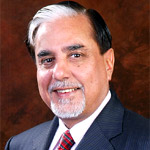
  • People come to Zoom for their daily dose of Bollywood: Avinash Kaul

    Avinash Kaul

    By A Correspondent


    “It’s been Zoombastic!” is how Avinash Kaul, Chief Executive Officer – ET Now, Times Now and Zoom describes the eight years of the Bollywood channel Zoom’s existence. The channel which was launched in 2004 is celebrating its eighth anniversary with a line-up of special programming spread across eight days, Zoom marks this milestone with the special theme Celebr8.


    The channel takes pride at at being in the forefront of delivering the best in Bollywood – entertainment, news, lifestyle and glamour to the viewers. “Success spawns imitators, and imitation is the best form of flattery! So while a number of other channels have launched trying to replicate the Zoom model, and some of them have even shut shop since, Zoom’s leadership in the genre has remained unchallenged. There are 3 reasons behind Zoom’s continued leadership – Access, Acumen and Audience,” says Mr Kaul about the recent launches of various other Bollywood channels.


    Over the years, the channel claims to have a built a deep understanding of its core viewer – the youth. “Our actions and plans are guided by this understanding and it is borne out in our product and in the brand experience. Youth is a very dynamic target group – in some ways one of the most difficult audiences and at the same time the most exciting. Bollywood has been and will continue to be a strong passion for many generations of youngsters over the years. However, with each generation of youth the relationship they share with Bollywood and the influence it yields on them keeps evolving. Zoom has it’s finger on this ever evolving pulse and when we keep the focus sharply on our audience we are able to create relevant, impactful and engaging experiences for our viewers and these in turn are great platforms for our customers – the advertisers,” explains Mr Kaul.


    Speaking on its future plans, Mr Kauls adds, “The youth space is exploding with a large number of marketers looking to target this highly brand-conscious segment that has an increasingly higher income and disposition to spend. Bollywood has an omnipresent influence on almost all aspects of the youth’s lifestyle. So Zoom as a brand that caters to the youth and is their most preferred Bollywood destination is poised for some very exciting times. Our focus going forward is to leverage the strengths we have – as a youth platform, as a content creator, as a broadcaster and as a part of a multi-platform media conglomerate – to partner with marketers and deliver engagement solutions for their brands. Using the philosophy of co-created contextual conversations, rather than plainly plugging a brand into a show, we develop a holistic association between brand and content. With a seamless connect between the brand message and engaging content, and the amplification of that enhanced proposition across multiple media, Zoom is able to deliver a holistic and really impactful communication solution for the marketer.”


    Meanwhile, Zoom has holistically embraced social media and digital platforms. With over 67 crore views it is the biggest media brand in Asia on Youtube – a reflection of the global appetite for Bollywood. Over 21 lakh fans on its Facebook page, nearly 5 lakh fans on Google+, close to 70 thousand followers on Twitter and growing influence on newer Social Media platforms like Socialcam, Tumblr and Pintrest. “Zoom is where the world comes to for their daily dose of Bollywood,” boasts Mr Kaul.


    Marking the special occasion, Zoom has planned various features like worldwide premiere of 8 exclusive songs, 8 different themes expressed through songs on the Zoom Barbar Jhoom, a special feature series 8-a-thon! will showcase eight spectacular debuts, biggest blockbusters, superstars, controversies, fashion statements, on-screen couples and the hottest on-screen appearances in the past 8 years.


  • Jaldi 5 with Harit Nagpal: Ensure those not following digitization rules are disadvantaged

    In our run-up to the digitization deadline, we have already interviewed the heads of the organizations representing the local cable operators and the Multiple System Operators (MSOs) and the head of bouquet of channels. The Jaldi 5 interview today was with Harit Nagpal, CEO, Tata Sky. The interview was done via email, and all the responses are rather short but guess they capture what the head of a DTH company would want to say…


    01 We have a little over a month to go for digitization in the four metros. If the government estimates of last week were to be believed, by now over 70 per cent of Mumbai, Delhi, Kolkata and Chennai would be digitized. Is that the case?

    Yes.


    02 Are the lower income groups in these cities buying set-top boxes?

    Yes.


    03 There is a worry that there will be some piracy in the form of pilferage of signals after November 1.

    This worry does not have a basis.


    04 What more would you like the government/others to do to ensure 100 percent digitization?

    Just keep the pressure on all stakeholders as they have done in the last couple of months and ensure that the ones not following the rule are singled out and disadvantaged.


    05 The last mile which is managed by the local cable operators is the key to the implementation of Digitization. Are all cable operators working step-in-step with MSOs in the four metros about the implementation of the October 31 deadline?

    Digitization is now a law and anyone not abiding by it is working against the law.


    Photograph: Fotocorp


  • Star Plus involves viewers in marketing innovation

    By A Correspondent


    Continuing its innovation of involving viewers in its soap stars’ lives, Star Plus has now called for congratulatory messages for Ek Hazaaron Mein Meri Behna Hai couple Maanvi and Viraat, as they prepare to get married.


    Viewers across India are invited to send the couple their best wishes, and the best messages selected by Maanvi get a chance to be a part of the wedding. The channel has chalked out a 13-city on-ground activity plan during which wedding floats will travel around collecting wishes for the couple.


    More details about the float schedule are at www.starplus.in and on Star Plus’ Facebook page.


  • 4 national MSOs announce digital cable TV rates

    By A Correspondent


    Towards achieveing the goal of digitization, four National-level Multi System Operators (MSOs), DEN, Digi Cable, Hathway and WWIL, have announced rates for consumer packages for digital cable.  As per TRAI’s stipulation, the Basic Service Tier (BST) consisting of at least 100 channels for Rs 100 has also been announced by some of them. The bouquet rates for pay channels is:

    Name of the Package No. of Channels Rate in Rs. (exclusive of taxes)

    Digicable

    Basic 145 180
    Gold 151 200
    Premium 165 250

    Hathway Cable and Datacom Ltd.

    Basic 135 160
    Medium 198 220
    Premium 242 275

    DEN

    Pack 1 112 180
    Pack 2 219 225
    Pack 3 235 270

    WWIL

    Janta 118 100
    Popular 1( Kolkata) 151 150
    Popular 2( Mumbai) 153 150
    Popular 3( Delhi) 142 150


    Consumers will also be given the option of choosing channels from an a la carte list. The MSOs had earlier announced a combined promotional rate of STB for Rs 799.  The MSOs have also announced a consumer care service wherein toll-free numbers including consumer charters have also been made available on the respective websites.


  • 73% digitization target achieved; Ambika Soni meets Delhi CM

    By A Correspondent


    Ambika Soni, Minister for Information and Broadcasting, met the Chief Minister of NCT of Delhi, Shiela Dixit, to discuss the progress made towards cable TV digitization on Sunday. In the four metro cities of Chennai, Delhi, Kolkata and Mumbai, the cable TV digitization deadline is October 31. During discussions Ms Soni emphasized the importance of meeting the deadline and sought the support of the Delhi government. The Chief Minister of NCT of Delhi assured the Minister of Information and Broadcasting of the Delhi government’s full support for the digitization exercise. She also asked the Chief Secretary to ask all SDMs to convene meetings with stakeholders to achieve digitization roadmap well within the time.


    The ministry has embarked on an aggressive public awareness campaign on the digitization deadline, on more than 200 television channels. Radio jingles, print advertisements and SMS campaigns have also enhanced public awareness about the digitization exercise. With all these efforts, digitization percentage in the four metro cities has gone to 73 percent.


  • Alok Agrawal replaces Barun Das as Zee News chief

    Alok Agrawal
    Alok Agrawal

    By A Correspondent


    Zee News Limited (ZNL) has announced that its CEO Barun Das has decided  to move on after a successful 5-year stint, and is being replaced by Alok Agrawal.


    Punit Goenka, Managing Director, Zee News Limited said, “Over the last five years Barun has contributed immensely to the growth of Zee News and taken the company to greater heights. We wish him the best for his future endeavour.”


    Speaking on Mr Agrawal’s appointment, Mr Goenka said, “We welcome Alok into the Zee News family. His rich experience in the media domain will help us take Zee News to the next level of growth.”


    Prior to joining Zee News Limited, Mr Agrawal worked with Cheil as Chief Operating Officer.


  • Zee@20 | Rajdeep Sardesai: In 1992, no one believed a 24-hr channel was possible

    Rajdeep Sardesai

    By Rajdeep Sardesai


    I still remember the day in 1992 when I got a request to write about a private channel that was about to start and if I would be interested to meet the person behind the initiative. I was the city editor of the Mumbai edition of Times of India then. I went to the Worli office of Zee to meet Mr Subhash Chandra. During the course of the interview, he told me about Zee’s plans of launching 3-4 hours of entertainment programming, including films and serials, and then also told me about plans to make Zee a 24-hour channel.


    After that meeting, when I came back to office and told my colleagues about it, no one would believe that the 24-hour channel was possible. My editor allowed me to make it front-page news about Zee. In 1992, a 24-hour channel drew apprehensions of whether it would work or not work. To tell you the truth, even I was sceptical. Who would believe that in 1992, a channel that would be uplinked from Hong Kong and would show 24 hours of entertainment would work! It was the era of Doordarshan. Even Star had not made a mark then. Frankly, none of us had foreseen the future.


    But Zee has been ahead of the times in whatever they have done. In the media, they have successfully stayed ahead of the curve. And for this, the visionary Subhash Chandra deserves huge credit.


    Zee, as it stands today, has become synonymous with certain kind of strength. Even though I am not sure about their news since it is kind of patchy, they have shown enormous strength in entertainment. Their success lies and has root in the ability to foresee the future.


    I have another great memory of Subhash Chandra. We became good friends after the first article I wrote about Zee. We were members of the Bombay Gymkhana. And I have seen him many times sitting in a quiet corner of the club with his wife, and smoking a bidi. I am sure that even today he goes to the club, sits quietly, and smokes a bidi.


    Mr Chandra was never flamboyant or has courted publicity, even when he has reached this stature. Over the years, I have secretly admired the manner in which he has risen to this position.


    (As told to Ananya Saha)


  • From ‘Okara Dukaan’ to Zee… the complete story

    Subhash Chandra

    The origin of the Essel Group may be traced to the end of the nineteenth century, though the company assumed formal shape only in 1926.


    Around 1890, Rameshwardas Goenka, the great great grandfather of Subhash Chandra, was running an established agro commodities business under the name of Jagannath Rameshwardas. Jagannath was the name of his partner.


    In 1920, Ramgopal Goenka, the son of Rameshwardas Goenka bought a plot of land in Okara in Punjab which is now in Pakistan. Ramgopal had three children – Jagannath, Gopiram and Inder Prashad.


    Shops were set up on this plot under a new establishment, Inder Prashad Harchand Rai (Harchand Rai was a family friend). The establishment, however, came to be popularly known as Okara Dukaan.


    With business at Okara Dukaan being sluggish, Ramgopal Goenka’s son Jagannath Goenka began exploring greener pastures. This brought him to Adampur Mandi in undivided Punjab. Adampur Mandi is now in Haryana.


    In 1926, Jagannath Goenka set up Messrs Ramgopal Indraprasad at Adampur Mandi to deal with food grains. This company is considered the precursor of the Essel Group.


    In 1930, Mr Chandra’s father Nandakishore Goenka was born in Sadalpur Village near Adampur Mandi. In 1941, Jagannath Goenka shifted to Hissar town due to poor business at Adampur Mandi. In 1946, Messrs Ramgopal Indraprasad ceased all operations at Adampur Mandi and moved to Hissar.


    The same year, Nandakishore Goenka entered the family business at the age of 16. He returned to Okara and tried to revive the business there. The business failed to pick up and subsequently Nandkishore Goenka too shifted to Hissar after wrapping up Okara Dukaan.


    In 1948, Jagannath Goenka shifted to Delhi and bought a plot at Mothiakhan where he set up a pulses factory which churned out polished pulses. He suffered heavy losses and the machinery was shifted back to Hissar in 1951. The new unit started operations in Hissar and supplied polished gram to Gujarat and the Southern States. This turned out to be a profit-making venture. By 1966 their firm M/s Ramgopal Indraprasad ran one dal mill and two cotton ginning factories, and the going was good.


    Mr Subhash Chandra was born to Nandkishore Goenka and Tara Devi Geonka on November 30, 1950 at Adampur Mandi. He was the eldest of the seven siblings – Laxmi Narain Goel, Jawahar Goel, Ashok Goel, Kusum, Urmila and Mohini.


    He was also known as Subhash Chandra Goenka (Goel); he chose to remove the surname and changed his name as Subhash Chandra as he felt that independent India was being divided by the political establishment (as per a notification dated August 31, 1989 of Govt of Maharashtra).


    Mr Chandra showed an inclination towards business even as a child. He went to the local village school which taught only up to the primary level. From the fifth grade, he shifted to CAV School in Hissar, where he was placed under the tutelage of his grandfather, Jagannath Goenka.


    Jagannath Goenka’s wisdom left an everlasting impression on the young boy. It was at the “Jagannath Goenka University,” as Mr Chandra would say, that he learned the three most important lessons of life: have no fear; never go back on your commitment; and do not stray from the path of truth. If there is one man from whom Mr Chandra draws his inspiration even today, it is his illustrious grandfather.


    Jagannath Goenka’s business involved buying grains and selling them for a flat commission, warehousing and money-lending. Every day when Mr Chandra returned from school his grandfather would sit with him and make him write letters to hundreds of people or clients. This was among the first lessons he learnt from his grandfather.


    Jagannath Goenka then went on to teach Mr Chandra his earliest lessons in business, the most important being how to analyse people. He taught the young boy to observe people intently and understand their motives or intentions through their behaviour. This is a lesson that has stood him in good stead till today.


    The grandfather also impressed upon Mr Chandra that he should not go back on his commitment, even if it is verbal. Even now Mr Chandra is known to seal a deal with a mere handshake.


    As a child, Mr Chandra was always in awe of what he calls his grandfather’s native wisdom. Jagannath Goenka played the role of a matchmaker in his spare time. During one of his visits to a house, he lined up all the women along with the prospective bride. When he found that another lady was more beautiful than the bride (to be), he advised that she should not be present lest the boy fall for her. Such small incidents would leave a lasting impression on Mr Chandra.


    On school holidays, the young Mr Chandra would go about the village bazaar with his grandfather collecting information and gossip about people. This taught him to constantly keep his ear to the ground. Even today, Mr Chandra is much the same and collects as much information as he can. He is a man who listens to what people say and has no hesitation in taking advice from the most humble of his employees.


    Mr Subhash Chandra always dreamt of becoming an engineer, but destiny willed otherwise. The family business suffered a series of reverses in 1967. Due to the mismanagement of the business by a relative, the family suffered heavy losses in cotton trading. The Adarsh Cotton Ginning and Oil Industries which was set up the same year went into the red and had to be subsequently wound up. A major road accident ensured that family had to spend what little resources were left. To make matters worse, Jagannath and Inder Prashad decided to split the business. Though at that time the businesses had net deficit of about Rs 600,000, Inder Prashad was given cash of 50,000 in addition to the equal properties.


    The family was not just bankrupt, it owed over Rs 6 lakh to friends and relatives who had lent monies. With the family going through a bad patch, Mr Chandra was told by his father that he now had to help with the business as he could no longer afford to pay his college fees.


    But Mr Chandra refused to be bogged down by this twist of fate, and instead took life head-on, turning an adversity into an opportunity. Two years later, that is in 1969, Messrs Ramgopal Indraprasad was renamed as Subhash Chandra Laxmi Narain (SL).  In 1976, the company came to be renamed as the Essel Group of Industries, which later took the form of the Essel Group.


    Steering a bankrupt business with just Rs 11 in his pocket was no easy task for this 17-year-old.  Mr Chandra struggled to find ways to continue business without making any investment.  Fortunately, he met a manager of the Food Corporation of India (FCI) in 1968-69 who took a liking to him. That was the turning point in Mr Chandra’s life.


    The Army was a big buyer of grains, pulses and dry fruit. But the FCI was unable to meet the high standards set by the Army. Mr Chandra suggested that his family could upgrade the product by polishing pulses and cleaning barley. The FCI agreed and the family was back in business because he found a way to add value without any significant investment. Mr Chandra also convinced the FCI to supply him with whole dal which would then be split and supplied to the Army.


    In 1971-72, Mr Chandra shifted to Delhi and leased a dal mill, at C-35/1, Lawrence Road Industrial Area, Delhi. The initial days in Delhi saw Mr Chandra’s evolution from agriculture to industry as he ventured into several new businesses like fibreglass mouldings, from which he exited soon after.


    In 1976, this 26-year-old entrepreneur got his first big break. India was by then thriving on the back of its green revolution, and the crop surplus in the mid-1970s had the FCI frantically looking for space to store 14 million tonnes of food grain. It was Mr Chandra who came to the aid of the FCI.


    His solution to store food grains out in the open under polythene sheets found favour with the FCI. Mr Chandra entered this business buying polythene sheets and then cutting and welding them into tents.


    The same year, he set up Lamina Packers, which for the first time manufactured flexible packaging and laminates for packaging pharmaceutical tablets and other combination of paper, plastic and aluminium files of international quality on indigenous machinery. Soon, also set up a manufacturing and the plant supplying empty capsules to the pharmaceutical industry, and also purchased a company manufacturing hand tools (mostly food grains). However, he had a mission in his head and that was “to remain in a business where he can be either the No 1 or strong No 2” else exit from that business.


    The year 1981 marked Mr Chandra’s entry into the big league. The country had just given its verdict in favour of Mrs Indira Gandhi, who for the first time in the history of the country, decided to open the doors of the economy to private players. For young entrepreneurs like Mr Chandra, this came as a blessing.


    These were bilateral trade agreement signed between India and the USSR. Once again, Chandra turned to his favourite business of food grains. Rama Associates, which Chandra had set up in 1976, won a lucrative deal to export rice to the Soviet Union. It was on May 21, 1981, that an agreement was signed to export 30,000 tonnes of rice to Russia at a cost of Rs 5,500 per tonne, under the bilateral trade agreement.


    But this was not without its share of hiccups. Barely moments before the agreement was to be signed, the deal threatened to slip through his hands, due to a communication gap with the Russian delegation. In the absence of mobile telephony those days. Mr Chandra who was in Belgium had to cut short his visit and rush to Delhi to salvage the situation. He subsequently won an additional contract to export soya bean. Within 17 months, the company exported grains worth a billion.


    The buyers as well as Indian trade authorities was so happy with Mr Chandra’s performance that he was awarded the Russian deal every year during 1981 to 1985. It was also a time when the Soviet Union was beginning to show its first signs of crumbling. The zero taxation policy of the Soviet government on export profits meant huge cash flows for Rama Associates.


    By 1982, the turnover of the Group had gone in excess of Rs 1 billion, a far cry from the bankrupt company that he had taken over in 1973.


    A cash-rich Mr Chandra now had ambitious plans. But before he took the next big leap, he made his brothers go through a traditional Marwari ritual called pani mein namak daalna, which literally means adding salt to water. It is a sacred vow within the community. Once you agree to do something during this ritual, you can never back out. They decided that they would never do any business outside the books.


    With the ambition to explore new avenues of expansion, the 31-year-old Chandra visited a packaging exhibition in Germany in 1981. The visit changed the course of his business. Essel Packaging was incorporated in December 1982 and began commercial production in the second quarter of 1983.


    In those days in India, toothpaste was primarily packed only in aluminium tubes and Chandra came across laminated tubes or soft squeeze tubes at the exhibition. In the West, multi-layered lamination tubes were replacing the aluminium tubes, which had earlier virtually monopolised the business of medicines, cosmetics and toothpaste.


    Undeterred by the advice of well-wishers that the product would not find a market in India, he imported a new technology and began making laminated tubes which he believed would replace metal tubes as toothpaste containers. As predicted, this Western innovation had arrived ahead of its time in the Indian market and Mr Chandra had to fight to survive for five long years in the face of low capacity utilization and mounting losses.


    But Mr Chandra stood to his ground, confident that this was a product that was bound to succeed someday. It was only in 1988-89 that the 50 million tube capacity packaging businesses showed signs of a turnaround. It was then that India saw the launch of gel toothpastes which required a non-aluminium format filling. Essel Packaging which is now Essel Propack is today the world’s largest manufacturer of laminated tubes, with a presence in 13 countries.


    Following the success of Essel Packaging, Mr Chandra was once again itching for something new. That was when he began eyeing the business of fun and entertainment. “After Essel Packaging, I became unemployed and was looking for new opportunities,” he says.


    In 1983-84, Mr Chandra had bought 753 acres of land in Gorai, on the outskirts of Mumbai. Inspired by his visits to amusement parks abroad, he introduced the Indian version, called Essel World, in 1989.


    But contrary to his expectations, the initial response was lukewarm. Mr Chandra was told by his friends that the Indian middle class would prefer entertainment closer home than travel to an amusement park two hours away. A spark instantly ignited in him.


    Those were the days when the country was witnessing a boom in video parlours. Mr Chandra initially toyed with the idea of equipping a fleet of video vans that would tour the countryside charging people to watch the videos. He had also made a quick calculation of the revenue he would earn through advertisements.


    In 1990, a casual visit to the office of Doordarshan in Mumbai inspired him to launch a satellite television channel, though at one point he had toyed with the idea of entering the cellular phone business too. He decided to pick up a TV station instead.


    Mr Chandra had contacted a school friend in Doordarshan who in turn arranged a meeting with the chief engineer. The meeting was a focal point in Mr Chandra’s foray into the television business. He was told that the Indian reputation did not permit television broadcasting as it is reserved for public sector.


    Then came another trigger. Mr Chandra was watching the Gulf War on CNN in 1990 and wondered why India could not have a private satellite channel of its own.  He asked why and how the foreign TV channels were seen in India and why the law did not permit Indians to start a TV station.


    For a while, he also explored the possibility of setting up a terrestrial channel to be beamed from Nepal. But when he learnt that the signals would not reach major Indian cities, he gave up that idea.


    That was when he heard about Asiasat. In December 1990, Hong Kong had granted a licence to a joint venture of the Chinese government and Li Ka Shing to launch a satellite to begin a Direct Broadcast Satellite (DBS) service in Asia.


    Mr Chandra practically chased the Chief Executive of Asiaset, finally locating him at Canada where he was holidaying in the Christmas of 1991, only to be told that the transponders were leased to one company named Satellite Television of Asian Region (STAR).


    Mr Chandra repeatedly knocked only the doors of STAR headquarters in Hong Kong, only to be cold-shouldered. Finally, because of his sheer persistence a meeting was fixed with Richard Li, son of Li Ka Shing, the owner of STAR. But it ended on an unpleasant note.


    Mr Chandra’s team was made to wait in a room for a long time. When Mr Li finally made an appearance, his executives told him there was a gentleman from India who wanted to start an Indian language general entertainment channel in a joint venture partnership. “India!” snapped Mr Li, “There is no money in India. I have no interest in India.”


    Having outright rejected the joint venture, Mr Li then asked Mr Chandra how much he would pay for the transponder. “I do not want to do joint venture with you, so you can take the transponder on your own,” was his remark. Mr Chandra said the price of $ 1.2 million had been agreed upon with STAR executives. “Not enough,” said Mr Li.


    “I do not know what came over me, but I got up and said I would take it for 5 million dollars, provided the agreement was signed within 24 hours,” recalls Mr Chandra. Mr Li refused to take Mr Chandra seriously and walked out of the room in a huff. The meeting ended there.


    By then, STAR had hired an investment banker to advice it on potential Indian customers. The banker did not even deem it fit to meet Mr Chandra who had no media credentials. In April 1992, Mr Li arrived in Mumbai to explore the possibilities of leasing the transponder to the highest bidder. His extensive appointment list figured big guns like Hindustan Times, The Times of India and Nusli Wadia of Bombay Dyeing. Finally, nobody was willing to pay as much as Mr Chandra.


    Meanwhile, Mr Chandra too was actively looking for opportunities outside the realm of STAR. But this time he was approached by Mr Li. Mr Chandra hired a helicopter and took him to Essel World and to the packaging plant. When Mr Li realised that the Essel Group was dealing with big FMCG companies such as Colgate, Lever and P&G, his opinion changed. The agreement to lease the transponder was signed on May 21, 1992, between Mr Chandra’s Asia Today and STAR.


    True to his word, Mr Chandra finally leased the transponder for an astounding USD 5 million. But he needed the cash to fund his ambitions television project. This time, the much-needed assistance came from an unfamiliar corner and in the form of a fund in Hong Kong owned by Sir James Goldsmith and Kerry Packer, three non-resident Indian friends and some other venture funds.


    “The existing media companies felt that satellite television would not succeed in the country. Since I did not know anything about the media business, I had nothing to fear,” says Mr Chandra.


    But launching a private satellite channel met with roadblocks at every stage. When Chandra broached the subject with the Secretary for Information and Broadcasting, Government of India, he was livid. “You will introduce consumerism and destroy the country. Your proposal can fructify only over my dead body,” the Secretary thundered.


    Mr Chandra then approached several legal luminaries, all of who shot down his proposal. Not a man to take no for an answer, Mr Chandra worked out a strategy. His question was simple: “If foreign channels like CNN and BBC could be viewed in the country, why not a private Indian channel?”


    In 1992, he entered the business of entertainment software through a company called Empire Holdings Ltd, which he had started in 1983. The name of Empire Holdings was changed to Zee Telefilms Ltd which provided content to Zee TV Hongkong which in turn beamed the signals into India from Hong Kong. That was how Zee was born on October 2, 1992, initially with only two hours of content.


    Overnight, Mr Chandra had ended the monopoly of Doordarshan.  Initially, he focused on inexpensive programming. The average programming cost was barely Rs 30,000 an hour for the first year. The formula of cheap programming worked and Zee was an instant success. Zee became a hit, with soaps like Tara and Hasratein and interactive musical shows like Antakshari and Sa Re Ga Ma. In six months, Zee had proclaimed its arrival in the television industry and Mr Chandra was slowly giving shape to his television business that was reaching out to almost 12 million homes across the country.


    But Mr Chandra had a shock in store. In an unexpected development in 1993, News Corp Chairman Rupert Murdoch bought a 63 per cent stake in STAR. Initially, Mr Murdoch had very little time for India as those days everybody was focusing on China. That was until he heard that out of the 20 million homes that STAR claimed to reach, 12 million were in India and they were Zee homes. Mr Murdoch now upped his ante.


    As Mr Murdoch began eyeing the Indian market, he contemplated pulling Zee off from Asiasat. As days passed it become clear to Mr Chandra that he had to look for an alternative to Asiasat.


    While Mr Chandra had no funds to invest in another transponder, the threat of Zee’s ouster from Asiasat loomed large. Driven to the wall, Mr Chandra had no option but to sell a 49 per cent stake in Asia Today to Mr Murdoch, the company that had leased Asiasat in December 1993. STAR and Zee set up Zee Cinema and Mr Murdoch became an investor in Siticable which Mr Chandra had started in 1992.


    However, relations between the two began to sour in 1996. The shareholder agreement between the two companies had clearly stipulated that STAR would concentrate only on English content. But STAR violated the agreement and began beaming Hindi content.


    “He thought being a global media baron, he could run roughshod over us, but his calculations went wrong. We were on the path of truth. He made the mistake of taking us for granted,” says Mr Chandra.


    Mr Murdoch then made an unsuccessful bid to take over Zee. He offered Mr Chandra USD 2 billion as against the company’s valuation of USD 500 million. That was when Mr Chandra remarked, “India is not for sale.”


    Mr Chandra sued in London and in the face of STAR’s imminent defeat, both the companies finally settled the case in 1998. Mr Chandra paid $180 million for Murdoch’s share of Asia Today and Siticable. The bitter partnership came to a final end in September 1998.


    Then on, there was no looking back for Zee or for Mr Chandra. Today, Zee has its presence in 167 countries with a viewership of 500 million.


    The rest, as they say, is history.


    Text courtesy: The Zee Entertainment Enterprises Limited Corporate Communications team

     

  • Zee@20: Producers raise a toast to team spirit

    By Meghna Sharma


    Tara, Tol Mol ke Bol, Antakshari, Zee Horror Show, Hip Hip Hurray and many more iconic shows like these take us back down memory lane. And why wouldn’t they? Twenty years ago, almost every family’s entertainment dose came from Zee television. The network revolutionized the concept of television watching for many.


    Even today, the channel continues to not only entertain but enjoys being a part of its audience’s life. As India’s first satellite television channel turns 20 on Oct 2, MxMIndia spoke to some of the current producers about their association with the channel…


    Ranjeet Thakur, producer of DID3, DID Lil Masters 2 and Dance Ke Superkids: After working for almost a decade in Zee, finally my partner (Hemant Ruprell) and I decided to start something of our own. Zee was gracious enough to give us an opportunity. The show (DID) has done really not only for the channel but the industry too. Also, the team from the channel is very cooperative and helps each one to evolve his/her creativity.


    Sashi Mittal, producer of Punar Vivah: Almost nine years ago, I started my career as a writer with Zee. I wrote my first show for them and since then have written many. This is my experience as a producer and I’m happy that it’s with Zee. The channel as well as the whole team is very cooperative. It’s been a wonderful journey and I hope it will go a long way.


    Rakesh Paswan

    Rakesh Paswan, producer of Afsar Bitiya:

    As Zee completes 20 years, we complete 200 episodes of Afsar Bitiya on the channel. So, for us it’s a double celebration! With too many general entertainment channels available today, it is very important for a channel to create its own identity, which according to me Zee has been able to do very well. Every channel has its own audience and market and hence, needs a balanced programming – fiction and non-fiction – strategy. And the same can be said about the channel especially if one takes a look at its weekend programming, which is strong. Also, one thing that separates the channel from the rest is the fact that it doesn’t run after stars because the shows speak for themselves. Also, their business strategy is also good, where they have been able to create a brand for themselves in today’s competitive market.


    Rashmi Sharma

    Rashmi Sharma, producer of Mrs Kaushik Ki Paanch Bahuein:

    I started working with Zee as a creative head (freelancer) more than three years ago and it’s been two years since I’ve been working for the channel as a producer. And the journey so far has been fantastic. I have learnt so much while working with Zee as the channel works as a team with production houses and has been very supportive. It’s always been a collective effort. And with Zee completing 20 years, I’m sure it has been a wonderful and emotional journey for anyone and everyone who has worked with or for the channel, like it has been for me.


    Neelima Bajpai

    Neelima Bajpai, producer of Sapne Suhane Ladakpan Ke:

    Zee will always be very special to me as I started my career with the channel way back in 2004. The channel didn’t hesitate in launching and promoting unknown people like me. It gave us a chance to work without doubting or asking us a million questions. I had come to the city from Delhi with an idea of a show and the channel let me go ahead with it. The channel puts a lot of faith in the people it works with and that really motivates people to put forward their best.


    Amrit Sagar

    Amrit Sagar, producer of Ramayan:

    I am the third generation of Sagars working for Zee TV. My grandfather Dr Ramanand Sagar worked with them on Sri Krishna and I’m doing so on Ramayan. I think Zee is a great channel to work with. Our association is nearly two decades old. It is a long-lasting, positive relationship and I am very proud of this fact that we have moved through generations together.


  • Zee@20: At the helm of the vision

    By Meghna Sharma


    Nitin Vaidya (Currently preparing to launch his own business in the field of Media & Entertainment):

    Nitin Vaidya

    I started my career in the world of television with Zee way back in 1997 after being a print journalist. I was instrumental in launch of Zee Marathi channel in August 1999 which was the first non south private satellite channel in India. After the success of the channel, I was also given charge of other regional channels in 2004 (Bengali, Gujarati & Punjabi channels). The network has been way ahead of its time and therefore, was able to see the growth in the regional market when others were hesitant to put their money there.


    The entry and growth of Zee in the regional channels can be said to be instrumental in the overall growth of the regional markets be it television or films. And in 2008, I assumed the charge of National Channels of Zee Network and was directly responsible of Zee TV as its Business head. For over a decade with the network, I looked after National as well as Regional channels of Zee, before calling it quits in October 2010. The journey has been a long learning experience wherein I got to work with creative and vibrant team. It was also great to work with Subhash Chandraji and Punit Goenka.


    Like me, I’m sure there are many in the industry who started their careers or have worked with Zee at some point in their careers. The industry – television as well as film – have to thank the Zee network for giving them opportunities and a learning ground to reach where it is now.


    Also, I do believe that one can easily say that the entertainment industry was started in the country by none other than the Zee TV. It is the pioneer of GECs!


    Ashwini Yardi

    Ashwini Yardi (Currently producer of the film OMG):

    Fresh out of college, I had joined Zee as assistant director and after working with the network for 15 years, I left as programming head. And I can proudly say that today whatever I am is because of the channel and all the lessons I learnt while working there. Unlike today, there weren’t any courses in television also the satellite television was young too. Therefore, we all learnt on the job and nothing can be more exciting and enriching than that. Even the team as a whole was young (average age of 26-27 year-olds) who were full of ideas.


    I have only good and enriching memories of my time spent in Zee. I can call it my family!


    Meenakshi Menon, founder and chairperson, Spatial Access:

    Meenakshi Menon

    It was September 1994, I had just joined Zee as Vice President Sales and Marketing. My appointment letter was issued by Ambience Space Sellers Pvt Ltd. but I was head of Sales and Marketing of Zee TV, a channel that was owned by Asia Today Limited, a Hong Kong based company that was floated by an Indian businessman called Subhash Chandra whose brothers were Goels.


    That was my entry into the exciting, confusing world of Zee TV.


    Satellite TV was just a few years old. The Gulf war of 1990 was the catalyst for CNN and drove penetration of satellite dishes across the country. Star TV launched in Dec 1991 with Santa Barbara and the Bold and the Beautiful. In October 1992 Zee TV had launched its Hindi satellite service. Programmes like Saanp Seedi, Colgate Top Ten, Close-up Antakshari, Khana Khazana, Tara and Bournvita Quiz contest were fresh and entertaining. They fuelled TV penetration as strongly as they fuelled C&S penetration. The middle class bought TVs because for the first time they could sit at home and in the comfort of their homes be entertained by television where the focus was creating a fresh new world every 30 minutes. But this is not about TV programmes. Enough has been written about that and how Zee created a genre of programming that set the pace for change; social re-engineering we use to call it. There were protests from men’s groups that Tara was encouraging women to stand up against their menfolk. The woman’s media advocacy groups on the other hand gave Tara and its lead Navneet Nishan an award. But this story is about the people behind Zee and not anyone else but the man who was Zee. SC as we called him with a mixture of respect, affection and angst in equal measure.


    My first week at Zee, my immediate boss Digvijay Singh was travelling. SC sent for me. He wanted an update on the revenue figures for the July/Sep quarter. I grabbed the reports from my finance team and ran up the stairs to meet him. My heart in my mouth. SC was known for his short temper and his ability to reduce everyone (including the senior guys) to tears. I walked into his waiting area, told his secretaries (he used to have two secretaries and two office assistants, even in those days) that I had been summoned and settled down to wait. The Boss would have three, four, five meetings running in tandem. He would step in and out of meetings and pick up the threads without skipping a beat. Ten minutes later he walked up to me and said “Meenakshi, kaise chal raha hai? Sab theek?” Much later I was to learn that “Sab theek” was his way of telling us that all was well and not the question that I thought it was in the initial months. “Haan SC, sab theek.” He looked at the sales figures and frowned. It was September, the Divali season was around the corner and SC was not happy with what had been done the previous quarter. “I want you to double revenues for the next quarter,” he said. “Can I count on you to do it?” Now Diggy, my boss, had not warned me that SC was not used to refusals or debate. His question was purely rhetorical in nature. He was not looking for an answer. All he wanted was action. Unfortunately I had not been briefed and it was too late. “Double revenues? No way. Not unless we revamp our operations systems and hike up our rate card.” Have you ever experienced time stand still? I did that day for the first time. There were three sets of people waiting to meet SC, two foreign visitors, his four-member office staff. Everyone was frozen. Did I not know that you were forbidden from saying no to SC? Did I think my professional reputation would save me from the gallows? What was I doing? Why was I messing up the day for the whole company? Nothing moved. Even the phones were silent. The crows outside his first-floor office window were cawless for one crazy suspended-in-air moment. SC looked at me and said, “Toh rate badhao! Par revenue double hona hi hai.” I could hear the loud intakes of breath from a dozen lungs around the room. SC stood up and so did I. My knees were quaking. Double revenues? Hike rate card? I had escaped SC’s wrath but I was about to be the most hated person in the advertising industry. Little did I know that day that it was to become a bit of an occupational hazard for me. Being on the opposite side of the hordes was always a preferred position.


    Second week September, I have created a new rate card. Built a concept that permits us to take a rate hike 365 days of the year. Programmes move up or down a cost scale based on delivery and demand. Pricing is perfectly positioned to seize the moment and double the revenues of the quarter. I ask SC for a meeting to walk him through the new rate card, Digs is still in Europe. SC’s response is, “Can it be justified? Then why do I need to see it? Don’t waste time, send it out to the market.” The rate card is out, agencies and advertisers are up in arms. How dare Zee hike rates just before the festive season. What is SC thinking? He gets calls from agency heads, advertisers. To each one he says, “Nayi bachchi hai, maalum nahi. Ab kya kare? Aage dekhenge.” Then he stops taking calls because he knows I am pissed off at being made the scapegoat behind my back. I have no problems with being the fall guy but it has to be stated up front. I draft a letter for him to send out to all those who call or complain. It says the same thing but asks them to call me if they have a problem. I will sort it out. No one gets in touch. The few that do are dealt with compassionately but end up paying just as much as those who did not call. Some agencies run by a bunch of SC cronies and distant relatives go to him with a complaint. I am arrogant. He needs to put me in my place. His answer to them is, she is arrogant with me and I pay her salary! The new rate card is accepted by the industry. Even today It forms the basis of all the rate cards that are currently used by TV channels across the country. Programme and day part categorisation. Where the categories do not change but programmes move up into higher categories. Rarely do they move down. The weekly rate adjustment (hike is a four-letter word) is here to stay something that was created by me in my second week at Zee TV. Something that SC did not even want to see because he had faith in me….in my second week on the job.


    That is the most amazing thing about SC. If he trusts you he will be one hundred percent behind you. If on the other hand he suspects your motives you could be Mother Teresa and he would find fault with everything you did. In those early years of private broadcasting there were no rules and conventions. We were all inventing the rules as we went along. What would succeed, what would fail? The only way to find out was to jump in head first. We were a young team with no experience but huge ambitions. SC was there to support, motivate, chastise, reward, reprimand. He was there for us 24×7 before the term became fashionable. In turn he expected the same from us. We were all consumed by Zee TV. It was not a job. It was a calling. We were all responding to SC’s vision of taking an amusement park into every household. To have people enjoy the thrills, spills and chills in their living rooms. He did not know TV. People used to disparagingly refer to him as a rice trader. His inability to mask his accent. His proclivity to smoke bidis with the lit end in his mouth. His lack of flash and dash were all part of the message that he was sending out to people. “Do me a favour, underestimate me.” That was his mantra and it served him well for many years until his adversaries and partners and partners who turned adversaries got smarter.


    SC was an amazing teacher. He taught me about business. He taught me that anger could be used constructively and that emotion was better than intellect and that human nature does not change even if the accent does. He taught me how to be a boss and how to be generous with my staff and how to get them to acknowledge it. But more than anything else he showed me the value of going after my beliefs. Today, almost 20 years later, his inputs hold me in good stead. Zee will evolve, will have its ups and downs, but for me the time spent learning from SC will always be my initiation into the business of the world.


  • Jaldi 5 with Ashok Kurien: Zee changed the Indian consumer forever!

    By Johnson Napier


    It was a dream that was waiting to become one big reality. When the rest of India was hooked on to the goings-on of the Gulf War in 1991 through relay from international news channels, a bunch of visionaries were contemplating launching a private channel that would do something similar in India. Thus was sown the seed of India’s first and private Hindi channel, Zee.
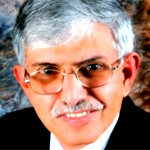
     

    Ashok Kurien, the man who ran Ambience Advertising which handled the ad business of Essel Group, recounts how a chance conversation took shape to create one of India’s earliest and most successful Hindi channels. Mr Kurien continues to be on the Board of Directors of Zee Entertainment.


    1. Do you recall how you reacted when Mr Subhash Chandra first came to you with the idea of launching Zee? From what we hear, it’s after your reassurance and active support that he got into it.)

    January 1991: Subhash, my client at Esselworld, and I were watching the Gulf War ‘Live’ on CNN. It was our early exposure to satellite TV in India.


    “Why can’t we do this here in India?” the conversation went.


    “What do you know about TV?” asked Subhash.


    “More than anyone else,” I replied, having spent many years on the ad agency side: Concepts and Pilot programmes, Sponsored programmes and FCT during the Doordarshan days…


    “Write me a business plan,” said Subhash.


    I did… and the rest is history.


    Of course, Subhash was way ahead of me, with advice and plans from some ex-Doordarshan people.


    The first 5 or 6 years, working hands-on to help Subhash build India’s first private TV station, was the most exciting chapter of my life.


    Zee changed the Indian entertainment scenario, and along with it changed the Indian consumer forever.


    2. Zee obviously had the advantage of being the first mover in the Hindi space, and later there were many others who entered the scene. What according to you is the reason Zee has been such a success story?

    Zee moved fast, was always the first, and stayed far ahead of everyone for over the first decade.


    Zee understood the emotions and tastes of the Indian consumer. It took a long time for the competition to figure it out… mainly by hiring Zee TV’s people.


    3. Other than being a director on the Board, are you active in advising the Zee management presently?

    No advice to Zee at all….. unless I am asked to.


    I have played a role in helping Dish TV grow to leadership over its first 3 or 4 years, and now helping to take the Zee group into new media with India.com.


    4. If there was one thing that Zee could have possibly have done differently in these 20 years, what would it be?

    Zee should have launched a Tamil/South channel 15 years ago. But it was my error of judgement and ill advice that prevented that. My one, big, unforgettable mistake!


    5. Zee, it’s said, mirrors Mr Subhash Chandra’s personality: dynamic, aggressive, a maverick, often restless, cost-conscious, risk-taker and a visionary. He’s been a friend for many years, would these descriptors be appropriate (for him and Zee). And how much would you attribute the success of Zee to Mr Chandra and in recent years, his family?

    Subhash’s personality is all this and more. He is fearless and will walk where angels fear to tread!


    But as a friend I have seen the warm, but very private, human side of him too. He has great inner strength, and this too is inbuilt in Zee’s DNA.


    Zee’s success was driven almost 100 percent by Subhash for many years, and only in the last decade or so did the professionals who joined Zee start contributing majorly.


    Punit has reinvented the ‘creative magic’ that Zee started with 20 years ago.


    But today, it’s certainly TEAM ZEE!!


  • Jaldi 5 with Sam Balsara: ASCI works despite no teeth

    While the CII National Committee on Marketing released a white paper on ‘Self-regulation in Advertising in India – A Critical Evaluation’ that advocates Advertising Standards Council of India’s track record in self-regulation of ads, MxM India caught up with Sam Balsara, ASCI’s past chairman.


    1. One of the key recommendations of the white paper is the mandatory membership of ASCI. How does ASCI plan to push that?

    Over the last 10 years, ASCI and I personally have taken the initiative to sign up more advertisers, media vehicles, and advertising agencies. With this CII recommendation of ASCI, I am hoping that industry would want to be a past of ASCI.


    2. Why has the industry been so slow to sign up?

    Low awareness can be one. Also, there if they sign up, the contract says that they cannot take us to court. But I am sure that once the industry gets to know of good points about signing up, they would want to associate with ASCI.


    3. Would more members, or less as the case is right now, give more teeth to ASCI?

    The beauty of ASCI lies in the fact that it does not have teeth and still works with the advertisers who make false claims. What happens is if we blacklist an ad, the frustration and anger in the advertiser rises. The bigger the advertiser, greater the anger.


    4. How does this help?

    In self-regulation. Co-regulation in itself helps the environment to become more facilitating. This enables ASCI to have more teeth.


    5. How many ads go off-air after ASCI blacklists them?

    The CII report says that it is close to 80 percent. But this is the number that inform ASCI in writing that they have taken the ad off-air. The number would be greater. Some prefer to pull it off without informing ASCI.


    (As told to Ananya Saha)