To state the obvious, for The Cable Television Networks (Regulation) Amendment Act, 2011 to kick in the mandatory switchover of the existing analogue cable TV networks to Digital Addressable System (DAS) in the four metros of Delhi, Mumbai, Kolkata and Chennai, the government must survive.
Even if that’s a given, the minister Mrs Ambika Soni mustn’t be allowed to meander into party work. If she does, a new minister will take his or her own to time settle down, and pernicious lobbies for a status quo will have an upper hand.
2. Ambika Soni and her babus get three states into action
Though Shastri Bhavan bears the mantle of implementing the Act, the ministry of information and broadcasting (MIB) has no boots on the ground. So, unless Maharashtra, Tamil Nadu andBengalsee the DAS in their own interest, Mrs Soni, Uday Varma and Rajeev Takru, her two key satraps, won’t make progress beyond impotent bluster.
3. There’s deeper monitoring and a few scalps on the lamp post
Albeit coming late, TRAI regulations on Tariff & Interconnection would have had enough time since April 30 to sink in. The Quality of Service Regulations and the Consumer Complaint Redressal Regulations would have existed since May 14, requiring every Broadcaster and MSO to publish its Reference Interconnect Offer within 30 days of issue of the regulation, and the stipulated 30 days for negotiations between Broadcasters and MSOs, and thereafter, the MSOs and LCOs to arrive at agreements for us ordinary Joes would have been exhausted many times over. No one could then cite lack of time for fuzziness over the terms and conditions for installing Set Top Boxes and the prices of channels on an a-la-carte as well as on a bouquet basis. Also, every MSO or its linked Cable Operator would have no excuse for failing to put a Consumer Complaint Redressal System consisting of a complaint centre with toll free consumer care number, web based complaint monitoring system, as well as appoint or designate one or more nodal officers and publish consumer’s charter for DAS.
Thus Verma and Takru have their tasks cut out. Implementation is their dharma, the concerned states their believers.
4. ISRO delivers the promised launch
For any stick that Takru and Varma may hold, the cable operator is wily enough to dodge them. What she can’t is if Indian Space Research Organisation’s much-delayed GSAT-7 multi-band satellite, carrying payloads in UHF [ultra-high frequency], S-band, C-band and Ku-band, leaves the ground and starts doing some work. It would then be left to Doordarshan’s Tripurari Sharan to show his mettle and put together a free-to-air DTH platform of 200+ channels on GSAT-7. If Sharan can swing that, the cablewalla will embrace DAS with a measure of fear if not conviction.
5. The DTH Gorilla Begins to Maraud
These folks have sat on their backsides sleeping over the opportunity that “DAS Confusion” presents to them. If only they can get cable operators to become LMOs and leverage some Rs6,000crore residing in their war chests, the pure-play cablewalla will see more in digitization than what the long-arm of the regulation can ever achieve by scaring him.
Rohit Bansal is CEO & Co-Founder, Hammurabi & Solomon Consulting
Star India’s Channel [V] is ready for a change from July 1 when it will discontinue all music slots in its programming. With this transition, the channel is set to consolidate its position in the youth entertainment genre.
This move is being made to strengthen its stance as a holistic youth entertainment channel. The drastic change in the content strategy took almost three years. Speaking on the move, Prem Kamath, Executive VP & GM, said: “This shift in programming strategy is rooted in our continuous effort to remain a unique entertainment destination for the youth. We recognize the affinity the youth have developed for our shows and we can only oblige them with greater hours of these preferred shows.”
In an effort to increase weekly hours of original content, Channel [V] will convert its teen crime show, Gumrah – End of Innocence into a daily. And, it also plans to launch new fictional shows like ‘The Buddy Project’ which will occupy the 6pm slot from Monday to Friday.
However, the channel promises not to distance itself from music. “As for music, it can never go out of the youth DNA. We will continue our on-ground and on-air properties that are based on music. We will simply stop airing Bollywood music slots.”
Launched in 1994 and reaching out to over 25 million viewers, the channel’s current mantra – Bloody Cool – manifests itself not only through its shows, but also through the broadcast persona and out of TV alliances created to engage with the youth.
The final day at Cannes Lion 2012 turned out excellent for Taproot’s campaign for Mumbai Mirror – I am Mumbai. The advertisement was shortlisted in Film and Film Craft categories and went on to bag India ‘s first ever Gold in the Film Craft category.
The campaign was entered in the Film Craft category by Mumbai-based Ramesh Deo Productions. The film was directed by Abhinay Deo whose work has been shortlisted at Cannes Lion before too. MxMIndia spoke to the winning director to know what it takes to make an award-winning campaign.
It is India’s first ever win in the category, were you expecting a Gold?
Honestly speaking I wasn’t. It’s my job to make a good film and keep entering them at such prestigious award functions. The rest depends purely on the quality of the work!
What goes into directing an award-winning film?
There is no thumb rule for it. All I can say is that one has to be honest to the craft. Never make a film to win an award be it cannes or any other, because then you surely won’t. (Laughs)
The cast had never faced the camera before, so was it difficult to film it?
When you have a cast which has never faced the camera before, it can either be extremely difficult or easy. It all depends on how you break the ice with them because they are bound to have apprehensions and fears about the whole thing. Sometimes such a cast can do wonders and have a film which even a seasoned actor couldn’t have been able to do better. I was sure that I wasn’t going to film the campaign with trained actors or celebrities.
What was the thought process behind shooting the ad in black & white?
Over the years, the city has lost its character. Today, everything is muddled-up; so, to show consistency, we decided to shoot it in black & white. Also, it was a polarised concept and I believe colour would have softened it. It was meant to be a hard-hitting one and B&W helped us achieve that.
How important is an idea to direct for a concept like ‘I am Mumbai’?
Both are important for a concept to work. The idea won’t work without good direction and vice-versa. Without each other, it will just flop.
How involved was Taproot in the ad?
It was Aggi’s idea all along. Only after the idea was conceptualised, did I take over. And while shooting, it was my baby alone. It is great that Aggi and I know, and are able to understand, each other well, which helped both of us. We were able to execute each other’s ideas and thoughts well.
Some of the reports that are coming out on Cannes Lions attribute the agency for the award. Do you think in advertising, perception-wise, it’s the agency which gets all the credit and not the film company and director?
The campaign won the award for Film Craft category, so I think the award should be attributed to the craft.
As a director, do you have any preferred agencies you work with?
I have worked with most of them and have loved the experience. And I would continue to work with all of them. There are no preferences when it comes to work!
Meanwhile, how’s the work on ’24’ going? When do we see the first season? Since TV is said to take so much of one’s time, does it allow you time for ad films?
The series is in the scripting phase and, hopefully, will soon move to the execution stage. And when the shooting begins, I will give it all the time needed. In the past too, when I was making my two feature films, I didn’t make any advertisements. So, if needed I won’t be taking up advertisements till the series is over. Dedication and honesty towards work are important for me.
The Zee Network hopes to repeat the popularity of its once popular Zee Horror Show with a new programme called ‘Fear Files’. The show will focus on events that are experienced by those who have lived to tell their story.
“Horror has been a part of our lives for years now. Almost all of us have heard stories of paranormal activities – some of us believe in them and some don’t. But there is no denying the fact that it hasn’t touched our lives. So, through this show we want to tell real life stories of people who have experienced the unexplainable,” said Sukesh Motwani, fiction programming head, Zee TV.
Sukesh Motwani
He added: “But this time around we have kept the gory details out. One can call it “intelligent” horror.” Fear Files was shot at haunted locations in a drama-documentary style. Thorough research was done for each story and at the end of each show, a paranormal expert will share the rationale view on all unnatural phenomena. The 26-episode show will go on air from June 30.
Talking about the weekend late night (10:30 pm) slot, Akash Chawla, Senior Vice President and head -marketing, national channels, Zee TV said that he is keeping his fingers crossed: “Data suggests that the weekend 10:30pm slot has been doing well. And since the show will be aired right after DID Little Masters, we hope to cash in on the slot. Also, the genre cuts across age-groups and gender and as many find it intriguing; we hope our TG (25-44 age-group) won’t be disappointed in the show.”
Akash Chawla
The channel is going all out to market the show. “Apart from promoting the show on our channels, there are going to be a lot of innovative print ads as well. Also, this time, we plan to spend around 12 per cent of our marketing budget on the digital platform,” said Mr Chawla.
“Marketing such shows is definitely a challenge,” he added. Innovative ways have thus been lined-up to promote ‘Fear Files’ as the channel felt that people have grown up and want to see something ‘reasonable’.
Bharti Airtel, a leading global telecommunications company, has launched Airtel Super Singer 7, aimed to entertain music lovers of Andhra Pradesh. The launch took place in the presence of Sharlin Thayil, CEO – Bharti Airtel, Andhra Pradesh along with the jury members of the show, singers Sunitha and Kouslaya along with lyricist Chandra Bose.
Airtel Super Singer 7 – The Spicy Series brings famous singers to a common platform. There will be 2 teams in this series – Warriors and Chargers and the show will have the singers showcasing a variety of music genres.
Speaking on the occasion, Mr Thayli said: “Airtel has always taken the lead in associating with events, shows and initiatives that showcases the talent of today’s youth. It gives us immense pleasure to be associated with this youthful and entertaining show. We would like to wish the participants all the very best for a fantastic show.”
Airtel Super Singer 7 – The Spicy Series will be aired every Wednesday on Maa TV.
9X Media has elevated Pawan Jailkhani to the position of Chief Revenue Officer and Punit Pandey to the position of Executive Vice President. The 9X Media Group has been on a high growth trajectory since 2011, adding 5 music channels to its network, besides the Group’s flagship music channel – 9XM.
In his new role, Pawan Jailkhani will be responsible for all forms of revenue across the existing six music television channels operated by the 9X Media Group. He will also be in charge of revenue for all future launches by 9X Media.
Punit Pandey, in his new role as Executive Vice President, will be responsible for the new business initiatives by the Network and would also continue to head the business aspect of the existing six music channels.
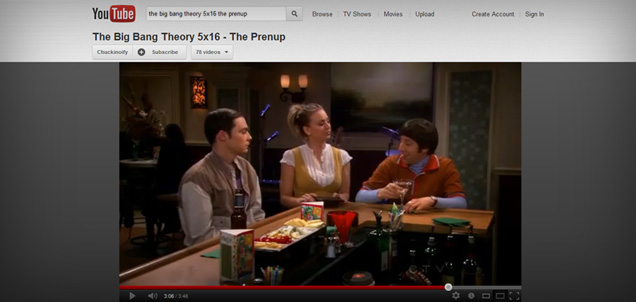
Dying to watch the latest season of Big Bang Theory or want to know who’s going to win the current MasterChef Australia series? Then, you have two options: either download it or wait for a channel to telecast it here.
Of course, many of us opt for the first option as Indian channels still lag in getting the latest seasons of these international shows to India . MxM India explores if the internet is indeed posing a threat to the genre.
Internet, a menace?
Anurag Bedi
Consumer trends have changed over the past few years; and if one gets his dose of entertainment, it doesn’t matter it’s on which platform. “The viewer is platform-neutral. So, as far as one gets certain amount of entertainment quotient, it doesn’t matter even if he’s doing it illegally i.e. by downloading. And with the internet reaching out to every nook and corner of the country, it won’t be wrong to say that internet poses a threat to content owners or channels,” explains Karthik Sharma, managing partner, Maxus.
The internet remains the biggest threat to the English general entertainment channels. Most of these channels are not able to telecast various popular international shows like Games of Throne, Weeds, Sherlock and others, hence viewers log online.
Saurabh Yagnik
“Today, the television audience is experimenting with content. They are quite receptive to exploring new, innovative and unconventional content. Considering the change in lifestyles and the impact of globalization, our audience is more aware than ever. Viewers have the knowledge of the scope of entertainment available on various platforms,” said Anurag Bedi, Business Head, Zee Cafe.
Saurabh Yagnik, GM & senior VP, English Channels, STAR India Pvt. Ltd added: “STAR World’s constant endeavour has been to bring international shows to India , at the same time as their broadcast in US. We, in fact, had the World Television Premier of shows such as Missing, Touch on our channel. Even for Masterchef Australia Season 4, we are broadcasting the show very close to its telecast in Australia this time. This also becomes possible due to our strong and exclusive associations with international production houses such as Disney, Fox, and others.”
Ricky Ow
On an optimistic note, Ricky Ow, executive VP, Networks, Asia, Sony Pictures Television feels that though the internet adds to the competition, it helps one realize what the market is looking for: “If one studies the internet, then it can definitely turn out to be an asset as it gives us an opportunity to look at what the audience is interested in. For example, it helps us know what the India n audiences’ interests are outside AXN.”
However, the newest entry on the block, Comedy Central’s Ferzad Palia, senior VP and GM – English Entertainment, Viacom 18 Media Pvt Ltd feels that internet should be seen as a complimentary asset rather than just as competition. “With technology, the social mindsets of people are changing too. And now people have become more accepting towards western culture. Thus, it’s good for us as more and more people identify with the content.”
Ferzad Palia
The buying game
There is no doubt that the English-language general entertainment market is developing. Almost every channel is trying its level-best to keep the audience hooked on by getting more and more international shows to the living rooms. One question still remains: why are channels not able to show what their TG wants?
“It is difficult to bring popular international shows to India , especially at the same time as their release in other markets. However, we have been driving our efforts to realize this for a long time with our property titled Torrentz, wherein we brought international shows very close to their release in other markets,” said Mr Yagnik.
New channels coming up are giving a tough competition to the likes of Star World, Zee Cafe and AXN. Media professionals feel that, though the competition is good, it can become a burden on English channels as they have a limited TG. This has lead to rise in the cost of procuring rights. So, if a channel is paying more for an acquisition of shows which are popular abroad, they might not be able to recover money as mass channels do.
Mr Ow added that though it cannot be categorized as easy or difficult, the onset of more channels has definitely risen the costs: “If we want a show, we try our level best to get it. AXN’s programming formula is simple – we are an action-adventure destination. Therefore, it narrows down the competition as we look for series, movies or reality shows which cater to that genre.”
On the other hand, Mr Palia feels that though procuring rights is a complicated process, nothing is easy when it comes to running a channel. “It’s a part and parcel of starting a channel. What is more important is the selection process of the shows which will interest the India n audience. Demand for international shows has increased in the country of late and people have become choosy about what they want to watch.”
Hence, many channels are now associating with production houses or producing their own shows as they feel it will help them grow their market without too much of a trouble.
Vishal Rally
“There could be 100 popular international shows, but we cannot telecast them all. So, a channel needs to choose what their TG wants. Thankfully, we are backed up with a studio and a JV which allows us to telecast shows simultaneously in India as well. We telecast shows like Survivors, NCIS at par with their international seasons. That’s our USP,” said Vishal Rally, business head, BIG CBS Network.
Nevertheless, most channels agree that it isn’t an easy task to get good international shows to India , but to keep the competition at bay, they have to try to out-do internet but also each other by bringing the latest shows to their audience’s living rooms ASAP.
Many broadcasters are also aware that the internet viewership of popular shows is small, and the public still prefers a bigger screen experience. As one broadcaster said, high speed broadband connections exist, but not with everyone. And the buffering is a pain. It’s a huge negative for the viewers who watch English GECs.
But low broadband speeds and poor connectivity will soon be a thing of the past, right? Yes and so will dated soaps and old seasons be, says the broadcaster, requesting anonymity. “Right now, we are catching up with old seasons since most people haven’t watched them… For instance, how many people have watched The Newsroom, which has been receiving rave reviews?” There’s also an issue of copyright and picture quality. “Some of what you see on YouTube is pirated and is being yanked off the site when caught in the act. And if it is available somewhere, it appears to have been recorded on the microwave oven… Who wants to view Masterchef where a tomato looks like a potato!!!”
Hmmm. Surely reason for us to wait and watch. Or in this case, watch and wait.
Launched 16 years ago as a music channel, Star India’s Channel V is now turning into a full-fledged youth entertainment channel. Starting July 1, V will stop airing music programmes in India and focus on fiction and non-fiction shows. The reason: “Over the last two years, there has been an explosion of ‘music only’ channels, but everyone’s playing identical playlists,” says Prem Kamath, executive vice-president and general manager at Channel V. “In order to grow as a channel and as a brand, it has always been critical to have an offering that is unique in our competitive space,” he adds on being quizzed on the decision.
Many experts feel that it was bound to happen as more and more channels try to mould themselves to stay connected with what their target audience wants. But there many questions arise: could this mean the beginning of the end of music on TV? What is the future of music genre? Where is it headed?
The beginning
The scene for Indian music channels was set with the launch of MTV in the early 90s. Soon after, Channel V was launched in 1994, and since then there has been no looking back.
The launch of these music channels also led to a boom in international as well as Indie pop culture. However, it was shortlived and Bollywood music took over, and the two channels, along with many other launched afterwards, started playing popular filmi songs. But over a period of time, these two channels moved beyond playing only music with shows like Roadies, Splitsvilla and Dare 2 Date.
Hemant Kenkre
According to music columnist Narendra Kusnur, somewhere down the line for these channels, music took a backseat: “I’m sure any channel would do thorough research while trying to change their gameplan. So, if a music channel shifting towards being a youth entertainment channel is proved beneficial – for viewership as well as revenue – then it wouldn’t harm them to take such a step.”
He’s not alone in voicing this. Even Hemant Kenkre, a former music channel professional and a corporate and brand communications veteran, feels that channels are now branding themselves differently to reach out to their TG. He, however, does blame the availability of music on various platforms – radio, cellphones, laptops, iPods – as the reason for this shift. “Today, the youth is moving towards reality shows and they want it from the channels meant for them. As for music, they get their share of it from other mediums too.”
Luke Kenny
Former VJ, musician, actor and 9XO programming head Luke Kenny, on the other hand, feels that the channel (Channel V) decided to shift long back and has been moving slowly towards it, but there are still many who want music on television. “If music was dead on TV, then how would you explain other new music channels cropping up and doing well too?”
He added: “Having said that, I do believe that with more channels showcasing Bollywood songs, music channels have lost their niche and have just became promotional channels. Therefore, if a channel decides to change colours, it might work. And you never know, Star India might come up with a new music channel called Music OK.”
Industry talk
If one takes a look at various channels, be it music or a GEC, they will find that, there is a great deal of music in some or the other. We have music trailers/songs aired across all channels. Award shows, too, have musical performances and talent shows like Saregama, Indian Idol, DID and even celeb dance show Jhalak Dikhla Jaa are high on ratings.
Mohit Joshi
Therefore, according to media planners, the existence of specialised music channels is a difficult game. “Today, unfortunately for the masses in India, music equals to Bollywood. This is the challenge. This was not the case in the ’90s when there were a lot of private music albums that were launched -Silk Route et al, and the music channels were used for their amplification. So, there was something more than Bollywood, which is not the case today. In the current scenario, if music channels do not experiment with music or the content, then there is a fear that they will dilute their relevance over a period of time,” says Mohit Joshi, managing director, MPG India.
Adds Carat Media India’s senior VP Himanka Das: “Channel V’s decision to discontinue music is a welcome change and would offer interesting opportunities to build engagement content with the youth, considering the very little content that is available to them in entertainment beyond music. Music as a genre gets 6-7 per cent share in the youth segment of viewers with Channel V contributing 24 per cent to this share amongst 20+ channels. Channel V vacating this space is someone else’s gain!”
Punit Pandey
Meanwhile, other music channels aren’t perturbed and are waiting to see how the channel is accepted in its new avatar. As per TAM (CS4+, All India market), there has been a consistent growth in the music genre. In 2007, the genre share of music channels was 2.02 per cent whereas in 2012 (till week 24) the share has grown to 3.62 per cent.
Punit Pandey, senior VP and business head, 9X Media Group, agreed with Mr Das and added: “Music has, and will continue to, work on television. It is close to a Rs360-370 crore industry (in the HSM belt) and growing. More and more people are ‘watching’ music, so there is nothing to worry about for music channels at large.”
Nikhil Gandhi
Similarly, the view from UTV Bindass which started out as a Youth Entertainment Channel (YEC) and has been a pioneer in the segment is that though in the recent past music channels, especially MTV and Channel V, have started shifting focus from music to fictional and non-fictional shows, there is no reason for sleepless nights. “We have an advantage over other channels entering the YEC genre as we have already created a connect with the TG,” says Nikhil Gandhi, Disney UTV Executive Director – Youth Channels, Media Networks. And adds an alert: “So, I would like to tell other channels entering the YEC genre to work on their strategies well.”
Apprehensive marketers?
The change in positioning is due to the feeling that youngsters now have a strong spending power. And, hence, are targeted by various brands more than ever before. TV forms a core part of advertisement for these brands as youngsters also spend a lot of time in front of the television sets.
Simeran Bhasin
But what happens to youth brands if a channel changes its content strategy? According to the various marketing heads, the apprehensions will emerge if the channel isn’t clear about the shift and isn’t able to help a brand reach its TG.
“If the TG of a brand matches that of the channel, it won’t matter if they decide to change over a period of time. However, if there is a shift in TG then a brand would think twice before advertising on that channel,” says Simeran Bhasin, head – Marketing and Retail, Fastrack.
Harkirat Singh
MTV’s latest show Sound Trippin was partnered by Woodland because the brand feels that youth oriented channels helps them reach their TG. However, the brand is clear that it get associated with channels or shows only if it feels there is a connect between the brand and the viewers. “Like any other brand, while media planning, the TG of a certain channel is important for us. We look for shows which are able to reach and connect with our TG. So, if a channel changes its content plan, we will want to go through their new strategy to figure out where do we figure and how it can benefit us,” says Harkirat Singh, MD, Woodland.
Will the shift work?
According to the industry professionals, the change in content plan by a channel is done after a lot of research and only time can decide if it will work in its favour or not. However, they believe that a channel should remain true to its philosophy because otherwise it will lose its identify as well.
Samyak Chakrabarty
Expanding on it, Samyak Chakrabarty, MD, Electronic Youth Media Group and Chief Youth Marketer, DDB Mudra Group believes that ‘youth’ is a very misunderstood word and youngsters cannot be defined in one category as all depends on the exposure and the background one comes from. “In their perception to become ‘youth’ channels, they are getting muddled up and don’t know where they are headed. Today, a youngster cannot associate MTV or Channel V with anything like they do for other brands. For instance, technology means iPad, connectivity means Blackberry etc. I think music channels should have remained with what they started as, instead of losing their identify to gain more TRPs. Such moves will only lead to their downfall, in the long term.”
From being largely optimistic to one predicting a downfall, we received mixed reactions to the proposed change in Channel V’s identity. However, one thing is clear, no matter what Star India decides, there will be many who will wait to see what this mean for them and the genre, at large.
Amar Upadhyay, last seen on Big Boss season 5, is all set to hit the small screen again with BIG Magic’s Police Files.
The channel aims to feature local-relevant entertainment through the core Hindi heartland – UP, MP, Biharand Jharkhand. With the Hindi heartland known for crimes like drug trafficking, extortion, murder for hire, crime against women, homicide, burglary, theft, land mafia and more, the actor will be seen highlighting cases that the local populace can relate to.
Anand Chakravarthy
“Amar is a household name and rose to fame through a fiction show and then again through a reality show. He connects excellently with audiences and has a huge fan following in the heartland. His ability to connect with audiences is unique and a show like Police Files requires someone who is one amongst them, understands the true issues of the heartland and offers them solutions on dealing with situations, should they ever be in one. Amar does this beautifully as he discusses cases and helps audiences look out for possible signs through discussions with psychologists, real cops and more…” said Anand Chakravarthy, Executive Vice President, Marketing, RBNL and Business Head, BIG Magic.
Speaking on hosting the show, Amar Upadhyay said: “BIG Magic is the newest entertainment channel that has swept the Heartland. With its specially created localized shows, the channel has been able to fulfill a huge entertainment lacuna in the region. I liked the concept of Police Files and its ability to help audiences deal with the growing crime rate in the region. I look forward to making this iconic show an ideal platform to fight crime and create awareness amongst public.”
The show hopes to empower viewers to be better equipped to deal with criminal situations. As part of the show, Mr Upadhyay will be seen engaged in discussions with psychiatrists, real lawyers and the real police, who discuss the reason, rationale, signs to look out for and more, when it comes to dealing with crime in the region.
News Corporation announced that it intends to pursue the separation of its publishing and media and entertainment businesses into two distinct publicly traded companies.
Upon closing such a transaction, shareholders would hold interests in a publishing company, consisting of the largest collection of best-in-class publishing assets and a new digital education group, and a global media and entertainment company, each of which would benefit from enhanced strategic alignment and increased operational flexibility with respect to an unparalleled portfolio of assets, brands and franchises.
News Corporation’s board authorized management to explore this separation after a board meeting.
The proposed transaction would create global category leaders in both publishing and entertainment: a publishing company, which would be comprised of News Corporation’s newspapers and information businesses in the US, UK and Australia, the Company’s leading book publishing brands, its integrated marketing services company, its digital education group, as well as its other assets in Australia; and a global media and entertainment company, which would encompass News Corporation’s broadcast and worldwide cable networks, leading film and television production studios, television stations and highly successful pay-TV businesses in Europe and India.
“There is much work to be done, but our Board and I believe that this new corporate structure we are pursuing would accelerate News Corporation’s businesses to grow to new heights, and enable each company and its divisions to recognize their full potential – and unlock even greater long-term shareholder value,” said Rupert Murdoch, Chairman and CEO of News Corporation.
“News Corporation’s 60-year heritage of developing world-class media brands has resulted in a large and unparalleled portfolio of diversified assets. We recognize that over the years, News Corporation’s broad collection of assets have become increasingly complex. We determined that creating this new structure would simplify operations and greater align strategic priorities, enabling each company to better deliver on our commitments to consumers across the globe. I am 100 per cent committed to the future of both the publishing and media and entertainment businesses and, if the Board ultimately approves a separation, I would serve as Chairman of both companies,” he added.
News Corporation believes that a separation of the businesses into distinct public corporations with their own identities and strategies would enhance overall shareholder value and allow each company to:
Focus on and pursue distinct strategic priorities and industry-specific opportunities that would maximize their long-term potential.
Benefit from greater financial and operational flexibility and better position each company to compete.
Respond and react more quickly to rapidly-evolving technology and global market opportunities.
Tailor its capital structure, and allocate and deploy resources in a manner consistent with its strategic objectives that best enhances value for its respective shareholder group.
With more focus devoted to each business’ financial and operational structure, investors would be able to more clearly evaluate the inherent value of both portfolios of assets and invest in each company accordingly.
The new global media and entertainment company that would be created through the proposed transaction would consist of News Corporation’s highly-profitable cable and television assets, filmed entertainment, and direct satellite broadcasting businesses, including Fox Broadcasting, Twentieth Century Fox Film, Twentieth Century Fox Television, Fox Sports, Fox International Channels, Fox News Channel, Fox Business Network, FX, Star, the National Geographic Channels, Shine Group, Fox Television Stations, BSkyB, Sky Italia and Sky Deutschland, among others.
As a pure-play content producer and distributor, the company would build on its deep heritage in developing incredibly strong, premium content for distribution on screens of all sizes by leveraging its leading content across its entertainment and cable news verticals, as well as its unparalleled collection of regional sports networks, and the industry’s leading movie and TV production and distribution company.
In addition, the entertainment company would benefit from its rapidly growing, high-margin cable network and pay-TV assets, and the distribution capabilities and opportunities associated with its unrivaled global footprint with significant scale across North and South America, Europe and Asia.
The new global publishing company that would be created through the proposed transaction would consist of News Corporation’s current publishing businesses, as well as its book publishing, education and integrated marketing services divisions. The new publishing company would create a scaled publishing platform that would be one of the best capitalized in the industry. The publishing company would have the opportunity to leverage its trusted brands for innovation and value creation across all traditional and digital platforms.
The publishing company would incorporate some of the world’s most successful print, digital and information services brands including Dow Jones, The Wall Street Journal, Dow Jones Newswires, HarperCollins, The New York Post, and The Daily, as well as offer the rich diversity of assets in Australia, including leading brands such as The Australian, The Herald Sun, The Daily Telegraph and The Courier Mail.
In addition, the Company would include The Times, The Sun, The Sunday Times, as well as News Corporation’s integrated marketing services group and its ground-breaking digital education group, including Wireless Generation. With a balanced portfolio of stable and growing news publishing brands and other assets, shareholders would benefit from strong and consistent free cash flow generated by these businesses, over multiple platforms.
Upon closing of the proposed transaction, News Corporation’s shareholders would receive one share of common stock in the new company for each same class News Corporation share currently held. Following the separation, each company would maintain two classes of common stock: Class A Common and Class B Common Voting Shares.
Upon closing of the proposed transaction, Rupert Murdoch would serve as Chairman of both companies and CEO of the media & entertainment company. Chase Carey would serve as President and COO of the media & entertainment company. Over the next several months, the Company will assemble management teams and Boards of Directors for both businesses.
The separation is expected to be completed in approximately 12 months. Management is developing detailed plans for the Board’s further consideration and final approval. To execute the transaction requires further work on structure, management, governance, and other significant matters.
After receiving final approval of the Board of Directors, News Corporation will convene a special shareholder meeting to consider the transaction. This meeting is not expected to take place until the first half of calendar 2013. During the closing process, News Corporation will remain focused on delivering the best possible results for the benefit of its consumers, customers and shareholders.
In addition to shareholder approval, the completion of the separation will also be subject to receipt of regulatory approvals, opinions from tax counsel and favorable rulings from certain tax jurisdictions regarding the tax-free nature of the transaction to the Company and to its shareholders, further due diligence as appropriate, and the filing and effectiveness of appropriate filings with the U.S. Securities and Exchange Commission.
The Company will provide interim updates as appropriate. There can be no assurances given that the separation of the Company’s businesses as described in this announcement will occur.
CNBC-TV18’s special series - The Olympian Effort will be launched at the end of June 2012. Built around the 2012 London Olympics, the show salutes the spirit of sportsmanship and takes an in-depth look at the business of Olympics. The series will offer a 360-degree perspective on London 2012 – from the dreams of sportsmen, to the ambition of global sponsors and from funding careers, to a country’s preparations to host the biggest sporting event in the world.
The series is devised into six parts, with a focus on different aspects of the Olympics in each episode. A special episode on India and the Olympics will showcase India’s history and track record at the Olympics, the past winners and their moments of glory. The show will then look at the Indian 2012 contingent, their prospects and the country’s expectations from them.
As the series progresses, it will dive deeper into the business of Olympics and analyze how Indian businesses and companies with Indian stakes are getting involved and leveraging on the games. The show will capture the expectations of various athletes and contingent sponsors as well as the first time broadcaster of Summer Olympics ESPN Star Sports.
A special episode will be anchored out of London itself that will provide a global view of the 2012 London Olympics and its impact on Brand London. Interviews with global sponsors and organizers will provide an insight to their views and expectations from the games.
The series will conclude after the closing ceremony which will analyze the 2012 Games and brand London from all aspects.
The UEFA Euro Cup has made the Europeans forget all about the economic crisis; London, along with the whole world, is eagerly waiting for the world’s biggest sporting event – the Olympics – to begin. The world is buzzed about the various sporting events coming up in the next few months.
Sports, around the globe, generate a major interest and channels – sports or otherwise – fight each other out for viewership and advertisements, and brands try to out-do each other through advertisements and activations to leave a mark on the public’s mind.
The last event of such a stature in India was the recently concluded IPL which saw the entertainment channels fighting for eyeballs. With the next three-four months choc-o-bloc with sporting events, MxMIndia takes a look at how channels in the country are gearing up.
Event
Period
Channel
UEFA Euro Cup
June 8- July 1
Neo Prime
Wimbledon
June 25-July 8
Star Sports
India-SL series
July 22- Aug 7
Ten Cricket
Olympics
July 27-Aug 12
DD/ESPN or Star Sports
Time to worry?
According to the media planners, for GECs and other channels, there is nothing to worry about. “Non-cricket fare is still appealing to a small niche segment and hence, its popularity is not reflected in ratings. India in the months of Jul-Aug has always been a moderate performer and not as high profile as some others and so this will also not have a major impact,” feels Shubha George, COO -South Asia, MEC.
Suresh Balakrishnan
And she is not alone. Suresh Balakrishnan, CEO, Brand Programming Network, agreed with her and added that though cricket is more than a sport in India, even IPL, which has both cricket as well as entertainment and was telecast at primetime, hasn’t been able to affect channels, especially the GECs in the recent past. “Lately, IPL has been able to get a rating of 2-3 which has hardly affected any GECs, so I’m sure other sports won’t matter to them at all. However, there is no denying the fact that viewership for other sports is increasing in the country. And major events might be able to at least reach the ratings which cricket gets, in the coming years.”
Mr Balakrishnan, however, feels that sports channels don’t have much to worry about as there are many male-focussed brands which help them generate enough ad revenue. “Having said that, I also feel that channels showing sports other than cricket know that recovering money isn’t an easy task,” he added.
The television behaviour showcases the interest of the masses which obviously tilts towards popular entertainment channels. However, most media planners agree that sports viewership is growing in the country and soon things might change but until then channels will have to make do with what they have/get.
Amin Lakhani
Amin Lakhani, principal partner, Mindshare said: “All leading newspapers and news channels have special coverage of important events, take Euro Cup for instance, but how much of it is being converted into viewership or readership? Even then, that hasn’t deferred them from covering the events because they know that, though tiny, there is a loyal following. Even brands are doing activations for sports which are gaining popularity in other sectors apart from Sec A&B – Pepsi is doing activations for football.”
Business as usual
Akash Chawla
Entertainment channels continue to enjoy the largest share in the viewership pie. Although, they continue to compete with each other, when it comes to other genres, nothing has been able to write them off.
Akash Chawla, Zee Entertainment Enterprise (ZEEL) marketing head – national channels, said: “Just like IPL, we are ready to combat any other sporting event. Our programming strategy does not depend on these events.”
“For us, it will be business as usual. The channel is backed with strong and fresh content for its viewers, irrespective of the programming on competing genres,” said Hemal Jhaveri, general manager, Movies Ok.
Hemal Jhaveri
Other genres which focus on the same target audience as the sports channels are youth and news. But many in these genres believe that such sporting events don’t affect their viewership. Nikhil Gandhi, executive director, youth channels, media networks, Disney UTV claimed that most of the sporting events attract a majority viewership of urban youth, whereas they, as channels, focus on the HSM belt which includes 62 cities. Hence, such sporting events won’t affect their viewership.
A broadcast veteran from a Delhi-based news channel too felt that news channels give enough coverage to the various sporting events, so there is no question that the events might eat into their viewership pie. He said that though both cater to the same TG, they are different genres and people might shift between the two, if needed.
Nikhil Gandhi
On the other hand, Neo Prime, the sports channel which is currently telecasting UEFA Euro Cup 2012, is aware of the competition within and between other genres and risk involved, but is still optimistic. “Sports is still a male-dominated genre, whereas other genres (read GECs) enjoy female viewership. But during big events, there are chances of a shift in the remote control. Sports do get eyeballs. And as for the advertisements, the brands which advertise on sports channels are different from the ones in GECs or other channels. Hence, nothing overlaps each other,” said Prasana Krishnan, COO, Neo Sports Broadcast.
Prasana Krishnan
Hopefully, as said by various media personalities, sports other than cricket in the coming years will be able to generate same interest among Indian citizens across sections and help sports channel to boom and enter the main TRP race as well.
 Imaging: Rafiq, Pictures courtesy: London2012.com
 By Rohit Bansal
 Star India’s Channel [V] is ready for a change from July 1 when it will discontinue all music slots in its programming. With this transition, the channel is set to consolidate its position in the youth entertainment genre.
 By Meghna Sharma