Category: TV

  • Hindi channels say ‘Vanakkam’ & ‘Namaskaaram’ to Southern hits


    By Meghna Sharma


    What is common between Ghajini, Wanted and Bhool Bhulaiya, apart from the fact that they were all blockbusters and starred A-listed actors? The fact that they were all remakes of popular South Indian films.


    Lately, Bollywood has been experimenting with a lot of films made down south. And since, the small screen is a reflection of what happens on the big screen, even the channels – movie as well as GECs – are cashing in.


    There has been a spate of south Indian dubbed films being shown on the television. According to the recent data, there isn’t much difference between the ratings for Hindi and dubbed films on TV. On an average, both get a 0.3TVR (HSM CS15+ on channels like Colors, Star Plus, Sony Max, UTV Movies, Star Gold in Jan -June) as compared to prime time where Hindi movies score better.


    So, it is logical to wonder, why the sudden acceptance of South Indian dubbed films on national channels? Is it a Rajnikanth effect or there is more than what meets the eye…


    Formula or freshness?

    Manisha Sharma, weekend programming head, Colors feels that the acceptance started gradually over four-five years ago with experimentation by all three stakeholders – Bollywood, broadcaster and viewer.

     

    Anilkumar Sathiraju

    “The viewer was getting hungry for content and the increased frequency with which Hindi blockbuster movies were being repeated ensured that he was willing to experiment with dubbed movies. The other thing that worked for the dubbed movies was the fact that the production quality of south Indian movies has gone up tremendously in the last decade. Also, the movies which were initial successes were the ones which had stars who, at some point, had crossed over into Hindi like Rajnikanth and Nagarjuna,” she added.


    According to media planner Anilkumar Sathiraju, associate VP and head South, Mudra Max, the fresh content and faces are working in favour of the dubbed movies on channels. “Movies down south, especially Telugu films, have a certain mantra – say six over-the-top fight scenes, two behind-the bushes romantic songs – which isn’t very common in Bollywood movies of late. So, people don’t mind watching something ‘different’.”

     

    Mohan Gopinath

    However, there are movie channels like Zee Cinema, which have been showing South Indian dubbed films for a long time, which feel that the trend has caught on other channels recently. “To be frank, these movies have always rated on Zee Cinema, so the appetite has always been there. Other channels have picked the trend up in the past few years and now the viewer gets South films, dubbed in Hindi, all across. Now with South Indian films being remade into Hindi films, the appetite for dubbed films has increased,” says Mohan Gopinath, business head, Zee Cinema.

     

    Manasi Sapre

    Also with broadcasters taking precautions to maintain the real essence of the film while dubbing, not much is lost in translation. So, viewers find it easy to relate to the films.


    Manasi Sapre, director programming and acquisitions, Movie channels UTV, said: “Though, dubbing is a challenging job, we make sure that the essence of the film isn’t lost in the process. Therefore, it varies – sometimes they are sourced dubbed and sometimes we do it.”

     

    Vijay Subramaniam

    “Till a decade or so ago, most regional movies were shown with subtitles which didn’t attract the viewer as much it does today, since they are dubbed. So, not only masala movies but also artistic films are able to find their way into one’s living room,” said Vijay Subramaniam, deputy GM, Madison Media.


    Apart from the content and viewer’s acceptance, Anamika Mehta, COO, LodestarUM feels that it’s the explosion of media which is behind this: “What happened with the song Kolaveri di is the finest example one can give today. Boundaries are shrinking and more and more people are coming to know about the film culture down South.”


    Cost cutting

    Vajir Singh

    Vajir Singh, editor, Box Office India accepts that freshness in content and crossover of actors – famous like Rajnikanth or lesser-known ones like Siddharth – does play a role, but feels that it is the cost of acquisition that plays a bigger part here: “If a channel can purchase entertainment at cheaper rates, then why shouldn’t it? South Indian films in comedy and action genre have always done well as they provide pure entertainment to viewers and eyeballs to the channel.”


    He’s not the only one to voice such a sentiment. Even media planners feel that cheaper acquisition rates are a main reason why suddenly these movies are being shown on television so frequently. “It is far cheaper to acquire little older or newer South Indian movies than latest Hindi movies which are showcased as premieres on the weekends by channels. So, it helps them to build a bigger library,” said Ms Mehta.


    “Broadcasters, over years, have been struggling with increased cost of acquisition, limited hits and increased competition. As compared to about a decade ago when a Bollywood star would have 2-3 releases a year, today stars prefer to do one movie at a time. Also, in a good business year the number of blockbuster movies will not cross 10. This, coupled with the fact that there are new channels getting launched in both Hindi GE and Hindi movie space, ensured that broadcasters was struggling for content and more willing to experiment with south Indian dubs,” explained Ms Sharma.


    The new experimentation seems to be working for Bollywood and it is working for the channels and viewers too. No one seems to mind it!


    Pictures courtesy: maxtelevision.com, Imaging: Rafiq



  • Aidem wins advertising duties for Jaya TV network

    By A Correspondent


    Aidem Ventures Pvt Ltd has announced its partnership with Jaya TV Network where the company will be handling the advertising sales duties for the Tamil television network for the next 3 years. The Jaya TV Network comprises Jaya TV, Jaya Max, Jaya Plus and J Movies.

     

    Announcing the partnership, K P Sunil, Vice President, Jaya TV Network said: “Having identified that in order to communicate with their consumers, brands need to speak to them in their language, thus national clients are increasingly adopting the regional mediums to reach their prospective clients. This is the perfect time for us to expand our sales operations in a big way to geographies beyond Tamil Nadu. Most of the major advertisers are based out of advertising and commercial hubs like Bengaluru, Delhi and Mumbai. We are looking at Aidem to complement our growth strategy with its established network and relationship across clients and agencies across India. This partnership promises to broaden our current client base and facilitate a healthy revenue stream for the Jaya TV network’.


    According to the FICCI Frames 2012,India’s regional television industry witnessed a growth of 70 per cent in 2011, as compared to the national growth of the industry which is slated at 12 per cent. The numbers clearly denote that the growth in the industry is coming from the regional markets and the future is there! With the regional channels accounting for approximately 33 per cent of all India CS 4+ television viewership, every advertiser is trying to better their foothold in the regional markets to ensure they enjoy Pan India presence.


    “Aidem is well equipped and geared to bridge the gap between the regional and national advertisers. We are optimistic that regional will be the new national and it is a strategic business decision on our part to make out foray in this market. There’s no denying that exciting times are in store for regional TV channels and we are looking forward to this business assignment,” said Vikas Khanchandani, Director, Aidem Ventures Pvt. Ltd.


    Discussing the Southern Media Market in India, Alok Rakshit, Head-Broadcast Business-Regional & News, Aidem Ventures Pvt Ltd said: ‘This market comprises various uni-lingual sub-markets, which helps the local broadcasters in terms of viewership, subscription profit, advertising revenue and building overall consumer loyalty for their channels. It forms a sizeable portion of the total Television pie after the Hindi General Entertainment Channels’ category. Among the sub-markets, Tamil genre commands the largest share in viewership. What is good news for the players in this market is the fact that the industry is now also backed by the presence of national advertisers who concede that the regional television industry is the best possible platform for them to connect with the local consumers.”


  • Paritosh Joshi joins Ormax as Strategic Advisor

    By A Correspondent


    Paritosh Joshi, former CEO-Star CJ, will now be associated with media research and consulting firm Ormax Media as a Strategic Advisor. Mr Joshi recently decided to step away from the corporate world after a 27-year career that spanned from FMCG marketing and Commodity Trading to Perfumery and Broadcasting*.


    In his advisory role, Mr Joshi will engage with the research and business teams at Ormax Media across various aspects of their work. Speaking about the association, Shailesh Kapoor, CEO, Ormax Media, said: “I am delighted to announce that Paritosh has accepted our invitation to take up the role of Strategic Advisor. With his experience in the media business, as well as his close involvement in several industry initiatives, he will bring a unique and fresh perspective to the table, that will help us, and by implication, our valuable business partners’ community.”


    Speaking about his new role, Mr Joshi said: “Ormax Media are doing some path-breaking work in developing new metrics altogether for television and film industries. I have a deep interest in audience measurement, and this engagement is another way of delving into this vast landscape, even as I get to work alongside Shailesh and his splendid team.”


    Disclosure: Paritosh Joshi writes Media Matrix on MxMIndia.com every Thursday


  • Suvarna Launches new weekend comedy show

    By A Correspondent


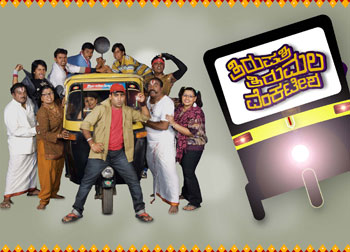
    Star Network’s Kannada General Entertainment Channel Suvarna has announced the launch of their new weekend comedy show Tirupathi Tirumala Venkatesha directed by Master Anand, who has earlier directed the comedy shows Paduvaralli Padegalu and SSLC Nanmakkalu for Suvarna.


    This is an episodic fiction comedy and the story revolves around a family which runs a small business of home-made products.


    The show will go on air from July 7 and will be aired on weekends at 10pm.


    Anup Chandrashekaran, Business Head of Suvarna said: “Suvarna has been setting new benchmarks with every new show and Tirupathi Tirumala Venkatesha is yet another offering from us which will stand out as a high quality product. We, at Suvarna, are bullish about the comedy genre as it appeals to the entire family and resonates across age groups. I hope our viewers like this show.”


    Anil Narang, Head of Marketing & Strategy, Suvarna Channel said: “This show will further strengthen our weekend offering. We have seen in the past that viewers like light hearted comedy shows which act as a stress buster. We are confident that viewers will enjoy this hilarious comedy show.”


    Tirupathi Tirumala Venkatesha is one more addition to the many popular shows of Suvarna such as Krishna Rukmini, Preetiyinda, Amruthavarshini, Pancharangi Pom Pom, Chukki, Cheluvi and Pallavi Anupallavi.


  • 9X Tashan now also available on Tata Sky

    By A Correspondent


    9X Media Group’s Punjabi music channel 9X Tashan is now also available on Tata Sky. Commenting on the initiative,  Sandip Bansal, Managing Director, 9X Tashan, said: “We are delighted to announce that Tata Sky subscribers can now enjoy Punjabi music and humorous short format shows aired on 9X Tashan.”


    Nicola Bamford, Chief Content & Business Development Officer, Tata Sky Ltd. said: “Our endeavour has always been to provide the most relevant content to our growing subscriber base. Today, Tata Sky engages every member of the family with the most comprehensive range of entertainment and music content. The launch of 9X Tashan on our platform underscores our continued commitment to add the very best to Tata Sky’s growing portfolio of channels and further increase the entertainment value of Tata Sky.”


    Launched on August 31 2011, 9X Tashan is available across cable and satellite homes. The Channel is streamed live on the internet on the channel’s website - www.9xtashan.in and on various mobile platforms.


  • Aidem wins ad sales duties for Jaya network

    Aidem Ventures Pvt. Ltd. today announced its partnership with the Jaya TV Network where the company will be handling the advertising sales duties for the Tamil television network for the next 3 years. The Jaya TV Network comprises Jaya TV, Jaya Max, Jaya Plus and J Movies.


    Announcing the partnership, Mr. K. P. Sunil, Vice President, Jaya TV Network said, ‘Having identified the fact that in order to communicate with their consumers, brands need to speak to them in their language.  Thus, national clients are increasingly adopting the regional mediums to reach their prospective clients.  This is the perfect time for us to expand our sales operations in a big way, to geographies beyond Tamil Nadu. Most of the major advertisers are based out of advertising and commercial hubs like Bengaluru, Delhi and Mumbai. We are looking at Aidem to complement our growth strategy with its established network and relationship across clients and agencies across India. This partnership promises to broaden our current client base and facilitate a healthy revenue stream for the Jaya TV network’.


    ‘According to the FICCI Frames 2012, India’s regional television industry witnessed a growth of 70% in 2011, as compared to the national growth of the industry which is slated at 12%. The numbers clearly denote that the growth in the industry is coming from the regional markets and the future is there! With the regional channels accounting for approximately 33% of all India CS 4+ television viewership, every advertiser is trying to better their foothold in the regional markets to ensure they enjoy Pan India presence. Aidem is well equipped and geared to bridge the gap between the regional and national advertisers. We are optimistic that regional will be the new national and it is a strategic business decision on our part to make out foray in this market. There’s no denying that exciting times are in store for regional TV channels and we are looking forward to this business assignment’, said Vikas Khanchandani, Director at Aidem Ventures Pvt. Ltd.


    Discussing the Southern Media Market in India, Alok Rakshit (Head, Broadcast Business-Regional & News, Aidem Ventures Pvt. Ltd.) said, ‘This market comprises various uni-lingual sub-markets, which helps the local broadcasters in terms of viewership, subscription profit, advertising revenue and building overall consumer loyalty for their channels. It forms a sizeable portion of the total Television pie in India, after the Hindi General Entertainment Channels’ category. Among the sub-markets, Tamil genre commands the largest share in viewership. What is good news for the players in this market is the fact that the industry is now also backed by the presence of national advertisers who concede that the regional television industry is the best possible platform for them to connect with the local consumers’.


  • Peter Mukerjea: GoodCo, BadCo & NewCo

    By Peter Mukerjea


    So it has finally happened. The break up of a mega corp. And it’s happening before our very eyes, and like global warming, it’s a sign of the times. In years to come, students at media schools in India and elsewhere in the world will be reading how the media landscape evolved and how new media slowly, but surely, took it’s place in society. The demise of print and eventually, television, along with the numerous obituaries on the subject will all be in the history books eventually. How media moguls like Rupert Murdoch and James Murdoch were literally pushed off their lofty perches and new names and faces like Mark and Sergei took their places will all be a chapter or two in reference books. The erosion of the powerful dominance of print media brands will be replaced by brand names like Google, Facebook, Instagram. This period in social history will be seen by students of media studies as part of a process of evolution and not much more.


    But for those of us who are seeing this unfold, it’s indeed an interesting and captivating phase.


    Speaking to friends and ex-colleagues in New York, LA and in London recently, it seems many of them are seeing this as the transitioning of one company which comprises of both GoodCo and BadCo to several NewCos. Many of them are also now wondering how many more NewCos will emerge from this, and how soon, but more importantly for them, who will run them. The share price of the company stock has always been a subject of conversation amongst those fortunate enough to get share options, and the fact that it has been static or of negative value for long periods of time has been a source of annoyance. But the fact that this announcement has caused a flutter of activity and raised the share price is seen by many to be a good thing for them personally, so they can now actually make some use of the stock options and realise some value. Most also believe that this value will increase more dramatically when the family gives up control but that could be like waiting for Godot.


    Let’s not forget that it’s the profits of today’s so called BadCo that  were used to acquire, build and grow the television businesses in the first place, which are now seen as today’s GoodCo. Like God made little green apples, surely there will come a day, very soon, given that the seed of thought has been planted, when these very television businesses at GoodCo will also be spun off into individual entities, driven by the same principles that are the cause for the split today – providing better shareholder value and value creation. But that’s the way the cookie crumbles.


    The company which is the largest revenue driver within GoodCo could well find a viable financial spreadsheet reason and which showcases a scenario where better shareholder value could be created if certain parts of their GoodCo were then hacked off and cut away into separate entities as they were losing money or were no longer beneficial to their shareholders.


    I do think that the possibility that billions of dollars of further investments into the UK and Europe being stopped and being diverted to the US is more of a veiled threat than reality, but the possibility that the Euro Zone and their currency itself may not survive for too long, will have financial planners everywhere crunching their numbers and hedging their bets in all sorts of different currencies, anyway. So for Rupert Murdoch to say this so plainly in a recent CNBC interview is not altogether surprising but is reminiscent of childhood cricket games, where if one could not get to bat then, they would pick stumps, bat and ball and go home so no one else could play either. Maybe some of those billions will head to India or Afghanistan or Pakistan, where there’s plenty of low hanging media fruit and bargains to be had for those with pockets of cash.


    In India though, the trend compared to the UK seems to be the reverse and where each of the various media segments – print, television, cable, radio, outdoor and new media are all growing – albeit in an unregulated and pressure cooker kind of environment. This has to be great news for those working in the industry, and the business case for setting up several GoodCo, BadCo and NewCos would be different but the ethos and principles would of course be the same.


    Maybe it’s time for the head of an Indian conglomerate to sail across to meet the boss of the media company that is now busy setting up GoodCo, BadCo, NewCo and  ‘make him an offer that he can’t refuse’ as they say in Mario Puzo’s The Godfather. Not that this is in any way connected to the words used by British MPs in the select committee set up to investigate the hacking scandal in the UK – when asking James Murdoch if he ever felt that he was running a mafia company or words to that effect? James Murdoch was, of course, most offended by that question and as expected, he refuted it completely.


    Nevertheless, maybe it’s time for an Indian company to do what Rupert did some decades ago when he moved out of Australia and bought papers in the UK, thus  creating a global media company. For an Indian company now to own a few internationally acclaimed newspaper titles around the world, then cut losses by injecting Indian cost control systems and management into them would create real shareholder value – rather like the brilliant way in which Tatas have done with the Tata Motors acquisition of Jaguar Land Rover which was a real BadCo and is now a true GoodCo.


    Maybe this is where the NewCo will come in.


  • Colors strikes deal with Eros to acquire 9 films @ Rs95 cr

    By Nandini Raghavendra


    Raj Nayak

    Colors, Viacom18’s entertainment channel, has struck an exclusive seven-to-nine year deal with Eros International to acquire a slate of nine yet-to-be-released films for around Rs95 crore, marking a return to the movie space.


    This is the first big external acquisition this year for Colors, after the channel sold a large chunk of 500 films from its library to Star Network earlier in January this year, as it deferred the launch of its own movie channel.


    Earlier this year, the channel had picked up an entire slate of 17 movies from Viacom 18 Motion Pictures, a Viacom group company.


    Confirming the deal, Colors chief executive officer Raj Nayak said: “The way movie prices are going we decided to take a pause. It is not viable for one channel to pick up films at those prices as we cannot amortize it across our channels. At the same time, being a leading general entertainment channel, we cannot not offer movies.”


    The deal is exclusive to Colors, which retains the right to syndicate the films. As for building their library again with more movies, while talks with a few independent producers to acquire more films is on Mr Nayak says price will be the deciding factor.


    It must above all make business sense. Which is why as a strategy, Colors has made a big shift into non-fiction programming and experimented with shows like ‘Ring Ka King,’ and the recently acquired the dance reality show, ‘Jhalak Dikhla Jaa’.


    While the satellite market has seen many ups and downs, it remains a huge source of income for producers and makes for as much as 20-35 per cent of a film’s recovery costs, especially the big ones. For Eros, it also reduces risk prior to release. Broadcasters who are in a race for ratings have been paying huge sums for big films.


    Industry insiders say, on condition of anonymity, that it is difficult to recover anything beyond Rs20 crore per movie. But the pressure to improve viewership is unrelenting. “The reality on a movie premiere is that it cannot recover more than 30 per cent of its cost; and the rest is across the years,” said Mr Nayak.


    Source: The Economic Times

    Copyright © 2012, Bennett, Coleman & Co. Ltd. All Rights Reserved

    Photograph: Fotocorp


  • Ann Chu joins CNN advertising sales team in Asia

    By A Correspondent


    CNN announced that it has appointed Ann Chu as Director – Partner Solutions Group, CNN Advertising Sales Asia Pacific. Based inHong Kongand reporting to William Hsu, Vice President, CNN Advertising Sales Asia Pacific, Ms Chu will be responsible for generating and managing sponsorship opportunities and projects across the region.


    “Ann’s experience in both the newsgathering and content sales functions position her extremely well to provide our clients with first-in-class sponsorship solutions,” said William Hsu. “As the CNN ad sales team in Asia continues its solid sales performance this year, we look forward to Ann’s continued commitment to the network and our clients.”


    Ms Chu began her career at CNN in the newsroom more than a decade ago, writing and producing for award winning programs including CNN Today and BizAsia. She was most recently the Executive Director of CNN Broadcast Sales and Affiliate Relations, responsible for managing sales and support of the network’s broadcast services to networks across the region. Ms Chu was instrumental in driving the expansion of the network’s affiliate training and support services across both traditional and new media platforms, including the development of a web-based content delivery system for the network’s broadcast affiliates.


    Prior to joining CNN, Ms Chu worked at MTV Asia and Dreamworks in Los Angeles. She has a BA in Communications and Business from the University of Southern California, and a Masters in Journalism from the University of Hong Kong.


  • Hathway scales up to meet demand for digitization

    By A Correspondent


    Hathway Cable and Datacom Ltd is set to scale up the availability of set top boxes (STBs) over the next four months. In addition to the previously planned deployment of 20 lakh STBs, Hathway has decided to procure another 10 lakh STBs to meet the growing demand.


    Hathway’s move is in line with the Ministry of Information & Broadcasting’s latest order on implementation of DAS (Digital Addressable System) from November 1 in the four metros-Delhi, Mumbai, Chennai and Kolkata. By infusing additional STBs in the market, Hathway believes it is poised to meet the fresh deadline, as well as ensure a smoother transition from analogue to digital for consumers across the four metros.


    Commenting on the development, Mr K Jayaraman, MD & CEO, Hathway Cable and Datacom Ltd said: “Hathway has always been committed to providing consumers with the best digital cable experience and we have been preparing to bring consumers a seamless move from analogue to digital cable TV. The modified deadline presents us with a unique opportunity to reach out to and impact a greater segment of the market. Hathway plans to procure the additional 10 lakh STBs to gear up and leverage this opportunity. Therefore, in total, we plan to deploy 30 lakh digital set top boxes across the Mumbai and Delhi. The rush for digital services will peak around the last fortnight of October and we do not want to disappoint the consumers and drive them towards the costlier option of DTH services.”


    In the first phase of digitization of cable television, all four metros- Delhi, Mumbai, Kolkata and Chennai – will switch from analog to digital transmission from November 1. The rest of the country will move to digital cable by 2014 as per the regulations laid down by the Telecom Regulatory Authority of India (TRAI) in consultation with the MIB. Due to lack of preparedness of the industry, the Ministry had recently postponed the sunset date for Phase I from June 30 to October 31.


  • Indo-Pak music show to be simulcast on Colors & Sahara One

    By A Correspondent


    The broadcast media is going in for interesting alliances. Last year, Star and Zee tied up to forge a distribution alliance. Prior to that Viacom 18 and Sun had got together. Earlier this year, the Star Plus mega-show Satyamev Jayate tied up with Doordarshan for a simulcast. And now Sahara One’s India-Pakistan music show, Sur-Kshetra, will be aired simultaneously on younger but bigger GEC Colors.

    Colors  has announced a first-of-its-kind strategic tie-up with the Hindi general entertainment channel (GEC) Sahara One to simulcast the relatively new singing based reality show – Sur-Kshetra.


    Produced by Sahara One, in association with Gajendra ‘Antakshari’ Singh’s Saaibaba Telefilms, Sur-Kshetra will be a cross-border musical battle between the Indian Team, captained by Himesh Reshammiya and the Pakistani Team, captained by Atif Aslam. Evaluating the teams and judging the musical talent will be Asha Bhosle (India), Abida Parveen (Pakistan), and Runa Laila (Bangladesh).


    The show will be anchored by actor Ayesha Takia and the  episodes will also have musical stalwarts  like Ghulam Ali, Hadiqa Kiani and Sajjad Ali from Pakistan, and Suresh Wadkar, Ismail Darbar, Alka Yagnik and Sapna Mukherjee from India.


    Speaking about the strategic tie-up, Raj Nayak, CEO – Colors, said: “Music has the unique ability to unite people and today, it has brought two channels together. Sur-Kshetra will mark Colors’ foray into the singing non-fiction content segment and we are extremely excited about this new venture. By adding the show to our bouquet of offerings, we are working towards fulfilling our commitment to cohesive viewing, while providing our audiences with unique content keeping them engaged.”


    Adding to this, Suresh Mishra, Asst Director, Sahara One said: “With this legendary Indo-Pak musical grandeur, viewers from both the nations and across the globe will witness a new generation of gifted singers. We are very excited about this strategic tie-up with Colors, giving Sur-Kshetra a combination of two large platforms that does justice to the stature of the show”

  • We’re bigger than the sum of all our competitors: Rahul Johri


    Text & Video by Shruti Pushkarna
    Although most of its channels are not mass like those offering soaps and sitcoms, the Discovery Network is a key member of the Indian broadcast landscape. The Discovery Network Asia Pacific’s Senior Vice President & General Manager for South Asia, RahulJohri attributes the network’s success to its dedicated and loyal viewership and says it is far ahead of competition


    Under Mr Johri’s leadership, Discovery India’s portfolio has grown from two to eight channels. In 2009, he led Discovery Channel to become India’s No.1 channel in non-fiction entertainment. He cemented TLC as India’s definitive lifestyle channel and energized Animal Planet with the brand recording the highest audience growth in the factual space.


    He launched three new networks in 2010, Discovery Science, Discovery Turbo and a 24-hour high definition channel – Discovery HD World. Mr Johri has also pioneered the channel’s localization strategy by launching language feeds in Telugu and Bengali. Discovery Channel Tamil was also launched in 2011.


    At a press meet in the Capital on July 5, Mr Johri announced the launch of a new series on TLC called Be Blunt with Adhuna Akhtar. A six-part series, Be Blunt with Adhuna Akhtar showcases the striking transformation of the girls selected from across India into dazzling divas by popular hairstylist Adhuna Akhtar and her brother Osh Bhabani.


    MxMIndia caught up with Mr Johri soon after he unveiled Be Blunt to the media. In this one-on-one interaction, Mr Johri tells MxMIndia about Discovery’s leadership and the network’s latest offering and that Discovery Kids will be unveiled shortly. He also shares his views on how digitization is set to impact Discovery and other niche channels.


    Excerpts from the interview:

    It’s interesting that you have a show on hairstyling. Tell us a little about this show with Adhuna Akhtar?

    Our focus in TLC is on different aspects of lifestyle and one of the most prominent ones of that is appearance. So keeping that in mind we thought a hairstyling show would fit in really well on the channel. And there is no other hairstyling show. When we wanted to do it, we found Adhuna Akhtar, who is one of the most popular hair dressers in the country. This show takes in six different individuals and carries out a makeover on them and in the midst of doing the makeover, Adhuna gives viewers a lot of tips on how to keep their hair better.


    [youtube width=”400″ height=”225″]http://www.youtube.com/watch?v=0LvsvFWwOTA[/youtube]

    You mentioned there are six episodes of this show ready to air… what’s coming up next?

    We have always done new things and surprised our viewers. Whether it’s a show on Shah Rukh Khan’s life, the jewellery show, and now it’s a hair dressing show, so we will continue to surprise people.


    And then there’s the programme capturing the Indian Army’s Women Expedition to Everest…

    The Army sent an expedition which scaled Mount Evereston May 25 and 26. There are seven women who were part of that expedition and a total of 17 climbers who climbed Everest. We shot the whole show; in fact, a Discovery cameraman also climbed Mount Everest along with the climbers. Right now we are editing the footage that has been brought back and we hope to bring this show within this year.


    And the two-part series on Oprah’s visit to India?

    Oprah was here earlier this year and she shot extensively in Mumbai, Vrindavan, Agra and Jaipur. There are two episodes of this new series that she now does which is called The Next Chapter which appears on Oprah Winfrey’s Network in US and in India you will see it both on Discovery Channel and on TLC. Discovery has had quite a few specials in the past, like the special show with Shah Rukh Khan, another one of course coming up with Oprah…


    Considering a lot of money has to be invested in promotion for programming, isn’t it better to stick to longer format shows rather than these one-offs?

    It is a part of the kind of shows we do. A documentary filmmaker does not make a series, there is no 52-part documentary. It will always be smaller parts. And viewers know that there will be specials and we have now eight different channels of our own. So we have enough air time to take the message to the viewers.


    Discovery has got a lot of competition in this space now, especially from a channel like History which is doing fairly well. How do you view competition from upcoming channels?

    We are, by far, the leaders in the genre. We are bigger than the sum of all our competitors. We’ve been in the business for 15 years and no matter how you slice and dice the numbers, we are the leaders. And we will continue to present to our viewers with quality programming. And the other important thing which is responsible for our leadership position is, on Discovery you will always find shows which are on brand. There is nothing that is not on brand. So viewers get from Discovery what they expect from Discovery. And that is really responsible for the loyalty that we have of our viewers.


    A channel like TLC is fighting for viewership with English GECs like Star World and Zee Cafe…

     TLC is bigger than most of them and TLC has a very dedicated audience. If you ask people what they watch on TLC, they will give you names of shows that they follow. And TLC has managed to establish itself as the definitive lifestyle channel in this country and that really gives it the advantage.


    Speaking of niche channels, how are Discovery Turbo and Discovery Science doing?

    In terms of reach, they continue to grow. Discovery Turbo has very dedicated audience in the metro markets and Discovery Science has been growing all over the country. Its distribution has been growing. And if there is a country in the world where a Science channel fits in perfectly, it is India because 65 per cent of India is under 30 years of age. And 35 per cent of the country is under 14 years of age. And everybody understands the value of education. And that is why the science channel works so well here.


    And how’s your regional foray going? Discovery Tamil is a success… what languages up next?

    Discovery Channel Tamil is a great success. Discovery is the only international company to have a full-fledged channel and not just a dubbed feed in the language. So it has its own programming grid, it has all the on-air packaging in Tamil. And from the day we launched in Tamil, the rating has more than doubled. Today it is the No 9 channel in Tamil Nadu. We are already available in Bangla, Telugu and Hindi and we continue to evaluate languages.


    It’s been a while since you announced Discovery Kids at FICCI Frames. When will it be launched?

    The test signals of Discovery Kids are already on and we are currently seeding the channel in various parts of the country. We should be announcing the launch very soon.


    And how will it be different from the other channels in this space?

    Discovery Kids is not a 100 percent animation channel. It has the inherent Discovery values. However, we understand the value of entertainment so there is a lot of entertainment on the channel and it’s a parent-approved entertainment channel.


    What will be its driver shows? For instance, POGO has Chhota Bheem and Disney has Doraemon…

    We have our set, and like I said it’s just a matter of time that we’ll announce Discovery Kids and we will show you all the big shows that Discovery Kids has.


    Are you looking at a reality show like Endurance which is a rage internationally?

    You will get all the big shows of Discovery Kids in India!


    Do you think digitization will have a positive impact on channels like Discovery?

    In a digital world where the consumers are not constrained by the bandwidth capacity and have a complete choice, channels like Discovery become that much more important. As a consumer you get complete control over what you want to watch and that is where clearly defined offerings like TLC, Discovery Science, Animal Planet have a clear cut proposition and they become that much more pronounced in a digital environment.


    Given that TRAI will have restrictions on pricing of channels, will niche channels (like Discovery) really benefit from it, considering the huge amount of investment on content by these channels…

    Not being able to price your channel has its drawbacks… I would like to bring the military channel here which talks about all kinds of war strategies and so on. But that will have a small dedicated tribe to watch it. Till the numbers grow, the next level of specialization is difficult. It’s a challenge to get extremely specialized channels into the country.