Category: TV

  • ABP goes the golf route. First Hindi & regional network to patronise elite sport

    By Our Staff


    ABP Network has entered a first of its kind partnership with Professional Golf Tour of India (PGTI) to be the digital media partner for its various golf tournaments to be held in 2021. It has become the first Hindi news network to cover a golf tour in the country and broadcast it live on its digital platform – ABP Live, and its associated social media platforms.


    Said Avinash Pandey, CEO, ABP Network, commenting on the partnership: “While golf is rising as a sport in India, we at ABP believe that Golf should be made accessible to the masses of the country and ABP with its widespread reach and popularity strives to make this possible. Over the last few years, we have been aggressively looking towards ramping up our offerings in the sports segment like Kabbadi and Olympics, while not remaining restricted to cricket. This initiative of broadcasting golf is in line with the larger goal. It’s a prestigious moment for the network to associate with PGTI and facilitate a pan-Indian viewership for the tournament.”


  • 9XM launches Loppipops Youtube channel

    By Our Staff


    Music television network 9X Media launched ‘Loppipops’, a kids’ learning channel available on YouTube. The channel will showcase specially designed and curated playlist of kids’ rhymes and videos, presented by duo Bade-Chote and their gang of animated characters.


    Commenting on the launch of Loppipops, Amar Tidke Chief Programming Officer, 9X Media said: “We are delighted to launch Loppipops Kids learning YouTube Channel on the occasion of Children’s Day. Loppipops will captivate the interest of its young audience in a fun and memorable manner. Over the years, Bade Chote and their friends have become iconic house-hold names extending the IP into the kids space was a natural progression with the ever increasing demand for kid’s content. Music is the building block of early learning and as a music network we have over the years experimented in various ways to entertain our audiences through music. The endeavour here is to entertain and make learning fun. The Loppipops gang will engage the kids in Child-safe screen time by providing them with the right edutainment. This should be fun ride for all!”


  • Zee Entertainment celebrates World TV Day

    By Our Staff


    Zee Entertainment launched the second edition of its  #TVIsFamily campaign to mark the occasion of World Television Day. The #TVIsFamily campaign aims to recognize the role of television as any family member by making it part of the family portrait picture.


    Speaking on the campaign, Kartik Mahadev, Chief Marketing Officer, Content Business, Zee Entertainment Enterprises Ltd. said: “TV has been the most trusted and preferred medium reaching 200mn households for decades now. We are delighted to roll out another edition of the #TVIsFamily campaign this year, wherein we have tried to bring to life the emotional connection that audiences have with television. Last year, the ad film received a phenomenal response from viewers who related to the bond they share with television. The introduction of television has been truly transformative and progressive for the global entertainment industry. For decades, television has provided a huge platform to creators, artists, and others by being an effective medium of taking their work to every household across the globe. With more and more mediums of entertainment and information emerging in the past few years, we wanted to bring to the fore how television will always have an undeniable chord with the viewers for generations to come.


  • Prashant Bhatt joins Sab as Programming Head

    By Our Staff


    Prashant Bhatt
    Prashant Bhatt

    Sony Pictures Networks India has onboarded Prashant Bhatt as Head – Programming, Sony Sab. In his new role, Prashant will be spearheading the content and programming division for the channel and will be responsible for managing the content line-up and the channel’s creative strategy. Prashant will be reporting to Neeraj Vyas, Business Head – Sony Sab.


    Said Neeraj Vyas, Business Head – Sony Sab: “We are happy to have Prashant onboard to drive the programming vertical. Am confident that Prashant’s expertise and his deep understanding of the industry will help us further strengthen our programming capabilities. Prashant will play a key role in ensuring we devise and execute a standout premium slate with ground-breaking narratives and high quality content for our viewers”.


  • TV9 beefs up digital sales team with Munaf Merchant

    By Our Staff


    TV9 Digital has onboarded Munaf Merchant as Vice President – Sales. He will be responsible for building and driving direct revenue streams that cater to the TV9 Digital platforms bouquet. Merchant will report to Azim Lalani, President, Revenue, TV9 Digital.


    Welcoming Merchant to TV9, Raktim Das, Chief Growth Officer (Digital & Broadcasting), TV9 Network said: “We are now a force to reckon with in India’s growing digital media landscape. Just like the broadcasting space, most of our digital platforms are already leaders in their respective markets. Advertisers are showing immense confidence in our ever-growing digital footprint.  We are aggressively pursuing ambitious growth objectives and Munaf’s appointment is another step in that direction.”


    Speaking on his new assignment, Merchant said: “I am delighted to be entrusted with this responsibility. TV9 Digital is a perfect platform to channelise my abilities and at the same time showcase my creativity. As I take up this new opportunity, I will aim to deliver enhanced value to all our partners and clients.”


  • Anupama: The Rare Hindi GEC Success Story


    By Shailesh Kapoor


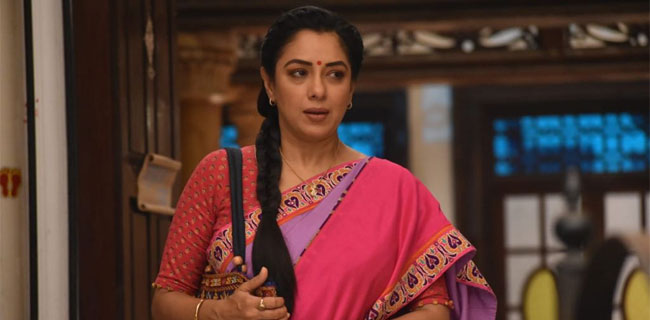
    Shailesh KapoorAmid all that’s wrong with the Hindi GEC category (and readers to this column will know that I have a long list), there is an occasional spark that brings some joy. After being the most-loved Hindi GEC character on Ormax Characters India Loves for 39 consecutive months (from July 2018), Jethalal from Sony Sab’s Taarak Mehta Ka Ooltah Chashmah passed on the top rank to Anupama, the titular character from Star Plus’ 2020 launch.


    Anupama, an adaptation of the Bangla show Sreemoyee on the same network, has been a runaway hit, achieving the unthinkable 4% rating mark in urban Hindi-speaking markets in recent months. In a category where a 2% rating is now considered an achievement (though Netflix’s Dhamaka tells you that you lose your job as a new anchor at 70% ratings, which is available live!), Anupama’s numbers have been exceptional. An average Anupama episode doesn’t rate much less than an IPL game, for example. And while IPL airs only 45 days a year, the show has managed to sustain this for several months, six days a week.


    With its multitude of well-etched characters, Anupama is one of the few well-written Hindi GEC shows currently on air. The storytelling is in broad strokes, but the characters and the conflicts are consistently engaging, and there’s enough entertainment on offer too in what is essentially a high-voltage drama of late.


    The casting and the performances are a notch above the operating level of the Hindi GEC category too. And the lead actress Rupali Ganguly has made the character very much her own, layering the portrayal with mannerisms that can possibly not be written on paper. It’s easy to guess that the show’s creative development process has managed to break away from the daily soap assembly line rut.


    If an OTT show would have even been half as good as Anupama, the press and the internet would have gone ballistic singing its praises. But GEC content earns no such respect in recent years. Not that the channels, including Star Plus, have anyone else to blame but themselves. They continue to diss their own category on air, an inexplicable thing to do. “Don’t act like a daily soap mother-in-law” and “There’s always a daily soap running in your house” are just two examples of dialogues (translated from Hindi) that you will hear in some of the top HGEC shows, including Anupama. When a category decides it can write a joke on itself, and the joke does not even come across as a joke but is taken in all seriousness by the audience, you know there’s a lot wrong at so many levels.


    Nevertheless, Anupama deserves even more love. It’s that rare sensible show that can potentially change some people’s perception about Hindi serials, only if it reached them. But the more important question is: Can there be more like it, or is Anupama a one-off? If there’s enough talent in the Hindi fiction television industry to pull off a show as interesting as Anupama, why are other shows so drab in comparison?


  • Punit Pandey of 9X Media takes additional charge of revenue

    By Our Staff


    Network 9X Media’s Chief Business Officer Punit Pandey has taken additional charge of revenue for the network. Being part of 9X Media’s executive team, Pandey will work closely with the Board of Directors to drive the next phase of growth for the network.


    Punit Pandey
    Punit Pandey

    Commenting on his additional charge as revenue head, Pandey said: “I am extremely proud to be a part of 9X Media since the network’s inception in 2007. From a single music television channel, 9X Media has evolved into India’s largest music television network comprising of platforms both television and digital. I am excited to take charge of ad sales in these challenging times. I am also delighted to take our network’s large tribe of happy young music and entertainment consumers across screens, to the marketplace! My priority as revenue head is to steer the network towards the next phase of growth.”


  • Pogo now also in Telugu

    By Our Staff


    Pogo, the WarnerMedia kiddie entertainment TV channel, has announced a Telugu language service.


    Commenting on the launch, Abhishek Dutta, South Asia Network Head for Cartoon Network and Pogo, said: “The creation of Pogo’s Telugu language feed is a step in our commitment to bringing local animation content in the first languages of our young viewers. This will be our opportunity to present world-class animation and stories to even more fans in India.”


  • Aaj Tak holds 2-day ‘Agenda Aaj Tak’

    By Our Staff


    Aaj Tak is back with “Agenda Aaj Tak”, the thought-platform for debates and discussions in Hindi language. It is being held in New Delhi today and tomorrow (December 3 and 4) with the theme ’Naye Daur mein Likhenge Nayi Kahani’ (new stories written for a new age).


    Notes a communique: The event will unite marquee leaders to decide the nation’s “agenda”- across its most important spheres. Shri JP Nadda, Chairman of the Bharatiya Janata Party, will deliver a keynote on the party’s vision and mission for the upcoming elections while Smt. Nirmala Sitharaman, hon. Finance Minister of India will offer insights on India’s financial outlook. The event will also witness the presence of eminent union cabinet ministers like Nitin Gadkari, Jyotiraditya Scindia, Ashwini Vaishnaw, Kiren Rijiju and Mansukh Mandaviya. This will also be the first time when Union Agriculture Minister Narendra Singh Tomar will be seen addressing a public gathering, post the three controversial farm bills got repealed. “ The event will stream live at www.aajtak.in


  • Death of the Niches


    By Shailesh Kapoor


    Shailesh KapoorThe last two years have been ridden with anxiety for the Indian television business. The uncertainty around the pandemic continues, and with all the NTO mess that has been inflicted upon the industry, a general sense of instability prevails, especially in the group of channels popularly called “niche channels”.


    The term “niche channels” came in about two decades ago, to describe channels that cater to specific interests, and hence, cannot be expected to have ‘mass’ viewership numbers. There is no formal definition, and the term is loaded with subjectivity. For example, is a Hindi movie channel that airs only retro films niche or mass? Is the top Punjabi music channel, which garners more viewership than any Punjabi GEC, niche or mass?


    The ambiguity in terminology notwithstanding, the issue with genres outside the Top 4-5 is for everyone to see. English entertainment channels have either shut down or contemplating the same. It’s not just the NTO but also the rise of the paid OTT market that has led to this reality. Core viewer base of English entertainment genre, when it was at its peak about four-five years ago, is far less than the paid OTT subscriber base in India today. Which essentially makes the genre irrelevant. English movie channels are currently in a more favorable position, but it’s not going to be a comfortable one over the next two-three years.


    Music and youth channels have struggled too, for very similar reasons. Audio streaming apps and YouTube are now primary destinations for new music, and channels running old music cannot claim to be offering much beyond digital music options either. It’s a matter of time that we see more music and youth disappear from our TV sets.


    The infotainment genre is facing the challenge too, because of the same two factors: NTO and digital content. So far, they have managed to stay afloat. But the consumption is gradually shifting to the OTT options being offered by the same networks, and it may just be a case of slow death of the linear versions.


    That essentially leaves us with five genres, including their language variants: GECs, Movies, News, Sports and Kids. These genres address a wider demographic, where the rising OTT penetration is unlikely to be a cause of concern anytime soon. These genres are also family-friendly (unlike youth channels, for example), and hence, largely immune to the OTT factor.


    A medium that was known for its variety may no longer be holding that position. The number of channels on your TV may continue to go up, but the number of channel types (or even sub-genres) will not. You can churn a movie library across six (or even more) network channels, but it’s simply more exposure to the same movies. The total viewing time will not drop, but will consolidate around these five genres.


    That’s the nature of a mass medium like TV, in India. It does not go well with the idea of segmentation and niches. It’s more like a one-size-fits-all medium within each language, now more than ever before. Segmenting audience to identify niches from a content perspective may be a sub-optimal, even flawed, approach for a channel operating in any of these genres to take.


    Segmentation is the strength of the streaming medium, where the target audience can conceptually be one in number. This polarisation of approaches is perhaps the single-biggest impact of OTT growth in India. In a way, OTT has shaped Indian television’s immediate future in a definite direction. And big networks should not hesitate to accept this reality, than prolong the agony that their niche offerings in the linear space will have to inevitably face.


  • Two views on the Mi-17 crash


    News channels this week: One Wedding & 13 Funerals


    By Shailesh Kapoor


    Shailesh KapoorThe tragic clash of the Mi-17, in which 13 people, including the Chief of Defense Staff Bipin Rawat, died, has understandably dominated news headlines since Wednesday. The accident carries strong national importance, and the human stories around it makes the tragedy even more relevant for the general audience.


    But that’s not how the week started for our news channels. They were gearing up for the Bollywood wedding of the year. Katrina Kaif and Vicky Kaushal tied the knot yesterday. The private event at a luxury resort in Sawai Madhopur, Rajasthan had seen the now-predictable news channels build-up since last week. Anchors in the studios, despite no access to the event, were ready to headline the wedding, and ‘reveal’ its intricate, even inconsequential, details to their viewers.


    On Wednesday, that story took a backseat, with the Mi-17 crash being the dominant news. Through the afternoon, news was hard to come by, with no official announcements from the Government of India till later in the day. The coverage was passable, with news channels waiting for official Government sources to confirm the actual details.


    Once Rawat’s death was officially confirmed, the coverage morphed into tributes, with some analysis of what may have led to the accident. The patriotic spin, something our news channels don’t like to miss out on these days, was easy to spot. A couple of Hindi channels even wondered if there was a “saaazish” involved.


    A day later, i.e., Thursday, the anticipated wedding got muted coverage on some Hindi news channels, while the follow-up to the crash story continued. It would have been interesting to see how the channels would have made this choice if they had access to the wedding itself.


    Which brings me to the larger point: Has our news become entirely studio-led now? Even in the Mi-17 crash coverage, ground reportage has been minimal (and restricted to off-prime hours), and most coverage has unfolded through studio shows, with anchors indulging in soliloquys, debates and expert interviews on the subject. In the wedding, that would have been the only method, because the only source of any “footage” is the social media feed of the couple. Indeed, those pictures, shared last night, are likely to be a part of our Hindi news channels, if not the English ones, through the day today.


    In my growing-up years, the top news anchors of the time were always on the ground, reporting from there, cutting their teeth and getting us a good story. Over the years, the reporters on the ground have become nameless, faceless journalists, who seem interchangeable and replaceable. The sad part here is that this perception may actually be the truth. An Indian news channel doesn’t need the same firepower on the ground as it needed earlier. Basic reporting, with no insight most of the time, passes muster. Even during the second Covid wave, some of the best ground coverage came from BBC, CNN and digital news platforms like Mojo, or the Hindi newspapers. TV channels had cursory ground reports, and prime-time debates that generally were useless exercises in blame-game or pontification.


    Judging basis the rock-bottom expectations we now have from our news channels, they have done well over the last two days. But at an absolute level, there isn’t much to write home about.


    Media responsibility missing in action

    This absurdity of 24-hour “news” channels has been around India for ages to know what the rules of the game are, writes Ranjona Banerji


    Ranjona BanerjiBy Ranjona Banerji


    The terrible helicopter accident near Conoor which led to the deaths of 13 people in Conoor on December 8 shocked everyone. On board were Bipin Rawat, Chief of Defence Staff, his wife Madhulika, Brigadier LS Lidder, Lt Col Harjinder Singh, Squadron Leader K Singh, Naik Gursewak Singh, Naik Jitender Kumar, Naik Vivek Kumar, Naik B S Teja, Havaldar Satpal, the pilot Wing Commander Prithvi Singh Chauhan, JWO Das, JWO Pradeep A.


    Group Captain Varun Singh is the sole survivor.


    It took 20 minutes of reading through newspaper websites to get all the 13 names of the casualties. The Times of India was the one I found which had most names, but not all. I had to pick up three names from Twitter, from various ex-armed forces handles that I follow.


    The death of CDS Rawat, 63, was a tremendous shock, there is no doubt about that. But the very least a responsible media can do is to at least acknowledge all those who died in the crash.


    But media responsibility was missing in action when the news of the helicopter crash broke, especially with television news which is the first port of call for breaking news. Whether it is laziness and lack of basic journalism in television newsrooms (my hypothesis) or the various budget cuts which have led to ground reporting staff being hacked (people kinder than me), viewers get short-changed either way.


    As an aside, budget cuts for newsgathering are not new in media houses. No one has had reporters, photographers, videographers everywhere for ages, if they ever did. But all newsrooms should have a network of agencies, freelancers, and local outlets that they can rely on.


    As news of the helicopter crash broke however, you would have been hard pressed to find satisfactory on-the-ground reporting or even straight forward information on what exactly had happened. The nation’s first Chief of Defence staff being in a helicopter crash is big news. It is not enough to just focus on it. You need to have more information than anyone else.


    Instead, our channels quickly sank into their fallback position: studio discussions. When an incident is unfolding, there is absolutely no sense in collecting a bunch of “experts” to speculate on what has happened. If you cannot go to the scene yourself, tie up with someone who is at the scene until your nearest people can get there. You see this happening all the time with international channels.


    This absurdity of 24-hour “news” channels has been around India for ages to know what the rules of the game are. They know how tough it is. News doesn’t “break” nonstop for 24 hours. And yet, when something big does happen, less and less can they manage to get the basics right. Hopefully, they might junk the studio discussion if something happens outside their studio gates but don’t hold your breath on that either.


    I am sure that television newsrooms are full of journalists who know how to do the job. I just wish there was more evidence of it. What seems evident from the outside is that whoever or whatever is in charge, does not know enough about the basics of journalism.


    There is a place for opinions in a news outlet but it comes after the event. It cannot become the event. That TV has turned this axiom on its head points to the miserable state of the bulk of the Indian mainstream media today.


    In case you think I’m being unfair, you will find that most of the subsequent coverage has been about famous people condoling the deaths, arriving at the funeral, getting out the car at the funeral and so on.


    Ranjona Banerji is a senior journalist and commentator. She writes on MxMIndia every Tuesday and Friday. Her views here are personal

  • Zee5 inks partnership with Applause

    By Our Staff


    View this post on Instagram


    A post shared by ZEE5 (@zee5)

    Zee Entertainment’s OTT platfom Zee5 has entered into a strategic partnership with content and IP studio Applause Entertainment, a venture of Aditya Birla Group, for a multi-show association.


    Commenting on the partnership, Punit Misra, President – Content & International Markets, Zee Entertainment Enterprises Ltd, said, “Zee5’s content design principles centre around intimately knowing our viewers and building a bouquet of engaging and entertaining offerings for our multiple consumer cohorts. While Consumer Intimacy is at the heart of our content creation philosophy, our Content Creator Partners are the other crucial pillar in our approach. We are excited about our partnership with one of the leading content creators of our country – Sameer Nair & Applause Entertainment. With our shared belief in consumer obsession, coupled with their unique content creation capabilities, I am confident that we will win the hearts of millions.”


    Added Sameer Nair, CEO, Applause Entertainment: “Over the past four years, Applause has created a diverse slate of content and explored stories across genres, languages and geographies. We are thrilled that our first outing with Zee5 is with Kaun Banegi Shikarwati, a light-hearted, heart-warming dramedy that is both quirky and delightful, and boasts a stellar cast of actors. We look forward to a long and fruitful partnership with Zee5 and help contribute in a small way to their global ambition.”