Zee5 has announced the launch of Infonomix – a universal offering from its Ad Suite. It is designed and developed to help brands benefit from precise targeting and segmentation capabilities to deliver measurable results.
Said Taranjeet Singh, Chief Revenue Officer and Business Head, Zee5 India said, “The core idea behind designing Zee5’s Ad Suite is to give power to brands to choose the best offering per their business objective. Infonomix is a classic example of how brands can make use of this flexibility and prowess to target precisely and leverage segmentation capabilities to deliver measurable results in a brand safe environment.”
Earlier this month, longstanding Sony Pictures biggie Sneha Rajani announced her exit from the entertainment network. Now, Uday Sodhi, Business Head of SonyLIV, has decided to move on and, according to a commuique, will now pursue his entrepreneurial passion in the start-up space. The mantle of SonyLIV will now be shouldered by Danish Khan as the newly appointed business head of SPN’s digital business. This will be in addition to Danish’s responsibilities as Business Head of Sony Entertainment Television (SET) and Studio Next.
During his stint, Sodhi was responsible for the introduction of its subscription model, SonyLIV’s relaunch and the international launch of SonyLIV subscriptions, among many others.
Both, Danish and Uday will work on a transition plan over the next month, in consultation and partnership with relevant stakeholders. Sodhi’s last working day at SPN will be November 15, 2019.
Star Plus has announced the second season of ‘TED Talks India Nayi Baat,’ a collaboration with TED.
The show will be aired over weekends in Hindi, English, Tamil, Bangla and Telugu across Star Plus, Nat Geo, Hotstar and Star World, starting November 2.
Sanjay Gupta
Said Sanjay Gupta, Country Manager, Star & Disney India: “With TED Talks India Nayi Baat, our goal is to showcase, celebrate and support the unsung visionaries who are working towards making a positive impact on society. I believe that a nation is built on the ideas and values of its people. We hope that the ideas and work of our featured speakers inspire our youth to don the role of a social change agent.”
Added Chris Anderson, Head of TED: “India has a spirit of optimism and continuous evolution that’s beautifully captured in this series. From speakers on the TED stage to hundreds of TEDx events organised across the country, TED has had a longstanding relationship with India. We’re thrilled to continue to collaborate with Star Network to showcase the brilliant ideas that can shape the India of tomorrow.”
Lifestyle channel TLC has kickstarted celebrations of its 15th anniversary by launching a new programming line-up across genres such as baking, fashion, food and travel, wedding and home and renovation-based programming. The channel has refreshed its brand identity and adopted a new, vibrant and bold packaging to engage deeper with passionate communities who are aspiring to indulge in exotic experiences.
Speaking on the occasion, Sai Abishek. Director – Content, Factual & Lifestyle Entertainment, Discovery, said: “AT TLC, we love to indulge our audience in exotic experiences from fascinating cultures, food, spectacular locations and the latest in global lifestyle. The 15th anniversary offers us a fascinating opportunity to capture every facet of global lifestyle with the best of programming across genres for our discerning audiences.”
Building on the support for Indian language for ad solutions, Google India announced support for Marathi for Google AdSense. With this launch, Google has now scaled up its support for five Indian language advertising covering Hindi, Bengali, Tamil, Telugu and now Marathi.
Said Shalini Girish, Director- Google Customer Solutions, Google India: “Over the past few years, we have been working towards making our advertising products support Indian languages. With this launch, we now have support for five of the popularly spoken languages in India – that will help publishers and advertisers to create more content in the language and help advertisers connect with their users in local Indian languages seamlessly.”
The response to the first part of this series where veteran media agency professional Shripad Kulkarni focused on festive spends in print (https://www.mxmindia.com/2018/01/exclusive-to-mxmindia-irs2017-top-5-takeaways-by-shripad-kulkarni/). In the second part, he trains his research lens on spends on television:
By Shripad Kulkarni
Shripad Kulkarni
The Rs 1000 crore-plus additional ICC World Cup adspend seems to have taken the sheen of festive TV growth. The festive kickstart phase (week before Independence Day till Shradh) has registered a decline as compared to the same period last year. Based on weekly the average, compared to 2018, the degrowth in TV advertising this year is 6% on All India NGRPs across all advertisers and 6.5% on duration.
A study of genre-wise growth clearly showcases classical cost optimisation. Planners seem to have increased the focus on cost-effective genres, cut duration on high cost/GRP genres and maintained GRP delivering Channels at 2-4% over 2018. Thus, second line GECs, Regioinal Movies and Kids Channels get more emphasis, the low cost/GRP genres of long tail of Television Genres, Regional News and English Channels get a shave. GRP delivering-channels of Top GEC, Long Tail Hindi GEC, Regional GECs and Hindi News have been maintained around a 2-4% growth over last year.
Personal Hygiene and Health, Durables, BFSI and Fashion and Textiles have shrunk drastically, while Services, Telco, Retail and Personal accessories have shown a massive growth.
So what’s the Outlook for festive 2019 looking like?
My forecast for the festive 2019 is that with a normal last-minute surge aided by the 6-Week Diwali Week period, TV Spends will recover a little. Assuming no rate increase over last year, I forecast TV festive spends to degrow by 5%.
Veteran advertising professional Shripad Kulkarni has been leading consulting assignments in the fiels of strategy, content and adsales. Having helmed teams at Carat, Percept Media and Vizeum and also running a media training and consultancy company called M:Ideas which was bought over by Carat Integra, Kulkarni is set to launch AdXforce, an end-to-end software solution for adsales, which facilitates sales process, Call calendar management and CRM.
Using AdXforce, Kulkarni undertook the unenviable task of forecasting the festive season spends for MxMIndia. This is the second of a three-part series. The first focused on print, and the other two will be on television and other media (outdoor, radio and digital). This report is part of a comprehensive white paper the veteran professional and his team have worked on. For more on that, please refer to ShripadKulkarni.com. The detailed TV white paper will be uploaded on the site by noon on Friday, October 11.
In keeping with the festive spirit, Star India, Zee and Viacom have announced special pricing for it’s a la carte channels.
Said Sanjay Gupta, Country Manager, Star and Disney India Star on its ‘Tyohar ka Upahar’ promotional offer for its 16 a-la-carte channels: “The Star network is known to offer best-in-class content inspiring a billion imaginations, making us a household name today. With this promotional offer for the festive season, we hope to spread even more cheer and get more families to experience and engage with our varied entertainment offerings.”
As for Zee, the festive offer sees the a la carte price of Zee TV, Zee Marathi, Zee Bangla, Zee Telugu, Zee Kannada and Zee Sarthak been reduced from the present Rs 19 to Rs 12 per month.
Said Atul Das, Chief Revenue Officer – Affiliate Sales, Zee: “Zee is the pioneer of Indian television industry. Starting with ‘Zee TV’ 27 years ago, and with addition of its strong regional language offerings over the years, Zee is today the No 1 entertainment network in the country. Zee further demonstrated its leadership by becoming the first major broadcaster to declare MRPs under the NTO regime, in August 2018. While there were teething issues during the initial phase of NTO transition, it has brought greater transparency across the television value chain.”
Commenting on the initiative, Prathyusha Agarwal, Chief Marketing Officer, Zee Entertainment added: “With the movement from low involvement bulk purchase to high involvement active unit purchase, the MRP regime is a great move for the consumer. Zee with its strong channel brand and culturally rooted content has become an obvious first choice for viewers. We firmly believe that we have fundamentally great products and robust value offerings. As a broadcast network, our endeavor therefore is to make our channels more and more accessible to the maximum number of viewers across the country. This festive bonanza offer would be an irresistible consumer delight and will go a long way in deepening consumer loyalty with the TV entertainment category.”
Viacom18 too has announced a la carte price for its flagship Hindi GEC Colors and Kannada GEC Colors Kannada at Rs 12/month each. In line with this special festive price, Viacom18 is launching a consumer awareness campaign ‘Har Din Diwali’ encouraging viewers to now subscribe to these channels at its new price point. As part of this offer, the a-la-carte price of COLORS and COLORS Kannada has been reduced from the present price of 19 to 12 per month each.
Said Sudhanshu Vats, Group CEO and MD, Viacom18:“As a broadcast network, our aim is to make our channels more accessible and affordable to all viewers across the country. While we are launching a slew of exciting shows on our channels, this festive offer – ‘Har Din Diwali’ will further empower our consumers to access their favourite shows at a more affordable price point.”
When it was launched 15 years back, Saas-Bahu shows were the rage, but there were many who wondered what a show with a name like ‘Saas Bahu aur Saazish’ (SBS) was doing on a true blue Hindi news channel. But soon enough it became the #1 show across Hindi channels, hence there’s enough reason for ABP News to initiate a campaign on Twitter with the hashtag #SBS15 and #EntertainmentJahaTakSBSWahaTak to connect with viewers.
Said Avinash Pandey, CEO, ABP New Network: “Considering the highly competitive and evolving entertainment and media landscape, we feel great pride in hosting an entertainment news show that has lived up to its fitting tag line for more than a decade now. The increasing viewership of the show is quite telling of its ever growing popularity. We thank our viewers for their continued love and support for the last 15 years, and we are also elated by the confidence reposed on us through all these years, maintaining the shows No 1 position.”
In June 2019, the Broadcast Audience Research Council (BARC) India had appointed an oversight committee to review its data validation and outlier policy which identifies and eliminates outliers including reach outliers. The two-member committee led by former BARC chairman Nakul Chopra and media research veteran Praveen Tripathi has successfully submitted its report to the BARC India board.
The committee has stated that the current process is accurate and unbiased and recommended BARC India to continue to follow the process as it is. Notes a communique: “According to the committee, there is no manual intervention in the process for treating outliers. The entire process is driven by robust algorithms and rules which makes the process unbiased. This is applied to all channels in a fair manner which in return helps BARC India give transparent and reliable data to its subscribers. Over the last 4 years this process has been enhanced and made more robust. New learnings and increased automation has been incorporated with every change. The committee is also working closely with BARC India to further automate the identification and treatment of landing page.”
The committee also recommended that BARC India should appoint a permanent oversight committee which acts independently from a maker-checker standpoint. The Board is reviewing the report and will decide on a concrete plan in the near future.
Said Punit Goenka, Chairman, BARC India: “The oversight committee has successfully submitted its report which should reinforce the faith of industry in the process. We have always ensured the fairness and transparency of all our processes and are proud that the findings of the committee re-affirm the same. We will continue working with the oversight committee and Industry members to improve the measurement standards.”
After Star India, Zee and Viacom18 Sony Pictures Networks India (SPN) too brings cheer to its viewers through its ‘Ab India aur bhi Happy’ offer. SPN has announced a special offer, allowing consumers to avail of a festive à-la-carte pricing of Rs.12 month on its premier entertainment channels, SET, Sony Sab and Sony Max.
Said NP Singh, Managing Director & CEO, Sony Pictures Networks India (SPN) said: “We are grateful to the viewers that our premier entertainment channels are leaders in their respective genres. It is our constant endeavour to provide quality entertainment at great value. This festive offer includes our highly rated marquee prime time content. Our intent through this initiative is to contribute towards and complement the festive spirit.”
Abhishek Dutta has been named Senior Director and Network Head -Kids, overseeing Cartoon Network and POGO in South Asia. Based in Mumbai, his responsibilities include programming, channel operations, acquisitions and promotions, as well as the content direction for the two brands.
Said Siddharth Jain, Managing Director of WarnerMedia Entertainment Networks in South Asia: “Abhishek brings with him a strong kids industry experience and I am confident that he will raise the bar of the kids’ portfolio and capitalise on the opportunities that lie ahead of us. I welcome Abhishek to the WarnerMedia family.”
Dutt will also be working closely with and under the direction of Leslie Lee, VP of Kids Content, WarnerMedia Entertainment Networks APAC.
Said Dutta: “The kids TV category has become more exciting than ever before. With my new role at the helm of Cartoon Network and POGO in South Asia, I am looking forward to driving the current business through its next phase of growth. This set of brands are not only first movers, but also the most established kids brands in the country.”
His career includes stints at ALT Balaji, Discovery Networks India and, most recently, was Senior Kids Programming Director at Viacom18, a company he joined in 2016.
File Picture of the Indian cricket team in a cricket match. Representative Picture only. Courtesy BCCI.TV
By George Abraham
I have been following Indian cricket since 1969. I debuted as a cricket fan during the India vs New Zealand series when the Graham Dowling-led side locked horns with Tiger Pataudi and his team. India won the first Test at Mumbai, New Zealand levelled the score at Nagpur while the third Test at Hyderabad was drawn thanks to rain. Next, the Indian cricket fan was treated to a five Test feast when Bill Lawry’s Australian team visited India. Every match was covered on radio, every ball was described in detail, updated scorecards were read out at regular intervals. Listening to the radio commentary was accelerating and we, the listeners, were literally made to feel that we were present pitch-side. As a visually impaired youngster, I was totally bowled over by the sport, never missed a match. Commentators like Anant Setalvad, Devraj Puri, Dicky Rutnagur, Balu Alaganan literally became the eyes of millions of listeners across the nation. During a Test match, I, like many others, would be carrying a transistor radio wherever I went. Conversations at streetcorners, coffee houses and social events would be about cricket.
Then in 1978, when the Indian cricket team under Bishan Bedi made the historic tour of Pakistan, the cricket fans across the country were introduced to television coverage for the first time. Yes, Doordarshan coverage was by then available nationwide. Now fans could actually see live their cricketing heroes and action sitting in their homes. These were exciting times for the cricket aficionado. I was in college and I remember watching the games along with friends in the common room. Kapil Dev had made his international debut. Seemed an exciting prospect. Fans across the country had the opportunity to watch the flair of Gundappa Viswanath and Zaheer Abbas, the grit and focus of Sunil Gavaskar and Javed Miandad, the flight and guile of Erapalli Prasanna and Bishan Bedi alongside the pace and swing of Imran Khan and Sarfraz Nawaz. Television had ushered in an exciting new era in cricket coverage.
Over the next few years, TV coverage became the preferred mode for fans to follow the sport. The emergence of former cricketers as commentators added fresh colour and appeal to watching cricket. Former legends like Richie Benaud, Ian Chappell, David Gower and Sunil Gavaskar added tremendous value to the cricket viewing experience.
While I did enjoy these developments, as a blind person, I found that I was missing out on critical information. For instance, at the toss, the playing eleven of the two sides are displayed on the screen. The commentators only talk of some key players being featured in the match. As a fan, I would like to know the entire list of players. When a new batsman walks out into the middle or a new bowler comes into the attack, the screen has the display of his career records. Often, the commentators do not talk about it. Ever since the scorecard details are displayed on the screen, the practice of reading out the detailed scores at the end of a session of play has stopped. Very often, when a brilliant catch or an outstanding piece of fielding happens resulting in a dismissal, the name of the fielder is not mentioned by the commentators. During the just-concluded ICC World Cup that took place in England, there were several occasions when one did not know as to who was Virat Kohli’s partner since the commentators kept talking about Kohli’s greatness, his stats and so on. As a blind cricket fan, I was at a loss as to who was at the non-striker end or who was taking strike when Kohli was at the non-striker end. I guess they assume that viewers can see and recognise players and besides the screen perhaps is displaying the details.
The commentators certainly add a huge amount of interesting content by way of their humour, insights, anecdotes and knowledge of the game. However, I believe television companies and cricket boards need to draw up a set of guidelines which would ensure that the coverage becomes more inclusive. There are millions of fans like me who are blind and follow the games on television. Having travelled extensively within the country promoting cricket for the blind, I can confidently assert that there are thousands of blind cricket connoisseurs who tune into TV channels in support of their favourite cricketers and teams. I believe that a little bit of awareness and consciousness of the prevalence of the blind viewer and a willingness to make those minor tweaks in the way commentators engage, could make cricket viewing exciting for all.
Starting October 2, South Africa has been playing India in a three Test series followed by a fairly busy domestic season for the Indians leading up to the T-20 World Cup in 2020 and the World Test Championship which concludes in 2021. There is a lot of cricket and I believe blind cricket fans would love it if television cricket coverage becomes inclusive.
Some Pointers:
1. Playing squads must be read out at the start of the match
2. Name of the bowler and batsman must be mentioned at the start of every over
3. When a batsman walks into the middle for the first time, his stats must be shared
4. Likewise when a bowler is brought into the attack for the first time in the innings, his bowling records must be shared
5. When runs are scored, the commentators must call out the name of the batsman and the number of runs accrued
6. When a wicket falls, the commentators must mention the mode of dismissal and the names of the players involved in the dismissal
7. When a catch or a brilliant piece of fielding happens, the name of the fielder must be mentioned
8. The updated scorecard must be read out at the end of each playing session
9. When interesting records and titbits are shared on the screen, the commentators must read it out
10. Often Twitter handles and phone numbers are shared on the screen to interact with the commentators and experts, they must be spoken out too
11. The team score and the individual scores of the batsmen at the crease must be spoken aloud at the end of each over
12. When the camera focuses on famous personalities in the stadium, it would be nice if the commentators can mention the names. This adds to the excitement of the action
13. Finally, the commentators must be conscious that their viewers also include passionate cricket fans who are visually impaired and that these fans too are interested in every piece of the action. In fact it might be a good idea for the commentators to from time to time recognise their blind viewers.
These are my personal suggestions to make cricket television coverage more inclusive. I believe it is time broadcasters covering cricket in particular and sport in general realise and recognise that their coverage reaches out to millions of viewers who are blind. It certainly could make business sense to start including them.
George Abraham has been blind since his early childhood, but that hasn’t prevented him from working and living his life like any of us. He worked with an advertising agency like Ogilvy, pioneered blind cricket in the country and now runs Score Foundation which, among other things, also offers a helpline for visually impaired individuals who need support and direction (Toll-free number: 1800 5320469). On Sunday, October 20, George Abraham will run the Delhi half marathon. He can be reached via Twitter at @georgebhai and via mail at george [at] eyeway.org



 In June 2019, the Broadcast Audience Research Council (BARC) India had appointed an oversight committee to review its data validation and outlier policy which identifies and eliminates outliers including reach outliers. The two-member committee led by former BARC chairman Nakul Chopra and media research veteran Praveen Tripathi has successfully submitted its report to the BARC India board.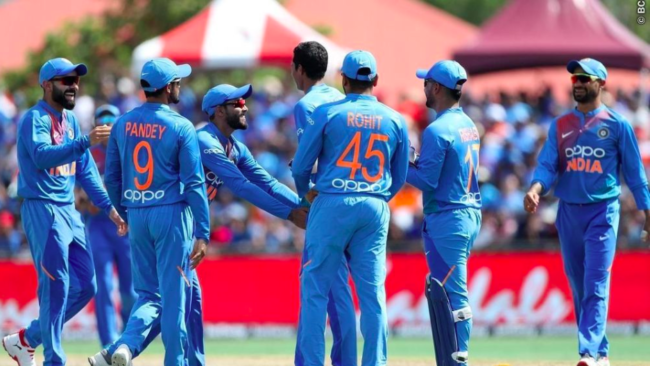
 By George Abraham