Category: TV

  • Hemant Arora joins Discovery as Head of New Revenue Streams

    By A Correspondent


    Discovery Communications India has appointed Hemant Arora as the Head of New Revenue Streams. Arora joins Discovery from Times Network where he was the Business Head of Times Influence.


    During his stint at Times, he also led sales for network channels including Times Now, ET Now & Zoom at different points of time. Arora will be based out of Mumbai and report directly to Megha Tata, Managing Director – South Asia, Discovery.


    “We are evaluating each subset of our network strategy in light of the fast-evolving media landscape. The introduction of ‘Head of New Revenue Streams’ in our org structure is a manifestation of that thought process,” said Tata. “We are excited to have Hemant Arora lead the new revenue streams vertical. He will play a key role in conceptualising and building new models to scale revenues from untapped opportunities while Head of Advertising Sales Vikram Tanna will concentrate his efforts in ensuring that [the] adsales revenue stream of our core network continues to grow northward.”


    Added Arora: “The new-look aggressive Discovery excites me. The company played a key role in the formative years of my professional life and in this second innings, I look forward to capitalise on multiple opportunities in the horizon to create successful alternate revenue streams.”


  • SPN extends broadcast partnership with Aus Open

    By A Correspondent


    Tennis Australia and Sony Pictures Networks have announced a three-year extension of their broadcast relationship. SPN was selected as the exclusive television and digital rights holder for India and the subcontinent and will provide more than 200 hours of extensive coverage for each edition of the Australian Open. It will now be the home for Australian Open and all the lead-up events including the Adelaide International ATP 250 event. SPN’s broadcast will be on a minimum of two English language linear television channels, along with streaming of all 16 match courts on SPN’s video on demand service, SonyLIV.


    “We are delighted to not just extend but also expand our relationship with Sony Pictures Networks in India from 2020,” Tennis Australia CEO and Australian Open Tournament Director Craig Tiley said, adding: “This year’s Australian Open attracted record audiences in India which saw the key international market rise to our eighth biggest worldwide, and the third in Asia behind Japan and China. Sony Pictures Networks’ commitment to providing their most comprehensive coverage allows us to engage with Indian fans in a deeper and more meaningful way by going beyond the on-court action to tell the story of the Australian Open from all angles,” Tiley said.


    Said Rajesh Kaul, Chief Revenue Officer, Distribution and Head – Sports Business, Sony Pictures Networks India: “One of the most coveted titles for any tennis player, the Australian Open has been the most watched Grand Slam in India for the past two years. We are proud to extend our relationship with Tennis Australia and will be providing over 200 hours of live and non-live content for each edition of the Grand Slam for the next three years. Our coverage will include the live matches, studio shows, highlights, build-up thematic shows, Australian Open classics and more along with a dedicated AO section on SonyLIV.”


  • Sony Pictures Networks associates with the Cricket Association for the Blind

    By A Correspondent


    Sony Pictures Networks India (SPN) recently partnered with the Cricket Association for the Blind of Maharashtra (CABM), for the state level cricket tournament for the blind in Mumbai. Under its umbrella CSR theme ‘Ek India Happywala’, SPN extends its support and encouragement towards India’s differently-abled and high-spirited sportsmen.


    Said Rajkumar Bidawatka, Head of CSR, Sony Pictures Networks India (SPN): “We at Sony Pictures Networks India, consistently strive towards creating an inclusive society. Our aim is to be catalysts of growth and success, for India’s differently abled sportspersons. It gives us immense pride to partner with the Cricket Association for the Blind of Maharashtra to provide a platform to encourage the spirit of true sportsmanship. This is an opportunity to enable rising stars within the state to hone their cricketing skills and unlock their potential to go #BeyondBoundaries.”


    Added Ramakant Satam, Secretary, Cricket Association for the Blind of Maharashtra: “Partnering with Sony Pictures Networks India has always been an exhilarating experience. This association brings alive the synergy in our goals and strengthens our belief of empowering India’s youth to become independent. We look forward to partnering with SPN for future endeavors.”


  • ABP News restructures newsroom top deck

    By A Correspondent


    Leading news channel ABP News has restructured its editorial department.


    Rajnish Ahuja will be Senior Vice President, News and Programming, Sanjay Bragta as Vice President, News Gathering, Arun Nautiyal as Vice President, News Production, Sumit Awasthi as Vice President, Planning and Special Coverage, Vibha Kaul Bhatt as Associate Vice President, Programme Production and Anju Juneja will be Associate Vice President, Special Projects.


    Also, a new role of Associate Vice President, Production and Operations will be introduced to work in partnership with newsroom and technology teams. Nitin Sukhija will be heading the same.


    Speaking on the development, Avinash Pandey, CEO – ABP News Network, said: “Employee empowerment is a core aspect of our organisation. This transformation in the editorial structure is a breakthrough moment for us and will revolutionise the way newsrooms operate in India. The newly-designated units will act as a catalyst for development in the Indian media landscape and we are extremely proud to lead the way towards this much-needed change.”


  • Media beyond Digital and TV


    By Brian Wieser


    Outdoor, radio and print-based media offer opportunities for marketers. So much of the industry’s focus is on television and digital media – specifically the largest internet-based, technology-focused sellers of digital advertising. This is particularly true of anything that combines elements of both, as streaming SVOD services. TV and Digital account for the bulk of industry-wide spending and investment and this co-dominance is unlikely to change any time soon, despite the shortcomings of each medium.  These challenges include digital’s brand safety and/or brand-building issues and TV’s incrementally worsening reach and ever-rising prices.

    Simple math:  an advertising economy growing at low-to-mid single digits, with digital accounting for around half of all spending and growing at least twice that rate in many instances, does not leave much opportunity for other media. However, other media may offer real benefits and maintain the potential for faster growth in the future than in the recent past, especially as they develop their own directly related digital assets.


    Outdoor advertising is growing faster than the rest of the industry aside from pure-play digital media. Recent results from many of the world’s sellers of outdoor advertising have been very favorable with relatively rapid growth. Our most recent estimates for the industry indicated growth of more than +6% globally this year.

    So, what is behind this trend?

    First, owners of outdoor-related ad inventory have invested in digital infrastructure, including a capacity to buy the medium programmatically. There is also widening availability of digital out-of-home inventory from niche providers. This encourages a wider range of advertisers to use the medium and provides some confidence in the long-term opportunities to reallocate budgets within the medium more efficiently. Second, OOH’s effectiveness is relatively undiminished by fragmentation or ad avoidance, at least where related real estate is constrained by local laws and regulations. Outdoor is also benefitting because there are many fast-growing marketers who believe the medium is a superior alternative to television when goals are focused around brand-building and target audiences are in geographically narrow areas.


    Radio maintains wide reach and real impact, but growth is more modest. Radio, or more accurately “audio,” has generally been less robust than outdoor or television in recent years. Like outdoor, however, innovation in audio has been percolating for years and has recently achieved more meaningful scale; the medium has the potential to benefit from advertisers looking to stray from pure-play digital and television-based advertising.

    Traditional radio has arguably always been very effective, so long as an advertiser was willing to invest in appropriate creative content and manage what can be, in some countries, a relatively fragmented medium. However, it also suffered from negative perceptions, a reputation made worse when trade associations of traditional broadcasters failed to embrace emerging industry participants. It has also been hard, or at least expensive, to buy and steward campaigns, relative to other broadcast media.

    Anyone looking to recommend spending on radio needed to overcome these issues.  Happily for owners of radio-related assets, streaming services and satellite radio helped to improve the reputation of the medium as a whole. Podcasting – while modest in size – has seemingly captured the attention of marketers in a meaningful way as well, and programmatic buying of radio is helping overcome some of the aforementioned executional issues in some countries. Now we are at a place where audio can be judged on its own merits, which remain relatively healthy given the medium’s wide reach and high levels of consumption.


    Print still struggles, but there are niches with opportunities for long-term growth. While once dominant in almost every country, print’s struggles selling advertising have been pronounced. They have suffered because the goals it tried to help large brands meet – consumer engagement, for example – were directly provided more efficiently by digital media. This introduced substantial competition to media owners who often had very little direct competition in a pre-digital era. And as digital media expanded, circulation of print titles fell, making what was left of print less worthwhile for marketers than ever before. By now, what is left of print as a medium can still be very effective for marketers, but the scale is so different that it is best viewed as a niche platform.

    Many traditional publishers have already built meaningful digital business for consumers, although success is often dependent upon subscription fees and a broad geographic focus. For these publishers, advertising is best viewed as a complementary source of revenue alongside other activities like events.

    Publishers who have transitioned their business orientation from print to digital expanded their geographic presence and invested in new business lines but have not been able to establish much of a subscription business. This puts them in a more precarious position regardless of the value their content brings to advertisers. All publishers are challenged to cover the costs of content good enough to hold consumer attention for meaningful amounts of time and also  good enough in context to warrant advertiser association. This will remain an ongoing challenge.


    All marketers should regularly assess opportunities to use media beyond television and pure-play digital in their campaigns. Just because a medium is growing fast, slow or declining does not mean it cannot be impactful for a marketer now or in the future. What matters is whether or not the media owner is investing in opportunities to connect with audiences. Marketers also need resources to capitalize on opportunities involving media that are incremental to existing plans. Doing so likely helps to improve the overall impact of their efforts.

    Moreover, ongoing investments into alternative sources of media inventory – and finding best practices that exist within them – may help to improve the use of traditional TV and digital media, both of which are likely to persist as the dominant forms of media into the future.


    Brian Wieser is Global President, Business Intelligence GroupM. This article was first published at https://www.groupm.com/news/media-beyond-digital-and-tv

  • Discovery takes DTamil on entertainment route

    By A Correspondent


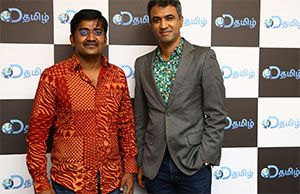
    Discovery Communications India has revamped DTamil into an entertainment channel which will have programming curated for family audiences in Tamil Nadu. DTamil has roped in Tamil actor Karunakaran, in his maiden appearance on TV, as the host of ‘Asaalta Alaravidum Pullingo’ premiering on November.
     

    Said Sai Abishek, Director–Content, Factual & Lifestyle Entertainment – South Asia, Discovery Communications India: “We are excited with how the new proposition of DTamil is shaping up. It is an interesting strategy – one which leverages our strengths and offers us a long-term scale-up of DTamil.”


    On the show with Karunakaran, Abishek added:  “This is the first time that such a show has been created for discerning Tamil audiences. Fail Army is the world-wide leader in funny fail videos and Karunakaran tops and tails these videos in his own inimitable humorous way, making the entire show more endearing. We are very confident that tamil audience will lap-up this new series.”


  • Viacom18 offers first SVOD OTT platform with Voot Kids

    By A Correspondent


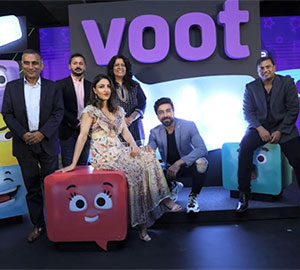
    Viacom18 launched of its first subscription-based service VOOT Kids on Tuesday. Certified by Early Childhood Association (ECA), Voot Kids is built as a multi-format app for children offering some 20,000 videos, e-books, stories and quizzes amongst other things. Priced at Rs 799 for a year and Rs 99 per month with a seven-day free trial in both packages, the app is available to download on iOS and Google Playstore.


     

    Said Sudhanshu Vats, Group CEO & MD, Viacom18: “Viacom18 has grown over the years by focussing on white spaces that are challenging and yet have tremendous potential. As a network, we have been the undisputed leader in kids’ entertainment content since the past five years. Our digital play VOOT is the second largest video-on-demand platform in the country today. VOOT Kids is a synergy of these two growth stories from the house of Viacom18. Marking our sharper segmented foray into the world of subscription-based VoD, VOOT Kids is India’s first and only multi-format Kids app offering Fun & Learning. No other kids app offers Watch, Read, Listen & Learn all at one place”


    Added Gourav Rakshit, COO, Viacom18 Digital Ventures: “The foray into the subscription space with VOOT Kids is the first step in our journey towards building an entire digital ecosystem under brand VOOT. VOOT Kids has been built on the 3 pillars of Product Experience, Content and Safety. In VOOT Kids, we are bringing an offering that is child-friendly, yet parent focussed and gives them an opportunity to bond with an immersive co-consumption experience. Our brand philosophy of ‘Masti Mein Acchai’ reflects our mission to make screen time meaningful.”


    Said Saugato Bhowmik, Business Head, VOOT Kids: “VOOT Kids is a category creating product in the space of digital fun learning that caters to needs of discerning Indian parents who seek meaningful screen-time that aids in holistic development of the child’s mental, emotional and social faculties. The app has the largest and most versatile offerings in the space of toon videos, e-books, audio stories and fun quizzes that provides children with a parent-controlled, safe and entertaining content destination.” He further added, “We believe masti should never be served up without acchai and the same holds true the other way around. And this is our guiding philosophy at VOOT Kids”


  • ABP News appoints Mona Jain as Chief Revenue Officer

    By A Correspondent


    ABP News Network has appointed senior media professional Mona Jain as the company’s Chief Revenue Officer. Jain will be responsible for the organisation’s revenue efforts across ANN channels, live events and digital platforms. Jain has spent nearly 30 years in media, marketing and promotions, the last six years have been in Zee Entertainment as Executive Vice President, AD Sales.


    Said Avinash Pandey, CEO, ABP News Network: “We are happy to welcome Mona Jain to ANN family. She brings a high-level of expertise and commitment to the organisation that is aligned with ABP values and vision. Mona is a critical addition to the leadership team and for our future plans. We look forward to her valuable contributions in the company’s progress.”


  • SPN acquires rights for X1 Racing League

    By A Correspondent


    Sony Pictures Networks has acquired the exclusive media rights for the world’s first professional franchise-based motorsport league, X1 Racing League along with the media rights for X1 Racing eSports. The inaugural edition of X1 Racing League will be held in Delhi and Chennai over two weekends – Weekend 1 from November 30 to December 1, 2019 and Weekend 2 from December 7 to 8, 2019. X1 Racing eSports, which kicked off on October 7 and will continue till November 17, 2019, is also being held across six cities – Mumbai, Chennai, Ahmedabad, Hyderabad, Pune and Delhi


    Said Rajesh Kaul, Chief Revenue Officer, Distribution and Head – Sports Business, Sony Pictures Networks: “Motorsport is a great televised sport and has a niche but dedicated following in India that has been growing steadily over the past few years. We are the official broadcasters of premier international motorsport properties like MotoGP and Formula E and the addition of the X1 Racing League, an Indian motorsport league, to Sony Pictures Networks’ portfolio will give audiences a strong local connect. Adding to this, X1 Racing League and X1 Racing eSports have a unique format that is designed to appeal to our audiences.”


    Added Armaan Ebrahim, Co-Founder, X1 Racing: “We are thrilled to have Sony Pictures Networks India Private Limited on board as our broadcast partners. Over the years they have had a great head start in effectively showcasing some of the best in sports from across unique formats. Motorsport and esport are fast-growing niche sectors seeing a brand new level of interest in India. The response so far to the X1 Racing eSports debut season has been highly encouraging and with this partnership with Sony Pictures Networks India Private Limited we have a wonderful opportunity to further fulfill our vision to make motorsport more accessible.”


  • #MeToo India: A Year Later…


    By Shailesh Kapoor


    It’s been a little over one year since the #MeToo movement erupted in India. Tanushree Dutta’s accusations against co-star Nana Patekar triggered off a chain reaction, whereby several women, including many in the media and entertainment business, came out with their accounts, some anonymous, accusing co-workers of sexual harassment.


    Fourteen months is a long-enough time period to look back and wonder: Did the #MeToo movement really change things for the good? The answer is not very encouraging. The #MeToo movement in India has fizzled out spectacularly, with no major signs of any fundamental shifts in the thought process. Yes, it provoked many organisations into putting more robust sexual harassment policies in place, and may have sensitised many working men about how they should treat women co-workers. But a lot of these ‘changes’ were perhaps borne out of fear – the fear of being caught on the wrong foot, the fear of losing one’s career, or the fear of bad PR for a corporate.


    The real test of the movement’s success or failure can be judged through the current career status of those accused in it. If we focus specifically on the entertainment business, the accused in the corporate sector lost their job, and many of them have since been marginalised. But if you look at actors and directors, the picture is a more mixed one. Alok Nath had a film release earlier this year and director Vikas Bahl’s Super 30 released with him getting the director’s credit (the very well-made film went on to do good business too). Sajid Khan, one of the most prolific offenders, has not managed to restart his career, and that’s something even those indifferent to the #MeToo movement will be happy about, given the quality of his last few films.


    But the biggest and the most darning evidence that the movement is all but history is the re-establishment of Anu Malik as a judge on Indian Idol. The music composer was removed midway in the last season when accusations against him surfaced, to be replaced by Javed Ali. But in this season, he has been a part of the show right from the start, as if nothing really happened last year. Interestingly, he shares a platform there with Vishal Dadlani, a strong voice on social media on a wide range of social topics, including gender equality.


    That Sony would actually go with Malik this season amazed me no ends. He was eminently dispensable. The show does not rely on any one judge, and Malik, in any case, has a jaded imagery by now. It’s not like he’s the Amitabh Bachchan on whose shoulders a big show like KBC firmly rests. Keeping Malik away from Indian Idol would have simply been good optics. But Sony, I think, have chosen to take a legal position than a socio-cultural and ethical one, and reinstated Malik. There has been a social media backlash, but it’s not of a proportion that cannot be managed.


    It’s unfair to call out Malik and Sony, because the decision is symptomatic of the larger concern on how #MeToo was more of a fad than a real change. And hence, we can expect more men accused in the movement last year to slowly get ‘rehabilitated’ over the coming months.


    Do we need #MeToo Season 2 to take forward the unfinished job in changing mindsets? Perhaps yes.


  • Zee Business unveils ‘Bazaar Aaj Aur Kal’

    By A Correspondent


    Zee Business has launched its new show ‘Bazaar Aaj Aur Kal’ starting November 18. With detailed market insights, the experts will do a wrap-up show on trading days to summarise all the action of the day.


    Showcasing the key happenings and drivers of the stockmarket, Bazaar Aaj Aur Kal aims to be the one-stop-shop for daily business, finance and market related news. The show will be aired from Monday to Friday at 7.26 pm and 9.26 pm. Zee Business Managing Editor Anil Singhvi will be hosting the show.


    Commenting on the launch of the show, Singhvi said: “With dynamic changes in the market, it is critical for an investor to constantly stay tuned to what is happening, which are the contributing factors in the events of the day and where they are headed tomorrow. These valuable insights are provided in this exclusive market wrap-up show Bazaar Aaj Aur Kal since viewers are so busy throughout the day – at home, office or in their own routines – that they might miss out the happenings during trading hours. So, we bring to you an evening show – Bazaar Aaj Aur Kal to get you in sync with all that has happened in the market today as well give you an edge on what is expected tomorrow.”


  • BBC Studios appoints GMs for APAC region

    By A Correspondent


    Jon Penn, Executive Vice President of BBC Studios Asia Pacific (APAC), announced the appointment of two General Managers to lead the BBC Studios teams in Australia & New Zealand (ANZ) and South and South East Asia (S&SE Asia).


    Ryan Shiotani

    Ryan Shiotani, currently Acting SVP, Branded Services, Asia, is promoted to the role of SVP & General Manager, South & South East Asia, based in Singapore and leading the Branded Services, Marketing, Creative, Content and Affiliate Sales teams in South East Asia and India. Fiona Lang, currently Chief Operating Officer for ANZ, has been promoted to the new role of General Manager, Australia & New Zealand, leading the Sydney-based Branded Services (including Marketing, Advertising and Creative), Commercial and Content Sales teams.


    Said Jon Penn, EVP, BBC Studios APAC: “I’m delighted to promote these outstanding leaders to the roles of General Manager and have every confidence that they are the right people to lead the teams to the next level of growth in the APAC region.


    Both roles report directly to Penn, as part of the newly formed Asia-Pacific (APAC) regional business, incorporating Australia, New Zealand and Asia, which was announced in September 2019.