Category: TV

  • Tata Sky goes aggro on Jingalala in South

    By A Correspondent


    Tata Sky has launched its latest campaign in Kannada, Tamil, Telugu and Malayalam languages to communicate its advantages over cable in the market. The campaign titled, ‘Jinga Jinga Jingalala’ focuses on how easy and convenient it is to choose Tata Sky to fit an individual’s budget and content needs.


    Said Anurag Kumar, Chief Communications Officer, Tata Sky: “So far, people here believed that DTH is an expensive choice and deprived themselves of the quality and innovative services. The recent TRAI channel pricing regime has provided parity in price giving us an opportunity to provide subscribers with quality entertainment using easy and simple steps at an affordable price. Therefore, via this campaign we are not only breaking the myth on pricing, we are also urging people to Not compromise on the ease and advantages that Tata Sky brings to life.”


    Speaking on the new campaign, Sukesh Nayak, Chief Creative Officer, Ogilvy & Mather said: “The campaign idea originated from an observation about our childhood. Right from our childhood days we always had a healthy fear of our father, especially when we were doing something that was out of line. Using this observation, we establish the fact that buying tata Sky is not out of line and the father will approve of it.”


  • Ramon Magsaysay Award for Ravish Kumar


    By A Correspondent


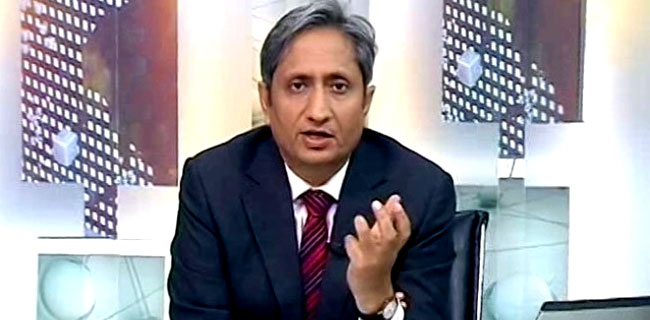
    Senior journalist and NDTV India anchor and senior executive editor Ravish Kumar will be awarded the prestigious Ramon Magsaysay Award for 2019. Kumar is among the five recipients of the 2019 Magsaysay award, billed as the Asian equivalent of the Nobel. The Award, which recognises the “greatness of spirit and transformative leadership in Asia”, has been awarded in the past to Delhi chief minister Arvind Kejriwal, journalists Arun Shourie, RK Laxman and P Sainath amongst others.

    While praising Kumar’s work, the award citation is also an indictment of the Indian television news media. It says: “In a media environment threatened by an interventionist state, toxic with jingoist partisans, trolls and purveyors of “fake news,” and where the competition for market ratings has put the premium on “media personalities,” “tabloidization,” and audience-pandering sensationalism, Ravish has been most vocal on insisting that the professional values of sober, balanced, fact-based reporting be upheld in practice.”

    We wonder what other news channel honchos have to say to this.


    This is what the citation reads:

    The world’s largest democracy, India has seen the space for an independent and responsible Indian press shrink over the past years.  The factors behind this  are many: a changing media landscape because of new information technologies, the increased marketization of news and opinions, growing government control, and, most worrisome, the rise of popular authoritarianism and religious, ethnic, and nationalist fundamentalisms with their consequent divisiveness, intolerance, and susceptibilities to violence.


    An important voice against these threats is television journalist Ravish Kumar.  Raised in Jitwarpur village in Hindi-speaking Bihar, northeast India, Ravish pursued his early interest in history and public affairs through postgraduate studies in history from Delhi University. In 1996, he joined New Delhi Television Network (NDTV), one of India’s leading TV networks and worked his way up from being a field reporter. After NDTV launched its 24-hour Hindi-language news channel — NDTV India — targeting the country’s 422 million native speakers of Hindi, he was given his own daily show, “Prime Time.”  Today, as NDTV India’s senior executive editor, Ravish is one of India’s most influential TV journalists.


    His more important distinction, however, comes from the kind of journalism he represents.  In a media environment threatened by an interventionist state, toxic with jingoist partisans, trolls and purveyors of “fake news,” and where the competition for market ratings has put the premium on “media personalities,” “tabloidization,” and audience-pandering sensationalism, Ravish has been most vocal on insisting that the professional values of sober, balanced, fact-based reporting be upheld in practice.  His “Prime Time” program on NDTV India takes up current social issues; does serious background research; and presents issues in well-rounded discussions that can run up to twenty or more episodes.  The program deals with real-life, under-reported problems of ordinary people — from the lives of manual scavengers and rickshaw-pullers to the plight of government employees and displaced farmers, to underfunded state schools and the inefficient railway system.  Ravish interacts easily with the poor, travels extensively, and uses social media to stay in touch with his audience, generating from them the stories for his program.  Striving for a people-based journalism, he calls his newsroom “the people’s newsroom.”


    Ravish is not above engaging in some theatrics himself  if he feels it effective, as in an innovative show he did in 2016 to dramatize how debased the discourse had become on TV news programs.  The show opens with Ravish coming on screen to talk to the viewers about how TV news programs had descended into a “dark world” of angry, strident voices.  The screen then goes dark and, for the next hour, there is nothing but a cacophonous audio of sound bites from actual TV programs, venomous threats, hysterical rants, the sounds of a mob baying for the blood of enemies. For Ravish, it is always about the message, dispassionately delivered.


    As an anchor, Ravish is sober, incisive, and well-informed.  He does not dominate his guests but affords them the chance to express themselves.  He does not balk, however, at calling the highest officials to account or criticizing media and the state of public discourse in the country; for this reason, he has been harassed and threatened by rabid partisans of one kind or another. Through all the perils and aggravations, Ravish has remained consistent in his effort to preserve and widen the space for a critical, socially responsible media.  Keeping faith with a journalism that puts service to the people at its center, Ravish sums up what he believes a journalist is in the most basic terms: “If you have become the voice of the people, you are a journalist.”


    In electing Ravish Kumar to receive the 2019 Ramon Magsaysay Award, the board of trustees recognizes his unfaltering commitment to a professional, ethical journalism of the highest standards; his moral courage in standing up for truth, integrity, and independence; and his principled belief that it is in giving full and respectful voice to the voiceless, in speaking truth bravely yet soberly to power, that journalism fulfills its noblest aims to advance democracy.


    The four other winners are Ko Swe Win from Myanmar, Angkhana Neelapaijit from Thailand, Raymundo Pujante Cayabyab from Philippines and Kim Jong-Ki from South Korea.

     

  • MTV announces new content line-up for the quarter

    By A Correspondent


    MTV has announced its content calendar for the next quarter. The new programming line-up includes: MTV Hustle showcasing 15 rap talents from across India, Splitsvilla Season 12 – with the theme of ‘Your Best Shot at Love’ and Ace of Space Season 2, which premieres on August 24, 2019 and will air daily at 6pm.


    Speaking about MTV’s performance in the first half of 2019, Ferzad Palia, Head – Youth, Music and English Entertainment, Viacom18, said: “MTV is the definitive leader for youth content in India with 700 mn views and 3.67 bn minutes of viewership in H1 2019, cumulatively on TV and VOOT.” Further elaborating on MTV’s new content line up, he added: “Incorporating the learnings from our Youth Insights report, we are introducing unique concepts such as Hustle and imbibing novelties in successful properties like Splitsvilla and Ace of Space. Experimenting with the time-slot, it’s also the first time that a marquee property like Hustle will be aired bi-weekly instead of once over the weekend.”


  • Republic Media launches operations in the UK

    By A Correspondent


    Republic Media Network’s news channel R. Bharat will now be seen in the UK through the Sky platform. The channel started beaming from yesterday, August 15 and will be available at channel number 708.  After launch in MENA Region and North America, this is the next overseas expansion of the media channel.


    Talking about the launch, Priya Mukherjee, President – Distribution & International Revenue at Republic Media Network said: “After the superlative performance of Republic TV as the No 1 English News channel in India since its inception in 2017 till date and its successful run in the MENA Region and North America, we are delighted to bring Republic Bharat to its viewers in the UK through Sky. With our compelling content, huge fondness and appreciation for the channel from the Indian diaspora internationally we will endeavour to build value through our partners for all the stakeholders.”


    The separate beam is being telecast in alliance with World View Media Limited, Channel partner for Republic Media Network in the UK. Talking about the association, Manish Vasisht – Director of World View Media Limited said: “This association is exciting as we will use our international experience to grow the brand of Republic Media Network overseas.”


  • Discovery partners WWF on Sundarbans

    By A Correspondent


    Discovery India and WWF India have come together to protect the world’s only mangrove tiger habitat, in partnership with the Forest Directorate, Government of West Bengal and local communities in the Sundarbans.


     

    Said Ravi Singh, Secretary General & CEO, WWF India: “This partnership between WWF India and Discovery India is significant as it brings together different institutions for the benefit of communities and wildlife of Sundarbans. This additionally includes the setting up of ecological observatories, reduction of human-wildlife conflict and providing scientific inputs for proper management.”


    Added Megha Tata, Managing Director – South Asia, Discovery: “The project at Sundarbans is part of a global movement – Project C.A.T – Conserving Acres for Tigers – aimed at building healthy habitats for Tigers wherein we support conserve nearly six million acres of protected land across four countries. In India, beyond Sundarbans, a detailed intervention is also being implemented at Manas Tiger Reserve. Discovery is a purpose-driven company with a mission to educate and inspire audiences around the world. We remain committed to leverage our brand strength to galvanise people power for the cause of Tigers and other endangered species.”


  • The Rise & Fall of INX Media


    By A Correspondent


    Former Home and Finance Minister P Chidambaram, one of the country’s top politicians, was arrested in a dramatic fashion on primetime television on Wednesday evening. The scaling of the entry wall and the camera crew chasing the CBI team to the back gate of the former minister’s home in New Delhi was riveting.


    Interestingly, it’s the affairs of a media company and the alleged involvement of Chidambaran and his son Karti that saw one of the most high profile and controversial arrests in recent years.


    Those from the media and entertainment trade would know that INX Media has seen several controversies even before it was set up.


    First the rise of Indrani Mukerjea. Her INX Services offered HR consulting to Star India when husband Peter was CEO. They married in 2002, and five years later set up INX Media and INX News. INX Media ran two channels – 9X, the general entertainment channel and 9XM, the music channel. News X was the news channel with senior journalist Vir Sanghvi as head.


    What led to the downfall of INX Media was the failure of the GEC 9X and the news channel being virtually a non-starter despite a state-of-the-art backend. As of to make matters worse for the duo, Viacom18 set up Colors and the GEC rose to the #1 position in less than a year. Rajesh Kamat, the CEO of the channel, worked with Peter Mukerjea at Star, more than a couple of levels junior.


    There was some indiscriminate spendings reported by the Mukerjeas, and finally, in 2009, on a day before Holi, the duo announced their exit. Soon, the news channel was sold, and the entertainment channel became part of the Zee network, and the music channel became an independent network managed by veteran mediaperson Pradeep Guha. The music network has been in discussions for a sale but with not much success. The Zee Network also pulled out of the stake buy.


    The controversy around Chidambaran and his son was around a case of money laundering with Indrani Mukerjea turning approver a few months back. The Mukerjeas are currently in jail… but that’s over a more personal matter.


    Those who know and have worked with Peter Mukerjea can’t believe that he could do any wrong and often blame wife Indrani for the misfortunes of INX Media.


    Misfortunes not just for the Mukerjeas, but also the Chidambarams.


  • Ageless Wonder


    By Shailesh Kapoor


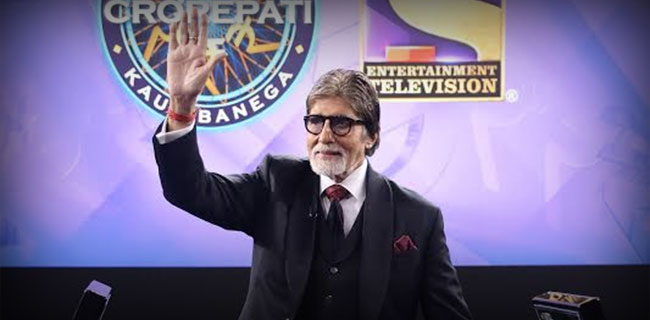
    It’s that time of the year again. India’s most iconic television show Kaun Banega Crorepati (KBC) is back again, this time with its 11th season. The first four episodes have set the tone for a 13-week entertaining and engaging ride. The story has been no different, after all, over the last few seasons.


    Ninety minutes a day for five days a week is quite some commitment to content. Yet, a sizeable section of the Indian audience makes this commitment year-on-year. Not to mention the various regional versions that have done immensely well over the last decade.

    ‘What keeps KBC going’ is not such a difficult question to answer. Its exemplary host Amitabh Bachchan, and its family-engaging format, one that’s full of positivity and interactivity, are the two cornerstones on which this 19-year old property rests. But over the years, KBC has acquired more value than just what its content is. And that’s the more interesting aspect to explore here.

    We live in times when it’s a matter of days that something that seemed so fresh until very recently, begins to look stale and jaded. This is happening with brands, ads, films, TV shows, cricket, everything. Product lifecycles of media products have reduced in general, as a distracted consumer moves from one to the other in a tearing hurry. In this context, KBC provides a certain comfort in the familiar. It’s that one show you don’t need to wrap your head around and figure out.

    Comfort in the familiar is quite an under-rated media thought. Very few shows on Hindi television today can offer this value, because it takes a lot of time and effort for a show to acquire this status. Of the Hindi GEC shows currently on air, only KBC, Taarak Mehta Ka Ooltah Chashmah and Yeh Rishta Kya Kehlata Hai benefit from this idea. And all three have gone to be enduring successes, bucking the growing consumer demand for short-term programming.

    In all three, there’s a sense of togetherness and family-inclusiveness. They are ensemble shows, despite very strong lead protagonists helming them. It’s the collective nature of the three, where multiple characters (host and contestants in the case of KBC) keep the flame burning.

    But KBC has two advantages over the other two shows in this coveted list. One, it is on air for only about 13 weeks every year, making it much sought-after when it hits the telly. Two, its interactivity is organic and central to its premise. Knowing an answer, when a family of 4-8 members is sitting and watching together, can lead to a moment of pride. Therefore, KBC also fuels family conversations like no other show can.

    Would KBC have acquired these values with another host? Almost certainly not. The fit between Bachchan and KBC’s values can only be a freak once-in-many-years kind of happy accident. And that’s why, he keeps getting better with each season, fitting the show even more, by giving a part of himself to it.

    Ratings will tell us how well this season does, but KBC may have transcended that test in the last 2-3 seasons. May the legacy live on!


  • Sab partners with TikTok for ‘Tera Kya Hoga Alia’

    By A Correspondent


    Sony Sab has partnered with TikTok for a product placement for its upcoming show ‘Tera Kya Hoga Alia’. This initiative will see the channel creatively integrating TikTok into the story to produce content that is relatable to the masses.


    Said Vaishali Sharma, Head, Marketing and Communications, Sony Sab, Pal and Sony Max Movie Cluster said: “This show, Tera Kya Hoga Alia, is built on a very interesting concept that everyone can relate to. We are happy to announce our association with TikTok for this show as it is one of the most popular short-video platforms in the country today. This unique integration will allow us to bring in that personal connect for our viewers as we want them to feel like a part of the content that we produce. Thus, this integration not only has been beautifully weaved into the story but will increase engagement with viewers as well. Alia as a character has the relatability which would resonate with the audiences.”


    Added Sachin Sharma, Director-Sales and Partnerships, TikTok India: “We are thrilled to announce our collaboration with Sony Sab for their new show, “Tera Kya Hoga Alia”. This partnership is chartering into unexplored territories on Indian Television which will also help us showcase the passion shared by millions of TikTok users in India. We look forward to seeing the character, Alia, resonating with the audience and be part of something iconic in the making.”


  • Sony Sab: An Unusual Success Story


    By Shailesh Kapoor


    Even as the Hindi GEC category struggles to recover its lost glory inch by inch over the last year-and-a-half, there’s a special little story unfolding on the side. Sab TV (or Sony Sab, as it’s officially called) has grown almost 40 per cent in the last one year, to now emerge as the No. 2 Hindi GEC in the Pay TV segment in Urban HSM in the pre-KBC period. The channel has seen an upward surge in the months of July and August this year, overtaking more seasoned players like Zee TV and Colors, and competing well with the network flagship Sony Entertainment Television, which has big-ticket material like KBC on its side for 13 weeks now.


    The channel is by far the No. 1 channel on TSV (time spent by viewer), being about 30 per cent ahead of the category leader Star Plus on this engagement measure week-on-week. Star Plus is the leader on viewership, because of its significant Reach advantage over Sab, symptomatic of the former’s wider appeal vis-à-vis the latter.


    A deeper look at Sab’s viewership numbers can be fascinating. The channel’s Gujarat viewership is almost five times its UP viewership. The Mumbai to Delhi ratio is almost 2. Evidently, the channel manages to do much better in the Western markets, which have a higher proportion of Gujarati population in their viewer universe.


    This, of course, is attributable to the flagship show Taarak Mehta Ka Ooltah Chashmah (TMKOC). Now on air for more than 11 years, TMKOC contributes a staggering 83 per cent to the channel’s viewership. 58 per cent of the channel’s programming time is allotted to the show, across various original, repeat and rerun airings.


    The show has wallpaper-level presence on the channel. Sab benefits hugely from the non-prime time performance of TMKOC. Compared to Star Plus, which gets 51% of its viewership from the 7-11pm prime time, Sab gets only 30% of its viewership from it, thus relying heavily on the afternoon time band, where repeats of TMKOC do ratings that some of the big Hindi GEC shows will be happy to achieve in their original telecast in the prime time.


    Yes, Sab is a one-show channel. It has struggled to find a second big hit anywhere close to TMKOC’s stature. And it’s been 11 years now. There is a reasonably-robust second line of shows, led by Aladdin currently. But the stature of TMKOC dwarfs everything else Sab puts out.


    Breaking down the success of TMKOC is a matter of another detailed piece. But it can be briefly mentioned that the show goes well beyond being just another comedy show, and manages to integrate culture, values and family, eventually delivering a wholesome family entertainer, a genre which very few Hindi GEC shows can claim to have a foot in.


    How long can TMKOC remain at its peak? A conservative answer would be ‘at least another 10 years’. Its protagonist Jethalal, played by Dilip Joshi, has been the most-popular Hindi GEC character in India for years now, as per Ormax Characters India Loves. Character bonding ensures longevity, and TMKOC has very strong legs on that count.


    Sab went through an elaborate brand refresh (Hindi GEC’s category when-in-doubt activity) recently. The new proposition ‘Khushiyon Wali Feeling’ strikes the right chord, relying to SAB’s positivity and light-hearted charm as its differentiators in a melodramatic category.


    But currently, all the branding is just scenery for a channel that runs on the towering presence of a giant. If there was a second TMKOC, and that’s easier said than done, Sab will be the biggest Hindi pay channel by some distance. If that happens, it will be some success story to tell!


  • Raj Nayak will Create, Curate & Consult at ‘House of Cheer’

    By A Correspondent

    Raj Nayak
    Raj Nayak

    Ever since he announced his departure from Viacom18 as Chief Operating Officer, there has been much speculation about where veteran mediaperson Raj Nayak would be headed next. Will it be a rival entertainment network, a global OTT major or a software production house.


    In the last few months though it has emerged that he would be getting into his own. But, then, there was also a possibility of a ‘kahaani mein twist’.


    But on Monday, September 2 morning, he announced via Twitter his new enterprise: House of Cheer. Nayak is a popular on Twitter with his handle @rajcheerfull.


    Athough he has asked us at MxMIndia to hold on for a formal interview, the credo of House of Cheer is: Create, Curate and Consult. That, in a sense, indicates a fairly large scope of operations. Guess one will have to watch for the next announcement from Nayak to know more.

  • BTVi pauses broadcast operations. Website not refreshed. Twitter feed live

    By A Correspondent


    On August 31, 11-year-old beleaguered business news channel BTVi announced a ‘pause’ on its broadcast operations. The announcement to this effect was made on August 31 with a statement from the HR department. The announcement claimed that the channel was “consistently ahead” of a channel with an over-two-decade-long existence.


    Be that as it may, the channel has been up for sale for a while, with no suitors ready to pick it up. The last straw was when CEO Megha Tata announced her departure earlier this year.


    “Over the next few days, we will communicate the future steps towards ensuring a smooth transition of our operations,” the statement announcing the “pause” added.


    BTVi was launched in April 2008 as UTVi and was rechristened BloombergUTV in September 2009. In August 2012, with a change of controlling state, it was renamed Bloomberg TV India and and four years later, in August 2016, it became BTVi, with the end of the Bloomberg alliance.


    While the channel has seen the pause, there is no refresh of the website too. The Twitter feed though is live.


  • Zee Live appoints Howl as its digital agency

    By A Correspondent


    Zee Live, the live entertainment and IP vertical of Zee Entertainment, has appointed Howl as its digital partner. As a part of this mandate, Howl will be responsible for building and executing creative and content strategies for all its key IPs i.e. Arth: A Culture Fest, Now Tasting: A Street Food Festival, Zee Educare and Supermoon.


    Swaroop Banerjee

    Commenting on the association, Swaroop Banerjee, COO – ZEE live, said, “The live entertainment and IP building scenario today is very different than it was half a decade ago, and is evolving at the speed of light each year, each month. There was a time when brands and promoters engaged to ensure a few thousand people come together for a live experience. Today, it is not only about the audiences that are physically present at each festival or experience but the millions of audiences that consume this on my live streams, on my social universes. Influencers in every form are not only catalysts but I believe are change agents to this universe. We now measure the health of each festival with the digital yardstick, engage with clients and brands on this universe before delivering the magic on ground. In Team Howl we have found partners that understand our brand and our audiences, we worked together on Supermoon as a project, opened the digital mandate pitch out again but what they came back in strategy was aligned with our vision at Zee Live. I am happy we can work with a team that has a pulse on trends, stats, creatives, social networks and therefore I believe will deliver a truly extraordinary digital and content experience to our consumers.”


    Tufayl Merchant

    Added Tufayl Merchant, Co-Founder of Howl: “We are actually quite excited to work with Zee Live, as I feel that they truly have some really unique events and IPs in India. Over the last 5 years, there has been an explosion in the IP space in India, creating varied experiences for multiple consumers looking to spend their time differently. Understanding who the experience is catered to and customising a communication in the Digital Space to the audience is something we have been effective in, and are confident to bring to all of Zee Live’s Properties in this space.”