
Category: TV

  • BARC gets media-neutral-ready. Rat’000 to be called Impressions’000

    Some eight months after it launched its TV Ratings service (on April 29, 2015, to be precise), the Broadcast Audience Research Council (BARC) has rechristened its popular viewership measurement metric Rat’000 as Impressions’000.


    Going forward (that’s with effect from today, Thursday, January 14 when data for Week1/2016 is released) the current Rat’000s will be referred to as Impressions ‘000s. “Users of BARC India data may note that the new terminology does not imply any change in the way television viewership is measured. Nor will the introduction of Impressions’000 have any impact on past data BARC India has released so far,” notes a communique. BARC India would also like to inform its subscribers that the metric Rat% will continue to be used as it is, and will see no change.


    The decision to usher under this new terminology in the new year has been taken to avoid confusion in the marketplace  and as BARC India gears up for its digital measurement initiative. “We are preparing for the future. When we get into digital measurement, viewership will be measured in Impressions and in order to maintain uniformity and avoid confusion we decided to rename Ratings ‘000s to Impressions ‘000s,” said Partho Dasgupta, CEO, BARC India.


  • Top 10 Hindi GEC Characters For 2015


    By Shailesh Kapoor


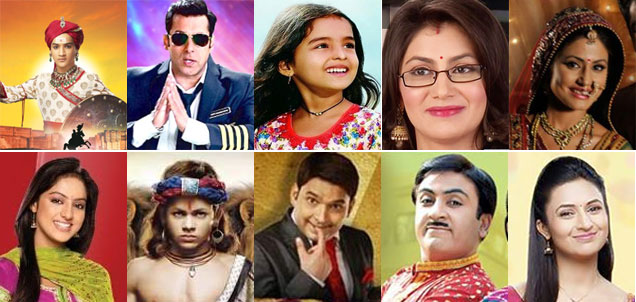
    Character popularity is now well known to be singularly important driving force towards programme loyalty. In the last of the yearenders in this column, here’s the list of the top 10 Hindi GEC characters (including non-fiction) for 2015. This list is based entirely on the results of Ormax Characters India Loves, an ongoing survey that polls more than 35,000 Hindi GEC viewers over the year across more than 20 markets.


    10. Maharana Pratap (Sony): Warrior portrayals hold intrinsic appeal, yet they remain largely an under-served genre on Indian television and even cinema. With Bajirao Mastani succeeding at the box-office, we can expect more warrior ‘biopics’ on the celluloid. On television, Maharana Pratap kept the genre’s flag flying through the year, though with a lot less intensity by the time the year ended.


    9.Salman Khan (Bigg Boss – Colors): He had a great year at the movies, with probably his best film in the last decade (BajrangiBhaijaan). But for many television audiences, Salman Khan’s primary identity is that of the Bigg Boss host. Khan has been often accused of taking sides on the show, but even his hardest critics cannot fault his commitment that comes shining through every weekend.


    8. Chakor (Udaan – Colors): Chakor’s character lost considerable steam during the year, starting the year in the Top 5 but ending it outside the top 20.With innocence being a scarce commodity in adult characters on television these days, child protagonists tend to stand out even more. But only till they don’t start behaving like adults!


    7. Pragya (Kumkum Bhagya – Zee TV): KumkumBhagya is emerging as a long warhorse for Zee TV, and much credit should go to its lead pair played by SritiJha (Pragya) and Shabbir Ahluwalia (Abhi). As the year closed, Pragya grew to an even stronger position,  signaling a good 2016 for this popular character.


    6. Akshara (Yeh Rishta Kya Kehlata Hai– Star Plus):It’s been seven years since she first went on-air. Her character journey over years has mirrored various life-stages and challenges Indian women would tend to face in their life. In the largely-unrealworld of television soaps, Akshara has managed to infuse her share of relatability and warmth for many viewers.


    5. Sandhya (Diya Aur Baati Hum–Star Plus):Between them, Sandhya and Akshara represent two facets of the Hindi GEC heroine. Sandhya is a woman of aspirations, but one who strives to balance her work and her family in her journey, while Akshara is a nurturer at heart, willing to let go for others. Between them, Star Plus has a strong 9-10pm slot that’s currently their prime-time pivot.


    4. Ashok (Chakravartin Ashok Samrat – Colors): Another warrior prince story that was waiting to be told on the small screen. Aided by good casting and production, Ashok emerged as a strong character challenging the dominance of female protagonists in the GEC space. Can we now have a PeshwaBajirao show on TV, please?


    3. Kapil Sharma (Comedy Nights With Kapil–Colors):The comedian dominated the non-fiction list in 2015, no different from what he managed in 2014 and much of 2013. He’s Colors’ fourth entry in this list, and the combination of Salman Khan, Chakor, Ashok and Kapil Sharma accurately captures the formula behind the channel’s success. In 2016, Sharma will move to Sony, his original home from Comedy Circus. He’s come in for criticism on various things, ranging from misogyny (on the show) to unprofessionalism (off the show). 2016 could be a defining year for Sharma, at the end of which he would either emerge stronger or begin to fade out.


    2. Jethalal (Taarak Mehta Ka Ooltah Chashmah – SAB): SAB TV remains a one-show channel and yet a strong force to reckon. Jethalal (played by Dilip Joshi) is the centerpiece around which this show continues to thrive, now for seven and a half years. The ratio of Jethalal’s popularity among male audiences to female audiences is a staggering 8.2, highlighting the dichotomy of our mass television content, which is family viewing in practice, but often not in spirit.


    1. Ishita (Yeh Hai Mohabbatein–Star Plus):Yeh Hai Mohabbatein combines various genres and sub-genres into a unique show. It has romance, inter-cultural conflicts, social issues, family and a lot more. It has even ventured into the supernatural space recently, as if to tick that pending box. But at the core of this huge success remain its leads Ishita (Divyanka Tripathi) and Raman (Karan Patel). Her motherly love is the central quality that makes her no. 1, especially because it’s love for a ‘daughter’ she’s not given birth to.




  • ZEEL enters Germany; to launch free-to-air channel by mid-2016

    By A Correspondent


    Zee Entertainment Enterprises Limited (ZEEL) has announced its foray into Germany. The company also shared its plans to launch a free-to-air television channel for this market by mid-2016. This FTA channel will offer high-quality Bollywood films produced by the Indian film industry as well as popular Indian television series to German screens, 24-hours a day. The new channel´s core target group will be females between the ages of 19 and 59. The channel is planned to be available on the most important satellite and cable platforms. Friederike Behrends will be responsible for business operations in the German-speaking area.


    Amit Goenka

    Amit Goenka, CEO-International Broadcast Business, ZEEL said: “Our foray into Germany is a major step as part of our international expansion strategy. The objective is to establish a lasting presence and grow in the German television market. With our highest levels of entertainment and new content, we are confident of being able to offer our German viewers an attractive enrichment to the existing range of television offerings.”


    Neeraj Dhingra

    Neeraj Dhingra, CEO Europe at Asia TV Ltd. (Zee TV) said: “The launch of the channel will signify ZEEL´s entry into one of the world´s most important television markets, in which the Bollywood genre is still barely represented as yet. With 210,000 hours of programming and more than 3,500 film titles, our endeavor is to delight the German audiences with Indian content.”


    “We also welcome Friederike to the ZEE family. She brings with her a rich experience and in-depth knowledge of Media, Broadcasting and TV content. Her extensive international and national industry expertise will help us not only to cement our presence in the German market, but take it to greater heights;” Dhingra added.


    Friederike Behrends

    Until recently, Friederike Behrends was the Senior Strategy Advisor for the international streaming provider Magine, being responsible for its German market entry in 2014. From 2008 to 2012, she was Managing Director of WDR media group digital GmbH and the full-service internet agency web COLONY in Cologne.


  • MTV partners with Vizeum to drive conversations around #DunkThatJunk

    By A Correspondent


    Vizeum in partnership with MTV has launched ‘The Junkyard Project’ with the objective of stirring an important awakening in the minds of citizens across, especially the youth.


    Commenting on the project, Sumeli Chatterjee, Head – Marketing, Media & Insights, Youth Entertainment, Viacom18 Media Pvt. Ltd. said, “MTV started with a basic question how can we make conversations around do-not-litter cool and interactive. #DunkThatJunk is gamification of the concept that junk should be dunked inside the dustbin. The simplicity of the concept coupled with interactive presentation is the key reason why these videos spread like wild-fire.  And, also drew heavy participation by Bollywood and TV celebrities. It is just a game, but with a serious message in it. We have driven 1.5 Mn + interactions in a fortnight of launching this campaign on social media. And, this is just the beginning.”


    Samarjit Rajkumar, Executive VP, Vizeum India, commented: “True to its spirit of being in the forefront of trend-setting, it has been an exciting journey together with MTV in re-defining the Swacch Bharat initiative leveraging MTV’s partner celebs attracting as many as 6000 user-generated videos in the first 2 weeks itself. We are now creating platforms for our audience to live this trend and subsequently, more platforms for them to share with their friends once they choose to be the advocates.”


  • Spidey to cast his web on Sony PIX for the entire day

    By A Correspondent


    The entire series of Marvel comic’s superhero Spider-Man will be shown in the form of a movie marathon as part of Sony PIX’s Spidey PIXathon. Spider-Man, Spider-Man 2, Spider-Man 3, The Amazing Spider-Man and The Amazing Spider-Man 2 will play back to back from 10:00 am onwards on Tuesday 26th January on Sony PIX.

     

    Apart from the telecast, Sony PIX has also arranged to bring a copy of ‘Daily Bugle’ a fictional New York City tabloid newspaper from the Spider-Man world to India. This is the original copy of the newspaper used in the movie Spider-Man 3 and PIX is going to make it available for viewing across multiple cities in India.The newspaper will be making its round across Hard Rock Café outlets in Mumbai, New Delhi, Bangalore and Hyderabad starting 15th January, 2016.


    A robust marketing plan has been put in place to promote the PIXathon with special focus on social media. Apart from an exciting contest, where in winners canwin exclusive Spider-Man merchandises, PIX will do an all India tour with the original ‘Daily Bugle’ engaging with fans and followers of Spider-Man. The Sony Pictures Networks will be utilised to the fullest to promote the PIXathon.


  • Shailesh Kapoor: ChaubeyJi: The New Face Of Patriarchal Patrakaars

    By Shailesh Kapoor


    Unless you are living under a stone, you would be aware of a certain Bhupendra Chaubey having interviewed Sunny Leone on his CNN-IBN show ‘The Hot Seat’, and the consequent social media wrath he had to face. While the television and print media have chosen to ignore the said interview, it’s been fodder for digital media over the last week.


    I have not seen much of Chaubey’s work. He’s not been an “in-the-news” journalist who begs to get noticed, for right or wrong reasons. In fact, the said interview was the first time I actually watched any long-form content featuring him.


    From the name, I assume that ‘The Hot Seat’ is a grill-the-guest format, much like Karan Thapar’s show ‘The Devil’s Advocate’ that used to air on the same channel not too long ago. But how do you grill an entertainment industry personality who has no topical controversy around her? You do what Chaubey did: Take a vicious line of questioning about one aspect of her life. That she has been a porn star. Give it an Indian culture spin and you have a ‘story’.


    One could say, what’s wrong with that after all? A few things.


    To begin with, I think it’s highly unlikely that Leone knew the format of the show (I’m assuming it has one). The Hot Seat is no KBC or The Newshour, so when you come on it to promote a film, it’s just another promotional interview.


    Chaubey came across as unprepared. I don’t think she has seen any of Leone’s film work, even songs or promotional videos, or tracked the box-office of her films, to know what her Bollywood impact has been. Leone has got a lot of press at the time of Jism 2 and Ragini MMS 2 releases, so research on her recent career would have been just a few clicks away. (Some other interviewers these days do the other extreme, where every other question starts with: “In a recent interview, you said…”)


    He was also unprepared on his material in general. Those PornHub stats he rattled out seemed to be a text message from a confused intern sent during the interview’s filming.


    But more than anything else, Chaubey came across as blatantly misogynistic. He applied a culture and values framework to steer the interview. A framework that probably exists in his head, and but was presented as if it was India’s official culture and values framework. Our politicians do this all the time. But Chaubey is a journalist, and should have known better.


    In a subsequent blog, he defended himself, including a disclaimer that he hasn’t ever watched Leone’s porn work, and can’t even if he wanted to, because he has kids at his home (Never attended Logic 101?). Another page of that value framework on display!


    Leone has gained significant support from various quarters, but this story is not about her. It’s about the existence of patriarchal mindset in our journalism, even if it’s in minority. (There are others in the Hindi media who have been guilty of similar misogyny in the past).


    I’m not sure if the News Broadcasters Association has guidelines on moral conduct of journalists, especially in context of gender sensitisation. It may be time to consider the idea. Because it was embarrassing to see a male journalist tell a woman guest he has invited on his show, at a filming location of her choice: “I am wondering whether I’m getting morally corrupt because I’m interviewing you.”


  • HarperCollins chronicles Dr Subhash Chandra’s life in new autobiography

    By A Correspondent


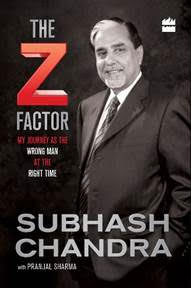
    Leading publihser HarperCollins India has announced the launch of the autobiography of Dr Subhash Chandra of Chairman of Zee and Essel groups. The book is an unusually candid memoir of a truly desi self-made businessman who came to Delhi at age twenty with seventeen rupees in his pocket. Today, he has a net worth of $6.3 billion and annual group revenues of in excess of $3 billion. Senior journalist Pranjal Sharma helped put the book together.


    Dr Chandra, the promoter of Essel Group and Zee, is an unlikely mogul. Hailing from a small town in Haryana, where his family ran grain mills, Chandra has been a perennial outsider, repeatedly aiming high and breaking into businesses where he was considered an interloper Starting work as a teen to pay off family debts, Dr Chandra had to rely on bluff, gumption and sheer hard toil to turn things around. A little bit of luck and political patronage saw him make a fortune in rice exports to the erstwhile USSR.


    Always a risk-taker, Chandra then had the vision of getting into broadcasting early, even as established media players failed to see its potential. Zee TV, India’s first private Indian TV channel, changed the rules of the game and tickled the fancy of a public starved of entertainment.


    Several gutsy initiatives followed, though not all of them were successful. Chandra’s attempts to launch satellite telephony and a cricket league came a cropper. But the man continues to reinvent himself; he is now also focusing on infrastructure and smart cities.


    The book was unveiled by the Prime Minister on Wednesday and then a day later amidst much fanfare at the Jaipur Litfest.


  • Colors partners Equal Rights Music for new Republic Day anthem

    By A Correspondent


    On the occasion of India’s 67th Republic Day, Colors, in association with Equal Rights Music Project, seeks to spread a message of goodwill and amity with the launch of Kabootar – A Peace Anthem. The song will be launched on Colors’ digital and social media platforms reaching out to over 13 million followers and subscribers on 26th January, 2016.


    Speaking about this initiative, Raj Nayak, CEO – Colors says, “As a brand, Colors has always showcased the different hues of human emotions, feelings and sentiments. However, as we drive global development to accomplish personal goals and ambitions, peace is something that the world has lost touch with. As a nation, India has always led the fight for global harmony and brotherhood, making the country’s 67th Republic Day the perfect launchpad for ‘Kabootar – A Peace Anthem’. We are happy to have partnered with the Equal Rights Music Project for this initiative and hope that it unites the nation to achieve peace.”


    Conceptualized and written by Manish Bhatt – Founder Director, Scarecrow Communications and composed by Eddie T Avil, the song uses Kabootar as a metaphor for peace. The song’s insightfully written lyrics asks the dove the one question that mankind has been eternally pondering over – ‘When Will Peace Finally Grace the World / Kab utrega dharti par, ein kabootar’. The video, aesthetically shot by Riju Samanta, also symbolizes the cause and is a nostalgic reminder of the diversity and similarities we share as Indians. The song and the video builds upon the fact that we really don’t care about the minor differences we have, but the one thing we genuinely care about, is to ensure harmony and peace for our coming generations.


  • Shailesh Kapoor: T20 Cricket: India’s ‘Second Sport’?


    By Shailesh Kapoor


    This Republic Day, India beat Australia in the first T20 International of the ongoing series. Earlier the same day, the Indian women beat the Aussies too, in a record run chase. Thus started a long season of T20 cricket for the Indian viewers; a season that will go all the way till May end, when the IPL concludes.


    India finishes three T20s in Australia, then plays another three with Sri Lanka, followed by the T20 World Cup in India in March, and the IPL in April-May immediately after. More than 80 T20 matches will be aired this period, not counting the women’s T20 World Cup, which is also scheduled for March.


    For those whose initiation into the sport of cricket was through Tests and ODIs, this may come across as a crazy cricket schedule, almost an off-putting one. But for a wide section of sub-25 audience, this is the cricket they enjoy seeing the most – the three-hour entertainment show, over the eight-hour or five-day drag.


    I may have made this point in this column a couple of years ago, but it’s worth saying again that the sport a person (and by extension, a country) grows up to love is the sport he (or she) grows up to watch (and possibly play) when he’s a teenager. Typically, 12-17 years is the age band when the mind is most impressionable regarding the sporting taste of a typical urban Indian.


    Times are changing, though. For many in the 12-17 age group, the “entertainment” that sports provided has been replaced by social options, loosely grouped under the generic category of activities (including the virtual ones) called “hanging out”. Hence, the challenge to engage them will continue to get tougher by the year.


    In the pursuit to find the ‘second sport’ in India after cricket, broadcasters and sports marketers have launched every possible sporting league. Some of these leagues have done genuinely well, while others are merely projected media successes, despite low viewership and financial losses to most stakeholders. A dozen leagues later, India has not got any closer to finding that second sport.


    But even as that effort continues, the sport of cricket is virtually getting split into two. Cricket 1 is the old cricket – Tests & ODIs – attracting a small section of 25+ male audience (40+ for Tests) and increasingly becoming a niche proposition, unless there’s a big event like the World Cup once in four years.


    Cricket 2 is T20, be it nation vs. nation or leagues (IPL primarily, for now, for the Indian audiences). Cricket 2 is entertainment first and sports later. It’s more gender-inclusive for that reason. It targets 15-30 as its core constituency, though the national team playing T20 would tend to get Cricket 1 audiences into it too.


    Year-on-year, the proportion of Cricket 2 audiences will grow, as the 15-30 year olds get older. A decade from now, Cricket 2 will address a much wider 15-40 audience, and be perhaps the only cricket that gets ratings.


    To that extent, India seems to have found its second sport (or the new first sport, more appropriately). Call it Cricket 2, Call it T20, it’s a new sport alright. And its strength will be on display, all the way till end May this year.


  • dittoTV unveils ‘before TV’ feature for viewers

    By A Correspondent


    dittoTV, India’s first OTT platform created by Zee Digital Convergence Limited has announced its ‘beforeTV’ feature focused on giving consumers freedom in their entertainment consumption experience. This feature aligns with brand’s aspiration to provide entertainment content anywhere, anytime. Borne out of extensive research on the changing consumption patterns and preferences of viewers, this feature will allow viewers to view their favorite content from the Zee Group channels hours before it showcases on television.


    Debashish Ghosh

    Debashish Ghosh, CEO – ZDCL underlines; “The fact that more and more people are finding it easy to cut away from appointment viewing and watch their chosen entertainment anytime, anywhere, has only driven consumer expectations higher and upped the ante for OTT platforms the world-over. While, original content will remain one of the key drivers and focus of dittoTV’s global operations, serious innovations will help give our consumers something new and engaging all-the-time, every time.”


    This endeavor is in line with the company and group’s continued focus on content and service innovations that consumers find value in. In line with this vision, other recent initiatives such as ‘Life Is Music’, the first show under its original content creation strategy.


    The ambition is also to take dittoTV to newer markets and offer local content in those markets. Currently, it is focusing on markets like the US, UK, Europe, Australia, New Zealand, Middle East, Asia Pacific and some parts of Africa.


    Further, a key differentiator is the fact that dittoTV is not just an India-focused OTT platform; it will also carry non-Indian content shortly in the markets where it has been launched. For example in the Middle East, it will carry third-party Arabic content. The idea is to make dittoTV a product that is not just for Indian expats, but can also be consumed by any Diaspora of the population.


  • Shailesh Kapoor: Kapil Sharma And The Loss Of Innocence

    By Shailesh Kapoor


    Till about two-and-a-half years ago, not many knew his name. Kapil Sharma had been on TV since 2007, when he featured on the third season of The Great Indian Laughter Challenge. But his real brush with fame and success came when he got a show with his name in it: Comedy Nights With Kapil (CNWK).


    Face recognition to name recognition is a critical leap every actor in showbiz aspires for. It’s a good barometer of “having arrived”. Lot of TV stars, and even film stars, don’t have name recognition after years of being around. TV stars are generally known by the name of the most famous character they played in their career. Till today, many know Boman Irani as “Maamu”. And we routinely meet consumers who refer to Dalip Tahil as Madan Chopra as a matter of fact.


    I had been following Sharma’s work on Comedy Circus for a couple of years before CNWK happened. He was the stand-out comedian on that show, head and shoulders above the rest, in his spontaneity as well as a unique touch of innocence he brought to his performances. His freshness stood out. There was an unmistakable sense of “common man” to him.


    When Colors gave him a show with his name in it, and even got him to produce it, they were placing their bets on a man who had the ability to deliver the goods. And he delivered them indeed. Enough has been written about the phenomenal success story of CNWK, including on this column. It seemed like a match made in heaven. A top channel and a top talent, with a show in his name. What could go wrong?


    But things indeed went wrong. Today, Sharma is off-air, putting together a show that is rumoured to be going on-air on Sony in the near future. CNWK itself didn’t have the best year in 2015, as ratings flattened out. Colors has a replacement show on-air, but without a titular hero this time.


    A small-town struggling actor-comedian comes to Mumbai, achieves success, has a huge tryst with fame, builds a fan base most top Bollywood stars will be enviable of, and then begins to lose his bearings. That’s a classic story, right? Wait, we have even seen the female version of that. The movie was called Fashion.


    Talent management is a tricky business, and all channels and production houses encounter celebrities who can give them a pain in their backsides at some point or the other. Petty squabbles over vanity vans, flight tickets for hair and make-up crew, hotel room class, costume selection, etc. are commonplace.


    But illusions stardom brings with it can go beyond such squabbles. By all accounts, official and off-the-record (I have never met Sharma), it’s apparent that Sharma had a tough time managing success, and didn’t have the best people around him to advise him either. Over time, that innocence of Comedy Circus, and the first two years of CNWK, was giving way to a certain swagger of success. He even started building his stardom it into his lines (a terrible thing to do), almost sub-consciously perhaps.


    But the camera can expose you. The weakening of innocence reflected on screen. May be he was not working on the show as hard as before, maybe he didn’t want success as badly as before, having achieved it already. Whatever the reason, the Kapil Sharma of 2015 was a less endearing version of the Kapil Sharma till 2014. Bollywood aspirations also took their toll (they often do for big TV stars) in the same period.


    The channel which airs his show has its task cut out. Sharma is a comedian of immense talent, the best mainstream Indian media has seen ever. But it’s not his talent they have to harness. They have to make the man find himself again. If they manage to do that, it would be like the last act of Madhur Bhandarkar’s Fashion. When one rediscovers innocence and the hunger to excel. All over again.


  • India Today TV launches Town Halls with Twitter

    By A Correspondent


    India Today Television in an exclusive partnership with Twitter, will be conducting Town Halls on the social media platform. The Twitter Town Halls will give an opportunity to followers on Twitter to engage with News makers, opinion makers and other eminent personalities. The Twitter followers can tweet their questions and the personality/guest will respond to the same during the Town Hall. This will be aired on India Today Television. The partnership also extends to the group’s Hindi news channel AajTak for relevant guests.


    The India Today Group and Twitter have already aired successful Town Halls with superstars Shahrukh Khan and Kamal Hassan. The third episode in the series featuring Sri Sri Ravi Shankar will be aired this week-end.


    Speaking on the partnership, Kalli Purie, Group Editorial Director, Broadcast & New Media, India Today Group said, “Our sole objective through social media is to engage our followers and viewers in a dialogue on issues of national and global importance. Twitter Town Hall is a great format to ideate, debate and celebrate the spirit of freedom of expression. We trust that our social media followers are equally well informed to ask the right questions of their leaders. We will be rolling out many such templates to empower our end users”.


    Rishi Jaitly, Vice President – Media for Asia-Pacific, Middle East and North Africa, added on the partnership “Twitter Town Halls have been used by global business and political leaders to connect with their followers and audiences at large for some time now. Twitter is the only platform in the world that is public, conversational, and real-time. The beauty of the platform is that it allows users to engage with influential personalities from different walks of life, and gives them a voice to be heard. This Twitter Town Hall will give users a chance to talk to and engage with influential icons and leaders from different walks of life for the first time.”