Category: TV

  • R K Arora elevated to Group CEO, ITV Network (From Yesterday)

    By A Correspondent


    R K Arora has been elevated to Group CEO, ITV Network where he will continue to lead and drive the organization and take it to the next level.  In this role, he will assume overall responsibility of strategic and operational management of the ITV Network and will oversee the group’s diverse portfolio of assets spanning news broadcasting.


    A chartered accountant by profession, Mr Arora joined the ITV Network in 2012 as CEO Broadcasting. Mr Arora has extensive experience spanning over 20 years in the field of distribution, finance and profitability of companies. Prior to ITV Network, he was the Chief Executive Officer with BAG Network (News 24, E24 and Darshan 24). He was also associated with Independent News Service Pvt. Ltd. (India TV) since its inception.


    “I’m delighted to announce Mr. Arora’s well-deserved promotion,” said Kartikeya Sharma, Managing Director, ITV Network. “I am confident that with his deep industry knowledge and collegial working style, he’ll continue to strengthen ITV Network’s position in the marketplace. He has been instrumental to the highly positive momentum which ITV Network enjoys today and has in the past two years, in his capacity as CEO Broadcasting, worked towards attaining leadership position for ITV network and taking it to greater heights. His astute business acumen and expertise has helped ITV Network solidify its position in the news genre. Under Mr Arora’s tenure all our products have become market leaders and as a group we have worked hard to deliver value for our advertisers. Not only have we fulfilled our commitments, but have also delivered more than what we had targeted. With this thought process, I am sure Mr. Arora will achieve many more milestones. Our company’s objective is to become India’s largest TV news network and the most profitable one as well. I am sure that ITV network will definitely achieve its objectives under his leadership.”


    “I am humbled to lead ITV Network as Group CEO,” said Mr Arora. “In spite of challenging and demanding environment both our brands NewsX and India News have been able to carve a niche for themselves. I firmly believe that with Kartikeya’s support and ITV Network’s formidable talent, we are well poised to continue to deliver superior results in today’s increasingly competitive market and take the Network to greater heights. India News and NewsX is now a preferred choice for advertisers as they are delivering strong performance week on week. In a short span of time, NewsX and India News have carved a value proposition in the mind of the advertisers and have been consistently over delivering”
     

  • Dish TV opts for MEC India as its media partner

    By A Correspondent


    Dish TV has announced a new partner for its media duties – MEC India.  The relationship will be managed by the agency’s Gurgaon office.


    With digitalization phase 3 & 4 on the anvil, the brand is planning for significant growth acquisition volumes as well as, retention initiatives. The brand portfolio is now armored with multiple products and offerings especially, for technology savvy users (like) recorders in SD/ HD, a strong HD content basket, dish-online for streaming on mobile devices and so on. The coming months will witness action and challenges both in terms of festivals and events and sporting actions.


    Dish TV has decided to consolidate its ATL and digital business for a more uniform and seamless experience for its consumers, across media. Owing to MEC India’s vast experience in the domain, both the ATL and Digital business have been handed over to them.


    Anjali Malhotra, Executive Vice President – Marketing said, “We pride ourselves in being Asia’s largest DTH company that understands the dynamics of the new age consumer and his needs. We have not only provided innovative product solutions and finest services to our consumers, but build smart go-to market strategies and communication plans. Agency change is a manifestation of this philosophy. We are excited to work with MEC India and believe that the group will help us communicate more strategically and efficiently in this rapidly evolving marketplace”.


    Speaking about the win, T. Gangadhar, Managing Director, MEC India said; “We are delighted with this win. We, look forward to (our partnership with) Dish TV on their quest for disproportionate share of the digitization opportunity. We are particularly excited about leveraging the power of data for smart, business-oriented solutions”.


  • Seven3Sports bags digital rights of Bundesliga

    By A Correspondent


    Seven3Sports has bagged the digital rights of the 52nd season of Bundesliga. Bundesliga is the best-attended league in football. After the success of the 2014 FIFA World Cup, that was broadcasted by Seven3Sports across five Indian sub-continental and South Asian countries, acquiring digital rights for Bundesliga came as a natural extension of the organisation’s services for the Indian Football fan base.


    “With inclusion of this undertaking to our portfolio, Seven3Sports is bringing a bouquet of diverse sports to its viewers. We are targeting to go beyond the conventional sports loved in India; introducing new experiences such as French Open in the past and now the Bundesliga. This will be an exciting new venture for us with the ultimate aim to provide live viewership to those who are always on the go,” said Jatin Ahluwalia, Founder and Chief Executive Officer of Seven3Sports.


    Seven3Sports has established itself as a leading Sports Rights Company and has been associated with most of the major sporting events across the globe including French Open, 2014 FIFA World Cup and IPL to name a few. Keeping up with this momentum, through Bundesliga, Seven3Sports aims to bring about a surge in the Football viewership within the country.


    Seven3Sports has put together a digital plan to bring ‘Bundesliga’ closer to over a billion Indians, live on their mobile phones and Internet screens. These digital rights cover Mobile, Internet, App, Video on Demand, Live streaming on digital platform, Highlight, Audio commentary on Mobile and Internet besides anything you would like to power on digital platforms.


  • Shailesh Kapoor: Same Day. Same Slot. Three Launches. It Happens Only In India!

    By Shailesh Kapoor


    It has been an action-packed week for Hindi GECs. Three shows launched in the same slot on the same day, earlier this week. Monday, August 18, 2014 saw the action unfolding at 8.30pm, with the simultaneous launch of KBC on Sony, Nisha Aur Uske Cousins on Star Plus and Udaan on Colors. Zee TV had launched a new show in the same slot (Jamai Raja) two weeks ago.


    We have had instances of a channel launching upto six new shows on the same day. But three big channels launching new properties on the same day in the same slot has to be a first in the nearly 25 years history of Hindi GECs. In a category where new launches have increasingly struggled to open well, this has to be counted as a very odd happening.


    The equivalent of this would be three big movies releasing on the same Friday. Or three cola brands launching a new campaign in the same week. Can you remember either of that happening ever? Probably not. Which brings me to the point of this piece: Are we an under-coordinated industry?


    Anyone who knows the way information flows in the Indian television industry would tell you that it needs no spy work to find out launch dates of new shows. The information is available everywhere, at the junior-most levels in channels and production houses. In any case, coming-soon promos for these shows have been running for weeks. That would be enough time to find things out.


    Yet, when I see channels taking each other head-on, it indicates a certain insular approach towards the business environment. As it is, getting sampling on new shows is a tough task. If three new launches happen at the same time the same night, all are bound to feel the pinch, though some more than others. Building from a low base of viewership is possible, but lower the base, the more challenging is the build-up task.


    There’s a lot of FPC planning that’s going on in GECs all the time. But it’s taking a more tactical form in recent years. Launching head-on against another well-promoted show is a strategic blunder, especially when an extra week would not make any discernable difference whatsoever.


    But one can imagine why it’s happening. To understand this, let’s look at the probable outcome next Thursday, when the ratings are out. At least two, if not all three, shows may open below expectations, because of the fragmentation of new viewers in a highly unpredictable slot. However, show openings are marketing and communication KRAs, I understand. And that’s a department that’s likely to have the least say in the decision to launch head-on. In the end, all you can do to resolve this anomaly is a corridor discussion that borders on pontification.


    52 weeks a year, six channels and at least eight daily fiction slots in a day gives us total of 2,496 possible launch day-slot options. The number of fiction launches in a year are only about 50. What are the chances even two, let alone three, fall on the same day-slot combination? It’s a version of the classical ‘Birthday Problem’ (visit the Wiki to know more). The answer would be very low, less than 1% for two shows and close to 0% for three shows.


    Yet, it happened. Only in India!


    TV Trails is a weekly column written by Shailesh Kapoor, founder and CEO of media insights firm Ormax Media. He spent nine years in the television industry before turning entrepreneur. The views expressed here are his own. He can be reached at his Twitter handle @shaileshkapoor


  • 100 Episodes Young!


    Happy 100!

    So why did Show X do well on Television Channel A and Show Y flop on Channel B despite a huge marketing blitz?  As mediawatchers, we have always asked this question and often relied on our own personal views or that of people around us.

    However, there had got to be a scientific way of figuring why certain television works, and why some doesn’t. We needed to pick the trends and dig for the insights.

    A few months after we launched MxMIndia, we felt we weren’t servicing the needs of our readers well enough if we didn’t provide these insights. It wasn’t enough to carry plugs of what the channels want to say. It wasn’t enough to interview business/programming heads/CxOs and ask the predictable questions.  Or quiz a cross-section of media planners and marketers on what show worked

    We didn’t have to look around too much to know how we could bridge this gap. The answer was to get Shailesh Kapoor, Founder and CEO, Ormax Media to write for us. We had read his tweets and some very interesting posts on his blog.

    It took me longer to meet him than to convince him to write. The rest, as they say, is history.

    Today, Shailesh Kapoor’s weekly column hits a century of appearances. Yes, what you see here is the 100th edition of TV Trail and at MxMIndia we are proud to publish his column and have him associated with us.

    We are also delighted that all our readers have embraced his column right from Week #1 and the views he has expressed.

    For those of you have come in late, do dig into our archives. TV Trail by Shailesh Kapoor is Essential Reading for ALL stakeholders in the business and craft of the Indian media.

    Congratulations, Shailesh!

    – Pradyuman Maheshwari
    Editor-in-Chief, MxMIndia


    By Shailesh Kapoor


    TV Trail completes 100 episodes today! A century is always special, be it on the cricket field or here on the Internet. It’s easy to indulge myself in this hundredth edition of this weekly column and write about the experience of writing it. But that would be ironic, given that I have spent at least ten of these 100 columns criticizing some of the common indulgences in our TV industry.


    Instead then, here’s my pick of the seven pieces I enjoyed writing the most, in chronological order, with excerpts from each in italics. Click if you want to read any of them in full. To use TV language, I’m hoping this piece can convert some of the irregular readers into regulars. And for those who have been regulars already, thank you for reading.


    Films Stars on TV – Free For All (August 2012)

    Channels allowing filmmakers free access to their medium has always baffled me. Two years hence, not much has changed!


    Why should a producer, who pays upto Rs 3 million for a print ad, not pay a rupee for getting a wider, more contextual (audio-video and entertainment) medium to meet the same objectives better? Because TV has never asked for it! Because the pecking order is twisted enough for old-school film producers and stars to still believe that they, and not the channel, are the ones extending a favor by making an “appearance”.


    Trite Tributes To Film Legends (November 2012)

    How news channels cover the passing away of cinema legends embarrasses me. 2011-12 was a period when we lost a few stalwarts. This piece was written a few days after Yash Chopra passed away.


    The ‘programme’ names often border on being ludicrous. A channel covered Rajesh Khanna’s death live, under a program called ‘Oopar Aaka, Neeche Kaka’. Looking for alliterations and puns in tragedy is not exactly the most sensitive thing to do, but if you choose to do it, choose words that at least make some sense. The commentary is frantic, almost as if it’s a race against time. After-death is anything but that, both literally and metaphorically.


    It’s All About Hindi Vindi (December 2012)

    Why Hindi channels use English in their on-air and off-air communication that even Newton would have struggled to answer. Things have got a wee bit better since 2012. But only a wee bit.


    This obsession with English extends to channel packaging and taglines. There are two strong stereotypes at play here. One says: In the metros, English is now widely used, and hence, can be the main language of communication. This is classic mother-in-law research (or my-friends-circle research) at play. In cities where slow-paced songs are called ‘silent songs’ and horror movies are routinely referred to as ‘horrible movies’ (by the youth, no less), using English for brand communication of a Hindi channel is pure futility on display.


    Why Imam Siddiqui had to ‘lose’ Bigg Boss 6 (January 2013)

    I rarely write about specific programs, but Bigg Boss has been the subject of about four pieces. I enjoyed exploring India’s moral compass in this piece.


    Over years, the ambitious Air Hostess (Kitu Gidwani) and the beer-guzzling Tara were replaced by Tulsi, Akshara and Priya. These are strong characters in their own right, but outright positive ones, with no shades of grey at all. During this period, the villains became even more menacing and unidimensional, scheming and plotting all the time. Television, over the last 15 years, has separated the black from the white, the way our cinema did in the 70s and the 80s. This slotting today cuts across all television. Imam Siddiqui is “good to watch”, but that doesn’t make him the positive-type good. He was clearly the villain of Bigg Boss. A villain, who may display his soft side once in a while, but remained a villain nevertheless. Imam Siddiqui was “bad”. Probably 200% bad.


    Five Tips For Young TV Executives (May 2013)

    Easily the piece closest to my heart. There’s nothing more satisfying than nurturing talent, and how little nurture is happening in our TV industry always pains me.


    Be Curious: There is a world at work, beyond your assigned work, i.e., the show or the client or the campaign you are working on. Seek learning from that world. Talk to people in other departments, ask them questions, find your “intrigues” and then find answers to them. Learning never stops, but there is no real, sustained learning unless the mind is curious. And curiosity can be a deceptively under-rated concept. Make it your big idea.


    Are We A Noise-Loving TV Nation? (November 2013)

    I have written a few pieces around Arnab Goswami, but this one used him, Gauhar Khan (Bigg Boss) and Taarak Mehta Ka Ooltah Chashmah as examples to make a larger point about the desirability of ‘noise’ on Indian television.


    You would normally not associate positive emotions with the word ‘noise’. It’s generally assumed and accepted that noise is bad. In context of television too, the media has propagated this notion for a while now. But there is very little real evidence to accept this belief. In fact, there is telling evidence to the contrary.


    Reality Shows: Trendy No More? (May 2014)

    The decline of reality television (barring Bigg Boss) in the last two years has not been understood well or discussed enough. This was one of the two pieces I’ve written on this subject.


    Today, the reality shows genre is facing imminent decline. The audiences who grew up watching these formats would have recently got married or are likely to get married soon. The impact of marriage on TV content preferences can never be overstated. And no young generation likes to inherit what the “oldies” liked. They want to create their own trends, their own hits.


  • 10 Trends that will Drive TV Tomorrow


    Global leader in assurance, tax, transaction and advisory services Ernst & Young LLP or EY, as it’s now known, presented a report at the TV.NXT conference being held in Mumbai and organised by leading industry publication afaqs. Presenting an extract from the report presented by senior EY professionals  Devendra Parulekar and Ashish Pherwani


    The Indian television industry is undergoing a seismic shift. The pace of technological change is accelerating so quickly that finding the right balance between addressing today’s daily operational challenges and planning for the next big thing can be a struggle. Many executives are so focussed on the critical issues that they need to address today that looking forward is nearly impossible. And yet, looking forward is what executives need to do if they want to innovate, prosper and survive.


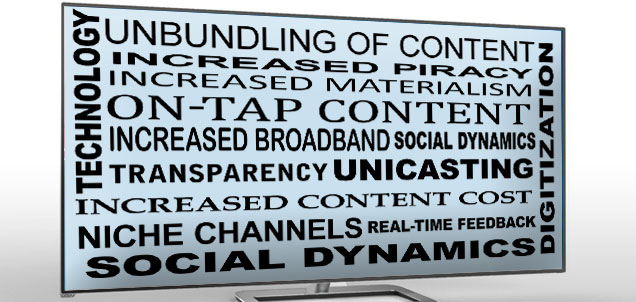
    Here are ten emerging trends that we see as having the biggest impact on the future of television in India

    1. Unbundling of content will drive new revenue models

    Trend:

    As seen in both music and books, with the advent of good-quality broadband and increasing per-capita income, TV content will get unbundled. There will be a shift from channel loyalty and TV loyalty to program loyalty and device disloyalty


    Implications:

    1. Need for sachet pricing models -Pricing by episode, series, day, etc willbe required

    2. Loss of traditional subscriptionrevenues
    3. Threat that high individual pricingcould be hampered by piracy


    2. Technology will enable omniplatform consumption

    Trend:

    Consumption will move from one location to many, as viewers’ desire to be entertained across locations will become possible with the aid of technology like wifi. They will consume content across various formats and devices.


    Implications:

    1. Content will need to move seamlessly across devices and locales; storytelling will need to evolve

    2. Measurement of viewership will be individualized, and be based on large volumes of actual data
    3. Increased adoption of digital supply chain to reduce cost and time


    3. “On-tap” content will lead to time-shifted bingeing

    Trend:

    As there is no need for immediacy of viewing (except in sports and breaking news), viewers will access most content at their ease, and indulge in binging (consuming many episodes at once).


    Implications:

    1. Digital asset management wouldneed to be strengthened to enable subscription revenues

    2. New pricing and packagingmodels would emerge
    3. Growth of Multi Channel Networks


    4. Increased materialism will move TV consumption from the living room to the bedroom

    Trend:

    Increased materialism and lower TV, broadband and PC costs will enable families to split their viewing patterns from the “common” or living room, to the “individual” or bedroom


    Implications:

    1. Lower share for GECs and increased importance of niche channels

    2. Ability for advertisers to target audiences one-on-one


    5. Increased broadband will result in increased piracy

    Trend:

    Broadband growth = Piracy growth. Specially when broadband rates reduce and come on par with cable rates.


    Implications:

    1. Need for industry-level initiatives to curb piracy

    2. Flexible & fair content pricing models


    6. Increased content cost will shift power to the content producer

    Trend:

    IP will begin to be co-owned by production houses, and not just broadcasters, as increasing content costs will result in increased risk sharing


    Implications:

    1. New models of content licensing

    2. Need for robust content use monitoring systems
    3. Premium artists start to share the risk


    7. Digitization will increase importance of niche channels

    Trend:

    India will digitize its distribution across Phases I to III, and increased collections from subscribers will trickle to broadcasters. Phase IV will remain a fragmented or HITS play, with LCOs retaining their last-mile relationships.


    Implications:

    1. Increased revenues for niche channels

    2. Fragmentation of the “GEC” into “sub- GECs” with focused target audiences
    3. Possibility of massive viewership measurement at the household level
    4. Marketing will need to support Phase III viewership support


    8. Transparency will lead to perviewer carriage models

    Trend:

    Carriage is a distribution cost and will be recognized as such, till such time as MSOs begin to collect a larger share of subscription revenues


    Implication:

    1. Per-viewer carriage models will come into being; split across 50 large and medium distributors


    9. Unicasting could lead to resultbased ad models

    Trend:

    Ad service will change to unicast models, targeting individual viewers, like the internet.


    Implications:

    1 Advertisers will begin to pay per ad served and viewed, and increased measurement will be the norm
    2. Value of a served customer vs. a mass customer will be determined
    3. Use of return path (where possible) to drive interactivity


    10. Social dynamics will lead to more real-time feedback

    Trend:

    Apart from viewership measurement, trends from social media like Facebook, Twitter, etc. will provide inputs to marketing, pricing and story-telling


    Implications:

    1. Need to implement social media crawlers and big data analytics
    2. Content supply chain needs to be flexible


    Published with permission from EY


  • Shailesh Kapoor: Bollywood embraces the Sports Drama Genre. Will TV follow?

    By Shailesh Kapoor


    MC Mary Kom’s biopic releases today. After the success of Bhaag Milkha Bhaag last year, the film, succinctly titled Mary Kom, is hot property in Bollywood trade. After all, Bhaag Milkha Bhaag was the first 100cr film that did not feature a big star in the lead. It was also the most-appreciated Hindi film in terms of audience word-of-mouth since 3 Idiots.


    In a different and yet not-so-different world, Sachin Tendulkar will be releasing his autobiography, in November. Co-authored by Boria Majumdar, the book, titled Playing It My Way, is sure to make at least some young Indians read beyond Chetan Bhagat.


    Evidently, the impact of sport on other media has increased in the last year or two. Traditionally, “sports” meant restricted live telecasts and news coverage of the same. Everything else around it was strictly ancillary. The only other place where sportspeople featured was the gossip column, when they dated a film star (at times, starlet).


    While Bollywood has found sports in its attempt to find new stories, Indian television seems to have ignored this recent development. We are not a sporting country by any means, but that does not mean that we don’t have sporting heroes. Yet, no stories on television have covered them, their lives or the drama associated with sport in general. The last attempt of any sorts was back in 2009, when Sony aired a daily called Palampur Express. The show was based on a fictional character, not a real story, and had severe story-telling concerns, none of which were about “sports” as such. It went off-air within weeks.


    In my growing up years, I remember watching the Bodyline miniseries with awe. The idea of recreating real sporting action with such authenticity was fascinating. Hollywood has also captured sporting drama in dozens of films, including the behind-the-scenes action in films like Jerry Maguire and Moneyball.


    I understand that the economics of sports channels may not allow them to invest in fiction series around sports. But isn’t sports drama a part of the wider umbrella called “general entertainment”? We dish out talent shows by the day, but there haven’t been any that search for the next potential Indian cricket team member or the next potential Saina Nehwal or Sushil Kumar.


    Sports drama can be excellent viewing for weekend audiences. It ticks most weekend boxes – it is male-skewed, it is kids-inclusive, it has a rush of adrenaline, and certainly a big scoop of inspiration.


    A big network like Star, with equal interest in both sports and general entertainment, is best aligned today to bridge this need gap. A crackling sports drama or sports reality show can open up a new area of television programming in India. Otherwise, like it took a Richard Attenborough to tell Gandhi’s story, it would take another Brit or American to tell Dhyanchand’s story on TV or celluloid.


    Bollywood has taken the first step. It’s time for television to follow and embrace the world of sport outside of live action. Anyone listening?


  • What Ticks for Indian Consumers/ Children – Nina Elavia Jaipuri and Deepak Jayaram

    Continuing with our extracts from the second edition of the MxMIndia Annual, we present contributions by Nina Elavia Jaipuri and Deepak Jayaram


    The changing face of kids entertainment


    By Nina Elavia Jaipuria


    Kids constitute nearly one-third of the total Indian population and thanks to this dynamic age group and their ever evolving entertainment needs, it is no surprise that kid focussed entertainment has multiplied and kids television is not only witnessing massive growth but also seeing new, innovative offerings.


    Kids are entering and exiting age groups at great speed and every age group comes with its own set of preferences. Hence microsegmentation of kids channels has become the order of the day. Customised and differentiated content offerings across various Target Groups (be it age, gender, geography, etc.) is what kids entertainers are catering to. For example, the Nickelodeon kids cluster consists of Nick that caters to kids seeking comedy, Sonic caters to the action and adventure loving boys, Nick Junior caters to pre-schoolers and young moms with edutainment focussed shows and Teen Nick talks to the whimsical tween/ teen girls with its cutting-edge international shows. Clearly, the one-size-fits-all formula does not work anymore!


    Creating relevant platforms will give marketers an early lead


    By Deepak Jayaram


    It is really interesting that I am writing about tweens, especially at a time when my elder daughter is moving out of this phase and the younger one is just stepping into it.


    We live in very interesting times and our tweens make them even more interesting with their energy levels, curiosity and willingness to try new things like sharing experiences, creating their own videos for the world to see and more. Tweens is really an interesting phase in life… too old for toys and too young for boys.


    On a serious note, they have immense confidence in themselves and state views in black and white as they discover them. Luckily, they are conformists and are constantly seeking information from their peers, parents, teachers, media, and are already digital nomads rapidly moving to becoming natives.


    With the wave of digitization sweeping across India, the choices that kids have at the press of a button are limitless. All the more reason for broadcasters to keep in mind that compelling story telling, endearing characters and great quality animation created along the way is what will tick with kids today. No matter how dynamic this age group is, animation still remains the favorite medium of entertainment that transports them to a parallel world of escape and fantasy.


    Few evergreen and larger than life characters such as Chhota Bheem, Ninja Hattori and Doraemon are bigger than the channels that carry them and dominate the kids category viewership. It is also very interesting to note that there is a growing preference for original Indian local content. Winning and endearing local shows like Chhota Bheem, Motu Patlu, Mighty Raju, Pakdam Pakdai and Keymon Ache are testimony to the fact that Indian animation is coming of age and so is the industry.


    Kids are early adopters of technology and to cater to the ‘Screenagers’, kids entertainers are ensuring that they are served their daily dose of entertainment at a time, place and screen convenient to them! This TG is a formidable one and with their short attention span, they will keep the marketers and broadcasters on their toes. We will need to continuously re-invent ourselves and innovate to stay relevant to this ever evolving and dynamic bunch of consumers! Jai Ho Kids!!!


    TV is a key part of life for them with the choice of programming being dominated by select channels like Disney, Nick and more of the same genre. Interestingly, viewing is more inclusive and has the family also watching these shows. The biggest change that I have been seeing is the effect of technology, its inclusion in our lives and the way we are living as nuclear families. Tablets have become a family entertainment device and the introduction to gaming to a lot of tweens. Farmville, Temple Run, Angry Birds…this list is an on-going process of discovery: attention and stickiness are however dependant on the next new fad!!!


    We know this audience takes to experimental marketing like fish to water if engaged right. Digital activation and gaming are the two opportunities that are likely to look much more interesting in coming times. In addition, some touch points are becoming interesting spaces to engage consumers. Supermarkets, malls, school contact programmes come to mind. Marketers, however, have to be clear about investing in this life stage and not sell through them.


    In nuclear families and especially ones where we have both parents working, parents are spending quality time with the tweens and making them a part of lot of decisions. The influence of tweens in purchase decisions has been increasing by the day. As a marketer, all of the above seem to offer enough opportunities.


    If a marketer chooses to engage with this phase in the consumer’s lifecycle, influences are bound to become a part of the coming stages. However, one has to be wary of not being typecast into this stage depending on the category under consideration. The marketers who create relevant platforms based on relevant insight and keep building on them will be the ones who will establish the early lead and create path-breaking case studies.


    Tomorrow: Wednesday, September 10:  Family – Tarun Katial and Anooj Kapoor


  • India TV annouces 2nd edition of Salaam India Awards

    By A Correspondent


    The second edition of Salaam India Awards 2014, constituted by India TV last year, is back to felicitate the exceptional acts of bravery exemplified by the common citizens of India.


    Following the ‘nationwide call for nominations’, the 2014 edition of the coveted honors is officially underway post the Jury deliberated to decide upon the distinguishing Bravehearts last weekend.


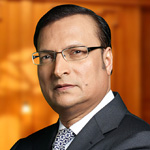
    Rajat Sharma

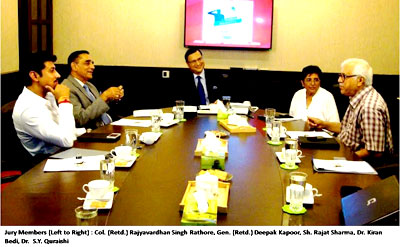
    This year’s Award Jury includes India TV Chairman & Editor-in-Chief, Rajat Sharma, Former India CEC, Dr. S.Y. Quraishi, Former Army Chief Gen. Deepak Kapoor, Ace Shooter Col. (Retd.) Rajyavardhan S. Rathore and former IPS Dr. Kiran Bedi.


    In line with the guiding principle for the awards, the chosen honourees are those who are not intrinsically fearless but who could selflessly win over their fears to safeguard someone else’s interest while risking or even sacrificing their own lives, in the hour of need.


    Ritu Dhawan

    Announcing the second edition of the honors, India TV MD & CEO, Ritu Dhawan said, “We are glad that we are again getting a chance to felicitate our real heroes, who simply inspire us all by their actions demonstrating selflessness & fearlessness, also the most important traits of a news source.”


    “As a leader in the Hindi news genre, it is certainly a matter of both pleasure & contentment for us to felicitate those who are not only our role models but also who bring the positive balance to humanity, our society & nation” she added.


    The chosen bravehearts will be honored in a glittering ceremony on Sunday, 21st September at Hotel Taj, New Delhi. Salaam India Awards will be conferred across four categories including Bravery Awards, Gallantry Awards, Jyoti Singh Awards and Special Awards.


    Officer’s Choice has once again decided join hands with India TV as the presenting sponsor of the initiative along with Amrapali Group as the associate sponsor. Dainik Bhaskar & Pioneer Publicity are the media partners for the initiative. Showtime Events, one of India’s premier event management companies will be managing the event.


  • What Ticks for Indian Consumers/ Family – Tarun Katial and Anooj Kapoor

    Continuing with our extracts from the second edition of the MxMIndia Annual, we present contributions by Tarun Katial and Anooj Kapoor


    Broadcasters will opt for genre segmentation in the future


    By Tarun Katial


    TV broadcast is maturing to a point where the only dominating content that plays will not be just TV soaps. The audience today is warming up to different genres providing different content. For example you have channels like Life OK giving you programmes like ‘Shapath’ and ‘Savdhaan India’ or someone like Sony that airs ‘CID’ etc.


    Even comedy as a genre has really picked up in the recent past and the credit for that goes to shows like ‘Taarak Mehta Ka Ooltah Chashmah’, ‘Comedy Circus’ etc. It goes to show that when it comes to the overall contribution towards GRPs, it is not just the soaps and reality shows that are bringing in the numbers; the contribution is coming from other genre of programming as well.


    Also, I am of the opinion that the linear format of television will get restricted to only the top one or two channels. Beyond that, a lot of it will become episodic in nature and people will want a sense of completion by the end of the whole episode. So the stickiness will only be for the period of half-hour than the overall level. Thus people may tend to use different channels for different days depending on the content that they watch.


    Having a sound positioning strategy is vital


    By Anooj Kapoor


    When SAB was launched in the year 2000 by Sri Adhikari Brothers, majority of the channel’s viewership was coming from male audiences. Now 14 years in the business, it has grown and evolved as a complete family entertainment channel.


    Today, it offers content for all members of an Indian family – housewife, male members of the family, kids and also young adults. What has made the channel so successful? Well, the answer to that question is simple. Once the channel decided on its positioning – which is light-hearted comedy, we stuck to it and believed in the thought that the channel can attain big success, even with that specialist kind of positioning which we created for ourselves.


    So that is one big factor why we’re successful as a channel. We introduced new shows, interesting formats, but while we did that – we never deviated from our core positioning. Shows such as Taarak Mehta Ka Ooltah Chasmah, Lapataganj, FIR, Jeannie Aur Juju and Chidiya Ghar are all examples of different shows that have done exceedingly well. Taarak Mehta Ka Ooltah Chashma has done more than 1200 shows and is one of the most liked and popular shows in India.


    In addition, I see the concept of ‘family’ disappearing in the near future. Channels will start shortlisting on the basis of demographics and years. Hence, to hope that you are going to appeal to all sections from 4-54 yrs will be a big challenge. As for radio, the era of doing contemporary hits and standard new music is over.


    Players will have to start making formats they want and the audiences they want to reach out to and the kind of content they want to build. The era of happy-go-lucky RJs are clearly over. Players are now looking for those who will offer credible sources of information and those that can add value.


    Lapataganj crossed 850 episodes in its earlier avatar and is now doing well in its second season (currently on air). As part of the strategy, we do not showcase saas-bahu quarrels or any such negative things in our programmes. We have consciously stayed away from reality formats such as dance competition, for instance. And it is something we will not bring to the channel in the future as well. On the contrary, other channels in the GEC space have tried to get into comedy, but have not been very successful. I believe there is space for only one channel in the comedy space.


    It is going to be difficult for any new channel to enter and survive as there is limited talent pool in this space. And we have been successful as a comedy-centric family entertainment channel for many years now. How can we as a channel evolve from here and how can we become a leading Hindi entertainment channel in India? Well, we’re making steady progress towards that goal and I’m sure that sooner or later it will happen. As I said, the key is in staying focused on your positioning strategy and working or striving to make the overall viewership experience better.


    Tomorrow: Thursday, September 11:  Men – Ajay Kakar and Manish Kalra


  • Gautam Bhanot joins NewsX as National Revenue Head

    By A Correspondent


    Gautam Bhanot

    ITV Network has roped in GautamBhanot as National Revenue Head for NewsX. Gautam will be responsible for the overall sales and revenue generation of the channel. He will focus on growing the top line for the company, while also creating new revenue streams and opportunities, and in turn significantly contributing to the overall growth of the ITV Network.


    Gautam is a seasoned media professional with more than 16 years of experience across leading media companies in revenue maximization, inventory management and market development. He comes with a proven track record of leading his team in achieving sales targets consistently. He joins NewsX from Network18 after a fruitful innings of 9 years, his last position being National Sales Head for CNN-IBN. Prior to this, he was Vice President – Sales, heading revenue generation for CNN-IBN, CNBC-TV18 and CNBC-AWAAZ, for the North region. Gautam’s has had successful stints at The Times of India & Economic Times and the TejBandhu Group.


    R K Arora, Group CEO said in an official communique, “We are delighted to have Gautam on board at this exciting time of growth and expansion at ITV Network. We are certain that his experience and understanding of the business will benefit NewsX as we strive to continue to be the market leader in English news genre, in line with ITV Network’s objective of becoming India’s profitable and largest TV news network.”


    Gautam is a Commerce graduate and holds an MBA degree with specialization in marketing.


  • Shailesh Kapoor: What’s in a Name? The Art of Choosing a Show Title

    By Shailesh Kapoor


    SAB TV launched a show called Chandrakant Chiplunkar Seedi Bambawala last month. The long, tongue-twister of a name is now the longest show title for an Indian TV programme in my memory (I have discounted inconsequential taglines while considering titles). Star Plus broke its mould by titling their new show Nisha Aur Uske Cousins. At the box-office two weeks ago, a film released with a title that made it virtually impossible for the film to be taken seriously – Raja Natwarlal.


    As the environment gets more distractive and options increase, the impact of content titling on its success has started to increase too. A title may not be the most important determinant of a show’s success. That comes from characters, plot and treatment, of course. But a title can be an entry ticket or an entry barrier, depending on how it is perceived.


    Very little understanding of what’s a good title is available. It’s one of the least-researched areas in content. Which is odd, given that it’s the first introduction of the content to its target audience. Titling is still seen as a vague creative exercise. It is nothing but that. It is a marketing variable, but one that marketing departments in channels have very little say in.


    It’s easy to justify a ‘bad’ title, because there will always be enough examples of shows that worked with a certain kind of title and vice versa. That they worked despite the title and not because of it is a point that’s rarely understood.


    There may not be any tenets cast in stone, but there certainly are guidelines for good show titles, that we sense over many years of content and communication research in the Indian market. Here are five of them. Unfortunately, work ethic demands that I stay away from giving examples for them. But you should get the drift.


    1. The marriage of simple and catchy: Keep it simple and stupid? In the entertainment business, that won’t necessarily be a recommendation. There needs to be a sense of attractiveness (commonly can “catchy”). But, the catchiness should not come at the cost of simplicity.


    2. Avoid homilies and random musings: It’s amazing how some titles can be so “creative” that they communicate nothing. Innumerable TV and film titles fit this category.


    3. Enough of song names, please: It may have worked for some shows, more memorably for Bade Achhe Lagte Hain. But the excuse to use a song name for a TV show title is now simply an excuse of being lazy. Songs that were never even popular in their own time are now being used as titles. And in some cases, this “own time” happens to be the 50s and the 60s!


    4. Communicate the genre: The biggest marketing task a title can do is to communicate its show’s genre effectively. Choice of words in a title can be critical to communicate the heaviness or light-heartedness of treatment, the emotional tenor and the content bucket the show broadly falls in. I’ve often seen misleading titles being justified by that very standard and very lame explanation: It will be taken care in the treatment of the promos.


    5. When in doubt, use character names: In fact, you can make that: Unless in doubt, use character names. Over five years of show tracking (Ormax Showbuzz), we’ve seen that shows with character names (lead or the lead pair) generate 35% higher unaided recall in their pre-launch week on an average, compared to those without one. Importantly, such titles force the promo writer to write character-building promos. For fiction content, that’s pure gold.