Category: TV

  • Bloomberg TV returns with season 2 of ‘Women in Leadership’

    By A Correspondent


    After profiling eminent women leaders in Season one, Bloomberg TV India is back with an inspirational new season of ‘Women in Leadership’. Today’s women is redefining her role and taking the lead in every field. Women today have pursued their entrepreneurial dreams and emerged on top and the show pays homage to these courageous, successful women.


    Lavneesh Gupta, COO, Bloomberg TV India said,Through this show, Bloomberg TV India continues to strengthen its commitment to enrich the business news viewing experience. The channel has carved a niche for itself by catering to influencers and providing exclusive content to its viewers. The Women in Leadership series finds its viewers amongst the key opinion leaders across industries. The show also promises to be an inspiration for next-generation women, to accept challenges and succeed.


    The first season of the show presented by Life Insurance Corporation of India, featured resilient women leaders like Ms. Chanda Kochhar, MD & CEO, ICICI Bank; Ms. Chitra Ramakrishna, MD & CEO of NSE; Ms. Usha Sangwan, Managing Director at Life Insurance Corporation of India; Ms. Roopa Kudva, MD & CEO, CRISL Ltd.; Ms. Shikha Sharma, MD & CEO of Axis Bank and Ms. Sminu Jindal , MD of Jindal Saw Ltd., amongst others. They shared insights on the importance of planning, taking on new challenges, need for confidence, need for more women leaders in the industry, requirement of role models for aspiring women, etc.


    The new season of “Women in Leadership” features the fascinating journey of some of India’s most talented women entrepreneurs where they share their trials and triumphs, and most importantly, what it takes to become a successful entrepreneur. It focuses on encouraging women entrepreneurs who are confident, believe in themselves and have enormous appetite to take on the best in the business to beat them at their own game.


    The second season will be telecast exclusively on Bloomberg TV India from July 2014.


  • Samaya TV appoints Fourth Dimension as media sales partner

    By A Correspondent


    Samaya TV has appointed Fourth Dimension as their national media sales partner. The collaboration will enable them to reach out to advertisers across India through the strong sales network which has been built by Fourth Dimension over last three years of operations in India.


    Shankar B, CEO, Fourth Dimension Media Solutions said, “We are confident about this development and hope this benefits advertisers/clients who have a big appetite for Karnataka as a region.”


    G V Krishnamurthy, the business head of Samaya TV added, “Fourth Dimension has been a successful media outsourcing firm which helped channels like Puthiya Thalamurai build major market share in Tamil Nadu among advertisers. I am sure they will bring in the same expertise to fuel our growth too…”


    Samaya TV was launched on 20th June 2010 and the positioning line for the channel is Naija Suddigaagi which stands for real and true news. Within a year of launch, Samaya TV has reached a wider viewership making it the second most viewed news channel in Karnataka after TV9.


  • Fox Traveller turns to Fox Life, seeks to tap new audiences

    FOX Traveller has taken on a new avatar with the launch of FOX Life India from June 15, 2014. After being the segment leader in the travel and lifestyle segment, FOX Traveller is broadening its appeal further with this re-launch to reach out to newer audiences.


    Fox Life happens to be a global travel and lifestyle brand in the Fox International Channels’ portfolio. This will give the channel two big advantages – the current winning mix of positioning and content, and a fresh and exciting global library.


    Besides a refreshing content line-up, FOX Life will bring in the global look and feel along with a refreshed thought for the audiences. Like Fox Traveller, FOX Life also believes that life should be a string of interesting journeys, rich with experiences.  The new tag line of the channel ‘Go Places’ is a summation of its philosophy, urging viewers to get out there and explore more.


    Keertan Adyanthaya, Managing Director, FOX International Channels said, “Fox Traveller’s journey has been exciting, fun, and fruitful. And as we continue on our next leg of this journey, it only gets bigger and better. With the promise of offering our viewers greater variety through the eclectic mix of our local and international programming, existing and new, we successfully switched from Fox Traveller to FOX Life on 15th June 2014. With the launch of FOX Life, we are growing the travel & lifestyle genre and broadening our channel appeal to variety seekers.


  • Shailesh Kapoor: OOH Media: Television Marketing’s Favourite Indulgence

    By Shailesh Kapoor


    Two decades of satellite television in India have seen many changes, including some watershed ones. But the more things change, the more they remain the same. Sometimes, there can be greater insight hidden in what has remained the same, than what has changed. For the television business, it is their love for the outdoor media that has stood like a rock for two decades now.


    This love started as a natural fallout of the reverence the television industry had for Bollywood in the early ’90s. Anything films would do for promotions was seen as cool and even effective. Never mind if measures existed or not, or if the target audience of the TV show in question had any connection with theatre audience profile or not. That being the context, “how many hoardings” was a very important question.


    In one of my early assignments in 2000, I was in charge of launching a new weekly fiction series. Working with frugal marketing spends, we decided to stay away from the outdoor media. Little did we know what was in store for us. About two weeks before the launch, the producers decided to hold back episode deliveries because they felt their show was not being promoted well. “We don’t see any banners”.


    An executive producer in the week before a show launch can be a bundle of raw nerves and hence a mess to deal with. “They are saying we don’t see any banners”. After decoding the terminology in my head (banners, hoardings, billboards, posters… all used interchangeably in India, I now know) I replied: “If they could see any, it won’t be short of a miracle. I don’t have a budget to take any outdoor on this launch.”


    A day later though, I was at the producer’s office, showing them outdoor creative, and taking them through the Mumbai outdoor plan, which included about five hoardings, out of which at least two were in Juhu, within a couple of miles from the producer’s home-cum-office. I had been sanctioned an additional budget the previous evening to make this happen.


    Conversations around buying strategic outdoor sites that senior management encounters on the way from or to their home are not uncommon. “It will be very visible to the MD when he goes for his morning walk,” I was once told.


    Several channels invest in an outdoor plan to create buzz amongst the trade – the advertisers and the media planners. Perhaps that principle was valid in the ’90s. But today, non-digital media being used for trade marketing in the media industry can only be seen as a wasteful expense.


    Regarding the impact of outdoor on consumer awareness or sampling of a new launch, the less said the better. We have conclusive large-sample evidence to prove that general outdoor media contributes (make that NOTHING) in a film’s marketing plan. But point-of-sales OOH, i.e., advertising in the theatre, is highly effective. For television though, ‘point-of-sale’ is at home. The closest outdoor media to it is the mode of transport that brings a person home – the local trains, the metros, the local buses, etc. Even for them, effectiveness is limited, given that many launches target an audience that hardly steps out of home. In smaller towns (<1 lac population), the medium delivers better results as 3-4 sites can cover a sizeable proportion of the city at a fairly low cost.


    But the Mumbai story is one of indulgence and prestige, than one of intelligence and prudence. Upto 10-15% of marketing budgets of some launches are spent on just the Mumbai outdoor budget. There is no measurement of the impact. But by extension of that argument, there is no measurement of the wastage either. Little knowledge can be a dangerous thing, right?


    This is a classic case of the “If I see my own campaign a lot, I feel my campaign is very visible” syndrome. The syndrome has stayed with the industry for two decades. Bollywood has nurtured it for more than five decades, though they are now questioning it more than ever before.


    Hope television follows suit!


    TV Trails is a weekly column written by Shailesh Kapoor, founder and CEO of media insights firm Ormax Media. He spent nine years in the television industry before turning entrepreneur. The views expressed here are his own. He can be reached at his Twitter handle @shaileshkapoor


  • Tata Sky unveils plans for 4K STB

    By A Correspondent


    Tata Sky has announced its plans to launch 4k set top boxes in India by early next year. The launch plans were unveiled last week when Tata Sky showcased the first ever live telecast with 4K technology on Sony Six HD using a 4k STB.


    The 2014 FIFA World Cup football match played between France & Germany was telecast on SD, HD and an (4k enabled) UltraHD television from Sony Electronics with live 4k feed of the football match on Sony six HD. 4K at 8.3 Megapixels (3840×2160) has approximately four times the pixilation as 2K (1920×1080) the current HD standard, thus providing far greater clarity and more vivid colours on screen for viewers.


    Vikram Mehra, Chief Commercial Officer at Tata Sky explained, “Being the market leader, we are always at the forefront of technology and have worked on delivering world class TV viewing experience. In today’s day and age, following global trends is not enough, we try to leapfrog them. Launch of 4k UHD STBs next year is another example of the same. 4K is the future for our subscribers and we are very happy to bring this preview to India for the first time together with Sony Six, showcasing the world’s biggest sporting festival.”


    Prasana Krishnan

    Prasana Krishnan, Executive VP and Business Head Sony Six, said “We are thrilled to associate with Tata Sky and Sony Electronics in demonstrating for the first time in India how 4k feed can completely take sports broadcasting to the next level and there is no better way to do it than with the world biggest sporting extravaganza 2014 FIFA World Cup Brazil on Sony Six. I am confident that this enhanced viewing experience will appeal to our sports loving consumers in India and 4k will mark the beginning of the next generation of high quality broadcasting in the country.”


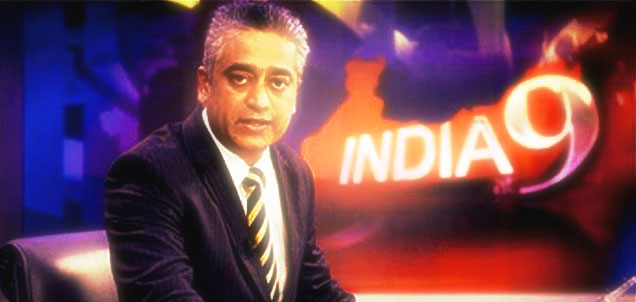
  • Mediaah! Will CNN-IBN survive without Rajdeep Sardesai?


    Mediaah! By Pradyuman Maheshwari


    Rajdeep Sardesai’s decision to quit CNN-IBN isn’t like that of an employee leaving any organisation. Had he not quit NDTV in 2005, he wouldn’t have not gone on to team up with Sameer Manchanda and Raghav Bahl and set up the channel.


    In Bahl, Rajdeep found an able ally and his teaming up with Manchanda, one of the sharpest brains in the business, ensured that the new channel started operations near-instantly. Rajdeep quit NDTV in April and CNN-IBN went on air in December 2005, and its instant success contributed much to Bahl’s fortunes as well as image of being a television news tycoon.


    Until early 2008, Rajdeep and his channel were the clear leaders. They had trounced NDTV early and the year 2006 and 2007 belonged to them. Rajdeep was voted ‘Impact Person of the Year’ in 2006 and was clearly the toast of town and the must-have guest in the capital’s political circuit.


    However, from 2008, after much fumbling and a really terrible take-off,  Times Now started gaining ground. This columnist, then writing on exchange4media.com, commented much to the annoyance of many how Arnab Goswami was a better, more aggressive, news anchor.  If Rajdeep would frown on his shows, Arnab would ask the tough questions. He was bratty, and often abrasive, and represented the mood of the viewing masses.


    The November 26 Mumbai terror strike changed things dramatically for Arnab and Times Now.  It was the undisputed leader. Simultaneously there was a sense of outrage against Barkha Dutt, though not as much against Rajdeep, who was equally shrill in his coverage from the terror zone. But then so were most other television journalists, including Times Now staffers.


    What emerged from Arnab’s show right then and the scene hasn’t changed dramatically ever since is that there’s little else other than the Newshour on Times Now. The other popular programme is Total Recall, but that’s Bollywood nostalgia.


    NDTV has established a huge second and third layer, though other than Prannoy Roy and Barkha Dutt, the rest of the cabin crew  – Vikram Chandra, Sonia Verma Singh and Sreenivasan Jain – pale in comparison even as they can hold fort for a month or two. Quite like CNN-IBN where Bhupendra Chaubey was an excellent stand-in for Rajdeep on the days he took off, but is he the man who can steer the channel to the top slot amongst English news offerings? Can his interviewing skills match those of Arnab?  The answer is a clear No. Read that in 200 points, all caps.


    So will CNN-IBN survive after Rajdeep Sardesai’s exit? Oh, yes, it will. Just as India not just survived but thrived after Indira, the Tatas after JRD, the Aditya Birla group after Aditya Birla etc etc. Also, remember, we have had channels which have meandered directionless for years. Headlines Today, for instance. Or even NewsX.


    Headlines Today has seen a fresh lease of life after the entry of Karan Thapar and it will gain more respectability with newly appointed vice chair and editor-in-chief  Shekhar Gupta on air.


    There were rumours that both Arnab Goswami and Barkha Dutt were approached by Reliance Industries for the top editorial job at CNN-IBN. Barkha is said to have spent a few days in Mumbai recently and even though she denied the news posted by Sahara Samay on its website last week, many believe she may well accept the job now that it’s clear that Rajdeep has exited. A well-known face like Barkha’s will ensure that Rajdeep’s absence is not felt by viewers.


    Meanwhile, a new top deck is reportedly assuming charge at Network18 and an announcement is likely to be made on who will lead the company in the absence of most biggies in the organisation.


    Will Rajdeep join the India Today group, as was speculated? Or is he taking time off to write a book? Since MxMIndia doesn’t revel in breaking news or carrying wild gossip , we recommend you look up other trade sites for that. What we would like to reinforce are three things.


    1. Had Rajdeep Sardesai not existed or not quit NDTV, CNN-IBN would’nt have been around or at least not happened as early as December 2005. Of the various news channels, CNN-IBN has an excellent reporting team, even though many were retrenched last year.


    2. The success of any leader is indicative by how it manages operations after he or she leaves. Prannoy Roy has ensured that. Arnab hasn’t. You don’t want to watch the 9pm bulletin when he’s not on air. Rajdeep has a good B and C team but none of them with the same profile has him


    3. CNN-IBN (and IBN7) will survive for sure. But it’ll need a new face soon.  Clearly, money is not going to be the constraining factor for this recruitment. For Mukesh Ambani and Reliance Industries Limited, that’s hardly a worry. What the master and his advisors have to convince the big and famous editors is that they will be allowed to operate in a free and frank manner.  That they will be allowed to carry news which may be negative on them. Now will that will be a tough ask?


    There are many who  believe news journalism is doomed with the active entry of Reliance Industries in news media. That, as I have written earlier, is an incorrect assumption. Most of our big publications were set up by business houses – large or small.  Moreover,  we do know of some well-known media conglomerates indulging in corrupt or incorrect practices.


    If in the true spirit of business, Mukeshbhai and Reliance Industries do not devalue the brand, there is no stopping CNN-IBN and the rest of the media empire from attaining greater heights. If considerations of the rest of their businesses impact the editorial policies, the Ambanis know what happened to TheSunday Observer and the Observer of Business and Politics in the 1990s.


    Interesting times ahead for sure.
     

  • DDB Mudra releases new campaign for HBO Premium

    By A Correspondent


    DDB Mudra West has released a new campaign for HBO South Asia to promote HBO’s belief – nothing should come in the way of entertainment.The HBO Premium channels campaign has been launched with the aim of making sure that audiences have an uninterrupted ad-free viewing experience.The campaign will highlight the HBO premium channels- HBO Defined and HBO Hits proposition of being 100 per centad-free.The objective of this innovative campaign is to get people to visit the HBOPremium.comwebsite and subscribe to HBO Premium channelsor directly through DTH operator or digital cable operators.


    HBO Premium will take a new route in their quirky TVCs with HBO Premium Accessories like HBO Agriculture and HBO Super Clone. To illustrate these TVCs further, HBO Super Cloneis a clone that manages everything in life so that one is not interrupted while watching TV. HBO Agriculture is a set of plants that grow foods like popcorn, burgers, etc., so that hunger doesn’t interrupt one from watching TV. The HBO Ultimate Couch is a couch that has just about the whole house built into it – dumbbell holders so that one doesn’t have to get up to workout, a wash basin so that one doesn’t need to get up to go to the restroom, an in-built kitchen and phone charging station and much more.


    Monica Tata

    Announcing the launch of the new multi-media campaign, Monica Tata, Managing Director, South Asia for HBO India Pvt Ltd said,”Both the HBO Premium channels maximize the entertainment experience by airing HBO Original content and blockbuster movies 100% break-free. We have initiated a multimedia campaign developed by DDB Mudra to promote the visibility and popularity of this unique proposition of HBO Defined and HBO Hits across platforms including print, cinema, TV, digital and social media. Our aim is to spoil our viewers with the very best non-stop, high quality programming, thus providing an unparalleled viewing experience.”


    Rahul Mathew

    Speaking about the creative strategy behind the campaign, Rahul Mathew, Creative Head,DDB Mudra West, said, “It’s not often that a channel can truly boast of a viewing experience and not merely bleat about its content. And we wanted to make sure that the communication reflects the richness and the uniqueness of the channel. HBO premium accessories as an idea does that and allows for many interesting executions in different media.”


  • Achche Din… Atul Phadnis’ What’s-ON is acquired by Los Angeles Times owner, Tribune Digital Ventures

    By A Correspondent


    Tribune Digital Ventures, the technology and innovation arm of Tribune Company has announced it has acquired What’s-ON, the leading television search and Electronic Program Guide (EPG) data provider for India and the Middle East. This move expands Tribune’s TV listings and video metadata footprint to more than 50 countries in 30+ languages, reaching more than 600 million pay TV subscribers.  Tribune has interests in multiple media as it runs 42 stations across the US and daily newspapers like Los Angeles Times and Chicago Tribune.


    Atul Phadnis

    What’s-ON provides EPG data and TV search products for 16 countries, including India, United Arab Emirates, Saudi Arabia, Jordan, Egypt, Qatar, Bahrain, Indonesia, Kenya and Sri Lanka. What’s-ON delivers data for more than 1,600 TV channels and helps power more than 50 million set-top boxes through the region’s top cable and IPTV services.


    What’s-ON customers include some of the biggest TV networks, service providers and consumer electronics manufacturers, such as STAR TV, Discovery Networks, Hathway Cable, Qatar Telecom, Samsung and Sony.


    Earlier this year, Tribune acquired music and video technology and metadata leader Gracenote. The company’s sizable presence in EPG data in Europe, combined with Tribune Media Services’ (TMS) presence in North America, immediately positioned Tribune as a leading provider of TV data, as well as music, around the globe. The addition of What’s-ON further extends this reach and strengthens Tribune’s position internationally.


    “The acquisition of What’s-ON fits with our broad strategy of diversifying revenue and scaling our metadata business to meet increasing client demand,” said Peter Liguori, CEO of Tribune Company. “The strategic investments we made over the last year expand Tribune’s presence internationally and enable us to offer a trusted solution to cable, Internet and consumer electronics clients globally. I’m pleased that with What’s-ON we will have a new presence in markets with significant opportunity and What’s-ON’s founder and CEO Atul Phadnis and his team will work together with Rich Cusick and Tribune’s existing TV metadata team to grow this area of our business.”


    India is the world’s third largest TV market, after the U.S. and China, with an estimated 175 million homes and a growing base of digital cable subscribers, according to ABI Research. The expansion of digital TV in Asia, featuring popular shows and movies, will enable Tribune to develop new technologies and services on top of its entertainment data that fuel discovery and recommendations on cable, satellite and over-the-top services.


    “We felt it was important to find a company that shares our vision for the business and understands the growth potential for TV data and services in Asia. And we believe we have found that with the Tribune team,” said Atul Phadnis, founder and CEO of What’s-ON. “Tribune’s portfolio of entertainment technology and metadata will provide us a solid foundation to grow the business and expand our services throughout the region.”


    “Electronic programme guides remain the primary vehicle for the discovery of TV shows and movies around the world,” said Rich Cusick, who oversees the TV metadata business for Tribune. “While data remains the foundation of what we do, our evolution will be centered on data-driven services and features to help define new TV platforms and experiences for viewers around the world.”


    What’s-ON will continue to operate out of its headquarters in Mumbai. Its leadership team, including Atul Phadnis, will remain with the company. Tribune’s Asian subsidiaries, including Tribune Digital Ventures Singapore Pte Ltd, are purchasing all of the shares of What’s-ON for $27 million subject to standard adjustments.  Edelweiss Capital served as the investment advisor for What’s-ON.


  • Shailesh Kapoor: Bade Achhe Lagte Thhe: A Goodbye

    By Shailesh Kapoor


    Circa May 2011. In a stressful television primetime, where most hit shows were either about “smart” women trying to adjust in a challenging household, or about social issues dominant in small-town and rural India, came Ekta Kapoor’s Bade Achhe Lagte Hain (BALH). Last night, three years and more than 600 episodes later, the show bid goodbye to its audiences.


    BALH’s premise, of late marriage between a couple as different as chalk and cheese, was only mildly unique. But as episodes unfolded, it was the treatment of the subject that captivated millions across India. The show provided a mix of ingredients that made for an irresistible offering: Imaginative lead casting, a well-etched out ensemble, assured performances, crackling chemistry between the leads, lavish yet tasteful production and a lightness of treatment that was striking in the middle of countless other shows that were beinghandled with a heavy hand.


    The results were instant. The show jumped to being one of the top shows on television within weeks of its launch, with blockbuster performance in the metropolitan markets. Audiences who had actively sworn off primetime Hindi fiction went back to it, and Ram-Priya, or RaYa as they are called on social media, were the talk of the town.


    In my book, BALH remains the most influential TV launch in the last decade, along with Balika Vadhu. (Co-incidentally, the title ‘Bade Achhe Lagte Hain’ is derived from a song from the film ‘Balika Badhu’!) Its impact on primetime television was evident in the way the proportion of ‘mind fresh’ (read light-hearted) content increased across channels. Happy moments and fun side-characters were incorporated even in serious subjects, to deliver to what was commonly referred to the industry in 2011-12 as ‘BALH audiences’.


    The show also did well for the careers of many of its cast, especially Ram Kapoor. He started getting important roles in films, though his latest and most significant outing (Humshakals) was an embarrassment on all counts. Sakshi Tanwar (Priya) has been the most prominent brand endorser from the television industry over the last three years. Sumona, who played Ram’s sister, bagged the prestigious role of ‘Kapil ki biwi’ in Comedy Nights With Kapil.


    Like many other successful shows, BALH overstayed its welcome. The first generation leap it took, in mid-2012, was the start of the descent, though the introduction of a new child character (Pihu) postponed the inevitable for a few weeks. But eventually, the show lost its audience, as it began to lose the very lightness of touch it initially won the audience’s hearts for. The farewell, hence, was only a foregone conclusion.The show ends to make way for Amitabh Bachchan’s Yudh.


    Yet, in its golden period that lasted about a year, BALH gave us many memorable moments, including a delightful honeymoon schedule in Australia. It also gave us the first real kiss on primetime television in India, an event that took the social media by storm, even as the audiences struggled to come to terms with the shock of seeing a lip-lock in the primetime.


    I can’t say I will miss Bade Achhe Lagte Hain, because that will need going back to 2012. But I hope we see more of its ilk – shows that can shape the future of primetime television in India for the better.


    Bade Achhe Lagte Thhe!


    TV Trails is a weekly column written by Shailesh Kapoor, founder and CEO of media insights firm Ormax Media. He spent nine years in the television industry before turning entrepreneur. The views expressed here are his own. He can be reached at his Twitter handle @shaileshkapoor


  • RBNL acquires RTL stake in broadcast jv

    By A Correspondent


    Reliance Broadcast Network Ltd has bought over the European television giant RTL’s stake in the joint venture that ran the channel Big RTL Thrill.


    According to sources close to the development, the stake sale happened in June 2014 and an application has been made to the I&B ministry for a name change.


    It may be recalled that RBNL had inked a 50/50 jv with the RTL group in 2011 for the launch of thematic action-oriented channels in the country.


    The channel, the source told MxMIndia, will now see renewed vigour with loads of original Made-in-India content.


  • TV is good for kids, says Tata Sky in new TVC

    Tata Sky has launched its latest ad campaign ‘Ab Bachchey Seekhein TV se’ (Kids learn with television). The ad is set out to convey the fact that while television is a great entertainment medium, it is equally a good learning aid, helping children gain beyond bookish knowledge.


    The campaign is targeted primarily at the parents with children between ages 6 to 12 years, trying to break the myth most Indian parents have on ‘television is only mindless viewing for kids’. One of the three ad films features a young boy stating an interesting fact on how to find out if the eggs are old or new. Similarly the other two ads have two kinder garden aged girls quizzing the audience on facts about ‘rhyming words to orange’ or ‘how to escape a leopard’ that catch you by surprise and leaves you with a smile. All the three ad films deliver the overarching message -Television is good!


    Vikram Mehra

    Vikram Mehra, Chief Commercial Officer, Tata Sky said, “Kids today are smart, not just studious. Give them the right content in an interesting package and see them absorb the knowledge at lightning speed. Over the last few years, Tata Sky’s pioneering efforts in ‘education through television’ with interactive (Actve) services and a bouquet of infotainment channels have been very well received by subscribers, specifically kids. With this campaign we wish to take the message to markets across the country on how fruitful learning through television can be.”


    Abhijit Avasthi

    Elaborating on the ad campaign, Abhijit Avasthi, National Creative Director, Ogilvy & Mather said, “If you ask any parent they would say that television and education are like chalk and cheese, rather most will insist that television gets in the way of education. But what we found out in research was quite the contrary. Parents are starting to recognize that there is enough wholesome content on television to supplement their kid’s academic learning, more so in smaller cities where there are very few avenues to give kids holistic education, television plays a role to provide that. Our campaign, ‘Kitna kuch seekh saktein hai bacche TV se’ features kids flaunting the interesting pieces of knowledge that they have learnt from the 13 learning channels that Tata Sky has to offer.”


  • Shailesh Kapoor: Pro Kabaddi: A Giant Leap for a Dying Sport?

    By Shailesh Kapoor


    When I first learnt that Star Sports are investing in Kabaddi, I rubbed my eyes in disbelief. A wrestling league, or even a boxing league, would seem like a good idea, given the talk value around these sports in recent years, especially in the wake of India’s creditable performance at the global stage, including the 2012 London Olympics. But Kabaddi?


    India has monopolized the sport at the Asian Games, winning all seven golds since its introduction in the event in 1990. But the primarily sub-continental sport has not found many takers outside South Asia. Awareness of the sport is very low amongst young audiences, many of who confuse it with the traditional Indian (dying) sport of Kho Kho.


    Star’s decision to invest in Kabaddi, then, can be labeled as ‘high-risk’, a decision that would have to rely on exceptional execution to even find a critical audience in its first season. To their credit, having taken the decision, they have gone all guns blazing, with some good advertising and high media visibility. The simulcast on Star Sports and Star Gold will also help in widening the reach in the first year.


    But you can’t “buy” relevance and appeal for a media property. It needs to be intrinsic to the content. Hence, it was with great curiosity that I tuned into the first four games.


    My skepticism about the league has reduced considerably, say from 9/10 to 5/10, having watched the first two days of action. The last I watched Kabaddi was probably back in mid-90s. What I saw this time was strikingly different and several notches higher in entertainment than the sport I had imagined Kabaddi to be. Here’s why:


    1. Shifting from mud to mat makes the sport visually cleaner and colorful. It is far more appetizing for TV than the ‘brown sport’ I remember from the 90s.


    2. The rules have been changed to make the sport fast-moving and contemporary. There is less scope for time-wasting and the speed of action is higher than most other contact sports.


    3. Hindi and English commentary are both available. The quality of commentary is very acceptable, and there’s a lot of focus on explaining the rules in the early games, while maintaining the energy of the event.


    4. The celebrity quotient is present in good value. If it is only a function of the opening matches being in Mumbai, we will know soon. But if it sustains, the celebs would generate a lot of chatter around the league, a critical aspect in the first year.


    It’s difficult to say if these steps will be enough to make the league work. But they at least give it a chance. I believe there’s definite entertainment on offer in the league, but the ratings would tell us over the next few weeks if the young audiences across India connect with this form of entertainment.


    Even a moderately successful first year should encourage the organizers and Star to come back stronger in the second year. Other sporting leagues, including the much-hyped hockey league, have struggled to sustain themselves after a season or two. Star Sports Pro Kabaddi will hope to buck that trend.


    TV Trails is a weekly column written by Shailesh Kapoor, founder and CEO of media insights firm Ormax Media. He spent nine years in the television industry before turning entrepreneur. The views expressed here are his own. He can be reached at his Twitter handle @shaileshkapoor