Category: DIGITIZATION

  • Reliance Broadcast launches ‘Choose Your Set-Top-Box Wisely’ campaign

    By A Correspondent


    Digitization is all set to revolutionize the television viewing experience. While operators are undertaking activities to build their brand equity and ensure that they gain from the eminent shake-out, the consumers now understand that the power to enhance their television viewing experience lies with themselves.


    Reliance Broadcast Network, which in a little over a year successfully created a bouquet of channels through a well-crafted strategy, has conceptualized a campaign that complements its television broadcast business. Aptly titled ‘Choose Your Set-Top-Box Wisely’, the campaign is tailored to increase awareness and empower consumers with adequate information to make the right choice while choosing their set top boxes, while also enabling operators to build their brand equity.


    Come digitization, the discerning consumer would look for quality, variety and a strong value proposition and operators who have the potential to offer these will stand to gain significantly. Backed by the belief that ‘content is the cornerstone for success’ and a deep understanding of the discerning consumers’ demand for quality and variety entertainment, the Company has positioned its 7-channel strong bouquet to cater to a wide viewer palette:


    1.     BIG CBS Prime, a male skewed premium entertainment Channel (male 15+, SEC A, 7 metros)

    2.     BIG CBS Love, the first ever international women’s entertainment channel (female 15+, SEC A, 5 metros)

    3.     BIG CBS Spark, the first ever International youth Channel (4-24, SEC A, 7 metros)

    4.     BIG MAGIC, a variety entertainment Channel for the Hindi heartland (CS 4+ MP, UP,Bihar)

    5.     Spark Punjabi, the country’s first international Punjabi Channel (CS 4+,Punjab, 1mn+)

    6.     BIG RTL Channel in the action space

    7.     BloombergUTV,India’s premier Business news channel (male 25+, SEC A, 7 metros)


    With the latest content fromAmericathrough BIG CBS Networks, Indian homes can continue to enjoy an unparalleled viewing experience of their favorite international shows. Similarly, the first international Punjabi channel – Spark Punjabi ensures the PHCHP region also enjoys the best international content, dubbed in their local language. BIG MAGIC is the Hindi heartland’s only variety entertainment channel offering the best home grown content, which meets local sensibilities and is already a favourite amongst consumers. BIG RTL will bring with it some of the best reality and action programming from the world renowned RTL Group, which also houses Fremantle. And finally, BloombergUTV, powered by Bloomberg, the final word in business news globally, offers Indian viewers a differentiated business news viewing experience amongst the monochromatic competitive offering. The channels come together to offer both consumers and operators an excellent offering.


    The multi-media campaign will spread across television, radio, out of home and the digital platforms and will be one of the largest initiatives in this space by any broadcaster. The campaign will be further sustained over the next 26 weeks across all Reliance Group platforms, including BIG FM’s 45 station radio network, it’s out of home arm – BIG Street, its 7-channel television network and its digital platforms.


    Speaking about the campaign, Mr. Vishal Rally, Business Head, BIG CBS Networks said: “Digitization will usher a new era of television broadcasting and the Choose Your Set-Top-Box Wisely campaign has been conceptualised and designed to benefit multiple stake-holders across consumers, operators and the channels. We are excited to present the most distinctive and eclectic content mix to the Indian viewers through our bouquet of channels, and encourage them to make a wise decision so they can continue to enjoy experience.”


    Reliance Broadcast Network Limited is a multi-media entertainment conglomerate with play across radio, television, intellectual properties and out of home. It is part of the Reliance Group and specializes in creating and executing integrated media solutions for brands.
     

  • @Ficci Frames 2012: KPMG study says M&E sector is set for good times ahead

    By A Correspondent


    HILE the effects of the economic downturn were felt across sectors and industries last year, it was a steady year for the Indian Media & Entertainment (M&E) industry that registered a growth of 12 percent over 2010, to reach INR 728 billon. According to the FICCI-KPMG report, the growth trajectory was backed by strong consumption in tier 2 and 3 cities, continued growth of regional media, and fast increasing new media business. Overall, the study predicts the industry to register a CAGR of 15 percent to touch INR 1,457 billion by 2016.


    But despite the positive numbers recorded, the report agrees that 2011 has indeed been a challenging year not just for the Indian M&E industry, or even the Indian economy, but for the larger world economy. While India is still expected to grow at a healthy pace, growth is projected to be lower than expectations.


    The report notes that television continues to be the dominant medium while sectors such as animation & VFX, digital advertising, and gaming are fast increasing their share in the overall pie. Radio is expected to display a healthy growth rate after the advent of Phase 3. Print, while witnessing a decline in growth rate, will continue to be the second largest medium in the Indian M&E industry. Also, the film industry had reason to cheer, with multiple movies crossing the INR 100 crore mark in domestic theatrical collections, and INR 30 crore mark in C&S rights.


    Advertising spends across all media accounted for INR 300 billion in 2011, contributing to 41 percent of the overall M&E industry’s revenues. Advertising revenues witnessed a growth of 13 percent in 2011, as against 17 per cent observed in 2010. In terms of performance, 2011 proved to be a year with mixed results in terms of growth across different sub sectors. The traditional media businesses experienced a slowdown compared to last year, especially in the second half of the year. However, the new media segments like Animation and VFX, Online and Gaming businesses witnessed phenomenal growth rates.


    Highlighting some visible trends spotted in the report, Dr. Rajiv Kumar, Secretary General, FICCI said, “The key highlights are rise in digital content consumption, launch of diverse content delivery platforms, strong consumption in tier 2 and 3 cities, rising footprint of the players in the regional media, rapidly increasing new media business and regulatory shifts.”


    Putting forth a more pragmatic outlook, Jehil Thakkar, Head of Media and Entertainment, KPMG said, “The Media & Entertainment industry landscape is undergoing a significant shift. Cable digitization, the promise of wireless broadband, increasing DTH penetration, digitization of film distribution, growing internet use are all prompting strategic shifts in the way companies work. Traditional business models are evolving for the better as a host of new opportunities emerge.”


    Key trends and industry drivers:

    – Growth in digital content consumption across media


    Key Highlights –

    Print: The print industry grew by 8.3 percent from INR 193 billion in 2010 to INR 209 billion in 2011. The growth was slightly lower than our expectation of 9.5 percent last year due to the challenging macroeconomic environment and reduced advertising spends.


    Television: The over-all television industry is estimated to be INR 329 billion in 2011, and is expected to grow at a CAGR of 17 percent over 2011-16, to reach INR 735 billion in 2016. The share of subscription to the total industry revenue is expected to increase from 65 percent in 2011 to 69 percent in 2016. The TV industry continues to have headroom for further growth as television penetration in India is still at approximately 60 percent of total households.


    Films: With several high budget Hindi releases lined up across the year, 2012 is expected to sustain the growth momentum witnessed in 2011. The Indian film industry is projected to grow at a CAGR of 10.1 percent to touch INR 150 billion in 2016. The industry is estimated to be INR 93 billion in 2011 indicating a growth of 11.5 percent vis-à vis 2010.


    Music: While 2010 was the year of structural shift from physical formats to digital ones, 2011 provided users viable options of music consumption through different digital platforms. The Indian music industry achieved revenues of INR 9 billion in 2011, registering a growth of 5 percent over 2010.
    Radio: Overall, the industry grew 15 per cent in CY 2011 to reach INR 11.5 billion, compared to INR 10 billion in CY 2010. Volume increases in certain markets and rate increases for the leaders in metros drove growth.


    New Media: Digital advertising is expected to grow at a CAGR of 30 per cent from 2011-16; digital adspend reached approximately 5 per cent of total M&E industry advertising revenue in 2011. Growth is largely driven by increase in internet penetration and proliferation of new devices.


    Animation & VFX: Animation, VFX and Post Production industry achieved estimated revenues of INR 31 billion in 2011, a robust growth of 31 percent over 2010. Growth was achieved on the back of increased contract work, higher VFX content in movies, 2D/3D conversion projects.


    Out of Home: The OOH sector was hit relatively harder by the global economic slowdown than other sectors of the Advertising industry. The sector registered a Y-o-Y growth of 7.6 percent.


    Digital technology continues to revolutionize media distribution – be it the rapid growth of DTH and the promise of digital cable, or increased digitization of film exhibition – and has enabled wider and cost-effective reach across diverse and regional markets, and the development of targeted media content.


    There has been increased proliferation and consumption of digital media content – be it newspapers and magazines, digital film prints, and online video and music or entirely new categories such as social media. Accordingly, online advertising spends have seen a spurt in growth vis-a-vis spends on traditional media.


    – Rise of new age user devices

    Smart phones, tablets, PCs, gaming devices, etc. all form the foundation of a new wave in media usage. This is gradually impacting the way content is being created and distributed as well. Multiple media including TV, films, news, radio, music etc are being impacted with this change.


    – New age consumers adapting themselves to the newer technologies

    As Indian consumers evolve, there is a heightened need to engage them across platforms and experiences. There is a greater need for integration and innovation across traditional and new media, with changing media consumption habits and preferences for niche content. Media companies today have no choice but to provide more touch points to engage with audiences.


    – Regionalisation

    Regional television and print continued its strong growth trajectory owing to growth in incomes and consumption in the regional markets. National advertisers are looking at these markets as the next consumption hubs and the local advertisers are learning the benefits of marketing their products aggressively.


    – An advertising revenue dependant industry

    The ARPU (Average Revenue Per User) for television, average newspaper cost for print and average ticket price for films continue to be low on account of hyper competition in these industries. Segments like Radio and a significant portion of online content are available free of cost to consumers. Owing to this, the Indian consumer is still not used to paying for content and hence the industry players are sensitive to the impact of the slowdown which affects the budgets of advertisers.


    – Awaited regulatory shifts

    Lastly, apart from the shifts in consumer preferences, company strategies and business models, one big change awaited for the next growth wave is the implementation of recently enacted and regulations on digitisation for cable, implementation of Phase 3 and copyright for Radio and the roll out of 4G. These shifts are expected to be game changers in terms of how business is being done currently and what could be the path going forward.


  • The sunset gets closer…


    By A Correspondent


    The Lok Sabha has passed the much-awaited Bill for digitization of Cable TV in India with the assurance that cable operators will not be harmed from the proposed move. The digitization sunset date for the four metros is June 2012. For complete digitization of cable sector in cities with population of more than one million, the date is March 30, 2013, all urban areas by September 30, 2014, and the entire country by December 31 2014.

     

    Information and Broadcasting Minister Ambika Soni said that the move to convert Analog TV into Digital will bring India on par with other countries like US, Britain, Korea and Taiwan.


    As a matter of fact, digitization of TV will bring subscription revenues for broadcasters and of course the elimination of carriage fees from the broadcast ecosystem – something which, as experts believe, would eventually happen as complete digitization would set in. As for now, carriage fees is one big challenge all broadcasters are facing. Industry estimates suggest that roughly 20 per cent of a channel’s cost account for carriage fees. As per the new regime, all satellite channels will be beamed to houses through set-top-boxes.


    While most members supported the Bill, a few raised their voices against content being broadcast on some channels and the unjustifiable hike in the cable rates. Soni assured Cable operators that the move will not render them jobless, and that the government’s major concern was the viewers’ interest. She said that an enabling provision had put in place to the effect that only Rs 200,000 to Rs 300,000 would be needed by cable operators to move to digitisation.


    On the prices of set-top-boxes, she said, “The prices of set-top-boxes will fall. These will be available on installments and rent. Also, viewers don’t have to take a whole bouquet of channels. TRAI will impose a tariff capping for subscribing to channels.” She also said that digitization would provide consumers a la carte selection of channels and video-on-demand among other things.


    She added that the Headend-in-the-sky (HITS), which had so far failed, would take off with greater investments


    The ordinance was passed earlier this year to meet the deadline set for full digitization by December 31, 2014. The government will complete the process in four phases starting with metros.


    The Bill will now go to the Rajya Sabha for passing and then go to the President for her assent after which it becomes law. Mr Dinyar Contractor, Editor-in-chief, SCATMAG, is of the opinion that it is only a matter of time before Rajya Sabha will pass the bill.


    According to Mr Devendra Parulekar, Partner & Segment Champion – TV Distribution Ernst & Young, the development is a positive one as this will lead to transparency in the entire system while creating a win-win situation for every stakeholder. “Digitisation will provide customers with wider choices, better signal quality, HD content and niche content tailored to suit niche audiences.”


    Whether there will be an effect on pricing, he said, “With hyper-competition, I don’t think price points will rise significantly; they will more so be determined by the market forces. ”


    On what it means to MSOs, Mr Parulekar said that MSOs focus will shift from B2B to B2C. However, due to the short implementation time-frame, he said that MSOs are likely to lose round one of the battle to DTH players, who have already invested in mature back-end systems. She also said that there were punitive clauses against cable operators, MSOs or DTH operators who failed to show the must-carry channels, including the Lok Sabha and Rajya Sabha TV channels.


    “The jury is still out on how the sector would fare in the medium to long term, as digital cable+broadband has some inherent technological advantages over DTH, as well as the advantage of personalised service that cable offers to end-subscibers. These service enhancements will need infusion of large funds and hence the sector may see some transactions (M&A activity). With increased transparency in collection of subscription fees as well as tax collection, broadcasters can de-risk their revenue streams versus advertising revenue that they are presently overly dependent upon,” he added.


    Big story image: Fotocorp

  • TRAI issues consultation paper on digital cable

    By A Correspondent


    The Telecom Regulatory Authority of India (TRAI) on Thursday released a consultation paper on “Issues related to Implementation of Digital Addressable Cable TV Systems”.


    The analog cable TV service, which caters to around 94 million households, has been a roadblock in exploiting the full potential of the sector. Keeping this in mind and in consultation with all the stakeholders, the Telecom Regulatory Authority of India had recommended to the government complete digitization with addressability of the Cable TV services, in a phased manner in August, 2010.


    After the Parliament passed the Bill to amend the Cable TV Act paving the way for the digitization programme, in order facilitate transformation to digital cable system, TRAI identified certain key issues that need to be determined. These issues pertain to:

    • Composition and Tariff of Basic Service Tier (BST)
    • Retail Tariff
    • Prepaid billing
    • Interconnection issues
    • Revenue share between MSOs and LCOs
    • Quality of Service Standards
    • Redressal of Consumer Complaints


    Some of the key issues raised by TRAI in the consultation paper concern:

    • The minimum number of free-to-air (FTA) channels that a cable operator should offer in the basic-service-tier (BST). TRAI has also demanded for the genre-wise (entertainment, information, education etc) mix of channels in a BST?
    • If the retail tariff is to be determined by TRAI or left to the market forces? If it is to be determined by TRAI, how should it be determined?
    • The subscription revenue share between the MSO and LCO and if it is to be prescribed by TRAI what should be the revenue share.
    • Whether an ad-free channel is viable in the context of Indian television market?
    • The responsibility for ensuring the standards of quality of service provided to the consumers with respect to connection, disconnection, transfer, shifting, handling of complaints relating to no signal, set top box, billing etc. and redressal of consumer grievances.
    • The impact on the wholesale channel rates after the sunset date i.e 31st Dec 2014, when the non-addressable systems would cease to exist.


    The full text of the Consultation Paper is available on TRAI’s website (www.trai.gov.in). TRAI has invited written comments on the issues raised in this consultation paper from the stakeholders by 16th January, 2012, and counter-comments on the comments by 23rd January, 2012.


    The comments and counter-comments may be sent to Mr Wasi Ahmad, Advisor (B&CS) at: advbcs@trai.gov.in or traicable@yahoo.co.in.

  • Set-top shortage could dampen digitization drive

    By Nandini Raghavendra & Meenakshi Verma


    Five months before time runs out for homes across India’s top four metros to switch to digital transmission to continue watching cable television, operators are battling short supply of set-top boxes as well as ignorance among consumers.


    More than 60,000 set-top boxes need to be installed every day to enable an estimated 10 million homes across Delhi, Mumbai, Chennai and Kolkata to meet the deadline mandated by the government.


    But with India going digital at the same time as Brazil, Russia, China and South Korea, among other countries, set-top box makers are finding it difficult to meet delivery deadlines. This is the case even as most leading manufacturers, based in China, have ramped up production manifold.


    “Most consumers don’t even know that they won’t be able to watch TV with the same cable after the June 30 deadline and that a digital set-top box is a must,” says Mr Anthony Brian D’Souza, a Mumbai-based cable operator.


    Direct-to-home or DTH operators, who use satellite and dish antennae, are therefore well placed to grab the business from cable operators. Nearly 80% of the 70,000 odd cable operators are believed to be independent players, who are also finding it difficult to absorb the rise in the cost of imported set-top boxes due to rupee depreciation.


    “This is a great opportunity and we are well poised to make the most of cable digitalisation,” says Dish TV’s managing director Mr Jawahar Goel, “The DTH industry will be able to grab 30%-70% of the analog cable homes across various phases depending on the locations.”


    Tata Sky has also geared up to cash in on the opportunity. “Our billing and CRM systems handle millions of customers. These have been further scaled up to ensure error free service to many more millions of new subscribers who will join us in next few months,” says chief executive officer and managing director Mr Harit Nagpal. The company can install fresh connections within a day of receiving the order, he says.


    Big multi-system operators like Den Networks and Hathaway Cable & Datacom, which have too much on their plate upgrading their subscribers, might find it difficult to add too many new subscribers.


    Den Networks has hired Ernst & Young to conduct seminars and train its partners and affiliate local cable operators. “Local cable operators will help us upgrade our existing consumer base on the ground and will play an important part in the process,” says Mr Sameer Manchanda, CMD of Den Networks. He says the company will focus on upgrading its current subscribers in the four metros.


    While the industry expects a majority of independent operators to align with the bigger players, many of them may find the switch hard to survive. “The large investments expected from cable operators for setting up the infrastructure in such a short span of time and competition from DTH players could create unemployment among smaller cable operators,” says Ms Roop Sharma, president Cable Operators Federation of India, the largest association of independent cable operators in the country.


    Sharma, however, says even the bigger players might find it hard to prove equal to the challenge. “Digitalisation is a mammoth task and there are concerns whether the deadline for the four metros will be achieved,” she says.


    An independent cable operator says many affiliate partners of the bigger players are showing a huge resistance to digitisation at the moment. “If someone in the cable fraternity keeps holding out till the last moment in the hope that digitalisation will not happen, he will only be making it easier for DTH players to garner incremental market share at the cost of the cable industry,” says Mr K Jayaraman, chief executive officer of Hathway Cable & Datacom.


    Source:The Economic Times

    Copyright © 2012, Bennett, Coleman & Co. Ltd. All Rights Reserved


  • Digitization’s sunset date may be delayed

    By Akash Raha


    The process of digitization is unlikely to be over by December 31, 2011, according to key stakeholders among broadcasters and cable organizations. The sunset date for digitization is therefore expected to be extended further, as it seems to be going nowhere at the current pace. The stakeholders say this is because of lack of clarity on the part of the Government, which needs to enable the industry to change over smoothly from analog to digital.


    The issue of digitization was discussed at length at Focus 2011, a seminar organised by The Associated Chambers of Commerce and Industry of India (ASSOCHAM). The theme of the event, From Analog to Digitization, was held on September 9, 2011 at New Delhi.


    Earlier in the day, Mr Choudhury Mohan Jatua, Honourable Minister of State, Ministry of Information and Broadcasting said that he was hopeful that the process of digitisation will happen in the stipulated time. He said that his government was doing everything to make it possible, but that to make it possible, the industry itself needs a lot of self-discipline. He said that the changeover from analog to digital is desirable and also compulsory.


    The romance with digital is on and the era of digital is here, said Mr A Mohan, VP, Zee Networks, kicking off a discussion session moderated by Gunjan Gupta of Deloitte. However, he said, there are several problems on the route to digitisation. The three-fold challenges that he pointed out were investment issues, finding a viable economic model in the digital era, and inter-connection issues. Subject as it is to a variety of taxes such as entertainment tax, service tax, VAT, entry tax and so on, he said, it is very difficult to make any profit. He appealed to the government to rationalize the taxes on the industry. Talking about investment, he said that the Government of India must change its FDI policies, which would help with more funding for digitisation.


    Ms Roop Sharma, President, Cable Operators Federation of India (COFI), said, Digitization cannot happen by the sunset date unless the government faces its problems and challenges. Moreover, the government has to come up with a phase-wise plan for digitization, as we cannot expect it to happen overnight. Awareness has to be spread, and consumers need subsidies to accept digitization. Ms Sharma, a member of the task force for digitization, and she rues that even after several meetings there is no clarity as to how the government plans to go about digitisation.


    Mr Sugato Banerji, CMO  DTH, Bharti Airtel, cited several advantages of digitization, beginning from safeguarding national security to more subscription-based revenue for broadcasters. He went on to say that the age of digital will benefit the whole ecosystem  consumer, broadcasters, government and cable operators. Mr Pulak Bagchi, Vice President, Star India too spoke about the advantages of digitization and said, If we intend to digitize in right earnest, the government has a huge role to play.The industry is set to provide 4 percent of the country’s GDP (excluding agriculture). Yet, the investment required for digitization of the whole country is set to be 15 billion USD. He also said that digitization would eliminate cable wars and prevent tax leakages for the government.


    With 35 million digital households, India is going to be the largest digital market said Mr Siddharth Jain, General Manager, Network and Content Distribution, South Asia, Turner International India. He went on to say that the success of any venture depends most on the consumer experience, which the industry has to keep in mind. Content is king, and yet content has a cost.


    Mr Raman Kalra, Director and Partner, IBM said that while in future content is going to be the key and content is poke about the future of the medium and said that eventually, content is going to be the key and that is exactly what the customer wants. At the same time, you can’t just thrust technology on him; the convenience of consuming content is also very important.


    Mr Rohit Bansal, CEO and Co-Founder, Hammurabi & Solomon Consulting, voiced his concern over government’s method of setting deadlines, and he fears that such deadlines won’t get translated.


    He said, Digitisation has its own advantages, and even though some incumbents are trying to resist it, everyone has to come together and volley for it. The I&B ministry, TRAI and all other stakeholders have to rise to the occasion and do their bit.


    The recently accepted TRAI recommendations for the implementation of digitisation of broadcast systems in India is expected to open up new opportunities for a broader ecosystem (content providers, broadcasters, equipment providers etc). Yet, there are several challenges en route to migration from analog to digital. The revenue opportunities are substantial, and all that is needed, it seems, is synergy between the government and the stakeholders to make the sunset date possible and viable.

  • Digitisation ups mood at trade show

    By Insiyah Rangwala

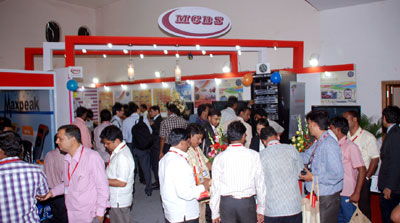
    The announcement of the new regulation enabling the rollout of digital addressable systems in the country, upped the mood at the Satellite and Cable TV Trade Show last week. Organised by the Satellite & Cable TV magazine, the show, now in its 20th year, SCaT saw the attendance of over 15,000 people from the industry and networks.


    Mr Dinyar Contractor, Editor and Executive Publisher of Satellite & Cable TV, said the response to SCaT has been overwhelming. With hardware prices having fallen from three years ago at 100 channels being Rs 1 crore to last year’s Rs 60 lakh and this year’s 200 channels at Rs 27 lakh, this has positively affected the mid size networks, as digital is now no longer inaccessible to them. The critical new element at SCaT has been the discussions of pricing and buying.


    The technologies showcased at SCaT this year were the digital set-top box, MPEG2 and MPEG4 along with emergence HD channels. Mr Dharmesh Gandhi, Product Marketing Manager at NDS, said their key aspect was content protection and providing the middle ware for pay TV. They were showcasing new features such as the search option and targeted advertising. It helps a user with browsing and discovering more related content.


    Mr Vikram Nagda, Marketing and Operations Head, Channel Masters, stated that they feel very positively about the digitization of cable TV in India as it has enabled the internet to become an even larger commodity. Mr Saravanan Narayanasamy, Chief Technical Engineer, Indian CAT from Pace, said that with or without the government digital is picking up as it can be seen at SCaT with the tremendous turnout from newcomers.

     

    Mr Manoj Thakur Deputy General Manager, Catvision, said that even though currently digital in India is big only in the metros it is increasingly broadening its reach.


    According to Mr Contractor, the mood in the trade is so buoyant that most operators have reconfirmed their presence in a bigger way for next year with stalls being pre-sold.


  • Digitization will boost TV industry: MPA report

    By Rishi Vora


    The government mandate to digitise cable networks across India will bring a significant transformation to the US $7 billion television industry with a positive impact on the nascent broadband market, says a report published by Media Partners Asia (MPA).


    Executive Director of Media Partners Asia, Mr Vivek Couto said, “India’s broadcasting and pay TV market is on the cusp of a high growth value phase, similar to North America between 1998 and 2003, Korea during 2003-2007, and Taiwan during 2005-2010. Valuations of the domestic companies in these markets during the high-growth value stage typically skyrocketed, as networks were upgraded and services to consumers expanded. In India, domestic players and foreign investors will both do well, to the benefit of consumers, when the government’s policies take shape.”


    The report, entitled ‘Investing in Digital India: The Dynamics of Mandatory Addressable Digitization’, underlines benefits across the value chain.


    A boost for the government and the economy
    If the current analog cable distribution model remains in place and digital penetration is limited, the cumulative value of the tax receipts lost by the government would reach US $11 billion over the next decade or more than US $1 billion per year. The government therefore has sufficient incentives to push digitisation and can also accelerate the process by offering tax incentives to a potential multi-billion-dollar industry. Digitisation will also help the government pursue India’s broadband goals and thereby help to boost economic growth. Potentially, a 10 percent increase in broadband penetration would increase India’s GDP by 1.5 percent. As of September 2011, broadband per capita penetration in India was only 1 percent. In its National Broadband Plan, the Telecom Regulatory Authority of India sees a pivotal role for cable operators with digital network upgrades paving the way for broadband growth.


    Consumer will have the choice
    Digital cable television will improve the consumer experience and resolve legacy issues from analog cable services. Consumers will gain access to more channels; attractive tiering options with differentiated content across local, regional and niche genres. It will provide a better viewing experience; and improved quality of service. Digital cable television will also be affordable for the consumer. As per international benchmarks, spending on pay TV typically accounts for 5 percent of GDP per capita. In this context, digital cable television in India will be affordable given heavy subsidies on STBs (currently subsidised at 60-70 percent by MSOs), which will ensure that consumer spends fall within the 5 percent benchmark. Consumers will also benefit from new competition as digitisation in metros ensures that seven DTH satellite platforms (including free service DD Direct) compete for customers with digital cable operators.


    Cable transformation almost certain
    MPA expects a six-fold increase in subscriber revenues for cable MSOs, though not without at least a 20 percent churn in the cable subscriber base to DTH. Subscriber declaration levels will increase from 15 percent currently to 100 percent, while the retained ARPU will increase by six times after assuming a 30 percent base case revenue share with the local cable operator (LCO) will reduce the payback period on digitisation. Under a bundled model, the payback period could be reduced by a year to 24 months, as opposed to 36 months under a standalone digital proposition.


    The main challenges, apart from managing subscriber churn to DTH are one, the drop in carriage fees by about 20-50 percent; and second – incentivising revenue-sharing agreements that need to be struck with local cable operators to drive digital into homes.


    Opportunity for DTH players
    Phase I digitisation in the four key metros offers a good opportunity for DTH operators to grab high-ARPU customers and increase the platform’s reach in larger TAM markets. MSOs envisage about 15-20 percent churn in cable subs to DTH, though some suspect this could grow to 30 percent in the early stages of Phase I deployment. Subsidised HD offerings will also act as a key differentiator for DTH players as few cable operators have rolled out HD services.


    Benefit to broadcasters
    Digitisation will help boost subscription revenues and reduce dependence on advertising. Improved economics will also help broadcasters launch niche channels with a premium focus while carriage and placement fees will fall in certain markets and moderate in others. At the same time, consumer adoption of certain programming tiers and specific channels (over others) will ensure healthy competition while broadcasters will also be under pressure to produce content with differentiation, premium quality (potentially advertising-free) and with local relevance.


    Benefit to investors
    Upon successful implementation of the digital mandate, gradual consolidation of LCOs will become inevitable. This will shift industry profits and value to centralised distribution platforms and broadcasters. Valuations for cable/ pay TV operators in the USA, Korea and Taiwan during their high-growth value stage typically averaged 12-16x one year forward EBITDA, versus the current trading average of 9-10x for India’s listed cable/pay TV entities. MPA assumes similar or higher valuations for companies in India subject to successful execution. Most investors, especially strategic companies, will adopt a wait-and-watch approach, potentially making their bets after Phase I is completed.

  • FICCI-MIB discussion on digitization on March 27

    By A Correspondent


    Digitization in TV distribution system is going to be a reality soon. The Ministry of Information & Broadcasting, Government of India has come up with a detailed roadmap to digitize the TV distribution system by 31st December 2014. And the four metros, Delhi, Mumbai, Kolkata and Chennai are to be digitized by 30th June which is just 100 days away.


    For digitization to happen successfully by the notified date, several steps have to be taken and one of them is to make the consumer aware of the benefits of digitization. A step in this direction of creating public awareness on digitization is being undertaken by FICCI in partnership with the Ministry of Information and Broadcasting, Government of India. FICCI jointly with the Ministry of Information & Broadcasting is organizing a seminar on ‘India going Digital: An Industry Interaction with Stakeholders’ on the 27th of March, 2012 at 10:30am at FICCI Auditorium in New Delhi.


    The seminar will start with a presentation on Digitization by Supriya Sahu, Joint Secretary (Broadcast & Poilcy), Ministry of Information & Broadcasting. The presentation will be followed by a keynote address by Uday K Varma, Secretary, Ministry of Information & Broadcasting. Following the keynote by the Secretary of I&B, will be an interactive session and the seminar will finally end with a concluding address by Rajiv Takru, Additional Secretary, Ministry of Information & Broadcasting.


    The event is being supported by MxMIndia.


  • 100 Days to D-Day…but where are the Set-Top Boxes?

    By Shruti Pushkarna


    Only 100 days to go for Digitization Day and the ground reality does not look too promising at this point. There is a mammoth requirement of set top boxes, Digital Addressable System (DAS) licences have not yet been issued to operators and several other issues remain unresolved as of now.


    To get a clearer picture of the ground reality from the cable operators’ end, MxM India spoke to Roop Sharma, President, Cable Operators Federation of India. Speaking of the ground level scenario, Ms Sharma said, “No DAS licences have been issued to the operators still. Until and unless the operator has the license, he can’t get a bank loan and unless the operator has the license, he will not want to order equipment which is worth no less than 1 crore. And more importantly there is no consumer demand for digital. This is only government’s demand because they want to curry favour to the broadcaster. There isn’t any incentive from the government either. They are only forcing a technology on consumers by mandating it.”


    But more than anything, the biggest problem as pointed out by Ms Sharma is the sheer unavailability of Set Top Boxes (STBs) in the market. She told MxM India, “You need a Set Top Box to go digital and where are the STBs? First there was talk of importing them from China but that will also take atleast four to five months. Now there are some vendors in India but for that too, the chip has to be imported from outside. There is a requirement of 30 lakh STBs for Delhi alone and this is counting only one TV per household. Also, where is the manpower to deploy all these STBs?”


    Another industry source told MxM India, “As per the declared number, there is a requirement of 10 to 12 million STBs but my experience says that the actual total count will be no less than 20 to 22 million, because they have only counted 1 TV per household. The boxes are just not there.”


    Ms Sharma feels that the government is pressurizing the smallest guy in the entire value chain, which is the cable operator. Talking of other unresolved issues, she said, “Even if the cable operator gets the STBs and gets the license, the government has not assured that every operator who gets the license will get the content. How can the operator make such a huge investment when there is no assurance of content? The government is only pressurizing the smallest guy in the value chain, they can’t pressurize the broadcaster, not even the MSO.”


    MxM India also spoke to Mr Neeraj Sanan, EVP- Marketing and Distribution, MCCS to learn of the state of readiness of channels and industry as a whole. Mr Sanan said, “In principle, the entire fraternity of MSOs, LCOs and DTH friends are united in supporting the lead taken by TRAI. In my view, Delhi and Mumbai are slightly ahead of Kolkata in digitization. Being a country where examinations to appraisals to income tax, everything happens at the last minute I see two things:  a huge last minute rush (that too provided TRAI holds it grounds) which will put operational pressure in implementation. I still hope that, in the larger interest of the community, that we see the sunrise of Digitization. Already we have taken a lead in creating consumer pull through tickers which have been running on MCCS’ three channels for a month now and if all players in the value chain do the same I am sure we can see a successful June 30 sunrise.”


    But as per another industry source June 30th seems quite unachievable, “There is a lot of resistance from LCOs and cable operators’ end. Their business is fragmented, that’s how they make their revenues, and digitization will put a stop to that. And moreover, none of the MSOs are really prepared because this requires a capital investment of 30 to 35 crore and they don’t have that kind of funding. The sheer size and the volume of the business is so large that you cannot do it even by December 31st. One thing is certain, it will create unforeseen situation on ground.”


    Ms Sharma feels that the deadline might seem possible only if STBs are made available. Listing out all issues that need to be addressed before June 30th, she said, “First and foremost, tariff needs to be in place. DAS licenses have to be issued. Interconnection agreements have to be in place. Revenue share has to be specified. STBs have to be made available in the market. And there have to be fiscal incentives given to the operators. Also, we need to have many consumer awareness programmes. All these problems have to be addressed if the deadline has to be achieved by the notified date.”


    She also added that the TRAI had only done one open house recently in Delhi but since the June 30th deadline applies to all the four metros, TRAI should have done an open house in each of these cities.


    What’s your view on Digitization? Do you think the four metros can meet the deadline? Email us at shrutip@mxmindia.com and editor@mxmindia.com.


  • [95 Days to D-Day] No negotiation on deadline: MIB

    By Shruti Pushkarna


    Once again the government of India maintained its hard stand on the issue of digitization. Speaking at a FICCI organized seminar, ‘India going Digital: An Industry Interaction with Stakeholders’, Additional Secretary, Ministry of Information & Broadcasting, Rajiv Takru, made it very clear that the June 30th deadline is not subject to any negotiation. Addressing all stakeholders, the LCOs, MSOs and the broadcasters, Mr Takru said, “All analog will be switched off from July 1. The June 30th deadline is not negotiable at all. So all stakeholders should pace up and brace the change.”


    The seminar on digitization was organized by FICCI in New Delhi in partnership with the government of India. Participating in the event were all stakeholders, from local cable operators (LCOs), to multi-system operators (MSOs) as well as broadcasters. The seminar was organized to address issues faced by various stakeholders in the run up to the switch over from analog to digital.


    Mr Takru started off by saying that there are several rumours in the market that he would like to belie. The first being the unavailability of set top boxes (STBs). He said, “In Delhi there is a requirement of around 33 lakh STBs out of which 7 to 8 lakh STBs are already installed. And around 28 lakh STBs have already been ordered for and they are at various points in delivery. So whoever tells you that there are not enough STBs, is all false.” Secondly, he said there is a lot of talk about the sunset date being extended, he said that the deadline was absolutely sacrosanct and all industry stakeholders will have to follow it as an order. However, he admitted that the task that lay ahead is not easy but knowing the weaknesses of analog, this seems to be the best way forward for all. Mr Takru said that digitization is good for everyone and especially for the consumer. He said, “Digitization is in the larger interest of the consumer and if it hurts a few then so be it. This initiative is not being undertaken to promote any particular business interest, it is a larger step in the move towards digital.”


    Also addressing the gathering was Ms Supriya Sahu, Joint Secretary (Broadvast & Policy), Ministry of Information & Broadcasting. Sharing some numbers with the audience Ms Sahu said, “There are 33 lakh cable TV homes and around 5000 cable operators. There are 5 national MSOs and several independent MSOs. The task ahead is difficult and we need to especially reach out to the migrant workers and slum dwellers.” She also said that the government was doing its bit by running ads on radio and TV for consumer awareness. A toll free number has been set up for all kinds of queries on the matter, and the ministry also has a Facebook page where issues can be addressed. However, she urged the LCOs to get into the act now. She said, “You need to start contacting all your consumers to pass on the message because time is very limited.” She assured all stakeholders that although the rules are still being framed by the ministry, once out, they will only ease the process of transition for everyone involved. She said that there were no substantial changes that the ministry is going to make to the existing framework for the benefit of all stakeholders.


    Despite all assurances of support from the government representatives, the industry stakeholders seemed unconvinced. Ministry representatives invited questions for discussion from the audience and it was evident from the several points raised at the forum that there were varied levels of discomfort among the stakeholders. While some were hoping that there will be an extension to the sunset date, some hoped that there will be subsidies in sight. But putting all doubts to rest, Mr Takru said, “There will be no free STBs provided for by the government, just like there is no such thing as free lunch. There are no subsidies being contemplated by the government at this point.” He said however, the service providers are putting their services out in the market with heavy amount of subsidy built in, like the cost of a set top box is already subsidized.”


    A concern was voiced by a local cable operator with regards to the quality of STBs. He said, “Often there are issues with the set top box provided by the MSO and once the customer buys the STB, he/she is stuck with it. Since the LCO is the link between the end user and the MSO, what does the LCO do if the consumer wants to return the STB and get another one?” Addressing his query Mr Takru said, “The government is devising a scheme where a customer can return a STB he/she has purchased. The refund guidelines etc. are being worked upon by the ministry. The LCO can also return the STB to the MSO and get a refund in return.”


    Addressing a concern over the tariff for channels, Mr Takru said that TRAI will soon notify the tariffs which will apply to all, including the LCO, MSO, broadcaster as well as the customer. On repeated complaints over lack of availability of STBs from the MSOs’ end, Mr Takru told several LCOs present that they were free to change their MSO if the MSO refused to provide them with required STBs. But he also urged the cable operators to cooperate with the MSOs in the switch over process.


    The seminar was followed by a press conference by the ministry officials. Addressing the media, Mr Takru said, “The discussion with the stakeholders was very interesting and we managed to address several concerns of all the stakeholders.” The Additional Secretary reiterated for the media that there were more than required STBs available in the market and the deadline was non-negotiable. Speaking of the tariff for channels, Mr Takru said, “We don’t expect the tariff structure to rise or to go beyond what it is today.” He also said that consumer awareness initiatives are being undertaken by the ministry, which has already put up radio jingles on AIR FM Gold and Rainbow. Two TV spots will be on air soon on all national and private channels. The IBF and NBA are also carrying tickers as an initiative to raise consumer awareness on the subject.


    Mr Takru concluded by saying that this process might leave a few unhappy but because it is being done in the larger public interest, the government is forced to ignore certain concerns being voiced by a smaller group. He said that digitization will empower the customer who will now have the ‘choice’ to watch what he/she desires to watch unlike the present day scenario when the customer is dependent on what is offered by the cable operator.


  • Mediaah! Network 18 bags 39 news TV awards, MCCS 24

    By Pradyuman Maheshwari


    Under normal circumstances, we wouldn’t write about an event until we were physically present at an event. But, in India, sadly media entities in the same space are normally not invited by peers (rivals), and so MxMIndia wasn’t present at the annual News Television awards of Anil Wanvari’s IndianTelevision.com. Sad, because we would’ve loved to report on the event. Okay, we would’ve have networked with people, exchanged cards and consumed some alcohol and food, but, heck, by not getting due coverage, the very industry you are trying to promote loses out.


    Regardless of this and since I was associated with one edition of the awards, here’s a quick, politicially incorrect report – Mediaah-ishtyle:

    Network 18 channels (and website ibnlive.com) bagged maximum honours at the annual News Television (NT) awards presented by IndianTelevision.com in New Delhi on Wednesday.


    MCCS channels bagged 24, TV 9 with 15 and NDTV and TV Today with 12 metals awards each. CNN-IBN (and its website ibnlive.com) bagged 17 awards followed by IBN Lokmat in Marathi and TV 9 in Telugu with 14 awards each. MCCS channels Star News and Star Majha (Marathi) bagged 12 awards each.


    Some trivia: in general English channels, Headlines Today bagged 7 awards while NDTV 24×7 had 5. Also, ET Now with 5 and Bloomberg UTV with 3 was ahead of CNBC TV18 with 2 in the final tally. CNBC Awaaz was the only Hindi business channel in the awards list with 4 awards. Times Now does not figure in the list of awardees, though ET Now from the stable does.


    Note: Since MxMIndia was not invited to the event, this is based on the Indian Television report at link


    Full list of winners can be accessed at link.


    Important: while reading the tally and list of winners, it is vital to note the number of entries sent by each channel as well as who participated and who didn’t.  Reason: the more you participate, the more you are likely to win. And, an obvious observation, but must be underscored, if you don’t participate, you don’t win.


    It’s good to see Star News bag a good number of awards… they’ve been consistent at their work and also playing second-fiddle to Aaj Tak in mass and NDTV India in class. Though I don’t find anyone more mass than Deepak Chaurasia and class as some of the other anchors whose names I forget.


    Anant Rangaswami on afaqs

    It was nice to read Anant Rangaswami on afaqs.com. He’s a great writer, and having been in the business for a few decades, is on backslapping terms with a host of folks. More importantly, he has a good understanding of advertising and media issues.


    The footnote in the afaqs article says he’s a consultant at firstpost.com, but the site notes he’s senior editor, but those aren’t significant issues. I think firstpost.com is picking up well, and I’m beginning to enjoy some of its commentary, even though I don’t agree with some of it.


    I had stopped reading Campaign India after Anant quit, but his successor (seasoned theatreperson and Printweek editor) Ramu Ramnathan is a great guy and has managed to set it back on sail. It’s credible, looks good and is still popular… guess that’s what matters.


    But lemme not digress any further and get back to Monsieur Rangaswami’s afaqs piece. I was quite surprised to see him believe that regulating ad duration on television is good. Agreed what we have on some of the channels is obnoxious, but that’s because all of them are doing the same. The moment a few channels change their standards, I am sure the rest will follow.


    In fact Anant’s very argument that digitization should reduce the pressure on revenues from advertising is what should make things exciting. If the government really want to reap the benefits of a free-for-all, it must watch the fun post digitization. I understand TAM is also getting digitization-ready and the master strategists amongst all broadcasters will be put to test to figure what their revenue policies must be in the wake of viewership data coming in from addressable set-top boxes.


    Let the free market prevail, my friend!


    The views expressed here are my own and not necessarily those of MxMIndia.com and the team working with it.