Category: PRINT MEDIA

  • Keeping pace with technology is the huge challenge: Jwalant Swaroop

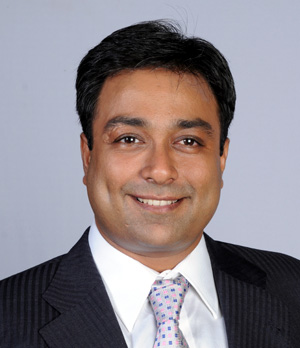
    Mr Jwalant Swaroop, who has more than 26 years of experience in the newspaper industry, has been associated with the Lokmat Media Group since 1992. He recently took charge as the chief operating officer of the group’s publishing and events division, based in Mumbai.
    In a freewheeling chat with Ritu Midha, Mr Swaroop talks about topics including new challenges to the newspaper industry, the growth of the regional press, and digital as the next big thing.


    How has the newspaper industry evolved in the last decade or so?

    The newspaper industry has evolved remarkably in the last ten years, both in mindset and revenues. The approach is futuristic so investments have been made in that direction. Just for numbers sake, the industry has shown robust growth of around 15 percent YOY in advertising revenues and about 10 percent on the circulation front in the last ten years.


    Traditional media in markets like India is still growing. Would you say that print players have taken the right steps to take optimum advantage of that and push the medium further?

    Yes very much. I think digital is being seen as the most potential transition, there are investments being made and backed with complete will to seize all opportunities. However, it is a long-term view and probably it might take another five years to see the real ROI.


    Looking specifically at regional press, do you believe it is poised to grow at a reasonable pace?

    It will, of course, as the regional markets growth is pretty robust. Therefore regional press will have its share of growth.


    Coming to Marathi media competition is growing intense (what with the launch of Divya Marathi). Do you see it helping in growing the market, or could it fragment the market?

    Both. Growth brings fragmentation. It is good, of course, making content the King and the consumer the real Hero.


    Moving on to your new role at Lokmat, what are the changes and transformations that you intend to undertake as the COO Publishing?

    As a company we are poised for the next orbit of the growth and therefore I need to accelerate that pace and make it happen so that the company is future-ready.


    On May 15, 2011 Lokmat saw a content and design change to its product. On August 15, Lokmat Samachar saw a similar makeover. Did they achieve their objectives?

    Differentiation and relevance are the key elements of the change, and I am glad that both the makeovers respectively, of Lokmat and Lokmat Samachar, achieved this.


    What has been the market response to your Hindi compact daily Lokmat Samachar? Do you think the compact format, like in the west, will have more appeal in future as it is easy to read and handle?

    Lokmat Samachar is actually a broadsheeter; the compact is the City News Express (CNX), launched in Aurangabad as a bilingual newspaper. That is doing pretty well, both in terms of advertising and circulation.


    Do you think that the regional newspapers are doing enough innovation to gain the attention of the advertisers? What are some of the recent noteworthy innovations?

    Unfortunately, innovations by the regional press are not showcased properly. We do everything that can deliver the desired impact to the brand communication. Communities and printing innovations are a regular in thing. We are doing several cross-media promotions for many brands these days. We recently published a 3D issue in Nagpur, Aurangabad, Nasik, Kolhapur, Mumbai, Jalgaon and Pune, which became hugely successful.


    Digital is supposed to be the next big thing. Do you think that such a threat would not affect the regional players for a long time as the technology, perhaps, has not percolated to the grassroot levels?

    Technology reaches the masses rapidly  faster than anyone can think. The huge challenge is actually to keep pace with it. Digital is reality, and why next big thing it is already a big one. Social media is changing the landscape and fast impacting media consumption patterns, and mobile internet browsing will be the defining medium of the future.


    How has the year been so far? And how do you see it panning out for the group?

    The early months have been disappointing and I hope, as we go forward, things will be better.


  • A pinch of cynicism, please!

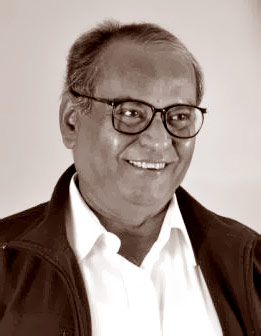
    Instead of raising awkward questions, theIndian media went along — and encouraged — with the wave of emotionalism which took over some of the country during Anna Hazare’s anti-corruption campaign… introducing a new weekly column by Editors tracking news across the country

    By Aroon Tikekar

    It is distressing to see the Indian media print as well as electronic- going berserk at the slightest provocation. Has the constant fear for survival affected the healthy vision of the Indian media? Why have the tried and trusted tenets of the profession been disregarded, intentionally or otherwise? These are some of the questions that demand a discussion.

    First and foremost, do the new brand of journalists sincerely believe that a demonstrative approach to solving social problems can and does help? Coming out on the streets shouting slogans can highlight political issues. Pressure put on the powers that be may help hasten a political process. But mere highlighting of social issues does not ensure their solution, as essentially it requires a change in social mind. Obviously journalists are not so nave as to believe that the Anna Team is not going to wipe out corruption from the Indian scene at one go. Then why did they not educate their readers or viewers to doubt the efficacy of any such attempt? Without a pinch of salt called cynicism, media ceases to be the Fourth Estate in a democracy.

    Indian media should raise awkward questions on the right occasions. Joining the bandwagon would have been considered in the past as bad journalism and an affront to the calling. The editors do have a right which is ex-officio to criticize the high and the successful. Reporting on the news and analyzing it for the benefit of readers or viewers as the case may be, is one thing and creating news by emphasizing unimportant aspect and commenting on it is another.

    Today’s Indian media, while fighting a battle of survival, is creating news unworthy of reporting and repeating it ad nauseum, much to the chagrin of readers or viewers. Supererogation of emotion has become willingly or unwillingly the hallmark of our electronic channels, but why should the print media too compete with the electronic media in sensationalizing or pandering to emotions? Whenever we, the people become victims of emotionalism in any large democracy, it becomes the prime duty of the media to educate them. The gullible masses are prone to seek and expect miracles to happen and can easily be tricked into accepting an apparent solution. The media has to come out to warn that miracles are not possible by emphasizing need to be cautious, even cynical of quick successes.

    Secondly, it may sound strange but the media, by definition, is supposed to be critical and is duty bound to take a negative stand by pinpointing weaknesses and lacunae in any proposal or happening which the gullible and innocent person may accept without complain or questioning. Social responsibility is nothing to be ashamed of. In fact it is expected that a newspaper editor or channel editor be so detached from the theatre of activity that he should be able to swim with ease against even torrential current of people’s emotions. The editors should not ride waves of emotionalism. Such objectivity is a pre-requisite in journalism.

    Thirdly, why do the media fail to grapple the historical fact that a political revolution is possible almost overnight but there cannot be a social revolution? Social change can take place only on evolutionary lines. History has shown us time and again that change for the better by slow absorption, not by convulsion, but by assimilation this is the only formula for social change. There are no short cuts to social change, no miracles, and no magical remedies.

    The same newly cropped up weaknesses were displayed by our journalists when the Anna phenomenon was taking shape in Delhi. Society should have been warned that wiping out corruption is not an easy task. Team Anna has only made a beginning. The entire country is aroused and is up in arms against corruption. All these are good signs, but nothing much per se is going to be achieved by the mere introduction of Anna’s Jan Lokpal Bill in Parliament. The roots of corruption have reached deep within our system. Again, on the issue whether the electorate is sovereign or the Parliament, the media should have brought out that our Constitution-framers have taken care to see that no section enjoys absolute sovereignty.

    Even while appreciating the novel idea of distributing caps with I am Anna written on them, the media should have warned the agitators about the limited use of such symbolism. It was on the contrary seen going overboard and was quick to call Anna Hazare as the Second Gandhi.

    The catapulting of Anna Hazare into a national figure is largely the media creation. Media is responsible for creating his larger than life image. One is not even sure whether he has the qualities of a national leader. But media called him as the second Gandhi. Let’s face it. To compare Anna with the Father of the Nation is a cheap gimmick. Comparison of the two is odious. Anna lacks vision. He also lacks wisdom, one doesn’t even know how much the Gandhi literature he has read. The original Gandhi did not even approve of the ways of revolutionaries as he believed that to assassinate is the highest kind of censorship, but Anna does.

    Aroon Tikekar is former editor of Loksatta

  • NBT goes hyper-local at Greater Noida

    By Akash Raha


    Navbharat Times (NBT) of The Times Group is going to launch a special eight-page local newspaper in Greater Noida today. The eight-pager will be distributed in Greater Noida along with the main NBT newspaper. There will be no change in the price point and the newspaper will be available with the added pages at the Rs 2.50. It is noteworthy that NBT has such hyper-localized content for other satellite-cities to Delhi, namely Ghaziabad, Gurgaon, Noida and Faridabad.

    Speaking about the idea behind NBT’s strategy towards creating hyper local content for consumers, Aman Nayar, Brand Head, NBT said “While the main product Navbharat Times (NBT) has the pulse of overall Delhi-NCR (or as we see ‘Greater Delhi’) there is a need to cater to the needs of each of the 4 NCR cities, as each of these cities are rival state capitals in their consumption or economic activity. Hence, we built on the concept of a dedicated local newspaper with local hard news but the focus being on development and growth in these cities. In sheer quantity we would be more local than the competition in fact, but rather than being sensationalist in playing up petty crime or local politics, our focus is the growth opportunities and where there are gaps, to drive change in these boom towns. A lot of our campaigns in these cities have been ground-level connect and have yielded more than encouraging response.”

    After the success of the group’s English newspaper, The Times of India across India, NBT had scaled down its newspapers to two editions – Delhi and Mumbai. However, about four years back, with localized newspapers it began building strategic presence in Delhi and NCR. The move helped them to penetrate in tier two and tier three cities. According to Mr Nayar, it has gained good traction with the advertisers too. Moreover, with ‘NBT Greater Noida’, the company will certainly garner robust local advertising.

    “Greater Noida is a step towards creating meaningful and relevant content for Greater Noida. There has been a marked jump in economic activity centering around the Formula One race. At the same time, as the recent Noida Extension episode showed – The Greater Noida readership’s concerns and thinking may have variation from that in Noida. And so now we have launched Greater Noida’s own local newspaper ‘NBT Greater Noida’. In fact in Ghaziabad, we observed that it was a case of two cities co-existing – the trans-Hindon Area (closer in thinking to Delhi than UP) versus Old Ghaziabad. Therefore, we created two splits of NBT Ghaziabad, one for each city,” added Mr Nayar.

  • 3 days to World Magazine meet


    By Akash Raha

    The FIPP’s 38th World Magazine Congress is only three days away and is going to be held for the first time in India. Approximately 600 delegates from 50 countries (including India) will be attending this event. The conference will be held from 10-12 October, 2011 at New Delhi,and the biggest names of the media and advertising fraternity, from India and internationally, will be present at this event.

    Chris Llewellyn, President and CEO FIPP, UK, speaking on WMC India edition to MxM India said “The World Magazine Congress is FIPP’s most iconic event, gathering together the great and the good from our industry and is always special. Being held in India for the first ever time is a wonderful endorsement of how the market for magazine media is developing in this country and I’m looking forward to some great interaction between the local and international publishers. More generally, being able to understand how to balance the array of opportunities that new digital platforms bring together with the many strengths of the traditional magazine is the obsession of the magazine media world, and I’m sure that our New Delhi Congress will provide real insight and guidance as to what’s working, where, and why.”

    In a conversation with MxM India Mr Mitrajit Bhattacharya, General Secretary, AIM said, “We have a huge number of delegates coming in from all over the world; from the far-east, from Europe, from America. So I think, this is going to be one of the most successful World Magazine Congress in the last decade or so. India is the toast of the world for anything and there is a lot of interests for delegates to attend the WMC 2011.”

    When asked if business transactions can be expected in the WMC Mr Bhattacharya added, “I think there is a large amount of work which is happening in the digital space, and there is a lot of business which could be driven in that area in the World Magazine Congress with the magazine publishers of India. So there would be a definite angle of business in World Magazine Congress and I know that publishers are already full with the dates in their calendar with meetings with international delegates. There is a very nice appointment dairy that we have offered to every delegate and that is getting full for many publishers. So there will definitely be business transactions in the World Magazine Congress.”

    The World Magazine Congress will begin with the opening address by Mr Aroon Purie, Chairman of FIPP, and Chairman and Editor in Chief, India Today; Mr Chris Llewellyn, President and CEO, FIPP and Mr Jussi Pesonen, CEO, UPM. This will be followed by an interaction with Mr Shahrukh Khan, who will talk about ‘My Tryst with Magazines’.

    The next two days will be packed with speakers of renown from across the globe. The key note address on the second day will be given by Ms Ambika Soni, Minister of Information and Broadcasting, India.

    The Congress’ theme for this year is ‘The 360-degree Opportunity’. The congress will showcase various innovation and means to success in today’s dynamic market. The conference agenda contains some of the world’s biggest media names, giving their own personal insights. In addition, the 2011 Congress will incorporate a large commercial exhibition, providing the opportunity for delegates to learn about new products, developments and opportunities in a highly-charged business environment.

    India is an essential market as it has 73,000 magazines, including weeklies, fortnightlies and monthlies. The market is dominated by Hindi and regional publications. About 34 percent of the overall magazine industry publications are in Hindi, followed by English publications accounting for 13 percent of the total pie. The remaining 53 percent of the market comprises regional languages such as Marathi, Bengali, Tamil and Telugu.

    FIPP’s World Magazine Congress is by far the biggest magazine event that is organized across the globe which brings forth magazine publishers and business media providers from across the globe. The biennial Congress has taken place in many different locations over the years, including United Kingdom, London (2009), Beijing, China (2007), New York, USA (2005), Paris, France (2003), Rio de Janeiro, Brazil and Buenos Aires, Argentina (2001) and Hamburg, Germany (1999).


    For more information: www.fippindia11.com

  • Engagement Study holds hope for magazines

    By Akash Raha

    With the World Magazine Congress round the corner, New Delhi is set to host magazine publishers, marketers and advertisers from all over the world.

    However, with news doing the rounds each year that the future of magazine is in doldrums (at least on print and paper), a lot of hopes are likely to be pinned on the Engagement Study conducted by Association of Indian Magazines (AIM), which is to be announced at the congress. The study aims to become a robust currency for advertisers.

    Media planners and buyers whom MxM India spoke to about the study feel that it will herald a change for the better.

    Premjeet Sodhi, President, The Collaborative, Lintas Media Group said, “Yes, the currently available syndicated research studies in India are not adequate to take fully informed decisions about selection of magazines from a media planning perspective. A lot of additional inputs are derived from proprietary research by agencies to be able to make prudent recommendations. Overall, there is a huge scope for enhancement of the syndicated data sources from the perspective of magazines. While, I am not aware of the research design of the Engagement Study, I am sure it will fill a critical void of information for magazines and will be a valued input for media planners and advertisers. I hope that going further the research does not stay at the ‘Category Level’ and does provide information at the ‘Individual Title Level’ else the applicability of the information will always be limited.”

    S Yesudas, Managing Director – Indian sub-continent, Vizeum India said, “Personally I was shocked to see the numbers of some of the magazines when the Registrar of Newspapers of India publicized the print order claim made by magazines on its website, presumably through an oversight, as it was subsequently withdrawn.  Coupled with this is the reality of IRS certifying a consistent southward trend.  There are too many titles fighting for the same share of the audience pie, unlike the newspapers, they themselves are currently feeling the pinch.  While the engagement study might help differentiate one against the other in the same area of operation in terms of affinity, it will not make any substantial changes in the current perceptions and judgments by media planners, from an overall industry perspective. At best it will result in the publication with the highest affinity, scoring over the others compared to the current judgment allocation where the one with the perceived audience retention possibility gets 80 percent and the rest 20 percent. With the engagement study it might become 90/10 or 100 in favor of the one with highest affinity.”

    With digital being the watchword for the future, this year’s theme of the magazine congress is ‘The 360° Opportunity’.

    Dinesh Vyas, Business Head, MEC India said, “If you look at the way the print medium has been faring of late, I wonder how much of a difference the Engagement Study is going to make. The situation has changed drastically over the years and today, digital is taking away massive part of the advertiser’s money. According to me, digital is a very engaging medium, perhaps more than print as a whole. Whether Engagement Study will make a difference or whether clients will buy into a medium which is already losing interest amongst consumers, only time will tell.”

    A few questions arise here: Will the media planners and buyers appropriate the study? Will they be able to trust a survey conducted by the very group on which the study is being conducted? The answers to these questions are close at hand.

    Also Read:

    http://www.mxmindia.com/2011/09/engagement-study-may-solve-magazines%E2%80%99-measurement-blues/

  • Industry expectations from WMC2011

    By Akash Raha

    As the World Magazine Congress gets underway today, the industry awaits lessons which will lessen the woes of magazine publishers in India. The topic of this year’s congress is ‘The 360° Opportunity’ and with the advent of digital, the publishers will be interested in sharing and gaining knowledge on how to monetize the digital space better and leverage the brand on multi-media platforms effectively. MxM India spoke to several members of the media industry to know what they are expecting from the congress and express their views on it.


    Suresh Selvaraj, President, Outlook and Marie Claire.


    “WMC kind of events should provide practical solutions to safeguard the magazine industry in its original avatar – i.e., the print version. Increasingly everyone suggests how digital could change the landscape and why one should invest in it etc. but what about the returns? Show me one website of a popular Indian magazine that makes equal amount of reach or turnover or the potential to do so in the next couple of years. When international magazines make a beeline to enter into India, how many Indian magazines venture into the neighboring countries, at least? Can Indian magazines use WMC to open the doors to the world – especially when we have some very successful titles and talent?”


    Rasina Uberoi, Vice President, Media Transasia Thailand Ltd.


    “At the World Magazine Congress we are looking forward to meet all our global partners. Although we meet them on a regular basis, WMC gives us a platform to meet everyone at the same time. We are looking forward to exchange of thoughts and ideas with our partners. However, my biggest expectation here is how we are going to monetize our digital business. Everybody has been talking about digital business and social media for a long time. And everybody is still toying with the idea. So I am keen to learn from WMC and from other publishers what a successful revenue model in digital is.”


    Anant Nath, Director, Delhi Press and Managing Editor, The Caravan.


    “My expectations from World Magazine Congress are the same as before – To re-establish and re-articulate the cause of magazines and help it stay relevant. Magazines have to grow in the right eco-systems in a multi-media framework, and be relevant for the various digital offshoots. I am eagerly looking forward to exchange of ideas and learning with our international counterparts. Since the congress, for the first time, is being held in India there is going to be a lot of participation from Indian publishers. The publishers will have a lot to learn from their international counterparts, who will share their learning and insights to what the future might hold for Indian publishers.”


    R.Rajmohan, Publisher, Open Media Network Pvt. Ltd.


    “WMC, held every two years, is a very significant conference for magazine publishers across the world. It is an achievement for AIM and Indian magazine publishers that India is the venue for WMC, this time. It also reflects the growing importance of India as a magazine publishing market. FIPP has brought together eminent panelists, making the congress a must-attend for magazine publishers. Opportunities magazine publishing offers in the digital ecosystem is tremendous and the conference will discuss this and far more, which will be a great learning experience. I look forward to meeting fellow publishers from all over the world and to the exchange of ideas and thoughts.”


    Sandeep Khosla, CEO, Infomedia18.


    “Since World Magazine Congress is an international event and several international publishers are coming from around the world, we are looking forward to interacting with them. There is a lot happening internationally and there are some new vehicles which we can possibly tie up and bring to India. Apart from that we are looking forward to understand, as to how publishers co-exist with technology too. We want to understand what various publishers are going to do with ipads and android platforms and how will we co-exist with them… what sort of a revenue model is one looking are looking at to remain relevant. We will be looking forward to understand that in the light of dropping readership, a sort of recession that we are seeing, how do we survive and make profits.”


    Riyad Mathews, Senior Assistant Editor and Chief General Manager, Malayala Manorama, Malayala Manorama


    “Well, it’s not often that you can get all leading publishing houses under one roof. The World Magazine Congress gives us all an opportunity to interact, meet and discuss issues facing the magazine industry and it also gives us business opportunities.”

  • Chalo Dilli!


    By Akash Raha

    Delhi is all set to host two mega international events back to back – The World Magazine Congress and AdAsia. It almost seems like Delhi has become the new hub to host such grand events, perhaps taking over the role from Mumbai, the financial capital of India. Nevertheless, the upcoming month assures to be grand and promising for Delhi, which is bound to receive a lot of attention with several international business honchos from the media and advertising industry attending the two events.

    Speaking about the two events in a recent conversation with MxM India Ashish Bagga, CEO, India Today Group said “The World Magazine Congress is in early October followed by the Adasia; it is a big month and there is a lot of activity around both these conferences. The learning is amazing; the energy levels are very high. We are all very excited and we hope to pull off two very successful broad format events. And we are all looking forward to it.”

    Talking about the two events scheduled to take place in Delhi Prathap Suthan, Chief Creative Officer/Chief Explorer, iYogi, said “Well, the expectations from WMC is not much as it’s an era of digital. The only time a person reads a magazine these days is when travelling in a plane. I do love print but it is no more reasonable these days to subscribe for it or carry it along. When it comes to Adasia, yes, I will be going for it with a couple of my agency people. We are expecting to hear the best of experts on ‘uncertainty is the new certainty’ as in my opinion the world has always been uncertain hence nothing can be regarded as certain, Steve Jobs death was not certain, anything that happens to anyone is never certain.”

    [youtube]http://www.youtube.com/watch?v=T7zC5_yLkbs[/youtube]


    Thereafter, Mr Suthan went on to praise the city of Delhi and said. “As far as having the events in Delhi is concerned, Delhi has a better infrastructure, better airport and better accommodation facility than Mumbai. In addition to this, every industry person makes a weekly Delhi visit. The only thing that Delhi doesn’t have is a sea but that is compensated with the nearness to mountains and desert. Hence Delhi is the perfect place to have such events.”

    In the two events several international deals and business transactions are also likely to happen. And that they are happening in Delhi is only good for the city. In the future too, it shall entice and lend confidence to the media, marketing and advertising fraternity to organize such events in Delhi.

    Talking about the two cities Mr Arvind Sharma, Chairman of India Sub-Continent, Leo Burnett said “Adasia is a major event happening for the advertising fraternity, it will bring a lot of great advertising minds under one roof. I’m hoping it will be a great event and I’m really looking forward to it.   I have been saying this for a very long time that the advertising industry in Delhi is growing double the rate than the Mumbai ad industry growth. Hence, it is the perfect venue for such a big advertising event.”

    But is Delhi’s gain Mumbai’s loss? This, only time will tell… But for the moment, it is time for the industry in Delhi to indulge in fun and frolic, amidst few of the biggest names of our industry as the city hosts World Magazine Congress and Adasia.


    Photograph: Fotocorp

  • TopGear marks 6th anniversary

    By Akash Raha

    BBC TopGear celebrates its sixth year in India with a mega 214-page issue. The October anniversary issue has hit the newsstands at a price point of Rs 150. The rising price of fuel has not deterred the hottest cars of the world from descending on Indian shores. Moreover, with the Indian GP around the corner, the sentiment around is all for performance.

    Commenting on the anniversary issue, Mr Tarun Rai, CEO Worldwide Media, said,

    “The last six years have been an exciting ride for TopGear. And this year has been exceptional. We went in for a redesign, added lots of new sections in the magazine but kept the price at Rs 100, even though the others increased their cover prices. We believe with so much action in the car market, including the top end glamour segment and the F1 contributing its bit, the time is just right for TopGear. We are gunning for the number one position.”

    The anniversary issue of the magazine from the Worldwide Media group drives Koenigseggs, Aston Martins, and Jags with an India exclusive drive of one of the most exotic – The Maserati GranTurismo.

    Mr Girish Karkera, Editor, TopGear India said “In the increasingly crowded segment of auto magazines, TopGear has been growing from strength to strength with its hot cars, cool features, great photography and striking design. The magazine, thanks to its unique approach to cars and bikes, has managed to stand out from the rest of its ilk. And while conventional wisdom would suggest that the current environment is that of high fuel prices, high interest rates, and higher cost of living, TopGear, with its unique style of writing and presenting has managed to rise above the mundane and keep the readers engaged with cars… by providing dollops of entertainment, humour and information to maintain itself as an engaging and exciting read; irrespective of the world around it.”


    Mr Debolin Sen, Publisher, TopGear India said “2011 is the year for BBC TopGear in India. The year has seen the magazine perform exceptionally well in a crowded marketplace and we aim to build on the momentum that’s been generated. Together with the magazine redesign in April, the launch of www.topgear.com earlier this year, the magazine’s ready to host the TopGear Awards on November 25 in Mumbai.  With BBC TopGear the excitement and passion never ends. It just gets bigger and better. The sixth Anniversary Special is yet another reflection of the TopGear spirit.”


    Since TopGear is celebrating, the readers reap the benefits with a free DVD worth Rs 599 of XXX-2, an exclusive small car directory along with the TG Lifestyle supplement.

    Since it’s the flavour of the season, readers stand a chance to win Rs 1.5 lakh worth of Indian F1 GP tickets by participating in the TopGear Air-drive to F1 contest. More details are available in the issue and on www.topgear.com/india.

  • Mid-Day re-launches Meter Down

    By A Correspondent

    Mid-Day has re-launched its Meter Down Campaign in Mumbai to put errant Rickshaw drivers to task. The campaign will be launched as a joint programme with the traffic department and the RTO. This year’s Meter Down campaign aims to take on the uncouth auto drivers to teach them a lesson. The campaign will go on for a period of four weeks and aims to garner support from the citizens across the city. According to Mid-Day, people have anger towards rickshaw drivers mainly for reasons such as tampered meters, refusal to ply and also for their rude behaviour.


    Mid-Day will identify key locations in the city where the authorities concerned will be present to reduce the hassles caused to the citizens. The focus will be on peak timings in the morning and in the evening when most office-goers are affected. The offenders will have strict fines levied on them and serious offences could also lead to cancellation of licences.


    Last year’s Mid-Day Meter Down campaign, which targeted the taxi drivers, received overwhelming support. In a span of just one month, the campaign saw as many as 1,551 taxis being booked for refusing fares across the city. In addition about 317 taxi drivers’ licenses were cancelled. Mid-Day followed up tirelessly with each department to ensure that the errant drivers are booked.


    Speaking on the re-launch of the campaign, Mr Manajit Ghoshal, MD and CEO, Mid Day Infomedia Limited said, “Mid-Day is a local city newspaper and therefore it is our endeavour to cater to issues pertinent to the people of the city. Mid-Day Meter Down campaign is an effort to resolve issues that a Mumbaikar faces on a daily basis. The last season saw great response from the city and we are more than happy to launch this campaign once again as people have again started facing a lot of issues with the rickshaw drivers. The kind of success that the campaign received last year makes us hope that this campaign will make a stronger impact.”

  • SRK does a ‘chhammak chhallo’ as World Mag Conf gets underway in style (Text & Video)


    By Akash Raha (text) and Shruti Pushkarna (Video)


    The 38th FIPP World Magazine Congress began on October 10 in New Delhi with huge fanfare. The first ever India edition of the World Magazine Congress is being attended by over 600 delegates from 50 countries (including India). The biggest names of the media fraternity, from India and internationally, were present on the inaugural day of the WMC which is scheduled to last till October 12.


    The welcome address was given by Mr Aroon Purie, Chairman of FIPP and Chaiman and Editor in Chief, India Today, India along with Mr Chris Lewellyn, President and CEO, UK. Mr Purie said, “It is indeed a matter of pride that India was showcasing the FIPP WMC 2011. The conference is possible because of the hard work of FIPP and AIM members. We welcome you all to, what the advertisement slogans rightly call ‘Incredible India.”


    In his short note Mr Lewellyn said, “There are three reasons why it is going to be a great congress. Firstly, the Indian magazine association has worked very hard to put it together. Secondly, it is for all our sponsors, especially UPM. Lastly, it is for you (the delegates) for whom the congress is going to be successful.” He concluded by saying that “FIPP World Magazine Congress is a place where some of the biggest deals are forged”. He termed the interactions at the WMC the “speed dates” of the business world.


    [youtube]http://www.youtube.com/watch?v=mTxOmOwhVjw[/youtube]

    Thereafter, Bollywood actor Shahrukh Khan said that being on the cover of over 8000 issues of magazine was a privilege, but his tryst with magazines had come much earlier when he was not as famous. “As a child, magazines were the window of my world,” he said, “long before I was on them.” In an enjoyable and witty talk, Mr Khan said it began since the time he saw Samantha Fox on the cover of People magazine when he was still very young. He asserted that even though life is becoming faster with the digital age, “this form of writing is not going away; not in our lifetime.”  He emphasised his faith for magazines and whished magazine publishers from around the world luck, as it was a vital medium. Mr Khan thereafter entertained and enthralled the crowd with this dance performance on ‘Chamak Challo’, the song from his upcoming movie Ra-One.


    Apart from dancing to contemporary Bollywood numbers, dance troupes presented classical Indian dance forms and Bhangra. This was followed by a networking session over dinner.

  • The Anchor: Sumanto Chattopadhyay on 7 reasons why print cannot die as an advertising medium

    #1 Every time a new medium comes into being, premature obituaries are written for preexisting media. This happened with radio, when television arrived. And with TV, when the internet came along. But I ask you, are radio and television dead?

    #2 In India, newspaper circulation is on the up and up. New newspapers are being launched every day. Almost every page of every paper has an ad or two. So where does the concern arise?

    #3 If paperbacks and magazines died, we might worry that print advertising could be next. But novelists are thriving. The Economist is growing. So me no worry!

    #4 While there are writers, print advertising cannot die. As a writer, I can tell you that the urge to write is too strong to shrivel and give up the ghost.

    #5 The smart phone, tablet and laptop are just not as easy on the eye as the printed page – so to protect our ocular health we will opt for print and print advertising.

    #6 Paper running out could be a serious blow. But with afforestation and recycling we are licking that problem.

    #7 And finally, imagine sitting on the pot with your laptop and clicking on some web banner… Nah. Print rules.


    Sumanto Chattopadhyay is Executive Creative Director, South Asia, Ogilvy & Mather Mumbai.

  • ‘Diplomacy? Not for Mail Today’

    Rahul Thappa, COO, Mail Today in a candid conversation with MxM India’s Akash Raha.

    Q: For a long time you had been in Malaysia, how does it feel to come back to India and join the India Today Group?

    Well, these are two different questions and I will take them separately. Coming back to India… I don’t think I ever had a big departure from India. Perhaps, there a few more cars on the road and lots of development since then, but the people are still familiar and the same. Moreover, I was in India fairly often even when I was working abroad, so coming back wasn’t a shock. As far as the rest of the family is concerned, and it was important decision for them too, they have been doing very good. Whereas joining India Today Group is concerned, I think it has been an excellent experience and a very good opportunity thus far. It is one of the best media houses and also one of the oldest. Usually in media, the oldest have the advantage of having settled down well and not being in a state of flux, like many new media organizations trying to find their DNA. So it’s been good on both accounts.

    Q: What is change of tactic that you are adopting, since you have been on the other side of the business too – Media Planning?

    How I characterize it is, I came from the demand side (for media) which would be the advertiser, advertising agency side of the business. And now, I have come to the supply side. I know how the demand side works. I know the psyche of the demand side and that helps me to understand on our end how our supply is to be sold to the demand side, what changes they may need to facilitate the exchange better etc. The knowledge helps us in building and positioning our product better in their mindset and in the way they conceive our product.  Since, we all have an ad-revenue model it is essential know more about the demand side. If we were a subscription based model, it would, perhaps be not as essential. I think that is what I bring to the table apart from the fact that I have been in senior managerial roles for a while now which helps me shape an organization; you could call us (Mail Today) a start up considering that we have spent merely three and a half years in the industry. I hope my past experience will help shape our team further as we will have exciting times ahead. We bring a strong differentiated product in the market and it’s doing very well. I am not saying it will meet the main stream newspapers head-on, as it was never meant to. It might very well contest against the magazines. It was purposed differently and not to take on the big boys on, and our aim was never so. It might look like such a product, but our content is packaged very differently, unlike other newspapers. Hindustan Times and Times of India are everything for everyone. And anyone who wants to read an English newspaper can pick them up. They are fairly democratic that ways and the entry barrier for those who want to come in is low. They have something for everybody. However, we are not everything for everyone… Our content is curated and our content is for a certain demographic.  And in that demographic itself we have several focal points. SEC as we know it today is not as flat as it is… IRS in the coming years with developed and enhanced methodology will aptly point out the fact where they will have a more living standard measure gauge of SEC’s rather than educational and occupational parameters. So if I were to see SEC as a pyramid, which it rightly is, then we as a product, we cater to the top half of that pyramid. Hence, we will not go deep in the market, because we don’t intend to…We don’t intend to access that audience. By choice we have defined our own playing field and it is, in a way, a niche product. We have lower values in mass product and yet, we are a subscription based product. Since we are a subscription based model in time we will have the leeway or flexibility to depend less on ad revenue and focus more on subscription.

    Q: So what are some of the changes that Mail Today has seen since you joined the group and what are some of the changes that the group is likely to see in future?

    Change in management doesn’t mean change in the way how a company is run. There are only subtle changes where efficiencies are creamed out of each system. A person X will look in efficiencies in one place and a person Y will look at efficiencies at another. That is how they are made and that is how they think. But yes, since I have joined, I have looked for efficiencies in certain places… Given the state of economy currently, everyone is making sure across all boards that all processes are running smoothly and efficiently. But a change in management doesn’t change a way in which a newspaper works… the DNA of our product can’t be changed. As we learn about the market, consumers and demand side of the industry, if any process needs to be changed/improved then so be it.

    Q: Efficiency since the slowdown has become an euphemism for job cuts, is that what you are hinting at?

    No, job cuts happens when one process grows faster, builds up fat and then realizing that that process wasn’t necessary to begin with . But in a media industry all processes are equal and that is not what I am hinting at.

    Q: Mail Today began as a paper for the newer audience – the office goers, to put more literally, the metro commuters. Being a ‘compact’ it is easier to handle and read? Are we right in understanding that this focus still continues?

    No, our compact size had nothing to do with the ease at which it could be handled in tight situation, like the model Mid Day in Mumbai. At least, that was never the overt intention. However, if does mean that a person travelling in a metro finds it easier to read, then so be it. One can observe a trend that successful international newspaper are or have switched to compacts such as Daily Mail, Independent, Guardian… One, it is good for savings in terms of the newsprint cost on the other hand it is also fairly easy to read. Ease of reading, pleasing to the eye, logistical advantages, cost advantages… We think that the newspaper industry can take this (compact) route in the years to come. We have taken a bold decision first and we are proud of that. We have taken the first step towards taking compact forward this format that has been a trend internationally too.  If people say only broadsheet is a serious daily then they are out of date… their size has got nothing to do with the seriousness of content. That’s just stereotyping. One cannot compartmentalize the products content by its size.

    Q: Talking about content… Mail Today was known as the ‘Paper Tiger’.

    Yes that focus still continues and will always continue because that is the belief on which media organizations are built. There is no ‘Madhyam Marg’ to it for us…which is what we call our competitors. They are large and fairly entrenched and they take the ‘Madhyam Marg’, or what we will call, being diplomatic. And we don’t believe in that. We tell a story straight, take the bull by the horns… several idioms come to my mind, but in essence we are very direct. We say what we mean and mean what we say, whatever be the consequences.

    Q: Not too long ago Mail Today used to have their circulation number on the masthead. We see that it is not there anymore… Any specific reasons for this change?

    We can put it back there… that is not a problem. But if it becomes two million and two hundred copies I can’t change it every day. It is a little tedious too and is nothing short of a live ticker. We started it only to tell that we were approaching a milestone and thereafter, that we have crossed it. Printing it every day will not make any difference to anybody’s mindset. Eventually, it will become a blind spot. We are currently at over two lakh copies and when we reach our next big milestone, we will put it up too. But keeping it up there permanently solves no purpose. It was for our detractors who said that we won’t grow. The market is growing and with it we are growing too. The market is not only growing only vertically but also horizontally… and there is enough space for us to grow in it. Everything is being diced up and segmentalized according to age, gender and so many other parameters. So the way media is going to grow is with more choice and there is going to be space for everybody; in fact, journalists will have far more trouble keeping their roots. But getting back to your point, the numbers were just to point out to the fact that we are alive and kicking and growing at a steady rate. In three and half half years, I think the numbers we have got in this cut-throat market is phenomenal.

    Q: Since Mail Today was launched in 2007, it was said that expansion was on the cards. Especially Mumbai and Chandigarh were being talked about. Yet, the industry is still awaiting the expansion. Is it still on or has it been scrapped?

    Hopefully you will hear of it soon, expansion has always on the cards. But expansion just for the sake of expansion, what you would have seen in several publications, is something we won’t like to do. We have seen several premiere media houses which saw splits, mergers, acquisitions expanding and trying to enter into every business, launching in every market that they can think off. And look where they are, look what the recession has done to them… Yes, money has become scarce; funding has become scarce too… There are companies in the market close to 80 and 150 years old and that’s why they are successful. We won’t take that long to be successful as they are, but we will get there. But we won’t ruin our work by trying too hard to get into newer markets. Delhi is our market and we know this market and stabilizing Delhi is of critical importance, which we have done. And very soon you will hear of us launching into major markets in a major way. We don’t want to be insignificant players in several markets. We won’t go into a market just because it’s large and growing… Big newspapers which are meant for all audience types can do that but not us. We are also looking for a certain/specific audience type; be it Bhopal, Cuttack or Port Blair. However, we already have a few marked city, the plans are at place and are being deliberated by the management. And very soon you will hear of our first foray out of Delhi.

    Q: What is your annual revenue from Mail Today, and what is your revenue target for 2011-12 and what is the growth number it has seen?

    Our readership is constantly growing. As far supply side, we are growing on that front too. As far as revenue side, we are growing at high double digits. Our growth over the last year is well into 40 per cent. For us, being a relatively new organization and having faced the slowdown, and yet being in the market with such a substantial growth figure is an even bigger achievement. Otherwise the way we started in 2007, we would have been growing currently at 60-70 per cent. We would love those times to come around but till then we are fairly happy with our growth rate.

    Q: It is being said that the IRS-NRS merger are at hand. Do you think it will solve the measurement problem that the industry faces?

    It won’t solve the measurement problem but it will certainly reduce the confusion. We will have one metric to go by and it will make it easy to everybody to look for improvements. When there are two measurements, it’s like having a pound and metric systems working together. The merger won’t solve the endemic problems immediately that publications may have but it will benefit if everyone focuses on one metric. For example, the simplest thing is when you go to a client or planner or agency you might find one of them focusing on one set of data and another one on the other. You waste a lot of productive time that way, which we can now do away with. Two sets of money which was used in setting up samples can now be used to set up double the samples, hence more robust data.

    Q: What are your digital plans?  We have seen your epaper on the digital space but do you have a plan to do more on the digital space and monetize it with advertising revenue, and perhaps subscription revenue through partial pay walls etc.

    We realize that the digital era is already here, yet, none of the Indian players have been able to do anything substantial on it. But I can’t hide behind and say since it’s not working and we will not go there. Digital has become a way of life, information is dynamic and people want information at any time and at any place. When the demand will increase, so will the entire market and then, people will have many models. For example, if you have a complete pay wall it might not work, yet, if you have a partial pay wall it might just work. Also, you can focus on advertising and give content for free. Ad rates, as we see today differ for a digital pixel and a print pixel, which is not right. It is a peculiarity of mindset and it has to change. In years to come, digital will reign. Yet as I say that, I believe that physical product will co-exist. In 20 -25 years when today’s generation consuming digital grow older and new generation of people consuming arrive, print might see a little fall, yet it will co-exsist and then better product will reign. Mobile, tabs and more futuristic system will come into existence and then the sole factor will be how you reach out to a consumer throughout his day on various mediums. Answering your question, eminently, we have been a little slow on that front (going digital) because we are just a start up and we wanted our editorial to focus on the paper product first and we wanted to keep it growing. The demand side still understands print better and hence it was understandable to keep that going before we jump into anything new. We are already making plans to go digital… But we want to come up with something different… Not something regular and utility base like the other Indian websites we have today. The idea will be to be a Huffington Post equivalent, otherwise, the content and the medium will not be differentiated. For example, god-forbid, if there is a bomb-blast everyone in a matter of 10 minutes will have the news. Hence, time is not a differentiator in that space because everyone has caught up and is as fast. Wealth, is the second dimension (one could be paid, one is not) yet, there is yet to be a successful model in it. Lastly it is skill, which is where one can differentiate. A well curated news and content is important. How does an event affect a person’s life and how you add value to it, which is the skill dimension… Currently at number two, Mail Today, our parent in the UK are competing on time and content. They have most of the news and on time too… You have to see it to believe it, how they put content together, on time and seamlessly where the designing is superb.

    Q: It is interesting how you say Daily Mail is your parent, I was more expecting a term like partner.

    Yeah, they are our parent as far as the website is concerned. And then again, I could say that we have two parents, one is Daily Mail and the other is India Today group, which undoubtedly is a parent. If you see the mast head (of Mail today), one can say that they are similar. We borrow a lot from them. Our DNA in terms of look, feel and the physical self of the paper is from Daily Mail. The way the content is put together is an India Today DNA.

    Q: What is the interaction level of Daily Mail with Mail Today after three years?

    We are very interactive. In content sharing of course we are the equity partners. Apart from that, they provide us the glimpse into the future and whole lot of other learning, as to how to handle multi-national clients. They have been handling the same format for a longer duration of time than us, hence the expertise. Our relationship is a fairly active and very cohesive.

    Q: Do you think that media houses should do something to change the current overdependence on advertisement revenues? Do you think rationalizing cover prices will help? What are the challenges?

    Yes they should. The biggest challenge is, the fear that if prices are hiked circulation will be affected. For example, there are houses where there are 4-5 a paper going in each day and the fear is with a hike in price they might cut down on 1-2 paper. But I don’t really see it as fear, rather it is a affirmation of two things –How valuable your product was in that person’s life if he can do away with it? On the other hand if that person was so price elastic that he couldn’t pay another two rupees for valuable information he or she is buying the first thing in  the morning, it creates serious doubts over the buyability of the reader as a valuable asset to an advertiser. For certain advertisers selling regular day to day stuff it will be bad. But for an advertiser selling a car, it becomes interesting… Let’s say my circulation is one million. If all products become double the price, the people who drop out are for instance 300 thousand. In that case, I would value that 700,000 more than the entire 1 million. Now that 700,000 I have are taking me no matter what the cost, they are actually reading the product and see value in it. The other 300 million weren’t reading me and taking me only because I was cheap.

    My argument to the advertiser would be, as it is earlier only 700 thousand were reading the product. And hence you continue paying me as much as you were, since that’s the exact number I still have. Then, my cost comes down and my revenue stays stable and I am a little more profitable. Some of these costs can be shared with the advertisers like they will want you to, but there are other ways of doing that; by elongating their campaigns, making content for them, doing events etc.,  not by giving them a price off.  The aims should not be to talk to everyone, but to talk to fewer people and be sharper in the communication.   It is time we bite the bullet, it is time we increase our price and it is time we do something rational for ourselves rather than keep digging ourselves deeper in the pit. If two rupees a day can bring down the edifices of large organizations then it is a slap on their face. If the whole network of large newspapers is built on Rs 2 a copy then there is no point discussing their value anyway.  It speaks a lot about what you have built over the past so many years. If you have built content-based credible organizations then the consumers will read you irrespective of a Rs 2-3 price hike. It can’t do away with what I call ‘Elasticity of Doom’. ‘Elasticity of Doom’ will come irrespective of the money – Sorry, you didn’t build a strong enough organization. You can very well increase 50 paise every month for four month. Then people in the industry say that do it all together, how would it make a difference, what is the point of doing it slowly. But like one of my colleagues in Mindshare used to say, you don’t boil a frog by putting it in hot water, it jumps out. You heat it slowly, and sooner or later you can boil the frog and make a nice broth. And all publishers can do it together, 1st of every quarter, across all boards. So that one is not costlier than the other and the parity stays. So it’s possible, you just need will to do it, because the ‘Elasticity of Doom’ eventually is inevitable. The cost of paper has to rise up, it’s not a renewal source, so might as well do it right now. Especially in the paper industry there is no reverse logistic. So till reverse logistics become a part and parcel of life, you will never have cheap recycling and cheap paper. Most of the paper today gets imported and there are tariffs, company disputes etc., due to which prices will always keep rising.

    Q: Talking about lighter subjects, Mail Today comes up with interesting initiatives. What are some of the upcoming marketing initiatives that the paper has planned?

    We have planned a lot of initiatives. But unfortunately we can’t talk much about it as it is a revenue stream for us. Olympics, Delhi centenary year we plan to do a lot on a lot of topics. Delhi has its own problems and being Delhi’s own paper we will try to tackle it in the best way possible. You will see several campaigns in times to come.

    Q: On a broader note, what are the new emerging trends in print media?

    There are wiser people who can talk about trends, but there is one trend that I will talk about which is the rise of tablets. I think it’s at our doorstep right now. While it might seem very quiet… you see cheap tablets of Reliance, Beetel. Samsung too have been known to lower costs drastically. The ipad market, I feel, will grow faster than the penetration of smart phones. There is still very little Indian content on the ipad. Yes the Times of India has an ipad app and a few others too, which is good and evolving, but it is not seamless yet. It is nothing like the foreignpolicy.com apps. We were talking about consuming content at ease in a metro. Consider the iPad which collapses a newspaper to one-eighth its size. You don’t have to open it any more, you can just slide your way through the complete newspaper. There are already about 250 thousand iPads in the country by official or unofficial estimate. Every second member in our industry has an iPad. It’s just a matter of time before the market explodes, and when it does, it will be everywhere without anyone having to curate content for it. That is something we should all keep our eyes on.

    Q: Can we expect Mail Today to come out with an iPad app soon?

    Mail Today would certainly like to do it; but probably as an organization we don’t think we ‘need’ to do it right now. But we have our eyes pinned on it, and will offer a value package to our consumers if and when we think it is the right time.