Category: MEDIA

  • I&B pussyfoots on digitization. Decision on deadline to be announced this week

    By A Correspondent


    Sad. MxMIndia learns that yet again no decision on the deadline on digitization was taken at the taskforce meeting that took place this afternoon in the Capital. Mr Uday Kumar Varma, Secretary, Ministry of Information and Broadcasting chaired the meeting and Ms Supriya Sahu, Joint Secy (Broadband & Policy) was also in attendance.


    It may be noted that June 30 is just 15 days away, and it’s unfortunate that the Government of India appears clueless on whether digitization in the four metros should be imposed or not. The charade thus continues. DTH operators have been advertising that cable is going to be history in the four metros, local cable operators are protesting and broadcasters are wondering whether they should factor in digitization in their forward planning.


    A routine meeting with discussions on issues and state of preparedness for digitization took place between the taskforce members and ministry officials. While no new announcements were made on the matter, news agency PTI reports that Mr Varma said that a frank discussion took place on all issues concerning digitization and the government had taken note of all stakeholders’ views on the matter. Mr Varma said that the ministry had more clarity now on the state of readiness of various stakeholders. PTI also reports that the government is likely to declare its final position on the matter by next week.


    In a meeting held on June 8 between Ms Ambika Soni, Minister, Information and Broadcasting and industry stakeholders, the government hinted at a comprehensive discussion on timelines in the scheduled June 15 taskforce meet. The ministry also collected duly filled forms from all stakeholders present in the June 8 meeting to study and assess the preparedness for digitization for Phase I. While the ministry has maintained so far that there will be no extension of the notified sunset date of June 30, it was suggested in the meeting held on June 8, that any discussion or decision would be deferred till the next taskforce meeting on June 15.


    A member of the taskforce told MxM India after the meeting today that no decision or announcement was made during the meeting by the government and that the ministry is likely to announce its decision later next week. Another member of the taskforce however hinted that discussion on new timelines led to suggestions of a possible extension upto December 31.


    Shortly after the taskforce meeting the Local Cable Operators (LCOs) protested outside Shastri Bhawan demanding that the ministry revisit the matter of revenue share of LCOs. Speaking to MxM India, a local cable operator based in East Delhi said, “We are protesting against Rs 45 share for LCOs. Also there is no clarity on STB price by the government so every MSO is offering it at a different price. And the quality of STBs is also very bad so we are facing a problem with the same.”


    Meanwhile, the hearing of the Mumbai Cable Operator V/S I and B Ministry case which was scheduled today, June 15, has been postponed till Monday, June 18.


  • Microsoft moves digital biz to Reprisemedia

    By A Correspondent


    Reprisemedia India will now handle the Digital Media AOR for Microsoft India across Display and Search. The business has been transitioned from WPP-owned Quasar and Publicis’s Performics.  Reprisemedia India will now work as an extension of Lodestar UM who has been the lead media AOR for Microsoft India for the past 10 years.


    “This shift aligns India with Microsoft’s global move to consolidate digital media buying and search with UM. 2012 will be a game-changing year for Microsoft with the impending launch of Windows 8, coupled with exciting developments across our entire product portfolio. We look forward to working with Reprisemedia and deepening our partnership with UM,” said Shafalika Saxena, CMO of Microsoft India.


    Anjali Hegde, CEO Reprisemedia India, added: “This is the most significant thing that has happened to Reprisemedia and we are really excited about the opportunity to work with Microsoft. It considers digital as a core and mainstream medium and that mindset allows a digital agency to push its boundaries of innovation and creativity – in short, a dream client to work for.”


    This new arrangement comes into effect from July and will leverage global expertise from across the many markets where Reprisemedia handles Microsoft’s Search business.


    “However, Reprisemedia India comes with an added advantage,” added Anamika Mehta, COO Lodestar UM. ” As a full-service digital agency, its offering extends far beyond Search, into the realm of Digital Display, Content and Application.  Reprisemedia will complement the unique strength of Lodestar UM within the Content space.”


  • Star Jalsha unveils new identity

    By A Correspondent


    Nearly four years after launch, Star Jalsha unveiled a refreshed identity on Sunday. The channel featured a new logo - the ‘Diamond Star’, amidst a fictionalized event show titled “Chalo Paltai”. This new identity is to be backed with programming that reflects and reinforces the brand philosophy to further deepen its bond with viewers.


    Star Jalsha was launched as a Bengali GEC from Star Entertainment Media Pvt Ltd stable in September 2008. Iconic shows like Ekhane Aakash Neel, Durga and Bandhan, to name a few, created magic and presented viewers with a myriad range of emotions, living up to the brand philosophy – “Chalo Paltai” (Let’s bring a change).


    On this occasion, Kevin Vaz, President – Ad Sales, Star India Pvt Ltd and GM, Star Jalsha said: “It gives me great pleasure to announce the brand refresh for STAR Jalsha. This is the first time in the history of regional television brands in India that a refresh has happened in such depth of detail. STAR Jalsha has become synonymous to Bengal with every step taken since its inception. “Chalo Paltai” brings about another beginning, of reinventing concepts, stories treatment and packaging, to keep up with changing emotions, societal changes and a fresh take on life and relationships.”


    Keeping up to the Chalo Paltai tag line, significant turning points have been incorporated in the storylines of several of their most popular shows. In addition to this, two new shows are being launched- Aanchal and Care Kori Na.


    This brand refresh is being brought alive though a disruptive marketing strategy, both in terms of creativity and scale, covering a mix of electronic, OOH, Print, Activation and Digital.


  • Dr Kalam is the guest ed @ Prabhat Khabar

    By A Correspondent


    “If you only do what you know you can do – you never do very much.” That’s why Prabhat Khabar, the leading Hindi daily of eastern India, always seeks inspiration from personalities of eminence.


    On June 15, Prabhat Khabar was honoured to have Bharat Ratna Dr. APJ Abdul Kalam, former President of India as the guest editor.


    When invited Dr. Kalam wanted to know, if Prabhat Khabar was owned by any political party or owed allegiance to any political group. After going through some of our issues he was convinced that Prabhat Khabar is an independent publication and attempts to raise issues of the ‘common man’ and be their voice to the government.


    After this assurance, Dr. Kalam agreed to be the guest editor for the day. Articles like children bypassing a vital educative link of their childhood and being burdened with the worries of the adulthood and the loneliness of senior citizen were appreciated by Dr. Kalam.


    He discussed various aspects of news and gave his valuable guidance to the resident editors across the editions. He showed keen interest in the various aspects of the news papers and gave his suggestions.


    Dr. Kalam is the founder of PURA (Provision of Urban Amenities in Rural Areas) and he was glad to know about Prabhat Khabar’s rural newspaper – Panchayinama. He called it a big step towards rural development.


    While leaving he gave his blessings to the Prabhat Khabar family for a bright future ahead. This is the first time Dr. Kalam had agreed to be a guest editor of any newspaper in Bihar, Jharkhand or West Bengal.


  • Times Internet acquires stake in logistics co

    In a move towards enriching customer experience and delivering quality service, Times Internet has invested in New Delhi-based logistics company, Delhivery to step up its last mile delivery for Indiatimes Shopping. Speaking to MxMIndia’s Shruti Pushkarna, Mr Gautam Sinha, Director- Technology & e-Commerce, Times Internet Ltd said that this acquisition is done to boost the delivery capabilities of the e-commerce vertical. He said: “After pivoting from a marketplace to a retailer model, we had to strengthen our warehouse network and last mile delivery. Some e-commerce companies in India are doing this by launching their own courier network, but that requires time to scale, hence we have decided to take the acquisition route.” Currently Indiatimes Shopping has Fedex, Bluedart, ASL and Aramex as its logistics partners.


    Gautam Sinha joined the Times Group in 2007 as CTO, and is heading e-Commerce as well. He leads and drives the technology strategy, vision and execution for all the internet, mobile and telecommunication properties of the group. He has over 24 years of rich experience in technology innovation and execution, which includes a wealth of startup and industry expertise. Most recently, Mr Sinha was the COO/CTO of CashEdge Inc, where he worked since 2001 building and leading the company from startup to profitability.


    Mr Gautam Sinha spoke about the recent investment in Delhivery given the importance of logistics and the focus area for TIL’s e-commerce business.


    Can you throw some light on the strategic investment you are making in a logistics company?

    Logistics is the key to any e-commerce player and there are multiple approaches a business can take. One is to build your own logistics company. Another approach is to work with third party partners, which we have been doing so far, and have strategic tie ups with one or more such partners. The third case is what we have done. Understanding the importance of logistics, we invested in a company which can have very tightly coupled systems and processes with us to make it work as if it’s your own company in-house logistics. That’s the reason why we invested in Delhivery. And this is just first of the series of investments and we are actually looking at multiple such investments.


    Why this investment in logistics? Wouldn’t it better to outsource it?

    We continue to outsource, so even with the investment, we are still outsourcing. They will execute the orders as an independent company.


    How is Times Internet’s e-commerce doing?

    We are doing very well. The growth has been on target and as per plan. We expect to grow another 100 per cent this year in terms of business. And we will be a credible player in this space. We used to be in the marketplace model, and we are pivoted to the e-commerce model, where we own the entire experience, right from warehousing to last mile delivery is owned by Indiatimes Shopping. Previously, this part of the experience was owned by the suppliers, which were on our platform; now we do end to end experience management for every business that we do.


    There have been several e-commerce players that have come up in the last few years… especially in the lifestyle segment?

    Indiatimes is a horizontal player. Our primary focus, as of today, is in the electronics, mobiles, computers, cameras, movies, music, books and games. The other category we are interested in is gifts. Although it’s true that a lot of players have come up in the fashion category recently, we don’t see a lot of impact on the business because of fashion as an industry.


    Deals sites have been doing very well, as also classified sites like Olx, Quickr and so on?

    They will continue to do well because there are a lot of people who are in the market for second hand products because of the price advantage. So Olx is a good place for buying used products. But if you talk of deal sites, they are typically in the services space, and only recently, a lot of them have started using products in terms of deals. For example, Snapdeal and Mydala are using more products in the deals space, but primarily they have been in the services space like spas, restaurants and so on.


    Given the current environment, what are the steps you are taking to shore up revenues?

    I think the market is growing at 60 per cent atleast and certain players are growing at 100 per cent or more. And the growth of the market is because of a lot of people converting from offline to online, the growing penetration of internet and the improved ability to brand yourself and deliver quality services. The first two are functions of the market, so our focus is on getting the repeat customers, so that the lifetime value of a customer is realized with the platform. So using that, we expect to grow at 100 per cent this year as well.


    If you look at the revenue pie of TIL, how much of it is brought in by e-commerce?

    See I can’t share this information, but I can tell you that e-commerce as a business is a focus area for TIL. We have put increased focus on it and that’s the reason you’ll see investments made by TIL in e-commerce in other players which are contributory to the ecosystem in the way we play in. So for example, Flipkart went ahead and built their own logistics network, we chose to invest, Snapdeal doesn’t want to do either, they want to outsource. For us, outsourcing but having a strategic relation was the right way to move forward. And we want to do it with more and more such companies so we can strengthen the ecosystem in which we play.


  • New appointments at Cheil SW Asia

    By A Correspondent


    Cheil Worldwide SW Asia is on a talent acquisition spree and has announced a series of new appointments across BTL, Creative, Digital, and HR.


    Ravi Narain
    Alok Agrawal
    Sanjeev Hajela
    Vikram Bhardwaj
    Saswati Sinha

    The agency has brought in Ravi Narain as Executive Creative Director, Sanjeev Hajela as Sr Vice President, BTL -South West Asian Markets, Vikram Bhardwaj as DGM-Interactive and Saswati Sinha as Head-Human Resources.


    Mr Narain joins from Emaar MGF where he was Vice President – Marketing & Design, while Mr Hajela is from DDB Mudra Group where he was President – Retail and Wayfinding business; Mr Bhardwaj moves from ThoughtBuzz India where he was Country Head and Ms Sinha from Evalueserve.


    Speaking on the appointments, Alok Agrawal, COO, Cheil WW, SW Asia said: “Cheil India is expanding at a rapid pace and as a fully integrated, one solution agency we offer a great opportunity for growth of talent. With Ravi, Sanjeev, Vikram on board we see more client successes and acquisitions coming our way. Saswati’s joining us also demonstrates the power of brand Cheil even for Human Resource management”.


    Mr Narain joins from Emaar MGF where he was Vice President – Marketing & Design. Mr Narain gained tremendous marketing and communications insights during his 5-year experience with Emaar MGF.  He believes that selling real estate after having spent over 17 years of experience in Marketing and Advertising was an immensely growing experience that added phenomenal dimension to his thinking.  As said by an industry veteran, life has come full circle for Narain.


    Mr Hajela, a marketing professional with almost two and a half decades of experience joins from from DDB Mudra Group where he was President – Retail and Wayfinding business.  A career that commenced with ITC (tobacco Division) has led Mr Hajela places. Over the years he has had the rare combination of having seen the industry as a client and having learnt materials and their impact on Trade marketing. In the last eleven years he worked in various positions including the Vice president and head of national Sales.


    Mr Bhardwaj moves to Cheil from ThoughtBuzz India, a premier Social Media Brand Monitoring Company where he was Country Head. Of late Mr Bhardwaj’s focus has been on making significant contributions to Online Marketing and offering strategies on – Social Media Management & Planning. As a strategic thinker, he enjoys wrapping his head around new media and future trends and opportunities.


    Ms Sinha, a veteran Human Resource professional, joins Cheil from Evalueserve. She started her career in the manufacturing industry and moved on to Advertising in 2006 as HR Director to Delhi JWT. Advertising gave the opportunity to hone her skills in managing people without letting go the bottom line. From 2008 till 2010 she went into a consultant mode and worked with different industries. However the lure of advertising proved stronger and she has returned this time albeit at Cheil.


  • Sony’s stake hike allows MSM flexibility: Man Jit Singh. Regional/niche channels on anvil

    This is one soap that Sony Entertainment Television bosses are happy to see the end of. Over two decades ago, a group of seven entertainment industry biggies (including then superstar Jackie Shroff) and Sony Pictures got together to launch Sony Entertainment Television.  There were also rumours of senior minister Sharad Pawar’s brother-in-law Sadanand Sule having a stake. Multi Screen Media, as the company was called, had a complex shareholding, as is the case with many Indian corporations.


    Four years back, the minority shareholders were in a legal tangle which was finally resolved, but it was evident that they wanted to cash out soonest.


    So when the communique reaches media inboxes on Sony Pictures’s announcement of an agreement to acquired around 32 per cent of MSM’s shares currently held by Grandway Global Holdings Limited and Atlas Equifin Private Limited. The transaction, which will bring Sony’s stake in MSM to a little over 94 per cent, will close by end-December 2012.


    Under the terms of the agreement for this acquisition, aggregate cash consideration of $271 million will be paid by SPT to Grandway and Atlas, subject necessary government approvals, with $145 mn to be paid by December 2012 when the transaction ends and the balance $126 million will be paid in in three equal annual installments starting from the fiscal year ending March 31, 2014.


    “SPT has enjoyed great success with our channels in India and this acquisition further demonstrates our commitment to entertaining Indian audiences,” said Andy Kaplan, president, worldwide networks, SPT in a statement. “We’d especially like to thank Grandway and Atlas for their entrepreneurial spirit that helped to get this venture off the ground 17 years ago.”


    MSM chief executive Man Jit Singh (who as a Sony representative was chairman of the Board even when Kunal Dasgupta was CEO) spoke to MxMIndia’s Pradyuman Maheshwari from London on phone. Excerpts from the interview:


    This thing has been going back and forth for a while between Grandway, Atlas and Atlas.

    Yes, it’s been some time.


    So, is it only a cash transaction or with there be a non-cash consideration as well?

    As stated in the press release that it is $271 mn transaction of which there is a upfront payment of $145 mn and then three equal installments.


    And the balance 6-odd per cent?

    The balance 6 per cent  is held by a fund called the Capital Group which is not part of this transaction.


    Capital has had some stake for a while…

    Yes, they’ve held the stake from 2001. The Indian stakeholders are exiting. Capital Group is another transaction.


    Are you happy with the 1 bn-odd valuation of the company?

    We are delighted with the valuation which happened at the end of an extensive private equity process which determine the market value and then Sony stepped in and decided to acquire the stake, which for us is great news. Because now: a) it show Sony’s commitment towards India and to the channel operation and b) it will give us a lot of flexibility in running our business. And we’ll be able to make investments as we go forward. So, we are delighted with this news.


    In the year around 1999, I think the evaluation was something around 2.5 bn. And that was of course the first high that Sony had reached. And now it’s come down quite a bit.

    As you know, perhaps it was a little later. But as you know during the dotcom period the valuations which were thrown around were extraordinarily high. I think that it was a moment in time, the markets have settled and businesses have fairly matured and I think the valuations are where they are and they are correct.


    You mentioned that this will allow some more freedom for doing various things so anything on the anvil. You’ve spoken about regional channels in the past and you did buy this Bengali channel. Anything more…

    As you know, we are in the process of acquiring a stake in Maa TV which we have announced already and that will continue. We’ll take opportunities as they come and we now have the flexibility to move quickly and consummate those opportunities. And we look forward to doing that.


    Is there any particular direction that you are looking at?

    We are certainly looking at regional channels as we are interested in regional channel space. And as you know we have made a major investment in our sports channels. And we expect that sport is an area where you have to continue to buy rights when they become available because you have to bid for them. And we’ll be in a position to make those investments when they come to us.


    But those investments you have made. Sony is already investing a fair bit for this acquisition and you’ll have to make a lot more investments for all of this.

    Correct.


    That mandate you have received…

    Yes. By investing in MSM, Sony has shown its willingness and enthusiasm for the Indian market. And they are very very open to continue….


    Is there anything else you are looking at other than channels because digitalization will allow all that to happen?

    Absolutely. We believe that digitalization is going to make us able to deliver different kind of content to smaller segments of viewership. So we believe that there will be opportunity to create niche channel. This will certainly help us by allowing us to look at all those opportunities. We believe there is a good amount of things that can be done over the next two-three years.


    The last two years have been tremendous for MSM because we have Sony doing so well, SAB is doing so well and IPL hasn’t been too bad. So would you credit that for the way things are right now and at Sony’s commitment?

    I think you have to look at Sony’s commitment which was committed in the good times as well as in the bad times to MSM. It is only that its bigger commitment is to the Indian market. Sony has always believed that India is one of the most important of the BRIC countries and it’s a place where Sony must invest and grow the market. So there has been a commitment to India. So we should give them credit for being consistent in their beliefs that India should be one of the key markets in which certain focus is on. And not only that but on the channel business, our electronic business side, it is a growth market for us on both sides.


    And will we see some synergies with all of that all, in the near future?

    Absolutely. This will give us much more flexibility to be able to create synergies between our electronic groups and our channel business. And we see opportunities to bring things together.


    Is there a possibility of a change of the company name now that Sony’s ownership is near-total? Perhaps Sony Entertainment Television…

    Why you don’t like MSM?


    No, I love it. One has got used to it. But still the fact is that now since it’s a Sony it could well be called that. Is it on the cards?

    I’ll be honest; we don’t have any plans to do that. But thank you, I’ll think about it (laughs). I’m quite happy with MSM, maybe because we all came up with it. There is no such plan. We are quite satisfied with it. Also, the channel is Sony Entertainment Television. So, I’m not sure if we’ll need to change the company name. Let’s put it this way, there has been no talk on this.


    With inputs from Meghna Sharma

     

  • Can JWT create digital Hungama with stake buy?


    MxMIndia spoke to a cross-section of media professionals to elicit their views on the JWT Singapore acquisition of a majority stake in Hungama Digital Services


    Hungama’s telecom business is intact


    By A Correspondent


    Make no mistake. Hungama hasn’t sold out. Of the 1000+ employees, only 120 will be off to the new company which will only be 51 percent owned by JWT Singapore. And the key telecom business is intact, as are various others.


    When on Wednesday, leading advertising agency JWT confirmed its acquisition of a majority stake in Hungama Digital Services, the digital and promotions marketing division of Hungama Digital Media Entertainment. The size of the deal is not known, though the digital services division is said to have aggregated a turnover of Rs50 crore last fiscal. WPP reportedly earns revenues of over Rs 2500 crore from India and Hungama earned around Rs 450 crore last fiscal.


    The new entity which will be called Hungama Digital Services Pvt. Ltd.will be a full-service digital agency specializing in digital marketing and social media solutions. As part of the acquisition, Hungama’s activations arm, Hungama Promo Marketing will become a part of Hungama Digital Services Pvt. Ltd. and provide an engagement platform linked to online and offline deliveries.


    However, it is not known who from the existing team at Hungama Digital Media would move to the jv. “We haven’t received the new org structure,” a Hungama spokesperson told MxMIndia.


    Said Neeraj Roy, MD and CEO, Hungama Digital Media Entertainment, “With JWT, we are now part of the largest advertising network in the world. Hungama Digital Services is the coming together of two exceptional teams in a globally relevant market.” “With this partnership with JWT we hope to offer integrated digital and experiential services to our clients and prepare brands to connect, interact and now transact with their customers.”


    Hungama Digital Services has been a dominant player in the digital space for 13 years and is spread across six cities in India. In fact the creative services devision is what Hungama started out with over a decade back. The 120-strong team will continue to drive the agency, including servicing old and new clients and offer creative and promo marketing services, viral marketing campaigns, social media marketing and mobile marketing, applications, managing websites and video services.


    For JWT, it’s a good acquisition, an insider told MxMIndia. Said Colvyn Harris, JWT India CEO: “Digital is our next new frontier.The idea of the partnership is to build a digital offering for our clients so we can live up to being a ‘single source’ partner across all their ‘marketing solutions’ needs. What will be most effective in the future is a new set of talented, digital high end specialists who will add new skills and capabilities to what JWT already offers to its clients. We want all our clients to be leaders in their respective categories.”


    “We have greatly expanded our digital capability across the region, and we are not standing still. JWT will continue to hire new digital experts and explore possible acquisitions across the region this year,” said Michael Maedel, President, JWT Asia Pacific.


    See earlier report: JWT acquires 51% stake in Hungama Digital

    Raghav Anand, Segment Leader-Digital, Ernst & Young (The observer and often advisor)

    Raghav Anand

    I think Digital is an extension that every creative arm should have, but the real efficiency comes from how well it is syndicated with the overall collusion. Most of the agencies which have bought digital companies have not been able to integrate them into the overall setup, and hence not been able to leverage the synergy. So, how well you integrate and leverage the synergies will really decide whether it’s a fantastic acquisition or not. Apart from that, the other important things is that companies like Hungama are not just agencies, they are more of digital workflow companies which do a lot more than advertising and creative. They integrate into mobile and few other things. So it’s important for an agency to fully leverage them.


    Arvind Sharma, Chairman of the Indian Subcontinent, Leo Burnett (He recently acquired Indigo, a digital agency)

    Arvind Sharma

    Setting up an outfit from scratch has its own merit as you don’t have to pay a hefty acquisition price. However, I think this is a chicken and egg situation as the challenge is that when starting from scratch, you lack the scale and expertise in the beginning which is a handicap when attracting talent or meeting the needs of a client. You get stuck in sub-optimal size and scale. Particularly in Digital, one needs technical expertise and should be armed with a suite of capabilities to meet the clients’ demand. Therefore, it makes sense to acquire an agency of 150-plus people who are specialists, especially in the digital category which is witnessing a lot of interest from clients too. It immediately gives you scale and expertise. Also today clients want gamut of services under digital. They are not looking for few pieces of digital work; hence having an in-house digital agency helps in delivering.


    Mahendra Swarup, Former CEO, Indiatimes, Chairman, Smile Interactive (He’s worked with Pepsico, Indiatimes, Smile Interactive whose Quasar was acquired by WPP, and is now a well-known VC)

    Mahendra Swarup

    I think Digital is not an easy space to get into for traditional agencies. And at this point of time, digital agencies’ valuations are pretty realistic, so it’s always good for the traditional agencies to take over an existing team which understands digital. Also, the digital space is going to start growing at a fast pace, although at this point of time, it has a very low share of the total spends. But it will probably end up growing almost by 75 to 80 per cent year on year. So, it’s a big growth area. Also, I think organic development of a digital agency within an existing traditional agency is just not possible, the existing teams will not understand this space at all. So it’s more an acquisition of knowledge and competence, rather than of revenues. It’s only a question how do they (traditional agencies) get into a space which they will then grow faster.


    Alok Kejriwal, CEO & Co-founder of Games2win (He’s a contemporary of Mr Neeraj Roy…)

    Alok Kejriwal

    Whatever be the nature of the investment, I think it is brilliant that Hungama Digital has managed to get a partner like JWT. It shows that people who have been around and helped build the digital landscape over the last 10-12 years have finally begun to see the fruit of their labour as it has been one long arduous battle. Neeraj Roy has fought many battles to get media owners and brand planners to get convinced about the digital platform for India.


    Creative people are not like cement bags where you can go to the market and buy them. They are like yogis in the mountains. So when you get hold of a yogi, you’d do anything to keep him. It’s not one size fits all. JWT has a large client portfolio while Hungama has the digital capability. There are some cutting-edge creative digital agencies in the world that are the ones trying to set shop inIndia. For them to buy it makes a lot of sense, but then there are existing creative agencies inIndiathen why buy an outside agency when they are cutting-edge themselves? If you look at Quasar, which is a WPP company, they too are doing a good job. So it varies according to the needs of the marketplace.


    Mahesh Murthy, Founder, Pinstorm (He embraced digital early and is known for his forthright views on everything!)

    Mahesh Murthy

    India is one geography in the world where MNC agencies are absent among the large digital agency houses. The basic reason is perhaps their unwillingness to give up on their bread-and-butter – that is media kickbacks and TV film production over-billing. Both of these tend to disappear when you move online and digital-first agencies like Pinstorm have built large practices by focusing more on new technologies and processes, having avoided the kickback-led business that still drives mainstream advertising. Given India’s importance on their global client rosters, the MNCs here have finally figured out that if they can’t build a digital business themselves, they’ll try to buy one. I personally don’t think these random purchases will make much of a difference.


    Vikas Tandon, Founder & Managing Director, Indigo Consulting (Indigo was acquired recently by Leo Burnett)

    Vikas Tandon

    It is no surprise at all. The pace of change in the world today is stupendous, and digital media is causing consumer behaviour to change very rapidly. There is no time to build the expertise from scratch, and scale is also critical to success. Another compelling reason is there is not enough digital talent out there – a lot of the experience and expertise resides in entrepreneurial outfits. Hence acquisitions make eminent sense.


    Karl Gomes, Co-founder – AgencyDigi (He co-started the agency after a great run as a digital CD)

    Karl Gomes

    When it comes to digital, any news is good news. In fact if you look around in the media marketplace, there have been similar news developments that have happened in the recent past. The focus for agencies should be about coming up with the right idea and focus on the consumers and brands. In today’s world you have to collaborate. My only worry with these acquisitions is I hope they don’t treat them as another division but they work together and in a synergistic fashion. They need to be sitting together on the table when a brief comes across to them rather than just approach it passively. So, an acquisition like this should be good for both the people buying them and for people selling them. We have been approached by agencies but we are completely funded by clients and their business. So we will continue to run independently.


    Compiled by Shruti Pushkarna, Johnson Napier and Tuhina Anand


  • Nanhi Kali: Story of the triumph of communication

    By Tuhina Anand


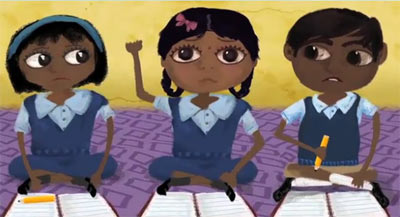
    Project Nanhi Kali along with StrawberryFrog has set a fine example of what an evocative communication can do for a cause. When KC Mahindra Education Trust, a registered public charitable trust in India and Mahindra Foundation USA, both not-for-profit arms of the Mahindra Group commissioned StrawberryFrog NYC (known for being the world’s first cultural movement agency), it had an inkling of the path ahead. The task for the agency was to help create awareness and support for its Project Nanhi Kali globally, especially through digital and new media campaigns.


    For decades, Project Nanhi Kali relied on paid advertising to generate awareness and support. Seeing the immense potential of the world wide web and the recent social media boom, the management decided to focus all its resources towards the cause and completely reinvent its marketing strategy to harness the potential of the digital media and online space.


    The collaboration between Project Nanhi Kali & StrawberryFrog has witnessed the design and launch of some unique and successful digital campaigns like the ‘A Girl Story’ (http://www.agirlstory.org/), ‘Girl Store’ (http://www.the-girl-store.org/) and the more recent ‘Girl Epidemic’ (http://thegirlepidemic.com/).


    Through these innovative campaigns Nanhi Kali has not only been able to successfully create mass awareness globally and raise sponsorships amounting to $44,218 for the project as well as drive traffic to the official Nanhi Kali website and generate a buzz on online communities such as Facebook and Twitter.


    The StrawberryFrog-Project Nanhi Kali collaboration has witnessed the launch of some innovative and hard-hitting campaigns that have created a buzz online. StrawberryFrog has purposefully designed these campaigns to be provocative to create an initial shock and awe response to the campaigns, and thereby create awareness and break through the wall of indifference.


    The websites individually and collectively not only put the issue of uneducated girls being most vulnerable to exploitation upfront, but also provides the viewer with a solution to join the fight against it by sponsoring the education of young girls. The idea is to bring about a shift in the “culture of silence” in our societies and bring critical issues to the forefront and seek global support to bring about effective change.


    Sheetal Mehta, Executive Director Project Nanhi Kali, on the Girl Epidemic (the recently launched campaign) said: “The Girl Epidemic must be seen and shared, there’s never been anything like it.”


    She added, “The work for Nanhi Kali could convert those who think that creativity in advertising is on the wane. The sheer volume of first-rate award winning work being produced is impressive. From the simple brilliance of “A Girl Story” which is the world’s first donation-based online film series to another standout – The Girl Store an opportunity to bring e-commerce and creativity together in an innovative campaign and where you can buy a girl her life back before someone else takes it.


    The creative excellence, strategic smarts and work ethic of StrawberryFrog working on Nanhi Kali has helped spark something special for brand Nanhi Kali. Further, StrawberryFrog has always understood that a nonprofit has limited resources, and therefore the message being sent needs to be strong and powerful enough to start a movement. The momentum, being slowly built over the past four years, has created a body of work that is outstanding. We are seeing Nanhi Kali at its best.”


    Scott Goodson, Chairman of StrawberryFrog said: “Our goal with this work is to generate more money to educate girl children through Project Nanhi Kali. Period! And we wanted to do this with the greatest weapon we have at our disposal: creativity and innovation.”


    Here’s a look at what StrawberryFrog has created for Nanhi Kali Project


    The Girl Epidemic

    StrawberryFrog & Nanhi Kali recently launched the Girl Epidemic. It shows how girls in some parts of the world are treated as an infectious disease. It highlights the centuries-old absurdity that would value the life and potential of a young girl less than a boy, the result of which is the disappearance of girls, the selling of young girls as young as 8-years-old into sex slavery or marriage. The extremely powerful campaign brings home the message that this is wrong, that it must stop, and that education is the cure. In fact, it is the cure to solving the most important challenge we face as human beings. If you educate a girl, you educate a family, and as a result you reduce overpopulation, environmental impact, hunger, disease and a host of other world problems. The Girl Epidemic shows how educating a girl can save the world.


    The multiplatform Girl Epidemic campaign features an innovative e-commerce site. The main spark to ignite the Girl Epidemic is a major film production for YouTube and the Girl Epidemic ecommerce site where you can make donations. It is a unique trailer-style film that dramatizes an already disturbing societal norm. Young girls are often sold into sex slavery, child labor, and are frequently killed at birth because they are not of the desirable sex: male.


    The cure for The Girl Epidemic is education. Donating to www.TheGirlEpidemic.org can help change deep-seated social norms by allowing girls to receive an education, therefore transforming young girls to become valuable members of society – making them indispensable.


    The Girl Store

    In 2010 KCMET & StrawberryFrog together launched www.the-girl-store.org. ‘The Girl Store’ is an innovative website which allows the viewer to sponsor the supplies that allow an underprivileged girl in India to go to school and get an education. The Girl Store operates like an e-commerce site. The site asks visitors to a buy a girl her life back by donating school materials to underprivileged girls in India. Visitors can buy specific items, such as a backpack, workbooks, or school shoes for a girl pictured on the site.


    The core idea reiterated throughout the site is that the life of an underprivileged girl is not a condemned fait accompli. It is up to the viewers to change her destiny by ‘buying’ her life back – empowering her through education.  Funds raised through the site are used to provide holistic educational support (not only academic support through classes, but also material support in the form of a comprehensive material kit) to underprivileged girls in India. This website has raised $40,000 through online donations on the store, from 1115 donors globally till date providing educational support to 500 underprivileged girls in India.


    The site has received over 3 million hits till date, raising enough funds to send hundreds of girls to school, and has also received global media coverage. The ‘Girl Store’ has earned critical acclaim to its credit, including the ‘Bronze Pencil’ at the prestigious One Club Annual at One Show Awards held in New Yorkin 2011. It also received a ‘Bronze Cyber Lion’ at the Cannes Lions International Advertising Festival 2011.


    A Girl Story

    Launched in 2010, A Girl Story is a unique, donation-based film series that combines technology, film, and storytelling to shed light on the global challenge of educating young girls. The animated, emotional story follows the path of a young Indian girl named Tarla who wants to go to school to better her life. Whether she succeeds, however, is completely up to you, because Tarla’s story progresses only by audience donations that unlock new chapters within the film series. This website raised approximately $4,000 from 182 donors globally.


  • JWT acquires 51% stake in Hungama Digital

    From the MxM Infodesk


    Leading advertising agency JWT has acquired a majority stake in Hungama Digital Services, the digital and promotions marketing division of Hungama Digital Media Entertainment. Although the joint communique issued does not state it, MxMIndia learns that the JWT stake in Hungama Digital will be 51 percent.


     

    The new entity which will be called Hungama Digital Services Pvt. Ltd.will be a full-service digital agency specializing in digital marketing and social media solutions. As part of the acquisition, Hungama’s activations arm, Hungama Promo Marketing will become a part of Hungama Digital Services Pvt. Ltd. and provide an engagement platform linked to online and offline deliveries.


    Neeraj Roy

    Said Neeraj Roy, MD and CEO, Hungama Digital Media Entertainment, “With JWT, we are now part of the largest advertising network in the world. Hungama Digital Services is the coming together of two exceptional teams in a globally relevant market.” He added, “India is at the cusp of a digital revolution with the advent of 500+ million consumers getting online in the next 3-4 years. From augmented reality to developing applications for connected devices, Hungama Digital Services has been at the forefront of digital technology. With this partnership\ with JWT we hope to offer integrated digital and experiential services to our clients and prepare brands to connect, interact and now transact with their customers.”


    Hungama Digital Services has been a dominant player in the digital space for 13 years and is spread across six cities in India. The existing team of 120 people, who will join Hungama Digital Services, will continue to drive the agency, including servicing old and new clients and offer creative and promo marketing services, viral marketing campaigns, social media marketing and mobile marketing, applications, managing websites and video services.


    Colvyn Harris

    “Digital is our next new frontier.The idea of the partnership is to build a digital offering for our clients so we can live up to being a ‘single source’ partner across all their ‘marketing solutions’ needs. What will be most effective in the future is a new set of talented, digital high end specialists who will add new skills and capabilities to what JWT already offers to its clients. We want all our clients to be leaders in their respective categories.” said Colvyn Harris, CEO of JWT India.


    With this acquisition, Hungama Digital Services along with JWT Digital capabilities will be a digital thought-leader with delivery capability in digital ideation, production, and social media.By our association with many of India’s largest clients, Hungama Digital Services will be able to create the right traction and critical mass within the digital and business community in India.


    “We have greatly expanded our digital capability across the region, and we are not standing still. JWT will continue to hire new digital experts and explore possible acquisitions across the region this year,” said Michael Maedel, President, JWT Asia Pacific.


  • Eros International launches online music channel

    From the MxM Infodesk


    Movie-makers Eros International Media Ltd has announced the launch of a dedicated online music service on YouTube titled ‘Eros Now Music’ (youtube.com/erosnowmusic).


    The channel will serve as a platform for emerging and established artists and will showcase original music content and leverage from the global reputation of Eros as a premium content provider.


    Speaking on the launch, Ricky Ghai, CEO, Eros Digital, said: “As part of our digital transformation, the launch of Eros Now Music is a step forward in providing rich and original music exclusively on the digital platform. This is part of Eros’s global vision to raise the stake and appreciate the raw and diverse talent of South Asian Music and promote it on the world platform.”


    Eros Now Music will feature established as well as emerging talent including Shaan, DJ Sheizwood, UK-based pop artist Kimeli, Shweta Yogendra, Farhan Saeed, Gajendra, Simmy and Tippy, Rahul/Shah Rule among others. The content on the newly launched channel will include music videos and behind-the-scenes footage.


  • End of Digital Beginning for M&E: PwC


    From the MxM Infodesk


    Digital migration is increasingly playing out differently across the various segments and geographies of the entertainment and media industry, says leading consulting firm Pricewaterhouse Coopers’s Global Entertainment and Media Outlook 2012-2016. Despite ongoing economic uncertainty, the past year has seen global sales of tablets and smart devices reach record levels once again, underlining the growing revenue opportunities from digital delivery of media and entertainment (M&E) content and advertising to increasingly connected, and particularly mobile, consumers.


    According to PwC’s annual Global Entertainment and Media Outlook 2012-2016, released yesterday (June 12), digital opportunities are now well understood by media companies, advertising agencies and advertisers themselves: the industry is approaching the ‘end of the digital beginning’ as rising comfort levels with digital mean that it is becoming business-as-usual. Although the ‘fog’ experienced in the past few years around strategic options is lifting, there is more to be done: today’s challenge is in the implementation of those digital strategies.


    A world of difference

    PwC believes that though the focus may still be on digital migration, challenges for M&E companies differ according to diverging market pictures across segments and geographies. Tipping points and contrasting market development rates highlighted by this year’s Outlook data and analysis show:


    • Global media and entertainment spending on digital advertising and consumer formats increased by 17.6 percent in 2011 compared with only a 0.6 percent rise in non-digital spending. Digital’s share of total spend will grow from 28 percent in 2011 to 37.5 percent in 2016, and digital spending will account for 67 percent of total M&E spending growth to 2016.
    • Digital maturity varies widely at a segment level. For example, global spending on digital recorded music formats will overtake physical distribution in 2015, reaching 55 percent of total revenues in 2016. And global spending on online and wireless video games will overtake console and PC games revenues in 2013. By contrast, the digital component of consumer magazines will account for only 10.4 percent of spending by 2016, up from 3.1 percent in 2011.
    • Global spending on music rose 1.3 percent in 2011, the first gain in many years, thanks to growth in the concert and music festival market and a slower decline in recorded music. Rises in digital music spending mean that overall, global spending on recorded music will finally begin to increase in 2013.
    • Mobile internet access subscriber numbers, a key driver of digital spending, will more than double during the next five years to 2.9 billion by 2016, of which almost 1 billion will be in China. In India, mobile internet subscribers will increase from a low base at a compound annual rate of 50.8 percent to 2016, making it the fastest growth market for mobile internet in the world.
    • By 2016, global mobile internet advertising revenues of $24.5 billion will grow at 36.5 percent compounded annually, to almost match the size of the classified internet advertising market. However, paid search at $78.1 billion and banner/display at $46.6 billion will retain the lion’s share of the market in 2016. China’s mobile internet advertising market will grow at a compound rate of 68.4 percent to reach $6.2 billion in 2016, making it the second largest market in the world behind the United States at $9.4 billion.
    • The newspaper publishing segment illustrates diverging trends across mature and growth economies. There will be ongoing declines in some territories such as the United States (declining 1.4 percent compounded annually to 2016, and expected to be worth 43.8 percent less in 2016 than 2007), but strong growth in countries where the digital infrastructure is less mature, such as Argentina (11.9 percent growth compounded annually to 2016), Indonesia (11.2 percent), and India (9.6 percent).
    • France passed the United Kingdom and Germany in 2011 to become the second largest TV subscriptions market in the world behind the United States, driven by a 76 percent rise in IPTV households. In the TV advertising segment, spending in Russia surged by 20.2 percent in 2011; by 2016, Russia will overtake the UK, Germany, Italy, and France to become the largest TV advertising market in EMEA (Europe, Middle East and Africa).
    • In the worldwide filmed entertainment market, over-the-top/streaming services will grow at a 21.0 percent CAGR to $11 billion in 2016, and will overtake spending through TV subscription providers in 2012.


    Said Marcel Fenez, Global Leader, Entertainment & Media, PwC: “The various segments of the M&E sector are at different stages of digital development, but they are all embracing digital to meet the ever-changing demands of consumers effectively and profitably. Media and entertainment companies have reached what we’re calling the ‘end of the digital beginning’: they’ve made the commitment to a digital future, and are now striving to make the necessary changes to their products, distribution and organisations.”


    Reshaping and retooling for life in the digital new normal

    According to the Outlook, the challenge now for M&E companies in a world where digital is established as ‘business as usual’ – and in those markets where the infrastructure is suitably developed to support digital distribution and consumption – is to focus on planning out and executing their digital strategies. Uncertainty in past years triggered by digital migration is giving way to a sharper focus on identifying, choosing and executing the business models, organizational structures and skill sets to harness new consumer behaviours and deliver rising future value.


    • A finger on the consumer’s pulse
      M&E companies need more than ever to understand consumer behaviours and motivations in order to engage with and immerse consumers in their connected, multi-screen environment. Data analytics tools are required to mine the mass of customer data, however the development of such tools may be triggering consumer fears over risks to their privacy. PwC believes that avoiding this will require a shift of industry mindset from ‘customer ownership’, towards facilitating a position where the customer is ‘in control’.Companies will find that giving consumers more control over how their personal data is used may deliver higher benefits back to consumers, encouraging them to volunteer even more information, as well as providing better value for advertisers and higher rewards for media owners. Businesses need to aim for a win-win model in which the medium, the advertiser and the consumer all collaborate and benefit. Ultimately, the only person who ‘owns’ the customer – and the customer’s data – is the customer him or herself.


    • New roles emerge across the M&E value chain
      M&E companies need to identify the role or roles they will occupy as new structures emerge across the digital value chain, and work collaboratively with other providers with complementary capabilities.


    According to the Outlook, these roles could include:

    • acting as the online destination or physical auditorium that hosts the customer experience (the ‘venue’)
    • aggregating and filtering consumers’ content requirements (the ‘community curator’)
    • providing exclusive content (the ‘content monopoliser’)
    • being the ‘device developer’
    • acting as the consumer’s trusted content companion across devices (the ‘digital services champion’)
    • being the third-party specialist supporting experimentation, innovation and execution (the ‘ideas generator’)


    For creative and media agencies, the rise of unpaid or earned media reflects an innovative new fusion of advertising, content and analytics, and presents an opportunity for sweeping change in their roles and business models. Advancing socialization is feeding into the widely-accepted concept among agencies and advertisers of “bought, owned and earned” advertising. A fourth category is emerging — “managed” advertising, (the orchestrated use of social media, such as engagement via bloggers). Everything that agencies do for their clients now has an embedded digital component and agencies are directing clients’ attention toward output measures such as earned/unpaid media reach, and purchasing intentions.


    There are therefore opportunities for agencies to act as digital marketing and brand consultants, guiding their clients with insights into opportunities around the aggregation of data, socialization and content – particularly as the historical distinction between traditional and digital disappears.


    • Benefits of reorganizing around digital
      To date, many M&E businesses have developed digital as an adjacent operating group, with separate infrastructure, solutions and staff. But in the ‘new normal’, PwC believes that companies need to move away from this siloed approach, instead embedding and integrating their digital operations into the main enterprise, and driving improvements in three key areas: profitability, by reducing operational costs through common platforms and integrated business processes; scalability, gaining greater agility to grow and flex the business; and innovation, through integration, automation and talent.To realise these benefits, companies will have to tackle challenges around rights, royalties and piracy – areas where many M&E companies are often burdened by rigid, complex, bespoke legacy systems There are additional issues in leading and marshalling the talent and culture of innovation, needed to make digital implementation a reality, particularly in meeting the distinctive employment needs and expectations of the Millennial generation.

      Added Mr Fenez: In the face of sweeping change and uncertainty, the M&E industry has spent the past few years seeking effective business and operating models for the new world, through a cycle of constant experimentation, ongoing innovation and targeted analysis of the results. This will continue. But with digital now at the core of business-as- usual, PwC believes that experimentation and execution are no longer sequential but will proceed in parallel, enabling M&E companies to press ahead into the ‘new normal’ with confidence.”

      “We’ve reached the point at which talking specifically about ‘digital’ increasingly misses the point. As digital becomes the standard, its rising penetration ceases to be a topic for discussion in itself. What matters now is how companies capitalise on it and operate within it,” he said


    The Pricewaterhouse Coopers Outlook for Entertainment and Media 2012-2016 can be purchased at www.pwc.com/outlook.