Category: MEDIA

  • Santosh Menezes joins Images Group as AVP

    By Akash Raha

    Santosh Menezes has recently joined Images Group as Associate Vice President Publications – West, at the Mumbai Regional office. Images Group has several leading and trade business media magazines such as Images Retail, Images Retail Middle East, Images Business of Fashion, Images Business of Beauty, Images Franchise, Food Service, Shoes and Accessories Shopping Centre News, Progressive Grocer, Food Service, Sportswear International etc. Mr Menezes’ role in Images will be to consolidate the titles in the respective category, increase revenue and activate opportunities through customized solutions.

    Earlier, he worked with The Times of India Group as Senior Manager and team head. He was a part of selling broadsheets, special features, activating events, and annual properties such as ET 500, Brand Equity Quiz Specials, launch of Best Wishes bridal special, Bombay Times and Westside Plus core teams.

    Thereon, he went on to join DNA to be a part of the core launch team, as Senior Chief Sales Manager. He worked there for two years being a part of ME Women weekend magazine and then heading the Andheri Office. Also, he was a brand custodian of weekly compact Sunday offering Ya Young Adults and retail weekly DNA Westcoast.

    He also had a stint in Dubai where he was Divisional Head (Sales and Alliances) at Concept
    Media for International magazines like Millionaire and Retail ME and as  Director (Sales and Marketing) with Spear Publishing, Dubai heading titles Emirates Parent Plus and Aailati ( My Family) in Arabic, consumer  Events like Family A’fair. Mr Menezes shared the information and details about his new work profile over an email interaction with MxM India.

  • Brothers are Discovery’s new stars

    By A Correspondent

    Robbie and Stephen Keszey are brothers who run one of the most unique family businesses – working with wild and dangerous animals deep in the swamps of Florida. They run America’s largest venomous snake farm, which is home to hundreds of the meanest gators and crocs one could ever see. Together, they are the stars of Discovery Channel’s new series Swamp Brothers, which is airing every night at 10pm.


    Robbie is a veteran of the 1980s metal scene who is passionate about all things scaly, and Stephen is a former New York City bartender, more accustomed to hailing a cab than handling a snake. Robbie and Stephen run Glades Herp Farms, Florida’s largest reptile sanctuary and exotic reptile dealership. Their farm also houses Florida’s International Teaching Zoo, which is full of rare species from around the globe and brings in a constant stream of new and different animals each month. In each episode of the show, the brothers put themselves on the line to protect the most unusual of creatures – from pythons and alligators to wildcats and bears.


    As a child, older brother Robbie loved two things: music and wildlife. After high school, he moved to Los Angeles to play bass in a rock band, living a life of excess on the Sunset Strip. Eventually realizing that his true passion was for wildlife and reptiles, Robbie moved to Florida and Glades Herp Farm, bringing with him his rock ‘n’ roll attitude and a penchant for living on the edge. Today, Robbie is a skilled expert in all herpetofauna – especially crocodilians and venomous snakes. His goal is to one day take what he’s learned on the farm and open his very own teaching zoo, where he can continue to teach people to conserve and respect animals.


    Robbie’s younger brother Stephen is a pure city boy at heart who headed straight to the Big Apple after graduating from university. During his 14 years in New York City, Stephen held his dream job as a bartender, where drinking, telling jokes and flirting with girls were all in a day’s work. When Robbie asked Stephen to help him expand the business, Stephen initially was not thrilled to leave the big city life, especially to spend all his time around dangerous animals. Overly cautious by nature, Stephen concedes that where reptiles are concerned, he always bows to the expertise of his brother.


    From pythons to rogue bobcats, the brothers make it their business to track these beasts down, capture them and return them to a safe environment – without losing life or limb in the process.


    ROBBIE KESZEY – The Herp Expert

    Partner at Glades Herp Farm, former bassplayer & rock ‘n’ roll band assistant Robbie Keszey has been interested in reptiles and wildlife since he was a kid. Robbie’s #1 goal is to teach people to respect and conserve animals through captive breeding. He is a professional skilled expert in all herps, especially crocodilians and venomous snakes. But it was Robbie’s other passion – music — that drove him to move to Los Angeles after high school to play bass in a rock band. While in L.A., Robbie served as personal assistant to C.C. Deville, of the glam rock band Poison. After traveling the world, Robbie found his way back to his first real love – wildlife and reptiles. He moved to Florida to work at Glades Herp Farm, bringing with him his rock ‘n’ roll attitude and a penchant for living on the edge. A Florida Gators fan, Robbie lives in Bushnell, Florida with his wife, Michelle and their kids, and they hope to one day own a teaching zoo of their own.


    STEPHEN KESZEY – The City Slicker

    Assistant at Glades Herp Farm, former New York City bartender Stephen Keszey is a pure city boy at heart who


    prefers the chirping of urban crickets (car alarms) to actual crickets. After graduating from The Ohio State University, Stephen moved to New York City, where he lived for more than 14 years. During his time in the Big Apple, he had a variety of jobs, including a stint working in music publicity — but Stephen’s love was bartending. When their mother became ill, Stephen left New York City for Florida to help out, and found himself also helping his older brother, Robbie, at Glades Herp Farm. Although Stephen is overly cautious and extremely fearful of getting hurt, he has gained some knowledge, and concedes that there is only one aspect in his life where he bows to the expertise of his brother without question, and that is where reptiles are concerned.

  • Puja with The Telegraph in Bengal

    By Akash Raha

    Durga Puja, by far the biggest festival in West Bengal, is the event of the year. Festivities touch dizzy heights in Kolkata where more than 2,000 pujas take place in neighbourhoods, not counting pujas in apartment complexes/RWAs, which touch about 500.

    West Bengal’s top English daily The Telegraph is all set to activate three big initiatives during this period so as to enable its readers to make the most of this festive season. It also partners with clients to set up meaningful interaction opportunities with relevant target audiences and help create a special bond through the festive route.

    Speaking about the initiatives Mr Dhruba Mukherjee, Associate Vice President, The Telegraph said, “Durga Puja is the most important festival of Bengal and being Bengal’s favourite English daily, we wanted to do something for the city. Our activities, even though fun, take up a social cause and exemplify our responsibility towards the city.”


    True Spirit Puja

    More than 300 neighbourhood pujas participate in this initiative, the objective of which is to make the Puja experience safe, happy and meaningful. Organizing committees are judged on the basis of their display of civic consciousness, social contribution and safety measures. After a preliminary judging round a panel of celebrities visit the shortlisted pujas to rate them. Based on the ratings the pujas are accorded stars from five stars to one star. Thereafter one puja is given the model puja status.

    Each star rated puja is given a fund to undertake a development project in their locality. This initiative is now in its ninth year and is co-partnered from the beginning by Calcutta Electric Supply Corporation (CESC) of the RP Sanjiv Goenka Group. It is also supported by Kolkata Police, Kolkata Municipal Corporation, West Bengal Fires Services and NGO – The Bengal.  It is extensively promoted editorially in the pages of The Telegraph.

    Hand in Hand

    Here, The Telegraph ties up with 100 SEC A apartment complexes/RWAs, each with a minimum of 100 flats. Overall about 20,000 flats participate in this initiative. During the five days of festivities The Telegraph helps the societies to organize various cultural programmes and fun activities for residents, and also arranges for prizes. Some of the activities organized are antakshari, sit and draw, dhunuchi dance, recipe contest and so on. The Telegraph through this also creates an engagement opportunity for various other interested clients to interact with the target audience through the Hand in Hand pavilion it sets up within societies. This activity is in its seventh year and is the centre of puja celebrations for apartment blocks in Kolkata. The entire proceeding is amplified in a big way using the pages of The Telegraph as well as TV, radio and web. This year the event is being presented by Lewis Berger and associate partners are Bajaj Almond Hair Oil and Reliance 3G.

    Festival of Joy

    This initiative, in its second year, is modelled on the ‘True Spirit Puja’ concept and is executed only for apartment societies/RWAs. The idea is to promote civic, social and safety consciousness among residents of these societies. This in turn ensures that their cause of celebration does not become a cause of concern to the environment around. In its second year this is rapidly gaining ground and has already seen participation from about 50 apartment societies/RWAs this year. A panel of celebrity judges visits the shortlisted apartments and accords ratings. Each rated apartment is given a funding for a development project in their locality. The whole activation is supported editorially in The Telegraph to amplify the just cause it intends to promote. This year the event is being presented by the Eureka Forbes group.

  • Freaking News | When newspapers twisted facts to suit themselves

    By Ranjona Banerji

    This weekend was dedicated to – surprisingly, not Mahatma Gandhi – but to the poor people of India. Of course this was a matter very close to Gandhi’s heart and perhaps more important to a commemoration of his 142th birth anniversary than cursory lip service paid to his legacy, as has become our wont.

    So TV channels and newspapers discussed the Planning Commission and its inexplicably odd expenditure cut-off of Rs 32 a day being above the poverty line in cities and Rs 26 a day in villages. As TV anchors, activists and the general public fretted and fumed, some analysts – in print and on screen — tried to explain it all statistically and economically to us idiots. Little of that was fully comprehensible and regardless of the contempt for a middle class which has only recently woken up to social issues, it goes without saying that the Planning Commission’s figures seem to be absurd.

    The imminent fall of the government continued to be a matter of discussion, especially for the BJP as the UPA scrambled to convince everyone that the dissent within them was normal and all was hunky-dory. But the BJP itself appeared to be a house divided with much speculation over Gujarat chief minister Narendra Modi’s perceived snub to both the party headquarters as well as to party stalwart LK Advani.

    **

    Weekends on TV are usually news-free as news channels fill their space with car, food and Bollywood shows. We also occasionally get interviews with artists and writers. Presumably, this satisfies our need for culture, both popular and otherwise.

    International news channels however manage to slip in a bit of news as well, with the Eurozone crisis, the unrest in Libya, Syria and Yemen, the US economy and the US fight with Pakistan sharing space.

    **

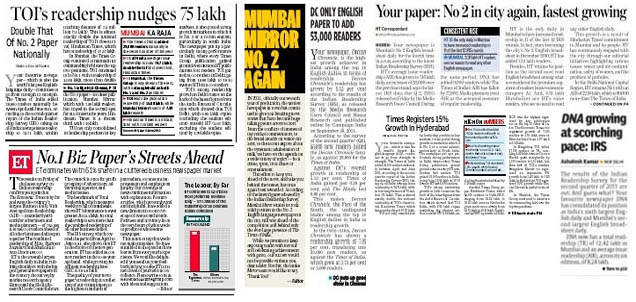
    The fun quotient for the end-of-the-week as far as Indian newspapers were concerned was the release of readership figures for the quarter by the Indian Readership Survey. Every newspaper managed to twist the figures to suit themselves and this means that readers of multiple papers would have been in a state of happy confusion. In Mumbai for instance, both Hindustan Times and DNA claimed the number two spot, while the Times of India claimed number 1 for itself and number 2 for its free tabloid Mumbai Mirror. The figures support Mirror as 2 and Hindustan Times as 3, but then given that Mirror comes free with Times of India which has a huge lead over the others, this leads to a few questions. It also effectively puts DNA at either 3 (if you discount Mirror) or a distant 4. Mid-Day also saw a readership increase, bucking its own trend over the last couple of quarters.

    In Delhi, both Times and Hindustan Times claimed a rise in readership and the number 1 spot – or so it seemed to me. Across the country, this chest-thumping continued. I’m guessing readers know what they read and that advertisers will be suitably impressed – the whole point of this operation.

    **

    Am I the only one tired of every newspaper and news channels calling itself “your paper” and “your channel”? I “own” so many newspapers and channels now that am considering getting an investment consultant to cope!

  • Claims and counter-claims start after IRS 2011Q2 release


    By A Correspondent

    The claims and counter-claims have begun. In Mumbai, Mumbai Mirror said it’s No 2 again. So did Hindustan Times. Both weren’t incorrect: Mirror may have the second-largest readership, next only to The Times of India, but Hindustan Times is the second-most read broadsheet English daily. DNA’s report too says it’s the second-largest broadsheet daily.

    Sadly, the conferences which the Market Research Users Council and Hansa Research Group would conduct to release every round of the Indian Readership Survey have been done away with. The detailed dump is curiously no longer handed out to the trade media.

    Consequently, what the MRUC and Hansa expect the trade media to do is to either carry unverified claims of various media entities. Or depend on friendly publications and agencies to give out data.

    MxMIndia.com requested veteran media consultant Sundeep Nagpal and his firm Stratagem Media to dig a little deeper and help us come up with a variety of insights given IRS 2011 Q2 data.

    For instance: the DNA report quotes a total readership (TR) figure for itself which most media agencies do not recognise. Media agencies and MxMIndia recognise Average Issue Readers (AIR) as currency. Interestingly,  when you look at the numbers for Greater Mumbai, while DNA is a distant third amongst English language broadsheets vis-a-vis The Times of India, it’s difference with #2 English broadsheet Hindustan Times is just 63,000. For HT of course the growth story in Greater Mumbai is tremendous: 27.2% year-on-year and 4.1% in the second quarter.

    We asked Strategem for the following:

    1. Given the toplines mailed to us by IRS, could we analyse it vis-a-vis the Q1 data for 2011 as well as the Q2 data for 2010 so that we can do a year-on-year analyses?

    2. Can we also similary analyse the data region-wise – Hindi belt and North, West, South and East and North East?

    3. Can we look at the numbers for the 8 metros combined and separately?


    Stratagem has provided us this data, and we present these to you as follows:


    First, take a look at the table withe the Top 10 publications across the country – urban and rural India.


    Publications

    IRS 2011 Q2

    IRS 2011 Q1

    % growth in IRS 11 Q2 over 11 Q1

    IRS 2010 Q2

    % growth in IRS 11 Q2 over 10 Q2

    Est. Individuals (000s)

    889070

    885122

    0.4

    871443

    2.0

    Dainik Jagran

    16393

    15910

    3.0

    15925

    2.9

    Dainik Bhaskar

    14174

    14016

    1.1

    13303

    6.5

    Hindustan

    11985

    11810

    1.5

    10143

    18.2

     Malayala Manorama (Daily)

    9962

    9938

    0.2

    9841

    1.2

    Amar Ujala

    8891

    8747

    1.6

    8417

    5.6

     Lokmat

    7595

    7486

    1.5

    7402

    2.6

     The Times Of India

    7471

    7442

    0.4

    7088

    5.4

     Daily Thanthi

    7290

    7187

    1.4

    7402

    -1.5

    Rajasthan Patrika

    6941

    7033

    -1.3

    6900

    0.6

     Mathrubhumi

    6690

    6800

    -1.6

    6566

    1.9


    Let’s also look at the combined numbers for the eight metros of Mumbai, Delhi, Kolkata, Chennai, Bengaluru, Hyderabad, Pune and Ahmedabad.


    Combined 8 metros-Mum,Kol,Ahm,Bang,Pune,Chen,Del,Hyd

    Publications

    IRS 2011 Q2

    IRS 2011 Q1

    % growth in IRS 11 Q2 over 11 Q1

    IRS 2010 Q2

    % growth in IRS 11 Q2 over 10 Q2

    Est. Individuals (000s)

    73117

    72672

    0.6

    71138

    2.8

     The Times Of India

    5114

    5073

    0.8

    4879

    4.8

     Ananda Bazar Patrika

    2708

    2725

    -0.6

    2821

    -4.0

     Hindustan Times

    2690

    2675

    0.6

    2566

    4.8

     Navbharat Times

    2392

    2349

    1.8

    2216

    7.9

     Gujarat Samachar

    1606

    1641

    -2.1

    1503

    6.9

     Daily Thanthi

    1365

    1319

    3.5

    1233

    10.7

     Lokmat

    1224

    1268

    -3.5

    1295

    -5.5

     Daily Sakal

    1175

    1213

    -3.1

    1089

    7.9

     Hindustan

    1128

    1142

    -1.2

    1167

    -3.3

     Divya Bhaskar

    1124

    1129

    -0.4

    1039

    8.2


    The growth story is undoubtedly that of Hindustan which has grown 18.2 percent over the second quarter of 2010, though the growth in the second quarter of this year has now steadied at 1.5 percent. But the winner of the quarter from the toplines of 2011Q2 for across the country is undoubtedly Dainik Jagran with a 3% growth. On a base of 1.59 crore this is big.  The other stories of the big players is also noteworthy. Bhaskar 6.5% y-o-y, Amar Ujala 5.6% y-o-y and The Times of India too at 5.4% y-o-y. Jagran’s y-o-y is 2.9% and Lokmat has grown 2.6 percent over 2010 Q2.
    We urge you to click on the links below (these will come up later in the day) for detailed numbers.It is important to note that the numbers thrown up in the above table are not truly indicative of the power of the various publications. Remember, these ratings are only for metros, and the picture is dramatically different for an ABP in West Bengal, and Gujarat Samachar in Gujarat or Thanthi in TN and Sakal and Lokmat in Maharashtra. Ditto with Hindustan and Bhaskar.

    Links:

    IRS Q2 2011 Hindi Belt & North


    IRS Q2 2011 – South


    IRS Q2 2011 – East


    IRS Q2 2011 Maharashtra & Gujarat

    Information courtesy:


  • UTV Stars cracks deal with Pakistan for PZ show

    By Dhara Salla


    UTV Stars is going international within just the first month of its launch, with its celebrity chat show, Up Close and Personal with PZ. Confirming this, Mr Nikhil Gandhi, Business Head, UTV Stars, said, “We are in syndication and have already cracked the deal with Pakistan, and the show will be aired there after the season ends in India. We are also in talks with the UK and US. There are many revenue streams attached to this show. It has upgraded the face value of the overall channel. The show is also available on YouTube. We are in talks with two service providers for the audio clips of the show and of course in-flight entertainment, video on demand, and many such revenue streams.”

    He added, “My team is working towards it and everything should be in place within the next two weeks for this show. We are fairly new but we believe that we have set a benchmark in this genre.”

    There are about 10 brands already associated with this show like Tanishq, Honda, Reliance and Maruti to name a few.

  • In your Facebook, in your brand?


    By Ritu Midha


    Though there have been, and are other social networking sites, none match Facebook – whose growth has been phenomenal – in terms of usage and the buzz around it. Brands, keen to be where their target audience is, seek it out and in spite of issues like low internet penetration, power cuts and low literacy levels, social media and more specifically Facebook is seeing exponential growth in India.

    A study by Experian India released in September 2011 indicates that Facebook, YouTube and Orkut are the top three social networking websites in the country.

    As per the study, search engines continue to be number one in terms of visit share in the month of August 2011 with 17.25 percent visit share, while social networking and forums are at number two with 13.99 percent.

    The study also indicates that social networking sites are amongst the top three sources of traffic for these industry categories: Automotive, Community, Computers & Internet, Education, Entertainment, Food & Beverages, Health & Medical, Lifestyle, Music, News & Media, Shopping & Classifieds, Sports and Travel.

    When it comes to specific social media sites Facebook is at number one with a 52.47 percent visits share, while YouTube is a distant second with 20.34 percent share (July 2011). And when one looks at percentage change this August vis-a-vis August 2010, Facebook has seen a whopping 88.46 percent growth from 27.85 percent to 52.49 percent.

    And as per a global Cisco study, within certain countries, including India, updating Facebook was ranked as the highest priority, even more than hanging out with friends. Of all the countries surveyed in the study India ranked highest in the frequency of Facebook interaction, with 92 percent of students and 98 percent of employees checking it daily.


    Facebook, thus, has arrived in India, and if the growth rate is any indication it is not a storm in the frying pan. However, one wonders if Indian brands have really begun to value the impact of social media, or is being on social media just a feel-good factor for them? Says Mr Ashok Lalla, President – Digital, Euro RSCG, “There certainly is a lot of enthusiasm among Indian brands to get onto the social media bandwagon. Unfortunately, most get on thinking that a fan page, or an app or a Twitter handle is all that it takes to crack the social media code. However, we are also seeing some brands take a more mature view of social media, and these also better integrate social marketing with the rest of the marketing and communications mix.”

    Mr Alok Kejriwal, CEO and Co-Founder, Games2win, too agrees that brands are at different stages of evolution as far as social media goes. He remarked, “Some of them use social media well, some of them are learning and some of them are completely ignorant. The brands who get it are those who have young CEOs and managers rather than the ‘Silver Foxes’ who run the companies that run the brands who live on the dark side of the moon. Think Vodafone vs Air India.”

    Talking specifically of Facebook, where most of the consumer action is at the moment, while a few brands are working on specific Facebook strategies, others just want to fit it in. Mr Lalla said, “I’m not sure if brands have reworked their overall communication strategies, but they certainly have recast and extended them to include social media. Facebook clearly is the first and most popular part of most social media plans. That’s not surprising, since it’s got the largest number of social media-active people in India.”

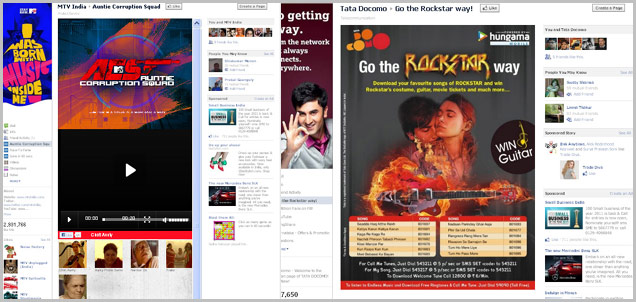
    Interestingly, one notices that brands look at gaining as many ‘likes’ as possible – a ‘like’ on a page can get a fan Rs 1,000 off on a luxury cosmetics brand – while a few others believe that the ultimate is to make the customers win a contest, and give away an expensive handset. These mostly work as tactics for the moment. As soon as the contests and discounts are over – so is the people’s interest in that specific page.

    What, then, would be an ideal Facebook strategy for a brand? Kejriwal explains, “Listening and not marketing. Brands and their decision-makers need to listen to the whispers on social media – their ears should be on the railway tracks picking up tremors and the train before it arrives in their face. Facebook is a reactive and conversational media for brands rather than a pro-active and defensive media.”

    It effectively means that ‘likes’ are not a good enough benchmark for a brand page on Facebook. Mr Kejriwal declared, “No way! Likes are silly. It’s like saying that the number of units sold of a sachet is the sign of the success of a brand! Less Is More on Facebook for a brand. The quality of conversation – not the quantity – is important.”

    “The real impact comes when brands look at ‘Life beyond the Like’. And focus on identifying and nurturing the ‘fans’ that have real brand love, and the potential to turn into brand advocates,” added Mr Lalla.

    Social media, and more specifically Facebook, opens doors for two-way communication between the brand and its audiences – and it is that conversation that brings the biggest value to a brand. Mr Lalla elucidates, “Today a brand is no longer about what marketers tell consumers it is, but it is what consumers tell other consumers it is. In this context, it makes immense sense for a brand to be receptive and responsive to its audience. That’s where a two-way communication (conversation) helps.”
    It is largely youth brands looking at a presence of Facebook – an effect of the perception that it is largely young and happening who spend time of Facebook. However as per Mr Lalla, the fastest growing demographic on Facebook worldwide is the over-50s. So, used right, social marketing via Facebook can make a difference for more than just youth brands. Brands, perhaps, are waiting, to witness a few big success stories before taking Facebook more seriously. In times to come it will become even more intrinsic to marketing, and brands will gradually learn to appreciate the influence it can create on their audiences.
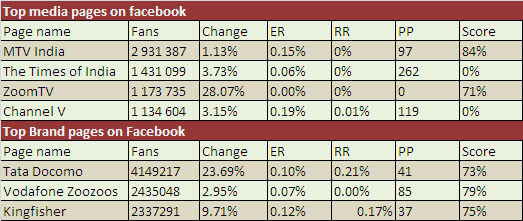
    ER = Engagement Rate, average number of total interactions to the pages posts divided by the number of fans in the last 30 days
    RR = Response Rate, the pages response rate to the user questions posted on the wall in the last 30 days
    PP = Page Posts, the number of the posts by the page in the last 30 days
    Score = The score of the Facebook page, a Socialbakers only metric that we create out of 30 different parameters

    Source:

    http://www.socialbakers.com/facebook-pages/brands/india/
    http://www.socialbakers.com/facebook-pages/media/india/

  • Double masthead for Bigg Boss innovation

    By A Correspondent

    SundayMiD DAYon October 2 had two mastheads, one each on the front page and the back page, each delivering Vodafone presents Bigg Boss 5’s theme of “Double Vaat”.

    Bigg Boss 5 which is being telecast on Colors, part of the Viacom18 group, is hosted by Salman Khan and Sanjay Dutt, two actors known for their fun and personas, enhancing the concept of ‘Double Vaat’ even further. To make its readers experience the theme, SundayMiD DAYhas devised an innovation of designing the masthead and impact jacket for Viacom18 on the front page and on the back page of SundayMiD DAY. So a reader will be able to read SundayMiD DAYin a regular manner on the front page as well as in an upside-down manner on the back page, creating some confusion and giving them the experience of ‘Double Vaat’.

    Mr Manajit Ghoshal, MD & CEOMiD DAYInfomedia Limited said, “MiD DAYbelieves in delivering the best to all its readers and clients. Innovations like these help us send clutter-free messages to our readers and it adds great value to the proposition that the advertiser wants to communicate. For all such innovations carried out across years, we have won many accolades and appreciated by one and all across the globe.”

    Mr Rajesh Iyer, Director-Marketing, Colors, said “Bigg Boss is Colors’ flagship show, and this season, with the theme being Double Vaat, this innovative association with MiD DAY will be really fruitful for us. Providing readers with the newspaper in reversible format is bound to create curiosity among them.”

  • Anil Thakraney’s Hard Knocks: Are newspaper owners in sleep mode?

    The latest IRS figures are in. And as usual, newspaper edits get busy boasting about rise in readership. Or, they’ll work out ingenious ways to interpret the findings, to keep their board of directors and advertisers in good cheer. By the way, I often wonder if everyone’s readership is healthy, who’s taking the fall? Anyway, that’s not the point of my article. And neither do I wish to discuss IRS’s methodology.

     

    What I want to say is this: Newspaper proprietors in India should be thrilled even if there is no growth for their brands. India is that unique nation where dailies continue to thrive even as they struggle to survive in the rest of the world. And that’s purely because, as Indian Express chief Shekhar Gupta said to me in an interview for GQ mag, and I quote: “India has more space for media than most societies. People read multiple newspapers. We may see a shakeout, but not in the near future. Simply because of the demographics. India is adding nearly three crore literate people to the market every year. That’s the size of a large European country.”


    Shekhar is right. India’s large population base and rise in education will sustain newspapers for a pretty long time. But the proprietors will do well not to get complacent and sit on their laurels. Because the global trends will sooner or later catch up with India. Soon the tech revolution will hit India hard, and many newspaper brands will be compelled to shut shop.


    And innovations and out-of-the-box thinking must start NOW before it’s too late. Sadly, I haven’t seen any signs of that so far. Almost every single news that gets ‘broken’ on the covers of our dailies, I have already been made aware of the previous night by TV and/or Twitter.


    So people, do gloat if you wish on the IRS figures. But also do take care to smell the coffee.


    ***


    PS: I badly wanted to stay inside the Bigg Boss house this time. But couldn’t think of anyone to kill, rape, molest, abuse or cheat. So I didn’t qualify. The loss is all mine.

  • Dainik Jagran is Publication #1 in IRS 2011Q2

    By A Correspondent

    The numbers from the latest round of the Indian Readership Survey are out as the Media Research Users Council and Hansa Research announced the findings of the second quarter of 2011.

    Top 10 Publications 

    (All figues in 000s)

    Publication Language Periodicity 2011 Q1 2011 Q2
    DainikJagran Hin D 15910 16393
    DainikBhaskar Hin D 14016 14174
    Hindustan Hin D 11810 11985
    MalayalaManorama Mal D 9938 9962
    AmarUjala Hin D 8747 8891
    Lokmat Mar D 7486 7595
    The Times Of India Eng D 7442 7471
    Daily Thanthi Tam D 7187 7290
    Rajasthan Patrika Hin D 7033 6941
    Mathrubhumi Mal D 6800 6690


    Top 10 Dailies

    (All figues in 000s)

    Publication Language Periodicity 2011 Q1 2011 Q2
    DainikJagran Hin D 15910 16393
    DainikBhaskar Hin D 14016 14174
    Hindustan Hin D 11810 11985
    MalayalaManorama Mal D 9938 9962
    AmarUjala Hin D 8747 8891
    Lokmat Mar D 7486 7595
    The Times Of India Eng D 7442 7471
    Daily Thanthi Tam D 7187 7290
    Rajasthan Patrika Hin D 7033 6941
    Mathrubhumi Mal D 6800 6690


    Top 10 Magazines

    (All figues in 000s)

    Publication Language Periodicity 2011 Q1 2011 Q2
    Vanitha Mal F 2653 2671
    PratiyogitaDarpan Hin M 2027 2154
    SarasSalil Hin F 1945 2039
    India Today Eng W 1650 1724
    MalayalaManorama Mal W 1413 1393
    Cricket Samrat Hin M 984 1213
    MeriSaheli Hin M 1100 1174
    India Today Hin W 1137 1144
    Kumudam Tam W 1066 1066
    Grehlakshmi Hin M 1031 1010

    There is no change in the rankings of the various publications among the Top 10 in terms of Average Issue Readership. The Top 3 slots are taken by Hindi dailies. Dainik Jagran rules with 16,393,000 followed by Dainik Bhaskar which is at 14,174,000. Hindustan is at #3 with 11,985,000. Malayala Manorama is at #4 at 9,96,2000 while Amar Ujala and Lokmat are in the fifth and sixth positions with an average issue readership of 8,891,000 and 7,595,000 resepectively. The Times of India, the only English newspaper in the Top 10, has an average readership of 7,471,000.

    The others in the Top 10 publications are: Daily Thanthi with 7,290,000, Rajasthan Patrika with 6,941,000 and Mathrubhumi at 6,690,000. The last two being the only publications in the Top 10 which have fallen in comparison to the first quarter numbers.

  • Can telly newbies score with biggies around?


    By Dhara Salla

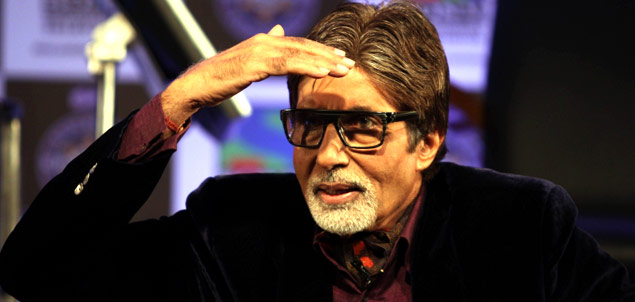
    Whenever one thinks of Antakshari on Zee TV there is only one face that comes to mind: Annu Kapoor. Or it’s Sonu Nigam for Sa Re Ga Ma. Fast forward to today, and the story is much the same – the big faces on television have always helped audiences to connect and reinforce the recall value. Today, all the channels have either celebrity hosts or celebrity contestants, be it the Big B Amitabh Bachchan in KBC, Salman Khan and Sanjay Dutt in Big Boss, Akshay Kumar in Khatron Ke Khiladi, Mithun Chakraborty in Dance India Dance, Madhuri Dixit in Jhalak Dikhla Jaa… and the list goes on. In the reign of big faces, the question to ask is, what is the scope for newcomers and can a new face create the same magic?

    Ms Anita Mookerjee, GM, Mediacom, said, “It depends on the newcomer and the format of the show. However, a big name is most often successful. In most of the cases the celebrity, along with the mass appeal, also has the ability to engage and enthrall the audience. Amitabh Bachchan is an icon, a legend people can’t get enough of.” She further adds, “Salman Khan has a unique mass appeal, he was media elusive for a long time and it was the fact that the audiences were getting to see a more personal side of him which worked to the advantage of the show. Akshay Kumar took Khatron Ke Khiladi to a different level; the same show as Fear Factor didn’t really click.”

    Mr Jamnadas Majethia, MD, Hats Off Productions, says, “No, I don’t believe a newcomer can create the same magic as the big stars. The life of a reality show is limited to about three months or 12-14 episodes. So it would take time for a newcomer to get established. By the time they reach the third or fourth week the viewers would have already shifted their loyalties. The pull that a Hrithik or any celebrity like Madhuri can give, nobody else can give.”

    Industry pundits’ views seem to reflect that a newcomer cannot create the same magic that big names and faces can. An established celebrity with an X-Factor, hence, can add more to the flavour of the show than a newcomer can. Having said that, the success of reality shows depends on influences such as the celebrity quotient, programme promotions, the channel on which the programme is telecast, controversies and PR, and lastly the concept.

    We may remember that Shahrukh Khan, Abhishek Bachchan, Genelia D’Souza and R Madhavan were also hosting shows which did not do well and were taken off air, so the success of reality shows depends not only on the celebrity but also on other things. There is more to it, as Rajendra Dwivedi, Vice President, Starcom Worldwide, Mumbai, explains. “Emotional stakes are more valuable than financial stakes. A real life credible drama or story of the participants works better than prize money. The format has to be engaging and good talent scouting should be undertaken. Then the celebrity host can build on these factors.”

    On Indian television, where there are celebrity hosts there are also celebrity participants on the other side. Examining the question of which one works better, Ms Mookerjee says, “Celebrity participants definitely work; we see spikes in episodes with celebrity participants.”

    On the contrary Mr Majethia says, “The shows with celebrity anchors or judges work better but not really the shows with celebrity participants. Celebrities should be there as they add a lot of value to the content. There is a lot of fresh talent, and because of these celebrity hosts they also get some mileage.”

    When almost all the reality shows currently on television include celebrities, then how does the TG differ? According to Mr Dwivedi, the TG of the reality show depends on the format of the show. Hence, for KBC it will be all individuals but for Emotional Atyachar it will be youth and for Khatron Ke Khiladi, it will be males.

    The big faces have been ruling the roost on the small screen for a long time in the reality show format. What is more interesting, however, is that the emotional storytelling and the HSM focus has added to the success of shows as it helps with audience connect. That’s something for media planners to note.

    Photograph: Fotocorp

  • AC Nielsen Jr, father of TV ratings, passes away

    By A Correspondent


    As someone pointed out on his Facebook status, had it been any other day, he would have got more obit notice. One could say significant notice. For, Mr Arthur C Nielsen, Jr, who passed away on October 5 is indeed the father of television ratings.

    Here’s a press statement taken from the Nielsen site:

    October 5, 2011 — It is with great sadness that Nielsen learned of the passing of Arthur C. Nielsen, Jr.  ‘Art’ Nielsen was an early pioneer of the global information services industry, dedicating his life to investing in innovative ideas to understand and measure consumer purchasing and viewing behavior.

    During his tenure as President and Chairman of Nielsen, Art’s passion and tireless commitment to helping industries better serve consumers led to the creation of many innovations we all rely on today, including consumer and performance surveys, market share, department and food index, and television ratings to name a few.

    Throughout his life, Art was a strong supporter of the Chicago Food Bank, the Museum of Broadcast Communications in Chicago, the Arthur C. Nielsen, Jr. Campus of the North Shore Senior Center in Northfield, Gertrude B. Nielsen Child Care and Learning Center in Northfield, the A.C. Nielsen Center for Marketing Research at the University of Wisconsin, the Arthur C. Nielsen Jr. Research Professorship of Parkinson’s Disease and Movement at Northwestern University’s Feinberg School of Medicine, and the Nielsen USTA Pro Tennis Championship.

    Nielsen expresses its profound appreciation and gratitude for Art’s leadership and his legacy, which we proudly continue. The thoughts and prayers of our 34,000 associates in more than 100 global markets are with the Nielsen family at this time


    In India, other than its presence as The Nielsen Company, the television ratings research is conducted by TAM Media Research, a joint venture between Nielsen Company & Kantar Media Research.


    Picture: Nielsen.com