Category: MEDIA

  • StreetSmart buzz for Disney movie

    By A Correspondent

    Disney Channel’s Emmy Award winning global hit series ‘Phineas and Ferb’, recently scaled another peak with a new TV movie inspired by the series. The movie made its debut on Sunday, September 25 on Disney Channel.

    StreetSmart was given the mandate to plan and execute the OOH campaign to create the needed buzz and awareness for the television premiere. The campaign was executed in Mumbai and started on 14th Sep.

    Disney Channel wanted to build a dominating visibility and high level of awareness for the upcoming movie telecast. To achieve this impact, it was important that the outdoor campaign was well planned and targeted the family and kids audience to achieve the desired impact and eyeballs.

    To achieve this objective, Streetsmart meticulously planned the entire campaign roll out to ensure that the priority zones are well covered. The other important touch points across the city were also identified and impactful media vehicles were deployed to create the desired visibility.

    A mix of large format billboards and backlit bus shelters were used for the campaign.

    The strategy used by Streetsmart was to identify the top TG heavy zones in the city and create media corridors in these zones using a series of backlit bus shelters spaced at regular intervals coupled with core billboards at key touch points to create impact along with the reach. This ensured high level of visibility and OTS for the brand. It also optimized the campaign visibility, minimizing spillover in lesser priority areas.

    The well designed layout and attractive visuals used in the creative multiplied the impact and noticibility of the campaign manifold. For the bus shelters, Streetsmart used a combination of three different visuals which highlighted the three main characters of the movie – Phineas, Ferb and Agent Perry. As the series is already popular amongst the TG, it was very easy for them to connect with the communication.

    This campaign was a part of a 360 degree activity planned by Disney Channel for the premiere.

    Mr Anirudha Pawar, Group Account Director, StreetSmart said: “Phineas and Ferb are extremely popular with kids and the movie with several viewership records globally was highly anticipated in India as well. OOH was an integral part of this launch and we were mandated to deliver a well planned campaign to convey the message across to the TG. Through well defined priority zones in the city we targeted key TG at regular intervals using media corridors and maintained TOM for the upcoming premiere. Gauging from the degree of response received for the campaign, I am sure our efforts paid off. Team Streetsmart thanks Disney Channel for keeping the faith in us. ”

    This is the third campaign executed by Streetsmart for Disney Channel. Spiderman Live! and Shooting Stars were the two properties launched earlier by the agency. The innovation done by the agency for Spiderman Live! won a metal at the OAC 2011 Awards held this year.

    “The campaign planned by Mudramax for the premiere of the Phineas and Ferb Movie: Across the 2nd Dimension was so well planned and executed that the exposure delivered seemed much greater than the outlays for a similar campaign. Once again team Mudramax has reinstated our faith in their OOH expertise and innovative solutions” added Mr Srikanth Sarathy – Director Marketing and Creative Services, Walt Disney Television India Pvt. Ltd.

  • Keeping pace with technology is the huge challenge: Jwalant Swaroop

    Mr Jwalant Swaroop, who has more than 26 years of experience in the newspaper industry, has been associated with the Lokmat Media Group since 1992. He recently took charge as the chief operating officer of the group’s publishing and events division, based in Mumbai.
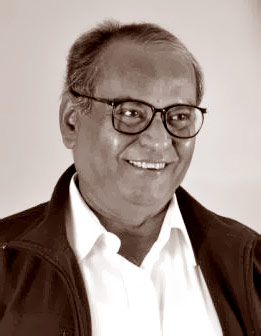
    In a freewheeling chat with Ritu Midha, Mr Swaroop talks about topics including new challenges to the newspaper industry, the growth of the regional press, and digital as the next big thing.


    How has the newspaper industry evolved in the last decade or so?

    The newspaper industry has evolved remarkably in the last ten years, both in mindset and revenues. The approach is futuristic so investments have been made in that direction. Just for numbers sake, the industry has shown robust growth of around 15 percent YOY in advertising revenues and about 10 percent on the circulation front in the last ten years.


    Traditional media in markets like India is still growing. Would you say that print players have taken the right steps to take optimum advantage of that and push the medium further?

    Yes very much. I think digital is being seen as the most potential transition, there are investments being made and backed with complete will to seize all opportunities. However, it is a long-term view and probably it might take another five years to see the real ROI.


    Looking specifically at regional press, do you believe it is poised to grow at a reasonable pace?

    It will, of course, as the regional markets growth is pretty robust. Therefore regional press will have its share of growth.


    Coming to Marathi media competition is growing intense (what with the launch of Divya Marathi). Do you see it helping in growing the market, or could it fragment the market?

    Both. Growth brings fragmentation. It is good, of course, making content the King and the consumer the real Hero.


    Moving on to your new role at Lokmat, what are the changes and transformations that you intend to undertake as the COO Publishing?

    As a company we are poised for the next orbit of the growth and therefore I need to accelerate that pace and make it happen so that the company is future-ready.


    On May 15, 2011 Lokmat saw a content and design change to its product. On August 15, Lokmat Samachar saw a similar makeover. Did they achieve their objectives?

    Differentiation and relevance are the key elements of the change, and I am glad that both the makeovers respectively, of Lokmat and Lokmat Samachar, achieved this.


    What has been the market response to your Hindi compact daily Lokmat Samachar? Do you think the compact format, like in the west, will have more appeal in future as it is easy to read and handle?

    Lokmat Samachar is actually a broadsheeter; the compact is the City News Express (CNX), launched in Aurangabad as a bilingual newspaper. That is doing pretty well, both in terms of advertising and circulation.


    Do you think that the regional newspapers are doing enough innovation to gain the attention of the advertisers? What are some of the recent noteworthy innovations?

    Unfortunately, innovations by the regional press are not showcased properly. We do everything that can deliver the desired impact to the brand communication. Communities and printing innovations are a regular in thing. We are doing several cross-media promotions for many brands these days. We recently published a 3D issue in Nagpur, Aurangabad, Nasik, Kolhapur, Mumbai, Jalgaon and Pune, which became hugely successful.


    Digital is supposed to be the next big thing. Do you think that such a threat would not affect the regional players for a long time as the technology, perhaps, has not percolated to the grassroot levels?

    Technology reaches the masses rapidly  faster than anyone can think. The huge challenge is actually to keep pace with it. Digital is reality, and why next big thing it is already a big one. Social media is changing the landscape and fast impacting media consumption patterns, and mobile internet browsing will be the defining medium of the future.


    How has the year been so far? And how do you see it panning out for the group?

    The early months have been disappointing and I hope, as we go forward, things will be better.


  • G Krishnan moves on

    By A Correspondent

    A mail from Mr G Krishnan yesterday morning took his industry friends by surprise. It said he was moving on, but had no mention of his next destination.

    Mr Krishnan’s departure from TV Today Network happens after a long and productive stint of 16 years. At the time of putting in his papers, he was Executive Director and CEO of the media giant.

    In an internal communiqu, Mr Krishnan simply stated, I write to inform you that I have decided to move after 15+ years from my current role of Executive Director & CEO, TV Today Network Ltd., to pursue new opportunities. He further said, In view of the above, I would like to relinquish my position as Vice President and Board Director – IBF and also the Chairmanship of IBF-AAAI subcommittee. However I am always available for any industry-related issues. I would like to take this opportunity to wish IBF and the sub-committee all the best.

    Meanwhile, India Today Group Chairman & Editor-in-Chief Aroon Purie stated in an internal communication, This is to inform you that G Krishnan (GK) has resigned from the services of the company with effect from September 1, 2011. All his direct reports will report to me until further notice. I would like to place on record my appreciation for his immense contribution in making TVTN a leading news broadcasting company of the country and AajTak, India’s foremost news channel in Hindi, right from its inception.

    Mr Krishnan’s stint with television began in the mid-1990s, with the introduction of the daily TV news bulletin Aaj Takon Doordarshan. Krishnan played a key role in launching Aaj Tak as a news channel. TV Today Network today runs news channels Aaj Tak, Headlines Today, Delhi Aaj Tak and Tej.

    Before the TV Today Network, Mr Krishnan worked with Bennett, Coleman & Company as the head of its marketing and sales departments. At BCCL too, he was credited with many firsts, among them Times FM.

  • MSM pumps up the volume with new music channel

    Multi Screen Media (MSM) is all set to launch its music channel, Mix, on September 1. Promoted as a pure Bollywood music channel, Mix will play songs not only from contemporary cinema but also the earlier decades, appealing to a wide audience spectrum.


    It is after a five-year gap that MSM is launching a channel  the last one was Sony Pix in 2006. Reflecting on the reason for launching a channel at this juncture, that too a music channel, NP Singh, COO, MSM said, We wanted to first advance our existing channels, and then launch the music channel. Now that Sony is number two in the GEC space, and SAB, Max and Pix too are doing very well, the time is just right for the launch of music channel. He added, As a network, we have seen tremendous growth this year. There has been viewership and revenue growth in every quarter.


    Music, Mr Singh believes, is a natural extension of the MSM bouquet of offerings. Mix primarily plans to cater to the core target group of 15 to 24, as the youth consume maximum music. However, the channel will also target adults in the age group of 25 to 44, the section which, Mr Singh stated, is largely underserved when it comes to music on television.Thirty percent of the programming on Mix will be targeted towards this group.


    The channel will have theme-based programming through the day, playing different types of music. For instance, Arziyan will feature devotional songs at 7am, Ishq- Vishq will have softer love songs from noon to 3pm, and Music Madness with faster numbers will be from 6pm to 8pm.


    Alleyah Asgghar, Vice President and Head Programming at Mix, said that scheduling on the channel is a result of mood mapping research conducted by MSM, combined with the network’s learnings from viewership pattern on its other channels.


    Answering questions on the key differentiators that the channel would have, Neeraj Vyas, Executive Vice President and Business Head, Max and Mix, stated, Though the content on a music channel cannot be unique, Mix will showcase good quality music in an uncluttered environment. It will have factoids about music similar to what Max has about movies.The channel, he said, would have a large library of songs to reduce the number of repeats.


    At the moment, average time per viewer on a music channel is 25 minutes. As Mr Vyas remarked, it is important to not only get more viewers to the channel, but also to keep them engaged and increase stickiness.


    The channel also plans to have user-generated content on the channel wherein the users can send in their stories and the channel will play related songs.


    Mix, Mr Vyas said, would be on all distribution networks in the duration of a month.

  • India Shops Online is thrust of HomeShop18.com’s new campaign

    Shopping for the Indian consumer usually means in-store  but with e-commerce gaining ground, HomeShop18.com has unveiled its new television commercial, called India Shops Online.


    The TVC is built around the idea that the e-commerce portal delivers the best brands at great value, and emphasizes the click of a button concept visually as well as in the audio.


    Announcing the launch of the new commercial, which is produced by Cell18 under the direction of Zubin Driver, the company shared some key statistics: 300 percent growth in traffic over the past 12 months, six-fold growth in online shopping revenues and nearly 30 percent repeat customer base.


    In creating the commercial, the brand has taken care to introduce the modern within the context of the traditional in the Indian household. The commercial also captures the instant nature of e-commerce shopping, and reflects the growing stature of homeshop18.com in the category.


    Commenting on the commercial, HomeShop18 CEO Sundeep Malhotra said, This commercial is reflective of our deep focus on the e-commerce domain and is meant to accelerate the growth of the e-commerce category and of homeshop18.com as a consequence, being the clear leader. In this commercial you will find a clear leader-like tonality and a deep association of e-commerce and homeshop18.com.


    The TVC, the first in a series, has been produced in a 30-second format with 15-second versions to follow, and more commercials are scheduled to be produced under the Indian Shops Online theme.


    HomeShop18 has recently been in the news for having acquired a books e-tailer called coinjoos.com and also for raising funds worth Rs 100 crore.

  • A pinch of cynicism, please!

    Instead of raising awkward questions, theIndian media went along — and encouraged — with the wave of emotionalism which took over some of the country during Anna Hazare’s anti-corruption campaign… introducing a new weekly column by Editors tracking news across the country
    By Aroon Tikekar

    It is distressing to see the Indian media print as well as electronic- going berserk at the slightest provocation. Has the constant fear for survival affected the healthy vision of the Indian media? Why have the tried and trusted tenets of the profession been disregarded, intentionally or otherwise? These are some of the questions that demand a discussion.

    First and foremost, do the new brand of journalists sincerely believe that a demonstrative approach to solving social problems can and does help? Coming out on the streets shouting slogans can highlight political issues. Pressure put on the powers that be may help hasten a political process. But mere highlighting of social issues does not ensure their solution, as essentially it requires a change in social mind. Obviously journalists are not so nave as to believe that the Anna Team is not going to wipe out corruption from the Indian scene at one go. Then why did they not educate their readers or viewers to doubt the efficacy of any such attempt? Without a pinch of salt called cynicism, media ceases to be the Fourth Estate in a democracy.

    Indian media should raise awkward questions on the right occasions. Joining the bandwagon would have been considered in the past as bad journalism and an affront to the calling. The editors do have a right which is ex-officio to criticize the high and the successful. Reporting on the news and analyzing it for the benefit of readers or viewers as the case may be, is one thing and creating news by emphasizing unimportant aspect and commenting on it is another.

    Today’s Indian media, while fighting a battle of survival, is creating news unworthy of reporting and repeating it ad nauseum, much to the chagrin of readers or viewers. Supererogation of emotion has become willingly or unwillingly the hallmark of our electronic channels, but why should the print media too compete with the electronic media in sensationalizing or pandering to emotions? Whenever we, the people become victims of emotionalism in any large democracy, it becomes the prime duty of the media to educate them. The gullible masses are prone to seek and expect miracles to happen and can easily be tricked into accepting an apparent solution. The media has to come out to warn that miracles are not possible by emphasizing need to be cautious, even cynical of quick successes.

    Secondly, it may sound strange but the media, by definition, is supposed to be critical and is duty bound to take a negative stand by pinpointing weaknesses and lacunae in any proposal or happening which the gullible and innocent person may accept without complain or questioning. Social responsibility is nothing to be ashamed of. In fact it is expected that a newspaper editor or channel editor be so detached from the theatre of activity that he should be able to swim with ease against even torrential current of people’s emotions. The editors should not ride waves of emotionalism. Such objectivity is a pre-requisite in journalism.

    Thirdly, why do the media fail to grapple the historical fact that a political revolution is possible almost overnight but there cannot be a social revolution? Social change can take place only on evolutionary lines. History has shown us time and again that change for the better by slow absorption, not by convulsion, but by assimilation this is the only formula for social change. There are no short cuts to social change, no miracles, and no magical remedies.

    The same newly cropped up weaknesses were displayed by our journalists when the Anna phenomenon was taking shape in Delhi. Society should have been warned that wiping out corruption is not an easy task. Team Anna has only made a beginning. The entire country is aroused and is up in arms against corruption. All these are good signs, but nothing much per se is going to be achieved by the mere introduction of Anna’s Jan Lokpal Bill in Parliament. The roots of corruption have reached deep within our system. Again, on the issue whether the electorate is sovereign or the Parliament, the media should have brought out that our Constitution-framers have taken care to see that no section enjoys absolute sovereignty.

    Even while appreciating the novel idea of distributing caps with I am Anna written on them, the media should have warned the agitators about the limited use of such symbolism. It was on the contrary seen going overboard and was quick to call Anna Hazare as the Second Gandhi.

    The catapulting of Anna Hazare into a national figure is largely the media creation. Media is responsible for creating his larger than life image. One is not even sure whether he has the qualities of a national leader. But media called him as the second Gandhi. Let’s face it. To compare Anna with the Father of the Nation is a cheap gimmick. Comparison of the two is odious. Anna lacks vision. He also lacks wisdom, one doesn’t even know how much the Gandhi literature he has read. The original Gandhi did not even approve of the ways of revolutionaries as he believed that to assassinate is the highest kind of censorship, but Anna does.

    Aroon Tikekar is former editor of Loksatta

  • NBT goes hyper-local at Greater Noida

    By Akash Raha


    Navbharat Times (NBT) of The Times Group is going to launch a special eight-page local newspaper in Greater Noida today. The eight-pager will be distributed in Greater Noida along with the main NBT newspaper. There will be no change in the price point and the newspaper will be available with the added pages at the Rs 2.50. It is noteworthy that NBT has such hyper-localized content for other satellite-cities to Delhi, namely Ghaziabad, Gurgaon, Noida and Faridabad.

    Speaking about the idea behind NBT’s strategy towards creating hyper local content for consumers, Aman Nayar, Brand Head, NBT said “While the main product Navbharat Times (NBT) has the pulse of overall Delhi-NCR (or as we see ‘Greater Delhi’) there is a need to cater to the needs of each of the 4 NCR cities, as each of these cities are rival state capitals in their consumption or economic activity. Hence, we built on the concept of a dedicated local newspaper with local hard news but the focus being on development and growth in these cities. In sheer quantity we would be more local than the competition in fact, but rather than being sensationalist in playing up petty crime or local politics, our focus is the growth opportunities and where there are gaps, to drive change in these boom towns. A lot of our campaigns in these cities have been ground-level connect and have yielded more than encouraging response.”

    After the success of the group’s English newspaper, The Times of India across India, NBT had scaled down its newspapers to two editions – Delhi and Mumbai. However, about four years back, with localized newspapers it began building strategic presence in Delhi and NCR. The move helped them to penetrate in tier two and tier three cities. According to Mr Nayar, it has gained good traction with the advertisers too. Moreover, with ‘NBT Greater Noida’, the company will certainly garner robust local advertising.

    “Greater Noida is a step towards creating meaningful and relevant content for Greater Noida. There has been a marked jump in economic activity centering around the Formula One race. At the same time, as the recent Noida Extension episode showed – The Greater Noida readership’s concerns and thinking may have variation from that in Noida. And so now we have launched Greater Noida’s own local newspaper ‘NBT Greater Noida’. In fact in Ghaziabad, we observed that it was a case of two cities co-existing – the trans-Hindon Area (closer in thinking to Delhi than UP) versus Old Ghaziabad. Therefore, we created two splits of NBT Ghaziabad, one for each city,” added Mr Nayar.

  • 3 days to World Magazine meet


    By Akash Raha

    The FIPP’s 38th World Magazine Congress is only three days away and is going to be held for the first time in India. Approximately 600 delegates from 50 countries (including India) will be attending this event. The conference will be held from 10-12 October, 2011 at New Delhi,and the biggest names of the media and advertising fraternity, from India and internationally, will be present at this event.

    Chris Llewellyn, President and CEO FIPP, UK, speaking on WMC India edition to MxM India said “The World Magazine Congress is FIPP’s most iconic event, gathering together the great and the good from our industry and is always special. Being held in India for the first ever time is a wonderful endorsement of how the market for magazine media is developing in this country and I’m looking forward to some great interaction between the local and international publishers. More generally, being able to understand how to balance the array of opportunities that new digital platforms bring together with the many strengths of the traditional magazine is the obsession of the magazine media world, and I’m sure that our New Delhi Congress will provide real insight and guidance as to what’s working, where, and why.”

    In a conversation with MxM India Mr Mitrajit Bhattacharya, General Secretary, AIM said, “We have a huge number of delegates coming in from all over the world; from the far-east, from Europe, from America. So I think, this is going to be one of the most successful World Magazine Congress in the last decade or so. India is the toast of the world for anything and there is a lot of interests for delegates to attend the WMC 2011.”

    When asked if business transactions can be expected in the WMC Mr Bhattacharya added, “I think there is a large amount of work which is happening in the digital space, and there is a lot of business which could be driven in that area in the World Magazine Congress with the magazine publishers of India. So there would be a definite angle of business in World Magazine Congress and I know that publishers are already full with the dates in their calendar with meetings with international delegates. There is a very nice appointment dairy that we have offered to every delegate and that is getting full for many publishers. So there will definitely be business transactions in the World Magazine Congress.”

    The World Magazine Congress will begin with the opening address by Mr Aroon Purie, Chairman of FIPP, and Chairman and Editor in Chief, India Today; Mr Chris Llewellyn, President and CEO, FIPP and Mr Jussi Pesonen, CEO, UPM. This will be followed by an interaction with Mr Shahrukh Khan, who will talk about ‘My Tryst with Magazines’.

    The next two days will be packed with speakers of renown from across the globe. The key note address on the second day will be given by Ms Ambika Soni, Minister of Information and Broadcasting, India.

    The Congress’ theme for this year is ‘The 360-degree Opportunity’. The congress will showcase various innovation and means to success in today’s dynamic market. The conference agenda contains some of the world’s biggest media names, giving their own personal insights. In addition, the 2011 Congress will incorporate a large commercial exhibition, providing the opportunity for delegates to learn about new products, developments and opportunities in a highly-charged business environment.

    India is an essential market as it has 73,000 magazines, including weeklies, fortnightlies and monthlies. The market is dominated by Hindi and regional publications. About 34 percent of the overall magazine industry publications are in Hindi, followed by English publications accounting for 13 percent of the total pie. The remaining 53 percent of the market comprises regional languages such as Marathi, Bengali, Tamil and Telugu.

    FIPP’s World Magazine Congress is by far the biggest magazine event that is organized across the globe which brings forth magazine publishers and business media providers from across the globe. The biennial Congress has taken place in many different locations over the years, including United Kingdom, London (2009), Beijing, China (2007), New York, USA (2005), Paris, France (2003), Rio de Janeiro, Brazil and Buenos Aires, Argentina (2001) and Hamburg, Germany (1999).


    For more information: www.fippindia11.com

  • Engagement Study may solve magazines’ measurement blues

    By Akash Raha


    Advertisers and media agencies will have more options to choose from in the print industry, as the much-awaited Engagement Study is set to be released at the World Magazine Congress 2011 in New Delhi next month. Mr Pradeep Gupta, President, Association of Indian Magazines (AIM), confirmed this development with MxM India.

    The apex association of magazine publishers is delivering on its promise of the Engagement Study on time. Mr Mitrajit Bhattacharya, General Secretary, AIM informed MxM India that the research for the Engagement Study was conducted by Quantum and IMRB, whereas Quantemplate coordinated the project on behalf of AIM. The research methodology of the study was based on desk research by Quantemplate, qualitative survey (20 one-on-one interviews of 2.5 hours each) by Quantum preceded the large scale quantitative survey (Sample Size: 3600 +, across 10 centers) by IMRB.

    Commenting on the study’s efficacy for the industry, Mr Bhattacharya said, The magazine industry has never been represented well by the large readership surveys like IRS, which are largely designed to cater to the needs of the dailies. The data for magazines has been less robust and highly fluctuating. More so, these surveys do not attempt to cover qualitative dimensions like reader involvement, lower clutter levels leading to higher attention, recall or even the image building capability which are the strengths of the medium. The Engagement Study will be a highly credible tool for the advertising fraternity to understand the engagement of consumers with various media and to evaluate the level of engagement of magazines vis-vis other media. These insights will help the advertisers immensely in choosing a medium like magazines in absence of sound readership data.

    He further added, But let me clarify at this stage that this survey is not attempting to capture any data at an individual title level. It is a very robust survey with a huge sample size, both qualitative and quantitative, trying to address the issues of the magazine industry as a whole, well represented by all major genres and languages.


    The AIM had announced during IMC 2010 its plan to conduct the Engagement Study for magazines, which could act as an alternate source of data for advertisers, after advertisers and media agencies expressed their concerns over the measurement issue that has plagued the magazine industry for long. The study is expected to solve the problem of qualitative measurement that the print industry faces, especially in the magazine domain.

    We have great work available on this subject in countries like the US, UK etc. However, the complex nature of the magazine market like India, with so many titles in so many different languages, makes this survey a unique and challenging one, concluded Mr Bhattacharya.

    Studies have shown that magazines have a completely different level of engagement. Magazine reading is very immersive and concentrated, much more than other mediums. Hence, the study is expected to be a boost for the advertising industry, giving them more options and choices to advertise effectively and efficiently.


  • Engagement Study holds hope for magazines

    By Akash Raha

    With the World Magazine Congress round the corner, New Delhi is set to host magazine publishers, marketers and advertisers from all over the world.

    However, with news doing the rounds each year that the future of magazine is in doldrums (at least on print and paper), a lot of hopes are likely to be pinned on the Engagement Study conducted by Association of Indian Magazines (AIM), which is to be announced at the congress. The study aims to become a robust currency for advertisers.

    Media planners and buyers whom MxM India spoke to about the study feel that it will herald a change for the better.

    Premjeet Sodhi, President, The Collaborative, Lintas Media Group said, “Yes, the currently available syndicated research studies in India are not adequate to take fully informed decisions about selection of magazines from a media planning perspective. A lot of additional inputs are derived from proprietary research by agencies to be able to make prudent recommendations. Overall, there is a huge scope for enhancement of the syndicated data sources from the perspective of magazines. While, I am not aware of the research design of the Engagement Study, I am sure it will fill a critical void of information for magazines and will be a valued input for media planners and advertisers. I hope that going further the research does not stay at the ‘Category Level’ and does provide information at the ‘Individual Title Level’ else the applicability of the information will always be limited.”

    S Yesudas, Managing Director – Indian sub-continent, Vizeum India said, “Personally I was shocked to see the numbers of some of the magazines when the Registrar of Newspapers of India publicized the print order claim made by magazines on its website, presumably through an oversight, as it was subsequently withdrawn.  Coupled with this is the reality of IRS certifying a consistent southward trend.  There are too many titles fighting for the same share of the audience pie, unlike the newspapers, they themselves are currently feeling the pinch.  While the engagement study might help differentiate one against the other in the same area of operation in terms of affinity, it will not make any substantial changes in the current perceptions and judgments by media planners, from an overall industry perspective. At best it will result in the publication with the highest affinity, scoring over the others compared to the current judgment allocation where the one with the perceived audience retention possibility gets 80 percent and the rest 20 percent. With the engagement study it might become 90/10 or 100 in favor of the one with highest affinity.”

    With digital being the watchword for the future, this year’s theme of the magazine congress is ‘The 360° Opportunity’.

    Dinesh Vyas, Business Head, MEC India said, “If you look at the way the print medium has been faring of late, I wonder how much of a difference the Engagement Study is going to make. The situation has changed drastically over the years and today, digital is taking away massive part of the advertiser’s money. According to me, digital is a very engaging medium, perhaps more than print as a whole. Whether Engagement Study will make a difference or whether clients will buy into a medium which is already losing interest amongst consumers, only time will tell.”

    A few questions arise here: Will the media planners and buyers appropriate the study? Will they be able to trust a survey conducted by the very group on which the study is being conducted? The answers to these questions are close at hand.

    Also Read:

    http://www.mxmindia.com/2011/09/engagement-study-may-solve-magazines%E2%80%99-measurement-blues/

  • Industry expectations from WMC2011

    By Akash Raha

    As the World Magazine Congress gets underway today, the industry awaits lessons which will lessen the woes of magazine publishers in India. The topic of this year’s congress is ‘The 360° Opportunity’ and with the advent of digital, the publishers will be interested in sharing and gaining knowledge on how to monetize the digital space better and leverage the brand on multi-media platforms effectively. MxM India spoke to several members of the media industry to know what they are expecting from the congress and express their views on it.


    Suresh Selvaraj, President, Outlook and Marie Claire.


    “WMC kind of events should provide practical solutions to safeguard the magazine industry in its original avatar – i.e., the print version. Increasingly everyone suggests how digital could change the landscape and why one should invest in it etc. but what about the returns? Show me one website of a popular Indian magazine that makes equal amount of reach or turnover or the potential to do so in the next couple of years. When international magazines make a beeline to enter into India, how many Indian magazines venture into the neighboring countries, at least? Can Indian magazines use WMC to open the doors to the world – especially when we have some very successful titles and talent?”


    Rasina Uberoi, Vice President, Media Transasia Thailand Ltd.


    “At the World Magazine Congress we are looking forward to meet all our global partners. Although we meet them on a regular basis, WMC gives us a platform to meet everyone at the same time. We are looking forward to exchange of thoughts and ideas with our partners. However, my biggest expectation here is how we are going to monetize our digital business. Everybody has been talking about digital business and social media for a long time. And everybody is still toying with the idea. So I am keen to learn from WMC and from other publishers what a successful revenue model in digital is.”


    Anant Nath, Director, Delhi Press and Managing Editor, The Caravan.


    “My expectations from World Magazine Congress are the same as before – To re-establish and re-articulate the cause of magazines and help it stay relevant. Magazines have to grow in the right eco-systems in a multi-media framework, and be relevant for the various digital offshoots. I am eagerly looking forward to exchange of ideas and learning with our international counterparts. Since the congress, for the first time, is being held in India there is going to be a lot of participation from Indian publishers. The publishers will have a lot to learn from their international counterparts, who will share their learning and insights to what the future might hold for Indian publishers.”


    R.Rajmohan, Publisher, Open Media Network Pvt. Ltd.


    “WMC, held every two years, is a very significant conference for magazine publishers across the world. It is an achievement for AIM and Indian magazine publishers that India is the venue for WMC, this time. It also reflects the growing importance of India as a magazine publishing market. FIPP has brought together eminent panelists, making the congress a must-attend for magazine publishers. Opportunities magazine publishing offers in the digital ecosystem is tremendous and the conference will discuss this and far more, which will be a great learning experience. I look forward to meeting fellow publishers from all over the world and to the exchange of ideas and thoughts.”


    Sandeep Khosla, CEO, Infomedia18.


    “Since World Magazine Congress is an international event and several international publishers are coming from around the world, we are looking forward to interacting with them. There is a lot happening internationally and there are some new vehicles which we can possibly tie up and bring to India. Apart from that we are looking forward to understand, as to how publishers co-exist with technology too. We want to understand what various publishers are going to do with ipads and android platforms and how will we co-exist with them… what sort of a revenue model is one looking are looking at to remain relevant. We will be looking forward to understand that in the light of dropping readership, a sort of recession that we are seeing, how do we survive and make profits.”


    Riyad Mathews, Senior Assistant Editor and Chief General Manager, Malayala Manorama, Malayala Manorama


    “Well, it’s not often that you can get all leading publishing houses under one roof. The World Magazine Congress gives us all an opportunity to interact, meet and discuss issues facing the magazine industry and it also gives us business opportunities.”

  • Chalo Dilli!


    By Akash Raha

    Delhi is all set to host two mega international events back to back – The World Magazine Congress and AdAsia. It almost seems like Delhi has become the new hub to host such grand events, perhaps taking over the role from Mumbai, the financial capital of India. Nevertheless, the upcoming month assures to be grand and promising for Delhi, which is bound to receive a lot of attention with several international business honchos from the media and advertising industry attending the two events.

    Speaking about the two events in a recent conversation with MxM India Ashish Bagga, CEO, India Today Group said “The World Magazine Congress is in early October followed by the Adasia; it is a big month and there is a lot of activity around both these conferences. The learning is amazing; the energy levels are very high. We are all very excited and we hope to pull off two very successful broad format events. And we are all looking forward to it.”

    Talking about the two events scheduled to take place in Delhi Prathap Suthan, Chief Creative Officer/Chief Explorer, iYogi, said “Well, the expectations from WMC is not much as it’s an era of digital. The only time a person reads a magazine these days is when travelling in a plane. I do love print but it is no more reasonable these days to subscribe for it or carry it along. When it comes to Adasia, yes, I will be going for it with a couple of my agency people. We are expecting to hear the best of experts on ‘uncertainty is the new certainty’ as in my opinion the world has always been uncertain hence nothing can be regarded as certain, Steve Jobs death was not certain, anything that happens to anyone is never certain.”

    [youtube]http://www.youtube.com/watch?v=T7zC5_yLkbs[/youtube]


    Thereafter, Mr Suthan went on to praise the city of Delhi and said. “As far as having the events in Delhi is concerned, Delhi has a better infrastructure, better airport and better accommodation facility than Mumbai. In addition to this, every industry person makes a weekly Delhi visit. The only thing that Delhi doesn’t have is a sea but that is compensated with the nearness to mountains and desert. Hence Delhi is the perfect place to have such events.”

    In the two events several international deals and business transactions are also likely to happen. And that they are happening in Delhi is only good for the city. In the future too, it shall entice and lend confidence to the media, marketing and advertising fraternity to organize such events in Delhi.

    Talking about the two cities Mr Arvind Sharma, Chairman of India Sub-Continent, Leo Burnett said “Adasia is a major event happening for the advertising fraternity, it will bring a lot of great advertising minds under one roof. I’m hoping it will be a great event and I’m really looking forward to it.   I have been saying this for a very long time that the advertising industry in Delhi is growing double the rate than the Mumbai ad industry growth. Hence, it is the perfect venue for such a big advertising event.”

    But is Delhi’s gain Mumbai’s loss? This, only time will tell… But for the moment, it is time for the industry in Delhi to indulge in fun and frolic, amidst few of the biggest names of our industry as the city hosts World Magazine Congress and Adasia.


    Photograph: Fotocorp