Category: MEDIA

  • OTT, not communication, tops internet use in India

    OTT, not communication, tops internet use in India

    As high as 86% of internet users in India, that is 707 Mn people, enjoy OTT audio and video services, making it the top use-case for internet in the country. These numbers were revealed by the ‘Internet in India Report 2023’, jointly prepared by the Internet and Mobile Association of India (IAMAI) and Kantar, the leading marketing data and analytics company.

    The report was released by Harsh Jain, Chairman, IAMAI, and CEO and Co-founder Dream Sports, at the inaugural session of the two-day India Digital Summit 2024, being held in Mumbai (Feb 27 and 28). “‘Internet in India’, which is based on the ICUBE 2023 study, covering over 90,000 households across all states and Union Territories of India (barring Lakshadweep), is the most comprehensive survey of internet usage in the country,” he said.

    Puneet Awasthi, Director, Specialist Businesses, Insights, South Asia – Business Development, Kantar, India, presented the key figures of the report.

    The rise of digital entertainment services is also bolstered by the rise of non-traditional devices (smart TV, smart speakers, Firesticks, Chromecasts, Blue-Ray etc) that has witnessed a growth of 58% between 2021-23 at all India level. The adoption is driven by the new generation ‘cordcutters’ as for the first time, there are more people accessing video content over internet only devices (208Mn) than over conventional linear TV (181Mn).

    Other top use-cases of internet in the country are communications, with 621Mn users, and social media with 575Mn users. These are the second and third most popular services availed by Indian internet users. OTT refers to audio/video streaming either from subscribed or user-generated content UGC platforms while Communication refers to text/ voice/ video chat or used email, video conferencing, etc. using an online website or app in the last one year.

    The report points out that users from rural India are driving all these use-cases, accounting for more than 50% of the user base for each use case.

    The growing internet penetration in India surpassed a new milestone of 800Mn as total Active Internet Users reached 820MN in 2023, meaning more than 55% of Indians have used internet last year. Internet penetration grew across the nation at a modest 8% YoY. Rural India (442 Mn) is a clear majority accounting for over ~53% of the total user base.

    From a Male:Female ratio of 71:29 in 2015 we have reached 54:46 in recent times, which is almost at par with the overall sex ratio of the addressable population in the country.

    Reading between the lines the report reveals that the growth has decelerated in both urban and rural areas. Rural India, which has been driving internet growth rates for the last many years has been witnessing a slowdown lately (11% YoY), effectively in the post pandemic period, that is lowering overall growth rates (8% YoY). However, while the growth rate has slowed down, in terms of actual numbers it is still phenomenal, since 8 per cent and 11 percent in a base of over 800 million are huge numbers.

    One of the ways to accelerate the growth may be to focus on Indic languages which shows a healthy sign of growth in some states. The report finds that 57% users prefer to access content in Indic languages, with languages such as Tamil, Telegu and Malayalam having the strongest language preference for content.

    Finally, it is also a matter of great optimism that states with the lowest internet user base is also showing signs of highest growth rates. States such as Jharkhand (46% penetration) and Bihar (37% penetration) are showing above average growth rates of 12% and 17% respectively.

    For a copy of the full report please visit: thought-leadership | India Digital Summit.
  • OTT Originals Growing Significantly in Regional Languages: MIB Secy Sanjay Jaju

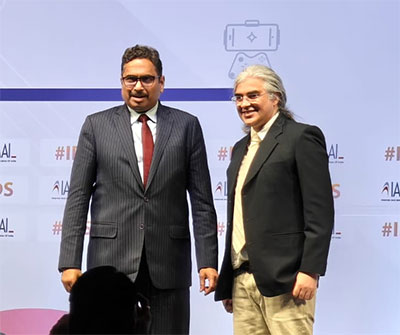
    OTT platforms are growing significantly in various regional languages across India, said Sanjay Jaju, Secretary, Ministry of Information and Broadcasting, Government of India, at the India Digital Summit (IDS) 2024, in Mumbai, on Wednesday. In his keynote address, he pointed out that there were over 60 OTT platforms in India out which 30 per cent OTT Originals were operating in regional languages. The number is expected to go up to 50 per cent this year. The session was moderated by Vivek Malhotra, Group CMO & COO, Consumer Revenue, India Today Group.

    Jaju also said that the media and entertainment sector was a huge sector and played a pivotal role in the Indian economy. “It’s been growing phenomenally at a rate of 20 per cent and is approximately Rs 2 lakh crore. In that, the digital media segment is the second largest sub-segment, and has been showing a growth of approximately 30 per cent — around Rs 60,000 crore — and the film segment has a 25 per cent growth rate,” he said. Sharing data he added that over 200 films were released on the digital platforms in the last year, including 75 films which were released directly on the digital platform without a theatrical release.

    Regarding the growth of the digital gaming industry, Jaju said: “The online gaming industry has been growing by 34 per cent and animation and VFX have close to around 30 percent growth rate, expected to become a $2 billion industry by 2025.”

    Jaju also announced some new initiatives that the government is taking to provide a boost to the media and entertainment sector in India. These include the setting up of a National Centre of Excellence in Maharashtra to create world class media talent and an incentive scheme to attract international projects. He pointed out that, this would help the industry undertake a lot of co-production treaties with multiple countries and create a number of audiovisual co-productions.

    IDS 2024 was being organised by IAMAI in partnership with the Ministry of Electronics and Information Technology (MeitY), the Ministry of Information and Broadcasting (MIB), the Union Ministry of Tourism, UIDAI, Indian Cybercrime Coordination Centre (I4C), Government eMarketplace, In-Space and Skill India Digital.

  • Yashwant Deshmukh highlights ISEC role in digital world

    At the IAMAI’s India Digital Summit 2024 held earlier this week in Mumbai, the Indian Socio-Economic Classification (ISEC) was much discussed. Central to this initiative is the COTN survey by senior researcher and founder-CEO/Editor of CVoter, Yashwant Deshmukh who is CEO, Dataeye Asia aimed at tracking consumer sentiments across the nation especially in digital consumption. To be conducted year-round in 11 Indian languages and commissioned by a leading media house.

    The survey helps CMOs with two essential batteries: the COTN Economic Battery and the COTN Product Battery. The first COTN survey report is scheduled to be released this month (March 2024). Additionally, this will be the first ISEC-aligned initiative, the survey will introduce a media consumption tracker. More details on what COTN is all about is awaited, and this report will be updated thereafter.

    The conversation led by Yashwant underscored the imperative for CMOs to embrace the transformative power of data analytics and new segmentation in navigating India’s dynamic media landscape. As evidenced by the early adoption of digital media in regions like Bihar and Uttar Pradesh, traditional media consumption patterns are in the midst of transformation.  Deciphering and understanding India’s growth in the digital space requires advanced survey methods due to the complexity and dynamism of the Indian consumer landscape.

    The summit highlighted ISEC’s potential with the debut of this study.

  • A Tale of Two Mergers, and the Future that Beckons

    A Tale of Two Mergers, and the Future that Beckons

    Shailesh KapoorIt was in December 2021 that we first heard an official announcement of the Sony-Zee merger. It took a little more than two years for that merger to be finally called off, unless we have another surprise in the offing. Since last year, there has been buzz about the Reliance-Disney deal. Earlier this week, there has been a formal announcement, leading to the creation of an Indian media behemoth, if there ever was one.
    Whenever someone has asked me this week what I think of the merger, my first response is that I’m glad it’s finally done. For more than two years, the news on these mergers have dominated attention, and now, we can move on. To more interesting things like content, marketing, technology, monetisation, the works.

    It’s largely speculative to predict how a merger of the nature of the Reliance-Disney one will impact the future of the industry. From the consumer side, there is unlikely to be any impact in the short term. Audiences eventually respond to content, marketing, and pricing, and it’s not currently clear how any of that is likely to be impacted. The first impact is felt at the level of the teams, as restructuring exercises are a natural outcome. Implementation of product and brand strategies can take their time, sometimes years.

    The Indian television industry is in the middle of a tough period. From single-digit percentage growth scenarios, it is now looking at potential degrowth in the coming year or two, however notional, in both revenues and subscribers. Of course, all the talk of young people not watching TV at all is highly exaggerated, and comes from a place of privilege. But there is no escaping the fact that linear television is no longer the first-choice destination of a section of audiences in India.

    But it’s not as if streaming is thriving. We are well past the pandemic-induced honeymoon period, and the reality that the Indian consumer is not willing to shell out the bucks for paid subscriptions is now upon us.

    The leadership team at Reliance-Disney has its task cut out, as do other major players in the category, including Sony and Zee. The next two-three years are going to see potential trend creation, across domains, ranging from streaming to linear TV to theatrical to news to sports. New rules will be written, and technology could play a decisive role. How exactly though? No one knows for sure. Technology giants Google and Meta are going to be very much at the centre of it all, enabling and influencing content and monetization decisions more than ever before.

    Successfully or not, the mergers are done with. The real excitement starts now.

  • Uff! Karan Johar’s Dharma Cornerstone signs Orry

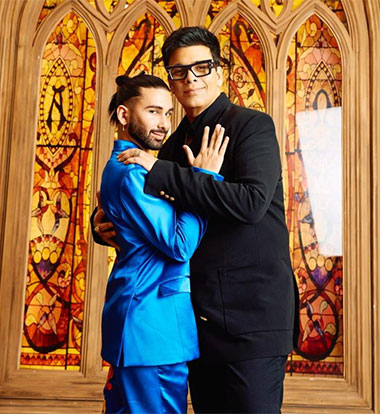
    Dharma Cornerstone Agency (DCA), a joint collaboration between Karan Johar and Bunty Sajdeh, announced the signing of social media personality Orhan Awatramani popularly known as Orry. The partnership will strengthen the influencer marketing portfolio of DCA, notes a comadding to the existing bouquet of services of the brand.
    Said Kim Sharma, EVP – New Media, DCA shared her excitement: “Orry represents the epitome of the modern-day influencer dynamic with his creativity and forward-thinking. We are delighted to welcome him to our family at DCA. This association not only strengthens our presence in influencer marketing but also fosters trust in us.”

  • Moment Marketing: The Mega Mandir Monday


    By Shailesh Kapoor


    Shailesh KapoorThe big day is knocking on the door, on the other side of this weekend. Monday, January 22, is the day of the ‘Pran Pratishtha’ at the Ram Mandir at Ayodhya. But far from being just a religious event, it’s shaped up to be the mega marketing event of the year. We are only in January, but it is safe to say that anything else this year will struggle to match this event on its hype and buzz. Not even the election results this summer, I’d say.


    Traditionally, brands avoid being associated with religion. It’s a sensitive topic, and more brand playbooks are not designed to handle religion as a domain, especially in a plural and complex country like India. But that rule (“don’t touch religion even with a bargepole”) will take a backseat this Monday, when brands queue up to cash in on the moment. It’s for days like this that you feel the term ‘moment marketing’ was coined!


    The event itself is certain to have huge celebrity presence, from all walks of life. Of course, the Prime Minister will be the face of it, but there is wide spectrum of eminent personalities from non-political fields attending the event too. Travel, fashion, food… nothing will be off-topic on the day. It’s a news event, but there the strong pop culture significance is hard to miss.


    The mass inclusion of religion in India’s pop culture has been a slow and steady process over the last decade. The song ‘Mere Bharat ka bachcha-bachcha, Jai Sri Ram bolega’ seemed controversial till a few years ago. But it’s now an omnipresent celebration song, playing at cricket stadia, Navratri functions, weddings, new year parties, the works. It’s now an unofficial anthem that doesn’t need any formal recognition. It’s also a song that will play through the day this Monday.


    The challenge for news channels on a day of this nature is to differentiate. Live feed is largely the same across networks, and it is only natural that viewers will watch the channel their daily-habit channel on the day. What can the second line of channels do to make their presence felt? Monday may give us some answers, including some rather comical attempts to break the clutter.


    The event would also mark the unofficial start to an election campaign, which will then go on for 3-4 months, depending on the poll dates. Even as winters begin to ease up just a bit in North India, political temperatures will continue to rise.


  • It’s never too much in the Modi Era


    By Shailesh Kapoor


    Shailesh KapoorIf you haven’t realised it by now, the first half of 2024 is the perfect time to do so. That there is no such thing as ‘Too much Modi’. We are into the second week of the new year, and the Prime Minister has been in the news every single day.


    It started off with his Lakshadweep snorkeling adventure, which stirred up an unexpected, somewhat silly, controversy. Maldives found itself at the receiving end, though they have their own politicians to blame for saying the wrong things, and choosing the worst possible timing to say them too!


    This week, the Prime Minister is on a development tour of sorts. After a well-marketed Gujarat tour, where Mukesh Ambani showered praises on the Prime Minister, Modi is in Mumbai today to inaugurate the Atal Setu, India’s longest sea bridge.


    Next week, the focus will shift to the mega event on January 22 in Ayodhya, where the Ram Mandir will be inaugurated. The guest list (or the absence of names from it) has been making headlines anyway, and we can expect Mon, Jan 22 to be one of the biggest news days in modern Indian history.


    We are already in the pre-election season, and post Ayodhya, the campaign trails and the rhetoric will gain momentum, and we can expect another 4-5 months of headlines dominated by politics, and indeed by its favorite face.


    That Prime Minister Modi has been the mass media’s favorite is well-known by now. But in recent weeks, even the digital media platforms, which have often been critical of the Modi government, have found it hard to resist covering him on almost a daily basis.


    One of the offshoots of the Prime Minister’s media coverage is that it has made news more inclusive for female audiences and the youth. For many years, older men (30+ years) were seen as the core TG of political news in India. However, PM Modi brings with him a ‘fan base’, much like a film or a series franchise would. ‘What did Modi say today?’ is often a topic of discussion in recent years between housewives in small-town India. No surprise, then, that our ratings-hungry news channels cannot stop talking about him.


    Many political experts believe that barring a last-minute surprise, PM Modi is all set to come back for a third term. Modern India hasn’t seen a national leader of such longevity. There has been no Prime Minister to hold the office for 15 years at a stretch since Jawaharlal Nehru (1947-1964). Not even Indira Gandhi.


    We are already in the ‘Modi era’, and a win later this year will extend it by at least another five years. An era that’s defined by a personality, and also by the media’s whole-hearted endorsement of it.


  • From SRK to Animal: Success Stories of 2023


    By Shailesh Kapoor


    Shailesh KapoorThe year 2023 had its fair share of success stories, across cinema and OTT at least. Here’s my pick of the five most significant landmarks of the year (in chronological order), which could, in turn, shape how Indian entertainment pans out in the next half decade at least.


    The return of SRK, and the old guard in general

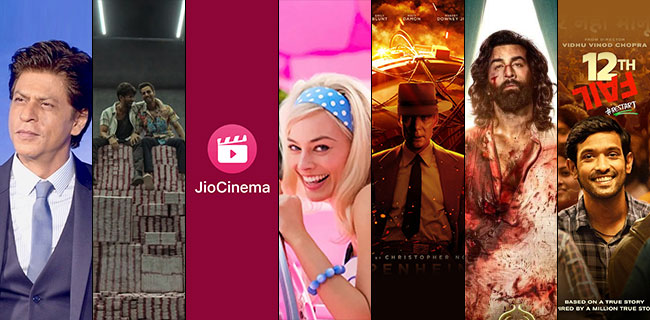
    January saw Shah Rukh Khan mark a box-office comeback with Pathaan. It had been a decade since he had a bona fide hit (Chennai Express). But with Pathaan, he announced his return, in an innings that’s already seeming a lot of fun. Pathaan was followed in September by Jawan, which went on to become an even bigger success. SRK’s December release Dunki has received mixed response, and significantly lower collections. But with SRK, and with Sunny Deol in Gadar 2, it seems like we are back in the ’90s. Superstars from that era are showing the young guys how it’s done!


    Farzi: The Real Thing

    In what was not the best year for OTT (curtailed subscriber growth, very few breakout properties), one show stood out as an outright blockbuster: Raj-DK’s Farzi, on Prime Video, starring Shahid Kapoor and Vijay Sethupathi, became the most-watched Indian SVOD show of all time, with an estimated 37 Million (Ormax Media estimates) Indians having watched at least one episode. Coming after the immensely successful and appreciated The Family Man, Farzi established Raj-DK as one of the most powerful names in the Indian streaming space. Their next venture Guns & Gulaabs (Netflix) fell short of achieving the same heights. But Farzi’s success confirmed that mass entertainers, rather than urban-centric understated content, is likely to be the way ahead for web-series in India.


    JioCinema: A ‘free’ ride

    The arrival of JioCinema, with an IPL edition that was free to stream, brought in a sea change in the Indian OTT landscape in March 2023. The platform made some of the global giants relook at their India strategy. Disney+ Hotstar offered the Cricket World Cup free later in the year. JioCinema backed the IPL season with a plethora of launches, most notably Asur 2 and Taali. But over the last four-five months, they have gone easy on things, and relied more on non-fiction properties, especially Bigg Boss. Perhaps IPL 2024 is when we will see more activity around the platform.


    Barbenheimer

    Who would have thought that a Hollywood film clash will make headlines in India? The Barbie vs. Oppenheimer weekend in August 2023 brought in about Rs. 100 Cr (gross) worth of box office in India, which was also one of the few countries where Oppenheimer was ahead of Barbie at the box office. Hollywood has not had its best year in India, with the Marvel Cinematic Universe, Hollywood’s mainstay in the Indian market, being on some sort of a downtrend. But with Oppenheimer, we saw audiences flocking theatres in the service of a director urban India has come to love: Christopher Nolan.


    Animal instincts

    December 2023 saw the release of director Sandeep Reddy Vanga’s Animal, a film that polarised critics, but was largely embraced by the audiences, going on to become one of the most significant success stories of the year, especially because it’s headlined by a younger star (not from the ‘old guard’). After Atlee’s Jawan, Vanga’s Animal established the firm hold directors from South India are beginning to have on Hindi audience’s imagination, through their distinctive style of storytelling. Everything about Animal, right from its trailer to the choreography and background music of its action set-pieces, broke conventional rules of mass Indian cinema. And it was very heartening that another film (12th Fail) that came just a month before Animal, and broke a few rules of cinema too, also got immense audience love, especially for its scale, cast and budget. That Animal and 12th Fail can co-exist augurs well for Hindi cinema, which had its best-ever year by some margin.


  • All eyes on the franchise


    By Shailesh Kapoor


    Shailesh KapoorIn context of a report Ormax Media is publishing next week, a staggering data point was brought to my attention. Forty-five per cent of Hindi theatrical business in 2023 till the weekend of December 3 has come from franchise films, i.e., films that were already a part of a franchise or a franchise universe at the time of their release.


    With Animal and Dunki being non-franchise films, and Salaar: Part 1 being the first of its franchise, this proportion will drop to 35-40% by the end of the year. But the staggering-ness is not in the 45% itself. It’s in the year-on-year comparison.


    Proportion of Hindi box-office from franchise films was only 19% in 2019, and increased to 31% in 2022 (the interim years were pandemic-disrupted). Within two full years, the contribution of franchise films to the Hindi box-office has doubled.


    The equivalent number in Hollywood has been in the high 70s or 80s for a while now, depending on the year we look at. Clearly, Hindi cinema is moving in that direction. It could be a matter of another couple of years that we hit 60%, if not even higher.


    Even on OTT, franchises are beginning to dominate, now that the category is somewhat settled in India. Amazon Prime Video has done a particularly good job of building strong franchises, none less than The Family Man and Panchayat. The latter is produced by TVF, which is a franchise factory of sorts, with a long list of illustrious web original franchises, such as Kota Factory, Gullak, Aspirants, Permanent Roommates, Pitchers, Hostel Daze, etc.


    Linear television’s attempts with franchise creation have been less emphatic, but that’s only because the approach to having seasons does not exist, and it’s impossible to do a Season 2 if Season 1 is the ever-running season anyway. Yet, Zee TV has managed to create some sort of a quasi-franchise, which some young audiences even have a name for: The Bhagya Universe. It has three largely-unconnected shows in it: Kumkum Bhagya (2014), Kundali Bhagya (2017) and Bhagya Lakshmi (2021), all three produced by Balaji Telefilms.


    The rise of franchise content is an interesting phenomenon. At one end, audiences crave for new stories and characters, because fresh and imaginative ideas is generally a strong driver of content consumption. But at the other end is the comfort in watching something familiar. This continuum of original to familiar is a compelling one, because both ends of it are strong on intrinsic benefits related to why content is watched to begin with.


    There are franchise films and shows that manage to re-imagine their world, and provide freshness within the familiar. Some of the early Marvel films, leading up to Avengers: Endgame, managed to do this very well. But those are far and few in between, and in general, franchise content willingly lets go of new imagination, and focuses on the familiarity factor.


    So, if franchise content is becoming stronger than before, does it mean that audiences prefer comfort of the familiar to the excitement of something original and imaginative? That’s not an evident piece of truth. The real difference lies in the differing risk levels. Franchise properties are significantly safer than non-franchise ones. The latter must get the idea, however original it maybe, right. In the former, that’s already been tested.


    But we need a healthy mix, because if franchises begin to dominate to the extent of 70-80%, which is a real possibility soon, the originality will get sucked out of the content ecosystem, leading to a decline in business at some stage in the cycle.


    Be that as it may, in the short-term future, we can expect franchises to dominate Hindi cinema and OTT categories, in a way India may have never seen before.


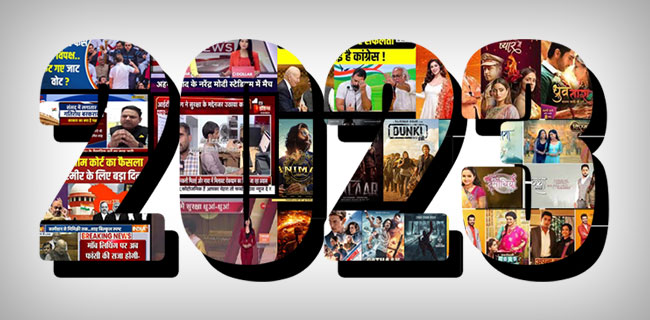
  • 2023: Resurgence of Cinema, Rationalisation of OTT


    By Shailesh Kapoor


    Shailesh KapoorIt’s that time of the year, called the year-end. Between this week and the next two, I will look at some defining features of 2023 from the Indian M&E perspective, and what we can expect (or at least hope) from 2024.


    2023 saw fundamental re-alignment of power centres in the Indian M&E industry, with two important mergers, both of which are still only in the pipeline. But if they indeed go through, we could have a duopolistic industry for the next few years to come, at least on the television front. Zee-Sony and Disney-Reliance will form the epicenter of the industry, even though Amazon and Netflix will continue to wield their influence. But all that’s still in the future. And a tad speculative one.


    Among the three major entertainment-led categories, 2023 saw the least action on the television front (even TRAI was unusually quiet through most of the year). Apart from the potential Zee-Sony merger, and the usual big-ticket events like the Cricket World Cup, it was an unremarkable year for Indian television. 2024 will, however, be a blockbuster year for television news, being the year of the General Elections. The Ram Mandir inauguration, scheduled for Jan 22, 2024, is set to kick off a 4-5 month long viewership bonanza for our news channels.


    The theatrical business saw a significant resurgence this year, and is already the best-ever year at the Indian box-office, with a weekend to go. At about Rs 11,750 cr, the year is a good 800 cr higher than 2019, which held the record earlier. Significantly, Hindi cinema saw a resurgence this year, with its share of national box-office increasing from 33% last year to a healthy 44% this year. It was also the year of Shah Rukh Khan’s comeback to the top, with top bonafide blockbusters in Pathaan and Jawan. If only his latest release Dunki would have performed at similar levels, SRK would have set a record that would have taken many years to break.


    Even as the theatrical category flourished, streaming platforms found themselves re-aligning to changing market scenarios. Post-pandemic, subscriber growth has been slow worldwide. Internationally, streaming platforms faced headwinds in the form of an economic slowdown and the prolonged WGA strike, leading them to rationalize costs, and focus on profitability. The impact was felt in India too, especially because early in the year, JioCinema disrupted the streaming ecosystem by offering the biggest property of them all, the IPL, free to its users. This set the cat among the pigeons in the SVOD-AVOD debate. With paid subscriber growth plateauing in the big cities, and audiences in the smaller markets being reluctant to pay for streaming, AVOD found a definitive this year. “TV+” was the buzzword through much of the second half of the year, and may well be the big streaming idea in India, going in 2024.


    Watch this space next week for more on 2023, and 2024!


  • One-worded Box-office Beasts


    By Shailesh Kapoor


    Shailesh KapoorIt’s a huge Friday at the box office today. Ranbir Kapoor starrer Animal, directed by Sandeep Reddy Vanga, releases today, and is set to witness one of the highest openings in Hindi cinema, with even a shot at the 50 Cr first-day box-office, a mark that only four Hindi films have ever achieved.


    2023 has been an interesting year at the Indian box-office. A series of non-performing films have been punctuated by mammoth blockbusters. In the Hindi language, it started with Pathaan in Jaunary, post which we saw a long period of flops, with an occasional hit like Rocky Aur Rani Kii Prem Kahaani. August saw positive momentum shift, with Gadar 2 emerging as a huge blockbuster. And then, Jawan followed it up early September, recording the highest-ever lifetime box-office for a Hindi film at the domestic box-office.


    In the Tamil market too, Jailer (Rajinikanth) and Leo (Vijay) have done great numbers, and are a part of the list of top 5 grossers of the year, after Jawan, Pathaan and Gadar 2. Animal would be challenging to enter this list, as will Dunki, the third Shah Rukh Khan release this year.


    What’s with film with one-word names, most of which are names or descriptors of their lead characters, doing well? Perhaps there’s more than a coincidence at play here. It could be a sign that audiences are gravitating towards superstardom and larger-than-life hero characters again. While this factor always existed, the pre-pandemic period in Hindi cinema saw a slew of thematic and genre-led films do very well. With OTT around, theatre-going is about scale today, more than ever before. But it need not be the conventional definition of “scale”, which comes with elements like large sets (Bhansali) or VFX (Marvel). It’s about bold-stroke, larger-than-life storytelling too, led by protagonists with an unmistakable swagger.


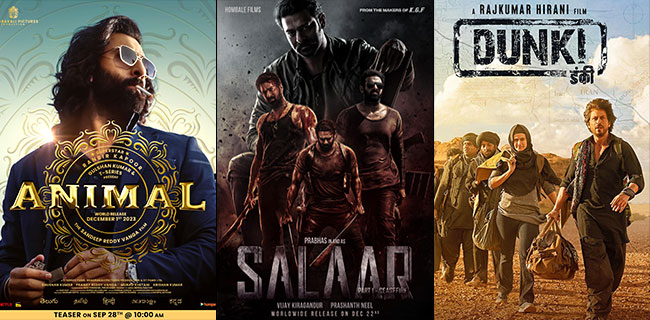
    If the three big films of December (Animal, Salaar and Dunki) live up to their expectations, 2023 has more than a real chance of becoming the best-ever year at the India box-office, with a gross business of 12,000 Cr in India.


    Animal, however, won’t be the only media highlight of this weekend. We have important elections results coming up this Sunday, when votes for legislative elections in five states will be counted. These results can have a significant influence on how the national politics will look like in 2024, in the lead up to the General Elections.


    Irrespective of how the film fares or what the election results are, one thing is certain: There won’t be a dull moment for media & entertainment observers this weekend.


  • End of a World Cup… and a Format

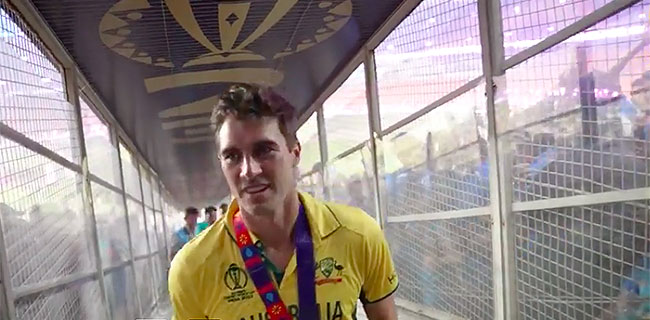
    Australia men’s cricket captain Pat Cummins walking back to the dressing room with the Men’s Cricket World Cup 2023 trophy. Photograph courtesy screengrab from video on ICC-cricket.com


    By Shailesh Kapoor


    Shailesh KapoorFinally, it’s done. The six-week long Cricket World Cup culminated last Sunday, with an imperfect finale from an Indian perspective. Forty-eight games of potentially 100 overs played out over this period. In the age of instant gratification, where “short” is the way to go for most things, cricket administrators seem to have their own unique ideas, some of which seem rooted in another era.


    Last night, India played a T20 game against Australia. It’s the first of the five T20s in a low-key bilateral series. Both sides are resting their star players. Yet, the game had a packed crowd at Vizag. It went to the last ball, something that none of the 48 ODI World Cup games can boast of.


    Cricket has even made it to the 2028 Los Angeles Olympics, on the strength of the T20 format. These are just some of the signs on how the future of the sport lies in this format, and the leagues built around it. Test cricket is there to indulge the connoisseurs. But it’s T20 that will expand the sport, taking it to newer audiences and geographies.


    ICC may be reluctant to end the format altogether, but it’s happening organically anyway. Over the next 12 months, the major cricketing nations are playing less than 20 ODIs put together. The number of T20s are at least twice that number, and that’s not counting the T20 World Cup scheduled for early 2024.


    The World Cup itself had its share of controversies, mostly administrative in nature, ranging from scheduling to the choice of pitches for the knockout games. The crowds in India, especially outside the major centers, can be very ‘un-sporting’, and this became painfully evident in the final, and the prize distribution ceremony that followed. As long as India is winning, all is good. But when we don’t, the picture looks embarrassing from a sporting perspective. It’s perhaps the nature of the hyper-nationalistic times we live in.


    Right out of the World Cup, we jump into the elections season. Next Sunday (Dec 3) is the big counting day for legislative assembly elections in five states, which are a lead-up to the big General Elections next year. Just from a thrills perspective, one hopes there are closer finishes in at least a couple of those, compared to the largely one-sided World Cup we witnessed.


    On the theatrical front, there are three big movies lined up in December: Animal, Dunki and Salaar. The year is well-positioned to be the highest-grossing year at the Indian box office ever. But that’s another story for another day.


    Shailesh Kapoor is Founder and CEO of Ormax Media. He writes on MxMIndia on Fridays. His views here are personal.