Category: MEDIA

  • Zee Cine Awards beats all other Bollywood award shows in the US

    By A Correspondent


    Zee TV, the number 1 South Asian entertainment network, announced recently that the 2012 Zee Cine Awards (ZCA) achieved record-breaking ratings this year. According to Rentrak TV Essentials, Zee Cine Awards delivered the highest rating for any South Asian program in over a year’s time (since Feb 11). ZCA received a viewership share of almost 75 per cent during its broadcast.


    On the monetizing front, the network saw a 40 per cent increase in revenues from last year’s awards show as announced by Zee TV America’s Business Head, Sameer Targe. He said: “Despite cut-throat competition we always find ways to reinvent, than to discount. As a market leader we have no one to follow, hence the challenge is to always focus on expanding the pie. This year we were able to bring well known mainstream brands like Omega, Verizon and MetLife as sponsors of the show. The idea was to sell the inventory at a premium value, keep the breaks short which eventually resulted in highest viewership.”


    Zee TV – the name that has become synonymous with unparalleled quality in entertainment – has been a dominant player in broadcasting content for more than 17 years in the national and international space.  As an Indian channel, Zee TV is committed to supporting the values and traditions that appeal to South Asians across the globe.
    In July 1998, Zee TV expanded its presence in the international space by establishing itself as a mainstay in American households, reaching more than 2 million viewers.  Zee reaches over 600 million viewers in about 168 countries.

  • High five in DNA T20 season V @ New Delhi

    By A Correspondent


    With four successful seasons in the past, DNA gears up for its fifth season of what is popularly known as ‘DNA T20’ amongst top media agencies, at the Jamia Hamdard
    University grounds, New Delhi from March 31.


    DNA T20 has always positioned itself as a non-professional cricket carnival that brings with it a month-long dose of entertainment for the participating teams as well as their families, who come to cheer them up.


    The tournament offers to be a platform for DNA’s business associates, to know each other better beyond the boundaries of their offices, indulge in friendly banters over food and beverages, share spaces in pictures together and display their passion for the game on-field. It is that time of the year when ‘celebrating together’ is top priority on everyone’s mind and not trade, which is generally a routine throughout the year.


    With 12 participating teams facing against each other at an entirely different echelon, one need not be as talented as Tendulkar or as dedicated as Dravid. The DNA T20 raises the spirit of Cricket.


    Furthermore, lofty passions and the excitement of experiencing something ‘live and unrehearsed’ during the T20 matches spices up the game to a whole new level.


    Supported by Citibank and Frito Lays, with Carlsberg as the beverage partner, Crystal Mirage as the trophy partner, DNA T20 – Season V promises to be one fascinating event.


  • Divya Marathi launches fifth edition from Solapur

    By A Correspondent


    The Dainik Bhaskar group announced the launch of the fifth edition of its Marathi newspaper, Divya Marathi, from Solapur.


    Solapur with an urban population of more than14.7 lac and a high per-capita income of Rs61,700 is one of the major cities of South-western Maharashtra. The first edition of Divya Marathi from Aurangabad started in May 2011 and soon other editions from Nashik, Jalgaon and Ahmednagar were launched. With 5 editions of Divya Marathi, it now covers complete central Maharashtra. Divya Marathi, Solapur is also the 65th Edition of the Group.


    “Through the Solapur launch of Divya Marathi, we continue to steadily enhance our footprint in Maharashtra and we now have 5 strong Marathi editions along withAurangabad, Nashik, Jalgaon and Ahmednagar, said Sudhir Agarwal, Managing Director, DB Corp Limited, commenting on the successful launch.


    The key proposition of Divya Marathi  Solapur launch campaign continued to be based on presenting an unbiased and fearless newspaper – “Na Ravanchi, Na Sahebanchi, Aata Chalel Tumchi Marji” (Neither influential class, nor Politicians, now public opinions will matter! ) – a theme that was central to the launches of the other 4 editions of Divya Marathi.


    Commenting on the success Nishit Jain, State Head; Maharashtra said: “The success is a reflection of the critical role brand building can play for a new entrant. It reflects across our processes. Our planning has been meticulous, including our strategically classifying city to understand its demographic nuances. This sharp focus on planning, management, marketing and branding has resulted in a successful launch of Solapur edition.”


  • Is Sachin’s brand aura on the wane?


    By Binoy Prabhakar


    Even if you are cricket’s greatest overachiever, there is no escaping pressure. When Sachin Tendulkar recently collected his latest superlative – a century of centuries – the deed helped banish the pressure of ‘when’ that had been building up for a year. No sooner did he say “phew!” than a new pressure took the earlier one’s place: his retirement.


    The answer from the man himself, though “in a not Tendulkar-like way”, according to Mr Suresh Menon, editor, Wisden India Almanack, was: “When I retire is something I will decide…” Mr Menon broached the subject in a rather unflattering article earlier this week. “… the pressure on Tendulkar now is to keep playing so his minders can squeeze the last drop out of his huge commercial value,” he wrote.


    Mr Menon called this the “flip side of the millions”. “High earning sportsmen make a Faustian deal with the money devil; they are paid sums beyond the dreams of avarice for a decade or two… the devil demands his part of the bargain. Keep playing. Keep bringing in the money,” he wrote.


    Brands Tendulkar Endorses…All the deals are pre-existing, no new deals since the ‘Century of Centuries’Aviva, Adidas, Amit Enterprises, Audemars Piguet, Boost, Coca-Cola, Canon, Castrol, Sach (private label Kishore Biyani’s Future Consumer Products Ltd has created with Tendulkar), ITC Sunfeast, Jaypee Cement, Kaspersky, Luminous, RBS, Reynolds, S Kumars, Tohsiba

    Moot Question

    It still does not the answer the critical question: when will Tendulkar call it a day? But if endorsements were the deciding factor, as Mr Menon suggests, the answer would be 2014. All the 17 endorsement contracts in Tendulkar’s kitty run until then, according to his managers, World Sport Group (India) Pvt Ltd. Tendulkar remains among the highest-earning sportsmen in the country, second only to India captain MS Dhoni. But at least for now, there is no prospect of brands prolonging his career beyond 2014. No company has signed him up since his last milestone, belying the widely held expectation in the advertising fraternity.


    The only marketing event commemorating his achievement has come from beverages major Coca-Cola, which announced a rollout of 7.2 lakh cans featuring the cricketer. Sportswear major Adidas is preparing to launch a new marketing campaign featuring him in the first week of April. But both are existing sponsors of Tendulkar.


    Is it still early to rule out new sponsors, given that Tendulkar’s feat came about only on March 16? Advertising executives don’t think so. The buzz in the industry is that many companies were in talks with Tendulkar’s managers to make the most of his 100th century. Mr Harish Krishnamachar, senior vice-president and country head of World Sport Group (India) had said the feat will not have any impact on Tendulkar’s valuation. But no name has arrived on the scene.


    That’s because Tendulkar has always been selective about his endorsements, according to Mr Krishnamachar. “And we have never seen a milestone as a short-term opportunity given that our focus has been on creating a sustained long-term value for him,” he says.


    Tendulkar, says Mr Krishnamachar, has been very categorical about what categories he will be associated with and what he will not. “We have a very good assessment of what he is comfortable with and we have stayed true to that.” The brands that Tendulkar has said he will not endorse are tobacco and alcohol, says Krishnamachar. Tendulkar is said to have turned down a multi-crore deal with liquor baron Mr Vijay Mallya’s UB Group two years ago.


    …And Those That Haven’t RenewedContractsPepsi, Action Shoes, MRF, Britannia, Fiat, TVS, Airtel, G-Hanz, Colgate-Palmolive, Philips, VIsa, Ujala Techno Bright

    No New Deals

    Mr Krishnamachar says as far as any other category is concerned, it is something they “will consider as the opportunities present themselves”. But for now at least, there are few on the horizon.


    And all the existing contracts are many years old, even as much as 20 years in the case of Boost. The ‘newest’, if one can call that, is a deal with Coca-Cola signed in early 2011. Tendulkar’s last deals of note too were signed around then – a Rs 9-crore contract with Pune developer Amit Enterprises and another with apparel maker S Kumars for Rs 13 crore.


    Mr Prashant Singh, director of Octagon India, a sports and entertainment marketing company, says it is true that there has been no frenzy over Tendulkar’s latest feat. “There won’t be any until companies realise what his [retirement] plans are,” he says. Mr Singh says in one sense, Tendulkar, who turns 39 next month, is restricted by his own persona. “He has become the grand old man of Indian cricket… a la elder statesman than a player. That restricts more brands coming.”


    Mr Singh says what is keeping new brands away could also be the sheer number of endorsements. “He is endorsing 17; where is the scope for more?”


    Yet, many brands have not renewed contracts (see adjoining chart) with Tendulkar. He also now has few brands that cater to the young, except Coca-Cola and Adidas, an important segment for marketers. This is the upshot, says Mr Krishnamachar, of changing his portfolio of brands to reflect maturity and high-value categories.


    What about his brand value? Mr Santosh Desai, MD and CEO of Futurebrands India, says it isn’t what it was a few years ago. “Clearly, Tendulkar is in the evening of his career.” Mr Desai says the cricketer’s performance of late has been below par and because his century took a long time coming, there was fatigue associated with his feat. Taken together, it explains why Sachin hasn’t received new deals, he says.


    Whether Tendulkar wins new deals depends on how he evolves as a brand ambassador, says Mr Desai. “We have to wait and see… there is no clue from his current endorsements.”


    Source:The Economic Times

    Copyright © 2012, Bennett, Coleman & Co. Ltd. All Rights Reserved


    Photograph: Fotocorp


  • Every man’s new ‘Mandate’

    By Archita Wagle


    Saturday saw the launch of Magna Publications’ latest offering Mandate. The launch was held at the yet-to-be-opened F Bar and Lounge (The F Mumbai). The event was attended by well known personalities from the corporate and entertainment world.


    The magazine’s tagline ‘The Ultimate Bible for Men’, tells all about Mandate – the team is not promoting it as just a magazine, but as a way of life, commitment to understand what the new age man wants.


    The magazine will carry detailed profiles of famous male personalities, spinets about upcoming gadgets, fashion labels and automobiles. The magazine also promises ‘break through features, international personalities, exotic holiday destinations and hard-talks with legends across fields. Mandate will also feature columns on issues related to business, sports and sex columns, all penned by well-known celebrities.


    Speaking to MxMIndia at the launch party, Yuvraj Juneja, editor, Mandate brushed aside any concerns over other similar lifestyle magazines which are already present in the market: “Our magazine covers what a man desires, but more importantly it tells him what he should desire, we are giving him options. That’s where Mandate stands differently from other magazines. In the market there are magazines which are content heavy, some are picture-oriented and some are very layout-oriented. But Mandate has a correct balance. We cover everything from fashion to gadgets to holidays in-depth. Our magazine is targeted at the men belonging to the age group of 20-30.”


    The launch issue of the magazine seems to living up to its promises. The cover features Virat Kohli, Ranbir Kapoor and Yash Birla and the inside pages carry in-depth interviews with the three, the magazine also features styling tips, a picture heavy feature on the “Man’s most desired” cars and some other interesting features.


  • Hoshie Ghaswalla takes charge as CEO, Cybermedia

    By Archita Wagle


    The winds of change are blowing at premier technology publishing company Cybermedia India. Senior mediaperson and old company hand Hoshiediar Ghaswalla has been appointed Chief Executive Officer. When MxMIndia spoke to Mr Pradeep Gupta, chairman and managing director of Cybermedia, about the reorganisation, he said: “Earlier only the information and communication technology (ICT) and speciality media group had been reorganised. But now our entire media business has been reorganised and Mr Hoshie Ghaswalla is now CEO of Cybermedia.”


    Earlier this year, Cybermedia had reorganised its information and communication technology (ICT) and specialty media group (SMG) in four units Mr Ghaswalla’s charge. The move was for better functioning, faster decision-making and better customer interaction and the new organisational changes were to come in effect from April 1.

    Said Mr Ghaswalla on his appointment, he said: “CEO is just a title, but I am certainly glad to be given this opportunity to head the entire  media business. These are challenging but extremely exciting times for the media industry”.


    On his plans, Mr Ghaswalla said: “We had hired a leading consulting firm last year  that worked with  various internal and external stakeholders to come up with a plan  for the future which  I will now focus on executing.  For the immediate future we are going Digital first – we will provide content to our audiences where they want it, when they want it and in the format they want it. For advertisers and sponsors, we will be moving a lot more towards the solutions approach. As a group we have always innovated and are therefore looking at some game changers which will give us tremendous scale in the mid-term.”


  • Jagran announces NaiDunia acquisition

    It’s now official. Kanpur-based Jagran Prakashan Limited has announced that it has acquired Suvi Info Management (Indore) Private Limited. Naidunia Media Limited is a subsidiary of Suvi and is engaged in publishing the leading daily NaiDunia in Madhya Pradesh and Chhattisgarh.

    Launched in 1947, NaiDunia has over the years become a major player in the Central Indian states. It has multiple editions — from Indore, Gwalior, Jabalpur and Bhopal in MP and Raipur and Bilaspur in Chhattisgarh.

    Said Mr Mahendra Mohan Gupta, Chairman and Managing Director of Jagran, “This was a logical market expansion for us and enables  us to strengthen our presence in Central India. Nai Dunia is a newspaper with a very strong team and has demonstrated editorial excellence over the last decade.”

    According to a Jagran communique, NaiDunia’s current circulation base is around half a million copies per day with the readership growing 2.6 times over the last five years.

    For the cash-rich Jagran group, the NaiDunia acquisition follows that of Mid-Day two years back. The inorganic growth process will continue, a source close to the development had told MxMIndia last week. “We are well on our way towards implementing our strategy for inorganic growth through mergers and acquisitions as on the one hand it allows to begin with a sizeable scale with much lesser investment and on the other hand, it saves long gestation period typical of print industry. The acquisition will enable us to leverage our existing network and will have significant operating synergies.”

  • Starry starry rights from BCCI

    By Rishi Vora


    Star India’s winning the rights to broadcast Indian cricket for six years – from 2012 to 2018 – is a significant development in the Indian sports arena where cricket is the only celebrated sport, and the one that attracts the maximum moolah.


    Though Star has won the rights much to the joy of the senior management team, the fact is that it has come at a staggering cost of Rs 3,851 crore for 96 matches.


    What this means is – for every single match played in India till 2018, Star will pay BCCI Rs 40 crore as part of the contract. The contract also says that Star will also have the rights for internet and mobile besides TV.


    Mr Uday Shankar, CEO, Star India said in a prepared statement, “BCCI is a great property and we are overjoyed to have an opportunity to develop it further. It was decided amongst ESPN Star Sports, ESPN and Star that Star would bid for the rights and if Star were to win the rights it would be exploited in collaboration with ESS.”


    So while it is great news for Star India for it augments its position as a network, there are some murmurs within the industry on whether it is a viable deal as far as profitability is concerned, especially when Indian cricket has seen one of its worst ever phases of late.


    A broadcaster of a sports channel who requested anonymity said, “It’s a move from Star to dissuade MSM from its cricketing interests. MSM already have the Indian Premier League which is one of India’s biggest properties, so the BCCI rights would have put them in a superior position in the industry. Hence it’s a setback of sorts for them, especially when they’ve been in the news on launching a sports channel.”


    He further said, “The price Star is paying is on the higher side. But it’s not very surprising that they’ve won it for the price they have, as they have the strength and the clout to pull off a high-value deal such as this one.” MSM came second to Star with a bid of Rs 3,700 crore.


    T Gangadhar, Managing Director, MEC India commented on the development: “Sports is a rights-driven genre and channels compete on that basis. As faras exploiting rights is concerned, Star India has announced they will collaborate with ESPN-Star Sports, an already established player. To that extent, life is as usual. However, going by the size of the winning bid, it is clear that Star is betting big on digitisation and increasing subscription revenue therefrom.”


    With the BCCI deal, ESS has now become a significant player in Cricket. They’re the official broadcasters of ICC matches, plus Australian and England cricket. Ten Cricket – the channel from the Zee stable airs matches played in South Africa, Sri Lanka, West Indies.


    Neo banked on World Series Hockey after having lost the rights for Indian Cricket. They however continue to own Bangladesh rights – the Asia Cup which was recently concluded was aired on Neo Cricket.


    Neelkamal Sharma, COO – Buying, Madison Media Group said, “For sports as well as for Star, it is really a big news – Star TV acquiring the rights for Indian Cricket for next six years. Since rights are with Star TV and not ESS, there could possibly be some more development on the way forward and time will tell what will those developments be.


    He further added, “There will be some consolidation of sports companies in the near future to leverage this opportunity. I will not be surprised if Star becomes a dominant player in sports as and fiction”


    According to Mr Mahesh Ranka, it will take some time before the investments could be recovered. “I can say that by the end of six years, Star will make money out of this deal on the back of subscription plus advertising revenues. It’s just not the Indian market. There are a lot of viewers who follow Indian cricket in other countries. Plus they have the mobile and the internet rights too. So it seems to me that it’s a good win for Star.”


    On what it means to other players in the sporting arena, Mr Ranka said, “Sadly cricket is the biggest game in India and quite clearly, other players such as Neo and Ten Sports would face a bit of a setback. They’ll survive, but that’s not the big question. The big question is whether they will be able to grow and build from where they’re now.”


    Advertising revenue may not be much in the first few years, and experts predict price points to range from 2 lakh to 3 lakh per 10-second spot. Profitability will be an issue.


    Star Network is poised to gain more strength. But will the Star shine yet again?
     

  • Single biggest role is accountability: Ali Velshi, CNN

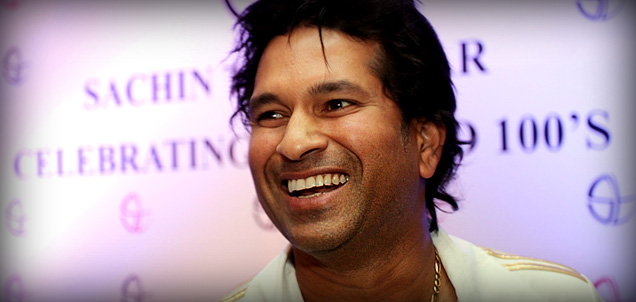
    Being associated with a network that prides itself on coverage being different from the clutter as well as being responsible for making the people and authorities accountable for their actions, are roles that many journalists would hanker after during their lifetime. And this is where Ali Velshi of CNN holds himself in high stead as he embarks on an enduring journey of bringing about accountability and response from the viewers in a way that affects the functioning of an economy. Whether it is connecting the news through finance, global issues, contemporary governance, education and big ideas, CNN’s Ali Velshi executes several roles across CNN as the network’s chief business correspondent and anchor of Your Money and World Business Today on CNN International.
     

    In a short yet crisp conversation with MxM India, Mr Velshi shares his sentiments around the political and business scenario bracing several economies and suggests patterns that would emerge as countries try and lift themselves out of the slowdown dilemma.


    Q: There’s talk of an ongoing slowdown that’s said to be impacting growth of several industries across the globe. How do you view the current economic crisis?

    The biggest differentiator between what the world is going through right now and what it went through in 2008-09 is that the current crisis has not evolved into a global credit crisis – that’s what made the last economic crisis substantially different in the sense that we learnt that we are all interconnected and that credit arrears that started in the US froze up the flow of money globally. Here we have a situation where we still have a great deal of uncertainty about Europe but you have stronger-than-expected economic growth in the US and weakening but still very strong economic growth in Asia. So we are not on the threshold of a disaster like we were globally in 2008-09; the general view is that the economic growth story is much more positive. It looks like the global economy is going to move forward heavily dependent on emerging economies and on strong growth in China & India.


    Q: What role will Asia play in helping the world rebuild its growth story?

    A lot of what happens to global growth is going to depend on China and India. We do see some slowing of growth in both of those markets for different reasons – in some cases because of the inflation and in the other cases because of the slowdown in spending in Europe. So the sum total of what happens in 2012 will probably have more to do with politics and inflation and oil prices then it’s going to have to do with organic growth. There are a number of things that are going to happen in the coming months particularly with respect to Iran and oil prices that will have an impact what 2012 will end up looking.


    Q: At CNN, what are some of the new viewership trends that’re redefining the way you cover news?

    The biggest trend that we’ve been witnessing at CNN and in the world of news is the remarkable surge in digital consumption of news, especially business news. Digital consumption of business news has been high for several years but the thing that is becoming important in financial news and economic analysis these days is context. And that’s where we can shine at CNN and that’s where we can gather the experts to add context to simple numbers or political results or debates as we have a strong stable of excellent analysts and commentators who can bring colour to the discussion. And that’s what is important; digital has given us access to development and news. But in the end, regardless of how our readers or listeners consume their news the value of the content and the context remains our major advantage in the market.


    Q: Don’t you see digital challenging the traditional medium where accessibility of news is concerned?

    As a journalist, I am highly agnostic to how people consume our product and one thing I have learnt at CNN is how to be agnostic. So I have to be able to report through TV, through social media, through blogging, through videos, etc. There are different types of audiences for these mediums, but ultimately if you are trying to get news and analysis out it should be relevant to the audience. I don’t think digital takes away the sheen from traditional media; in fact it adds to it as it allows us instant access to our audience and allows us to respond to them more quickly etc.


    Q: How according to you does CNN stand out from its peers in the highly competitive news market?

    Our reach continues to grow at CNN because it’s a must-have product for people who want to stay informed about global events and happenings. Whereas the Indian market is concerned, it’s fascinating how much news there is, how much broadcast there is…the growth of newspapers, etc. So Indians are clearly national consumers of news but where we stand apart is that CNN is a key channel that offers global perspective. We only see an upside potential in terms of busy, crowded, noisy world where people need to understand context in digestible portions.


    Q: Apart from being just a disseminator of news, how do you ensure you play a larger role in impacting the lives of people?

    The kind of initiatives that we take up like CNN Heroes etc we see to it that it really creates an impact because what ends up happening is that we can throw a light on corrupt practices and the plight of people who have no other voice. We can influence bad policy and have an impact on changes in an effective way. Also, the other thing is that using the strength of CNN we can get accurate reporting where sometimes a smaller organisation that doesn’t have a similar reach is not able to do so. As a result, we can hold people accountable. In media, the single biggest role that we can play is that of accountability. It makes for a more honest and fair world and I think that’s what our viewers appreciate.


  • Cheil appoints Vivek Dutta as VP-Planning

    By A Correspondent


    Vivek Dutta joins Cheil as the Vice President-Planning after spending almost five years at Hakuhodo Percept where he was VP and National Planning Head. He has also worked for JWT in the past and in brand and marketing functions at Dainik Bhaskar, LNJ Bhilwara Group (Mayur Suitings) and Mahindra & Mahindra.


    Commenting on the development, Alok Agrawal, COO, Cheil Worldwide SW Asia, said: “Vivek has the right credentials to provide the required momentum in the planning function. His experience across diverse categories from automotive to consumer electronics; to health, lifestyle and sports; to social development, makes for the perfect choice of a seasoned partner for the Cheil India team.”


    Dutta has been in the industry for over a decade and a half and has had extended brand experience in the automotive sector having worked on the Maruti Suzuki range. He has also worked with Daikin, Carrier, Panasonic, Sharp, Toshiba, Sony and the like in both the HVAC and consumer electronics categories. Other career brands include Yakult, Hindware, Sukam Power Solutions, Unicharm, Citizen Watches, Top Ramen noodles, UNICEF, ILO, GAIL, Apollo Tyres, ESPN Star Sports among others.


    Confirming his appointment, Vivek Dutta said: “It’s a great time to be a part of Cheil. Contrary to popular belief Cheil is not just a Samsung agency. The intention here is to exponentially grow to be one of the top agencies in India. The fact that in the past few months Cheil has acquired a slew of varied business is a testimony for this. My intention is to be a part of this movement and provide momentum for growth.”


    Cheil India has been on an aggressive growth plan over the last 2 years, almost doubling its size its employee strength and billings. Significant expansion and growth has been seen particularly in BTL and Digital areas, making Cheil one of the largest fully integrated single agencies in India. Cheil set up the agency office in India in 2003 with just 12 team members and today has over 85 talented and passionate team members.


    Cheil Worldwide Inc is Korea’s largest and one of the world’s leading advertising groups. Established in 1973 with headquarters in Seoul, South Korea, Cheil operates 49 offices in 27 countries with about 3,000 employees. Cheil offers a full portfolio of marketing communications services including advertising, PR, sports marketing, exhibition and display production, and production of large-scale performance events.


  • With Nai Dunia in the bag, Jagran is #1 print group


    By Archita Wagle


    There was no press conference announcing the deal. The Kanpur-based Jagran Prakashan Limited (JPL) simply did it by notifying the stock exchanges. The acquisition of Nai Dunia was done via Suvi Info Management (Indore) Private Limited which in turn owns Naidunia Media. It was an all-cash deal.


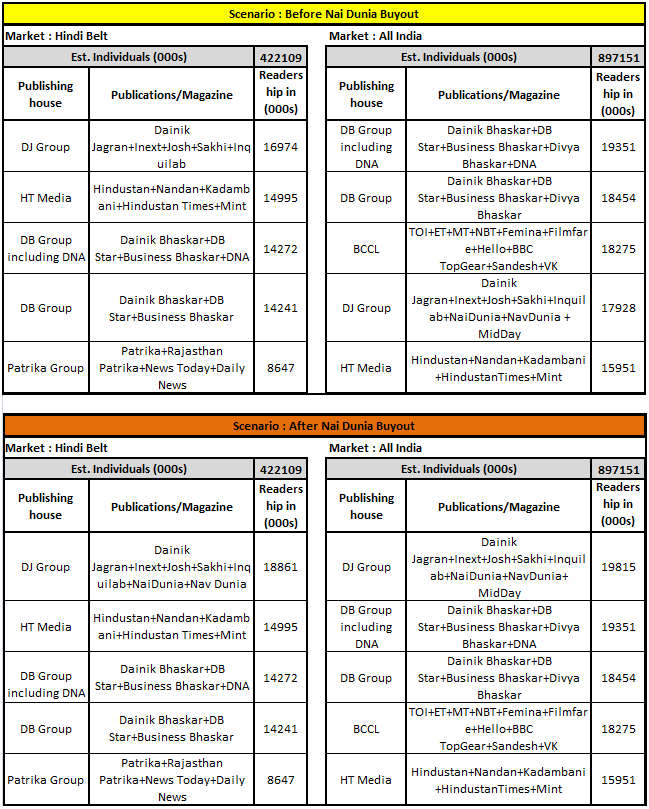
    What it does for the Jagran group is significant as its hold on the Hindi belt becificant, a factor that could help strike better contracts with advertisers. In fact, as an analysis with IRS 2011 Round 4 numbers shows, the Nai Dunia acquisition has helped JPL become the numero uno print media group in the country (see accompanying story: Saala Jagran No 1 print media group ban gaya…)


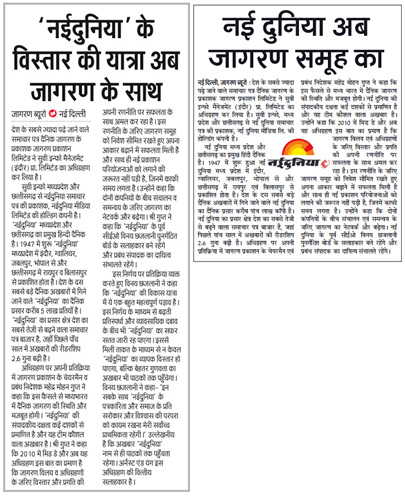
    Announcements of the deal on the front pages of Nai Dunia (left) and Dainik Jagran (right)

    According to an analyst from a domestic brokerage firm, this deal makes sense to JPL as the enterprise value assigned to Nai Dunia is Rs2.25 billion and had JPL planned a greenfield expansion in MPC, the total cost could have run into at least Rs3 billion.


    In an email interaction with MxMIndia, Mr Amit Jaiswal, Company Secretary, JPL clarified that JPL has acquired only Nai Dunia. NewsX and Webdunia are not a part of the deal. Talking about the changes after the deal he said: “Mr Vinay Chhajlani will continue as Advisor to Board. His vast experience of print and knowledge about the market will be quite useful for us. We will add some new members to the team at senior level in sales, marketing and editorial. Our corporate brand team will help in branding and communication. As far as the staff, the erstwhile promoters have already rationalized the staff strength to a large extent.”


    Commenting on the acquisition in a communique, Mr Mahendra Mohan Gupta, Chairman and Managing Director of Jagran said, “This was a logical market expansion for us and enables us to strengthen our presence in Central India. Nai Dunia is a newspaper with a very strong team and has demonstrated editorial excellence over the last decade.”


    Nai Dunia is the flagship publication of Naidunia Media Limited, which was launched June 5, 1947. Nai Dunia features amongst the top 10 Hindi dailies of India and has multiple editions in MP and Chhattisgarh and is the third largest read newspaper in Madhya Pradesh and the fourth largest read newspaper in Chhattisgarh (IRS Q4 2011). According to a Jagran communique, Nai Dunia’s current circulation base is around half a million copies per day with the readership growing 2.6 times over the last five years.


    The industry is almost unanimous in saying that the deal is windfall for both the parties involved, especially JPL, which can now enter the Madhya Pradesh-Chattisgarh (MPC) market. JPPL, controlled by GD Gupta family publishes the Jagran editions in Bhopal and Rewa in Madhya Pradesh and JPL, promoted by the PC Gupta family, has been barred from using Dainik Jagran banner in MP as it has been in litigation since 2007. But with the Nai Dunia acquisition, the other option for JPL, they are entering the MPC market with an established newspaper, which is the second largest newspaper in terms of readership and business volumes in MPC.


    “JPL will benefit in terms of circulation and readership as it gets two new territories, Madhya Pradesh and Chattisgarh, with the acquisition of an established and well-known newspaper. JPL couldn’t enter Madhya Pradesh as per the agreement in the family, but now taking over Nai Dunia has opened the MP market for them,” said Mr Vijaydutt Shridhar, senior MP-based journalist and ex-editor of Navbharat.


    Mr Abhishek Karnani, Director, Free Press Journal which also has an edition in Indore, echoed Mr Shridhar’s sentiments: “The takeover deal is a windfall for both, JPL and Nai Dunia. Entering the MPC market was the next logical move for JPL. Initially the market had only Dainik Bhaskar and Nai Dunia but several local new publications with strong backing were launched in the market. Nai Dunia made a smart move in selling out rather than being marginalised in the market.”


    Says Mr Sundeep Nagpal of leading media consulting firm Stratagem, “This is in line with what other leading groups have done – like the Times of India group did with Vijaya Karanataka.” According to Mr Nagpal, the acquisition is a win-win for all parties involved.


    “With Nai Dunia’s acquisition, JPL has gained foothold in an important and growing market for Hindi publications. Nai Dunia never grew much beyond Indore, though they had launched editions in other cities. But with an aggressive player like JPL taking over we can expect to see Nai Dunia growing in other centres too. JPL has now entered Dainik Bhaskar’s territory. We can now expect a good fight,” said Mr Janardhan Pandey, associate VP, DDB Mudra.


    Stockmarket analysts though are a little cautious about this face-off as they believe that DB Corp will not be impacted because of the entry of JPL from a short to medium term perspective. But they say that Patrika would be impacted as Jagran would become aggressive to win back the No. 2 slot in MPC. The analysts also feel that the price paid (net of tax benefits) is inexpensive and should derive benefits in the medium to long-term.


    For the cash-rich Jagran group, the Nai Dunia acquisition follows that of Mid-Day two years ago and the management plans that Nai Dunia will be consolidated once a year just like Mid-Day.

    Saala Jagran No 1 print media group ban gaya…

    By A Correspondent


    Question: Until last fiscal, which was the largest print publishing house in the country?

    Answer: No, the answer is not Dainik Jagran. It’s Dainik Bhaskar, In fact, Jagran was at No 3 until two days ago, just behind the BCCL group. But with the buyout of the Nai Dunia group, Jagran now becomes the largest print media group in the country. Check tables below:


    Note: MRUC does not share detailed IRS numbers with the media. Given that we had adequate time for the confirmation of the Nai Dunia buy, we collected the information from what MRUC shared with us and from respective media entities.


  • Twitter goes ‘laplap” for Center Fruit

    By A Correspondent


    The last evening of the financial year saw the start of something unique in the media space: celebrities using Twitter to seed in a viral video of a TV show which was scheduled later the same evening. The unique thing about it was that it was not only to promote the show tune-in, but to actually create awareness of a branded content segment by Center Fruit in the Mirchi Music Awards.


    Perfetti Van Melle India is credited with introducing some catch phrases through their advertising which have gone on to become common lingo amongst the Indian youth. After Center Fresh’s Zubaan Pe Lagaam and Mentos’ Dimaag ki Batti Jala De, this time Indian audiences were witness to something unique for Center Fruit on Mirchi Music Awards which was aired on Colors on Sat-Sun.


    Starting early evening before the show was supposed to premier on Colors prime time, a video was seeded through Twitter medium. It was not just a plain seeding. The campaign took the help of celebrities to seed in the video as a teaser. The video had the host of the award show Shaan being interviewed just before he was about to take the stage. In the middle of the interview, the journalist holds up the jar of Center Fruit, and off goes Shaan with his tongue-wagging act. This was similar to what happens in the brand commercial where a singer competing with a tabla player wins the battle when Center Fruit makes the singer go non-stop laplap with his jeebh (tongue).


    This was probably the first time a FMCG brand used the Celebrity tweet route to create a teaser online for amplifying a TV show scheduled later in the day. Commenting on the initiative, Sudarshan Saha, Client Leader, Maxus says that the idea came to his team when they saw top trending topics in the evenings in India recently tended to pick up what was being shown on Television. The agency team decided to turn the tables around, and used Twitter to seed in a tease before the show went on air, in this case. Sample this: Sophie Choudhrytweets – Does Darrling Luscious Lopez make your #Jeebhlaplap? or Poonam Pandey tweets -Shaan’s exclusive #jeebhlaplap backstage footage from MMA. Eesha Koppikar tweets -Enjoyed Shaan’s laplap secret. Watch Colors to see what makes Usha Uthup’s #jeebhlaplap.


    Perfetti Marketing Director Nikhil Sharma feels that the quality of innovation executed for Center Fruit pushes the benchmark further on how to use multiple mediums, especially Digital along with TV for FMCG brands. He leads marketing mandate for an array of impulse purchase brands in Perfetti, and treats Maxus as a long term partner to drive the growth agenda for his brands.