Category: MEDIA

  • Ranjona Banerji: No one does it better than Arnab Goswami on championing women’s rights

    By Ranjona Banerji


    After a long gap, I decided to watch Arnab Goswami, the voice of the nation on Times Now, India’s most loved and hated news anchor. And I was in luck. Because Thursday night was the night that he decided to champion women’s rights; and you have to concede that love him or hate him, when it comes to women’s rights, nobody one does it better. I am being extremely serious here. For all the problems I have had with Goswami’s style of journalism, when it comes to women’s rights, he is tops!


    The subject was the sexual harassment allegations against Dr RK Pachauri, scientist and part of a Nobel Prize winning team for work on climate change. Sexual harassment cases in India have always been treacherous territory and even more so when the accused are rich, famous, influential and so on. Given the details of the accusations, Dr Pachauri was suspended from TERI (The Energy and Resources Institute). But now he’s back and in a higher position than he was before in what seems to be a clever sleight of hand by his friends at TERI since he was the boss anyway.

    Hence, the outrage.


    The subject therefore was gripping enough. A very senior doctor, who works with women’s issues and empowerment, pointed out to me recently Goswami takes on such issues more often than anyone else. But the problem seems to be that guests on such shows have also twigged on how to manipulate the inevitable screaming match (“open debate”) to their benefit. “Let me speak let me speak let me speak” they go on, while saying nothing. Goswami interrupts them when he disagrees and this leads to higher decibel levels.


    Other guests know how to stay on the star anchor’s good side so they agree with him, adding their expertise when necessary. This means that they will be invited again and again. Pachauri’s lawyer however took the “let me speak” route which meant that he not only annoyed the anchor but everyone else. It did not help that he was trying to defend the accused. Nor did it help that he decided the best way to do so was to personally attack Goswami and the media.


    Pachauri’s lawyer also put up a sheet of paper claiming his mike had been switched off which further aggravated the host. He said that Goswami was not a judge and that he should have his own show where only he speaks. It is hard to understand whether the lawyer was being ironic or insulting or just thick since his own show is precisely what Goswami does have and he has established his authority over his show very emphatically over the years. It is Goswami who makes the show and everyone knows that. An easy tip for guests who want to remain in the public eye – do not upset the anchor!


    If Pachauri’s lawyer decided that he was the entertainment for the evening, we have a few problems here. The first is that the subject at hand was vitally important. The allegations against Pachauri are very serious and have not been made by just one woman. Students at TERI University of which Pachauri is the head have said they refuse to receive their degrees from him. The people on the TERI governing council are also big names. Although Friday’s papers report that the council will re-look at Pachauri’s role at TERI, it cannot be ruled out that the attention on this case prompted a re-think. For this, Goswami and others who highlighted sexual harassment cases including this one, please take a bow.


    However, through his show Goswami discussed media houses which are supporting Pachauri and are part of his large circle of influence. There was an old Tamil film song which asked “Who is the black sheep? Who? Who? Who?”. I repeat the question here! Who?


  • So what went wrong with Free Basics?


    By Pritha Mitra Dasgupta


    MUMBAI: Facebook didn’t get the tone of its extensive Free Basics campaign right, said brand consultants and advertising veterans.


    The social media company failed to gain enough public support, win over the government or convince the Telecom Regulatory Authority of India (Trai), which ruled against discriminatory pricing for data services on Monday, effectively shutting down the initiative.


    “It’s fair to say it was a mishandled campaign for a company that’s trying to launch a new initiative,” said Futurebrands India CEO Santosh Desai. “It was a naked show of muscle power.


    Also, the campaign didn’t fit with their alleged intention at all.” The campaign was accused of seeking to manipulate opinion, with Trai publicly expressing displeasure over a Facebook survey that purported to show widespread public support for Free Basics.


    It may have been a better idea to show that Facebook was working in collaboration with the government’s objectives instead, the experts said. The campaign was too “in-your face,” said brand expert Harish Bijoor. “Bureaucrats’ political masters are a voter-sensitive audience,” he said.


    The Narendra Modi government has been at pains to distance itself from allegations of crony capitalism, he pointed out. It was surprising that Facebook seemed to get this wrong.


    Industry sources say Facebook had earmarked upwards of Rs 150 crore for the Free Basics campaign. By November last year, the company had spent around Rs 25-30 crore on print, digital and outdoor campaigns, according to media agency sources, including ads in this paper.


    It may have spent about Rs 50 crore on the Free Basics advertising campaign until this week, they said. “I think the campaign missed a trick or two,” said Sam Balsara, chairman of Madison World.


    “While the campaign or its aggressive nature cannot be the only reason behind Trai’s decision, I think Indians didn’t relate to it so well.” MG Parameswaran, former executive director of FCB Ulka, said Facebook should have employed more subtle methods.


    “They should have reached out to influential bloggers and used social media more effectively to explain what it actually meant,” he said. Some experts pointed to the manner in which overseas companies such as Uber and Nestle have sought to deal with difficult situations in India.


    The taxi aggregator has had to deal with the fallout of a passenger being raped in an Uber cab and hostile scrutiny of the way in which it does business.


    Uber hasn’t embarked on advertising campaigns to build its business in India as it has overseas. It has instead tried other strategies, including social media messaging.


    After being banned briefly, Nestle’s Maggi noodles returned with an advertising campaign created by Prasoon Joshi of McCann India aimed at winning both the trust of consumers and the government. And Joshi’s take on the Facebook campaign? “It will be unfair to blame an ad campaign for what the democracy or the government decides,” he said.


    Source:The Economic Times

    Copyright © 2016, Bennett, Coleman & Co. Ltd. All Rights Reserved

    Licensed to republish


  • 6th India Digital Awards felicitates worthy achievers

    By A Correspondent


    Anand Mahindra was adjudged as the Social Media Person of the Year at the 6th India Digital Awards presented by IAMAI. The winners of the 6th India Digital Awards coinciding with 10th India Digital Summit, 2016, were announced at a ceremony recently. The awards, this year had 6 Categories and 32 sub-categories for the internet and mobile value added services industry. The categories were Digital Advertising; Website; Mobile; Digital Payment; Digital Social & Economic Empowerment and Special Awards. While WatConsult’s “Sony SIX” was awarded Advertising / Marketing Award on Mobile, the coveted Best Digital Person of the Year was awarded to Vijay Shekhar Sharma of PayTm & Bhavish Aggarwal of Ola. Interactive Avenues won the best Digital Agency of the year award.


    Vijay Shekhar Sharma received the coveted Best Digital Person of the Year from Shri. Jayant Sinha, Minister of State – Finance.


    Winners of 6th India Digital Awards include:

    Award Winner
    Best Advertising / Marketing on Mobile WatConsult for Sony SIX
    Display Madison for Marico
    Search Marketing iProspect for ShopClues
    Viral Marketing Campaign Star India
    Email Marketing Campaign netCore for BIBA
    Social Media Marketing Campaign Interactive Avenues for Micromax Interactives
    Digital Integrated Campaign Experience Commerce for Lenovo India
    Execution of Performance Campaign Realty Redefined for The Wadhwa Group
    e-Commerce Website for a Retail Brand www.trendin.com – Madura Fashion & Lifestyle
    e-Commerce Website in a Specialised Category www.pepperfry.com
    Local Language Website www.chuttuvattom.com – Malayala Manorama
    News Content Website NDTV.com
    Travel Website Thomas Cook
    Financial Website www.bankbazaar.com – A & A Dukaan Financial Services
    Educational Website www.simplilearn.com
    Brand / Product Website www.hotstar.com – Star India
    Consumer Mobile Service National Mobile Number Portability – Vodafone India
    Mobile Enterprise Product or Services Abbott India Radio
    Mobile Game Star Chef by 99Games
    Innovative Mobile App Inshorts
    Mobile Money Prepaid Card / Product Happay and Payback
    Money Product / Service mVisa
    Digital Payment Facilitator Avenues India
    Digital Wallet PayTm
    Money Transfer Programme MobiKwik
    Payment Technology / Solution Provider PayU Payments
    Best use of Mobile for Social and Economic Development Karnataka MobileOne by Centre for e-Governance
    Best use of Internet for Social and Economic Development Intelligent Grid & Smart Metering Solution by Essel Infraprojects
    Start-Up of the Year OYO Rooms
    Digital Person of the Year Vijay Shekhar Sharma & Bhavish Aggarwal
    Digital Agency of the Year Interactive Avenues
    Social Media Person of the Year Anand Mahindra


  • IndiaMART unveils ‘India ki Khoj’ campaign celebrating Indian entrepreneurship

    By A Correspondent


    IndiaMART is set to seal its position as the enabler of business growth with its new brand campaign – ‘India ki Khoj’. The new campaign featuring Irrfan Khan will establish its value proposition of a business facilitator of India, by being the platform that powers the ‘Khoj’ for growth, success, ambitions and legacy.


    “It feels great to be associated with this brand and its campaigns that have been inspirational to millions of entrepreneurs as well as the buyers in fulfilling their needs, be it business or personal. Through this campaign, I am sure that it will generate a strong impact and encourage enterprising people across the country to come forward and put their ideas into action,” said Irrfan Khan, India’s critically and globally acclaimed Cine Star.


    Speaking of the campaign, Sumit Bedi, Vice President, IndiaMART said, “India’s economic prosperity is fuelled by millions of small & medium sized entrepreneurs. We give them the platform to grow and act as an enabler that they can trust. Through this campaign, we will be celebrating the spirit of enterprises found across the length and breadth of India. Thus, we have summed it up as ‘Khoj’, for everything that they are looking for in life. We don’t just connect markets with opportunity; we connect individuals with their ambitions.”


    The campaign has been crafted by ‘Bang in the Middle’ and was shot in Mumbai. Prathap Suthan, CCO and Managing Partner, Bang in the Middle said “Every entrepreneur and every businessman starts his or her journey to follow a dream. The innate search and thirst to achieve a target, reach a landmark, and build an enterprise worthy of the dream in their minds. Our country is full of legends of people who have started small and made global successes, and those stories and surnames are driving forces for a country that’s now woken up.  They are inspiration to those searching for their own footprints to leave behind. This campaign is a tribute to that entrepreneurial spirit, as much as the earthiness of Irrfan adds realness to the grit of these people”


    The campaign kick-started with a tweet by Irrfan Khan and will also be amplified through his other digital platforms.


  • Spuul unveils new avatar as it seeks to grow viewership across India

    By A Correspondent


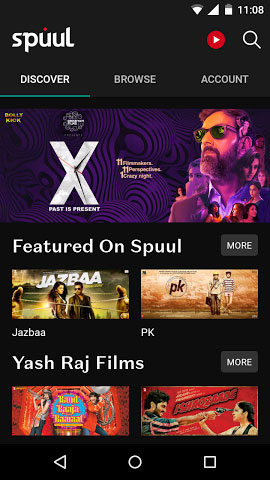
    Spuul has announced strategic investments in key areas made with the objective of enhancing customer engagement and growing viewership across regions. In line with this move, Spuul is presenting itself in a new avatar with its mobile and web applications with a redesigned interface created to facilitate easy content discovery, quick and easy modes of payment with pocket friendly pricing, and tweaks that will allow users to stream content over low bandwidth networks. The update is currently available for Android & the web, with an update scheduled for iOS devices in the coming weeks.


    With a revised pricing strategy, Spuul will be offering premium subscriptions at sachet prices ranging from Rs. 30 for 5 days to Rs 150 for 30 days. The OTT service provider has tied up with telecom operators to provide carrier billing for payment options from within the app, allowing users to pay for their subscriptions through their mobile operator.


    Keeping in line with its commitment to offer its viewers a complete experience, Spuul has also launched the ‘Tiny’ download option – which will help combat slow data connections and erratic network issues.


    “India has typically been a single TV household – it is now transforming into one where ~650M people will have a TV in their pockets by 2019. 90 per cent of all consumption on Spuul already comes from smartphones. With this update we aim to increase consumer engagement and enhance their overall experience. Furthermore, India is a growing market where a device’s network often creates a hindrance for a user trying to consume content in any form, especially when one is outside a wi-fi zone. We’ve kept this in mind while trying to present a seamless experience to the user, by introducing certain features that will allow him to consume content, even in poor network areas. With this update, we are very excited to present our users with immense flexibility to pay and stream their favorite content,” says Subin Subaiah, CEO, Spuul.


    Spuul’s UI for the website and mobile apps has undergone a complete overhaul, with increased browsing options that make content discovery easier. The update comes with an improved search experience that will help the user to search by language, genre, actors and directors. The app’s Instant Play feature allows the user to resume the video right where he paused it, and also throws up recommendations of unwatched content based on the users’ viewing history.


    “With our growing content library, aiding the user with the discovery of untapped content is essential to engagement. With these new features, we are confident that the viewing experience will only be further enhanced.” says Subaiah


    Spuul has introduced completely new price points to suit the wallet of users in India. “We took the consumer goods model of sachet pricing and exported it to the VOD space. Our new price points for recurring subscriptions are Rs. 30 for 5 days, Rs. 60 for 10 days, Rs. 90 for 15 days, and Rs. 150 for 30 days. You can pay using your debit or credit card, iTunes & Google Play or operator billing for which we have partnered with Vodafone & Idea. By March, we will have all the major telecom operators covered. In addition to the tech updates, we are adding a ton of content this quarter, which will surprise and delight viewers”, added Subaiah.


  • Nitin Alawadhi appointed National Sales Head at LIVE Viacom 18

    By A Correspondent


    Viacom18 has announced the appointment of Nitin Alawadhi as the National Head, Sales, LIVE Viacom18. In his new role, Nitin will spearhead the business development team to drive revenues and build a strong clientele across India.


    Launched in 2013, LIVE Viacom18 creates large format event IPs such as Vh1 Supersonic, MTV Bollyland, Emerge, MTV Indies Extreme and MTV Indies SPIRO along with International award formats like MTV Video Music Awards India (VMAI), Kids Choice Awards, et al.


    Nitin joins LIVE Viacom18 from Bennett, Coleman & Co Ltd. (BCCL) where he spearheaded the Integrated Brand Communications and Experiential marketing divisions. With dual management degrees in Marketing and International Trade Management from CMD and NMIMS, Nitin, in his career spanning close to two decades has worked in designing brand campaign, media planning, building statutory audit/ legal frameworks and strategic alliances.


    Speaking about Nitin’s appointment, Jaideep Singh, Sr. Vice President and Business Head- LIVE Viacom18, says, “Nitin’s experience in successfully driving revenues for the Integrated Brand Communications and Experiential marketing platform will add a great value to the LIVE division at Viacom18. The experience and caliber is apt to be leading a dynamic and ever aggressive brand like ours that is always in a transition for better compliance with market needs.”


  • OMD bags media business of Telenor

    By A Correspondent


    OMD has been awarded the media strategy, planning and buying duties for Telenor Group, a leading mobile service provider with more than 200 million mobile subscribers. The win covers the markets of Thailand, India and Pakistan in Asia Pacific, across both online and offline media platforms.


    India, Pakistan are new market wins, while in Thailand, the pre-paid category is an additional win for OMD. OMD Thailand has successfully retained Telenor’s post-paid business along with dtac – Telenor’s subsidiary company in Thailand.


    Commenting on the win, Stephen Li, CEO, OMD APAC, said, “The win is a fabulous start to the year and our teams could not be happier. We believe that in working with Telenor, it will give us the opportunity to create interesting, challenging and effective work in the changing marketing and media ecosystem.  Leveraging our deep analytical capability, performance-based media channels, and media creativity, we are looking forward to driving tangible business results for Telenor.”


  • Arre co-founders increase stake in entity

    By A Correspondent


    As a precursor to the launch of Arré, the founders have realigned their shareholding. B Saikumar, Managing Director and Co-Founder has taken controlling interest in Arré, with Ajay Chacko continuing as CEO and Co-Founder. Sanjay Ray Chaudhuri (RayC), who was Co-Founder of TV18 has come in as Co-Founder in Arré.


    Speaking on the development, Ronnie Screwvala said, “Arré is now all set to launch and all of us are tremendously excited about its potential and trajectory. I am pleased that Sai and team are taking a controlling shareholding in Arré and I will continue as an investor with a significant minority shareholding supporting the company and mentoring the leadership team.”


    B. Saikumar added, “I am thrilled to welcome Ray C aboard as Co-Founder and we are delighted and honoured to have Ronnie continue to guide us. The trailer to our first show “I Don’t Watch TV” is now out and we look forward to the launch of Arré in the next few weeks.”


  • Zee 24 Taas Ananya Sanmaan on Feb 16

    By A Correspondent

    The eight edition of “Zee 24 Taas Ananya Sanmaan” will continue its effort for carrying forward the tradition of “Sanman” and honoring the extraordinary, to reward and recognise the extraordinary efforts of the unsung heroes across various fields of activity which are sports, entertainment, social service, education, farming, environment, and bravery. Along with this, the platform also celebrates the achievement of the legendary person from one of the field with the Life Time Achievement honour.

    In its previous editions, Zee 24 TaasAnanya Sanmaan honored Marathi achievers and Unsung Heroes from different fields respectively. It had witnessed the presence of eminent personalities like Union Minister, Chief Minister and Dy. Chief Minister along with other luminaries.

    The Zee 24 Taas Ananya Sanmaan 2015 will be held in the evening of February 16 2016 in Mumbai. Panvelkar Group and DHFL are associate sponsors for it where as Mango Holidays as Travel Partner, Chikitsa as Wellness Partner & TJSB as Banking Partner are associated with it.


  • Ranjona Banerji: Arnab Goswami’s Newshour – Jingoism not Journalism!

    By Ranjona Banerji


    It had to happen. Just when I praised Arnab Goswami and Times Now for taking on Dr RK Pachauri and TERI in their unacceptable behaviour in the sexual harassment case against Pachauri, Goswami gets his channel into full jingoism mode deciding to bypass journalism for grandstanding.


    Let’s get back to the beginning. On February 9, some students at the Jawaharlal Nehru University organised an event in support of Afzal Guru, the terrorist who had been hanged for his role in the 2001 attack on Parliament. Guru’s involvement had been a matter of controversy then as it seems to have become again.


    But what’s happening now is something else. Like the last government, this one seems trigger-happy on the “sedition” angle to suppress all criticism. And as journalists, our primary role has to be to watch and report, not jump in and take sides. There was, as people have pointed out, something immensely cynical in the way Times Now decided that it had to play the “patriotic” card at all costs. This is one of those double-edged cards. Is it patriotic or anti-national to mention for instance that many Indians do not have access to adequate healthcare or toilets or education? You could well argue that it presents India in a bad light internationally to keep harping on our shortcomings. But if you never mention it, are you ignoring the reality for most Indians and failing as a journalist?


    So when journalists, students and teachers are attacked by lawyers at the Patiala House Court on February 15, as they waited for JNU students’ Union leader Kanhaiya Kumar’s sedition case to come up, how is a newsroom to respond? The usual procedure is for journalists to stick together and such violence to be condemned. The police stood by and did nothing. This normally makes Times Now furious. However, this time it broke the code and decided to concentrate on the families of those police and security personnel killed in the 2001 attack on Parliament to demonstrate the channel’s high regard for patriotism and sidestep the travesty of rule of law and the frightening excesses of mob violence on display at Patiala House Court.


    This is Alok Singh of the Indian Express on what happened to him on February 15:

    “You will not shoot videos,” he said. I told him I wasn’t recording and was only making a phone call. A third man, also in black robes, rushed over and slapped me. “Desh ke gaddar (anti-national),” the group shouted. Within seconds, I was surrounded by at least 10 men in lawyers’ coats. They started slapping and punching me, targeting my face and head. I remember screaming at them, “I am a journalist..I am a journalist.” But nobody seemed to care. After a few more seconds, they stopped but then another man dressed like a lawyer walked up and slapped me again. They kept shouting at me, “He recorded a video…get out of here…get out.” Finally, a lawyer from the court came to my rescue. He stopped the assault, and told me to quietly leave the premises. I asked for my phone, which was handed over to me. The screen was cracked. – See more at: http://indianexpress.com/article/india/india-news-india/jnu-patiala-house-court-attack-indian-express-journalists-recount-the-assault/#sthash.YP4MWRDV.dpuf.


    In case Indian Express is not credible enough for Times Now’s idea of journalism, here’s Sana Shakil, a journalist from The Times of India, its sister concern (or big brother, to be technically correct):

    “The agitators’ attention then turned to us. We thought our press ID cards would guarantee us safety, but of course that wasn’t to be. A journalist who sported a beard was called a traitor and his ID dismissed as fake by the assailants; I was told that I looked like a JNU student and was abused harshly for looking at my attackers in the eye.


    The frenzied lawyers threatened to teach us, “deshdrohi (traitorous) journalists”, a lesson. “Bone bhi todenge aur phone bhi todenge, (We will break your phones as well as your bones,” rasped an angry advocate. From my five-year experience of legal reporting, I thought things would be fine once the judge emerged from his chamber. But even as the pro-BJP/anti-JNU slogans got more raucous, the judge did not make an appearance. Instead, corralled by them, we continued to be tortured physically and mentally.”

    http://timesofindia.indiatimes.com/city/delhi/One-of-them-said-bone-bhi-todenge-phone-bhi-todenge/articleshow/51001849.cms


    Through the day on television, most news channels focussed on this behaviour. So did most primetime shows. However, Times Now could not be bothered, as it continued with its “patriotic” line. Whatever was happening on Arnab Goswami’s show was not journalism. It was not amusing. And it represented precisely why Goswami’s show is popular and why sensible people cannot watch it. I must in this congratulate Zakka Jacob of CNN-IBN as he stuck to his guns no matter how absurd Sudhanshu Trivedi of the BJP behaved on the evening debate.


    Meanwhile, the dangers of journalists and media houses aligning too closely with political establishments remain. The fact is that the people who beat up journalists, students and teachers outside the Delhi court were aligned to the BJP. The fact that you as a newsroom or a media house cannot shift away from that alliance to stand with your fellow journalists when they are under attack, demonstrates your understanding of what being a journalist means. Or not… most likely, not.


  • Sudhanshu Vats | Make in India. Show the World


    By Sudhanshu Vats


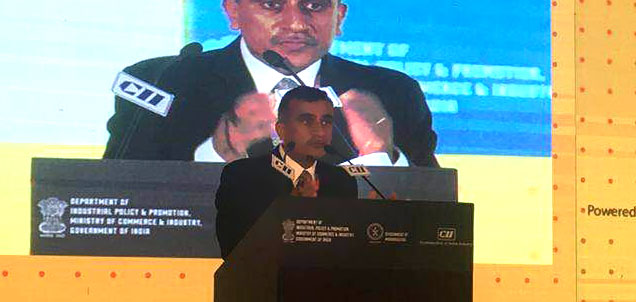
    Sudhanshu Vats, Viacom18 Group CEO and Chairman CII National Committee on Media and Entertainment, gave a closing speech at the Media & Entertainment Seminar on Day 3 of Make in India, chaired by I&B Minister of State Colonel Rajyavardhan Singh Rathore, Sumit Mazumdar and Ramesh Sippy. Here’s the text of the speech:


    Sometimes we get carried away with the concept of Make in India and think of it in terms of big machines, big companies, big resources. But Make in India is at the heart of every Indian, every individual. And it was actually interesting to see that Shri Narendra Modi, our honorary Prime Minister, on Saturday, emphasising on a great point: Make in India is a programme that is supposed to do two things. 1) It’s supposed to generate jobs for our youth, and 2) Be a platform for our youth to become job enablers and entrepreneurs. And I think it’s in this context that Media and Entertainment fits beautifully. The ability of an Indian and everybody associated with the M&E industry to do that is fantastic. And I think it is this concept I would want to build up on first.


    The size of our industry is close to about 18-20 billion dollars. India boasts of the world’s 3rd largest TV audience, 2nd largest print circulation, largest film output and one of its largest Internet audiences. Yet, at ~17 Bn USD, our entire industry earns less than some of the world’s largest media conglomerates. The latest edition of the Star Wars franchise has already crossed over 1.5 Bn USD in global ticket sales, more than 2x of global collections (including gross domestic collections) of all Bollywood films in CY15.


    Some will attribute this dichotomy to our content: is the comparison even valid? ‘Can we even think of matching the production budgets of global tentpole properties?’ ‘Are our stories universal in a way that they appeal to the entire world?’ Others make references to economics to explain the chasm: in terms of purchasing power parity we are significantly greater than based on our ‘nominal revenues’.  There is another lot (including myself) that looks at the regulatory framework for answers: shouldn’t pay TV pricing be completely deregulated if we want to deliver quality content? ‘We need addressability across India to ensure that the entire value chain gets its fair share of revenues.‘


    All these voices are acceptable, rational and attention-worthy. It might be prudent to point out that for our sector to attain escape velocity a deeper, more holistic view is required.


    But I think the Make-in-India programme has placed the (long overdue) global spotlight on India’s economic potential. And for the Media and Entertainment industry to realise its true potential, I would like to emphasise on what our honourable Prime Minister rightly described in his inaugural speech: The idea of the 4 Ds. Reiterating what he said, India is known for 3 Ds, which is democracy, demographic dividend and demand. But now the time is to lay emphasis on the 4th D, which is deregulation.


    For Indian firms to compete successfully, we need a light touch, consistent regulatory approach when it comes to our content, pricing and licensing- one that ensures parity across technology, platforms and jurisdictions. Multi-dimensional capacity building is the need of the hour. This theme has been repeated so often that it’s on the verge of becoming cliché. Yet that doesn’t take away from its relevance even today. If we truly want to transform this country into a global content powerhouse we need to invest in human capital and infrastructure. We employ around 5 Mn people today. We will easily need to double our workforce in the next 5-7 years to realise our goals.  This includes talent from the creative, technical and management spheres.


    We need to invest in this talent pipeline today, if we are to reap the benefits in time. The industry needs to collaborate more with educational institutions, the government needs to facilitate these partnerships and parents and teachers need to create awareness and nurture interest in design, technology and creative skills at the level of primary education. On the infrastructure side, while BharatNet is a commendable step, we need to expedite its rollout. Even today India has mobile-dark villages and some would argue that broadband speeds are too dismal to even be classified in the way that they are. Public Internet access is fast becoming a basic necessity in the lives of most Indians.  Finally, infrastructure in the form of convention centres, stadia and venues for experiential entertainment needs to be built to support our industry. If we don’t get this piece right, the puzzle will remain incomplete.


    Today, the M&E sector contributes to ~1% of India’s GDP, much lesser than its counterparts in developed economies. With time, as it grows in importance and scale, this contribution is bound to increase exponentially. The sector’s very inclusion in this flagship programme underscores its importance. Several policy measures under the aegis of the ‘Make-in-India’ programme are well intended. We are eagerly awaiting the new IPR policy, which is a much-needed intervention to ensure that our industry prospers. A steam-lined investment approval process and favourable foreign trade policy regime is bound to provide our sector with a fillip. The Make-In-India programme is a right step in the right direction. It has captured the imagination of people around the world, bolstered spirits within corporate and policy corridors and set the ball rolling for much-needed reform measures.


    We power several ecosystems, beyond our own. As per press reports, over 18 Bn USD of investment proposals have been received in electronics manufacturing, particularly by mobile handset manufacturers. Have we ever stopped to ask about the utility of that awe–inspiring device with a 5-inch HD screen with 64GB storage and oodles of computing power if we don’t have high-quality, engaging video content? Media rights are the single largest contributor to almost all sporting leagues in this country. FMCG companies spend a significant portion of their top-line (~10-15%) on advertising because it contributes significantly to their growth. French islands and Turkish cities witness an increase in in-bound tourists after they’ve been featured in our films. We’re more than just us.


    To conclude: The first thing is to continue the journey on deregulation. Keep it light with policies that are thought through. The second thing is in the area of IPR. And I think if the M& E industry has to grow further, we will need to have a very well-articulated IPR policy and the good thing is that the honarable Prime Minister himself spoke about this at the Make In India inauguration event.


    We need to seamlessly blend technology and creativity. For that, we will need more physical infrastructure for us to be able to organise events that do so more regularly, more frequently and more safely. I think that is the third area where the impetus is on us for building better physical infrastructure.


    My final point is in the area of building capacity from the point of view of multidisciplinary talents. Because ours in a converged world, I think it’s the combination of talent and management, talent and creative content, and talent and technology which will allow us to progress.


    The M&E sector is a key pillar of the Make in India programme and is bound to gain from it, and gain it should. After all, when we ‘Make in India, For the World’, we also ‘Make India and Show the World’.

     

  • YuppTV announces content partnership with NDTV Group

    By A Correspondent


    YuppTV, the leading Over-The-Top (OTT) provider for Indian content, has announced its partnership with the NDTV Group. Under the move, YuppTV subscribers will be able to view the four channels – NDTV India (Hindi), NDTV 24×7 (English) and NDTV Profit /Prime (Business) and NDTV Good Times anytime, anywhere.


    The four channels of NDTV can be accessed by users on www.yupptv.com from outside India and www.yupptv.in from India, or by downloading the YuppTV app on their smart phones, smart TVs,smart Blu-ray players, streaming media players, tablets and gaming consoles. The move took the number of channelson YuppTV’s platform to 16, adding to its current repository of 200+ Indian TV Channels in 13 languages including Hindi, Tamil, Telugu, Malayalam, Kannada, Marathi, Bengali, Punjabi, Oriya, Gujarati, Sinhala, Urdu and Bangla.


    Uday Reddy

    Speaking on the announcement, Uday Reddy, Founder & CEO, YuppTV, commented, “We are the largest OTT provider for Indian content in the world, while the NDTV group is the preferred news channel for Indian expats worldwide. The association will allow us to add NDTV’s popular news and lifestyle programmes to our offeringsand will improve the selection choices for our users. We are confident of satisfying all India-centric news-related requirements of our subscribers with this partnership.”


    Rahul Sood, Head, Network Distribution & Affiliate Sales, NDTV, added, “We are pleased to partner with YuppTV, a leading digital content destinationfor Indian expats andthis association will serve to add even more options for the YuppTV usersand allow its users with anytime, anywhere access to our channels.”