Category: MEDIA

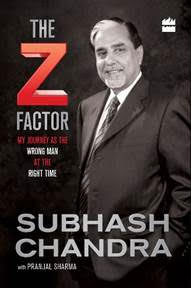
  • HarperCollins chronicles Dr Subhash Chandra’s life in new autobiography

    By A Correspondent


    Leading publihser HarperCollins India has announced the launch of the autobiography of Dr Subhash Chandra of Chairman of Zee and Essel groups. The book is an unusually candid memoir of a truly desi self-made businessman who came to Delhi at age twenty with seventeen rupees in his pocket. Today, he has a net worth of $6.3 billion and annual group revenues of in excess of $3 billion. Senior journalist Pranjal Sharma helped put the book together.


    Dr Chandra, the promoter of Essel Group and Zee, is an unlikely mogul. Hailing from a small town in Haryana, where his family ran grain mills, Chandra has been a perennial outsider, repeatedly aiming high and breaking into businesses where he was considered an interloper Starting work as a teen to pay off family debts, Dr Chandra had to rely on bluff, gumption and sheer hard toil to turn things around. A little bit of luck and political patronage saw him make a fortune in rice exports to the erstwhile USSR.


    Always a risk-taker, Chandra then had the vision of getting into broadcasting early, even as established media players failed to see its potential. Zee TV, India’s first private Indian TV channel, changed the rules of the game and tickled the fancy of a public starved of entertainment.


    Several gutsy initiatives followed, though not all of them were successful. Chandra’s attempts to launch satellite telephony and a cricket league came a cropper. But the man continues to reinvent himself; he is now also focusing on infrastructure and smart cities.


    The book was unveiled by the Prime Minister on Wednesday and then a day later amidst much fanfare at the Jaipur Litfest.


  • Ranjona Banerji: Much anti-Dalit prejudice in newsrooms

    By Ranjona Banerji


    Once more into the breach: That is how the Indian media deals with news breaks. From flip-flopping over the Pathankot attack and a number of senior editors and journalists trying to protect the government from accusations of inefficiency and worse, we now have journalists trying to be fair on Dalit issues. Forgive me if I sound cynical. It is only because I have seen too much anti-Dalit and anti lower caste prejudice from upper caste journalists in newsrooms, especially in recent times. This is nothing but a massive tragedy because if journalists do not stand up for the underprivileged, then who will?


    So now we have a situation where a research scholar at Hyderabad University, Rohith Vemula, commits suicide under some very unfortunate if not almost criminal circumstances. India discovers that he was part of a group called the Ambedkar Students’ Association, which is considered “radical” by members of the BJP’s student wing the Akhil Bharatiya Vidyarthi Parishad. Vemula and four other students were suspended by the university over a fight with the ABVP. Vemula’s stipend was withheld for months, leaving him and his family desperate.


    What made the case worse was that a BJP minister wrote to the HRD ministry to inform them of the ASA’s apparent assault on the ABVP and that these students were “anti-national”. Further, the HRD ministry consequently sent a number of letters to the university until these five Dalit students were suspended. The BJP, as is its wont these days, took too long to respond and several journalists decided to concentrate on the fact that the Congress vice-president rushed to Hyderabad rather than discrimination against Dalit students in higher educational institutions in India or government interference in support of a political party’s student body, which perhaps were the bigger stories.


    This is not the first time that we have seen upper caste anger against Dalits at institutes of higher education in India. IIT Bombay, IIT Madras, IIT Roorkee, Hyderabad University – these are only some examples of discrimination and prejudice against Dalits. It is a story that ought to be looked at thoroughly and not through the prism of upper caste angst as is evident in websites like Swarajya, for instance where takes the position that these Dalit students, by demanding their rights and holding “uncomfortable” positions, are somehow the problem. By Indian law, caste discrimination is illegal: should journalists be aware of this?


    On the evening of Thursday January 21, NDTV and India Today TV focussed on this issue. Times Now and NewsX were engrossed on a probable scam in Bihar and CNN-IBN looked at students’ suicides at Kota coaching centres. However to be fair, the media as a whole has made Rohith Vemula a household name and only a few of the usual suspects have been left scrambling to protect the BJP government at the Centre.


    **


    Bhupendra Chaubey of CNN-IBN, who has lately stewarded the channel back to a more professional mode since its ownership turmoil, found himself the butt of jokes on social media and had to face the rage of Bollywood. While interviewing Bollywood actress Sunny Leone, he focused for too long on her past as a porn star, to the extent that he was offensive and misogynistic. His questions included asking her if her presence in front of him would morally corrupt him. He also suggested that actors like Aamir Khan would never act with her. Leone was dignified throughout, which only added to her charm.


    As it happened, Aamir Khan tweeted he would be happy to act with Leone. Firstpost.com put up this defence of Chaubey, which was a superb move considering that they are sister concerns.

    http://www.firstpost.com/bollywood/in-defence-of-bhupendra-chaubey-outrage-about-the-sunny-leone-interview-is-misplaced-2592884.html


    **


    The death of Dr Aroon Tikekar this week marks a sad day for Indian journalism. He belonged to that old school of erudite, informed and free-thinking journalists who cared more for their convictions than for corporate success. He will be sorely missed in all his capacities but especially as a thinker and a mentor. I feel privileged that he considered me a friend.


  • Colors partners Equal Rights Music for new Republic Day anthem

    By A Correspondent


    On the occasion of India’s 67th Republic Day, Colors, in association with Equal Rights Music Project, seeks to spread a message of goodwill and amity with the launch of Kabootar – A Peace Anthem. The song will be launched on Colors’ digital and social media platforms reaching out to over 13 million followers and subscribers on 26th January, 2016.


    Speaking about this initiative, Raj Nayak, CEO – Colors says, “As a brand, Colors has always showcased the different hues of human emotions, feelings and sentiments. However, as we drive global development to accomplish personal goals and ambitions, peace is something that the world has lost touch with. As a nation, India has always led the fight for global harmony and brotherhood, making the country’s 67th Republic Day the perfect launchpad for ‘Kabootar – A Peace Anthem’. We are happy to have partnered with the Equal Rights Music Project for this initiative and hope that it unites the nation to achieve peace.”


    Conceptualized and written by Manish Bhatt – Founder Director, Scarecrow Communications and composed by Eddie T Avil, the song uses Kabootar as a metaphor for peace. The song’s insightfully written lyrics asks the dove the one question that mankind has been eternally pondering over – ‘When Will Peace Finally Grace the World / Kab utrega dharti par, ein kabootar’. The video, aesthetically shot by Riju Samanta, also symbolizes the cause and is a nostalgic reminder of the diversity and similarities we share as Indians. The song and the video builds upon the fact that we really don’t care about the minor differences we have, but the one thing we genuinely care about, is to ensure harmony and peace for our coming generations.


  • Happy Republic Day. Holiday tomorrow

    It’s Republic Day tomorrow and our offices are shut tomorrow on account of Republic Day. Hence we will have no update on January 26. Our next update will be on Wednesday, January 27, 2015.

    ​

  • Piyush Pandey awarded Padma Shri

    By A Correspondent


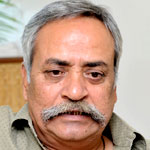
    Veteran adperson and Ogilvy bossman Piyush Pandey has been named as a Padma Shri recipient.

    Piyush Pandey                                                                     Â


    As reported by MxMIndia earlier today, Pandey was tipped to be named as a Padma Shri winner. He was the only representative of the advertising and marketing services fraternity in the list of 112 awardees, 83 of which are being accorded the Padma Shri. According to the grapevine, Ogilvy India bossman Piyush Pandey’s name is set to be announced in the list of Padma Vibhushan, Padma Bhushan and Padma Shri winners to be unveiled today.


  • Rediffusion Y&R creates #FlagoffChange on eve of Republic Day

    By A Correspondent


    On the eve of Republic day, Rediffusion Y&R has unveiled a digital film that revolves around “Teach them, Change Them”. The film set up is in an office, where an old man (teacher) asks a clerk on the progress of his file; to which the clerk casually replies that it is stuck in the same place. The clerk begins to explain to the old man on how being a teacher he should already understand the science behind the car running on petrol and that it is very important to fuel the file and increase its weight in order to fasten the work. The old man is dazed yet stays poised.


    Thereafter, upon peon serving the tea, the clerk asks the peon to serve the tea to the old man so that we can understand the significance of “chai-paani”. The old man subsequently asks the clerk for his file, and expresses his willingness to increase the weight of the file to which the clerk smiles and takes out the file from the heap and points out that the tea worked. The old man puts something inside the file and returns it back to the clerk. The clerk takes it and contentedly tells the old man that the weight has increased only to find the tricolour flag lying inside. The old man adds that he isn’t sure whether the file’s weight has increased however his shoulder definitely has some heavy responsibilities to take on. The film ends on the musical notes of the national anthem.


    This film tied together with the theme #FlagoffChange is momentous and carries a reflective message.


    Jaideep Mahajan – NCH, Rediffusion Y&R said, “Technology is all about bringing positive change. But this Republic Day, we chose to talk about positive change of a different kind; the kind that we’d like to spark for a better India. And, who better to start this conversation than a brand that’s truly Indian.”


    Pranav Harihar Sharma, ECD – West & North and director, Rediffusion Y&R said, “You rarely get these kinds of scripts to execute. And though the budget for the film was really minuscule but only on the sheer basis of the script people came on board for free. I tried my best to keep the story in film zone and not commercial. We kept the shots organic and camera in classic locked frames. Actors were asked to hold on the dialogues and delay the delivery. I had the dream cast which made my job easier. I’m glad to have directed this gem”.


  • SIMC’s ‘Research Clairvoyance’ explores the world of Collaboration

    By A Correspondent


    Symbiosis Institute of Media & Communication, Pune hosted the Research Clairvoyance on January 24, 2016 as a part of the “Inspire Series” which is a series of events and lectures to commemorate 25 years of the Institute. The theme, “Transforming the world through Collaboration” stresses on the evolution of the research industry as a result of widening horizons, new technological innovations and focus on effective and time-saving methods of research through collaboration.


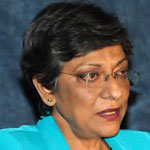
    Preeti Reddy

    The speakers comprised of eminent market research professionals, namely, Preeti Reddy (President & CEO at IMRB International), Shobha Prasad (Director at Drishti Strategic Research Services Pvt. Ltd) and Raj Sharma (Co-Founder and President, Majestic MRSS). These renowned gurus spoke about the need to walk the fine line with neurological measurements, which has revolutionized the way research is conducted and disseminated in the digital age, along with talent acquisition.


    The keynote speaker, Preeti Reddy kick started the event by addressing the dramatic change that the market research industry has witnessed. With the creation of new cohorts, new touch points have also emerged. She expounded that this can be attributed to the growing pervasiveness of digital technologies, which allows us to connect and synthesise data through collaboration, leading to a shift in the way research is being undertaken. She continued to explain that technology allows us to ameliorate from a sample to census, leveraging behavioral data more than ever, which leads to collaboration of disparate sources of data. Thereby, the role of research will be to bring the “Whys to the Whats” to analyse consumer behaviour patterns. Addressing the industry changes, she has identified trends such as social listening analytics, processing behavior data in motion, movement away from direct questioning to implicit understanding and data scientists becoming the new insights experts. As a result, it is inevitable for research agencies to be multi disciplinary.


    Continuing the discussion on changing trends, Shobha Prasad spoke about the blurring boundaries within qualitative research, stressing on the fact that co-creation can lead to richer insights and a more meaningful dialogue between the marketers and consumers. She further explained, “It allows us to reach them better and get real time insights to gauge their thoughts and emotions.” She opined that brands today are seeking methods to discern customers better and have an in-depth  understanding and experience with them. She espoused, “Marketing has become one on one, so you need to have a deeper human understanding of that one person.” In conclusion, she believes that brands have realised the importance of being flexible and try and engage individual consumers through storytelling.


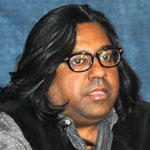
    Raj Sharma

    Talking about ‘Revolutionizing the way research is conducted and disseminated in the digital age,’ Raj Sharma stated, “We’ve moved to implicit research.” He explained that the research methodology being employed has changed exponentially and there exists a possibility of all stakeholders becoming active participants. Further, he elucidated that platforms like mobile applications are being exploited to undertake usability research. Eye trackers, access panels and perception analysers are being put incorporated in research, along with methods like neuromarketing, sensory panels and facial decoding to gauge the most accurate feedback from the consumers.


    Shobha Prasad emphasized on the ease of training business graduates to understand consumer psychology rather than going about it the other way round. On being asked about the attributes of aspiring researchers, Preeti Reddy suggested that aspirants must be more curious about consumers and their motivations. They should be open to solving problems and seeking solutions.


    The Research Clairvoyance was insightful and gave the students a new perspective into the world of research and the changing dynamics within it. “We have experienced an introductory level of research till now, but the experts have shed light on real time industry exposure. It also gave us an overview of the various innovative tools available for carrying out processes,” said Nupur Kedia, a first year Media Management Student at SIMC.


  • Fountainhead is now Fountainhead-MKTG

    By A Correspondent


    After the recent acquisition of Fountainhead Entertainment by the Dentsu Aegis Network, Fountainhead and psLIVE India will be merged to form Fountainhead-MKTG. For the record, MKTG is a leading global lifestyle-marketing agency with its headquarters in New York. Fountainhead Entertainment is a 20-year-old experiential marketing and events agency with over 200 employees and offices in  Mumbai, Delhi and Bangalore.
     

    The first phase of this merger will focus on knowledge transfer, import of technology and training while equipping the group for more effective service. The aim is to increase the effectiveness of experiential marketing and direct consumer marketing by using group expertise and knowledge.


    With this influx of international expertise, safety standards, design and technology, Fountainhead MKTG will attempt to raise the bar when it comes to producing events within the country. “While officially we are a full-service marketing agency, in reality we are a creative group of people who come to work everyday to create unique, disruptive and innovative projects for our clients,” said Brian Tellis, CEO, Fountainhead-MKTG.


    Another high emphasis area will be the creation of intellectual properties for brands that will be supported by all of the Dentsu Aegis Network.


    Ashish Bhasin, Chairman & CEO – South Asia, Dentsu Aegis Network, added: “In India, the lifestyle marketing solutions market is growing at twice the rate of the ATL market. With Fountainhead, a leading player in India and MKTG, a leading global player, we now will have the best offering of global standards, through Fountainhead MKTG. This is another big step forward in helping us achieve our mission of being the second largest agency group by end 2017 in India, overturning for the first time the existing ranking which has historically been in place for over 80 years in India.”


  • Minesweeper launches proprietary Media Planning tool

    By A Correspondent


    E-commerce companies can now effectively minimize their wastage and maximize results by efficiently combining the marketing insights and expertise with extensive media research, at Minesweeper Media. With this tool they can enjoy the benefits of a media plan that ensures that the advertising campaign/communication reaches out to the maximum, yet intended, audience.


    Minesweeper Media has launched a proprietary tools that helps e-commerce companies in responsive media campaigns.


    Sudarshan Rajan

    Sudarshan Rajan, Chief Operating Officer, Minesweeper Media, said, “We optimize our media plans in a way that that not only meet the media measurement parameters but also help deliver significant ‘business results’ to our clients. The goal is to not just bring the best media buying and selling solutions to the table, but also optimize ROI on advertising.”


    Being backed by proprietary systems and media models for setting campaign awareness and communication frequency levels, Minesweeper Media also ensure maximization of media output by advanced tools and post campaign analytics.


  • Vuclip appoints Vishal Maheshwari to head India ops

    By A Correspondent


    Vishal Maheshwari

    Vuclip has announced the appointment of Vishal Maheshwari as the Country Manager in India. This comes at a time when Vuclip is on course to launch its new Over-The-Top (OTT) video streaming service in India.


    Vishal’s core responsibilities will include driving consumer adoption, engagement and monetization for this service in India through strategic partnerships, service innovation and consumer insights. He joins Vuclip with over fifteen years of leadership experience in the telecom and mobile internet space with organizations such as Yahoo! India and BPL Mobile, and ten years of product and brand management experience at Parle, Warner Lambert and SBI Cards.


    “We are excited for Indian consumers in 2016 to experience a whole new way of entertainment on the go and pleased to have Vishal come on-board to lead our OTT service in India,” said Arun Prakash, COO, Vuclip. “With India in digital overdrive, creative thinking, fleet-footedness and focused execution are required to win over consumers’ hearts, minds and devices. Vishal’s leadership, consumer centric thought process, passion for product and brand, and value creation for partners will lead Vuclip and this entire industry in India.”


    Vuclip has a free user base of 20 million and a paying subscriber base in excess of 5 million people in India. The imminent launch of its OTT video on demand (VOD) service is aimed to redefine the way entertainment is consumed in the country.


  • Ranjona Banerji: Bad journalism to flog fake letter? Or judgment call?

    By Ranjona Banerji


    There are many embarrassments in the life of a journalist. Let’s face it, the job by nature aligns itself to errors. Some are genuine and some are what we like to term “judgment calls”: a rose by any name you may well argue. For those who thrive on sensationalism, the “mistakes” are deliberate: to slightly twist facts, to mislead with a headline, to focus on one aspect while ignoring the context. To a certain kind of editor, this is what sells and this is what needs to be presented to the “gullible” reader. Because after all, if there are people who genuinely believe in the headline, “Woman gives birth to two-headed goat”, then who is the humble press to disillusion them. Yes, “tabloid” or “yellow” journalism has its place: Usually entertaining, often nasty and sometimes punishable by law.


    However, what about errors that spring from a complete absence of established journalistic controls and checks and balances? What happens when editors themselves decide to put information into the public domain without checking authenticity but having no qualms about maligning people? I do not hold with the theory that all television journalism is bad although I have excoriated it enough in these columns.


    But, the curious case of the letter about Netaji Subhas Chandra Bose deserves time and attention. Twitter and social media were abuzz this week over a letter written by Jawaharlal Nehru to British prime minister Clement Attlee in 1945 which apparently emerged from the files relating to the freedom fighter, declassified by the government on Bose’s birthday, January 23. Bose’s disappearance, as is well-known in India, has long been a source of controversy and conspiracy theories. The fact that successive governments have refused to release any information has only added to the myth and the dissatisfaction.


    It is therefore hardly surprising that a fake letter that has been doing the rounds for six months before declassification should excite people who are waiting for information that would put the Congress Party and India’s first prime minister under murky light.


    But is that reason enough for a seasoned television journalist like Rahul Kanwal, joined by Aditya Raj Kaul, to start pushing this fake letter as real on Twitter and Facebook and demanding an explanation from the Congress Party? The letter had many giveaways. For one, Clement Attlee’s name was spelt wrong and so was Nehru’s. What are the odds that Nehru did not know how to spell both his own name and that of the British prime minister? Further, Nehru was not prime minister of India in 1945 and Attlee was not prime minister of “England”. The letter is unsigned. The grammar is appalling. I can understand that people schooled in the RSS version of Indian history, filled with Vedic spacecraft and advanced infertility treatment, know nothing about Nehru but any regular school-going child knows that Nehru studied in the British public school Harrow and at Cambridge University. He also wrote several books. However much you hate him, his English was close to impeccable.


    There is more than ideological underpinning that is the problem here, though. It is the rush to get a story out without checking the facts. All Kanwal and Raj Kaul needed to do was sit down and think for 10 minutes. That is, I assume they did not do so. If they did, the situation is truly dire.


    As I have understood from social media, Kanwal deleted his Facebook post which had put forward reasons on why the letter was real and Raj Kaul apologised. This was only after historians and the general public explained how the letter was fake, which should in fact have been obvious. Here are details on the website scroll.in:

    http://scroll.in/article/802403/twitter-starts-to-mock-fake-nehru-letter-with-fake-nehru-whatsapp-messages


    As for the promotion of the fake letter: that was just bad journalism. There can be no “judgment call” excuse here.


  • Social media to power m-commerce boom: Deloitte


    By A Correspondent


    The 6th edition of Deloitte India’s predictions for the Technology, Media & Telecommunications (TMT) sector in India Deloitte India predicts that the future of e-commerce in the country is expected to be m-commerce. It also highlights that the boom in m-commerce will be powered by social media, and is likely to become the need of every business.


    According to the Deloitte TMT India Predictions 2016 report, mobile ad spends are expected to grow from current 2-4 per cent to 15-20 per cent of the overall media expenditure by 2020. Mobile advertising in India is fastest growing among all segments in the digital advertising space, and is gaining momentum through various apps and mobile sites.


    “With telecom operators launching 4G and hi-speed Wi-Fi services, mobile-based internet connections are set to surge which will also fuel growth in social media users,” said PN Sudarshan, Senior Director, Deloitte India. “At the same time, more and more consumers in India are accepting the idea of buying products online through social media. Accordingly, e-marketers will have to devise their strategies factoring in the digital surge.”


    In the coming years, Deloitte India expects digital-first brands – brands that can only be purchased online – to see strong growth across categories such as budget fashion, furniture, jewellery and groceries. These are categories where India has strong design and manufacturing capabilities, thereby allowing companies to set up an efficient supply chain and sell these products at high gross margins.


    The report adds that there will be significant adoption of e-commerce in the retail medicine sales market. Medicine e-commerce players would look to take advantage of the inefficient distribution system leading to non-availability of medicines and the issue of counterfeit drugs which currently plague the existing physical pharmacy business. The market for pharma e-commerce will grow 10 times to $400 million in 2017.


    Giving a significant boost to the e-commerce boom will be the rollout of 4G in India. According to Deloitte India, 2016 is set to be the year that would herald the 4G revolution in India. While 4G services have been present in the country since April 2012, the push for mass rollouts across major markets gained momentum from 2015. Aggressive 4G rollout plans from major operators and the growing demand for and availability of affordable 4G-enabled handsets point towards 2016 being a breakthrough year to kick-start the 4G revolution in India.


    Additional findings from Deloitte 2016 TMT India predictions include:

    Technology

    :: Wearables: The next smartphones: Deloitte predicts that in 2016, digital wearables would have experienced a significant adoption across consumer segments though it would primarily emanate from tier 1 and 2 cities. The global sales of wearable devices is expected to be approximately 250 million units by 2018, while the major portion of the sales will be driven by North America and Europe, India is expected to have some participation in this segment. According to Deloitte, fitness trackers and smartwatches will see mass adoption in the coming years and expect safety devices geared towards location tracking and emergency assist to also see significant adoption.


    :: The emergence of smart cities in India: Deloitte estimates that $150 billion needs to be invested in the development of smart cities in India over the next few years. Several challenges remain with respect to the development of smart cities including those related to project funding, project management, government decision making and policy & regulatory framework. Deloitte expects that despite existing challenges, service providers will increase investments in the development of smart city solutions. Major service providers will also continue to invest heavily in infrastructure solutions relevant for smart cities (e.g., Wi-Fi, fibre networks, and backhaul networks).


    Media

    :: International television content on an upswing: International TV content popularity is likely to increase significantly. As digitization in tier 2 and tier 3 cities picks up, TV viewers will be able to access niche channels resulting in increase in viewership of English entertainment and movie channels. Channels will differentiate themselves by broadcasting content along with the US and Western Europe, attracting customers to pay premium subscription charges for these channels.


    :: Cinema content: Reality into reel: Deloitte predicts that content will be king and theme experimentations such as biopics and reality will be the way forward in 2016 for Indian Cinema particularly Bollywood. Filmmakers will look at platforms like Digital EST, i.e., Electronic Sell-through of a movie directly to consumers to counter the threat posed by piracy.


    :: Broadcast reach vs Online: Transformation of media trends: In the coming years, digital platform, like digital audio and video on demand service, will see increased activity, and hence getting the right business model will be very crucial for success. Instead of sitting at home and watching the broadcast on TV, the consumers prefer to go online which allow them to connect anywhere, anytime with any device.


    Telecommunications

    :: Used smartphones: The $1.7 billion market you may have never have heard of: India, currently the third largest market for smartphones with estimated annual sales of about 143 million units in FY 2016, is estimated to generate about $1.7 billion for its owners at an average value of about $90 in FY 2016, with outright sale or trade-in of approximately 20 million smartphones. Growing at a CAGR of about 32 per cent till 2020, the used smartphone market is forecasted to grow to about 46 million units generating an estimated $4 billion for its owners.


    :: The rise of the data exclusive: In 2016, 26 per cent of smartphone users in developed markets will not make any traditional phone calls in a given week. We call these individuals ‘data exclusives’. They have not stopped communicating, but are rather substituting traditional voice calls for a combination of messaging (including text messages), voice and video services delivered ‘over the top.’ Similar trends are observed in India, with voice calling falling drastically over the past 2 years since 2013. We expect this trend to continue over the next 2-3 years as operators as well as smartphone vendors push for 4G fueled by increasing availability and falling prices.


    :: VoLTE / VoWiFi: Capacity, reach and capability: Deloitte predicts that about 100 carriers worldwide will be offering at least one packet-based voice service at the end of 2016, double the amount year-on-year, and six times higher than at the beginning of 2015. We estimate that approximately 300 million customers will be using Voice over LTE (VoLTE) and/or Voice over WiFi (VoWiFi); double the number at the start of the year and five times higher than at the beginning of 2015. In India, with the proliferation of 4G services and new entrants choosing 4G VoLTE over traditional voice an estimated 50 million subscribers will move to 4G and hence VoLTE.