Category: MEDIA

  • MIB alert on live coverage of anti-terror operations

    By A Correspondent


    The Ministry of Information and Broadcasting has notified the Cable Television Networks (Amendment) Rules, 2015, which states that no programme shall be carried in the cable service which contains live coverage of any anti-terror operations by security forces and that media coverage shall be restricted to periodic briefing by a designated officer till such operation conludeds.


    An advisory put out says that it has been brought to MIB’s notice that Monday’s anti-terrorist operations in Gurdaspur, Punjab, had some news channels carrying telecast of these operations without retstricting themselves to periodic briefing by a designated officer.


    This, the advisory notes, is in clear violation of the Cable Television Networks (Amendment) Rules, 2015 and is liable for action. The MIB has issued a desist-from-further-violation advisory.

  • Ranjona Banerji: Intelligence failure on News TV

    By Ranjona Banerji


    Two films that I saw recently highlighted the role of the media in our lives, but in very different ways. Jon Favreau’s Chef demonstrated how social media, particularly sites like Youtube and Twitter can make or break us or at any rate, bestow both fame and popularity in ways that someone unfamiliar with this phenomenon cannot fathom.


    But David Fincher’s Gone Girl shows us the ugly side of mainstream media, of how journalists run with the pack and like a pack, ignoring facts and playing up the drama. The media, although not integral to the gripping main plot, was always there at the edges and in the subtext. The hysterical TV anchor who decided on guilt and demanded blood regardless of the state of the police investigation, the nonstop presence of screaming reporters and running photographers, the jam of OB vans and long wires – we see them or people like them on our TVs every day.


    However, Hollywood is hyperbole. And the media is a convenient whipping boy. As a journalist I am not denying the media’s right to be where it wants to be and cover what it wants to cover. But I am decrying the media’s tendency to abandon good sense when a little bit of thought or discussion might serve you better than leaping into the mindless chasm of “they’re doing it so I must follow”.


    When terrorists, suspected to be from Pakistan, attacked a bus and then a police station in Dinanagar, close to Gurdaspur in Punjab early on Monday morning, news channels decided that they would not report on India’s police procedures or have live coverage of the shootout between terrorists and the Indian forces which lasted for hours or reveal operational details. Well and good. This was because TV news received a lot of flak for the way it covered the Mumbai terror attacks on November 2008, giving away vital information to the handlers of the terrorists.


    I decided to follow updates on Twitter rather than put on the TV on Monday morning, to spare myself any more cardiac infarctions than TV news normally causes. By the evening, it was business as usual though. Instead of giving the viewer details of what had happened, how many casualties, how many terrorists, we had high-decibel jingoism, facts at variance with each other, repetition of information between anchor and reporter and no clear picture. How many dead? 3? 5? 10? How many terrorists? 3 or 4? 5 or 6? Different channels had different numbers. How difficult is it to say, “We are awaiting clarifications from the authorities but we can confirm that there are casualties?”


    An interview with an eyewitness, who was shot in the shoulder, as the scroll below informed us, had the reporter asking the man the same questions again and again. Why not just edit what is extraneous or unnecessary? The questions included where he had been injured, more than once. More importantly, he had nothing substantial to add to what was already known at the time. It was as if the channel wanted to prove to the viewer that its staff had actually gone to the hospital. Well, thanks.


    After an attack like this, the viewer might expect to hear from terrorism experts or defence and geopolitical analysts or retired police and army officers who have dealt with such attacks to throw light on what had happened or offer their ideas on the whys and wherefores. Can we do something as simple as that? Of course not, when there is a simpler option at hand. Dial someone from the BJP, someone from the Congress and set up a pointless battle on nothing on your TV screens.


    There are intelligence failures and there are intelligence failures.


  • ‘Social media is the right partner for OOH’


    Digital has led to the explosion of Out-of-Home advertising in recent times. At the Outdoor Advertising Convention 2015 held last week, Mauricio Sabogal, Global CEO, Kinetic Worldwide, highlighted some  key trends in OOH and tells MxMIndia why this format works best in conjunction with other media.


    From a global perspective, how has OOH been doing?

    Out-of-home (OOH) has been growing a lot in the last five years, especially because of the explosion of digital out-of-home. Luckily, digital OOH is not coming out of the static OOH, so that means we are expanding the offer as a platform. While digital is eating in the budgets of traditional media, like television or print, OOH is becoming a real complement for digital advertising. We believe OOH is playing a central role in media planning, helping to activate and amplify measures through digital assets.


    India seems to be doing fairly well in OOH…

    I think because of geography, the difficulty in advertising and the penetration of other mediums in rural areas and small towns. OOH provides a real value for advertisers in this kind of environment. It is indeed difficult for the advertising industry to access the entire population. So in those environments, OOH works well.


    What trends do you see in OOH in India vis-à-vis the rest of the world?

    The biggest challenge in India is fragmentation. It’s the complexity in the markets, in terms of how to approach the population, and it’s a very complex market in terms of OOH as well. However, that challenge gives us the possibility to offer more value to our clients because of the need of an agency to integrate all the assets around, and create value for the business within the complexity. I see really good growth in India, especially because digital OOH is just starting, so in the coming years we can expect to see trends that we see in other markets.


    There’s so much competition between mediums. A person travelling in a car has his/her mobile phone, tablet, perhaps even laptop on, and might miss the billboard s/he passes. So how can one grab attention with an OOH ad?

    If you employ creative measures, you’ll get the attention. When you have competing screens, the advantage we have is the connection that OOH has with a mobile phone. The more interaction we offer with the mobile phone, the easier for the consumer to assimilate the measures and be engaged by the creativity in OOH.


    So is it one or the other, or it is necessary for mediums to complement each other for a brand to effectively pass on its message?

    OOH is becoming the centre of media planning. It’s the least fragmented, and offers the possibility to reach people in an easy way – particularly since mobile penetration is not yet that good, with [the reach of] smartphones beginning to expand. Also, OOH can be activated by the digital asset by default, especially through a partnership with social media which allows us to amplify the measures.


    While the number of smartphones in India may be large, the usage is still at a nascent stage…

    Not necessarily. OOH works depending on the situation. And in countries like India, the value that OOH offers in different towns and cities, is exactly how it is happening by country as well, depending on its development. In Korea, like in Singapore or the UK, the use and value of OOH is totally different, and the interaction that OOH allows is also totally different. That’s why specialised agencies matter; they understand the consumer and the local conditions and create the right plan for the right geography and culture. So no matter the difference in terms of development or technology, agencies are the ones provide the role that OOH plays in different spectrums.


    Among your clients, how do they look at OOH versus other media?

    I don’t think clients prefer mediums. It’s strategic planning matters that matters, and it depends on the conditions, the measures that need to be transmitted, the objective of the communication towards different mediums etc. When you are doing strategic planning, you are no longer rethinking in specific media; you are thinking of strategies to reach and engage the consumer. I’m not saying that the client prefers one or the other, I’m saying there are campaigns where OOH matters or where OOH is used in a better way than others. As I said earlier, creativity matters. Sometimes what is important is how creative the message is, and how we’re going to transmit that message depending on the medium and the amplification required.


    So would you say that OOH is stealing budgets from other media?

    At this point, I don’t see that. We are not stealing budgets from traditional media. When you see the trends, digital is taking most of the budget. However, the connection between digital and OOH is allowing us to take those budgets and put them into our sector. I believe the expansion of OOH is going to come from traditional media rather than digital, or more from expansion of our sector.


    Are the spends on OOH in India in line with elsewhere in the world?

    When you see advertisement invest by country, out of 100 per cent, about five to seven is on OOH, and that’s not different in India. The distribution of advertising shows that OOH represents between four and five per cent in India — a little less than in developed countries. What I hope is in the coming years, digital OOH helps us increase that percentage in the advertising expenditure.


    There is no definite way to determine how many eyeballs a particular OOH ad has grabbed. Do you think the lack of measurement parameters is a downer for the sector?

    Measurement has been very difficult for OOH. First, because it’s expensive and second, because of fragmentation. It’s difficult to put all the vendors together to create a trustworthy index. However, with the data available from cellphones and social media, we are using different methodologies to allow us to find the real impact of OOH and compare that with what digital is producing. Digital has a lot of data to track and measure effectiveness. So we are looking at the same data for how to measure OOH. The advantage is that once we are connected with social media, we can measure the effectiveness through social media data.


    Are you saying there ought to be some synchronisation between OOH and other forms?

    Totally. Social media, for me, is the right partner for OOH. While the latter provides the creativity, the idea, execution and amplification comes from social media. We have plenty of cases to show that OOH in combination with social media provides fantastic results.


    With OOH being essentially a one-way medium, how do you make sure your ads will help lead to sales?

    I disagree that it is one-way. It is changing, and today, with interaction with the mobile phone, OOH is becoming a two-way communication tool. Secondly, the value that OOH provides has different models. We are using econometrics to measure RoI and effectiveness in OOH. In fact, one of our companies is creating dynamic placing based on econometric modelling to allow us to place the advertising based on what the model suggests, and be more efficient and measure RoI for advertisers.


    Lastly, what trends do you forecast for OOH?

    The key trend is that OOH is moving towards the centre of media planning, while TV is moving out. I believe that OOH is the least fragmented, and giving us an advantage over digital, because in most countries, mobile penetration is poor. Also, the connection between the mobile phone and OOH creates a certainty for advertisers to reach people on-the-go.


  • Rediffusion Y&R appoints Navonil Chatterjee as CSO

    By A Correspondent


    Navonil Chatterjee

    Rediffusion Y&R has appointed Navonil Chatterjee as its Chief Strategy Officer. Navonil joins the group from JWT where he worked for 15 years. He will be reporting to Dhunji S. Wadia, President, Rediffusion Y&R.


    With over 17 years of experience in advertising, Navonil has headed the planning function across clients like Hindustan Unilever, Levi’ s, Pepsi, Godrej, Madura Garments, ITC, United Spirits Limited (USL), United Breweries (UB), ING Bank and Landmark Group to name a few.


    But the one brand that is perhaps closest to his heart is Nike, where he has played a key role ever since he pitched for it successfully at the Chinnaswamy Stadium in Bangalore in 2005.


    A postgraduate from MICA and a graduate in English Honors from St.Xavier’s College, Kolkata, Navonil is also an occasional faculty at ISB Hyderabad, IIM Bangalore and IIM Indore.


    Dhunji S. Wadia

    Dhunji S. Wadia, President, Rediffusion Y & R, on the appointment says, “Our No. 1 priority is to focus on strategic thinking that will help us create breakthrough work. And I can confidently say that in Navonil, we have the best in the industry to lead our Strategic Planning. I have known and worked with him before. He has a real respect for good ideas, great work and results. He is a bit of an ‘Un-Planner’ since he is extremely cynical about conventional research and over-intellectualization, and prefers simplicity above all else. We have now strengthened the core team at Rediffusion-Y&R with Rahul, JD and Navonil.”


  • Olx kicks off Phase 2 of ‘Keemat Bhi…’ campaign

    By A Correspondent


    On the back of a positive response to ‘Keemat Bhi, Kuch Keemti Bhi” launch campaign earlier this year, Olx has launched the second edition of the same. Two new commercials released under the campaign depict that there is both value and something valuable hidden in every Olx transaction. The two films aptly bring out the importance of being able to make others happy, while fulfilling one’s own aspirations.


    Said Amarjit Singh Batra, CEO, OLX.in, “Our second ‘Keemat Bhi, Kuch Keemti Bhi’ campaign is based on the resounding response to the first campaign from across the country earlier this year. As a consumer-to-consumer (C2C) platform, human connection is at the core of our business. Olx has always given people the best value for their used products, but every product is also tied to its user through a unique story, which is invaluable. These two Ads celebrate those invaluable aspects of an Olx transaction.”


    The latest “Keemat Bhi, Kuch Keemti Bhi” campaign features two films – A Phone. A Picture. And a lifetime of friendship in Kashmir’, which has been shot entirely in Kashmir, and ‘Old Treasure Found’, which has been released in Tamil, Telugu, and Malayalam.


    ‘A Phone. A Picture. And a lifetime of friendship in Kashmir’ depicts the story of a local shopkeeper and an army officer, and the beautiful friendship shared between the two. The second film features legendary actress Kanchana, who has acted in films in various languages including Tamil, Telugu, and Malayalam.


  • McNROE appoints 22feet Tribal as its digital agency

    By A Correspondent


    McNROE Consumer Products has announced the appointment of 22Feet Tribal Worldwide as its digital agency. The company, which is known for its brands Wild Stone and Secret Temptations, has brought the digital agency on board to lead its digital efforts across online platforms with a special emphasis on consumer engagement.


    22feet Tribal Worldwide will be responsible for the digital strategy across the McNROE’s entire portfolio- Wild Stone and Secret Temptation. The agency will lead digital brand planning across businesses and develop strategic brand campaigns for the digital platform to strengthen the connection between the two brands and their respective consumers.


    NK Daga, Director-Founder, McNROE said, “We have always been committed to bringing top international quality fragrances to Indian consumers and delivering the best innovative experience in the industry. As we continue to grow, our intention is to place even greater emphasis on engaging with our customers through online experiences. 22feet Tribal Worldwide’s strong strategic capabilities combined with the understanding of our business made them the perfect agency partner to help us engage with our customers online.”


    Commenting about the partnership, Vineet Gupta, Managing Director at 22feet Tribal Worldwide, said, “We are extremely excited about our partnership with McNroe Consumer Products Pvt. Ltd. for its brands Wild Stone and Secret Temptation. Wild Stone is a brand that has cemented itself in Indian consciousness with their distinctive communication and offering. Secret Temptation has created a niche for itself by appealing to young girls with its contemporary fragrances. We want to bring this equity into the web and create a robust digital framework that yields results for the brands and the business.”


  • Mogae Plus to handle ad sales for FoodFood

    By A Correspondent


    Mogae Plus, the sales division of Mogae Media will handle the entire advertising sales of FoodFood, the channel promoted and owned by Chef Sanjeev Kapoor under the umbrella Turmeric Vision Pvt. Ltd.


    FoodFood is a category leader in the space of 24/7 food. It was India’s first channel to dedicate its programming entirely to the subject of food. The channel’s popular shows are Sanjeev Kapoor’s Kitchen, Cook Smart, Turban Tadka, Mummy Ka Magic, Out of the World and Health Magazine. Apart from Masterchef Sanjeev Kapoor, Chef Rakesh Sethi, Chef Harpal Singh Sokhi, Chef Shailendra Kekade, Chef Shantanu Gupte, Chef Saransh Goila, Chef Chinu and Amrita Raichand are celebrity chefs who host many popular shows on the channel.


    Chef Sanjeev Kapoor said: “We are happy to have Mogae on-board for monetising the channel. With Mogae’s strong All India outreach to market FoodFood, we hope to focus our energies on the content to be in synch with the ever changing tastes of the viewers”.


    The market for a food lifestyle channel today not only covers women, but an increasing number of younger viewers of both genders are coming on board to sample food content. With FoodFood’s interesting take on food, lifestyle and travel, viewers are being pulled in to sample varied content. FoodFood has pioneered the short format in food programming, for those viewers, who can’t spend longer times due to their hectic lifestyles.


    Mogae has a team of almost 50 sales people across its three offices in Mumbai, Delhi and Bangalore. Mogae Media today reaches over 800 clients a month and is continuously deploying their market outreach to reach out to clients & their brands.


  • IAA India Chapter hosts ‘Let’s Get Real’ seminar in Hyderabad

    By A Correspondent


    The India Chapter of the International Advertising Association conducted a knowledge seminar on Saturday, July 25 as part of the ‘Let’s Get Real’ series focusing on real estate advertising and marketing. The seminar was held at the Taj Deccan, Banjara Hills, 4pm onwards.


    Welcoming the audience, KRP Reddy, Marketing Director, Sakshi Media Group said, “Real estate is poised to achieve unprecedented growth and Brand Hyderabad is a new magnet for investors and real estate prices are seeing an upward surge.” Srinivasan K Swamy, President IAA India Chapter & Vice President, Development, IAA Asia Pacific mentioned “IAA believes that two verticals that need the support of professional agencies are the real estate and retail industries. Advertising and marketing agencies can help these mostly family-owned and -run businesses with outside thinking.”


    Starting the proceedings of the seminar, Sandip Patnaik, Managing Director, Jones Lang LaSalle said, “The last four-five months have seen a tremendous change in Hyderabad. The HR firm Mercer listed has Hyderabad as the best city in the country to live in.”


    Isaac Jacob, Professor, Somaiya Institute of Management Studies and Research spoke on marketing in the downturn. “What you should do is avoid gimmicks,” he advised. “Find out which marketing programmes work and which don’t. Focus on the benefits and advantages of your product.” Innovative advertising, humour and social media are a great help during a downturn, Prof Jacob added.


    Charulata Ravi Kumar, CEO, Razorfish India underscored the need to look at the digital media as a means to send the message. “Your rivals are not your only competitors, given the alternative options in the market place ” she said. She further added, “associating with other brands can add value to your brand. And don’t compromise on the content of your website. Look at the best websites even if they are not related to your business to get inspiration”.


    Preeti Vyas, Chairperson, Vyas Giannetti Creative spoke on the importance of branding of real estate projects. She provided examples on how to differentiate properties that are absolute premium, luxury and for the middle class.


    An engaging panel discussion moderated by Pradeep Dwivedi, Chief Marketing and Corporate Sales Officer, Dainik Bhaskar was held with P Dashrath Reddy, President, TREDAI; G Hari Babu, President, APREDA; Neeta Patel, Marketing Manager, Naman Group and Sonal Seth, luxury and experiential marketing specialist.


  • Siddhartha Mukherjee: PR Agency v/s Consultancy…. Any difference?

    By Siddhartha Mukherjee


    I have always believed that the PR service providers will be the catalysts of PR’s growth story in India. Towards this, while the initiative to transform a PR Agency to a Consultancy started many years ago, not sure the conversion has been a 100 percent success story. In fact, the claim of “We are a PR Consultancy and not an Agency” all the more confuses me.


    The advertising industry is what it is today – size- and quality-wise – largely because of its agencies. They have shaped themselves and positioned the tool of advertising on a platform that has made it so intrinsic to every brand-building story for every client.


    Somehow, I have found very few PR firms who are genuinely taking efforts to create that differentiator both in their thinking and action. Some PR firms make that claim of being a consultancy for the style quotient… some to momentarily hide their insecurities… but to be fair to some, they have no qualms or inhibitions about who they are. They think and act exactly like a PR Agency and not a Consultancy. They are the implementers, the coordinators, event managers… the jugaad guys. Mind you, our market, currently and for the next few years, will have more potential for PR Agency work than Consultancies.


    Without generalising, I have seen cases where multinational, large PR firms continue to act and think like agencies. At the same time, there have been very humble and quiet Indian PR Firms who are doing amazing consultancy work.


    For the moment, I am intrigued to visualize what possibly could be some of the key differentiators between a PR Agency and PR Consultancy:

    a. Quantity Vs Quality of Clients: I do not believe that a PR service provider’s turnover or its number of clients qualifies it to be called as a Consultancy. I would much rather give weightage to the quality of clients or the kind of work the service provider is rendering for the clients on an ongoing basis. Imagine a scenario where any and every form of media relations services is no longer the mainstay but becomes the default backend output of the service provider and for the client. Noticeably, the focus of work shifts from media coverage to brand building – Recall, Disposition and Conversion!


    b. Quality Vs Quantity of Team Members: Many clients, many people to service, many offices! Great story! For me, size does not matter. Quality matters. I see a stark difference between an average team member of a PR Agency vs that of a Consultancy. Well, to summarise it quickly, it is all about their Audio & Visual. I do not want to spend time on the visual part. On the audio part, well, let me go straight to the PR Consultancy person. This person is humble with a constructive energy. He/she is all the good permutations and combinations of a Learner, Manager, Thinker, Researcher, Statistician, Strategist, Sociologist, Anthropologist, Soothsayer, Journalist, Economist, Brand-builder, Writer,…culminating into a wonderful storywriter and narrator.


    c. Services being offered: Well, a Consultancy becomes one when it talks and only talks brands… not media coverage! Media relations or media coverage services become the default, as and when needed, backend output for the PR Consultancy. A Consultancy is only working on and for a client’s brand reputation. This means, every single service associated with the client’s corporate and marketing communication requirements, across stakeholders, are taken care of. This also shapes the type of people/desks within client organisations you are interacting with. Let’s do a check – do we interact/discuss/debate with CXOs on Brands? If so, how often? Or is our interaction largely restricted to Corporate Communications and media coverage volumes?


    d. Simple Client Servicing Etiquettes: A quality Consultancy or brand-builder will have some of the basic traits:

    :: Client Servicing Executives believe in punctuality – arrive at meetings before time. Not on time…forget about being late! Punctual on calls, sending documents and other logistics.
    :: The kind of the questions they will ask the clients will not only charm them but force them to think.
    :: They know more about client’s competition than the client himself/herself.
    :: They work towards Possible “Business As Usual” or “Business Not As Usual” scenarios for their Clients and the required Fall Back solutions.
    :: They will base their arguments basis research and numbers!
    :: They will be the document creators for clients for every situation.
    :: Their plans/proposals will focus on input, output and outcome


    e. Evaluation Parameters: A PR Consultancy will never agree to be evaluated on the count of media coverage or advertising equivalent. The Consultancy will talk on the lines of output and outcome for the client’s business.


    f. Presence of a Holistic Research Desk:  Like I said, there are genuine attempts being made by a few to transition into a Consultancy. One such genuine effort is by setting up a dedicated research desk/team. This team is responsible towards answering or creating information for all corporate and marketing communication needs. It is a desk that works not towards the end output of media coverage but towards a practical and effective outcome of brand exposure, engagement and the final conversion for every stakeholder. It is a specialist in generating data, collating and fusing multiple data sets and analytics – all of which go towards new business wins and client sustenance.


    Does not matter which side of the bridge the PR service provider is in. To cross over to the Consultancy side, some habits, traits and behaviour have to change. This change is for the PR industry’s growth. Moolah, image and added longevity are some immediate benefits.


  • BARC receives official registration from MIB

    By A Correspondent


    As per a communique received from BARC, the ioint industry body has been granted registration for operating as Television Rating Agency under the Policy Guidelines for Television Rating Agencies in India by the Ministry of Information and Broadcasting. It may be recalled that at the time of the launch of BARC’s release of data, there were some hiccups with the MIB on the issue were sorted out.


    Meanwhile, TAM has also issued a statement which reads: “As per the last update received from MIB officials on TAM’s registration under Policy guidelines dated 16th Jan, 2014, they informed us that TAM’s registration is under process”.


    The question of course is that why do both these operators need to register themselves to operate in the business of television audience measurement.


    Return to the licence raj?!


  • Big Data is Big Business


    By Ravi Balakrishnan, Amit Bapna, Delshad Irani & Shephali Bhatt


    Big data, like every other industry, has its early adopters and usual suspects: banks, retail chains and telecom. But now its appeal is extending to several categories and businesses.


    According to Nishant Kalra , business leader, IBM Commerce India/SA, “81 per cent of the CMOs in consumer brands believe they have a holistic view of customers, but only 22 per cent of customers believe the average retailer understands them.” The first challenge: to capture customers as individuals, focusing not merely on transaction data but their interests, preferences and interactions. The second challenge: changes in the customer journey with 50 per cent to 80 per cent of the buying process taking place before the brand gets a chance to speak. “How do we seamlessly give an integrated experience across channels?” puzzles Kalra.


    Says Sandeep Mittal, founder & MD of marketing analytics firm Cartesian Consulting, “The trick but take the decisions with better information and predictability.”


    The answer it would appear is in the numbers and knowing what to do with them.


    Big data is how companies both online and offline are trying to solve the personalisation challenge. It’s a brave new world out there, one that requires yes, a great deal of left brained number crunching but also some good old right brained creativity.


    The goal: to leave consumers feeling less like a test subject with the barest illusion of privacy and more like a special valued patron of the brand who manages to snag the best. Here’s how four companies are doing it.


    Right Brain, Left Brain: Big data is how companies, both online and offline, are trying to solve the personalisation challenge… it requires a great deal of left brained number crunching as well as some good old right brained creativity


    IBM/Matrimony.com –NOW MARRIAGES ARE MADE WITH DATA

    According to IBM, time taken for Matrimony.com to identify a market segment, tailor a campaign and launch it has been reduced by 90 per cent.


    As any Indian will tell you, getting hitched is a serious business. Even more so for a site in the business of getting people hitched: Matrimony. com. With 150 customised websites, call centres and even physical outlets, and an estimated 3 million users at any given time, the task of getting relevant messages across was getting incredibly complicated. To say nothing of giving a user a seamless experience irrespective of which touchpoint was used.


    Says Nishant Kalra, business leader, IBM Commerce India/SA, “For a bank, churning is bad. For Matrimony.com it’s good. The task: How do you deliver consistent messages across multiple channels? And how do you make users opt in for paid services?”


    The No 1 challenge with this born on the web company was its data was on open source standards. IBM applied its predictive tools to segment data, assign weightages and built campaigns around these. For instance, it helped the site run a campaign encouraging users to update their profiles with more information, something that significantly raised their chances of finding a match. Says Kalra, “We started with predictive analytics and marketing campaign solutions which were rolled out in real time across multiple channels” including physical stores.


    Once the users began to enrich their profiles with data, Matrimony.com was able to send them prospective soul mate profiles and run offers for its paid services. A third objective that data helped with was to serve up the next best option in case a potential alliance fizzled out.


    Askme (and AskmeBazaar) –ALL THAT SHE WANTS

    Over 70m searches per month on Askme produces 7 billion data points… combine it with deals and classifieds, the number would be 10 to 20x more.


    Creepy, she thinks. How did the Internet know she needs a dupatta to go with the kurta she just purchased? And then it suggests matching accessories. “What sorcery is this?” she cries. No Hogwarts degree needed though, one simply stalks the individual within an inch of sanity. And we’re just scratching the surface of what our digital footprint reveals.


    Consider what transpires on local search and classifieds portal, Askme and its online marketplace, AskmeBazaar. The company captures every touch point in the consumer’s journey on its sites and then refines algorithms to churn out tailor-made experiences. The goal: Create serendipity moments. Says Manav Sethi, group CMO, Askme, “The future will belong to those who create personalised experiences that will build stickiness and engagement.” Let’s face it, there is no differentiation between, say, the top four or five ecommerce companies clamouring for your phone-swipes.


    “Expect the same discounts and 2 million SKUs everybody shouts about. What is the value proposition?” asks Sethi. That value proposition is buried under mountains of data on consumption triggers and consumer history.\


    But if marketers can’t leverage billions of data points to create individualised experiences, the entire exercise is pointless.


    The future of grocery, for instance, is in predicting what Lalitaji will need next on the basis of her consumption history. And not just stopping there. Using mapped consumer identities and purchase patterns, Askme can help convert a P&G customer into a Unilever loyalist or vice versa.


    “Big data can give the company an edge that becomes a strategic business lever. That’s where the long tail comes into play,” says Sethi.


    Maruti Suzuki –FROM KITNA DETI HAI TO KITNA DATA HAI

    Maruti Suzuki realised as early as 2006 that their dealers were sitting on reams of data that needed to be aggregated, organised, cleaned and then analysed.


    Most marketers prefer to hide under a rock the moment their CRM guys start talking about Big Data. Sanjeev Handa, vice president and head of marketing at Maruti Suzuki isn’t one of them. Big Data intrigues him. “It is this stream of database from your phones, credit cards, TV audience measurement metres and even airplanes these days. The total data collected in the last two years is larger than the data collected throughout human civilisation and it is in Zettabytes (1 zettabyte = 1,000,000,000 Terabytes),” says Handa.


    Awareness of Big Data hasn’t got him caught in the hype cycle though.


    “We use relevant data of the 15 million customers that we have accumulated over the last 30 years. We don’t want to know every detail, just their profile, likes and dislikes, insurance status et al.”


    Maruti Suzuki realised as early as 2006 that their dealers were sitting on reams of data that needed to be cleaned and then analysed.


    “Last year, we sold 50,000 extra cars purely because of data mining,” he says. This was 4.5 per cent of the sales for the year. They plan to sell two million cars through their CRM initiatives by 2020. The internal target is to get 10 per cent of the sales via database management.


    And management of database is not expensive, he says, especially since “we spend crores on advertising.” It’s just a pinpointed effort – keeping a track of customers who’ve had the same model of car for five years, for instance, helps them inform dealers about upselling to them. Maruti Nexa, the premium dealer network, is also a byproduct of data mining. “Psychometrics showed that more people were flying business class, keeping relationship managers and switching from Maruti to Ford. That was the trigger.”


    Club Mahindra –COUNT YOUR HOLIDAYS

    By data mining members’ past holiday behaviour, customised and personalised mailers were sent, often layered with an offer.


    One of the prime challenges that inhibits brands from deep-diving into data and analytics is an obvious one – lack of rich data. In case of Club Mahindra, lack of data was not the challenge. Being around for almost 20 years has helped the brand build on a formidable width and depth of data about its 1.8 lakh membership base. Says, Deepali Naair, CMO, Mahindra Holidays: “Having database of 1.8 lakh members as against 18 lakh members (for example) can be an advantage since it makes the data much more manageable.”


    Holidaying, especially in India, is dependent on both the climate as well as vacation time, which for a category that Club Mahindra is operating in, creates challenges of erratic occupancy. Data was sought to resolve this issue via the ‘Reshaping demand’ project. The idea is simple: solve seasonality-led low occupancy challenges by reaching out to members and nudging them to plan holidays through the year. Maybe getting people to go to Goa during the monsoons and to Jaisalmer in the summer heat. Backed by the data mining on the member’s past holiday behaviour and other analyses, customised and personalised mailers were sent out, often layered with an offer as well Member nights which can be attributable to ‘Reshape Demand’ are upwards of 15 per cent, shares Naair. Big data is making the difference to the life of the businesses, points out Sandeep Mittal, founder & MD of marketing analytics firm Cartesian Consulting, thanks to its ability to frame a hypothesis or post a business challenge and actually get results with correlations across multiple data sources, very quickly.


    Source:The Economic Times

    Copyright © 2015, Bennett, Coleman & Co. Ltd. All Rights Reserved

    Licensed to republish

     

  • Consumers in a Connected World


    By Dyanne Coelho


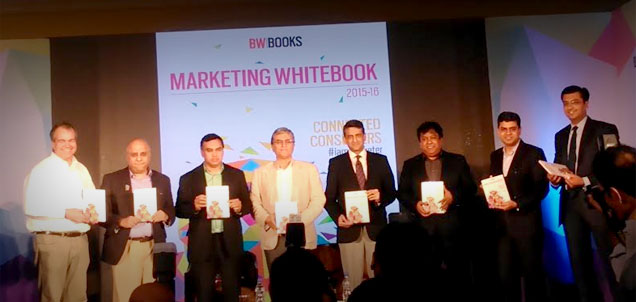
    Businessworld in association with Nielsen launched the 11th edition of the Businessworld Marketing Whitebook 2015-2016 with much ado including an impressive lineup of speakers. Key trends in the marketing space were touched upon through the sessions.


    John Burbank, President Strategic Initiatives, Nielsen set the tone for the release of the Marketing Whitebook with his insightful discussion on ‘Gearing up for a Consumer-First World.’ “I think the world is data-rich and analytics poor,” he said. The basic questions are the ones marketers need to be asking, he said. These include ‘How many are actually seeing my advertisement?’ and ‘How effective is my advertisement in delivering ROI?’ among others. Do not let the complexity of the amount of big data change these fundamental questions, he advised.


    ‘A Year of Cautious Optimism: What Lies Ahead for Business Leaders’ was the first topic of discussion. The panel included Devendra Chawla, Group President, Foods, Future Group, Rakshit Hargave, Managing Director, Nivea India and it was moderated by Gurbir Singh, Executive Editor, Businessworld. “A category comprising skincare and personal care is growing in single digits, the consumers are not opening their pockets,” Hargave pointed out, while Chawla said that food and FMCG products are not hit as badly as sectors like real estate and automobiles. High value purchases have been hit harder, he said.“Inflation, especially food inflation has eaten into the money supply of the family. The consumer is holding back,” Hargave mentioned. Chawla however highlighted that the beauty industry is actually growing 70-80 percent. To this Hargave, added that the pattern is no different for him. Beauty products in the men’s category are growing faster than those in the women’s category, he said.“Marketers ought to work on deriving more basic information, get more innovative, study different needs and tastes of consumers, etc in order to keep up with changing times,” Hargave said.


    Salil Kapoor, COO, Dish TV moderated the next session which dwelled on the topic of the ‘Emergence of New Media for an Impactful Connect with Consumer’. “By 2020, 50 billion devices around you are going to get connected, you have to be smart about who to reach out to,” Avinash Jhangiani, Managing Director, Digital and Mobility, Omnicom Media Group said. Shripad Kulkarni, CEO, Vizeum India opined that this newness is here to stay. “We see a very bright trend emerging of experimentation which leads to all kinds of advertising. It is moving towards a new metric of performance. This is a good thing,” he said. The topic of big data was discussed in the regard. Tarun Jha, Head of Marketing, Skoda India spoke that the automobile industry is highly dependent on big data. “We run lean ships, spend money wisely, have a very focused objective for every campaign and ensure that every penny is accounted for,” he said.


    Social listening has become a serious business, the panelists discussed in the session titled, ‘#iammarketer: The Realities of a Changing Consumer World’. “Socialisation allows us to build communities of like-minded people, build engagement, etc. This is where one gets insights from across categories and consumer behaviour,” Veetika Deoras, Head of Brand Marketing, Digital and Corporate Communications, Tata Capital said. While many marketers have evolved into digital, some are still experimenting, Ashutosh Gupta, Director Marketing Solutions, LinkedIn India said. “It’s not about social or digital, it’s more about the consumer journey,” he said. Sudeep Ghosh, VP Marketing at VIP Industries is of the belief that one should not follow the template. “Do digital if it works for you,” he said. Digital works differently for different brands and hence each needs to adapt depending on its needs, he added.


    Prashant Singh, MD, Nielsen India lead the discussion entitled, ‘The Rise of the Connected Consumer’. The panelists included Kamal Basu, Marketing and PR Head, Volkswagen India, Prashant Peres, Director Marketing – Chocolate, Mondelez India, Sameer Satpathy, CMO, Marico Ltd and Tarun Arora, COO and Director, Zydus Wellness Limited. The session revolved around how the need of the hour is not about focusing on advertising or broadcasting, but on using an integrated approach to have a full conversation and up brand value for consumers. “Legacy marketers are often apprehensive about the impact they can make through new media, there is a fear,” Peres said. Arora on the other hand argued that the line between online and offline is blurring as both need to use each other to build the brand. “Multi-channel purchase is going to happen and FMCG cannot sit back,” he said. From an automobile industry perspective, digital is the lifeline, Basu pointed out as most buyers do primary research online before they walk into a store. Satpathy however believes that it all depends on the task for the brand.


    CVL Srinivas, CEO, GroupM South Asia played moderator to an interesting discussion on ‘Decoding Diversity in India’ followed with presentations by Sachin Jain, President, Forevermark India and Samir Jain, MD, Bunge Ltd wherein each pointed out the growth of their brands and how they adapted their marketing strategy to different segments of India in order to target different sets of consumers.


    Earlier, Annurag Batra, Chairman and Editor in Chief, BW Businessworld (also Chairman and Editor-in-Chief of the Exchange4media group) delivered the opening address, gearing up the delegates for the rest of the event.