Category: MEDIA

  • It’s wait ‘n watch for TOI-Matrubhoomi alliance

    By A Correspondent


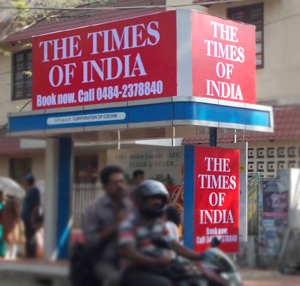
    After much speculation, The Times of India has finally made its foray into the Kerala market, forging a strategic alliance with Mathrubhumi to make inroads into this market. While for readers this alliance might be the best deal as just for Rs2 extra they get a copy of Mathrubhumi and the TOI with its many supplements, as a reader quipped: “This is not a bad deal for 2 bucks”.


    This exactly is the sentiment that TOI wants to ride upon – the bundling with a regional newspaper which the readers are familiar with and allow them to test something new definitely is a great way to enter a new market dominated by regional players.


    Kerala, in that sense, is a unique market with high literacy rates and people who are proud of their culture, willing to try something new but not at the cost of old. Hence, it is primarily seen as a two newspaper-market where one paper is regional, which appeals to the older generation and is more of a habit, and the other is an English newspaper appealing to the younger population.


    It is this younger population that TOI is trying to appeal to. The English newspaper market is primarily dominated by The Hindu, The New Indian Express and more recently Deccan Chronicle. The Hindu too has become aggressive and gone all out to protect its turf.


    Recently, on January 29, just two days ahead of the TOI launch, The Hindu and The Hindu Business Line launched its Kozhikode edition. This shows that The Hindu understands the might of TOI and has gone aggressive with its 360 degree campaign to reiterate its hold over this market. In fact, it has also taken around 30-35 hoardings to make itself visible while sources inform that TOI has taken up around 80 hoardings across to announce its presence in Kerala.


    The divide in Kerala, according to reading preference, is: South to Cochin (till Trivandrum) is where readers prefer Malayala Manorama whereas the area from Cochin to Kasaragoda is dominated by Mathrubhumi. This liking is also based on the political inclination too. Currently, TOI has come out with editions fromKochi, Thiruvananthapuram,Kozhikode, Kottayam, Pathanamthitta, Malappuram, Palakkad, Thrissur, Alappuzha and Kollam, thus being seen all over Kerala.


    However, it is learnt that the paper is having teething troubles: The newspaper is not available at many places; the hawkers union’s in Kerala raising ruckus over the availability of the newspapers in some pockets.


    Giving his view, Kiron Kurian, Group Manager, MudraMax said: “For TOI the real competition is The Hindu in this market. Their current strategy of tying up with Mathrubhumi, as I see, suggests that as the former caters to Sec A and B audience it will be easier to convert this TG to also adopt TOI as a second newspaper.”


    Swarup BR, Founder Stark Group, a Kerala-based 360-degree communication agency feels: “I think largely the TOI offering in Kerala market is nothing phenomenal from what has been seen in the other markets. There would be many people who would want to try out the newspaper and along with their aggressive marketing strategy, it should work out well for them.”


    However, for all, it’s ‘wait and watch’ to see how the market evolves. Some feel that a new trend might start with homes having three newspapers, with both Hindu and TOI having their share of readers. Also there could be revised rates to capture more audience.


    This TOI- Mathrubhumi alliance, while is advantageous for the former, will also be good for the latter as it might give it the much needed push that it requires to lessen the gap with the leader Malayala Manorama.


    Vidya Nandakumar, Business Director, LMG based in Cochin is doubtful that TOI will find it easy to break the monopoly of The Hindu. She said: “In Kerala people are die-hard loyalist and if they like a brand, it is difficult to make them switch. So it would be interesting to see how TOI gets them to convert.” She is of the opinion that probably it would be some pockets where TOI might succeed.


    But Mr Swarup countered: “Kerala is a ‘rurban’ economy; hence there is no clear divide between rural and urban. The brand proliferation too is across the market hence it is one big market. The opportunity for a TOI to reach across is immense. The entire state is a captive market, not just few pockets of interests. Yes, The Hindu is a formidable power and people would not be willing to give the newspaper so easily for TOI. So in that sense it would be interesting to see how the market plays itself out. It is possible that a whole new audience will evolve who will be readers of TOI.”


  • Yuvraj cancer news first lead?

    By Ranjona Banerji


    The unveiling of Justice OP Saini’s verdict on the petition filed by Subrahmaniam Swamy to make P Chidambaram a co-accused in the 2G spectrum case on Saturday was fascinating. Times Now gave us second by second coverage about nothing at all happening outside Patiala Court. The other channels thankfully limited themselves to studio panel discussions about the possible implications of this verdict.


    The BJP was very cocksure that Swamy would succeed. The Congress was largely invisible, relying on a few of its friends to state its case. The old telecom companies were part of the discussion. The new ones (and now licence-less) were invisible.


    As Navika Kumar talked about the butterflies in her stomach waiting for the verdict (why?), she conceded that Chidambaram may have bigger airborne insects inside his digestive organs. This waiting outside this courtroom was apparently the most exciting journalistic assignment ever! Wow!


    Anyway after hours of pointless speculation and some interesting debates on other channels, the judge then called Swamy for a private discussion and cleared the courtroom. Immediate outrage at this ill-treatment of the media! But then someone pointed out that the judge wasn’t in the courtroom at all. More inconsequential details followed. Then the judge just said the petition was dismissed.


    Suddenly, we were told that actually Swamy looked deflated when he came out of the private discussion with the judge. This, however, was not noticed before the petition was dismissed, a sort of after the fact observation.


    As expected the BJP tried to put up a brave face and then vanished and the Congress, to its credit, did not go too far in its victory dances. Swamy appeared “first” on Times Now but refused to answer who finances his penchant for litigation. By Sunday his bravado was back and in Monday morning’s papers he was saying the judge was good but his judgment was bad (damned with faint praise?) and Swamy would be going higher up the judicial ladder.


    * * *


    Sad as the news of cricketer Yuvraj Singh’s cancer is, am not sure whether it is first lead news, but most Indian papers seem to think so.


    * * *


    The divorce between Sahara and Indian cricket also appears to have come as a surprise to our intrepid sports journalists and here again Yuvraj Singh’s health seems to be have been an issue. Some further investigation here may be a good idea but whenever a big money player is involved, the media’s newsgathering resources seem to shrink.


    * * *


    Press Council of India chairman Markandey Katju is apparently on twitter with the handle (@mark_katju. There is some speculation on twitter whether this is a genuine account or not but today’s newspapers seem to think it is. I’m following it anyway just to check.


  • Be-Sahara BCCI | What next for cricket? Laxminarayan, Bijoor comment. Also: the Sahara communique in full

    By A Correspondent


    The news that Sahara was ending its association with Indian cricket was greeted with shock and disbelief by cricket fans and media professionals alike. Apart from the monetary implications, many found it hard to imagine the Indian team without the Sahara branding on their jerseys. But some also thought native resilience will tide the team over the crisis.


    Harish Bijoor, brand expert and CEO of Harish Bijoor Consults, said, “Sahara and Indian cricket have been associated for 11 years and it has been a long-standing association of deep commitment. It has helped Sahara gain ubiquity through a mass game for its many offerings.


    “I don’t think Sahara’s backing out would dent its image. Sahara will be missed on the Indian cricket team’s tee shirt, but take it from me, there will be another name out there, faster than we think. How about the Tata blue on the Indian blue?


    “Some keys to remember when going for an association for any new brand – and even for Indian cricket when considering the tie-up – would be that Indian cricket is a long term investment. Cricket is a forever game in India. Yes, we are currently going through what I would call the bathos-period. But we will come out of it. Brands that invest today will gain in the medium and long term.”


    Karthik Lakshminarayan, COO, Crest, Madison Media, said, “It was a symbiotic association and both parties gained infinitely well and have grown in size and stature over the last decade plus. Sahara is a well established name and while it will definitely be affected to a certain extent, the extent of damage would be minimal for Sahara.


    “One hopes that there are takers for the same given the way cricket is worshipped in our country. Am sure people will still recall WILLS association with the cricket team which is over two decades and hence this kind of association and mileage can only be offered by a platform of this size and magnitude. Whichever brand takes up the same will definitely be remembered for a while. The only thing one needs to watch out for would be ensuring that there is newness and innovation with the association as the next few years will mark a sea change in the way media is consumed by the audience.”


    For Brand Sahara, life without cricket seems to be something it is well prepared for. A company release said that Sahara is putting the cricket money into welfare work – all Rs 1,000 crore worth.


    A statement from Sushanto Roy, Managing Director, Sahara Adventure Sports Limited, said:

    “We are declaring to put immediately Rs 500 crore in Sahara Welfare Foundation, which will be run with the association of eminent persons of our country. For the programme as mentioned below, Sahara declares to put around Rs 500 crore more in the next 1-2 years as per the need of all the programmes.


    We are working on various programmes including financial implications etc since we have taken this decision after continuous persuasion with the BCCI failed, meaning on the 2nd of February, 2012. But we waited upto the auction day, ie 4th of February, that our request to BCCI would be accepted. But again, there was no natural justice.”


    Our programmes in brief are as follows:

    Rural/semi urban young sports person promotional centers


    • We would develop 20 Rural/Semi Urban Sports Promotional Centers including Rural/Semi Urban Cricket promotional Centers.
    • Each shall have 7 to 10 Acres of land which will be developed into sports person promotional centers with hostels having 50-100 rooms
    • Everyone shall get minimum 5 years.
    • Scientific selection youngsters shall be done throughout the country in remotest villages also to unearth genuine talents.
    • Every year, thousands of youngsters will be selected throughout the country from will be put in these sports centres with all cost of Sahara Welfare Foundation including their education also.
    • Local sports teachers shall be appointed and high class Domestic/International teachers shall also be appointed who shall visit these centers regularly in turns throughout the year for special training to local teachers and students.
    • Centres will have diversified sports disciplines viz. cricket, hockey, soccer, formula1, tennis, golf, wrestling, boxing etc.
    • One international standard sports academy shall immediately be developed at one point in India.
    • All best selected students shall ultimately come to this International Class Sports Academy.
    • Any of the students who secure a position at the National Level shall be appointed in company.
    • We shall definitely have minimum one center in every state barring very few highly disturbed states.
    • After a certain level of achievement on State/National/International level these people will be rewarded suitably.
    • They will stand to receive permanent jobs, houses, marriages (particularly girls), old age facilities etc. etc. Deserving student shall be given regular opportunities to go abroad for further improvements/ developments.
    • All regular students shall be given high coverage of insurance which may go into crores.


    Support fund

    There are many old (retired) and present players who, at times, face up to miserable days regarding medical bills, girls marriage, shelter etc. Every year minimum 10 crore will be distributed –

    – 3 crore for cricketers

    – 7 crore for all other disciplines


    Increase of sponsorship amount


    • We shall discuss with other federations where we are sponsoring different disciplines of sports and as per the genuine need for better promotion, we shall enhance the sponsorship amount.


    Medical vans

    On all India basis 300 fully equipped medical vans shall be introduced which shall only go to remote villages (at the moment we are running around 50 such vehicles) where there is no medical facilities exist. Our van shall have good doctors, check-up facilities and free medicines and also supporting cases for going to hospitals.


    So, we shall introduce around 300 medical vans in the country to start with which shall increase gradually.


    Safe drinking water

    We shall introduce for Rural and Semi Urban areas 100 tankers who shall distribute to even remote areas safe drinking water free/or maximum 50 paise to 1/- per liters (to poors it will be free). Some money could be charged so that gradually the areas covered would increase, meaning if charged, it shall be done to increase area of safe drinking water only.


    Important note:

    Safe drinking water is one of the most essential needs of our country. As an example for bad quality of drinking water every summer in Uttar Pradesh, people and government send around Rs. 6000 crores towards few kind of tablets and liquid drips since millions are very seriously critically effected with blood dysentery and all sorts of worst gastric problems.

    With safe drinking water this problem can be reduced to maximum extent.


    Education

    10,000 T.V Screens in villages and semi-urban areas with Dish Antenna etc.

    For free education/support of various types of adult literacy, child care, child education, hygiene, cultivation/agriculture, Hindi/English education, Education of high morality, education of good life, information of mandis on regular basis through our centres. Large studio will be made for this purpose.


    Important Note

    In India, today may be around 3 per cent population knows English well. The entire administration (IAS/IPS etc.) is in English medium; entire judiciary, medical science, engineering, corporate world are all in English medium. Even ministers mainly in Delhi should be English speaking. Meaning entire administration of our country is always governed by 3 per cent population only. It is unfortunate, sad & very bad for the country. Sad, we don’t have Hindi as one language of the country like all developed countries have. Well, English will never go. This is the time English should reach gradually go to all villages.”


    Sahara’s statement on the BCCI issue

    “Our association with Team India was primarily emotional and all along, the journey was indeed, a privileged one for the entire Sahara India Pariwar. In 2001, cricket was not as rich but had become a religion in our country. We had requested the then BCCI President, Shri Jagmohan Dalmia to go for an open auction, for the Indian team’s sponsorship inviting only interested Indian Corporates, since it was not right that it should go to some MNC. But for obvious, unavoidable reasons, BCCI did not accept that.


    “After 03 months, one fine morning, our Hon’ble Chairman was told that the sponsorship had gone to an MNC. Immediately, our Chairman called Shri Dalmiaji and expressed his desire to take up the sponsorship. He responded quite positively and requested for a 10 per cent increase in the price, which our Hon’ble Chairman immediately accepted.


    “Now after a 11-year journey as sponsors, we can say with surety that cricket has become very rich. Many rich people are there to support cricket with a strong will to do so. So, with absolute peace of mind we can exit from cricket under BCCI and are now exiting with a heavy heart. It was an emotional decision for us to start this sponsorship but our emotions were never appreciated and many genuine situations, were not given due consideration at all.


    “Our first entry into IPL was thwarted in 2008 when we were disqualified, owing to a small technicality on the whims and fancies of BCCI. Yet our Bid was not opened.


    “Last year, Sahara entered the IPL on the basis of information in the media and everywhere else that 94 matches will be played among 10 teams. The bid price was accordingly calculated, but only 74 matches were played. We are still pursuing continuously with the BCCI to refund the extra bid money proportionately. It has been denied on the basis of strict rules.


    “In the interest of the tournament, we repeatedly tried our best to pursue the BCCI for open auction of all players so that we achieve level playing field and all teams are equally balanced from the quality players’ point of view. Again, as per BCCI’s strict rules it was denied and again, we were deprived of natural justice. 12 of the best players were retained by the existing teams then.


    “The two new teams then requested for allowing us at least one extra foreign player but that too was denied, quoting rules.


    “Once during a World Cup tournament, Sahara’s name was not allowed because there was a clash of our Airline with a South African airline. In two major tournaments, the team had to play without the ‘SAHARA’ logo. It was ICC’s decision so we could realize that it was for no fault of BCCI and we also did not want the players to suffer. As per the rules, we were not supposed to pay sponsorship money for those matches but we still paid the players share of the amount in entirety. Sadly, we never found BCCI believing in genuine give and take.


    “Furthermore, Shri Yuvraj Singh, who is truly like one of our family members, is, quite unfortunately, passing through a bad phase health wise, undergoing treatment for critical illness, overseas. Out of enthusiasm, he may like to come out on the ground after a few months. But any well-wisher who truly loves him, would never desire that he be allowed to play for the oncoming months. Our duty is to take care of him, so Sahara has decided to pay him his full fee this year with condition as a Guardian that his priority should be health care and he should not play till he has fully recovered.


    “We requested the BCCI on the basis of the fact that we have only one Indian marquee player, that we be allowed to add price of Shri Yuvraj Singh in our auction purse, during the 4th February auction because we had later taken Shri Sourav Ganguly at 0.4 million. Again, we have been denied on the basis of the rule book. Yet again, a case of being denied natural justice.


    “We think this peculiar situation of Shri Yuvraj Singh is silent in the rule book because it probably talks only about players who are temporarily injured.


    “Incidentally, once during the Champion’s League tournament, one of the Indian IPL teams had a lot of injured players so they were rightly, out of natural justice, allowed to break the rules and take one extra foreign player. We appreciated this natural justice.


    “We really feel such one-sided emotional relationship cannot be dragged any further. We are withdrawing from all cricket under BCCI/ However, we don’t want to give any problem to the BCCI and we also feel that the players should not suffer. BCCI will definitely take 2-4 months to get a new sponsor and we will continue paying the sponsorship money till then. All other IPL team players, coaches and other such associates will definitely get their due this year, in case they do not get a chance to play.*


    “For this, our humble request once again to the BCCI is that through the right process and with strict rules/regulations, they should pass on our team to some other interested party immediately. We expect at least this much of our humble request will kindly be accepted after 12 years of our productive relationship with the BCCI.”


    Also read:

    Why this cricket-veri… ? by Mahesh Ranka
     

  • Be-Sahara BCCI | Mahesh Ranka: Why this cricket-veri… ?

    By Mahesh Ranka


    Indian cricket doesn’t need a plan to stay in the news – it always does. Let’s look at the last few years… in no particular order India wins 2007 T20 world Cup, ICL starts, BCCI bans ICL, IPL launched… amongst the biggest sports property in the world (valuation), rules changed at will, IPL moves to RSA, comes back, SET Max-IPL deal off.. on again (sweetened with more greenbacks) Lalit Modi ousted… and away… Sahara renews large team sponsor deal… Nike extends deal, record auction for two new teams of IPL, Shashi Tharoor force drops ministerial post, Kochi’s new owners, IPL 4 changed from 94 games to 74, Kochi sacked, Nimbus sacked as BCCI broadcast rights holder… Sahara walks out of IPL and Indian Team sponsorship.


    Media loves cricket and BCCI

    If there ever was a need to find news, BCCI-IPL-Cricket was always feeding the hungry.

    So, what happens each time BCCI-IPL-Indian Cricket gets dragged into a controversy? The fans get upset…. Team performance is blamed on off field activities… marketers (who are mostly fans as well) translate emotion (masked as rationale) to talk about How Cricket Is Losing Its Sheen… and foreign cricket boards take the opportunity to take a dig at BCCI or Indian cricket in general.


    The trigger for this article

    The 4th of February 2012 at about 10 am, a massive explosion took place in Bangalore … that of Sahara leaving the IPL auction room and announcing walking out of IPL as well as withdrawal of the Indian team sponsorship deal. I got a call from a journalist friend to talk about it… and I was blissfully unaware of it… till one of the news channels enlightened me.


    My mind and heart was full of questions, doubts, worries etc, like most cricket fans and many sports marketers.

    What will happen to BCCI-Indian Cricket-Sahara, will IPL be laced with litigation, What happens to the Pune warriors sponsors… etc.


    I have a few points to make:


    1. What happens to the Indian Team playing currently- will they change their jerseys overnight?

    2. What happens to IPL – will it be back to the ‘8 teams 60 matches’ format?

    3. Will IPL get into litigation?

    4. What happens to the image of cricket in India?

    5. How will this affect Indian cricket and the commerce involved?

    6. What is the long-term impact?


    For the last few months, we haven’t heard good news in Indian cricket: with two consecutive overseas whitewashes and lowering TVRs: everyone is questioning the viability of cricket at current prices. Add to that the Nimbus contract’s abrupt termination and now Sahara.


    Will Indian cricket commerce grow or de-grow from here?

    Sahara’s Rs 1700 crore-odd IPL deal and Rs 3.34 Cr per match deal (approx Rs 500 cr in 4 years) are clearly things no other corporate will look at investing: meaning loss of revenue for BCCI. This from a rational point of view… and emotional reason sure can take the stakes high… but no one on the horizon seems to be ready with that kind of moolah.


    Looking at the current business and economic environment, it looks extremely difficult to get someone to fill slot vacated. This may be the beginning, then, of rationalizing prices by BCCI, as there are brands and businesses ready to participate but are aware of the value-benefit equation. BCCI on its part has taken the brickbats, but not done enough to put forth a point of view that is acceptable: forget whether agreeable or not.


    Nimbus’s contract didn’t allow them to make enough money – as reported – meaning they were in loss, how can another channel / rights company think of making it work?


    The whole cricket controversy is a good reason for many marketers to negotiate harder “Not too many people (consumers / marketers) are interested in cricket”… “I don’t get the required ROI” – even as there’s no measurement metric envisaged for ROI.


    We have seen rates falling in TV broadcast of cricket, except IPL of course, but is it foolish to think that with controversy after controversy and issue after issue, IPL will be overlooked? It’s quite possible in fact that public opinion changes and then it might be too late. BCCI-IPL has to take concrete steps to ensure these fiascos don’t occur… at least not in full view of the public; these things can be clearly sorted in the boardrooms before the media and public get to know it.


    BCCI needs to look at a better way to manage a crisis than they are currently, else all of the above will lead to less greenbacks in the BCCI bags and maybe an opportunity for other sports to get a share of the money.


    Opportunity for other sports?

    Sahara India has made public its plans to support other sports and provide basic necessities to the underprivileged Indian population. This possibly is not a thought only with Sahara (especially the other sports). Many other corporate thinkers will look at options to invest and associate with sports that have been neglected for far too long – not that corporate support was the only missing factor. Last year has seen the advent of and importance given to other sports / sportspersons; this current cricket controversy may help the same to grow, even as BCCI spoke about “talking to Sahara” and Sahara stating that they are not “rigid” about the decision.


    For now, one thing is for sure, that the BCCI-IPL has a lot to do in terms of positive image-building, something that happened naturally for them all these years.


    What’s the likely long-term impact?

    It’s quite likely that the current young generation and generations to come, that are exposed to global sports and are making their choices, may be driven away from cricket. If this happens, we may be in for a different scenario a decade or so down the line. Fewer followers = less popularity = fewer eyeballs = less TVR = less greenbacks will lead to more effort and investment to attract followers, which in turn can put great pressure on the BCCI coffers : leading to less money in the sport itself.


    Re-invention is the key – not only of the sport, but also of the sports administration and development.

    What transpires in the next few days is anybody’s guess, but looking at the long term, cricket and its administration needs to become and behave like a consumer marketing company; they can no longer afford to have controversies and negative news float continuously.


    Mahesh Ranka is CEO, Indus Sports and Sponsorship. An expert in sports marketing, he was with Starcom Worldwide until last year and headed Relay Worldwide.


  • Big CBS Network’s channels expand reach into Sri Lanka

    By A Correspondent


    Big CBS Networks, a joint venture between Reliance Broadcast Network Limited and CBS Studios International, recently announced its expanded reach into the SAARC region, beginning withSri Lanka.


    The company offers its three-channel bouquet – Big CBS Prime, Big CBS Love and Big CBS Spark, and will target the 15+ English speaking audiences inSri Lanka. The channels will be available inSri Lanka, across cable platforms and key hotels in the English language. BIG CBS Networks will also evaluate the possibility of dubbing the content in local languages in the future.


    With a GDP of $64.047 billion and a growth rate of 6.5 per cent,Sri Lankais one of the fastest growing economies in the world. It has a youth literacy rate of 98 per cent with the highest literate population amongst developing nations, an indication of a fast-growing English entertainment seeking audience. With limited English entertainment options, the Big CBS Channels are designed to targetSri Lanka’s fast-growing, upwardly mobile population.


    The channels will be launched on a fixed licensee fee model and will ensure regular and streamlined revenue from the market which will add to the bottom-line of the JV. Also, the same satellite with existing feed being utilized for this expansion ensures no technical cost to the JV.


    At start, the channels will be distributed with the biggest cable operator Lanka Broadband Network but plans are on to soon launch across all platforms across the entire SAARC region comprising of Bangladesh, Nepal, Bhutan, Maldives, Pakistan and Afghanistan.


    Commenting on the same, Mr. Vishal Rally, Business Head, BIG CBS Networks said: “This is a natural extension to make accessible the superlative content of Big CBS to audiences in the international markets. With audience demographics similar to those of urbanIndia, we are confident of the channels doing exceedingly well. As a business model, this is a cost neutral expansion enhancing the JV’s profitability.”


    The wide range of popular CBS content to be offered by the channels will include hits such asHawaiiFive-0, America’s Next Top Model, NCIS, Survivor, CSI: Crime Scene Investigation, 90210, Frasier, Everybody Loves Raymond, The Oprah Winfrey Show, Entertainment Tonight and more.


    Big CBS Networks Private Limited is an equal joint venture between Reliance Broadcast Network Limited and CBS Studios International, BIG CBS Networks has changed the way English language television entertainment is served to Indian audiences.

  • MJ Akbar’s The Sunday Guardian turns 2

    By Akash Raha


    The Sunday Guardian, the weekly Sunday newspaper, completed its second year in the market. The anniversary issue of the newspaper came out on February 5, 2012.


    Senior journalist and columnist MJ Akbar had launched the weekly newspaper from Delhi on January 31 2010. The newsweekly is also simultaneously published in London under the name of ‘India on Sunday’.


    Speaking about the two-year-long journey Kamal Shah, COO, The Sunday Guardian said, “It’s been an exciting journey so far. We’ve managed to create a distinct identity in a very short span of time, and have been able to assemble an excellent group of editorial staff who have consistently provided thought-provoking analysis and news. It is possible to be successful as a Sunday newspaper in this day and age of instant news. Our approach has always been analytical. We just don’t report news but look at news in depth!”


    When asked how the newspaper has grown in terms of revenue and circulation Mr Shah said, “We have concentrated since the beginning in establishing a broad circulation base and readership profile. We have managed the high net worth individuals, knowledge seekers and decision makers as our readers. Our revenues are growing and we’ll be able to capture a large percentage of advertising volumes in the weekly newspaper category.”


    According to sources in The Sunday Guardian, the newspaper circulates 74,500 weekly copies and 8,000 in its London editions. The weekly newspaper comprises of 40 pages of which 20 pages are devoted to the youth in the section Guardian20. The newspaper also has a digital presence on www.sunday-guardian.com.


  • Anil Thakraney: So then what must The Hindu do?

    By Anil Thakraney


    The Times is on a rapid expansion drive. They’ve recently launched multiple editions in Kerala, including in small towns. This is quite understandable. Newspapers are in a slow death mode in large towns, and it makes sense to penetrate as many towns as possible to delay the inevitable demise of the newspaper as we know it.


    And this portends a serious challenge for incumbent brands. How can they protect their turf? How can they retain their readers in the face of stiff competition? It’s not going to be an easy task. The Times, which is a powerful challenger, has many strengths – the group has deep pockets, tremendous marketing fire power and the newspaper is wholesome; a healthy mix of serious news and entertainment. If the local brands remain lazy and complacent, they will struggle hard, that’s for sure. Deccan Herald learnt this lesson the hard way in Bangalore.


    Let’s take the current battle raging between The Hindu and The Times in Chennai as an example. The ad war between the two has already been discussed, and I mentioned in the Debrief section of this portal that I quite like The Hindu’s spirited fight back. But in terms of the content itself, what can the newspaper do to stay alive and relevant? This is a tough one; but allow me to put forward two critical points: The Hindu must NOT dump its image of an ultra serious brand. This is the newspaper’s core strength, it has been so for many decades, and it must be protected.


    If they attempt to emulate Times’s please-all mix, they will become a me-too brand and quickly lose the battle. Sticking to their core values will ensure they don’t disillusion their loyal readers. However, at the same time, they have to win over the hearts and minds of younger readers. Already, there is pressure from the internet, so this is going to be a huge problem. The Times is, anyway, particularly strong in its youth appeal. The trick here is not to dumb down the content and dive into a full on filmi and party coverage.


    The youth of India aren’t dumb. Yes, they enjoy entertainment coverage, but they also have their own serious issues to worry about, which include education and career opportunities. And this is what The Hindu must tap into very aggressively.


    The Express tries to do that but they haven’t achieved much success, and that’s because they are pretty clinical in their approach, and don’t make enough song and dance. The style of presentation and the marketing of youth-related stuff is critical. Features on career prospects don’t have to be boring; they can be made to rock. And marketed in such a way that the youth of Chennai perceives The Hindu to be a newspaper that understands their needs and concerns.


    As I said, it’s going to be a tough one. And I used The Hindu only as an example. The coming years will see massive newspaper wars because the category is on the decline curve. And each brand will have to be very smart and proactive to survive. Interesting times await!


    * * *


    PS: I am not a huge fan of authors who parade themselves at Litfests. And an even lesser fan of authors who tweet. I have always believed writers must remain enigmatic and should be known only through their books. That, the mystery enhances a writer’s appeal. Here’s an interesting article from The New York Times, it  explains the authors’ obsession with Twitter.


    Link: http://www.nytimes.com/2012/01/08/books/review/why-authors-tweet.html?_r=2&smid=tw-nytimes&pagewanted=all


  • Dainik Bhaskar asks voters to select the right candidate in Punjab

    By A Correspondent


    The state of Punjab went for polls just after the nation-wide public uprising against corruption. The whole nation was reeling under wide spread mismanagement and corruption, and it had provoked the citizens to rethink and hard.


    Elections are the most important part of democracies and societies in transition and the Punjab elections were an ideal platform for the people of Punjab to set tone for rest of the country, to rise and choose the right candidate, who would truly work in the interest of the public.


    Keeping in view the kind of awareness as well as apathy among voters, Dainik Bhaskar took an unique approach – Sahi Ko Chuno.


    Dainik Bhaskar, as India’s largest newspaper, felt that it was their responsibility to create the awareness among people, and to remind them that if they really wanted to eradicate corruption, and improve the overall system, they could not do it just by holding protests and picking up anti-corruption placards! If people really wanted their representatives to work for their benefits, to create policies and laws that were pro-public, they would have to choose their political representative with much thought. Sahi Ko Chuno (choose the right candidate) was Dainik Bhaskar’s call to the readers.


    The “Sahi ko Chuno” campaign did not align with any political party. It was a truly citizen agenda. It just provided platform for common public to voice their views and express themselves.


    On November 22, 2011, Dainik Bhaskar’s editorial team announced the start of campaign ‘Sahi Ko Chuno’ across all its editions in Punjab. This created high awareness and buzz on why was it important for voters to “Choose the right candidate”.


    A special initiative, “Yuva Sansad”, was organized in colleges and universities acrossPunjab, to catalyze productive discussions amongst youth on the prevailing political scenario and to educate them of the need to choose the right candidate.


    Public’s opinion on what is an “Ideal Candidate” was initiated in 32 cities of Punjab. The ground survey was completed in 26 days. Results of the survey were announced in Dainik Bhaskar on January 2. More than 85 per cent of voters inPunjabhad expressed their views that while voting they would be given due weightage to the “candidate” instead of “party”.


    The ‘Sahi ko Chuno’ campaign set a tone in Punjab, creating high awareness on need to choose the right candidate, as a right candidate would represent them in future as well as playing a significant role in policy making for the betterment of Punjab and its people.


    The campaign also used cable, FM, print promo ads as well as outdoor media including gates, standees, banners, posters in major touch points across 32 cities of Punjab.


  • Ready for the digital revolution: Vivek Khanna

    By Akash Raha


    Vivek Khanna, Publisher and Business Head of Mint, HT Media Limited

    Vivek Khanna joined HT Media in 2008 after working for more than 16 years, of which 11 were spent with Hindustan Lever Limited (HLL) where he led strategic and marketing initiatives – segmentation, positioning, advertising, and new product development. In his last assignment he was Director Marketing with Aviva, responsible for the company’s product and marketing strategy. He is a post-graduate in management from IIM-Ahmedabad and an economics graduate from the University of Delhi. In conversation with MxMIndia, Mr Khanna talks about Mint’s brand of accessible business news, new markets, and the digital wave, among other things. Excerpts:


    Q: Since its inception five years ago Mint has become a success story of its own. What has the journey been like, and what are some of the learnings that you would like to share?

    When we started off five years ago we identified a clear need gap amongst readers, which none of the existing business papers were satisfying. And that is how the entire positioning of Mint got developed, looking at the need gap and then asking how we could address it. We worked towards developing a product that would address the need gap; plus we said that we would get the best minds in the business – and we got editors and journalists from around the world and created a totally differentiated and unique product. I think the single biggest learning that we have is that as long as we are able to sustain this quality that we have been known for, we will continue to grow and do well. The journey so far has been very good, basically because of the fact that we have a product that is totally unique and well differentiated, and has been able to sustain and maintain itself from day one.


    Q: There are many reasons attributed to Mint’s success – the Berliner format, the content, and good marketing. What do you think is the main reason Mint has worked with both readers and advertisers?

    What clicks is with the readers first is the product. It is the quality of the product over the last five years that has helped us grow significantly since our launch. The advertisers are paying for the fact that we reach out to a certain number of very high-profile target audiences across the country. That’s really the key thing. Our product is something that this target audience likes, and therefore they are reading it on the regular basis. No one will keep picking up a product each day if it’s not good… Hence the fundamental thing behind our success is really our content.


    Q: Mint started off with emphasis on making business news easier for the masses. Is this still the ethos now and for the future?

    The Mint proposition is ‘clarity in business news’. We didn’t say we will be for the elite or for the masses. We just said that we will provide clarity to business news and that is what we continue to do – by analyzing and discussing a particular topic at length and presenting it in a manner that is easy to read as well as supported with facts, and therefore we have a certain credibility in the market. That focus has been there since the beginning, and it should continue.


    Q: What is the nature of Mint’s tie-up with The Wall Street Journal – content sharing or more?

    I can’t discuss what constitutes our tie-up with WSJ, as it is confidential information.


    Q: Following the Hindi and Gujarati editions of The Economic Times, do you see Mint also coming out with regional avatars?

    Well, as we speak, I have heard about some of these regional avatars getting pulled out from the marketplace. We will get to know over the next couple of days if that news is true or not. As far as we are concerned we have a certain growth path which is planned, we will continue to go on as per that planned growth plan. I can tell you that in the very near future, in the next 3-6 months, we don’t have a plan for any language business daily.


    Q: Regional media in India is still growing. How does the proposition of Mint in a Hindi or regional language avatar look to you?

    There is a increasing trend in smaller towns and among readers of Hindi and regional language. As the economy of some of these smaller towns continues to grow there is the tendency and the desire for people to be abreast with what is happening in the business environment. So if we feel that we have a certain role to play and we can provide those readers with news that will help them, then we will certainly evaluate it. But like I said, as of now there are no such plans.


    Q: Going forward how do you see the audience and revenue breakup for your digital editions? Specifically the web, tablets and smart phones?

    It is almost impossible to say that… You have different experiences in different markets. We have some western economies where people have moved predominantly towards digital and have dropped significantly. On the other hand we have a market like Singapore which has an 86 percent internet penetration, and 70 percent of the people there own a smart phone, and still there is no drop in circulation of leading products like The Straits Times. So we are talking about very different markets and very different experiences. I think in India the printed form still has some way to go. However, digital is going to emerge over a period of time. Now whether it is going to be five, 10 or 15 years is very difficult to say. What we have to do is, be prepared when it comes. Therefore, we have launched some apps and some more are going to come. So there is a whole plan to be ready for the so-called digital revolution in newspaper, when it comes.


    Q: What are the plans to break into newer markets?

    We are in fact evaluating a few markets. When we feel that the time is right for us to enter, we will do so. We still have some way to go in a few of the existing markets… So the focus remains in growing in the existing markets as well as looking at the right time to enter in some of the newer markets.


    Q: What are some of the marketing initiatives that the paper has planned and in which cities?

    We have two big initiatives coming up which are around the budget and around our luxury conference (in March), which is an annual event.


    Q: Since you are a listed company, will you be give us some numbers as to how Mint has been doing over the years?

    I can’t disclose that information.


    Q: What are some of the upcoming trends that you observe in the print industry?

    What is happening is that there is a clear trend, in terms of increase in readership, in some of the language publications that we have been seeing. Clearly, as the literacy level is rising, people’s urge to learn more and read more too is increasing. In times to come, this phenomenon will grow further with penetration of technology and spread of education in India. The other trend that we can observe is the proliferation and spread of digital media.


  • One Alliance & Neo renew arrangement

    By A Correspondent


    NEO Sports Broadcast Pvt. Ltd and MSM Discovery Pvt. Ltd have come together once again for the distribution of television channels NEO Sports and NEO Cricket under the aegis of TheOneAlliance bouquet effective January 4.


    TheOneAlliance bouquet is further strengthened with a line up of blockbuster sports events – Asia Cup (Cricket), UEFA Euro 2012 (Football), French Open (Tennis) and World Series Hockey (Hockey). This stellar line up coupled with DLF IPL on SET MAX makes TheOneAlliance bouquet the preferred choice of sports fans.


    Rajesh Kaul, President – MSM Discovery Pvt. Ltd, said: “The philosophy of TheOneAlliance is to create a strong product offering of diverse and strong television content. The sports genre has always been a strong growth driver. We are happy to welcome back NEO to TheOneAlliance bouquet. The blockbuster line up on Neo channels coupled with DLF IPL on SET MAX will ensure the bouquet is poised for further growth.”


    Prasana Krishnan, COO – NEO Sports Broadcast Pvt. Ltd added: “TheOneAlliance and NEO distribution deal is a strategically sound arrangement. NEO has shared an extremely fruitful and pleasant relationship with MSMD and we are happy to rejoin TheOneAlliance bouquet and aspire to take it to greater heights. The combined offering of the bouquet will ensure viewers get to witness the biggest blockbusters in Cricket and major sporting events in 2012.”


  • Vijaydutt Shridhar: Passion for the printed word

    The Padma Shri award for Sahitya (Literature) this year has gone to author Vijaydutt Shridhar, 60, former editor of Navbharat and the only journalist on the list. The award is well-deserved for the man who has almost single-handedly taken up the task of preservingIndia’s history through the lens of time, past and present – the newspapers, magazines and periodicals.
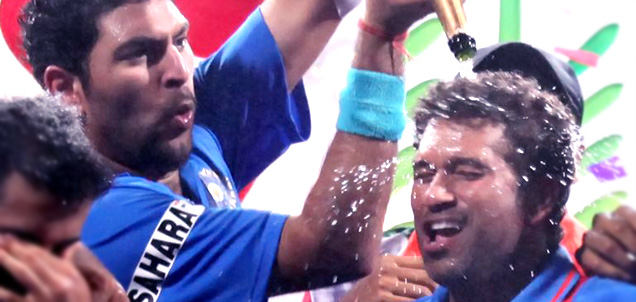
     

    In an email and telephonic interview with MxM India’s Archita Wagle, Mr Shridhar talks about his passion, the Madhavrao Sapre Samachar Patra Sangrahalaya evam Shodh Sansthan in Bhopal, Madhya Pradesh.


    Q: Tell us about your career, and what you are doing now.

    I am retired now and I concentrate on the museum and my books nowadays. Before that I was the director at Makhanlal Chaturvedi University of Journalism and Communications. I also worked as the editor of Navbharat. I have worked with several state level committees related to journalists and newspapers in Madhya Pradesh. I was a member of the Madhya Pradesh Vidhan Sabha Press gallery committee for two decades.


    Q: What prompted you to start the Sapre Sangralaya in 1984?

    I was working on my book Shabd Satta, which chronicles 150 years of journalism in Madhya Pradesh. I had to travel far and wide to research for my book. While researching for the book, I realised that there was no systematic classification of the material that I required. Authenticating the material was also difficult, and posed a lot of problems for me as history is incomplete without properly verified material. I visited individual collectors, but the newspapers in their collections had started deteriorating. This sparked the idea of preserving newspapers.


    Q: How did you get the material for starting the museum?

    I met Pandit Rameshwar Guru, a veteran journalist, Hindi poet and Mathematics teacher. He also had an extensive collection of journals, newspapers and periodicals going back two generations. But due to family obligations he was ready to donate them. He had two conditions, though. One, he wanted the material to be saved systematically and in the name of future generations. Two, the collection or the museum which would house them will not be handed over to the government or any university as Mr Guru feared that the material would not be cared for properly at either places and that the universities are more concerned with their salaries than preserving the heritage that such a collection represents.


    Q: Can you tell us more about the Sapre Sangralaya and the work it does?

    After Mr Guru agreed to donate his collection, a society was set up in the name of Madhavrao Sapre, the pioneer of Hindi journalism. The ideology that Lokmanya Tilak had when he started Kesari, was the same ideology that Shri Sapre had, so he launched Hindi Kesari. The Sapre Sangralaya collects all kinds of old periodicals and newspapers in all the languages – Hindi, Marathi, Urdu and so on – for the purpose of preserving them. Earlier I used to travel to different places scouting for materials. I once bought an old collection of Punch magazines from a man who sold them for a song because he wanted to pay for his liquor. But as time passed, people came to know about the work we are doing and they donate their private collections to us, knowing that we will take good care of the material they donate.


    Q: How are the footfalls in the museum? Do you get a lot of visitors?

    The museum is acknowledged as a research centre by many universities. We mostly get journalists and academicians who come to the museum as they know that what they might not get anywhere else, they will find it here. Once, the editor of an established and well-known Hindi newspaper came to the museum because he wanted to see a copy of a particular issue for January 1962 of his paper. It was a moment of pride that we had the issue which their archives didn’t have.


    Q: How do you arrange for the funding for the Sangralaya?

    The Central and the state government provide funding for the museum but they never interfere in the day-to-day working. We also receive donations. So funding is not a problem for us.


    Q: Any future plans for the Sangralaya?

    You should know that the paper a newspaper is printed on is not of the finest quality. We have newspapers and journals dating from the 1600s. Constant handling also accelerates the deterioration. We have preserved the material we have gathered so far by chemical treatment, pest control, laminating the old papers, and transferring the old papers onto microfilm. So far, we have transferred material up till the 19th century. But now we are looking at digitising the content we have. We are looking at transferring all the material to DVD so that people who come to the museum to look at these newspapers for their research will be able to go through the DVDs and the newspapers can be preserved better.


    Q: The website for the museum is in Hindi. Would you consider having a website in English, in order to reach a wider audience?

    The suggestion that you have given is a good one. We are translating the summary for the website in to English and other languages… but only the summary, the rest of the website will be in Hindi as that is the language we work in. But once we translate the summary, that will provide enough information for people about what we do.


    Q: You are an author; any work in progress on that front?

    I have written three books and now I am in the process of completing my fourth. My first book was Bhartiya Patrakarita Kosh, which is an in-depth study of Indian journalism in the pre-Independence period (1780-1947). The book covered the whole sub-continent -India,Bangladesh and Pakistan. It is the history of Indian journalism in all languages of country – origin, growth, struggles, achievements and contribution.

    My second book was Shabd Satta which covered the history of 150 years of journalism in Madhya Pradesh from 1849 to 1999. My book Choutha Padav is the history of 1000 years of Bhopal with special reference to BHEL. Now I am working on my latest work, Pahela Sampadkiya, which is a collection of the first editorial in prominent Hindi language newspapers. The book has about 28 editorials and my comments and analysis on each of the editorial.


    Q: How do you find time to manage both your writing and your day-to-day commitments?

    Now that I have retired, I can devote more time to writing and my work at museum. So it is not difficult.


    Q: How does it feel to have your efforts recognized by the government in the form of the Padma Shri in Sahitya?

    I didn’t expect to be awarded. I have been working on the museum for the last 28 years. I never expected to get the award as the government doesn’t declare it in advance, but it feels good.


  • Is cricket overpriced?


    By A Correspondent


    The past six to nine months has been a phase where Indian cricket has seen a remarkable slump. BCCI, which is at the helm of affairs, has been criticised for not keeping an eye on the future. The general sense is that the board is not prepared to mend this sorry state of Indian cricket despite pressures from broadcasters, the media and of course, viewers at large which matter the most if the plan is to sustain the sport in the long run.


    Yes, cricket is the only celebrated sport in the country and advertisers have banked on its popularity. But recently, the game has come under the scanner with India’s debacle in its current series. Sahara has decided to end its 11-year association with BCCI and the Indian cricket team. And have also put the fate of Pune Warriors in jeopardy. The question here is whether cricket, as it is today, is an overpriced sport.


    Jai Lala, Principal Partner – The Exchange, Mindshare said, “Cricket has always been a very attractive sport for advertisers. Therefore, it has been priced highly. When the performance of the Indian cricket team goes down, the viewership goes down and hence advertisers find it expensive. Advertisers want guaranteed viewership. So as a broadcaster if you’re able to provide that, advertisers will be more open to pay expensive ad rates on cricket.”


    So it’s about the TRPs. R Sridhar, CEO, Brand-Comm offers a different dimension. “I think there is too much of cricket and too many properties are being created. What needs to be done is to bring focus back on the game and once India starts to win matches, which it shall as for the next 20 months it is playing at the home turf, it’ll be business as usual. Cricket will always have takers. But, with the current development there is likely to be some kind of negotiation.”


    On whether BCCI is losing the plot, Mr Lala said, “BCCI has to be more professional. They are riding on a monopoly as far as Cricket in India is concerned. I think the time has come for them to corporatize their proceedings. There is a need to ensure that the future of Cricket in India is safe. The systems, procedures etc. needs to be relooked at.


    IPL as is known is the game that corporate czars play, and are in no mood to go soft on their plans around the property.


    However, a senior media planner on condition of anonymity said that there is a swing in the opinion because of India’s performance where the same people were betting high on the game. She said, “Cricket was not an expensive sport when India was winning, people who advertised during the Word Cup paid off their skins and didn’t complain. Now that India is losing, there’s been a negative sentiment among all stake-holders.”


    On the recent development of Sahara pulling out of the Indian team sponsorship, the senior source said: “This is nothing but politics. Unfortunately, BCCI is interested in only making money rather than focusing on the future of this sport.”


    Another media planner is of the opinion that there may be a bit of caution in the air. But he says, “There is no property better than cricket when it comes to capturing a large chunk of audience. So one pays premium for the kind of viewership which in any other property is difficult to get.”


    He added that the association of Sahara and Indian cricket team was that of passion. Though it was not a brand-building exercise for Sahara, in the bargain the brand gained too. He says Rs 120 cr is what it takes to spend on cricket in India in a year. And if one thinks of that number, then the choice of corporates wanting to associate would be a handful. “Telecom players would have been a good bet but with the fiasco that they are facing, that seems to be an unlikely choice. However, there might be some price cutting on this front but getting a sponsor would not be difficult.”


    For now, it seems everything rests on BCCI as far as the margins for broadcasters are concerned. Nimbus has found itself in a fix, with BCCI terminating the contract on non-payment of dues. An insider reveals that the heavy price levied on the part of BCCI, plus the slowdown, impacted ROI for the broadcast major.


    Even in the case of IPL, MSM has already paid a heavy price, and are looking to monetise the same via hiking ad rates (by 10 per cent this year, as stated by President of MSM, Mr Rohit Gupta). Any plans to relook the 10-second on air-spots will drastically bring down revenues for the broadcaster.


    Plus, the back-to-back cricketing schedule lined up by BCCI, as many opinion makers within the sporting arena agree, is the single reason why Indian cricket is experiencing a downfall never seen before, which could mean India losing many more matches, loss in viewership, loss in advertisers/sponsors. In a nutshell, cricket as a sport in India will lose its sheen

    Photograph: Fotocorp