Category: MEDIA

  • Coming soon: Milestone Digital and Milestone Rural

    By Robin Thomas


    In a bid to extend its services, out-of-home media agency, Milestone Brandcom has big plans and is all set to enter the rural communication and digital space and set up a creative agency, all within the next one year.


    Milestone Brandcom is slated to venture into the rural communication space with Milestone Rural in the next three to six months. The next six to twelve months will see Milestone Brandcom entering the digital space as well with Milestone Digital. In addition to these developments, in a year’s time, Milestone Brandcom aims to set up a creative agency under the brand name Milestone Brandcom. It will be a mainstream creative agency which will handle the entire creative communication programme, be it TVC, print or radio.


    Through Milestone Digital, brands will be able to explore social media campaigns, digital OOH innovations and various other digital initiatives and campaigns. Milestone Brandcom, therefore, is aiming to provide enormous opportunities for brands to extend their communication ambit in the digital space.


    “Digital and Out- of- Home works hand-in-hand and therefore it increases enormous possibilities for brands. Since the digital and social media space is unique and real time, it just scales up the opportunities. You will see us in the digital space in the next 6-12 months time,” said Mr Nabendu Bhattacharyya, Managing Director, Milestone Brandcom.


    Milestone Rural, on the other hand, aims to reach out to the rural consumers, particularly in those areas where television and print have limited or no access at all. “Milestone Rural is about communication in ruralIndiawhere television and press don’t reach all marketers and brands looking at next destination for their growth story. We would be launching Milestone Rural in next 3-6 months time” shared Mr Bhattacharyya.


    Today, Milestone Brandcom has an Out of Home media division – Milestone Out of Home, a retail division – Milestone Last Mile and an event promotion division – Milestone Connect. With the soon to be launched digital and rural communication initiatives, Milestone Brandcom aims to build an entire vertical which will provide complete integrated solutions to their clients.


    Milestone Brandcom is said to have over 70 established brands in its kitty. Tata Docomo, Colors, McDonalds, Binani Cement, Axis Bank, HDFC Mutual Fund, Dish TV and Franklyn Templeton to name a few. The recent additions to its client list are L’Oreal Paris and Garnier.


    Speaking about Milestone Brandcom in 2012, Mr Bhattacharyya observed: “In just two years we have reached a stage where we are one of the leading agencies in the country. We have already touched the Rs200 crore plus mark in turnover. In 2012, we will try and offer our existing clients more solutions and we will continue to expand our services. We have been growing 100 per cent since the last two years, and this year is going to be no different.”


    In the next three years Milestone Brandcom aims to plough back the profitability into the business with more investment on quality talent, manpower, on production set up, and technology.


  • The Anchor: 5 reasons online radio will grow in India

    By Prashant Panday


    #1 Variety in Music Programming

    As internet radio grows it will offer much more variety in music programming. The internet is the future of everything, and radio happens to be part of it. Radio is currently hamstrung by the music royalty license issue, but we hope that it will get sorted out soon. Once that happens, all Indian radio stations will be available online.


    #2 No Geographical Boundaries

    Geographical boundaries that exist today will be demolished. What will happen is that a listener in Mumbai will be able to hear a Delhi radio station and vice- versa, or a New York station in Mumbai etc.


    #3 Higher Interactivity

    There will be far higher interactivity. For example, if I like a song, I will be able to download it instantaneously. In fact, download speed will further increase as 4G services will be available; and as broadband internet penetration increases, it will bring more users on board.


    #4 It Will be Wonderful for Artists

    As online radio grows strong it will help artists make a mark in the music industry merely on the back of great content; whereas today, a whole lot of marketing support is required.


    #5 New Challenges and New Opportunities

    For broadcasters it will bring new challenges because there will be much more competition, it will also offer new opportunities because then the whole world will be our oyster.


    Prashant Panday is CEO, Radio Mirchi.


  • Tribal Fusion is now world’s 2nd largest digital display ads provider

    By A Correspondent


    Tribal Fusion, the global online advertising provider owned by Exponential, is the world’s second largest source of display advertising, according to comSCORE’s December 2011 rankings of the leading global display networks.


    Site reach measurement service comSCORE reported that Tribal Fusion’s premium publisher network reached more than 490 million unique users globally, behind only Google (1.2bn) and just head of AOL Advertising (477m), which includes its advertising.com ad network subsidiary.


    The company said the new ranking reflected its growing global presence and increased demand from brand advertisers for campaigns that take advantage of its rich-media capabilities to offer more engaging creative executions.


    Dilip DaSilva, founder and CEO of Tribal Fusion and parent company Exponential, said: “Brand advertisers across the globe are increasingly looking for new ways to leverage digital media to connect with their prospective customers and are looking for the same kind of high-impact and emotionally engaging creative messaging that they get from traditional TV advertising. And beyond just reaching their prospective customers, our tight integration with our publishing partners, allows brands to connect at scale with prospective customers using high-impact, engaging messaging.”


    Founded in 2001, Tribal Fusion has expanded across the globe and now operates offices in 37 locations worldwide including theUnited States, Canada, Mexico, Brazil, United Kingdom, Spain, Germany, France, Saudi Arabia, United Arab Emirates, South Africa, India, Thailand, Malaysia, Singapore, Indonesia, Philippines, Hong Kong, Australia and New Zealand.


    “Digital media can be accessed by visitors in any country; as a result most premium publishers attract a global audience. Through our ability to monetize publisher inventory in so many countries, we have now become the partner of choice for premium publishers in every country,” said DaSilva.


  • A night filled with stars and entertainment at the7th Apsara awards

    By A Correspondent


    The 7th Chevrolet Apsara Awards 2012 powered by Venus Soap saw a glittering, star-studded event held at Mumbai’s plush Yashraj Studios. The Film & Television Producers Guild of India and Wizcraft International Entertainment announced the much awaited winners for the finest talents in film and television for 2011. The 7th Chevrolet Apsara Awards 2012 ceremony saw the who’s who of the industry.


    Ranbir Kapoor, on winning the Best Actor Award for Rockstar, said: “This is my 3rd Apsara Award and actually, I don’t feel humbled because I worked really hard for this role, so I’m very happy that I got the award for it. I express my deepest gratitude to the Guild for giving me this honour; it is very special to me.”


    Commenting on the ceremony, Mr. Sumit Sawhney, VP Marketing, Sales & Service, General Motors India said: “Chevrolet Apsara Awards is an endeavour to honour excellence in cinema and television by the stalwarts of the industry itself. This is our third straight year of association with the Chevrolet Apsara awards, a partnership that has really given us a wide reach acrossIndia. It is one of many initiatives that has served to increase the awareness and purchase consideration of Chevrolet vehicles inIndia.”


    Mr. Rahul Gyanchandani, Director, RSPL Ltd said: “We take pride in associating with Apsara Award which is the official award event of Television and Film Producer’s Guild and is an important event for the industry. We are proud to be associated with this award and feel that our brand, Venus Coconut Soap, would definitely reap rich dividends out of this association. We hope this partnership to continue for many years to come.”


    Speaking on the list of celebrity performers, Sabbas Joseph, Director, Wizcraft Entertainment International Ltd. said: “We have always been pleased to partner with the Guild for the Chevrolet Apsara Awards and strive every year to recognize talent in the Indian entertainment industry. The 7th edition of the Awards was a grand success and the night was one of winners.”


    Speaking about Colors’ association with Apsara Film and Television Producers Guild Awards TM, Mr. Raj Nayak, CEO – Colors, said: “Colors has been associated with the Apsara Awards for two years now. It is a perfect platform for Bollywood and Television stars to come together and celebrate the excellence that they have put forth through their efforts during the course of the past year.”


    On stage, the director duo Farah Khan and Karan Johar were the masters of ceremony. They entertained the audience with their wit and humor and camaraderie.


    Highlights of the evening were the enthralling performances by the stars themselves. The most exciting act was the soon-to-be-wed Riteish Deshmukh and Genelia D’Souza enacting their love story. Along with many other spell-binding performances and other stars joining in the baarat, this was truly a prelude to their wedding celebrations.


    King of Bollywood, Shah Rukh Khan set the stage ablaze as he grooved to the tunes of his latest movie Don 2. Svelte Kareena Kapoor put up a sizzling performance as she danced to some of the most popular South Indian hit songs like Nakka Mukka, Ringa Ringa and the recently popularized Kolaveri Di.


    The 7th Chevrolet Apsara Awards also dedicated a special segment to the legends of Indian cinema and their glorious years in Bollywood. This act marked the beginning of ‘100 years of Indian Cinema’ celebrations.


    A special act designed by Shiamak Davar and his troupe paid tribute to iconic stars like Dilip Kumar, Saira Banu, Shashi Kapoor, Dr. Vyjanthimala Bali, Waheeda Rehman, Asha Parekh, Manoj Kumar, Jaya Bachchan, Shabana Azmi, Vinod Khanna, Zeenat Aman, Rajesh Khanna, Hema Malini to name a few. Shahrukh Khan hosted the segment and spoke to the legends about the centenary celebrations.


    Amisha Patel mesmerized the audiences with a scintillating performance on hit item numbers ‘Chikni Chameli’, ‘Ooh La La’ and ‘Madhubala’. ‘Band Baaja Baarat’ star Anushka Sharma shook a leg with popular TV stars – Nandish Sandhu of Uttran, Sushant Singh of Pavitra Rishta and Shabbir Ahluwalia, winner of ‘Khatron ke Khiladi 3’ to three different styles of dance including Lezim, Hip-Hop and Bollywood.


    Of course, in the midst of all this entertainment, the envelopes were opened to reveal the winners for 2012 who accepted their Award amidst excitement and fervour, as the air was filled with thunderous applause and cheers.


    Watch the magic of the 7th Chevrolet Apsara Awards 2012 exclusively on Colors.


  • FM Radio rocks in South India… and how!

    By Robin Thomas


    The FICCI-Deloitte report on Media and Entertainment in South India says that radio in South India will grow with a CAGR (Compounded Annual Growth Rate) of 20 per cent by 2015. The reach of FM radio is said to be far higher in South India than its counterparts in other parts of the Country. According to Ms Nisha Narayanan, Senior VP Projects and Programming Red FM, South India has 28 per cent share of existing radio channels and it will have 28 per cent representation in FM phase III as well.


    Besides the larger FM stations like Red FM, Big FM, Radio Mirchi and Radio City, there are many local or smaller FM stations as well, such as Radio Hello, Club FM, Best FM, Suryan FM and Radio Mango, to name a few. Unlike the North, FM radio stations in the South play music in multiple languages as prominence is given to the local language. Big FM for instance plays only Kannada music in Bengaluru whereas in Hyderabad it plays Telugu and Hindi music. Club FM, a Kerala-based FM station, plays mainly Malayalam music with a mix of Tamil and Hindi music whereas Red FM in Andhra Pradesh mainly plays Telugu.


    Rabe T Iyer
    Nisha Narayanan

    Rabe T Iyer, Business Head, Big FM, the radio arm of Reliance Broadcast Network was of the opinion that compared to the rest of the country, the reach of radio in south India is much higher. Mr Iyer was also quick to point out that in some key markets like Bengaluru, Chennai and Hyderabad the reach of radio is significant, higher than most news channels, and is on comparable terms with leading GECs.


    “Given the inherent strengths of the region backed by a strong film and music Industry, added to its rich cultural diversity, it is not surprising that radio in South India has relatively higher penetration than other regions. The south of India has done some innovative radio over the years. It continues to be a huge focus area for all players given that it has three big metros which are important from both listenership ratings and revenue perspective,” he added.


    Nisha Narayanan of Red FM said, “South has been an integral part of radio and its growth in India. Radio is more close to people’s lifestyle here than any other part of India. Radio Ceylon had created a strong base for radio even before the advent of FM radio in India. FM radio penetration is the highest in South India, particularly in Tamil Nadu. In the long term, obviously there is tremendous growth and we are in the early stage of that growth.”


    Shaan Menon, Manager Content, Club FM noted, “FM in South India is going to take a huge leap as it is waiting for the next bidding. Even the smaller cities and small townships in Kerala will get a chance to taste the feel and warmth of FM culture. South Indian film music is the strongest music industry in terms of production. Although CD sales are deeply affected due to rapid downloads, FM industry is full of the new genre of music and music directors.”


    Challenges and Opportunities

    Some of the key advertisers in the south are retail, textile, jewellery, real estate, hospitality, FMCG, consumer durables etc. Big FM claims its advertising and content ratio to be 1:4, while Red FM says it plays 45 minutes of music and 15 minutes of ads every hour during off peak season whereas in peak season the inventory time is slightly more. One of the reasons why radio is said to be doing well in the south is because of its strong regional film and music industry. “Given the diversity, there is tremendous potential for localization which radio can capitalize on and deliver. The opportunities to create a unique brand identity in this market are immense,” explained Mr Iyer.


    He further said, “A challenge any product faces in its life cycle is finding the ‘differentiating quality’ after the market matures. The same applies to the radio industry and its many players. With a market that has matured and grown manifold and poised to grow further, novelty and innovation in content will be a key component for success and will decide further growth of the category.”


    Ms Narayanan on the other hand observed that time has come for radio to look for new revenue streams. She was also of the view that radio stations must experiment beyond the traditional programming formats, and that music royalty still remains a challenge. “Content has to evolve a lot as most of the programming strategies are music based. We are still into traditional programming formats and the time has come to take it to the next level. The ability to create new revenue streams is ideally needed at this hour, as the only source of revenue for radio stations has been advertising sales. Music royalty is another area of concern as we pay needle per hour, whereas the international markets follow the revenue sharing model. These are the challenges faced nationally too.”


    The road ahead

    The much awaited FM Phase III policy seeks to extend FM radio services to about 227 new cities. Phase III will cover all cities with a population of one lakh and above, simultaneously there will be a total of 839 new FM radio channels in 294 cities. The local players in particular expect to further expand their radio station into the southern markets. However, one of the possible challenges after FM phase III is launched could be to attract listeners to the medium and then to sustain its listenership.


    Mr Iyer of Big FM observed, “We foresee huge growth in the radio industry in the coming years. There will be more stations leading to more innovation in content and communication. This will result in more revenues and hence more profitability for all players.”


    Ms Narayanan remarked, “South India has 28 per cent share of existing radio channels and it will have 28 per cent representation in phase III as well. Radio will be a national medium and the true mass medium with the number of channels coming in Phase III. In the south 75 to 80 per cent of the licenses are for the ‘D’ and ‘C’ cities which will be a great boost for advertisers as a medium breaking across demography.”


    Mr Menon stated, “The challenge during FM Phase III is to convince the small town public that FM radio is equally or more entertaining than TV. It will be difficult to make them taste the sample, but the current popularity of FM industry in the main towns will definitely help to fight the difficulty of convincing the new public.”


  • Given India TV sting, EC warns parties on unfair practices

    By A Correspondent


    A sting – Operation MLA – telecast on India TV on January 26 which alleged that some candidates belonging to various political parties are procuring bribes from corporates, allegedly for the purpose of their election expenditure in the forthcoming Uttar Pradesh Assembly elections, has drawn the Election Commission’s attention.


    The sting also telecast that such persons, aspiring to be candidates from various political parties, have admitted that their election expenditure will be between Rs1-3 crore, which includes expense in the name of dummy candidates, liquor for the electors and other expenses.


    The Commission, taking serious note of the contents of this sting operation, called for the transcript. After considering the transcript, the Commission has taken the following decisions and measures:


    1. Any attempt to obtain or procure gratification for exercising any electoral right, including right to stand or not to stand at election, is offence of bribery under IPC. Therefore, the DEOs have been asked to file complaint against the persons who were seen to be involved in such acts for the offence. (If convicted by the court, it may result in imprisonment up to one year or fine, including disqualification for continuing as MLA, if elected, and also from contesting any election in future).


    2. The Commission has reiterated its appeal to all the political parties, whose functionaries are named in the sting operation, to inquire into the matter and advise all their functionaries to refrain from such activities in the current elections.


    3. The Commission has reiterated its stand that such bribery under the IPC should be made a cognizable offence. The Commission has once again approached the government to pass an ordinance to make suitable changes in the law, as the matter is quite serious.


    4. Besides the above, the Commission has given strict instructions to all election officials in Uttar Pradesh that any such attempt to bribe any elector during election process should be dealt with firmly. The entire liquor production, sale and distribution shall be monitored everyday and any illicit liquor shall be seized. Movement of unaccounted cash in the constituency is to be monitored and seized. If any person raises funds in cash as mentioned in the sting operation, the Income Tax department has been alerted to deal with such donors firmly and investigate about the source of such bribe money.


  • NDTV expands global reach in US

    By Akash Raha


    NDTV 24×7 and NDTV Good Times is now available on Dish Network in the US, bringing the channels to 74 countries and 18 million households outside India.


    Both channels are now a part of Dish Network’s South Asian Mega pack along with other channels from India. In addition, NDTV 24×7 also becomes the first Indian channel to also be available in their international base pack as well.


    Commenting on the launch, Vikram Chandra, Executive Director and Group CEO, NDTV Limited said, “NDTV is delighted to be partnering with Dish Network to bring its content to an even wider audience in the US. We recognize that Dish dominates the South Asian market in the US, but we are also delighted that NDTV 24×7 will also be available to a wider audience through their International base pack. We hope our association helps both companies reach new heights.”


    The launch of NDTV 24×7 in Dish Network’s international base pack comes close on the heels of the launch on Virgin in the UK, where it also became the only Indian channel to be launched in their basic pack.


    NDTV’s channels are now available in the leading platforms across the US, UK, Canada, Sub-Saharan Africa, the Middle East, Australia-New Zealand and the Indian sub-continent, among others, and reach more households than General Entertainment Channels (GECs) in the international market.


    In addition, NDTV Good Times, India’s very own lifestyle channel, has also done well in the international market, allowing the Indian Diaspora to enjoy the range of offerings that it brings, and giving them a taste of the New India. Within four years of its launch NDTV Good Times is available in key international markets, including the US and Canada, with a launch in the UK already in the pipeline.


  • Hindu hits back with a tough punch


    By Tuhina Anand


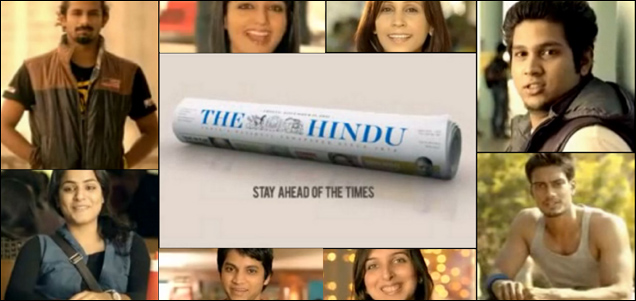
    The Times of India fired the first salvo with its hints at a “boring” newspaper. The Hindu has countered with its ‘Stay ahead of the times’ campaign. A bit of a revelation coming from the house of the newspaper which is perceived as traditional and old-fashioned, the 360-degree pan-Indian advertising campaign seeks to bring the core values of journalism to the fore. At the same time it shows how the ‘popular’ read has trivialised the kind of news being dished out to the readers, with the result that they are more clued in about Aishwarya’s baby and Hrithik Roshan’s pet name than knowing the name of the Vice President of India.


    What is more surprising is that in the campaign, even though it’s bleeped out, one knows that people who have been featured say that they read The Times of India, thus clearly acknowledging at one go that TOI is a force to reckon with but at the same time responsible for this trivialization of news. The tagline leaves no room for doubt as it states, “Stay ahead of the times.”


    This kind of aggressive marketing could be the answer to the campaign that The Times of India had come out with a few months ago in the Tamil Nadu market which targeted The Hindu for being boring. The Times of India campaign says, “Stuck with the news that puts you to sleep? Wake up to The Times of India.” In fact, it is learnt that the TOI had even printed a dummy newspaper, circulated within the industry, with The Hindu masthead and “zzzzz” printed all over, to underline its message that reading the newspaper put people to sleep.


    Mr Suresh Srinivasan, Vice President (Advt), The Hindu Group of Publications insists that the campaign is not a reaction to the earlier TOI salvo. He said, “We have been on a path of transformation and change where we have not only undergone organizational changes but also been contemporising our product in order to connect better with our reader. The changes have been in content, layout and packaging based on the research we had commissioned, and their suggestions.”


    He added, “We are the country’s most respected English daily and the number 1 English daily in the South, with a growing footprint in the North. While we build on our strengths there is also a need to protect our turf. The Times of India is definitely our single largest competitor down South.”


    The Times of India, meanwhile, has been watching the recent development with a  touch of amusement. Mr Rahul Kansal, Chief Marketing Officer at Bennett Coleman & Company Limited, said: “It is good fun to watch it from the sidelines. TOI is an all-India brand and has redefined the news and newspapers altogether. In fact, this doesn’t really damage our brand in any way. On the contrary, it reiterates the fact that we are a very strong contender for the leadership position in the Chennai market. Remember, the Coke and Pepsi war? It didn’t hamper Coke in any way but it did establish Pepsi as a worthy young brand.”


    One of The Hindu TVCs
    [youtube width=”400″ height=”200″]http://www.youtube.com/watch?v=xmXPBp7DpQw[/youtube]
    The Times of India TVC
    http://timesofindia.indiatimes.com/videos/news/Wake-up-Chennai/videoshow/10557020.cms

    “While advertising, one does exaggerate and that’s what we had done when we said in our earlier campaign that The Hindu is a staid brand. One takes extreme positions in advertising to bring out the humour, so even now when the ad says we give only Page 3 news that just to bring out humour. Everybody knows that the TOI is a complete newspaper,” added Mr Kansal.


    Despite the impressive numbers of The Hindu, there definitely seems some concern about the might of the TOI which led to this kind of aggressive marketing. Mr Narendra Kumar Alambara, Vice President at Starcom Worldwide, who has been observing the Chennai market, explained: “The TOI has made inroads into the Chennai English newspaper market and there is no denying that. While the gap between the leader and TOI is still huge, but the latter has become a strong competitor. Youngsters and migrant population have been picking up this newspaper, especially, because of the kind of news reporting that TOI has been doing. While earlier there was no option, but now there is an alternative read. In terms of readership, I think that for The Hindu it has remained stagnant while TOI has grown the category itself. However, one should remember that in the Chennai market retail advertisers lead and for them The Hindu is still a priority.”


    On the campaign, Mr Srinivasan said: “The Hindu believes that, more than ever in a globalising, knowledge-driven economy, it is vital that readers are well-informed about the world at large. And yet, over the last few years, the news and media industry in India has become increasingly focused on serving up a steady diet of trivia, shying away from the national and international issues that really matter. This may help sell more newspapers or get more viewership in the short term, but it is the news equivalent of junk food. And the long-term result is a steady dumbing-down of readers who end up knowing more about Aishwarya’s baby than the Arab Spring.”


    The campaign shows how one may be creating a country that is fully conversant with gossip and Page 3 culture but clueless about current affairs and world events.


    Mr Srinivasan says, “The campaign is aimed at triggering conversation and if we succeed in provoking thought and debate that would be the measure of our success. It is intended as an eye-opener to get people to re-evaluate their media choices, to demand a smarter newspaper.”


    The campaign will be on TV, radio, cinema, print, outdoor and digital. It will be supported by on-ground activities in malls, cafes and other locations.


  • Rural market is the new siren call for OOH

    By Robin Thomas


    According to industry estimates, ruralIndiais growing at a faster pace than its urban counterparts, atleast in certain product categories. The overall Indian rural market size is believed to be Rs800 crore, with a total advertising pie of Rs12,000 Crore in rural markets. FMCG products, consumer durables, agro manufacturers, banking and insurance, telecom companies are some of the big spenders in rural markets.


    A survey reveals that FMCG products account for nearly 53 per cent of the market share in ruralIndiawhereas consumer durables account for the rest.


    The last few years have seen a drastic increase in the standard of living and purchasing power in ruralIndiaand many marketers heading for the lucrative rural markets. Also people in rural areas tend to spend a lot of time outdoors, which makes the rural market an ideal target for OOH media. As a result, almost every OOH industry player believes that the next phase of growth for the out-of-home media will come from rural markets.


    In interactions with MxMIndia, Mr Nabendu Bhattacharyya, Managing Director, Milestone Brandcom – who had shared his plans to launch Milestone Rural – and Mr Rohit Samarth, Business Head – Rural, Percept- Out of Home, were of the opinion that out-of-home media is seeing a tremendous growth in rural markets as consumption power in smaller towns and villages is increasing.


    Mr Anirban Ghosh, Senior Vice President, Adz Edge opined that an increase in purchasing power of rural masses in recent past has fuelled lot of interest amongst clients across all categories in ruralIndia. “Once considered a market only for low end products, today companies are seeing rural market as the new growth avenue. Comprising more than 70 per cent of the total consumers in India and annual market potential in excess of Rs12,30,00 crore, rural India is being charmed in novel ways. Naturally, out-of-home has also taken an upswing in rural market. More and more clients have shown interest in tapping this market which has got tremendous potential and increasing buying power” he said.


    The main revenue stream in rural market will come through a media integration and activation approach such as van activations, road shows, wall paintings, melas or village fairs.


    Mr. Ashish Pherwani, Associate Director, Advisory Services, Ernst & Young is very optimistic about rural out-of-home media. He believes that it can reach 25-30 per cent of the OOH advertising share in 5 years and that as consumptions shifts from metros to the 35 to 100 of the largest towns, OOH spends will also follow.


    Although OOH in rural areas is on the growth curve, it still has a long way to go and in order to continue growing in the long run; industry players believe that there are certain challenges and concerns that need to be overcome.


    One of the biggest concerns is the fact that the rural market is very fragmented and there is neither a credible measurement system nor a clear census data that can provide a clear definition of ruralIndiaand the socio-economic classification, among other relevant details.


    Mr Samarth observed: “While advertising in ruralIndiais growing, fragmentation of the market is a big challenge; there is no distribution network and there is no credible measurement system either. Another set of challenge is about living up to the promise of delivery in the rural markets. However, on the positive side, the biggest change in the rural is the fact that there is much less central control because today a lot of large companies are decentralizing their budgets.”


    Mr Pherwani said: “The rural market is extremely fragmented and there is little or no transparency to provide confidence to advertisers. Therefore, transparency needs to improve with better demonstration of proof of delivery. There are also few national players who can support large campaigns.”


    But Mr Ghosh believes that the biggest challenge for OOH is the lack of quality properties in rural market and also the fact that it is even more unorganized as compared to its urban counterpart. As a result, execution and proper monitoring is another core challenge. “To overcome these problems, we need to understand the rural market in a better way. Major players from OOH media owning houses should take initiative to open up their operations close to these locations for better control. They should collaborate with the local authorities to implement uniform regulations and open up more quality properties in rural market” he suggested.


    Innovations are the need of the hour to attract the rural masses and the OOH approach needs to be more interactive and integrated with brand activation for high recall value. As product consumptions increase, OOH media spends will also increase.


  • Publicis Healthware launches India presence at Health 2.0

    By A Correspondent


    Publicis Healthware International (PHI), part of Publicis Healthcare Communications Group (PHCG) – the largest healthcare communications network in the world, has launched Health 2.0 inIndia.


    PHI is an integrated agency focused on improving communications across the health & wellness community, with a strong eHealth and information technology focus. As one of the largest global digital agencies, PHI has developed a strategy which focuses on three key service offerings: consulting (innovation planning, change management and e-business strategy), communications (digital marketing, web development, e-detailing, e-CRM, e-learning, e-science, health 2.0 and KOL management) and eBusiness solutions (software platforms, business solutions and proprietary tools to increase the deployment of the digital tactics).


    Publicis Healthware International (PHI) will be based in Mumbai and would be spearheaded by Abhijit Shitut, Jt. Managing Director and Kiran Pai, Jt. Managing Director at Publicis Life Brands Watermelon.


    Roberto Ascione, President of PHI is currently in India to launch the new PHI presence, as well as, to promote its most recent product, Videum.com, a global health video portal able to globalize video assets leveraging an exclusive subtitling technology and featuring unparalleled search engine optimization.


    Ascione spoke on his plans for the Indian market at the Health 2.0 conference inDelhi: “Indiais an emerging information superpower. The digital medium is catching on fast with more and more people becoming web-savvy.Indiahas the largest population of new users after theUSandChina. Healthcare needs are growing and so are awareness levels. People are demanding better and more effective healthcare solutions. In fact, ‘healthcare’ is one of the most searched and Googled words inIndia. Launching PHI will help us widen our reach and aid us in getting a strong foothold inIndia.”


    Ashley Kuchel, President of PHCG, APAC, further elaborated: “With a growing focus on providing clients an enhanced digital experience, the launch of PHI inIndiastrengthens our position in this sector. With this initiative, we hope to increase our APAC footprint and become a formidable digital entity inIndia.”


    Abhijit Shitut echoed the sentiments: “Today, every healthcare client inIndiahas digital ambitions. Our clients for a long time have been demanding a keener expertise in digital solutions.”


    Kiran Pai added: “With PHI’s products and capabilities now added to the Publicis Life Brands portfolio, we can now call ourselves a full-service healthcare agency that would enable us to provide more focused and integrated campaigns; empowering client businesses to grow manifold.”


  • Akash Raha: From Coming Soon to making it big

    By Akash Raha


    My journey in MxMIndia so far has been very entertaining and exciting. Starting off with a launch team and developing content from the beginning is always an exhilarating feeling. The feeling then is not of working ‘with’ a company, but rather that of building a company.


    I still remember the day when I got my first MxMIndia visiting card delivered, my name embossed on it in bold black. Behind the card, it read “MxMIndia– Coming Soon”. From ‘Coming Soon’ to making it big in the space of 100 days has been a short, yet fruitful journey.


    We have carved a special niche for ourselves in the media, marketing and advertising space amongst existing clutter. Completion of 100 days is a big and special milestone for the MxM family and yet there are ‘miles to go before we sleep’.


    Over the past few months, covering the print media and news broadcast beats, I was lucky to have been given the opportunity of interviewing and reporting on big developments.


    The journey began with two mega events – World Magazine Congress and AdAsia which our team covered comprehensively. Moreover, it gave the opportunity to interact with the big names in the industry.


    The print industry at the World Magazine Congress and INMA seem to be preparing for the coming digital revolution and seem to be appropriating the technology of the future. The times ahead seems to be exciting and adventurous for the print industry and for us, who report on all these developments.

  • How (and why) marketers love social media


    By Rishi Vora


    There is sooooo much happening in Social Media. Every brand – no matter how big or small, every media and entertainment company, especially film and television content (where YouTube has become such a rage!), even a local mall or a retail outlet owner in a small district is looking to be on Social Media, where he feels he should be before his neighbourhood rival is, and win more customers.


    Although this might sound as if Social Media is a disparate measure for brands, the fact is that the market is responding to the rise of a new medium which is a just about a three-year-old phenomenon; one which promises to change the game as far as marketing is concerned.


    There are many cases of brands benefiting from the social space, be the whacky Old Spice videos that did the trick in 2010 – yes, they were a set of videos, but became most popular on Social Media or Kolaveri Di, which became an online sensation. Or whether it is the case of Megan Fox meeting Rose Boy back in 2009, thanks to Kodak that took the initiative of taking it to the masses, through Social Media of course, offering the winner a handsome $5,000. There are many more stories where brands have recognised the opportunity and made the most of it. Celebrities have now become a key asset to the marketing strategies for many online brands.


    Traditional Media:

    Even the radio channels and newspapers danced to the tune of Social Media, a rare case of digital beating traditional media hands down. But the TV Channels and content companies are the ones taking the most advantage of the new medium.


    Akash Chawla, Marketing Head – National Channels, Zee is of the opinion that the percentage spends on digital has seen an increase and social media is one direction where most channels are putting their focus on. “We’re not the only ones to have entered the social space. It’s important to be there. But, the fact is that being on social media is also a fad. It is stylish and fashionable. The medium is highly measurable, and you get real time responses from consumers.”


    Even participants of Zee TV’s flagship reality show Dance India Dance Season 3 claim that watching videos on YouTube has encouraged participation in the show.


    Star Network too has been fairly active in the space, promoting all of its entertainment channels on platforms like Facebook and Twitter. And so as Viacom 18, MSM Group.


    Social Commerce:

    Yet another aspect of the social media – social commerce- as a trend started last year, and as experts believe that 2012 is going to be a year when Social Commerce will take off in a big way. Three of the most upcoming and prominent social commerce platforms are: Facebook (f-commerce), Twitter (t-commerce) and GuruLike.


    F-commerce or f-comm refers to the buying and selling of goods or services through Facebook, either directly or through the Facebook Open Graph. Experts forecast that F-commerce transactions on Facebook will overcome Amazon’s annual sales ($34 Billion) over the next five years.


    The emergence of social media has resulted into a sea change as far as the marketer’s psyche is concerned; who a couple of years back was unsure how the medium fare for the brands. He has now realised the true potential and as a result has started to appoint specialists for the job. This has resulted in the rise of specialist social media agencies- people who evangelised the medium three to four years back and who’re now well-equipped to handle marketing problems, using the power of social media.


    Social Wavelength and Windchimes are the two most popular pure play social media agencies, while there are other digital agencies that offer 360 degree digital solutions (where social becomes one part of the offering). And then there are PR agencies that have now expanded into offering social media services to existing clients. Hanmer & MSL Group, Ketchum Sampark, AdFactors and many others. Though these agencies pitch for social media businesses separately, they have the added advantage of an existing PR clientele.
     

    Sanjay Mehta
    Sandhya Sadananda

    Social media and creativity:

    Though different agencies follow different processes, there is a misconception which plays in the minds of many that Social Media does not need creativity; there is not much of strategy involved, as against other forms of advertising.


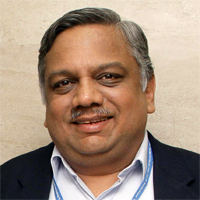
    Sanjay Mehta, Jt. CEO, Social Wavelength clarified: “Executing a good social media strategy is a mix of two disparate skill sets: One is creativity, like that of an ad agency, to differentiate the social media activity of the brand, and second: processes, of the kind that one usually associates with KPOs, as social media is not a campaign, but virtually a day-to-day, minute-to-minute business process.”


    Sandhya Sadananda, who prior to launching Windchimes, was a PR professional, explains how Social Media is not an extension of PR. “Unlike the US and the UK, PR in India is still a media-led activity. When you are in Social Media, you need to rethink the way you look at communication. Social Media cannot be seen as an extension of PR. Unlike PR, here you have the direct control in terms of the content you want to put up. At the end of the day, it is about adding value to the brand. And that could be in terms of content, the creativity, the number of fans and so on.”


    The nuts and bolts:

    So how do Social Media campaigns run? How different the approach needs to be? What are the systems and procedures that need to be followed? How does a social media agency scale the operations?


    Mr Mehta explains: “The starting point is to create a ‘character’ for the brand on social media. All communication, tonality and so on has to be in sync with the brand positioning and the brand’s character. For a TV channel, a social media campaign will typically have one set of conversations centred around the brand, and the other additional set of conversations to go closer to the interests of the target group.”


    From the standpoint of the marketer, however, the question which most often arises is: ‘Does social media help clients improve bottom lines’. This is also one reason why spends on social media are way too less in comparison to other media. Yes, these are early days, but pure play social media agencies have to grow and that is seen as a big challenge.


    Ms Sadananda affirms: “One needs to look at social media, not from a bottom line perspective, but from the point of view of qualitative engagement. The ROI in this business is so much number driven (number of fans, interactions) that people started to equate that with the bottom line. If you’re expecting increase in sales after a social media campaign – that’s not going to happen. One needs to have a different sort of mindset when it comes to social media.”


    She adds: “It’s very easy for marketers to make this just another medium. Agencies need to step in and help them understand the true nature of the medium.”


    Challenges:

    On the challenge for agencies to scale up their businesses, Mehta reckons that one needs to visualise the scale, in terms of the opportunity. And then investigate into various ways of creating an organisation, bringing in leadership levels and correcting/ tweaking the model as business grows to ensure smooth sailing.


    But, broadly, it is content that will decide the fate of specialist agencies. And, that in experts’ mind, is a bigger challenge. Adaptation will be the key as platforms evolve, users evolve. It is an age of e-commerce, and Social Commerce is not far behind.