Category: MEDIA

  • Gouri Dange: Those deliciously bizarre Google ads

    By Gouri Dange


    You know how Google watches over your shoulder and reads the content of your emails and sends you what it thinks are appropriate ads on the sidebar? I just love the convoluted logic behind the ads that are selected to send to you. For the longest time, I just didn’t notice them, but once I began to glance at them, it became a most illuminating exercise. There is something so deliciously bizarre in the way the ads refract your reality. Open your emails in the last week and take a look at the sidebar.


    It’s like some slightly deranged/overreacting person is keeping a log or diary of your life as it is unfolding. On top of it, this deranged person has the job of continuously coming up with solutions – all sorts of goods and services – to counter what it thinks is the angst in your life.


    So, for instance, a couple of years ago an ageing dog of mine began to get epileptic fits. I must have written in anguish to a couple of close friends about this development, and there it was: Google began to urge upon me ads for homeopathy, allopathy, healing crystals and what-have-you for epilepsy. Then I may have mentioned to someone in an email that the vet has said that I might have to prepare myself to have the old dog put down. So now the ads in a rather ghoulish but ever-helpful manner began to become about humane vet services, pet cemeteries, incinerators and other such sombre subjects.


    Once you begin to notice the ads, two distinct realities begin to emerge about yourself. Parallel Universes. One is what is actually happening in your life and what you need to do about it, and one is what the Google ad-world thinks is happening in your life and what it thinks are some of the solutions and strategies that you need to adopt with the help of its advertisers and their sparkling merchandise.


    Just today, I wrote to a niece saying I need to get a hardship allowance from the government for putting up with the idiosyncrasies of a neighbour. And whadyouknow – the ads on the sidebar became about government jobs, government grants, and properties for sale. So my offhand joke got interpreted as: lady, you need in some way to be connected up with the government, and/or you need to move house.


    Of course, given that dabbling in real estate is urban India’s new religion, the ads for rent, sell, buy, beg, borrow, steal apartments come fast and thick anyway, whether you mention this subject in your mails or not. ‘Luxurious 1 bedroom apartments’ are being peddled all the time.


    But my most favourite interpretation-misinterpretation came from a flurry of emails that were flying amongst some 11 fellow writers. The subject of our emails was the less-than-professional behaviour of a publisher soliciting our writings for the Chicken Soup for the Soul series. I hadn’t been paying attention to the ads that Google had been wildly generating in tandem with our mails. Once the matter was sorted out in our favour, someone sent around mail saying let’s get together soon, toast each other and have chicken soup on the menu. Heading the list of ads that day was one for ‘poultry slaughter lines’. All those hot and bothered emails that us renegade writers had been exchanging, translated in the mind of Google to this reading: the one thing that would solve all our problems was if we got ourselves a fully-automated chicken beheading, skinning and dismembering machine!


    And why not. Perhaps I’ll get one anyway. May come in handy.


    Naming no Names is the mid-week column where novelist, columnist and counsellor Gouri Dange presents her tongue-in-cheek view of our world.


  • The Anchor: 7 things for Lifestyle channels to remember

    By Smeeta Chakrabarti


    #1 Till a few years ago, most of the programming on lifestyle channels was imported. Giving an Indian touch to programming is important as it makes it exciting for the Indian audiences. For example, even though there are many international news channels such as BBC and CNN, the perspective changes when the programming is done by an Indian channel.


    #2 India has the most amazing and interesting lifestyle. We can teach something to every other country – About food, the way we eat, we drink, the way we get married, clothes etcetera. It is important to keep in cognizance that India has a lot to give to the west.


    #3Today the world is adopting our lifestyle and not the other way around. The flow is now from East to West, and countries like India and China are going to dictate to the West about lifestyle issues. The world has to catch up to the big fat Indian wedding.


    #4 India is a young and affluent country and the current generation spends in a different way from the way our grandparents used spend. We are not hoarders any more and we don’t necessarily save.


    #5 Especially in the Indian context, lifestyle is not just about brand names and tags – it’s also about quality and trades craftsmanship, something that India is very good at. It’s not just about imported labels but also feeling pride about what we Indians are doing indigenously at the grass root levels. That is what makes us special.


    #6 Being Indians, we have to be proud of the India we live in and have to feel great about this country. It’s about living in the best possible way with the resources available.


    #7 The genre will definitely grow. When we started there was just one international channel, with international programming, and the genre has grown ever since with launches of newer channels. Along with the regional space, lifestyle and news spaces will grow too.


    Smeeta Chakrabarti is the CEO of NDTV Lifestyle Limited.


  • Gadgetsguru gets hyperactive, launches brand campaign

    By Archita Wagle


    An eye-catching full page ad in the Times of India on Monday morning spoke of “Demo kahin bhi lijiye, shopping gadgetsguru.com par hi kijiye”.


    Asked why the big bang route, Arun Kapoor, CEO-gadgetsguru.com said: “This is purely a branding ad. We are trying to increase our brand awareness.”


    Mr Kapoor goes in depth about the strategy adopted, explaining the reason for coming up with an ad just now: “There is a lot of competition from other online portals. Every other portal will offer you Cash-on-Delivery, 30 days warranty and other sops. So we created a whole new funda. Instead of competing with the online industry, we decided to take the offline industry (the retailers and the wholesalers).”


    While offering branded products to the customers, the online portals lose out due to the fact that the customer doesn’t get a demo of the products he may want to buy. Even when a person goes to buy an expensive item from a shop, s/he will  go to 10 different shops to find out about the best deal they can get. “A person buying products online can’t get a feel for the product he wants to buy. So we are telling him/her that they can go to a shop to get a demo of the product they have their eye on; but they should buy it from us as we give them the best deal they can get,” Mr Kapoor explained.


    Gadgetsguru.com was founded by Mr Kapoor in 2004. The website and the backend support was developed in-house. When asked about what was the reason for coming up with such ads now, Mr Kapoor said: “When we started in 2004, the first few years were not so great. The first year saw sales of just Rs1.25 lakhs. It didn’t make sense at that time to give out such full page ads. Now that we have established ourselves, we decided to increase our brand awareness. Also we have recently been affiliated with Brand Capital, Bennett Coleman & Co. Ltd’s offering (earlier called ‘private treaties’. We have got a budget of Rs30 crore for the next three years thanks to the tie-up. So we decided to for it now.”


    [youtube width=”400″ height=”200″]http://www.youtube.com/watch?v=-b5JSmWtvnc[/youtube]

    Gadgetsguru.com is not just coming out with print ads, but have also launched TVCs which take a tongue-in-cheek look at “bahanas” that consumers give to avoid buying a product after they take a demo at the shop. The TVCs show a boy running out to avoid buying a tablet by telling the salesman that he is allergic to tablets; a man refusing to buy a refrigerator because the door faces south instead of east; and a woman running out of the shop on the pretext of testing the zoom on a digital camera. The voice-over at the end tells us “Demo kahin bhi lijiye, shopping gadgetsguru.com par hi kijiye. Faayda aap hi ka hai.”


    The TVCs were launched recently when the promos for the Zee Cine Awards  started to be aired. Gadgetsguru.com is the associate sponsor for Zee Cine Awards.


    In fact, Mr Kapoor promises that radio and online ads will be launched in the next 15 days. When asked about what they would be talking about, Mr Kapoor refused to say anything.


    Not only that, gadgetsguru.com has launched a campaign on Facebook which promises the person coming up with the best bahana a chance to win a BlackBerry.


    The creative mandate for gadgetsguru.com’s ad campaign has been handled by   Manoj Motiani, Founder & Chief Creative Officer of Thought Bubbles. Mr Motiani was formerly a creative director with O&M. “We decided to give the creative mandate to Thought Bubbles as Manoj Motiani is a good friend,” explained Mr Kapoor.


    Gadgetsguru.com is on a roll. After launching a branding campaign, they are now looking at providing services in countries such as Singapore, Malayasia, UAE andcUK. “We will be starting our services in Hong Kong,DubaiandSingaporein the next three months. We are looking at tie-ups with the major market players who have a reputation of expertise in electronics market. We will create a sub domain for that particular country so that people in that country and surrounding areas can buy from there. We have been getting a lot of orders from South-east Asian countries,” said Mr Kapoor.


  • Cricket gets even more interesting with Zapak’s Cricville

    By A Correspondent


    Zapak.com, India’s leading gaming portal, announced on Tuesday the official launch of Cricville, a social cricket game on Facebook. This is Zapak’s second initiative in the social gaming, first one being Zapak Tambola. Before the official launch, the game was launched in the open Beta testing phase and got rave reviews.


    http://www.insidesocialgames.com/2012/02/06/social-cricket-game-cricville-aims-to-hit-a-six-on-facebook/


    Cricville broadly follows the IPL-pattern gameplay where the user can own a cricket club and work towards making it bigger and better. The user can work as a club manager, and build the club’s city and stadium. S/he can also hire a coach to train and upgrade the players’ overall performance.


    Users can choose from an array of exciting modes to play. These include Challenges, where the users can throw challenges to their friends on Facebook; Tournaments which will help increase the user’s rankings and in turn help the user’s chances of winning Gold, Silver & Bronze trophies. The users can also play practice matches to improve their overall skills. The game also allows them to upgrade their players by improving their batting, bowling and fitness to score over their friends.


    Speaking on the launch of Cricville, Manish Agarwal, Chief Operating Officer – Reliance Entertainment – Digital Business, said: “Cricket is not just a game but a complete religion by itself in India. With IPL just round the corner, this is the perfect time to launch Cricville, which follows an easy and competitive gameplay that will appeal not only to cricket fans but also to other gaming enthusiasts on Facebook. Zapak wants to tap the Indian-themed games segment which offer universal appeal on Facebook and what better way to spearhead that other than Cricket.”


    Zapak Digital Entertainment Ltd. is India’s largest gaming company that addresses the complete value chain of digital gaming. With currently 8 million registered gamers, Zapak.com is not only the largest casual gaming sites in the country but amongst the top casual gaming sites in the world. As per a recent survey on an average a user spends about 21 minutes on Zapak.com, which is way higher than the average time one spends on any gaming website.


  • Venturenet Partners to launch Radiowalla in April

    By A Correspondent


    Venturenet Partners Private Ltd, a Bengaluru-based internet radio company plans to launch a premium model internet audio service, Radiowalla by April 2012.


    Venturenet has already launched Spot Radio, a b2b digital in-store radio entertainment network in August 2011. The internet radio company has already announced that it has raised series A funding from Ojas Ventures Partners (OJAS) which will enable it to further expand the services and features of its retail audio solution – Spot Radio and it’s b2c radio service – Radiowalla.


    In addition to this, it is also learnt that after having out-performed its business goals, Venturenet will scout new investors for the next round of funding.


    In conversation with MxMIndia, Mr Anil Srivatsa, Co-Founder and CEO, Radiowalla explained that the objective of starting Radiowalla was to provide radio with its due of choices and to serve the special interest groups and communities with the content they would like to listen to and willing to pay. “We are trying to be in all languages and genres, including motivations, philosophy and other non music content… It is like an audio mall – one place for everything,” he added.


    Launched in August 2011, Spot Radio is said to have already partnered with 20 national retail chains, with over 2000 sites nationwide and is targeted to grow to a record 10,000 sites by the end of the year.


    Currently, Venturenet has around twenty brands in its client list ranging from lifestyle brands to hypermarket brands to food and beverage brands to name a few. According to Mr Srivatsa, Venturenet Partners is currently in an investment mode and hence he is not thinking about break-even plans.


    However he believes the sites – Spot Radio and Radiowalla – will sustain break-even very soon, though not for the next 18 to 20 months.


    On his vision for the year 2012, Mr Srivatsa said: “My vision for the coming year is to launch a life changing audio platform that will change the way people will consume audio content. Therefore we are trying to leap frog into raising and meeting the expectations of our consumer base.”


    The team size of theBangalorebased Venturenet Partners is currently around 12 – 13 and growing. The marketing plans, for now, are limited to viral but will later spread to the traditional and digital media.


    Mr Anil Srivatsa has been a veteran of the media field since the past 20 years. He had launched a radio show called ‘Anil Ki Awaaz’, inNew Jersey,USAand ‘between the sheets’ inIndia. He also launched an internet radio channel for Asian Americans. Prior to launching Venturenet Partners, Mr Srivatsa was the CEO of Kings XI Punjab and before that he was the COO Radio Today Broadcasting (Meow 104.8 FM).


  • Nisha Narayanan holds fort @ Red FM as Rana Barua quits

    By A Correspondent

    Senior vice-president projects and programming Nisha Narayanan is learnt to have assumed charge at Red FM as COO Rana Barua is moving on (as reported by MxMIndia yesterday). Though both Mr Barua and the company spokesperson were unavailable for comment, MxMIndia learns that he has put in his papers and amongst other things is mulling turning an entrepreneur.


    According to sources, it’s business as usual at the leading FM station with Ms Narayanan, an old Red FM (and Sun FM) hand, managing affairs of the company at least temporarily. Mr Barua is reported to be on leave and serving notice.


    Prior to joining Red FM, Mr Barua was EVP – Programming & Marketing at Radio City. Before he moved over to radio, he was VP and Head – Mumbai at Bates. And earlier: Client Services Director at Rediffusion DY&R, Account Director at McCann, Senior Account Exec at Ogilvy & Mather and an Account Exec at JWT.


    with Robin Thomas

  • Radio One likely to turn English in Mumbai & Delhi

    By Robin Thomas


    FM radio network Radio One is likely to go English for its Mumbai and Delhi stations, MxMIndia has learnt from industry sources. This shift is likely to take place next month or early February 2012. MxMIndia did not receive any official confirmation from Radio One at the time of writing this, though industry sources have confirmed the development. Radio One, a joint venture between Next Mediaworks Ltd and BBC worldwide, operates in seven cities – Mumbai, Delhi, Kolkata, Chennai, Bengaluru, Pune and Ahmedabad.


    An English FM radio station in Mumbai and Delhi may add a fair deal of differentiation in music, but what remains to be seen is how advertiser-friendly it will be, given that listenership levels are lower than those playing just Hindi music.


    MxMIndia spoke to few industry players on whether Mumbai and Delhi markets will open up to an English FM station. One of them was of the view that an English FM station in Mumbai in particular will create a much needed differentiation in terms of music. There is a market for English audience, but it may take some time to get established, what remains to be seen is how the advertisers will react to this change. Another industry observer was of the view that while there is a market for English music listenership in both Mumbai and Delhi, it could still be challenging for the FM station in terms of revenue generation, as the audience size is small.


    On the other hand, Sunil Kumar, MD, Big River Radio feels the fact that there are audiences willing to pay a huge sum for rock concerts, the number of English newspapers, the popularity of serials such as Friends, are sure indications that there is a market for an English FM station. “There is a market for English music listeners, these are the people who have an international or global outlook, they travel abroad and are well attuned to English music. An English FM radio station will bring an additional audience to radio – that is, those who do not listen to radio. Just look at the number of English movie channels, English GECs, news channels, they are doing extremely well. Therefore, for a premium channel you don’t need a large audience but, you can charge huge premium for the audience they deliver to, which is often people in the higher socio-economic group,” he said.


    It may be recalled that when Fever FM was launched in Mumbai, it initially aired both Hindi and English songs after which they had to completely switch to Hindi. Radio One too has experimented for long with its English format in its earlier avatar of Go92.5 and Radio Mid-day. Market pressures and the desire to catch up with the more mass Bollywood hit music format got it to go completely in Hindi. Hit FM is the only 24×7 English FM station in Delhi, while Mumbai currently has no fulltime English FM station. The other 24×7 English FM stations in the country are Radio Indigo in Bangalore and Chennai Live in Chennai. All India Radio’s FM Rainbow station also plays English music.


  • Rana Barua quits Red FM, may start own venture

    By Robin Thomas

    Red FM COO Rana Barua is moving on. MxMIndia learns that he has put in his papers and amongst other things is mulling starting out on his own. Mr Barua and the Red FM spokesperson were not available for comment.

    Prior to joining Red FM, he was EVP – Programming & Marketing at Radio City. Before he moved over to radio, he was VP and Head – Mumbai at Bates. And earlier: Client Services Director at Rediffusion DY&R, Account Director at McCann, Senior Account Exec at Ogilvy & Mather and Account Exec at JWT.

  • Very challenging times for radio: Rana Barua


    By Robin Thomas


    Rana Barua is a veteran media professional. He is Chief Operating Officer (COO) at Red FM. Prior to joining Red FM, he was the EVP – Programming & Marketing at Radio City. Before he moved over to radio, he was VP and Head – Mumbai at Bates. And earlier:

    Client Services Director at Rediffusion DY&R, Account Director at McCann, Senior Account Exec at Ogilvy & Mather and Account Exec at JWT. He’s been through it all.

    In conversation with MxMIndia.com, Mr Barua speaks about FM phase III, and how radio can emerge stronger from the ongoing slowdown.


    Q: How did your transition from advertising to radio happen?

    Advertising was getting a bit stagnant, the market in media was opening up, television had opened up in a big way at that time, newer media were on the anvil, movie marketing was also opening up, radio was also growing at that point in time (ie about six years ago). I have always been very keen to move into a domain which is more or less a specialized medium. Since radio was also into huge expansion mode with phase II at that time, it made more sense to move into radio rather than any other medium.


    Q: And the advertising experience came in handy…

    Oh yes! I think it comes in extremely handy if you come in from classical advertising or communication which is more specialized. Since I moved as Head, Marketing, it made a lot of sense because I worked with a lot of brands, and had the entire expertise of knowing clients, advertising, communication skills, media and creative agencies. Thus the entire gamut came in handy which helped me settle in easily. So, the transition was good, it was just that the scope was very different.


    Q: Can you throw some light on the overall importance of phase III for FM radio?

    Phase III is extremely, extremely important for radio growth. This is probably going to be very exciting, at the same time a really challenging time for the industry because radio is multidimensional. There is huge expansion, multi frequency will be allowed and news will be available but not in its best form as it will be sourced from All India Radio (AIR). FDI gets raised from 20 percent to 26 percent. I’ve always said it should have been higher because that would have allowed more international players or private investors/ equity holders to look at it in a more serious way. Fourthly, networking will be allowed, which means one will be allowed to run the FM station sitting out of a main hub; as a result the cost may come down. Therefore if you look at it on the whole, these are definitely exciting times and we will probably know how all of us shape up in the next two years. There are going to be many challenges and a great number of opportunities for everybody in the radio medium.


    Q: And this will help increase the ad pie…

    It should! The only contrary point is that you may have new FM players entering, but the ad pie will grow because of different genres coming in, as a result new clients may also come in who would have not necessarily advertised on radio. And since costs will also come down, you will find a lot of innovative programming happening in radio. Nevertheless, these are still early days; the overall scenario looks very positive, but the challenge is, what will be the benchmark for research? There are also other challenges like the music royalty issue, the entire migration process from phase II to phase III, the e-auction as bidding process etc.


    Q: Do you view e-auctions favourably?

    We are pretty okay with e-auction, and from what I have understood from a lot of people, it is a much cleaner exercise.


    Q: Are there any setbacks…?

    Everyone will have some issues which are different from each other. The common factor however is the music royalty issue which is still unresolved. We are still a little unclear about the multiple licensing because if the e-auction bid goes into some preposterous amount it will naturally lead to some kind of setback for the overall industry, so we are hoping that this does not happen. News could have been better if it had been a bit more independent and I am sure we would have invested in the entire medium/department. Nevertheless if you see the overall picture, especially the way radio has been growing over the last three or four years, this gives you an impetus. Today if you look at the global economic scenario you just can’t predict any more but, yes it is a movement forward, with exciting times, greater challenges. Yes, certain things could have been better or more favourable for us, but we will go step by step.


    Q: How is Red FM gearing up for FM phase III?

    We are still weighing the pros and cons. Yes, we will be seriously involved in Phase III. We are clear about being present in most of the markets which will have some kind of ROI but we will weigh the pros and cons, we will see the costs, we will be extremely cautious about the approach because breaking even in radio is not the easiest of forms as it will all depend on the return on investment (ROI), the advertising revenues etc. If you ask me whether we are serious about phase III, then yes we are definitely looking at it in a very serious way.


    Q: Any specific cities that you are looking at?

    No, we are not looking at certain cities, but we are looking at towns… say where we are not available, which are important for advertisers. We are looking at these as one of our strategies, but we are weighing all the pros and cons and only then are we going forward.


    Q: Is there any lesson or takeaway that the radio industry should learn in Phase III from Phase I and II?

    One of the critical learnings for a lot of us in phase I and II is probably going to be that we must not overestimate the potential of the market. We also know that we look at certain benchmark figures and we tend to overestimate and because of that one tends to overbid. This is one of the key learnings one is hoping that everybody puts on the table before one gets into the e-auction process because at the end of the day it’s a fixed pie and from that fixed pie you would probably get a certain amount of revenue for radio. More than phase I, and phase II, one of the learnings for all of us is the uncertainty of the markets as we don’t know what’s coming up in the next three months. Therefore, I think the biggest challenge that lies ahead for all of us is the uncertainty, which has become such a huge thing that everybody is talking about the uncertain future. Hence I think a cautious approach is going to be extremely critical.


    Q: So, is the uncertain future – the global economic slowdown that seems to have come back – is that something to worry about?

    Yes, absolutely. However, more than worry I believe we should be taking complete cognizance of the fact that there is definitely a slowdown. The clients, advertisers, everybody are extremely, extremely careful about the money they are investing in any form of media. Taking things for granted and creating business plans for the next two or three years seems passé now. It’s more like making a business model and reviewing it every month because the numbers keep changing every month, not because of wrong projections of estimation, but because the moment costs go up, inflation goes up, prices go up. The environment has become so dynamic – which it wasn’t even a year ago; every day there is a new story. So, it’s great to plan for the future, but I think one needs to be very cautious about any kind of numbers or projections or predictions made by various studies and research etc, which will however be reviewed very soon.


    Q: How would you sum up 2011 for Red FM?

    We have definitely grown; even this year we have made overall growth in our entire network, at a certain target we had set for ourselves. But as I said, with the environment being so dynamic naturally those numbers are nowhere close to what one would have guesstimated maybe earlier, say last year when things were so much on the rise and one had hoped that coming out of a slump the next two or three years would be on the way up. What we have managed to do very well is that as a network we have grown extremely strong – into a formidable player post the RAM numbers which were released I think a month or two ago, wherein for the first time RAM went into the nine markets which they are hoping to do more frequently. So we are pretty confident that all the efforts of building the brand and all the efforts in programming have really helped. We are confident because we have got people and our talent in place.


    Yes, we are aware that with phase III coming in there would be a lot of movement again, but that’s part of the business. We have got a great team going, who are extremely motivated and work passionately for their brand and numbers therefore are showing very well. As I said the larger markets are not showing growth that it should have ideally shown, but it’s the mini metros and towns which have grown much more dynamically for us.


    Q: And how would you sum up 2011 for the radio industry?

    Overall if you look at the numbers one had predicted for radio, the growth has not been as dramatic as one would have expected because it is understood that there has been an overall slowdown. One of the things we need to look out for is some kind of consolidation which is how we would want the medium to grow.

  • Radio Mango in 4th anniv mode, to consolidate in Kerala for Phase III

    By A Correspondent


    Radio Mango, an FM radio venture by Malayala Manorama, a Malayalam daily, aims to consolidate its position in Kerala once FM Phase III is officially rolled out. It is however not known which cities the FM station would bid for as they are currently awaiting clarity on the phase III. “We would definitely look to consolidate our position in Kerala. We are still unclear about the reserve price calculations and await clarity before finalising our phase III plans,” said Ravindran Nair, Director Programmes, Radio Mango.
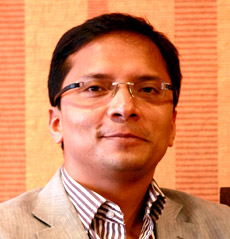
     

    He further said, “We are confident of growth in 2012 since we have been steady since the last 4 years. The key factor in the quantum of growth, of course, would be phase III.”

    In Kerala Radio Mango is aired in Kochi, Trissur, Kozhikode and Kannur. Red FM and Club FM are its main competitors in these cities besides the All India Radio (AIR) FM stations. On November 29, 2011 Radio Mango will celebrate its fourth anniversary however the FM station seems to be in no mood for big celebrations.

    Radio Mango claims that its national and local advertising ratio is almost 50:50. Some of its national advertisers are Maruti, Hero Motors, Nokia, Blackberry, Max Bupa, Kenwood, Airtel, Docomo, Belkin, Ford, Hyundai, Sharp, and Philips etc. Nearly 80 per cent of songs aired on Radio Mango is Malayalam film songs and the rest 20 per cent from non-Malayalam music ie Hindi and Tamil songs. Besides its on-air activities, Radio Mango is quite active online too. It has over 5,700 likes on its Facebook page and nearly 300 followers on Twitter.


    In conversation with Ravindran Nair, Director Programmes, Radio Mango.


    Q: Since November 29, 2007 when Radio Mango first went on air, until the year 2011 how has the journey been for Radio Mango? 
    Radio Mango has had a great period of sustained growth since launch. We have been consistently No.1 in the state and have been figuring in the top 20 nationally in terms of reach. In IRS Q2, Radio Mango is 16th nationally, in terms of reach (11th if AIR stations are excluded). In terms of reach within a state, Radio Mango ranks 5th nationally! Radio Mango has grown by 45 percent in Yesterday’s listenership over the last one year. Within Kerala, Radio Mango leads the no 2 station by 81 percent in terms of reach. (All figures are from IRS Q2 2011).


    We have won several national and international awards including New York Festival silver and bronzes, Wow Experiential Marketing Award golds, ERA golds etc. In fact, we are the only radio station in India to have won Mirchi Kaan Award golds for two years running.  We also figure in the Limca Book of Records for our musical reality show ground event.
    Q: How do you plan to celebrate Radio Mango’s fourth anniversary?
    We don’t look at months and years as landmarks. We would rather have our achievements be the milestones. Hence, all our anniversaries are private internal affairs and we don’t tom-tom in public.
    Q: Can you throw some light on your phase III plans? Will the FM station expand in cities/ towns of Kerala or will the expansion be beyond Kerala i.e. other parts of India?
    We would definitely look to consolidate our position in Kerala. We are still unclear about the reserve price calculations and await clarity before finalizing our phase III plans.


    Q: How has the response from advertisers been? What is the national-local advertising ratio?

    The response from the advertisers has been good so far. The national and local advertising ratio is almost 50:50. Some of the national advertisers are Maruti, Hero Motors, Nokia, Blackberry, Max Bupa, Kenwood, telecom majors like Airtel, Docomo, Belkin, Ford, Hyundai, Sharp, and Philips etc.


    Q: For 2012 what are your growth targets? How will you sum up 2011 for Radio Mango? 
    We are confident of growth in 2012 since we have been steady since the last four years. The key factor in the quantum of growth, of course, would be phase III. 2011 has been a great year and we are very pleased with our overall performance. The Radio Mango brand has never been more robust and recognised.


    Q: Who is your creative and media agency?
    Our creative and media agency is Stark Communications.

  • Amritendu Roy catches Fever

    By Robin Thomas


    Amritendu Roy is now Regional Head – East, Fever FM. Prior to Fever FM, he was Head, Radio Business, Friends FM. Mr Roy who joined Fever FM in August 2011, is based out of Kolkata and will be reporting to Mr Harshad Jain, Business Head, Fever FM.

    One of his main responsibilities as Regional Head- East will be to drive the sales for the region.

    Confirming the news to MxMIndia, Mr Jain stated, “With substantial industry experience, he will be able to add a lot of value into the existing system and will prove to be an asset for Fever FM.”

    Mr Roy was instrumental in setting up Friends FM from scratch. Mr Roy started his career in advertising with Mudra Communication in 1990 and went on to become the Group Business Director at the time he left in 2004. In the 14 years with Mudra he worked in various cities like Kolkata, Delhi and Mumbai. He handled various clients with Mudra, the prominent ones being McDonalds, Indian Oil, Orient Fans, National Insurance, Reliance Telecom and Kitply. Mr Roy then moved to the FM radio industry in 2004 when he took over as Vice President and Station Head of Radio City in Delhi.

  • Be cautious in slow market: Rana Barua

    By Robin Thomas


    The government has enhanced the foreign investment limit in FM radio to 26 percent from the earlier 20 percent. E-auction for FM phase III is reported to have received a nod from the Union Cabinet. Multiple frequencies if allowed will bring different genres of FM station in the same city, the overall media spends and advertising revenue in radio will see humongous growth. FM stations will soon be allowed to air news although not independent of the government owned AIR (All India Radio), nonetheless it seems good times are ahead for the Indian radio industry.


    While the FM phase III rollout has moved a little closer to reality, there is always something to learn from past experiences, even for the Indian radio industry. MxMIndia tries to find out one of the critical learning for the radio industry in FM phase III from the earlier phase I and II. In conversation with MxMIndia, Mr Rana Barua, COO Red FM observed, “One of the critical learning that a lot of us had in phase I and II is not to overestimate the potential of the market. The biggest challenge that lies for all of us is knowing that uncertainty has become such a huge thing today, therefore I think a cautious approach is going to be extremely critical.”


    “We should be completely taking cognizance of the fact that there is definitely a slowdown, the clients, advertisers and everybody else is extremely careful about the money they are investing in any form of medium. Taking things for granted and creating business plans for the next two three years seems like a passé now. It is more like making a business model and reviewing it every month” he added.


    Mr Barua also shed some light on how Red FM is gearing up for FM phase III. He spoke about Red FMs cautious approach and its keen interest in participating in FM phase III. “We are still weighing the pros and cons but, yes we will be seriously involved in phase III. We are very clear that we would like to be in most of the markets which will have some kind of ROI but, we will weigh the pros and cons, we will see the costs and we will be extremely cautious about the approach. We are looking at towns where we are not available and which are important for the advertiser. So we are definitely looking at this as one of our strategies” explained Mr Barua.