Category: MEDIA

  • Change the world with Data


    By Labonita Ghosh


    Madhav Mishra is a 19-year-old magazine seller on the streets of Mumbai. On Friday, he made it to a high-profile Nielsen Consumer 360 conference hosted by research and insights major Nielsen – via the opening speech by India region president Piyush Mathur. Reason: Mishra has done something remarkable in his work life. Just before he makes a sale, the secondary-school graduate takes a good look at the car his prospective buyer is travelling in, and pitches his product accordingly. If the occupant looks like a banker or corporate honcho, he pulls out the business publications; if she appears to be a homemaker, then it’s the society or lifestyle magazines. He has only a few seconds to make that call, but over the years, Mishra has perfected the art of creating successful outcomes for his business from years of learning.


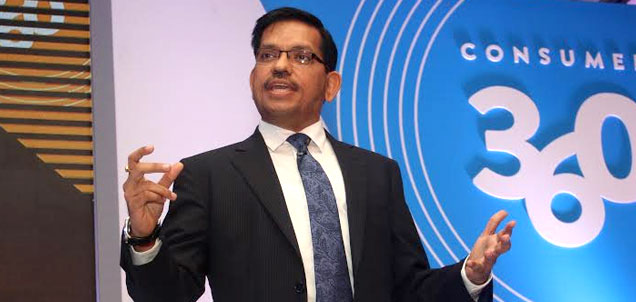
    “Just insights are not enough,” said Mathur, on the conference’s theme, ‘Create Outcomes’. “It gets better when these lead to actions, and the real difference comes when there are actual outcomes for our clients’ business.” Indeed, Nielsen no longer just hands over findings to clients. It has started doing a value-based exercise where it checks back with the client on what the company has done about the recommendations. “Increasingly, we are also collating the value of what outcome we’ve created for our client,” added Mathur.


    Voices from the panel discussion:
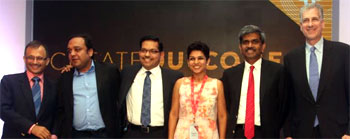
    Group photo (L to R) – (Panel discussion participants): Harish Bhat, Member, Group Executive Council, Tata Sons; Punit Goenka, MD & CEO, Zee Entertainment; Piyush Mathur, President, Nielsen India Region; Kirthiga Reddy, MD, Facebook India; D Shivakumar, Chairman & CEO, Pepsico India & John Lewis, President, Global Summer Goods, Nielsen


    Sub-brands vs mother brand

    Harish Bhat, Member, Group Executive Council, Tata Sons

    You have to be careful that a mother brand does not become a grandmother brand. Mother brands have a tendency to age. And typically, the sub-brands that you launch, have to be aspirational for your current set of customers. So companies do a lot to keep their sub-brands young, sexy and aspirational but in meantime, the mother brand has aged. Marketers will have to keep this in mind. Only if your mother brand is young and edgy and aspirational, will the sub-brands under the mother ship, work.


    Moving away from the mother brand

    Punit Goenka, MD & CEO, Zee Entertainment

    Today, in the analogue world, the consumer is used to accessing anywhere from 50 to 80 channels, which will grow to 200 or 500 channels, which means fragmentation of TV viewership was bound to happen. Newer viewership will be created, and not just on the TV screen but on various kinds of screens. Lastly, today’s young consumers say Zee is my mother and father’s channel, it’s not meant for me. So even the new-generation families were looking for new content. That’s why we decided to move away from the mother brand and embark on a host of new channels which were in no way linked to the mother brand. This also allows us to experiment with more edgy content that we can’t have on the mother brand


    The power of digital

    John Lewis, President, Global Summer Goods, Nielsen

    All mediums have to be more addressable, more precise. The notion of a demographic group – that will increasingly no longer be the right construct [for measurement of impact]. It will be about people who are looking for a specific brand or service; for instance, those who are about to buy a car. It’s all becoming more precise. It already happens digitally, which is what makes digital so powerful. But it will soon happen with broadcast or any other medium. And any medium that cannot be more precise, will have problems.


    Information and Innovation

    Kirthiga Reddy, MD, Facebook India

    We believe information equals innovation. The Facebook experience from more than five years ago was very different from the one today. When we started, we had a very static photo image because we thought people would only want to change these on special occasions, birthdays and such. But then we found that people were changing the photo several times a day. It became clear that people wanted to express through photographs what they were doing through the course of the day. It was that user interaction that led to us very quickly launching our photos product, which has become the largest photo-sharing site on the web. We believe in innovation coming from information.


    Lessons for marketers

    D Shivakumar, Chairman & CEO, Pepsico India

    Very rarely in India have I seen a brand move up the ladder. It’s easier for it to come down. For example, if you start with the premium position, you can go down. But if you start with the bottom position, you will find you can never go up. There are some categories intrinsically that consumers don’t give you licence for. No hair care brand across the word has been able to go into skin care. But every skin care brand has gone into hair care. At the heart of all branding in India and most emerging markets, is aspiration and quality. Thanks to disruption in technology, consumers are willing to give brands a lot more latitude today than they did before. But if you’re not in your core area and going somewhere else, then you will have to up the value significantly.


    Jairam Sridharan

    Invited to showcase their outcomes-based initiatives at the meet, different corporates seemed to have divergent results and experiences. Jairam Sridharan, president, retail lending and payments at Axis Bank, spoke about the creation of the Asha home loan. Research had shown that while a large number of high-end properties was coming up in Mumbai, there weren’t enough takers for those. Instead, there was an overwhelming demand for low-cost housing mainly because consumers wanted to do away with rent and live in their own home. This made the bank create a new product called Asha, a home loans for buyers of low-cost housing.


    What a constantly-evolving marketplace needs, however, is innovation outcomes. Sunita Bangard, President, Marketing at Idea Cellular realised the company needed to make its product stand out in a crowded and competitive market. In the early stages, in the debate about India vs Bharat, Idea decided to concentrate on the former (hence its initial, rural-setting ad campaigns). More recently, the cellco found it needed to stay relevant to its rapidly-changing customer base, so it launched the ‘No Ullu Banaoing’ and ‘IIN’ campaigns. “The insight we received was that information is power,” said Bangard. “Keeping the customer at the centre, you need to create innovation in the way you do work, not just in terms of products and services.”


    Srirup Mitra

    Innovation can sometimes mean swimming against the tide, as Srirup Mitra, head of the hair care category at Hindustan Unilever (HUL) found with the launch of TRESemme. He had to take several Big Leaps (of faith) by under-leveraging the HUL scale of product launches and deciding to unveil TRESemme in only seven centres across the country; eschew the traditional 30-second TV spot and go digital with YouTube, and even launch the shampoo during the Lakme Fashion Week. “Do what is right for the brand, but make sure you’re consistent in getting across to people in multiple ways,” said Mitra.


    Sunil Kataria

    Sunil Kataria, business head, India and SAARC at Godrej Consumer Products, however, believes that marketing should not be at the centre of innovation but one of a bouquet of things (including R&D, design, packaging etc) that will lead to “whole brain thinking” about changing course in business in the interest of growth. This idea certainly helped when Godrej launched its Rich Crème hair colour in sachets instead of the older, glass bottles. The demand for the product skyrocketed so much that Kataria believes it turned into “teaching India a new way to colour hair”.


    Sameer Satpathy

    Every company has its own way of reading trends. At Marico, the Consumer Preference Score is sacrosanct; the success of a brand is calibrated against this, says Sameer Satpathy. The company operates on CPS metrics from each state and city, and this came particularly in handy when it launched its Nihar Shanti Amla hair oil. “It’s not about strategic coherence versus tactical flexibility, but both together,” said Satpathy.


    Future Group, on the other hand, took customer preference to a whole new level when it revamped the very layout of its stores. As Devendra Chawla, group president, food and FMCG brands said, the stores became more focused on young customers; brought in a regional assortment in the food sections, since culinary preferences change quite significantly from place to place; and adopted a cross-category strategy through an adjacency of product placement. That is, placing mugs and ‘tea time’ snacks alongside tea and coffee. When research indicated that women shoppers spend 20 minutes out of their 30-minute shopping time browsing beauty and personal care products, the group decided to include one-stop beauty centres in its stores, for women.


    Eventually one could argue that it all boils down to creating consumer demand. But there are certain rules of the game one needs to follow to do this successfully, said Harish Bhat, member, Group Executive Council at Tata Sons. “As a business companies have to be very clearly aligned to some of the big consumer trends that sweep the market from time to time. There are decades in which certain trends are very big, and any category can hitch itself to a big trend.” But that’s not enough. It’s also important for a brand to have its own lens with which to view and leverage this trend. It’s only when these work in tandem, can successful outcomes be created.


    Earlier in the day, Harish Manwani, non-executive chairman Hindustan Unilever and former COO, Unilever, spoke about living and operating in a VUCA world – a volatile, uncertain complex and ambiguous place, that business has to strive to work and grow in. Garth Viegas, Global Insights Director, Tata Global Beverages, and Kartik Sharma, MD, Maxus, South Asia participated in a talk about marketing effectiveness and the art of effective advertising, while Ravi Desai, Divisional Marketing Manager, ITC Foods weighed in on consumerisation and how to engage with the ‘super consumer’. Several top Nielsen executives also participated in the conference, including Prashant Singh, Managing Director, Nielsen India Region, Senior Vice Presidents (Nielsen India) Roosevelt D’Souza and Adrian Terron, and Executive Directors Vijay Udasi, Dolly Jha and Nitya Bhalla.


    ‘Research important, but can also go wrong’

    Companies and the agencies hire sometimes don’t even realise they’re trying to compare apples to oranges until it’s too late. But figuring out why the numbers don’t match and fixing it, has to be a collaborative process, Piyush Mathur, President (India Region) for Nielsen tells Labonita Ghosh


    Given the rise of the services sector and some others like telecom, who are the biggest consumers of research?

    Traditionally, it is the FMCG companies have been big research spenders. But now telecom and financial services companies are also doing so. The requirement for most of them, going forward, will be how to marry their own data with external data, and how to put it all on one platform. You can go down to a very small geography, like a locality, and find what is relevant to consumers there. FMCG has been at the forefront, and now telecom is catching up


    But there is a lot of scepticism in the corporate world about research and how findings can go badly wrong. Companies can’t do without agencies like yours, but they always whip research when things go wrong. Comes with the job or is this a case of sour grapes when business logic might be faulty?

    There are always possibilities of research going right and research going wrong. For instance, in retail audit, the number of outlets goes up every year by three to four per cent. But where does it go up, in which city and which channels – just to assess this is a nine-month exercise. We visit 14 lakh outlets and try to simply find this which channels are changing and whether the smaller outlet is becoming bigger. It takes nine months to collate this data and another three or four to insert that into our data. So by the time you finish, you’re already 12-14 months into it. That change has already happened and it’s no longer reflecting in your data. By the time you manage to incorporate the changed data, the market may have changed again. It is a challenging market. We work closely with clients and sometimes things don’t match. But we sit down with them and try to figure out why. A lot of times their products are sold through channels we don’t cover — sale to institutions or army canteens, for example. So we tell them to take these figures out and then compare like-to-like for a clearer picture.


    Still, it’s about improving and figuring out better ways of doing research. We have a 40,000 panel for retail and there are nine million outlets. What we often wonder is, is there a way we can a million-outlet panel in future? Of course this is not cost viable. But if there was another way – for instance if we could get a small retailer to take an EPOS machine where he would simply swipe the barcode of products, we would get some data every three hours. Suddenly that would change the game. So we are piloting things like that.


    We’ve teamed up with Facebook to see which consumers are going to which sites. That information is used in media planning. If I’m targeting housewives in the 30-35 age group, then I should be advertising on certain sites. So you tag that campaign to that site, and see who’s watching it. Through cookies you can also see the person’s profile is. Now my panel size becomes 118 million [the number of Facebook users in India], and that’s probably more than 50% of the country’s internet population. So chances are, I’m fairly accurate with this data.


    But just Big Data or panels is not enough. Big Data will provide granularity, and panels will provide quality, and you need both together. We’re planning something called digital ad ratings. Any campaign that’s run on a digital platform — a website or a mobile app – will tell us who’s watched it, though in a privacy-compliant way. We’ll be able to get the reach and frequency of television, but in the digital space, in terms of ads being viewed. So now one can compare the digital metrics with the television metrics, and that will help the client decide where he should advertise and how much to spend.


    Another reason for the scepticism about numbers is that consumers sometimes buy on impulse. And this is impossible to factor in, into findings.

    I agree with you. In fact even as a consumer you may not be able to articulate things that guide his or her choices. There might be things happening in your brain or your subconscious that even you are not aware of. This is what made us buy a company, three years ago, called Neuro Focus. They have created a process that goes deep into your brain as you’re watching certain stimulus – an ad or you’re looking at a product — and registers what are the things that appeal to you and what don’t. And this is the unfiltered response of a person, captured at a one-third of a second before the brain can even activate the filters. The capturing is done via an EEG (electroencephalogram that detects electrical activity in the brain). Sometimes even the consumer can’t figure out why certain things happen, but the behavior is there. We’ve taken the help of neurosciences to figure this out.


    Because we’re constantly asking ourselves: can we get the real sense of the consumer without asking questions? Over the years, we’ve funded MIT and Berkley to invent new technology which is our IP. So, instead of hooking people up with a mass of wires, it’s a Bluetooth-enabled baseball cap with a camera which captures the brain waves, and you can see these on your phone. The data is then transmitted to our hub in Chennai and processed. We have invested in this process enough that it is now viable to even do large samples, although you don’t really need large samples in neuroscience vs traditional methods. You only need to pick samples based on some parameters – gender, people who are already loyal to your brand versus new users, age etc. Currently these are mobile rigs that we take from place to place for testing. We also have our own lab in Mumbai, and will soon open one in Delhi. This process, called the Nielsen Neuro, takes much less turnaround time for data collection than traditional research.


    Do you sometimes feel marketers use research as a crutch to mask their own shortcomings?

    I wouldn’t say that about my clients. It’s a collaborative process. Sometimes they don’t get things right, and sometimes we don’t. Sometimes we figure out that we’re comparing apples with oranges. Sometimes we don’t even realise that we’re doing that, so then we deep-dive and try to figure out why the numbers don’t match.


  • Star World expects viewers to binge on new offering

    By A Correspondent


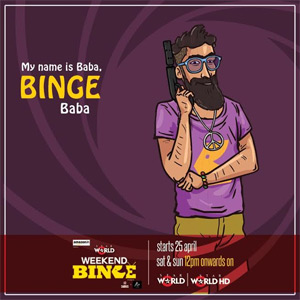
    Star World is set to launch ‘Amazon.in Presents Star World Weekend Binge’ from 25th April, a property which is designed to bring an all new TV viewing experience to viewers in India. To take this innovation to the next level, Star World has created a robust integrated marketing campaign with the channel’s first-ever mascot – Binge Baba, to add fun and excitement to the campaign.
     

    Star World has conceived Binge Baba to drive home the maxim of the property – it is for those who can’t have enough and want more, in this case, the complete story of a show at one go. As the brand’s voice every weekend, Binge Baba is spreading the message ‘indulgence is good’. The channel is leading all marketing efforts for the property through Binge Baba.


    With the support of various engagement activities for this flagship property, multi-dimensional efforts have been initiated across cities like Mumbai, Delhi and Bangalore to ensure that the show is the talk of the town for months to come. It will also be promoted in upscale shopping malls across metros and at major domestic airports. Star World is also going big on digital through a powerful reach campaign that is being rolled out to target core consumers.


    To mark the launch of this innovative property Star World is also rolling out an office contact program with focus on trade in Mumbai, Delhi and Bangalore by giving key offices and their employees a chance to binge on their favorite ice creams as they get ready to binge watch the biggest international shows on the channel starting this Saturday, 12 PM onwards.


    A STAR spokesperson commented: “Star World Weekend Binge will mark a new beginning and set a new trend for consuming content in India and to support this innovative initiative, we have ensured that no stones are left unturned with the marketing of this property. Our objective was to create a differentiated marketing campaign and developing a mascot like Binge Baba is a step in that direction. The character has already gained popularity amongst our core target audiences on digital and we are very excited with the positive response and sentiments that are being built for this weekend innovation of ours.”


     

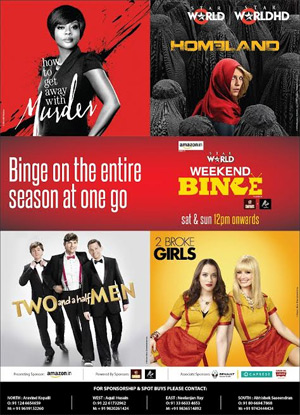
    Keeping in mind the growing need for uninterrupted entertainment, Star World Weekend Binge will give viewers a chance to watch all seasons of television’s popular series at one go, thereby showcasing more than 1200 hours of award –winning shows from the biggest studios, and premiering more than 30 shows across 52 weekends for its viewers. The Binge line-up includes popular shows like How to Get Away with Murder, Homeland, 2 Broke Girls, Modern Family, Two and a Half Men and Agents of SHIELD, among several others.


  • Smartech, a cross-channel marketing automation platform unveiled

    By A Correspondent


    netCORE, a leading digital marketing solutions provider has launched Smartech, a cloud-based marketing technology platform. With the launch of Smartech, netCORE aims to help modern marketers streamline digital communication, increase engagement, automate cross-channel workflows, deliver data-driven personalization and improve operational efficiency.


    Commenting on the launch, Rajesh Jain, Founder and Managing Director, netCORE, said, “Smartech is yet another example of industry-leading innovation that netCORE has been known for. As technology transforms marketing, Smartech is exactly the platform marketers need to take away the drudgery of campaigns and enable a deeper personalized connect with customers.”


    netCORE is the market leader in email marketing technology and a leading provider of SMS, Voice, Push Notifications and USSD platforms. It is the first Indian company to offer a multi-channel integrated marketing technology platform.


    Through the launch of Smartech, marketers can streamline lead generation, enable lead nurturing and scoring, develop customer retention programs, measure marketing effectiveness through analytics and optimize ROI.  Additionally, Smartech enables automated workflows to be designed on the basis of a customer’s behavior like checking email, clicks, missed calls, SMS response, customer attributes and demographics.


  • Kyoorius Awards gets 1419 entries across ad & digital

    By A Correspondent


    The final tally at the 2015 Kyoorius Advertising & Digital Awards has been revealed. 1419 entries have been submitted by Indian agencies and studios, at the second session of the Kyoorius Advertising & Digital Awards. This is a jump of over 40 per cent from last year’s total tally of 988 entries from Advertising & Digital Awards.


    Participating agencies include DDB Mudra, Ogilvy & Mather, Madison Group, Grey Worldwide, Contract Advertising, Creativeland Asia, Scarecrow Communication, Linen Advertising, Itsa Brand Solutions, Webchutney, Isobar, Rediffusion Y&R, Ideas@Work and BBH, to name a few.


    Rajesh Kejriwal

    Rajesh Kejriwal, Founder CEO of Kyoorius said, “This number has been very encouraging, and a sign of acceptance by the industry. Kyoorius thanks all agencies for their support. We look forward to a packed jury session next week as these entries battle it out for Blue and Black Elephants.”


    Next week, all jury members for the Advertising & Digital Awards will gather in Mumbai-India to review, discuss and elect the best of the best over an intensive four-day session. To make the judging process as transparent and open as possible, members from the industry are invited to see the jury in action at Nehru Centre from 29th April to 1st May. This is amongst the very few open to public jury sessions around the globe.


    Visitors can come in and watch the jury debate the entries, checkout some of the best in Indian creativity and attend four FYIdays conducted by the jury members themselves. This promises to be a source of inspiration for the young blood in the industry as they can witness in person the debates on how juries think, why some works are voted and why some do lose out in the end.


  • Sony Max goes past Star Plus in TAM Week 16

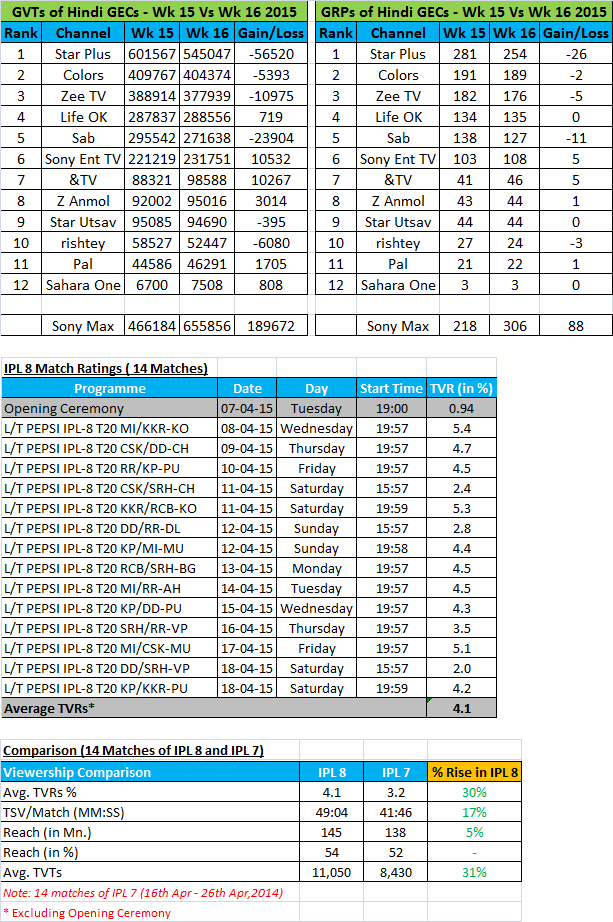
    This is indeed big news. Sony Max has earned 306 GRPs in Week 16 of 2015 as per TAM ratings even as Star Plus has got only 254 GRPs, losing 26 from last week. Interestingly Colors and Zee haven’t lost much, though Sab has lost 11 GRPs. This is of course early days of the IPL still.


    These are highlights of the IPL numbers:

    • 14 matches of IPL 8 were sampled by 145 million unique viewers.
    • Time Spent by Viewers per match was 49 Minutes and 4 Seconds; which is 17% more compared to IPL 7.
    • Avg. TVTs showed a growth of 31% for IPL 8 compared to IPL 7.
    • 14 matches of IPL 8 garnered 4.1% Avg.TVR which was 30% more compared to its previous edition.
    • 54% of the All India Universe tuned to watch IPL 8 matches.


    Do take a look at the ratings.


  • Ranjona Banerji: Bad coverage of a suicide and more on cowardly journalists

    By Ranjona Banerji


    The public suicide by a young farmer from Rajasthan at an AAP rally in Delhi this week exposed not just our political establishment but also members of the media. Watching events unfold on television it seemed inconceivable that this could happen with so many people present.


    After the fact as well, TV attention shifted to a political blame game because no news is legitimate in India unless it has a political angle – barring Bollywood and cricket of course. So instead of the death of this one farmer, which capitulated the problems of all farmers to centre-stage, we were fed a constant loop of he-said-she-said finger-pointing by all India’s political parties.


    Contrast this to the way the migrant crisis is being covered in Europe and you can an idea of how stories can be developed without competing quotes from political spokespersons.


    Yes, I know. I’m talking to the wind.


    **


    I can understand members of the public being angry with newspapers and TV channels and websites for not being admirers of the current government. I for instance rarely read journalists who I feel are going to be needlessly critical of the tennis great Roger Federer. It is a choice I make as a fan, not as a thinking journalist.


    But journalists who get upset when the current government at the Centre and the prime minister are criticised? What is one supposed to make of them? I’m not even talking about those who are open card holders and well-known admirers of the BJP or its attendant organisations. Or even the journalists who joined AAP. I am talking about working journalists in various news organisations.


    Of course, it could be the dangers of too much blabbing on social media that I see before me. Many journalists, especially young ones, feel that they deserve a voice. The blog-as-diary is no longer as popular as it once was. So enter Facebook and Twitter. Perhaps their frustrations are better expressed on other fora as well that I am unaware of. Sufficeth to say, they sound off enough on the social media platforms I visit.


    I’m even willing to forgive the young, the rookies, those at the bottom of the newsroom food chain. But not journalists who have had a good 10 years of work experience or more. They should at least know how a newsroom if not a news organisation functions. And they ought to know that the primary function of the media is to in opposition. So if they felt full of indignant self-righteousness when they called out fellow journalists and senior columnists for being pro-Congress or pro the Nehru-Gandhi family, then surely those same high principles apply to those who are pro-BJP or pro-Narendra Modi?


    Incidentally, these are the same sort of people who happily point fingers at mistakes and transgressions by other news organisations but are silent when it comes to similar problems by their own. And no one is error-free – if I really even have to point that out. As I have mentioned in earlier columns, this sort of behaviour is cowardice and unprofessionalism.


    There is also some irony in such journalists calling whoever disagrees with their political views “paid agents” of the other party. I mean, if that shoe fits…


  • Adarsh Mishra quits Mi Marathi Live as Business Head

    By A Correspondent


    Seasoned media professional Adarsh Mishra has put in his papers as Business Head of Mi Marathi Live, a Marathi daily launched by the group that also runs news channels Live India and . Mr Mishra led the newspaper’s high profile launch last month.


    Confirming the news, Mr Mishra, who had joined the Mi Marathi Live group in February 2015, said that he will disclose the details of project that he is likely to launch soon. “Yes, it will be in the news media space,” he disclosed. The information on his quitting was ratified by a source in the Mi Marathi Live group. Mr Mishra has worked with Diligent Media Corporation (dna) and Lokmat amongs others.


  • Mediaah! Was Brand Equity unfair in damning Goafest?

    By Pradyuman Maheshwari


    Last week, Brand Equity in The Economic Times did a hatchet job on Goafest. Unfair for a publication which comes from a group that ought to have lost all reason to point fingers at people. Remember it’s the same media conglomerate that pioneered the concept of paid content for brands and lifestyle companies and individuals in its publication. Economic Times is the same publication which published the leaked results of the Abby at two or three successive Goafests not too long ago. The Times of India is the same group which has been a major benefactor of the event and allowed its top executives to give the Ad Club quality time as its President.


    The Times of India’s television arm, Times Now, was the presenting sponsor of Goafest 2015 and the channel’s Editor-in-Chief and Editorial Director Arnab Goswami was allowed to defend his act at a leadership session. Goswami, being one of the most sought after names in Indian news media, was a huge hit.


    That it’s time to take Goa out of the Goafest has been discussed for a few years now, perhaps the author of the article – Priyanka Nair – would do well to ask her senior colleagues (albeit on the business side) why they put in such huge monies on the event and also sent their mascot Arnab Goswami to deliver a keynote. If the event is indeed a damp squib as the article tries to suggest, then why do all of this? Why unveil your channel’s new identity to a group of people who may seem uninterested in the content of the event.


    I agree that not all is well with Goafest. It needs an overhaul. There are several things going wrong with it. Regrettably, the bosses at the AAAI and Ad Club haven’t been able to think too laterally on this one. They fashion themselves as out-of-the-box ideawallahs, but have done precious little in the formatting. Adding on broadcast/ publisher and PR categories last year was of course an out-of-the-box idea.


    The 2015 edition was more efficient than the last one, and the Abby Awards have indeed been cleansed, but the format is predictable. Many speakers were great and Jaideep Gandhi put in his bestest. But organizers AAAI and Ad Club weren’t able to pull in all their members to attend.


    Ironically, Goafest head priest and organising committee chairman Nakul Chopra and some in his team may swear at Economic Times (and its glossy pull-out Brand Equity) for now, but they can’t do without the paper when it comes to giving leads on important news.


    There are some adpersons who are aware of this unpredictability of Brand Equity and have been at the receiving end of the frequent reverse sweeps.


    Trying to force-present an event’s ugly face often exposes your own, and this is what the Brand Equity report has done.


    As for the Goafest bosses, they should use this article to clean up their act. Professionalise the set up… if necessary bring in professionals to curate the event for you.


    PS: A tip for those who read the B’Equity story with glee: remember, the same weekly could do the same to you with a Bekaar!


  • Bracing yr Brand 4 Online Feedbk


    By Faisal I Farooqui


    Understanding the economic consequences of social interactions has always been a challenge in the regular, monetary economy. Where land, labour and capital were considered crucial elements in wealth generation, social interactions, private discussions and other ‘non-economic activities’ — while valuable and necessary — did not have any greater meaning. Until the advent of the internet, that is.
     

    While studies dating as far back as 1955 show us that word-of-mouth is an important source of product information and positioning, recent research by marketing gurus highlights that such word-of-mouth recommendation influences a consumer’s product purchase decision a great deal. The all-pervasive Internet has made it possible for thousands, or even millions of consumers to interact online — the consequences of which are now beginning to haunt every CEO and marketer involved in selling a product or a service. A rising culture of sharing experiences and opinions on everything, from goods and services, to the arts and attitude, is the result of a rapidly-shrinking world, with a global economy, global brands and global icons all well within reach of practically everyone.


    One thing is indisputable: social media is driving consumer choices and feedback. Social media’s growth relies around content that is primarily generated by users– or consumers in this case — and is bound by two common threads. The first thread is the platform’s binding medium, which is the internet with its software, servers, apps, websites and bandwidth.


    The second thread is human emotions: the passion of consumers who believe in empowering others by sharing their own thoughts and experiences. As the country’s landscape is rapidly flooded with products manufactured from all over the world, Indian consumers are taking to their laptops and various mobile devices to talk about the hundreds of thousands of goods and services on offer – and not always in a flattering way. But what is significant, though, is that with this trend, a sociological ‘mapping’ of the consumer space is also taking place.


    Various studies have indicated that more than 60% of online users in India do research on products and read reviews online before going ahead with their online or offline transactions.


    So, what makes people share their experiences online? These days, around the world, there is a set of extremely well-informed consumers who are trying their best to help other consumers. This ‘competitive altruism’ or the eagerness to help other consumers with honest opinions, is resulting in the creation of a unique and a powerful community of consumers. It is this community that turns the spotlight on both the good and the bad; the pros and the cons of things.


    The relative anonymity that the Internet offers has been known to enable people to shed their biases online, and review websites apparently draw out even the shyest of consumers and make them express their the opinions. And sometimes that feedback turns out to be quite influential.


    Such largescale opinion-sharing is creating a direct impact on the reputation and the bottomlines of brands. While consumers are calling the shots, companies can leverage such discussions to monitor these reviews and consequently improve their offerings.


    It is quite possible that if you are a brand manager or the CEO, you may come across opinions and reviews that criticise your products and services. You should have the ability to understand that most of the time, this is honest and unbiased feedback, and it would be good to address it.


    Six ways to engage the online consumer –

    1. Two-way communication: Set up a culture of dialogue. Build two-way communication with those who have written about your brand online.

    2. Listening: Don’t confront. The smart CEO will never confront reviewers, but engage and communicate with them instead

    3. Staff training and attitude: Empower your customer support team to quickly resolve issues. Often the cost of pampering a disgruntled customer is negligible, while the consequences of delaying it may only escalate matters.

    4. Analysis: The shift from word-of-mouth to offline-to-online provides the single biggest opportunity to measure and analyse an activity that has always been a challenge to economists. Analytical tools will help you analyse all online feedback

    5. Increase service quality allocation: Brands must spend more on service quality and customer support. If that means shifting some money from promotions and campaigns, so be it

    6. Reward: Thank those who talk about your brand online. Remember, millions of people who write reviews are actually providing you feedback — subtle or otherwise — without you paying them. It’s the biggest market research data available to you. And you don’t even have to hire an agency to get it!


    So get online, and listen to what your customers are saying.


    Faisal I. Farooqui is CEO of MouthShut.com, a leading consumer review and feedback platform


  • Zee Classic unveils new positioning – ‘Woh Zamaana, Kare Deewana’

    By A Correspondent


    Zee Classic unveiled its brand films highlighting its core proposition of ‘Woh Zamaana, Kare Deewana’ during the telecast of its celebrated musical concert ‘RD Night’ on Sunday, April 26, 2015. The two brand films aimed at engaging the audiences to the most significant period in the evolution of Indian Cinema.


    Designed and developed by Whyness and produced by Abstract Films, the films are directed by Pariskhit Vaidya.  They encapsulate the ethos of bringing alive an era of films that not only enchanted but was also revered by the audiences. Rehashing the cult classic path-breaking films such as Padosan and Sholay, the brand films reconstruct the scenes merged with contemporary situations and characters.


    Speaking on the occasion, Ruchir Tiwari, Business Head, Hindi Movies Cluster, ZEEL said “Zee Classic is a trendsetter within the cluttered television environment and its success lies in the truly distinct content. Classics, in its true sense, embody the cultural and cinematic roots that exude timeless warmth transcending generations. Zee Classic with its tagline of ‘Woh Zamaana, Kare Deewana’, promises to bring home the eternal magic of classic Hindi cinema. However, in order to make the content relevant for today, we are recreating those immersive moments with our brand films that will resonate with our dedicated audiences.


    The insight behind our new brand films is simple – classic cinema in its intrinsic value has the ability to transport you to a different world which today’s films rarely do and that is also in sync with our positioning Bhool Jao Sab Kuch aur Kho Jao Zee Classic ki Haseen Duniya Mein. With the best collection of movies spanning several eras of Indian Cinema, we are setting out to indulge our audiences to the finest treats.”


  • ASCI frowns at Ullu-Banoing, finds Idea ad defaming Haryana

    By A Correspondent


    In February 2015, the Consumer Complaints Council (CCC) of the Advertising Standards Council of India (ASCI) upheld complaints against 125 out of 167 advertisements. Of the 125 ads against which complaints were upheld, 73 belonged to Personal and Healthcare category, followed by the Education category with 29 advertisements, followed by others.


    Says a communiqué on the Idea ad: “The advertisement of Idea Cellular shows the practice in Haryana of girls not being allowed to step out of homes to study, is defaming Haryana and tends to bring this State into disrepute.  Also, the TVC is misleading by implication as the product/service promoted (Idea Internet Network) is shown as a substitute to and equating to college education.”


  • The 120 Media Collective and Diagonal View unveil Sooperfly

    By A Correspondent


    India’s The 120 Media Collective and UK based Diagonal View announced their joint venture, Sooperfly. The partnership is the first of its kind in the rapidly growing digital video space, where two companies with skill-sets have come together to create a proposition for talent and publishers to enter the world of video creation, distribution and monetization. The 120 Media Collective will package professional content and substantial audiences to drive premium ad sales and brand integrations.


    The company will have a three-pronged approach to empowering the entire digital video ecosystem:

    1. Bringing new and existing talent into the digital ecosystem by breaking down barriers and providing an entire suite of services including development, production, channel management and audience building. The content will range from the self-promotional for individual talent to premium content that can fit into emerging subscription platforms.

    2. Tap into large publishers and curate, manage and monetize their existing content.

    3. Sooperfly will also empower and enable brands to turn publishers with the creation of video led properties around the enormous talent pool that exists in the ecosystem today.


    Sooperfly will forge 200 partnerships during 2015, across individuals, publishers and content collectives, who will co-produce content across a range of genres including lifestyle, beauty, fashion, comedy, sports, education, technology, the performing arts and more. The network already boasts names such as celebrity journalist Vir Sanghvi, celebrity chat show host Tara Sharma and stand-up comic Radhika Vaz, while collectives such as Shalom Films and The Rolling Garaari bring in a variety of topical and serial content.


    Commenting on the partnership, Roopak Saluja, Founder & Chief Executive Officer, The 120 Media Collective, said “Sooperfly is The 120 Media Collective’s digital video distribution arm that gives us the capability to build content brands direct-to-audiences.  It capitalizes on the production expertise of Bang Bang Films and Sniper and the digital marketing credibility we’ve built with Jack in the Box Worldwide but most importantly, it leverages our credibility with brands built over nine years.  Diagonal View as the global leader in audience development and channel management is the ultimate partner to join forces with in taking Sooperfly to a position of leadership in empowering digital video across Asia.”