Category: MEDIA

  • #ThereIsAnotherWay stresses Educomp via new campaign

    By A Correspondent


    Educomp Solutions has come out with a new ad campaign that aims to change the way people view education and the process of learning for children in the country.


    The campaign “#ThereIsAnotherWay” stresses on the importance of a smarter way of learning. It seeks to get people thinking that there is another, better way for children to learn and Educomp has the answer.


    The concept behind the campaign is to show the kind of severe pressure our children are under. The competition and the need for 99 per cent is not only ruining the quality of childhood but also making parents into a dictatorial police force. Educomp believes that this system should not come in between the child and the joy of learning and that there is an alternate way to grow, to learn, to teach and be taught.


    #ThereIsAnotherWay campaign has been launched across electronic and digital media. It is already trending on Twitter. The digital campaign aims to engage people through contests, videos and live interactions to get them to think about their own innovative methods of learning in today’s digital age.


    Through this campaign Educomp wants to highlight its key stakeholders that include parents, teachers, school community, policy makers and educationists the joy of learning and that there is an alternate way to grow, to learn, to teach and be taught.


    Shantanu Prakash, Chairman and Managing Director, Educomp Solutions Ltd. said, “Our education system is being revolutionized by the Internet, online social collaboration and increasing availability of smart and mobile devices. This is another pioneering move by Educomp that marks the transition of the education system from the digital age to Internet Age.”


  • IPL teams to mop up Rs 300 crore in sponsorship deals as most brands stay committed

    By Ravi Teja Sharma & Nandini Raghavendra


    That the Indian Premier League (IPL) has emerged as the choicest new brandbuilding opportunity can be gauged from the sheer stickiness that brands have displayed with the teams, and this year too most of the sponsors have decided to renew their contracts for at least the next two years. Together, the eight teams in the T20 league are estimated to mop up close to Rs 300 crore from kit deals — sponsorship on shirts, trousers and caps of players – with existing as well as some new sponsors this season.


    Media planners and industry sources say sponsorship rates have risen 10-15% over last year, when the eight teams put together made just over Rs 250 crore from sponsorship. “A lot of companies today want to invest in sports. Those who were already there felt the tournament has given them a good bang for their buck,” says Mohit Burman, co-owner of Kings XI Punjab.


    Among the newcomers to the IPL party this year is Chinese mobile handset maker Gionee, which will be seen on the front of the shirt of Kolkata Knight Riders’ players, replacing longstanding sponsor Nokia. The brand believed to have paid between Rs 15 crore and Rs 18 crore a year for the three-year deal. Another brand that has come in this year is Japanese air conditioner maker Daikin, which has signed up with Delhi Daredevils for an estimated Rs 10-11 crore.


    Among those who have renewed, Aircel’s deal with Chennai Super Kings is the most expensive at Rs 22 crore a year. For Mumbai Indians, Videocon d2h has renewed sponsorship at Rs 15-16 crore a year. Huawei has renewed with Royal Challengers Bangalore for Rs 10-12 crore, while Ultratech logo will again be seen on Rajasthan Royals shirts at Rs 9 crore.


    “Even the ground sponsors for teams look closely at ratings and reach of the tournament. These aspects have done well in recent years and that is what they see value in,” says Rohit Gupta, president of Multi Screen Media, official IPL broadcaster.


    The cumulative reach of the IPL has risen from about 100 million in its first edition in 2008 to 191.4 million in 2014.


    Last year, rating for the tournament grew to 3.6 from 3.2 in 2013 despite a part of the tournament being played in the UAE and stiff competition from Lok Sabha election. “In early years of the tournament, rating was over 4 but it has now stabilised which is attractive for sponsors,” says Gupta.


    Rajasthan Royals has added a new sponsor in Kalasalingam University from Chennai, which is advertising for the first time in the IPL. “They see this as the right platform for visibility within other states of India,” says team Chief Executive Raghu Iyer.


    Venky Mysore, the chief executive of Shah Rukh Khan-owned Kolkata Knight Riders, says they have seen a 15% increase in pricing. “Brands evaluate the value they see and the fan base, which for KKR has grown hugely, which is why we can command a premium,” says Mysore.


    One of the most high talked about franchisees, Royal Challengers, has seen a churn in the last few years. While initially most of its sponsors were in-house brands of the UB Group — Royal Challenge, Whyte & Mackay, McDowell’s No. 1, White Mischief — over the last few years they have been replaced by outside brands. Huawei India, Tata Motors Bolt, Britannia and Kingfisher Beer have renewed their deals.


    Vinit Karnik

    While the World Cup viewership didn’t exactly set record, IPL, experts feel, will be a different ball game. “Fatigue levels for prime time cricket viewing is not there because the World Cup was not prime time,” says Vinit Karnik, national director, sports and live events at GroupM ESP. “What is also helping is the realistic pricing despite a slight increase in pricing this time.” IPL teams can be put into two buckets. The three top teams — Chennai Super Kings, Mumbai Indians and Kolkata Knight Riders — are in a different league when it comes to pricing of their kit deals.


    Source:The Economic Times

    Copyright © 2015, Bennett, Coleman & Co. Ltd. All Rights Reserved

    Licensed to republish


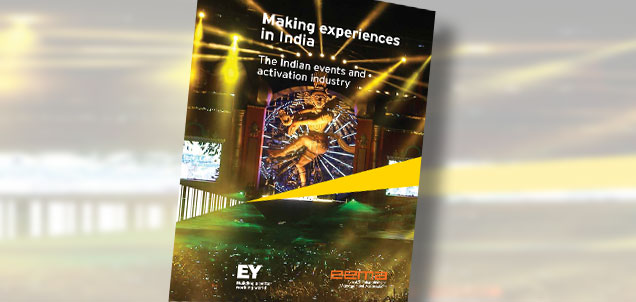
  • Events & Activation grows 15% annually fm 2011-12: EY-EEMA report


    The organized events industry has grown at 15% annually from INR2,800 crore in 2011-12 to INR4, 258 crore in 2014-15.


    Managed events remain the largest service offering, but, IPs (Intellectual Property) and digital events are growing at a faster rate than managed events. IPs continue to provide a disproportionately high share of revenues to their owners and activations are increasing in importance; however, managed events are beginning to get commoditized.


    Survey respondents have increased their staff strength from an average of 55 employees in 2011-12 to 84 employees in 2014-15, which has resulted in payroll costs increasing from 13% to 18% of total costs. EBIDTA margins are in the 10%-15% range.


    The key strengths of the industry remain the ability to get things done, ideation and efficiency, while there is a need for the industry to work on acquiring the right talent, managing costs, demonstrating ROI to marketers and increasing transparency in operations.


    Future trends

    The industry is expected to grow at 16%-17% to reach INR5, 779 crore in 2016-17, on the back of marketers increasing their below the line (including digital) spends to 21% of their total marketing spends. The growth will be led by personal events, MICE (meetings, incentives, conferences and exhibitions), activations and sports. Most survey respondents are expected to develop one to three IPs over the next few years.


    Non-metro markets are expected to increase in importance as marketers look to tier II and tier III cities for incremental growth. Digital events and activation is also expected to grow significantly on the back of smart phone penetration, internet availability and the cost efficiency of such campaigns for marketers.


    Margins are expected to decline from an average of 16% to 13% over the next two years, mainly due to a growth in overall costs by 12%, and more particularly in payroll costs by 15%, as companies expect to increase their average headcount from 84 to 104 employees.


    Mergers and acquisitions

    While the industry has reported very few M&A transactions over the last few years, there exists scope for consolidation. More than 50% of deal activity over the last few years has been inbound (foreign companies buying into India). However, deal values are usually sub-US$10 million. Valuations are driven by IPs owned, advertising agencies’ interest in activations and digital events and sports leagues.


    Tax implications

    Taxes continue to be a large cost for event companies in India. There are several challenges such as double taxation, taxation across multiple states and varying and inconsistent application of different taxes. The introduction of Goods and Services tax could have a significant impact on the industry in terms of rates and implementation across multi-state activities.


    Governance, risk and control

    The introduction of the new Companies Act, 2013 will result in a more comprehensive approach to governance, risk and control for events and activation companies. Key changes will be in internal financial controls, compliance with more than 60 acts and regulations, and implementing a vigil mechanism to identify undesirable activities.


    EEMA wishlist

    There is a need to grant industry status to the events and activation industry, enable single window clearances, manage withholding and other tax issues and enable skill development for the industry.


    Vision 20:20

    In order to succeed in the future, the industry needs to work towards the following initiatives:

    > Internal aspects: Improve the quality of talent through skill definition for various jobs, skill development, job security, compensation benchmarking and implementation of health and safety standards. The industry must build robust olicies, processes and information systems to manage business efficiently and safely, and implement technology and automation.


    > External aspects: The industry needs to work on its positioning to marketers, build an account focus and demonstrate returns more effectively. There is a need to improve the supply chain by developing quality vendors, implementing a system of vendor accreditation and improving overall risk management. The regulatory ecosystem needs to be made more conducive by simplifying taxation, permissions and copyright issues.


    > Strategic aspects: The industry must build more IPs focused on defined communities of interest to marketers, and embrace the opportunity provided by marketers’ increasing spends on digital media.

     

  • O&M to handle creative mandate for Xrbia Developers

    By A Correspondent


    XRBIA Developers has awarded their creative mandate to Ogilvy and Mather with effect from April 2015.


    XRBIA Developers Ltd a unique housing brand established in the year 1996, is focused on building world-class cities that offers futuristic and sustainable housing solutions to every Indian. Promoted by Eiffel Group, XRBIA is headquartered in Pune – India with realty footprints spanning across Pune and Mumbai with over 6 million sq. ft. of existing development and 20 million sq. ft. of planned projects. The spends of the group is pegged at INR 80 crore for the current financial year


    Confirming the news, Rahul Nahar, Chairman and Managing Director, XRBIA Developers Ltd said, “Constant innovation and creative thinking have been the cornerstones of our value offerings and we found a perfect partner with Ogilvy & Mather as the extension of our creative team.”


    Kunal Jeswani

    Kunal Jeswani, CEO, Ogilvy & Mather, said “What excited me was the idea that they are bringing future ready homes to India.  Looking forward to this partnership.”


    XRBIA aims to provide sustainable housing solutions for every Indian and meet the need of infrastructural shortage by building 100 futuristic cities by 2030, out of which they have already announced the launch of 10 smart cities strategically located in value housing segment in the Mumbai Pune corridor.


  • IAA announces 3rd edition of leadership awards

    By A Correspondent


    The India chapter of the International Advertising Association (IAA) has announced the third edition of the IAA Leadership awards. The awards will be held on Saturday, April 18, 2015 at the Grand Hyatt Mumbai and is presented by Colors.


    The awards will recognise marketing, advertising and media professionals community for their performance, innovation and creativity in delivering pathbreaking marketing initiatives across 12 categories.


    A jury comprising Sunil Alagh (SKA Advisors), Sangeeta Pendurkar (Kelloggs), Kaushik Roy (Reliance), Neeraj Roy (Hungama), CVL Srinivas (GroupM), Gayatri Yadav (Star India), Ramesh Narayan, Raj Nayak (CEO, Colors), and Srinivasan K Swamy (President, IAA India Chapter) will appraise the shortlisted candidates. The overall process is validated by Ernst & Young.


    Srinivasan K Swamy

    Speaking on the third edition of the IAA Leadership Awards, Srinivasan K Swamy, President of IAA’s India Chapter said, “The high admiration that the IAA Leadership Awards has earned from the community in the past two years fuels our enthusiasm to return with our third edition with a bang. We are gearing up to applaud the efforts of those marketers and professionals whose hardwork has borne fruition in the past year.”


    This year’s categories include the following:


    S. No

    Category Names

    1

    Marketer of the Year Automobiles – Two wheelers

    2

    Marketer of the Year Automobiles – Passenger vehicles

    3

    Marketer of the Year – Banking

    4

    Marketer of the Year – Cellular Phone Services

    5

    Marketer of the Year – Consumer Durables

    6

    Marketer of the Year – E-Commerce

    7

    Marketer of the Year – FMCG – Food

    8

    Marketer of the Year FMCG – Beverages

    9

    Marketer of the Year FMCG – Household Products

    10

    Marketer of the Year FMCG – Personal Care

    11

    Marketer of the Year – Insurance

    12

    Marketer of the Year – Mobile Devices

  • All set for the 10th Goafest…


    By A Correspondent


    It’s that time of the year when advertising, media and marketing professionals head to the sunny climes of Goa for an annual dose of some knowledge, networking and winning awards. It’s also celebration time as this is the tenth edition of Goafest, the annual congregation organised by the Advertising Agencies Association of India and the Advertising Club.


    The latter brings to the party the Abby Awards which have been expanded since last year to include various members of the media ecosystem. What started as essentially a Creative Awards show now includes Media, Digital, Print, Film, Film Craft, Out of Home, Ambient Media and Design, Radio, Direct, Branded Content and Entertainment, Brand Activation and Promotion, Print Craft, Integrated Advertising, Public Relations, Broadcaster and Publisher. Awards will be presented category-wise on each day of Goafest – that’s starting today, April 9 through April 11.


    Yes, there are naysayers, but they’ve been silenced by the response that the event has generated.  After the inauguration today, the Industry Conclave will start mid-afternoon followed by the Media and Publishers Awards.


    Said Nakul Chopra, Chairman of Goafest 2015 organising committee: “It is our endeavour to make Goafest 2015 better and superior. We will bring together the best minds in the field of advertising, communications, marketing industry to discuss, debate, interact, offer thoughts and experiences, share ideas and questions on our industry.”


    Meanwhile, Ad Club president Bose is ecstatic about the number of entries he has received this year. While some of the leading agencies like Ogilvy, Lowe Lintas, McCann and Leo Burnett have not sent entries, Bose boasts of a near-35 per cent increase from 2014. “The fact that we followed a rigorous judging process last year brought back the faith in the system which had eroded in the previous Abby.”  The number of entries is up 900 to 3500 with participation from 200 creative and digital agencies. In the Media Abby, the number of entries has grown from 574 to 612 from across 53 agencies. “Agencies you thought weren’t participating are doing so,” Bose smiles. “Some clients have pushed their agencies to participate while many others have entered directly.” Talking of the new categories introduced last year, he said that Public Relations has shaped up well and so has the Broadcaster category.  When asked about efforts being taken to woo back the agencies which have boycotted the awards, he said: “We tried our best to persuade them.” Bose is of the view that agencies don’t gain by staying away. “For the sake of the young professionals who do some splendid work, they must enter.”


    At the time of writing, the final numbers of registered delegates at Goafest was not known.


    If there were no awards, you wouldn’t even have half the participation in Goa: Nakul Chopra
     

    This is the second year, Publicis’ CEO South Asia Nakul Chopra has helmed the Goafest Organising Committee. In an interview with Pradyuman Maheshwari, Chopra speaks on organising the festival and the controversies about some leading agencies staying away.


    Many sleepless nights because of Goafest?

     I never had sleepless nights because of GoaFest.


    But must be a thankless job?

    That’s why it must be done. I think you hit the nail on the head. To share an honest personal experience with you,  I got into Goafest actively because I was a vocal critic. I protested 2011 and was chairman of Goafest in 2013. It’s easy to sit and critique others. I’ve done both with a very cynical filter in how I saw things. Except, when you look at it from the perspective of what you said: It’s a thankless job. Somebody spends a lot of time and effort to make something happen and you don’t look at the stuff that worked or you could appreciate. Instead, you catch onto the three things that didn’t work or that personally pissed you off for some reason. It could be just the food or who got the awards…


    Last year you didn’t do it because the timing wasn’t right?

    Last year, the timing had to be changed, so, I thought it better if somebody else did it. This year, the AAAI President didn’t give me a choice. I think we all have to, turn by turn, take the responsibility. Either the association decides they don’t want to do it, so, they should parcel it off to some third party to do it. But, if the two associations want to continue to do it, somebody has got to take responsibility.


    Obviously, you run a network of agencies. Goafest is also more than a full-time job for a couple of months. It must be taking away from your time here at Publicis.

    It takes away from time at Publicis and at home. It does. I’m fortunate that we have a very strong team at Publicis. We have also a good team helping out with Goafest… many people pitching in to take on different responsibilities.


    You’ve done Goafest in the past, so you obviously know…

    But the grammar has changed from an organisation and logistics standpoint. There was the Beach GoaFest which was the first three or four years. Then there was the GoaFest at Zuri. When you do it on the same format with similar vendors, by Year 3, things become much simpler. You’ve learnt from the mistakes, you know what can go wrong. Last year was the first year at Grand Hyaat. Many of the things worked for us. From a sheer organisation standpoint, it wasn’t that well-organised, perhaps.


    What about the festival format? The general perception is Goafest is more about the beer than the knowledge or conclave or the people speaking…

     This is a little bit of an unfair pseudo comment to make. Firstly, is it fair to say Cannes Lions is more a corporate junket than it’s about people learning? If I’m not mistaken, there are maybe 8 to 10,000 delegates who register for Cannes. There isn’t even a room large enough to hold more than 1,500 of them and in most cases the rooms aren’t full. If you start seeing something in a uni-dimensional sense, are people studiously sitting in the knowledge seminars and listening? I don’t think that’s the only form of learning.  Second, Goafest, unlike really any other festival of its kind in the world, has an inverted participation where as much as 60 per cent or more people who attend are under-30. There are more people sitting in the room to listen and learn in Goafest than there are in any other such festival anywhere else in the world. Young people have something which is part of their nature. If you make Goafest an attendance-oriented class, the young people won’t come. They will learn in an atmosphere of fun and frolic. It’s an over-exaggerated view of the Goafest that it’s just about the booze and the beer. It’s not!


    Without getting into speakers are there one or two standout things this year that one could look forward to?

    I think Goafest is beyond that phase of being about one standout thing. We’ve consistently invested behind building some properties. And we amend or change or junk some of them basis the feedback we get. Last year was the first year we had three award nights and we are continuing with that.


    How critical is the Abby to Goafest? Last year, I remember, there was a statement made that the Goafest is not all about awards.

    It’s not all about awards, but it’s been around the awards as well. Goafest is not an awards fest, in which case it might as well have been in Mumbai. But it’s not fair to say, Goafest is more about the festival than it is about the awards either. I think it’s a balance of both. The celebration is more about the awards. The participation is more about the festival. At its peak, we have had more than 3000 people… Three thousand people don’t win awards.


    Ogilvy and Lowe have no issues participating in the Effie Awards. Obviously, there’s something wrong with the creative Abby  that stops them from coming there.

    I don’t think that would be a fair thing to say about the Creative Abby. There have always been some agencies, different ones in different years including Pubicis in one year that may have felt upset or slighted by something that happened and that’s understandable. In the case of the Effie, the points here are part of the global Effie agency rankings.


    If you had no Abby, you’d have Ogilvy and Lowe as part of fest?

    If that’s true, they can still send people to the Goafest. There’s no restriction on your coming and participating in the festival part if you’re not participating in the awards part. If there were no awards, you wouldn’t even have half the participation in Goa.


  • E-com majors Flipkart, Amazon etc spend mega on ads

    By Shambhavi Anand & Pritha Mitra Dasgupta


    Ecommerce, probably the most happening sector in India, has turned into one of the hottest for the advertisement industry , too.


    Spending on advertisements by e commerce companies surpassed that of consumer durables, banking and financial sectors in 2014. They are spending as much as the traditional table-toppers -telecom and auto companies.


    TAM Adex data show that the big four e-commerce companies ­ Amazon, Flipkart, Snapdeal and OLX ­ alone spent a staggering Rs 600 crore on ads in 2014. Overall, the sector spent Rs 750-800 crore in 2014 and the budget would cross Rs 1,000 crore in 2015, say media planners.


    The big spending has come despite the fact that Amazon started advertising in India as late as in May 2014. But that forced rivals, local leader Flipkart and Snapdeal, to beef up their efforts. In 2014, the sector spent Rs 60-70 crore on print ads, as they vied for premium positions, such as front page, jacket and double jacket ads in newspapers.


    The sector spent Rs 32-35 crore only on jacket ads ­ four full pages of advertisement that cover the rest of the newspaper as a jacket.


    But, more money has gone to television ads: as much as 50-60% of the total ad spend. While 15-20% of the total was spent on digital, 10-15% went to print media and the rest to radio and out-of-home media. “We expect the spend to go up by 20% in 2015,” said Anand Chakravarty , head of western India operations at media agency Maxus.


    The media mix of the sector will continue to be driven by television, followed by digital in 2015, he said, as the primary objective of the players is to build reach and ensure high visibility to garner more investment interest.”Digital drives business performance,” he said.


    Foreign investors who saw e-commerce as an opportunity to play in the nation’s mammoth $500 billion retail market have bank-rolled top online retailers’ efforts to scale up quickly over the past few years.


    This has also increased competition in the online market, where the players are waging a war to win over the consumer. While the companies have of late cut down on discounts to consumers, they are focusing more on brand building, signing up Bollywood celebrities as brand ambassadors and stepping advertisement activities around sporting events.


    The e-commerce sector is expected to spend heavily on the Indian Premier League.


    Source:The Economic Times

    Copyright © 2015, Bennett, Coleman & Co. Ltd. All Rights Reserved

    Licensed to republish


  • MSM to rake in Rs 1000 crore from IPL ads as e-commerce players join party

    By Ravi Teja Sharma & Ratna Bhushan


    If all goes according to script, Multi Screen Media, the official broadcaster of the Indian Premier League, is poised to make about Rs 1,000 crore from on-air sponsors and spot advertising this year, riding an ecommerce wave, say media planners and industry watchers. About 25% of the revenue will come from e-commerce companies, said Rohit Gupta, president of MSM, though he did not confirm the total amount that the broadcaster is likely to make.


    Spending by online retailers made up for 10-12% of MSM’s revenue of Rs 800 crore during last year’s IPL. Flush with cash raised at mind boggling valuations, e-commerce companies that will be seen on air this time include Amazon, Paytm, Magicbricks and CarDekho as sponsors while CarTrade, Snapdeal and Freecharge have taken television spots during matches.


    MSM has signed up 12 sponsors including Vodafone, Hero MotoCorp, Intex Mobiles, PepsiCo and Vimal Pan Masala, selling close to 95% of its inventory before the eighth edition of the tournament started on Wednesday. These sponsors have taken over 50% of the inventory while the rest has been sold as spots to other advertisers.


    “In the last couple of years, a lot of e-commerce companies have raised funds. Their target is quick consumer acquisition for which they are trying to use cricket as a platform to get quicker reach,” said Nandini Dias, chief executive officer at media agency Lodestar UM. IPL’s viewership has grown from about 160 million in the fourth edition in 2011 to 191 million last year.


    “There is no better platform than IPL to reach out to the Indian masses,” said Manisha Rana, head of marketing at property portal Magicbricks.com, which will launch the second phase of its new campaign that started in February. The new campaign is set around IPL matches and this time is in a shorter 15-second avatar.


    Media planners say e-commerce companies have almost doubled their spending this year. Amazon is one of the presenting sponsors this year after having been an associate sponsor last year. It gets 210 seconds of advertising time per match compared with an associate sponsor’s 100 to 120 seconds. “Amazon would have doubled their outlay as well as inventory this year,” said a media planner, not wanting to be identified.


    In a recent report, media investment company GroupM said that it expects e-commerce to lead advertising spends in 2015, though it currently has a much smaller base than other categories. A report by Assocham and Deloitte says e-commerce will cross $16 billion worth of business by the end of 2015.


    LK Gupta, chief marketing officer at Girnar Soft, the owner of CarDekho.com, said the momentum has been building up for the ecommerce sector for the past three to four years as it gets ready to explode into a mass category. “There is a watershed period when a category has to achieve scale. For e-commerce, that comes from Internet connectivity, mobile phone adoption, openness of the mass public to buy and search stuff online. That tipping point was crossed last year,” he said. “Cricket is a huge property to go behind because it gives you national scale in one go.”


    The Ratan Tata-funded company CarDekho will launch the second phase of its “Mr I Know” campaign during the IPL.


    Shankar Nath, senior vice president at Alibaba-backed Paytm, said the company plans to step up brand recall and salience for Paytm through cricket. The company is investing in IPL as an associate sponsor with the official broadcaster, for which it has planned a new campaign, and also is in a tie-up with Mumbai Indians as official partner.


    Gupta of MSM said youth, which is the big category and a target group for e-commerce companies, come in big numbers around the IPL. Apart from finding space on television, several e-commerce companies have tied up with IPL teams. Food ordering app TinyOwl has signed up with Mumbai Indians as its official food ordering app. Harshvardhan Mandad, CEO of TinyOwl, said the company will launch its first big marketing campaign through the IPL.


    Mobile taxi-hailing app developer Uber has tied up with Kolkata Knight Riders as the official local transport partner, Foodpanda is the shirt and kit sponsor with Sun Risers Hyderabad while Shopclues is the e-commerce partner of MS Dhoni-captained Chennai Super Kings.


    Source:The Economic Times

    Copyright © 2015, Bennett, Coleman & Co. Ltd. All Rights Reserved

    Licensed to republish


  • Goafest Day 1: Content key to success, say biggies in Industry Conclave

    By Dyanne Coelho


    The first day of Goafest typically sees CxOs from across the spectrum of media, advertising and marketing professionals converge at an Industry Conclave for an interface with leading lights from amongst industry professionals.


    Following the inauguration of Goafest’s tenth edition in the afternoon on Thursday, the Conclave saw keynotes by Anand Kripalu, MD and CEO, United Spirits and Member Diageo Global Executive Committee, D. Shivakumar, Chairman and CEO, PepsiCo India, R. Chandrasekar; Head of Communication and eCommerce, Nestle South Asia Region and Sanjeeb Chaudhuri; Global Chief Marketing Office and Regional Head, South Asia, Standard Chartered Bank.


    Shivakumar highlighted the dawn of the social media, digital space and e-commerce. “Recruit tech savvy people,” he said, adding: “We are getting seduced by so many tactics that we lose sight of our brand. Don’t be data rich and insight poor,” he added.  Shivakumar included a checklist for agencies in his talk; strategic planning, quality of management, buying, creativity, insights, value and tech solutions are the key, he said


    Anand Kripalu was up next, talking about the sacred relationship between a brand and its agency. “A brand and its agency is like a marriage, only divorce after you’ve tried bloody hard,” he said. Kripalu stressed the importance of agencies and clients creating value together. “Today organisations are becoming less and less important to talented people,” he said.


    Chandrasekar Radhakrishnan of Nestle pretty much backed up Kripalu talking about the timeless relationship between a client and its agency. “People don’t just buy products, they buy into products.”  Like the previous speakers, Radhakrishnan too highlighted the importance of creating quality content. “Content quality matters the most, not the platform. If the message is great, it will get rewarded. The quality of the message will determine the rewards.” He added the importance of increased creativity. “Brush aside safe creativity to make way for impactful and compelling creativity. Creativity must be relevant, not safe”


    The last speaker for the day was Sanjeeb Chaudhuri. “Consumers decide what they want to listen to, they have the ability to make or break your brand,” he said. The bulk of responses that brands receive have to do with consumers increasingly venting out on social media platforms. We need people today, who can listen and acknowledge the problem and offer solutions, he said.

    In Arrangement with MxMIndia.com


  • GroupM maxes Media Abby as Lodestar UM wins 3 Golds

    All smiles: CVL Srinivas and Shashi Sinha at the Media Abby on Day 1 of Goafest 2015. Picture by Shailesh Mule/Fotocorp


    By A Correspondent


    “It’s all in the family,” said CVL Srinivas, CEO South Asia, GroupM on his network of media service agencies in India winning 28 metals at the Media Abby last evening. Held as part of the ongoing three-day Goafest, behind held in Goa, the Media Abby is conducted by the Advertising Club for excellence in use of media. Goafest is jointly organised by the Advertising Agencies Association of India and the Ad Club.


    According to Pratap Bose, President of the Ad Club and also Chairman of the Media Jury, as many as 70 leading professionals constituted the judging process which was held over four days. There were 674 entries as against the 619 of last year from 53 agencies. “This year we attracted the best possible response in the Media category over the years,” added Nakul Chopra, Chairman of the Goafest Organising Committee. There were a total of 74 metals awarded – 12 Golds, 23 Silvers and 39 Bronzes.


    “The quality of entries was more or less similar to that of last year with nothing really very outstanding and hence there was no Grand Prix awarded,” explained Bose.


    Commenting on the overall trends in the entries, Bose said that with the pressure on margins and the bottomline, getting creative in media is possibly taking a backseat.


    Meanwhile, Shashi Sinha, CEO, IPG Mediabrands India is happy to see his network of agencies winning 14 metals. The maximum number of golds won by an agency this year  – three – was from his network’s Lodestar UM. “It speaks for the splendid work put up by our teams from across all our offices,” Sinha said.


    The Advertising Club does not award a title of Media Agency of the Year at the Media Abby and also does not rank agencies in any specific order of metals.


    Along with the Media Abby, the Publisher Abby category of the Creative Abby was awarded on Day 1 of the Goafest.  There were 62 entries in all from across 10 publishers and 17 metals were awarded. There were four Golds, six Silvers and seven Bronze metals. Bose admitted that the awareness for the Publisher Abby needs to be raised to generate more entries from across the print media.


    Result


  • Ranjona Banerji: The curious use of the term “presstitute”

    By Ranjona Banerji


    A little storm whirled around in the world of Indian journalism when former chief of army staff and a junior minister in the NDA government at the Centre General (retired) VK Singh put out this tweet:
    Friends what do you you expect from presstitutes. Last time Arnab thought there was ‘O’ in place of ‘E’ #TimesNowDisaster
    – Vijay Kumar Singh (@Gen_VKSingh) April 7, 2015


    This was compounded by former Supreme Court judge and current Press Council charman Markandey Katju who came up with this tweet:

    The vast majority of mediapersons wld certainly fall in d category mentioned by@Gen_VKSingh , as my experience in Press Council taught me.
    – Markandey Katju (@mkatju) April 9, 2015


    One could argue successfully that there is nothing wrong with criticizing or disapproving of journalists and their behaviour. After all, I do it twice a week in these columns. But the choice of language used by a prominent member of society and backed by another is certainly open to question. The term “presstitutes” is not new but it is derogatory. It is also, in today’s climate, deeply insensitive to those who are now known as commercial sex workers. There is a long ongoing struggle to phase out the word “prostitute” because of its obvious connotations.


    But when a former army chief and a former Supreme Court justice think they have made a clever joke then you understand the stranglehold of regressive patriarchy on our society.


    Then there’s the question of journalists. The term “presstitutes” was used through the 2014 general elections specifically for journalists who did not support the BJP campaign or Narendra Modi’s candidature. These journalists are also called “paid Congi agents” – that is the Congress Party pays them to attack Modi and the BJP.


    However there is a logical fallacy here. A presstitute by definition would do anything for money and would therefore switch allegiance without any problems. So here’s a further dilemma. Many journalists have switched allegiance to the BJP after Modi’s dramatic rise to prime ministership. Is Singh therefore addressing a support group within? Of course, the mistake is mine because the theory goes like this: All journalists who support parties other than the BJP are presstitutes and all journalists who support the BJP are patriots.


    It is fascinating to see how many pro-BJP patriot journalists have jumped in to support VK Singh. Some of these have been journalists who have become PR people (er, what term is one supposed to use for them given what they now do for a living?). Others work for media groups which practise the worst forms of selling editorial space without informing the reader. Since these people do not quit their jobs, it makes you wonder whether they are practising some form of self-flagellation when they call journalists “presstitutes” or whether they are only pointing fingers at other people. I would suggest that working journalists who feel so strongly about abhorrent media practices invented by the people who pay them their salaries need to take a strong stand and pay the price for their principles by becoming jobless.


    But you know and I know that these journalists are not just shameless but are also caught up in that old trap of left versus right and everyone versus the BJP. They see no irony in the fact that they are attacking people for doing exactly what they themselves do. So all journalists who criticize the BJP are abominable and yes sir, of course I will remake the page to fit in all those paid news, Medianet, private treaty stories.


    And how is anyone supposed to respond when well-known journalists and columnists who spend all their time on TV and in print supporting the BJP then agree to become board members of large corporate and at the same time applaud the use of the term presstitutes?

    http://www.business-standard.com/article/companies/columnist-dasgupta-joins-l-t-board-115020901148_1.html


  • Shailesh Kapoor: Expectations from BARC on the Eve of its Debut

    By Shailesh Kapoor


    Finally, it’s happening. After two exciting years that were forever pregnant with possibilities, the first BARC (Broadcast Audience Research Council) ratings will be out later this month. While the original announcement on formation of BARC dates back to 2008, the lawsuit NDTV filed against TAM in 2012 was perhaps the momentum trigger, whose results we will begin to experience soon.


    So far, broadcasters, who are stakeholders in BARC via IBF, have been unanimous that BARC ratings should be the only operating TV currency in India in the future. We have seen with the new IRS in 2013 that things can take an ugly turn when the actual data is out, but chances of that happening in TV ratings is significantly lower, because of the nature of the industry and broadcasters’ wholehearted endorsement of BARC thus far.


    Yet, a lot will be expected from BARC once the ratings begin to roll out. Here are five of my expectations (in no particular order) from BARC for it to emerge as not just India’s unanimous TV currency, but also an industry favourite for years to come.


    1. Don’t let the pressure get to you: There are bound to high-pressure situations once ratings roll out. Broadcasters who are at the wrong end of the proverbial stick are bound to create stress in your lives, demanding explanations. There are bound to be comparisons to the TAM ratings, however unwarranted they may be statistically. Just take firm stands in such situations, and the rules of engagement will be set for the future.


    2. Stick to data reporting, don’t offer advisory services: Stick to reporting and do not offer advisory services at any time. The moment you begin to guide channels on what they can do to increase their viewership (TAM has done that for a while through S Group), you are essentially losing your status of a data reporter operating at an arm’s length. It is much like a critic who hobnobs with the studios during the week and then reviews their films on the Friday that follows.


    3. Offer an ‘elite audience’ service soon: The area of measuring the ‘elite audience’, the small fraction of wealthy India that many premium products target, remains an unfinished agenda. It may not be on your agenda any time soon, but do keep it on the task list. There is a large piece of the ad revenue pie that the television industry is potentially losing to print because TV ratings do not have meaningful measurement in this audience segment.


    4. Price and package innovatively: Remember, there are not just broadcasters and media agencies, but many other types of firms who would be served well with your data. This includes content producers, insights firms, digital agencies, film studios, etc. Be innovative in pricing, so that affordability is ensured without dilution of value. Get your data into the bloodstream of the media industry, not just in the broadcaster and planning world.


    5. Open up data bureaus soon, very soon: Do not delay the “licensing” (is there a better word?) of data to approved data bureaus, who can create their own products around the data, offering them as standalone services to the relevant target audience, e.g. a category of channels or advertisers. In the digital world today, third-party ideas that build on your data can be game-changers. The possibilities can be endless. Just open the gates!