Category: MEDIA

  • Dr Uday Nirgudkar takes charge as Editor of dna as CP Surendran quits

    By A Correspondent


    Dr Uday Nirgudkar

    Dr Uday Nirgudkar, designated Chief of dna as also Editor and Head of Zee 24 Taas, the Marathi news channel from the Zee Media Corp stable, has taken charge as Editor of dna. His name appears in the daily’s imprint with effect from today.


    CP Surendran who has been Editor-in-Chief of the paper since July 2013, announced his resignation yesterday. The poet, novelist and journalist is reported to be moving back to Delhi NCR.


    An MBA and doctorate in marketing from Pune University, Dr Nirgudkar has handled diverse businesses from conceptualization to execution in a career spanning over 20 years.


    In the past, Dr Nirgudkar has been Business Head at IL&FS, COO of Godrej Lawkim (2004-06), Vice President at Aptech (1994-2002), Marketing Manager, Kores (1991-94) and Forbes, Forbes & Campbell (1989-91).


  • EEMAGINE Summit to be held in Delhi next week

    By A Correspondent


    The premier convention of the live events and experiential marketing industry, EEMAGINE SUMMIT 2015, will be hosted between April 6-8, 2015 in Delhi. The event will bring together global professionals and imagineers from the events, entertainment, sports, cinema, advertising and marketing industry under one roof to discuss trends and map the future of the industry in a path-breaking convention.


    The convention organized by Event and Entertainment Management Association (EEMA), the apex body of the events industry, is being hosted at the FICCI House on 6thApril and then moves to the Hyatt hotel in Manesar for 7thand 8th April. Headlined by David Zolkwer, Project & Creative Director of Olympic and Commonwealth Games ceremonies in Manchester 2002, Athens 2004, Melbourne 2008 and Glasgow 2014, as well as many other international public ceremonies, celebrations and commemorations.


    Shiv Shivakumar from Pepsico, Rahul Bhatia, founder of Indigo Airlines, renowned film maker Rakeysh Om Prakash Mehra, FICCI President Jyotsna Suri, advertising genius Prasoon Joshi, Chairman of McCann Group Worldwise India will be a part of this convention that captures the mood of the country in its theme, “Inspiring India”.


    “The events and experiential marketing industry is growing at a brisk pace and delivering communication platforms for the world’s leading brands, for governments, sports bodies, tourism initiatives and influencing the media and hospitality industry in a remarkable way. Bringing the key stakeholders together to share thoughts and define the way forward is key for the EEMAGINE Summit,” said Sabbas Joseph, President – EEMA.


    The speakers include global success stories, thinkers, business icons, industry leaders and our country’s political leadership in the key deliberations and presentations.


    Key Speakers at the convention include Matteo Carvino, the renowned wedding designer for Italy, Sarah Gardiner, one of Scotland’s most accomplished experience creators; Poonam Mahajan, MP, Venky Mysore, CEO of Red Chillies and Kolkatta Knight Riders, Dr. A Didar Singh, Secretary General of FICCI, Vikas Agnihotri, Director- Google, Rishi Kaitly, Country Head – Twitter, film-maker Bharatbala Ganapathy, renowned for the Vande Mataram and National Anthem re-creations with music maestro AR Rahman, Rannick Colaco, leader of the NBA’s India program, Ravi Krishnan and Nitin Kikreja, Business Head Star Sports.


    Speaking on the occasion, David Zolkwer said, “I’m thrilled to be returning to India! I’ve always been a huge fan of Indian creativity and ingenuity. The region is the source of so much brave and untethered thinking – I know I’m going to be inspired by the EEMA 2015 experience.”


    “I’m delighted to come to India to participate in EEMA 2015 – it’s a special honour. I spend much of my life connecting with people, places and their stories and then bringing those stories to the stage – so to finally be visiting a nation steeped in such proud and ancient storytelling traditions is very exciting,” commented Sarah Gardiner.


    Expert panels will bring together some of the brightest minds cover diverse areas such as experiential marketing, public events, concert management, ticketed events, rural marketing, sports marketing, personal events, events tourism, creation of event brands, digital activation, integrated marketing and celebrity talent management.


  • Meet the Media Superviewer!


    The entire deck from a special Nielsen study on the tribe of heavy internet users with a corresponding high level of dependency on connectivity

  • With World Cup viewership worse than 2011 edition, Star misses Rs 850-crore ad target

    By Ravi Teja Sharma


    Much like the national cricket team, Star India’s World Cup performance doesn’t seem to have reached the same level that it did in the 2011 outing. Overall viewership percentage, reach and time spent are lower than four years ago. As a result, Star has missed its World Cup target, much like the Indian team, which went down to Australia in the semi-final. Sure, India did better than initially expected to win six games on the trot but that wasn’t enough in the end.


    According to multiple industry sources, Star India had an internal revenue target of Rs 850 crore from advertising sales during the World Cup but several media agencies said it could barely earn Rs 600 crore. The time spent has declined by 19%.


    Apart from the team not going the distance, they also attributed the shortfall to matches being played in Australia and New Zealand and some very early starts that led to lower ratings. Had India made it to the final, close to Rs 75 crore would have been added to Star’s revenue figures, said media planners.


    Star had about 6,000 seconds in each of the World Cup matches this year to sell to advertisers.


    According to AdEx, which provides an estimate of the total value of advertising on television, print and radio, Star sold an average of 4,500 seconds per India match. In the 40 non-India matches, it sold close to 2,600 seconds per match. According to industry sources, Star charged an average rate of around Rs 5 lakh per 10 seconds for India matches and Rs 1.5-1.75 lakh per 10 seconds for non-India matches.


    It did manage to sell some spots during marquee India games at very high rates — Rs 25 lakh per 10 seconds for the India-Pakistan match and Rs 15 lakh per 10 seconds for the semi-final against Australia.


    “Because of the timings, people knew ratings would be lower than before when the tournament was played in India,” said a media planner, who didn’t want to be named. “This World Cup was mostly about the six India games that did well in terms of ratings and viewership.”


    635 MILLION WATCHED WC

    The India-Australia match garnered the most impressive rating among all India matches at 10.4 while the India-Pakistan clash got a rating of 9.3. According to Star, 305 million people (TAM Panel CS4+ extrapolated to the universe using a standard conversion factor) watched the India-Australia semi-final match compared with the 288 million who watched the India-Pakistan one. According to Star, a total of 635 million people watched the World Cup this year.


    The last World Cup in 2011 was held in India and matches were played at local prime time. That led to much higher ratings during India as well as non-India matches and Star is reported to have made upwards of Rs 800 crore from ad sales in that edition. While the average rating for the 2011 World Cup was 3.3, this year it was 1.8. For the India matches, ratings were higher in both years — 13.05 in 2011 versus 6.9 this year (excluding the ratings for the final, the data for which will be available only later this week). Star did not respond to questions sent.


    The semi-final this year between India and Australia got the highest rating among all India matches at 10.4 but that pales in comparison with the India-Pakistan semi-final in 2011 — 21.2. The final in 2011 between India and Sri Lanka, which India won, got a rating of 23.6. Nevertheless, Star has done well to generate the revenue it has, said the head of an agency, not wanting to be named. “Getting close to Rs 600 crore from ad sales in this World Cup considering the constraints is good,” the person said.


    SPOTS ON REGIONAL FEEDS

    Star opened up more opportunities for smaller advertisers this year by selling spots on regional feeds — Tamil, Malayalam, Kannada and Bengali, apart from Hindi and English. Media planners said this and before-and-after match programming worked well for Star. Hindi and regional feeds contributed 77% of the overall viewership, according to Star India. In absolute numbers, total viewers rose 14% to 205 million from 179.9 million in 2011. But considering that the total television viewing universe in India has become bigger in the past four years, the World Cup was seen by around 65% compared with 84% in 2011.


    Star said it got 50% more advertisers this World Cup compared with the previous edition. This included brands such as Maruti, Airtel, Marico, Raymond and Nestle, among others, that signed up at the beginning of the tournament and others such as Amazon, Snapdeal, Dell, Panasonic, Toyota, Voltas and OLX that came in for the semi-finals and finals. Digital too saw high traction during the World Cup with a cumulative viewership of around 87 million on Starsports. com and its new Hotstar app through the tournament. The India-Pakistan match got over 25 million views on Star’s digital platforms while the India-Australia semi-final got 50 million views, according to the broadcaster.


    Innovations such as feeds in regional languages, the first global telecast of cricket in 4K and drone cameras above the stadiums came at a cost. According to people aware of this, the production costs rose to Rs 170 crore from Rs 65 crore in 2011 because of the innovations and the matches being played in Australia and New Zealand, further denting the margins.


    Source:The Economic Times

    Copyright © 2015, Bennett, Coleman & Co. Ltd. All Rights Reserved

    Licensed to republish
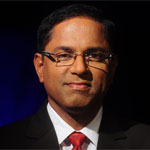
     

  • Divya Uttam joins Razorfish as Director Strategy

    By A Correspondent


    Divya Uttam

    Razorfish has announced the appointment of Divya Uttam as Director Strategy.


    Ms Uttam, listed by Impact magazine in 2014 as “Top 30 Under 30 and a future leader of Creative and media agencies” joins Razorfish from CheilWorldwide.


    Said she in a statement:, “Nothing excites me more than decoding the complex digital world for clients, helping the brands to acquire new fans, engaging the existing users innovatively and enabling advocates to spread word of mouth.”


    Said Gaurav Pathak, COO Razorfish India, “Divya’s incredible blend of a probing and intuitive approach is what we want to bring as an important dimension to our Digital solutions. We are building a strong senior team that can guide clients in their business transformation journey beyond vanilla digital offerings. ”


    Charulata Ravi Kumar, CEO Razorfish India added: “In today’s digital world, increasing discovery, generating conversations and driving advocacy is all clichéd and given. What we look for inaddition, is a curious mind and fire in the belly. And of course clients who have the appetite for it to take their brands to the next level of this matrix.” Razorfish has announced the appointment of Divya Uttam as Director Strategy.


    Ms Uttam, listed by Impact magazine in 2014 as “Top 30 Under 30 and a future leader of Creative and media agencies” joins Razorfish from CheilWorldwide.


    Said she in a statement:, “Nothing excites me more than decoding the complex digital world for clients, helping the brands to acquire new fans, engaging the existing users innovatively and enabling advocates to spread word of mouth.”


    Said Gaurav Pathak, COO Razorfish India, “Divya’s incredible blend of a probing and intuitive approach is what we want to bring as an important dimension to our Digital solutions. We are building a strong senior team that can guide clients in their business transformation journey beyond vanilla digital offerings. ”


    Charulata Ravi Kumar, CEO Razorfish India added: “In today’s digital world, increasing discovery, generating conversations and driving advocacy is all clichéd and given. What we look for inaddition, is a curious mind and fire in the belly. And of course clients who have the appetite for it to take their brands to the next level of this matrix.”


  • After Six, Sony out with second sports channel – KIX

    By A Correspondent


    Multi-Screen Media (MSM) announced the launch of the new sports channel named SONY KIX, which is set to broadcast the best in sports and entertainment in India. The channel is MSM’s second foray in sports after SONY SIX.


    As part of its line-up, KIX will air the Pepsi IPL, the Ultimate Fighting Championship (UFC), Australian Open Tennis Championship, National Football League (NFL), Rugby World Cup 2015, premier fight sports properties such as Glory World Series and CSI Boxing alongside some marquee events in football and rugby.


    NP Singh

    Speaking at the launch of KIX, NP Singh, CEO, MSM commented, “Sports has always been a core focus for us right from our early days. Our entertainment and movie channels such as SET, MAX and PIX have also, over the years, broadcast some of the landmark sports events both in India and internationally. While the resounding success of SIX in less than 3 years was a deciding factor to launch KIX, there was also this need to cater to the clear demand seen in the market for largely, alternative sports programming.  KIX promises to be a great addition to our mix of channels and will go on to complement SIX in more ways than one with exciting and iconic properties such as Pepsi IPL, UFC and NFL among many others.”


    One of SONY KIX’s flagship offerings would be the Pepsi IPL, which begins from April 8 this year and will be telecast on the channel in English, Tamil & Telugu. The telecast will be in conjunction with that of SIX and MAX, which will show the tournament in English and Hindi, respectively.


    Prasana Krishnan, Business Head, SONY SIX said, “SONY KIX will not only be an extension of our sports portfolio but it also serves as an opportunity for us to expand the sports viewership in the country. We have already acquired and have a very strong portfolio of rights including to some of the major sports hitherto unseen on Indian television. We will continue to build on this and expand our range of offerings. ”


  • Jabong takes ‘Be You’ philosophy further with new TVCs

    By A Correspondent


    Fashion portal Jabong has unveiled three TVCs, which will be aired across various channels. The TVCs capture aspirations, dreams, thoughts and personal styles for people who have chosen to break free from the norm and followed their own style and passion.


    The launch campaign, last year was a reminder, a knock on everyone’s conscience. After radiating this vision, Jabong adds to its philosophy of ‘Be You’. The TVC reiterates the idea of self-direction and freethinking, unescorted by the stringent norms of the society. It inspires lateral thinking and affirms fashion as a mode of unorthodox expression.


    On the launch of the second edition of the brand campaign, Praveen Sinha, Founder and Managing Director, Jabong.com, said, “Post tasting success with the launch of ‘Be You’ campaign last season, our team decided to take the winning streak forward and give a different dimension to it in the second season. Jabong.com is constantly innovating to churn out something new for its customers; we let out a spark of individualism last season and we plan to sustain it with this TVC in its second inning. The TVC is very simple in terms of the message it plans to send out, chase yourself, not the word.”


    Created by Bang in the Middle, with different films, weaving different stories, this year’s plan is much grander and bolder. Instead of just telling people to follow their own star and break free, it shows the stories of people who dared to be themselves. Here, Jabong celebrates each type of special, every kind of different.


    Prathap Suthan

    Prathap Suthan, CCO, Bang in the Middle said, “Last year around when we launched the philosophy of ‘Be You’, we were pretty much convinced that it gave enough and more encouragement to young India to be proud of themselves and to go ahead and be what they wanted to be. Jabong being the one brand that would support and inspire them on their self discovery and conviction with the widest range of fashion. Ready with ideas to help express themselves across the days and nights of their journeys. The campaign was a balanced act of liberation, and pushed people to go beyond the shallow definition of fashion, and gave them the freedom to stand up and be themselves: beLeaders instead of followers. This time around, instead of a common philosophy, we are bringing to life stories of individuals, how they choose to live their lives and how they use their minds to create a niche for themselves. More importantly, these ads also surf the top of emerging social trends and try to present the changing faces of the country. Young India is a more confident, globally conscious, and empowered lot of people. And all you have to do is look around to find youngsters living life the way they want and successfully at that. Jabong is at the cusp of being the one positive pat on the back for these millions of dreamers and thinkers and doers who will do India prouder than ever.”


    This campaign is a mouthpiece for the youth that has risen above the herd and retained its true identity. Jabong, with these new ads, exemplifies what ‘Be You’ means. The TVC includes a 30 second couplet narrating the tale of a young couple in a live-in relationship, defying the societal customs and avowing to stay true to their individual beliefs. An additional 60 second film is shot for digital promotion encapsulating the dreams of young India and how they are pursuing their unique entities, away from the social orders. Two more commercials chronicling journeys of the protagonist follow as well this season.


  • Sniper makes debut in India

    By A Correspondent


    The 120 Media Collective, a digitally-inclined company founded by media entrepreneur has launched Sniper, a brand that aims to redefine commercials and content production by providing agile production and effective amplification to meet the rapidly changing needs of today’s marketing paradigm and evolving content models.


    The launch of Sniper stems from the need for a new hybrid entity that combines the best of the big-budget, high production values model of Bang Bang Films coupled with the company’s lean and flexible digital content production model that has seen tremendous success over the past 24 months. Sniper will produce TV commercials, as well as long, short and mid-form content and also see it through to amplification across social platforms and paid digital media, where applicable.


    Roopak Saluja

    Commenting on the launch, Roopak Saluja, Founder & Chief Executive Officer, The 120 Media Collective, said, “At The 120 Media Collective, we believe staunchly that content is king but also that distribution is god. Video has become par for the course for brands, advertisers, media and publishers alike. The TV commercial as we’ve known it is no longer the only show in town and with new platforms mushrooming and the evolution of consumption habits, we’re seeing the emergence of a range of video types- long, short and mid form. With multiple pieces of content produced by a brand in a year, the shelf life of each piece of content goes down and consequently the willingness, ability and propensity to spend on each of them decreases.”


  • Child Rights and You (CRY) invites applications for Media Fellowship

    By A Correspondent


    Child Rights and You (CRY) has announced applications from journalists who are passionate about child rights and intend to explore various dimensions of children’s issues and violation of their rights. Four fellowships of Rs. 1 Lakh each will be awarded this year.


    CRY believes in encouraging a community of journalists to advocate child right issues. The fellowship duration will be three months. The journalist would be required to research on a topic of his choice which must encapsulate an area of neglect or violation of the child right space. An interesting case study, new perspective and a breakthrough research idea makes for an ideal candidate for this fellowship. The area and topic of research will be the journalist’s prerogative.


    The deadline for submitting the application for the fellowship is May 10, 2015 and the names of selected media fellows will be announced on CRY website in June 2015.


    The candidate should be an Indian journalist, residing in India. Journalist should be associated with a media house and contributing to print or online medium. Applications must be submitted in preferably English or Hindi. The essential requirements for the application include a proposal of 1500-2000 words outlining the thematic area, the objective, geographical coverage, methodology, timeline and a detailed budget. Updated CV, and recent stories published are also to be shared. A written consent from the editor is a pre-requisite for the fellowship.


  • Hungama.com unveils Studio Diaries Part 2

    By A Correspondent


    Hungama.com has launched the second part of the Hungama Studio Diaries by tying-up exclusively with Facebook. The Studio Diaries are video capsules of current musical icons that paid homage to Kalyanji-Anandji at the Hungama Studio launched exclusively over the social media platform.

     

    The association, which began with the launch of the first video in March 2015, has, within a short period of its launch, registered over 1.5 lac views from across the globe and has seen thousands of interactions over Hungama.com’s Facebook. The video is a montage of artists that sang the hit song ‘Pal Pal Dil Ke Paas’ created by legendary duo Kalyanji-Anandji. Musicians like Arijit Singh, Daler Mehendi, Shaan, Pritam, Amit Trivedi, Hariharan, Abhijeet and Armaan Malik are seen in the video performing their own renditions of the timeless classic at Hungama Studio.


    Part 2 of the Hungama Studio Diaries was unveiled exclusively on Facebook recently and will show Atif Aslam, Shraddha Kapoor, Shankar Mahadevan, Zakir Hussain, Sivamani, Leslie Lewis, Benny Dayal, Ankit Tiwari, Vasuda Sharma, Aakriti Kakkar, Kanika Kapoor and Runa Rizvi performing their renditions of Kalyanji-Anandji’s hit numbers ‘Har Kisiko Nahi Milta’ and ‘Laila O Laila’.


    “Speaking on the association with Facebook and success of the first video, Siddhartha Roy, CEO of Hungama.com said, “Hungama Studio has conceptualized this track to celebrate the evergreen music of Kalyanji-Anandji. The video of the renditions sung by this generation’s most loved artists has been appreciated by one and all over Facebook. The idea to exclusively launch this video over Facebook has brought about massive consumer reach and great results, seeing its success we are all set to launch the 2nd part of our video series. Our association with Facebook has been mutually beneficial, with this we hope to continue building on our space of original content and sharing this exclusively with our subscribers.”


  • NDTV chooses Amagi Storm to localize advertising in the Middle East

    By A Correspondent


    Amagi has announced that NDTV 24×7 will use its STORM regionalization platform to insert regional ads in the Middle East on the channel’s Asia-Pacific satellite feed.


    “NDTV is expanding its viewership base amongst the vast expatriate population in the Middle East. We were looking for ways to provide local advertisers in the region access to our clearly segmented viewership. Post evaluation of multiple vendor platforms, Amagi’s ad-insertion solution emerged as the perfect choice as it allowed us to regionalize our channel in the Middle East without creating new, expensive satellite feeds,” said Dinesh Singh, CTO, NDTV.


    “Content regionalization and monetization have been a growing need for TV networks globally. Amagi’s STORM IRD series integrates ad and content insertion capability with traditional IRD functionality thereby making it easy for TV networks to regionalize their satellite feeds. Amagi’s STORM platform is deployed across more than 4,000 headends and is a time-tested & reliable solution. We are excited to have India’s leading news network, NDTV on board as our valued client,” commented KA Srinivasan, co-founder, Amagi.


    For NDTV, Amagi inserts unique content watermarks on advertisements that need to be replaced in the Middle East. These watermarked content assets are transmitted over the satellite as per the channel playlist. The local ads that need to be played out only in the Middle East region and associated local playlists are transmitted through a trickle satellite bandwidth to be stored in Amagi’s STORMLite IRDs deployed at NDTV’s headends in the region. When the STORMLite IRD receives the watermarked content assets, basis the local playlists, it replaces the watermarked content with local ads which are already stored in the device.


    “For a live news channel such as ours, the Amagi watermark triggers turned out to be a much more reliable content trigger mechanism than SCTE-35 and DTMTF cue-tones. With Amagi, we monetized our channel in the Middle East including the Aston bands without affecting existing workflow and systems. The solution was easy to implement and we are very satisfied with the final outcome. The ad-insertions have been flawless and we are confident that the regional advertisers will benefit from geo-targeting” said Prashant Rawat, Head of Broadcast Operations, NDTV.


  • Ranjona Banerji: Journos get hysterical on Twitter on Mihir Sharma’s religion

    By Ranjona Banerji


    Last week, Twitter went into frenzy mode over the religion of journalist Mihir Sharma, who writes a popular column for Business Standard. Let me amend that sentence: the Indian right wing of Twitter was most agitated. Apparently, according to the tweets, Mihir Sharma, whose name indicates he is a Hindu, is actually a Christian called Simon Mathew. Your first thought on reading this should be, so what? And indeed, it would have been even a year ago.


    But Sharma, you see, is often critical of the Bharatiya Janata Party and the Narendra Modi-led government and that is reason enough to attack him. The logic, if you really don’t understand it, is clear: Mihir Sharma is hiding behind a Hindu name to criticise a pro-Hindutva government because he is actually a Christian minority. Or that is, no real and proper Hindu would criticise a pro-Hindutva government. If any do, then they are communists, liberals, naxalites, anti-nationals, secular and so on.


    Dig a little deeper and all you find is a reaffirmation of the Hindutva creed – that all Indians who do not embrace their Hindu origins are traitors. Underlying that is the other idea that religion determines your loyalty. So an Indian Christian automatically pays allegiance to the Vatican and so on. The idea that all Christians are not Catholics or all Muslims are not Sunnis and so on is irrelevant to your argument.


    The flip side is the reaction to Julio Ribeiro’s column in the Indian Express about his fears as a Christian as attacks on churches and Christian gatherings have gone up in the past few months in India. Ribeiro, one of India’s most respected police officers, was immediately dismissed as someone who was given to exaggeration and whose intent was to malign the Narendra Modi government at the Centre.


    A tangential view of this defence is visible in the columns of Tavleen Singh, also in the Indian Express, where everyone else but the prime minister is to blame for the Central government’s shortcomings. Singh also called the reactions of Christian’s “hysterical” in her Sunday column.


    But at the bottom of it all, lies this: as a journalist (or indeed as a citizen) you are free to call yourself what you want and criticise whoever and whatever you want. There is no rule and there cannot be a rule which says that you have to belong to X religion to comment on Y government. Who cares if Sharma is a Christian? Why should that invalidate his opinion? Similarly, journalist Rana Ayyub is attacked because she investigates and writes about atrocities committed on Muslims in India. Her name becomes reason enough to question her journalism.


    There would be no need for this comment if the “hysterics” on Twitter about Mihir Sharma’s religion had been limited to those known as “trolls” and to BJP supporters. But when journalists themselves jump in, then you have a problem. As we do.


    **


    One problem that thinking editors face is how to deal with “source” journalism used commonly by all reporters. Veteran journalist and author Katherine Boo suggests doing away with it altogether and using freedom of information acts instead. Here, the Columbia University Graduate School of Journalism makes it clear how dangerous “source” journalism can be. It tears apart a Rolling Stone report on rape through sharp forensic analysis.


    A strict lesson in how journalism should not be practised: http://www.nytimes.com/2015/04/06/business/in-report-on-rolling-stone-a-case-study-in-failed-journalism.html?smid=nytcore-iphone-share&smprod=nytcore-iphone&_r=2