Category: MEDIA

  • TAM’s AdEx to certify ad spots for Amagi

    By A Correspondent


    Amagi has announced that its ad spots will be certified by AdEx India, a division of TAM Media Research. AdEx India is the country’s most prominent advertising monitoring and information unit. This arrangement has come into effect from 1st, February, 2015.


    The certification adds a new dimension to Amagi’s offering of geo-targeted advertisements on television. An endorsement of Amagi’s ad-spot reporting mechanisms, the certification will include proof of execution and time of delivery, which will be included in the company’s post-campaign report. The certification is currently specific to Zee TV ad-inventory purchased through Amagi.


    Speaking about the development, Amagi business head, LS Krishnan said, “The TAM-AdEx certification adds value and integrity to the reporting of our ad campaigns. This partnership will add not only add credibility but also ensure transparency to the ad play-out process, a realignment which media planners have been waiting eagerly for. A first-of-its-kind certification for India’s geo-targeted TV advertising industry, this will help accelerate the adoption of geo-targeting by advertisers. This substantiates our commitment to a value-driven and effective advertising service. As a pioneer in this industry, we see it as our responsibility to grow the world of targeted advertising in India and this is a big step in that direction.”


    Amagi’s geo-targeting will help media planners, marketers and advertisers across the country plan their budgets more effectively. It also gives agencies the opportunity to offer specific, result-oriented campaigns to their clients across sectors.  Furthermore, the TAM-AdEx certification ensures that media planners can now be absolutely certain about their reporting for geo-targeted ad campaigns.


  • Google & Bain study predicts interesting digital trends

    By A Correspondent


    A joint report released by Google and Bain & Co. to understand the influence of digital on the FMCG sector revealed that the Internet would influence a third of total sales in the FMCG sector over the next five years. The influence of Internet will impact $35bn worth of FMCG sales in India, as more and more users get online to research for FMCG products.


    Projecting the growth of online user population in India, the report revealed that India would have over 650 million Internet users by 2020. Online shopping will continue to see rapid growth and over 250 million users will shop online by 2020. This dramatic rise in the online shopper base in India, will contribute $ 5bn worth of FMCG product sales through online channel, growing 50 times from current level contributing 5 per cent of total sales from current 0.3 per cent share by 2020.


    The study notes that Internet influence will be the most for high engagement categories like male grooming, infant care products and beauty products, as more and more users will research online for information related to these products. For male grooming products, 25 to 30 per cent purchases will happen online, 20 to 25 per cent for infant care products and around 8 to 10 per cent of all beauty products will be bought online by 2020.


    These findings were derived by studying various factors including research conducted for Bain and Google by Millward Brown by selecting a sample of an evolved 1600 Internet users (male and female) from across 13 cities in India including metros and non-metros – across eight FMCG categories – Skin care, hair care, oral care, home care, infant care, male grooming, beverages and food.


    Findings from the study further revealed that 35 per cent men and 22 per cent women are strongly influenced by digital for their purchases. Internet influence differed by category of products, with maximum influence on purchase decisions noticed in male grooming (39 per cent), skin care (26 per cent), infant care products (24 per cent) and hair care (24 per cent) products.


    Speaking about the key findings of the report, Vikas Agnihotri, Industry Director, Google India said, “By studying the behavior of the lead consumers from an FMCG standpoint, it is clear that FMCG companies in India need to start thinking of digital as a more strategic medium and chart out a digital growth path for their products. In terms of key target audience from FMCG perspective as made clear in the report, 200 million digital natives will be online, 30 percent of women population in India will be online by 2020 reaching 200 million and 100 million women will shop online. 200 million plus users will be from rural India, whose disposable income will continue to grow. With these three key consumer segments moving to digital and spending more time online, FMCG companies will need to prepare themselves for this digital future.”


    Speaking about the current engagement levels of FMCG companies with the digital medium, Nikhil Prasad Ojha, Partner, Bain & Co., said, “Most FMCG companies in India have underestimated the impact of Internet and are struggling to ascertain a clear digital roadmap for their products. Companies need to uncover the digital potential for different categories, and align their growth trajectory with the changing consumer behavior. This report will serve as a useful reference point to start thinking and engaging consumers.”


  • Reliance partners Facebook to offer free data usage

     By A Correspondent


    Reliance Communications has announced a new partnership with Facebook to offer free data access to a few websites to Reliance customers through Internet.org. Internet.org provides access to popular websites and services with zero data charges in order to make it easier for people to access the Internet, across both the 2G & 3G platforms.


    To start with, these services will be available for Reliance customers in the telecom circles of Mumbai, Maharashtra, Gujarat, Andhra Pradesh, Chennai, Tamil Nadu and Kerala. The goal is to extend the services to the rest of the country in a phased manner, and gradually add more services and websites.


    Gurdeep Singh, Chief Executive Officer, Consumer Business, Reliance Communications, said: “We are delighted to announce the launch of Internet.org services in India. Through this partnership with Facebook, we aim to increase Internet inclusion and encourage more Indians to go online. This partnership will not only accelerate Internet penetration in India, it will also open new socio-economic opportunities to users in fields like education, information and commerce.”


    Chris Daniels, Vice-President of Internet.org at Facebook, said: “Today, we’re excited to make the Internet available to millions of people in India through the launch of Internet.org and free basic services with Reliance. This is a big step forward in our efforts to connect everyone in India to the Internet, and to help people discover new tools and information that can create more jobs and opportunities.”


    The launch of Internet.org helps overcome the data access barrier in customers’ minds, by offering them a set of websites which Reliance customers can access without any data charges.


  • Star India acquires broadcast biz of Maa TV Network

    By A Correspondent


    Star India and Maa Television Network have announced a deal under which Star India will acquire the broadcast business of Maa Television Network. This opens up an opportunity for major creative content innovation in the Telugu television market.


    The acquisition would give Star India access to the highly attractive Telugu TV market and a market where Star has a very limited presence till date. Maa Television Network is a leading broadcast network in Telugu language content and has a strong trajectory of growth driven by fiction content and movies.


    The strategic deal will come into effect upon complying with the necessary regulatory formalities and the broadcast business of Maa TV will be integrated with the business of Star India, once the policies and procedures in the acquired broadcast business of Maa TV are aligned with those at Star India.


    Uday Shankar

    “The Telugu market is an important market however the pace of innovation has been slow. We are keen to change this by acquiring a local presence and fundamentally changing the content quality paradigm. We were very impressed by the solid creative core and quality and depth of the management team at Maa Television Network. In a short span of time they have built a leading business which is poised to take the next leap. The acquisition fills a vital gap in our portfolio allowing our advertisers targeted access to a critical market,” said Uday Shankar, CEO, Star India.


    “The strategic decision to align with Star India and be part of a global media group will be a big leap in our efforts to take the Maa TV Network to the next level and strengthen the positioning of Maa brand in the entertainment industry. Star’s leadership in Indian media and entertainment industry and its parent company’s proven expertise in media business on global scale will enable Maa to offer more innovative, rich and differentiated entertainment content to the Telugu Diaspora worldwide,” said Nimmagadda Prasad, Chairman, Maa Television Network.


  • IAA extends entry deadline for Corporate Social Crusader Award

    By A Correspondent


    The last date for receiving entries for the International Advertising Association (IAA) Corporate Social Crusader Award has been extended to February 28th 2015.


    The Corporate Social Crusader award is conferred on a Corporate which has excelled in any form of CSR activity in the last calendar year. The CSR could be in any area of the Corporate’s choice and is judged on the basis of its scale, relevance, and impact.


    Srinivasan Swamy, President, IAA India Chapter & Vice President – Development, IAA Asia Pacific said, “We introduced the IAA Corporate Social Crusader Award as a part of our prestigious Olive Crown Awards last year. The response was amazing. Over 53 large corporates sent in their entries. The award was ultimately shared by Hindustan Unilever and Mathrubhumi Group of newspapers.”


    Neeraj Roy, Chairman, Olive Crown Awards Committee, IAA India Chapter, added, “Last’s years award ceremony was special. We had Amitabh Bachchan and Maneka Gandhi with us along with the entire communications industry. This award is for a company that takes a justifiable pride in its CSR activity over the last year. It includes any CSR activity from improving life skills to recycling to healthcare and education and of course the environment.”


    The Olive Crown Awards are run as a cause and there is no entry fee.


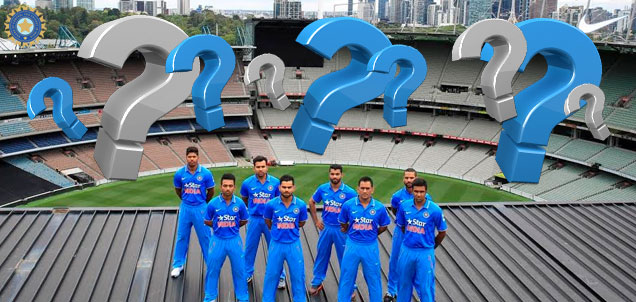
  • Will out-of-form India dampen adspends on W’Cup?


    Much interest in the Cup, but only dampener is India’s form

    Some of the brands who are probably fence-sitters today are only wondering what the form of the India team will be

     

    By CVL Srinivas, CEO, GroupM South Asia


    We see a lot of interest in the World Cup this year. One of the reasons for this is that it is a once-in -four-years event. But I think there seems to be a lot of innovation coming in to the World Cup product. Whether it is in terms of the number of languages it is going to be telecast in, or the kind of programming and advertising innovations that are available, and the fact that a lot of viewership is going to be on digital and there is also going to be a lot of interplay between digital and TV even when someone is watching the match on TV makes it very interesting for brands, for advertisers, for agencies to come up interesting campaign ideas and innovations. So there is definitely a lot of interest in the World Cup.


    The only dampener at the moment is India’s form. I only hope that picks up. This does have an impact on advertising to an extent. While overall the sentiment is still positive towards the World Cup. I think all the big sponsorship has been lined up. A lot of brands are also excited with the innovation possibilities on the World Cup, therefore they have also come in. I think some of the brands who are probably fence-sitters today are only wondering what the form of the India team will be, and whether they would be able to afford the scale of investment required, so if actually all goes well and India perform well in the first few matches, it could be a complete sell-out.


    It is the biggest aggregation of consumers possible

    The cricket format allows frequent short breaks making it apt for advertisers to be present creating impact and high brand recall.
     

    By Vivek Sharma, CMO, Pidilite Industries Ltd


    Cricket is a not just a sport in India, but is in fact a religion, which no one can refute. Not only is the ICC Cricket World Cup the premier flagship tournament of the ICC that comes only once in four years, this year India are the defending Champions, which means higher level of engagement from audiences in India and Indian diaspora. Given this context, the ICC Cricket World Cup 2015 is the right opportunity for our brands to reach out to a large consumer base.


    Furthermore, with large number of TV viewers in the country watching the last edition of the World Cup, it is the biggest aggregation of consumers possible. This year, the ICC Cricket World Cup will be broadcast in six different languages making it even larger. The cricket format allows frequent short breaks making it apt for advertisers to be present creating impact and high brand recall. Viewers will get an opportunity to see two of our new TVCs for Fevikwik and Dr. Fixit during this World Cup. Thus we believe that the ICC Cricket World Cup 2015 will be an ideal platform for us to create both awareness and connect for the brands with our end consumer across the key target regions.


    The unpredictable format of the ODI game makes it more exciting and keeps audience engaged, overall we believe that the ICC World Cup will prove once again to be a win-win situation for all advertisers. Pidilite has supported the game of cricket for long time and will continue to support our boys and the spirit of sportsmanship.


    Has the magic diminished?

    One great match, one killer performance, one massive win, one boost of hardcore patriotism and heroics, and Indian blood will get to pump again.


    By Prathap Suthan


    The fact is that the boys in blue, are now more black and blue. Considering that they been blown to the outback in Australia. They seem to be unfocussed. As though there’s a sort of ennui in the team. A lackadaisical attitude.


    Nowhere close to what they were when they won the Cup last time around. Worse, very much contrary to the advertising that’s going around featuring the team, they seem to be determined to do everything to give the Cup back.


    As a viewer, currently I just don’t feel being inspired to watch. I am all but looking forward to the World Cup. Somehow I am as listless as the team itself. I have no hope, no faith, no conviction in the team.


    The problem is that this listlessness is contagious. It comes from the team and affects all of us. All viewers and advertisers. Unfortunately, the team’s motivation, and the team’s resolve, and the team’s body language etc. have all been in the dumps. They haven’t been able to fire any adrenaline back to us.


    More importantly, there’s been an overdose of cricket. As a nation we are up to our gills with this game, and sadly, the plentitude is boring. Don’t forget there’s IPL soon after, and there’s just no end to this. I suppose the specialness of the game has waned and much like everything that’s profuse, even the magic of cricket has diminished.


    From an advertising perspective, I think regardless of our team, this is great and rich advertising opportunity for brands. In terms of the numbers, million would watch even if India isn’t playing.


    This is a game that doesn’t need to be explained to the masses. All of us know the game. And all of us are experts. Including large numbers of our women.


    I certainly would advise clients to be part of this. I am sensing a lot of clients are timid and tepid about spending money on this tournament. It is not a bad place to be in, even if we aren’t playing. At some level, we appreciate good cricket and we are fans of the game.


    However, everything might change. One great match, one killer performance, one massive win, one boost of hardcore patriotism and heroics, and Indian blood will get to pump again. All it takes is the return of victory and passion into the team, and the wind will fill our sails again.


    And at that time, it would be a scramble for slots and spots. Best to hope for a miracle, and be part of this tournament early.


    At the end of the day, none of us are anti-cricket, or anti-blue, or anti-anything. As a nation, this is one of the very limited areas of physical excellence that we have the ability and talent to win and dominate. We are poor losers. And poorer patriots.


    We are fickle as a nation, and especially when there’s no heart in the team, we give up on the team as quickly as we rally behind them.


    Prathap Suthan is Managing Partner and Chief Creative Officer at Bang In The Middle


    IPL is any day a better bet for brands!

    World Cup 2015 is unpredictable. Not for which team would win but for marketers, brands and the media
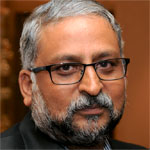
     

    By Sanjeev Kotnala


    The Indian Premier League or Cricket World Cup is a choice or problem for a few brands. You either have money to splurge on both tournaments or you don’t. Those who have money either have a campaign to run or they don’t. And brands with money and campaign, it is only the rate and ROI issue. ROI can never be guaranteed and remains a gamble. So, if you have the money and a campaign and need to advertise during these times you may want need to look at it differently.


    World Cup 2015 is unpredictable. Not for which team would win but for marketers, brands and the media. Success here depends on audience interest, viewership, viewer’s empathy and apathy towards the team. Oh yes, the die-hard will watch anything, but the deciders are the real consumers; the fringe audience that makes the numbers advertiser look at. Match timings are big spoiler for them. We can expect non-India matches to be completely blanketed. Unfortunately, such matches form a large percentage of the tournament. The main sponsor get these ineffective buys as a package helping them show lower ER.  Non-sponsor brands try avoiding them but are served as no-option as channel has to square off the investment.

    IF (a capital, bold IF) India plays well in the 1st final (India Vs. Pak) it could change the whole game. We as a nation are currently feeling low entering WC15 after a series of losses. Cricket is suffering from lack of empathy and viewers apathy.


    On these qualitative counts itself IPL outscores WC-15 with a high percentage of your real TG hooked on to every match.


    Srini or No-Srini, 12 or 8 teams, ball-tampering or fixed matches nothing changes the ground rule; IPL is a festival, a mela, a tamasha we all enjoy with a spicy tadka of regionalisation. IPL demands less of your time, give you much to discuss and is much more fun. It is realignment of interest, supports and stars. The audience loves this cut-throat high intensity not giving an inch of attitude. They smile, so can the channel and the advertisers. The patriotic feeling is understated or completely dead and that makes team losing a bit more manageable for the viewer.


    I firmly believe that even a low WC-15 performance by the Indian team will fail to dampen the IPL spirit. Good or near decent show will help IPL. In gambling terms, with IPL you hold the royal run. IPL is always a new beginning. With auctions, there is always a new team under every banner. It has a clearly differentiated taste and flavour.


    On the other hand, the hard focus on TV impact in these tournaments creates blinkers and brands end up underutilising or missing opportunities with other media. Radio and hoarding are good bets. In WC, by the time newspapers share the result of a match, the audience would be watching the next day’s match.  But if you want to add regionalised tadka in IPL making it exciting for your brand, go talk to your print guy and be pleasantly surprised with the ideas they have.


    Sanjeev Kotnala is Head Catalyst at Intradia and believes the best way forward for an organisation is to enhance the potential of  internal teams instead of depending on external resources. He is a management- marketing-media consultant and also conducts specialised workshops in the area of ‘Harvesting and Liberating Ideas’ and Innovation.  To contact email netkot@yahoo.com or tweet at s_kotnala visit www.intradia.in  www.sanjeevkotnala.com. The views expressed here are his own.
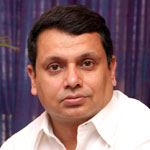


  • Ten Sports lands exclusive broadcast rights for MotoGPâ„¢

    By A Correspondent


    Ten Sports Network has secured exclusive rights for MotoGP™, the premier World Championship for motorcycle road racing. This is for the first time that MotoGP will be broadcast exclusively by a broadcaster in the Indian sub-continent.


    This new deal between Taj TV and MotoGP™ rights holders Dorna Sports will run for a period of five seasons starting 2015. As a part of this deal, Ten Sports will broadcast all MotoGP, Moto2™ & Moto3™ races and Qualifying practices live on their network of six channels. Ten Sports will also be offering multi-screen feeds on its digital platforms and will develop a dedicated MotoGP section on www.tensports.com.


    Rajesh Sethi
    Manel Arroyo

    Rajesh Sethi, Global CEO of Ten Sports, said: “We are very excited to embark on this new journey with Dorna. We are committed to building this property in India over the next five years and viewers will witness unprecedented MotoGP programming initiatives on Ten Sports Network. Viewers identify MotoGP with the Ten Sports Network as can be seen with the higher MotoGP viewership numbers on Ten Sports viz a viz other networks. We have also been rightsholders for this premium property since 2006 and we are delighted to continue and take this partnership to the next level.”


    Announcing the agreement, Manel Arroyo, Dorna Sports Managing Director commented: “We are thrilled about our exclusive partnership with Taj TV and looking forward to developing a close relationship with them. India is a key market for MotoGP in the coming years and the World Championship will benefit greatly from the extensive promotion that Taj have committed to provide.”


  • Shailesh Kapoor: Ranking The World Cups: 1983-2011

    By Shailesh Kapoor


    We are a day away from the 11th edition of the Cricket World Cup. The 1983 World Cup was the absolute initiation into cricket for me, at the age of eight. The eight World Cups from 1983-2011 have left lasting memories behind them, driven by two strong factors – India’s performance and the media experience they created.


    Here’s my ranking of these eight World Cups, from the worst to the best.


    8. The Cup That Ended Before It Started: 2007

    I still thank my stars that I decided against a West Indies vacation for the Super Sixes at the eleventh hour. I suspect if there was a list of the worst World Cups, 2007 will top it even 100 years from now. It had nothing going for it. And as it turned out, late night match timings, no crowds and poor television viewing experience were only the smaller problems. Both India and Pakistan were eliminated in an ill-thought-out qualification format. When a coach’s (Bob Woolmer) mysterious death is the lasting image of a big tournament, you know it didn’t go as planned at so many levels.


    7. The Something-Was-Missing Cup: 1999

    England is a good venue for a World Cup, except that rain can spoil the fun far too often. 1999 was the introduction of the Super Sixes format, which died a death after the 2007 fiasco, with ICC going back to the safe 1996 format. After 1983, this was the World Cup I was least engaged with. Our team was not exactly consistent (that loss to Zimbabwe seems bizarre after all these years too) and I was settling into my first job. The classic tied semi-final was followed up by a damp squib finale, which started Australia’s World Cup dominance. The famous story about Tendulkar flying to Mumbai (for his dad’s funeral) and back, and scoring that century, is going to endure. Not much else from 1999 may stand the test of time.


    6. The Small-Nations-Can-Win-Big Cup:1996

    The sub-continent hosted this World Cup, which I have to admit, looked rather tacky on television, much in contrast to 2011 which had superlative production. The knock-out format (where only seven games effectively decide who wins the title) was introduced here, and then brought back in 2011. It’s a format so evidently lacking in logic. But commercial interests, especially after 2007, have ensured it stays. 1996 was Sri Lanka’s World Cup in every respect. It changed their cricket forever. The India-Pakistan game at Bangalore was entertainment of the highest order, but it was followed by our semi-final defeat at Eden Gardens was perhaps the most torturous cricket game I have ever seen. If only we had batted first after winning the toss…


    5. The How-The-Hell-Did-We-Win Cup: 1983

    To be honest, I have little memories from this World Cup, except listening to the commentary of the finals while on vacation in Srinagar, and then reading the papers the next morning. 1983 was also the last World Cup that had limited media coverage in India, including a broadcaster strike that meant Kapil Dev’s 1983 not out at has no video footage available.


    4. The Long-Forgotten Cup: 1987

    Very little has stayed from the 1987 event. It was the last white-clothing World Cup, and the footage looks un-broadcast-able on TV by today’s standards. I’m not even sure if anyone has the rights to it. There were some gems, like that absolutely superlative batting performance by Zimbabwe’s Dave Houghton in an early match. But it was Graham Gooch sweeping India out of the cup that would remain the lasting memory for me. The 1987 edition ranks high on my list because it was my first World Cup as a proper cricket fan. It was also my second experience of the sheer devastation a fan can feel, the first being the Australasia final (the Chetan Sharma match) a year before that.


    3. The Cup-That-Got-It-All-Right: 1992

    I have to confess I absolutely loved the 1992 World Cup, and if India had done any better, it could have been right at the top of my list. The format was to kill for. Everyone plays everyone and the top four go through. You can’t beat that on fairness and excitement. It was the first cricketing event I watched on satellite television, with world-class commentary, nothing short of a luxurious experience back then. It was also the Cup that had the best jerseys. Take that laughable rain rule out (really, what did they smoke up while deciding on it?), and you have what a World Cup should be. That Pakistan won it, after being on the verge of elimination, in many ways sums up the spirit for the 1992 event.


    2. The So-Near-Yet-So-Far Cup: 2003

    Memories of that excruciating final at Wanderers still haunt many of us. But the 2003 World Cup was a lot more than that for India. After a slow start that included decimation by Australia and a scrape-through vs. Holland, India got into its own and showed a streak of dominance that one had not seen since the 1985 World Series. I remember the loss in the finalleading to a mixed sense of dejection and pride, the latter for having played the way our team did, under Ganguly, over the previous three weeks. This was also the MandiraBedi World Cup, for the record.


    1. The Yes-We-Can Cup: 2011

    The 28-year-long wait had to be end at some stage. The three matches – Australia at Ahmedabad, Pakistan at Mohali and Sri Lanka at Mumbai – that led to the title were individual celebrations in themselves. I was there at the finals at Mumbai. After that high, watching any other limited-overs cricket in a stadium seemed pointless. There’s so much to remember from 2011, yet so little needs to be said, because it’s all fresh in everyone’s memory, like it happened last week. Hope the wait doesn’t last another 28 years.


    I’m off for a cricket vacation to Australia and this column will take a two-week break, to be back on March 6.


  • DDB MudraMax-OOH crafts outdoor campaign for South African Tourism

    By A Correspondent


    In its continued efforts to attract more and more Indian travelers to South Africa, DDB MudraMax-OOH and South African Tourism have unveiled a new outdoor advertising campaign, #MeetSouthAfrica, by showcasing a diversity of experiences available in South Africa.


    The campaign outspreads to metro and tier-II cities in India such as Mumbai, Kolkata, Ahmedabad, Delhi, Noida, Gurgaon, Jaipur, Chandigarh and Bengaluru among others.


    In an endeavour to resonate with the Indian travellers, the striking creative executions of the #MeetSouthAfrica campaign has been customized with the use of impactful one-liners in local languages that are engaging and appealing.


    The visuals integrate the underlying essence of the campaign through impactful illustrations on adventure, scenic beauty, wildlife and luxury experiences on offer in the country. The campaign includes media mix comprising of large format hoardings, bus shelters and ambient media such as malls in strategic locations to further enhance consumer reach.

    Commenting on the campaign, Hanneli Slabber, Country Manager, South African Tourism, said, “Outdoor advertising is one of the strongest mediums of gaining widespread access to the nation’s holiday seekers. This year, we have customized our outdoor campaign to make it more local by highlighting South Africa’s unique experiences in local languages in a contextual manner. This idea came from the insight that we gathered during our interactions with Indian travellers, where after their visit to South Africa, they could best express certain emotions of experiences such as pleasure, eternity and beauty only in their mother tongue. Taking cue from this, we thought of bringing alive emotions that resonate with our customers at a regional level to draw a stronger connect with the potential travellers. We have also added some innovations in our outdoor creative work to demonstrate South Africa’s distinctive, spectacular and high quality tourism products and experiences that are amongst the world’s finest.’


    Mandeep Malhotra, President, DDB-MudraMax quoted, “South African tourism as always excites and induces prospective holiday goer’s with inciting creative on large format medium. The information dissemination with the creative are amazing and full of excitement. Handpicked sites and creative thought through for the locations differentiate it with other travel campaigns. We at DDB MudraMax love working on creating a lot of buzz around the campaign.”


  • TR:OUTH 2015 uncovers various facets of youth behaviour

    By A Correspondent


    Youth is India’s firepower and they are making sure everyone stands up and takes notice. They exercise a powerful influence on our culture, are not afraid to take a stand, crave social interaction, continue to love selfies, are tech savvy, aspire for self-improvement. These are some of the patterns of youth behaviour uncovered by TR:OUTH 2015, Trends for Indian Youth study by Genesis Burson-Marsteller, which forecasts the trends our youngsters are likely to follow in 2015.


    TR:OUTH is a result of a benchmark study first conducted in 2013 when it revealed trends ranging from fashion, media consumption habits, music, branding and more. This year’s forecast is a result of extensive pan-India brainstorming sessions that were conducted with a cross section of participants from millennial and Gen X age groups across different industry sectors. The consultancy used a specially adapted version of the Consumer Trend Canvas with the permission of trendwatching.com and in collaboration with Elaine Cameron, Head of Burson-Marsteller’s Future Perspective Trend Analysis Group.


    Deepshikha Dharmaraj, Chief Marketing and Growth Officer, Genesis Burson-Marsteller said, “The TR:OUTH: Trends for Indian Youth study has become representative of the constant changes that society and the Indian youth in particular, is undergoing. Times are changing at a pace faster than brands can keep up with. And this rapid change is being brought about by the exuberance that the youth of the current generation demonstrates. They no longer limit themselves to impressive and lofty platitudes, they act in a manner that leaves a deep impression among the public at large. Through our collaboration with Elaine, we have identified trends in the youth demographic to help brands target their products and services better.”


    Elaine Cameron has provided the guidance and methodology to make the brainstorming sessions more structured and the findings more robust. She shared, “TR:OUTH is a truly cross border innovative collaboration as it involved a trendwatching.com consultant based in Austria, me in the UK and the Genesis BM team across India. We adapted the trendwatching Consumer Trends Canvas to provide the team in India with an evidence-based framework for the trends.”


    Providing an overview of the trends, Elaine said, “Expanding global markets, greater connectivity, rich cultural urban environments are making the Indian youth increasingly driven, committed to improving themselves, and impatient about experiencing life. They no longer believe in the static way of life. Instead they have fun, they allow themselves to be surprised, embrace excitement. One key trend though has been that youth have become change champions – brands that give voice to the concerns of the masses will win in the long run.”


    Top 10 TRENDS that reflect the mind-set of the INDIAN YOUTH

    I. STATEMENTAL: Mind set to make a statement; look better and stand higher

    India’s emerging affluent middle class is eager to try the latest and best. Indian youth derive much of their social status through the goods, services and experiences they consume. Indeed, with so many choices available, consuming becomes as much a statement about who you are, as what you have.

    II. NEW-YOUer: Constant need to be a better version of ourselves

    Show us a consumer who doesn’t aspire for self-improvement. The drive to improve oneself can manifest itself in a number of ways, such as the desire for better health, for greater knowledge, and the development of new skills. Brands and products that satisfy these needs will therefore simply appear ‘better’ than those that don’t.

    III. MYOPIUM: Being intoxicated with yourself

    MYOPIUM is each person’s consumption realm, where his/ her preferences and tastes reign. Cater to an individual’s MYOPIUM with brilliantly customized products, by enabling and encouraging personal expression, or by offering protection from harm.

    Our online experience is fueling this: profiles (that make it all about the individual) are ubiquitous, personalisation is rampant and effortless, and the expression of one’s likes, dislikes and everything in-between is easy and constant.

    IV. DESI COOL: Being Indian and buying Indian continues to be cool

    Despite globalisation, despite online connectivity; being desi continues to be cool. Whether driven by a sense of pride, authenticity, convenience and/or eco-concerns, consumers will continue to embrace Indian products, services and knowledge.

    V. CHILLS-UMERS: How do you bring some much-needed fun to your daily life?

    Surprise. Entertainment. Amusement. People relish brands that bring some much-needed fun to the consumer arena. Introducing competitive and participatory games, embracing humor, or celebrating the unexpected makes life – and consumption – less boring and simply more enjoyable.

    VI. NOWians: Indians want it right here, right NOW

    Whether to satisfy their ever-shorter attention spans, their lust for the ‘now’, their craving for real, physical interaction, or to free themselves from the hassle of ownership, Indian youth are moving beyond the fixed or static, and rushing instead to collect as many experiences and stories as possible. That’s why ‘time’, and its many dimensions, should be brands’ next innovation frontier.

    VII. CHANGE CHAMPIONS: With great power, comes great responsibility and therefore, greater involvement

    Younger generation of Indians lead busy, busy lives, yet they are now more involved in driving change. They will not blindly accept the status quo. Instead, empowered by digital technologies and democratised access to information, they’ll collaborate their enthusiasm and knowledge to create new solutions to shared problems. Naturally, therefore, many will be happy to advocate for brands that are socially responsible and produce responsible products and services.

    VIII. CONNECTIFY: The eternal desire for connection, and the many (new) ways it can be satisfied

    Indians are social beings, and will forever enjoy coming together, making connections, collaborating and sharing experiences. The good news? There have never been more opportunities to cater to, benefit from or facilitate this basic desire. All together now…

    IX. OMNI-TECH: The ever-greater pervasiveness of technology

    We all love staying connected to technology, round the clock. Well, technology will become ubiquitous, universal and impossible to live without. Why? Quite simply because Indian youth will continue to crave (and build their lives around) the unparalleled ‘superpowers’ that technology offers them: perfect and instant information, absolute transparency, limitless choice and more.

    X. INFO-BURST: Why consumers’ voracious appetite for (even more) information will only grow

    Forget information overload: Indians’ desire for relevant, useful, timely information is insatiable. Youth will continue to lap up products, tools and services that bring them the right information, at the right time, in an understandable, intuitive and actionable way.


  • The MxM Quiz on Brands & the World Cup


    By A Correspondent


    The popularity of the format ensured that several brands were associated with the World Cup. Take this quiz to find out how much you know about brands,sponsorships and the Cricket World Cup.


    1. A sitter to begin with: Complete the popular slogan – ______ Khao, World Cup Jao


    2. Which Indian brand sponsored the 1987 World Cup?


    3. Who was the only non-cricketer to feature in Pepsi’s ‘Nothing Official About It’ campaign during the 1996 World Cup?


    4. Another question on Pepsi – The cola brand is famous for launching a marquee campaign during every World Cup. After the 2007 World Cup, they decided to go with a new creative agency to launch the immensely popular ‘Change The Game’ campaign in 2011. Which start-up agency created the campaign?


    5. Shane Warne was expected to perform very well on the subcontinent  pitches during the 1996 World Cup. However, he blamed his below par performance on ________ Baked Beans not being available in India.


    6. Surprisingly, the Netherlands team had an Indian brand as a jersey sponsor during the 2011 World Cup. Identify the brand?


    7. “______ Marketing” was a term coined by Jerry Welsh of American Express. It became extremely popular after the 1996 World Cup and eventually ICC introduced a clause against it.


    8. Star Sports is currently promoting a movie integration for the India Pakistan match as “Sabse Bada Awaaz, Sabse Bade Match mein”. Identify the movie?


    9. Which brand launched the “Champions of the World” campaign during the 2011 World Cup featuring 6 World Cup winning captains – Kapil Dev, Steve Waugh, Allan Border, Clive Llyod, Imran Khan and  Arjuna Ranatunga?


    10. Which Indian company promised to give every Indian cricketer a luxury villa on winning the 2003 World Cup? They eventually gave the villas inspite of the team losing the final?


    11. Who was the title sponsor of the 1999 World Cup


    Answers

    1. Britannia

    2. Reliance

    3. Dickie Bird

    4. Taproot

    5. Heinz

    6. Amul

    7. Ambush

    8. Shamitabh

    9. Idea Cellular

    10. Sahara

    11. ICC stopped having a title sponsor from the 1999 World Cup. How can there be a cricket quiz without a googly


  • Ranjona Banerji: The nation wants to know when Barack Obama will answer Times Now! No, really!

    By Ranjona Banerji


    Many people have complained to me that if I was being sarcastic about Arnab Goswami and Times Now being the best anchor and channel to watch on the Delhi election results day this week, it did not come through. My sincere apologies. But I reassert that Times Now was the most entertaining channel to watch!


    **


    But here’s a story where you have to partially at least agree with Goswami and Times Now: the assault on Suresh Patel by the police in Madison, Alabama, which has left him paralysed: http://www.washingtonpost.com/news/morning-mix/wp/2015/02/11/alabama-cops-leave-a-grandfather-partially-paralyzed-after-frisk-goes-awry/


    I say partially because while the story is horrific and the actions of the police smack of both brutality and racism, it was ridiculous for Goswami to sit in his Mumbai studio and demand an answer from US president Barack Obama. Certainly, you can castigate the US system, you can take on racism but it is silly to use a hashtag like ObamaStopPreaching to highlight Sureshbhai Patel’s plight.


    The fact that Obama spoke of the need for secularism in India did not mean that he said that there is no racism in the US. Quite the contrary. He mentioned racism in America and his own experiences in his speech in India as well. But in a jingoistic way, it is heartening to see an Indian TV anchor, watched by 1.2 billion people (Goswami hinted at that on Thursdaynight though I have yet to see it in a Times Now ad) ask questions of the US president with no hope of ever getting an answer.


    Meanwhile, NewsX has been claiming since Friday morning that some part of this story was “first on NewsX”.


    Wait till Goswami hears about that, all you paparazzi channels!


    **


    NewsX however went hammer and tongs at activist Teesta Setalvad on Thursday night, after a Gujarat high court denied her anticipatory bail application in a case about possible fraud in money collected for a museum to commemorate victims of the 2002 Gujarat riots. The anchor Rahul Shivshankar made it clear to some hapless guests that he did not want to discuss the legal aspects of the case but the hypocrisy of Setalvad.


    Just to make life interesting, the Supreme Court has since stayed the arrest warrant. Obviously the apex court is more interested in discussing the legal aspects of the case than Shivshankar?


    This comment from The Economic Times puts some of the questions for and against Setalvad in perspective: http://blogs.economictimes.indiatimes.com/et-editorials/stop-harassment-of-human-rights-activist-teesta-setalvad/


    **


    Mohammed Fahmy and Baher Mohammed are hopefully to be released on bail soon from an Egyptian jail. The two Al-Jazeera journalists were arrested on suspicion of being Muslim Brotherhood sympathisers. A retrial has been ordered in their case. Earlier, Australian journalist Peter Grieste also one of the three Al Jazeera journalists, had been allowed to go home as well.


    http://www.aljazeera.com/news/middleeast/2015/02/egypt-court-releases-al-jazeera-journalists-bail-freeajstaff-150212114228426.html


    **


    The US is mourning the deaths of two senior journalists. Bob Simon, celebrated foreign reporter and war correspondent with CBS, died in a car accident in New York on Wednesdaynight. Simon had reported on wars since Vietnam. He was 73. http://www.cbsnews.com/news/cbs-news-correspondent-bob-simon-1941-2015/


    The New York Times is mourning the loss of David Carr, 58, who wrote a very popular media column. Carr collapsed in the newspaper’s Manhattan newsroom on Thursday.

    http://www.nytimes.com/2015/02/13/business/media/david-carr-media-equation-columnist-for-the-times-is-dead-at-58.html?_r=0