Category: MEDIA

  • Have you sent your nominations for the Mediaah! Dubious Achievement Awards 2014?

    You read about this last week. The popular (and infamous) Mediaah! Dubious Achievement awards. Will be presented at 11am India Time on MxMIndia.com.


    There are awards and awards and awards. But this one is special. It’s no-holds-barred. Because only MxMIndia (and Mediaah!) have the you-know-what to deliver these awards.


    Holy cows, better watch out.


    The Mediaah! Dubious Achievement awards are, as the name suggests, for achievements that are dubious. It’s a fun feature that MxMIndia carries annually and the objective is to have some fun at the expense of others and ourselves.


    Let’s take a few possibilities:


    The Congress under Rahul Gandhi Award for Loyalists Dumping the Party Award

    To CNN-IBN business executives and editors for exiting from the channel the moment the full acquisition by Mukesh Ambani’s Reliance Industries


    The Lagaan Award for Extra-Long Ad Films Award

    To Pepsi-Kurkure Gharwali Diwali Ad which went on and on and on even as it was fun watching


    The Ajay Devgn Award for ‘Aata Maazi Satakli’

    To Rajdeep Sardesai for giving one ‘kaan ke neechey’ to the NRI audience  at Madison Square Garden in New York City


    The Hum Aapke Hain Koun Award

    To Delhi journalists who were the shown the finger by the new NDA government as we now have a PM who doesn’t taken then on overseas visits and prefers to bypass the very journos who propelled the BJP to winning position


    Get the drift? If you want to send in your entries for these, inbox them to pradyumanm@mxmindia.com. Confidentiality assured. We will protect your identity if you don’t want it disclosed.


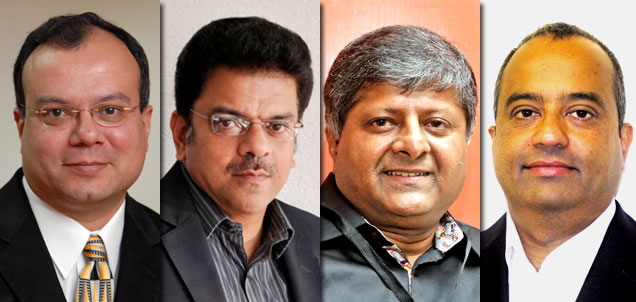
  • Shashi Sinha, CVL Srinivas, Pratap Bose & Rohit Ohri present Outlook for 2015


    Interviews by Shruti Pushkarna


    2015 is acid test year for our industry:

    Pratap Bose, President, The Advertising Club

    I don’t want to sound pessimistic but honestly I have spoken to a lot of people in the industry. It’s a view that everyone’s taking which is the whole thing of being very cautious. There is optimism but there’s cautious optimism. And therefore I think, 2015 is really the acid test year, both for the BJP as well as for our business. The promise is large, the delivery is yet to happen. The strain on the government to actually do something concrete, pivotal around strategy, around implementing, to make things happen is huge. People say it will happen, give us time… I understand that. So there’s a lot of optimism that things might happen but unfortunately we haven’t seen the fruits of that yet. I don’t want to sound like a pessimist but I think we have to take the wait and watch approach. Even if you see the Congress men talk about Narendra Modi right now, they are saying that we’ve heard a lot, he’s made the right impression, the mood is right, but we need to see real time action. To summarise what I said, 2015 is the acid test year for our industry. There’s a lot of hope but I’m still pessimistic about it because it needs to transpire into concrete decisions that grow the economy and move the economy forward. That’s not been seen yet. I tread very carefully.


    Digital is finally kind-of becoming a strong reality:

    Rohit Ohri, ‎Executive Chairman, Dentsu India & CEO, Dentsu Asia Pacific (South)

    I think 2015 will be a promising year for everybody because I think a lot of the work that the new government has started, should show some results. And we are hoping that the positive sentiment will carry through to 2015 and 2016 as well. The other thing is, from the entire advertising and media industry I think digital is finally kind-of becoming a strong reality. It’s no longer just good to do, I think brands are realising that it’s an interesting part of their plans. And I think we are going to see a big change in the next two years in how brands actually communicate online. And what we have seen in 2014 was this big thing about brands creating content, which they did in a mini movie kind of format releasing online. I think that’s something we’ll see a lot more of going forward in 2015. All in all, from a creative perspective, and from a media spends perspective, I think the industry is looking up.


    Government has great plans but they have to push it through:

    Shashi Sinha, CEO, IPG Mediabrands

    I’m hoping and praying that the next year is good. I am hoping that Budget works out well for the government, whatever they decide, they implement because to me, that’s important. This government has great plans but they have to push it through. As we speak, currently GST is held up… so if they pull off a great Budget, life will be good. To me that’s vital. And not because it’s will be a great Budget but that will show their ability to push through and resolve things. But if they still get caught up in this religious thing that is happening, then there’s trouble. So we hope the government succeeds.


    In terms of adspend growth, it’ll be pretty much similar to this year:

    CVL Srinivas, CEO South Asia, GroupM

    We see 2015 to be a good year. On an overall basis, I think in terms of adspend growth, it’ll be pretty much similar to this year. But one must remember that this was an election year so we had a bit of a bump up to growth because of elections. Next year, despite it not being an election year, we see the growth rates to be more or less similar. We see digital growing upwards to 35 per cent like it has been over the past two or three years. We also think television is going to continue its strong growth in healthy double digits and so will the regional print dailies. So, all in all, it looks like an interesting year. We have the ICC World Cup coming up next year so that will lead to spends at some level.


  • Letter from MxMIndia: A Year of Consolidation

    So how was 2014 for us at MxMIndia?


    The previous year was a horrible one for us. Annus Horribilis, we called it.


    Twenty-fifteen was pretty good in comparison. Even if the bucks hadn’t turned big, the mood was upbeat. We hate to admit it, but the ‘achche din aane waale hain’ slogan did change the mood of the nation.


    Many may not have forgiven those responsible for Gujarat 2002, but then there was Delhi 1984 and several other communal and civil unrests initiated by various political and community leaders. So even as it’s not right to condone the perpetrators of any riot, the blessed souls from across the spectrum are all the same.  It was the cry for rooting out corruption from the Narendra Modi and the BJP camp that caught the imagination of the nation.


    The news media was looking up. Their coffers -for many of them, if not all – were being filled legitimately and under the table. In my interaction with some politicians and newspaper biggies, I learnt how it was done. And how it was impossible to nail a publication. Unless and until one does something silly like this former chief minister…


    Twenty-fourteen saw the best and worst in the advertising business. Self-regulator ASCI has gotten hyperactive, Goafest, our version of the Cannes Lions, was saved from a no-show. An industry  association like the India chapter of the International Advertising Association was super-active. The Ad Club expanded its Abby Awards. And there was the birth of an all-new awards show  in the form of Kyoorius.


    There was some experimentation on the television scene even as the GECs went on their great ratings run. Zindagi, a channel with re-runs of Pakistani serials, may not have attracted GVTs in large numbers, but it was a winner idea. Sports television grew considerably with Star India putting its might behind the various leagues. Epic, the independent channel funded by Mukesh Ambani and Anand Mahindra, finally took off. Pal, the second Hindi GEC, didn’t take off very well despite the blitz.


    As for print, it isn’t dying. In fact it’s been proliferating. Not just in the regions (or the ‘unmetros’) and in Hindi, but in English too.  Radio is still waiting for its Phase III and news, but smart content strategy like BIG FM did with its retro-fication of some stations worked wonders.


    And what do we say for digital. It’s here, there and everywhere. A quarter of our billion-plus populace is connected with more than five million smartphones being added every month. Yet, digital is not going to the #1 media even in 2017, as per one study. And we don’t know what’s going to happen later.


    The big attraction in the media is integration. Along with BTL and social media, there is much focus on orchestrating an integrated campaign for maximum. Quite like the way Prime Minister Modi did in the run-up to the elections.


    The downer of the year has been the Indian Readers hip Survey. It’s sad to see otherwise outstanding professionals unable to come up with a measurement system that will be mutually acceptable. The new measurement regime under BARC is set to launch in April 2015, and one hopes that the television ecosystem handles it more maturely.


    As for MxM, we are happy that we are beign counted for our content. Regrettably, not as much for our business and sales. But that, we hope, will happen.


    We are looking forward to Twenty-fifteen. Warmest wishes for the year ahead.


    Pradyuman Maheshwari

    Editor-in-Chief and CEO

    MxMIndia


  • The Mediaah! Dubious Achievement & Yearend Awards 2014


    So here we are: the MxMIndia Dubious Achievement and Yearend Awards. Remember, this is a fun feature that MxMIndia carries annually and the objective is to enjoy at the expense of others and ourselves.


    Here we are:

    The Congress under Rahul Gandhi Award for Loyalists Dumping the Party Award

    To CNN-IBN business executives and editors for exiting from the channel the moment the full acquisition by Mukesh Ambani’s Reliance Industries


    The Lagaan Award for Extra-Long Ad Films Award

    To Pepsi-Kurkure Gharwali Diwali Ad which went on and on and on and on even as it was fun watching it


    The Cheerleader Pompom Award:

    To be shared by Barkha Dutt and Rahul Kanwal, for being most faithful to Narendra Modi.


    The How Cold is the Water Award:

    To The Week That Wasn’t for gently getting its collective toes wet in tentative attempts to make fun of the Prime Minister and the BJP.


    The Incredible Hulk Emeritus Award:

    To Arnab Goswami of Times Now for having the loudest voice in television – again!


    The Last Minute Most Insensitive Headline Award:

    To the Economic Times for this: “Damn! Malaysia Again. 162 Vanish. AirAsia this time.”

    (Wrong on most counts as well)


    The Bravery to the Reader Award:

    To Caravan for writing the longest stories in journalism filled with excruciatingly small irrelevant details.


    The No More Bosom Buddies Award:

    To The Times of India’s Twitter account for offending film star Deepika Padukone, women, men, people generally all over the world.


    The Extraneous Noise That I Have to Suffer Award:

    To Bachi Karkaria for dismissing social media with two cruel strikes and yet listening to what it had to say about disinviting Tarun Tejpal from the Times Literary Carnival.


    The I Wish I Was A Writer Award:

    To Priya Gupta of the Times Supplements and Medianet for writing the worst article in defence of the Times of India after the fracas with Deepika Padukone’s cleavage. Also, the How to Upset Purists, Feminists, Traditionalists, Analysts all in one Go Award.


    Also: The Archaeological Survey of India Award for Reaching New Depths In Journalism Award

    To Priya Gupta of Bombay/etc Times for her masterpiece (with pointed graphics) on Deepika Padukone and her cleavage appeal


    The Panvati Position Award

    To the Editor-in-Chief of the India Today group. MJ Akbar was hardly there, the offer was withdrawn to Siddharth Varadarajan at the 11th hour and Shekhar Gupta joined with much fanfare only to feel humbled. Hence the Panvati (bad luck in Bambaiyya) Position Award.


    The Ajay Devgn Award for ‘Aata Maazi Satakli’

    To Rajdeep Sardesai for giving one ‘kaan ke neechey’ to the NRI audience at Madison Square Garden in New York City


    The Hum Aapke Hain Koun Award

    To Delhi journalists who were the shown the finger by the new NDA government as we now have a PM who doesn’t taken then on overseas visits and prefers to bypass the very journos who propelled the BJP to winning position


    The Laut ke Buddhu Ghar Ko Aaya Award

    To Shekhar Gupta who switched from NDTV 24×7 to HeadlinesToday and now back at comfortable territory at NDTV 24×7


    The Bagpiper Award for Doing the Daaru while Discussing what India Wants to Know

    To Vinod Mehta for not shying from drinking through the extra-long News TV discussions. After all Khoob Jamegi News Jab Baithkar Peeyenge…


    The Most Misused Word in TV Debates Award:

    To “Should” for featuring in everyone: should people stand up, should people sit down but never, “Should TV anchors just shut up.”


    The Short Term Memory Loss Award:

    To election pollsters for getting it wrong and claiming they got it right.


    The 9X Award for a Non-Starter Channel

    To Sony’s new GEC, Pal. Ratings are sad, this channel aspired to be a Zee killer. Alas, it virtually killed itself doing so.


    The Most Promising Debut Awards

    To Rajesh Kejriwal and his Kyoorius Awards. Showed the world that even boring award shows can be made be snazzy


    The Old Is Gold Award

    To Big FM to turn some of its stations to retro and attain ratings and rankings


    The Award for organising several Award Shows

    To the Exchange4media group for organising innumerable awards and events through the year.


    The Aayega Aanewaala Award

    To BARC, the audience measurement body for broadcasters. One expected it to happen by end-2014, but it now appears it will happen only by April 2015


    The Milkha Singh Award for Promoting New Sports

    To Uday Shankar and Star India for bringing sports out of the closet and converting them to super-leagues. After Kabaddi, kho-kho, lagori (7 tiles), gilli-danda?


    The Down in the Dumps Award

    To the Indian Readership Survey. The industry bodies may have agreed to not dispute but that didn’t mean it would back it. Only one round is out of the 2013 edition, and life goes on. So do we need a readership survey, a research council….?


    Contributed by Ranjona Banerji and Pradyuman Maheshwari and various others


  • Veteran journalist BG Verghese passes away

    By A Correspondent


    BG Verghese, veteran journalist and former editor of The Times of India, Hindustan Times and The Indian Express passed away in New Delhi on Tuesday.

     

    Mr Verghese (June 21, 1927 – December 30, 2014) was with the Centre for Policy Research since 1986. He started his career in journalism with the Times of India and was later Editor of the Hindustan Times (1969-75) and Indian Express (1982-86).


    He was Information Adviser to the Prime Minister (1966-69), a Gandhi Peace Foundation Fellow for some years after the Emergency and Information Consultant to the Defence Minister for a short period during 2001.


    He was a recipient of the Magsaysay Award in 1975, Assam’s Sankaradeva Award for 2005, and the Upendra Nath Brahma Soldier of Humanity Award in July 2013. Verghese has served on a number of official and unofficial boards and committees and continues to be associated with a number of NGOs in the fields of media, education, the environment and community relations. He is chairman of the Commonwealth Human Rights Initiative, Delhi, and a distinguished fellow of the Administrative Staff College of India, Hyderabad.


    Mr Verghese was a member of the Kargil Review Committee and co-author of the Kargil Review Committee Report tabled in Parliament chronicling the sequence of events leading up to the India-Pakistan confrontation and recommendations for the future. He was also a member of the Editors Guild of India Fact Finding Mission to Gujarat in April 2002.


    With a keen and enduring interest in developmental reporting and the social transformation it can help bring about, Verghese has authored several books including the seminal Design For Tomorrow early in his career following an extensive tour of the country and its infrastructure projects, Waters of Hope, Harnessing the Eastern Himalayan Rivers, Winning the Future, India’s Northeast Resurgent, and Reorienting India. Rage, Reconciliation and Security (Penguin 2008) deals with managing India’s diversities. His personal memoir and “worm’s eye” view of India, First Draft: Witness to the Making of Modern India, was released by Tranquebar in October 2010. Post Haste – Quintessential India, (Tranquebar), followed in April 2014 with an official launch in May, chronicling the diversity and history of India as portrayed through its postage stamps and ‘dak’ runners who still traverse jungles and remote Himalayan valleys to get the mail through. Reviews and launch comments in Jansatta, Indian Express, and The Hindu.


    Schooled at Doon School, Dehra Dun, India, Mr Verghese went on to read Economics at St Stephen’s College, Delhi University and Trinity College, Cambridge. Verghese was born in 1927. He resided in New Delhi.


    Mr Verghese passed away on December 30 having lived a life “without regrets”, fearlessly and tirelessly championing the cause of the underprivileged and less fortunate in his crusade for justice, social equality and freedom..


    Information source: http://www.bgverghese.com


  • Retirement not to affect popularity, Brand Mahendra Singh Dhoni is not over, say experts

    By Pritha Mitra Dasgupta, Ratna Bhushan & Ravi Teja Sharma


    Indian cricket captain Mahendra Singh Dhoni on Tuesday announced his retirement from Test cricket bang in the middle of the Australia tour, catching many by surprise and fuelling speculation whether this is the beginning of the end of brand Dhoni.


    “It’s clearly a succession plan in the making, so it will definitely impact the brand value of Dhoni in the short term,” says Indranil Das Blah, chief operating officer of sports management company, Kwan.


    But he was quick to attach a caveat. “If India wins the World Cup next year, Dhoni will be bigger than ever. If not, we will begin to see the end of brand Dhoni, as we are certain that others like Kohli will rise.”


    Santosh Desai, CEO of Future Brands, termed the Indian captain’s decision as the “evening of his career and his brand endorsements”, but certainly not the end. “Is this step one of his game plans?” asks Madhukar Kamath, group CEO and MD of Mudra. “It was becoming evident that Dhoni will pull out of Tests and from other formats after the World Cup. Hence brand Dhoni will not get affected till after the WC.”


    Nandini Dias, chief executive officer of Lodestar Media, says that Dhoni has been the most successful captain for India and is currently the costliest sports endorser. “But sports icons quickly lose sheen when they stop playing. Since Dhoni will continue to play in the other two forms of cricket, which are more popular than Test cricket, it will not affect his endorsement or popularity yet.”


    Dhoni has been one of the top brands in India over the past few years, endorsing close to 20 brands such as Pepsi, Reebok, Aircel, Gulf Oil, Star Sports, Reebok Amrapali Developers and many more. He reportedly charges between Rs 10 and Rs 12 crore for a brand, which is way more than the next best Virat Kohli who charges around Rs 6-7 crore for a brand. Dhoni is also known to have done a few revenue share deals.


    Anupam Vasudev, chief marketing officer at Aircel, says their brand endorsement deal with Dhoni ended in October-November 2014 and they are still talking to him on renewing it. A PepsiCo India spokesperson said the company will continue its association with Dhoni. “We wish him all the best for his continuing leadership in the T20 and one-day formats.”


    Dhoni’s decision to focus on the shorter versions of the game will extend the longevity of his brand, says Abraham Koshy, professor of marketing at IIM-A. The dilemma for advertisers in India is that there are only two big names left in cricket at the moment – Dhoni and Kohli. There was a time – and not too long ago – when marketers were spoilt for choice with Sachin Tendulkar, Sourav Ganguly, Rahul Dravid, Anil Kumble, Virender Sehwag, and even Harbhajan Singh, Gautam Gambhir and Yuvraj Singh to pick from.


    Source:The Economic Times

    Copyright © 2014, Bennett, Coleman & Co. Ltd. All Rights Reserved

    Licensed to republish


  • Jwalant Swaroop joins Sakal as CEO

    By A Correspondent


    Veteran industryperson Jwalant Swaroop has joined the Sakal Media Group as CEO. He will take complete charge of the group’s print and digital media businesses.


    The Pune-based Sakal Media Group has a presence over nine ‘units’ across Maharashtra along with a Marathi and English daily in Goa. Other than the eponymous flagship Marathi daily, the group also publishes a slew of Marathi magazines, English daily Sakal Times and a daily Marathi tabloid-sized newspaper exclusively on agriculture called Agrowon. While all its publications have digital editions, the Marathi esakal.com is said to be the largest Marathi news website. Sakal is the #2 Marathi daily as per the Indian Readership Survey.


    Mr Swaroop is seasoned in the media domain having spent two decades in Lokmat (which is the #1 Marathi daily). He was COO at Lokmat from June 2011 to July 2012 and had joined the Marathi news group in August 1992 after stints in an ad agency and a publication (1995-92).


    Since leaving Lokmat, Mr Swaroop set up Oshoyana Consultants in August 2012 and Happiness Unlimited as recently as October 2014.


    Speaking to MxMIndia, Mr Swaroop said he was looking forward to leading the Sakal Media Group to greater heights. Interestingly, while at Lokmat, he would fight the Pune-based group fiercely. On Oshoyana and Happiness Unlimited, Mr Swaroop said both operations are being run by professionals now.


    While the print and digital business will be looked at by Mr Swaroop, he clarified that he will not oversee the television operations of the group. The social development activities run under the aegis of the Delivering Change Foundation that the group has promoted will be run independently of the Sakal Media Group, it is learnt.


  • DD set to combat GECS with big-bang shows

    By Vasudha Venugopal


    Watch out private television broadcasters, in 2015 Doordarshan is entering the soap war.


    DD, the host of shows such as Buniyaad, Hum Log and Nukkad in prereforms India, had long lost the ratings and advertising game for serialised TV dramas to private channels.


    But under Modi Sarkar, it is firming up plans to commission and broadcast quality serials. And the process has begun in earnest with a recent meeting chaired by Arun Jaitley, who, apart from heading the finance ministry, also holds the information & broadcasting portfolio.


    The meeting presided over by Jaitley also had I&B junior minister Raghavendra Rathore, senior Doordarshan officials and senior executives of TV production houses in attendance. Among production companies represented in the meeting were Balaji Telefilms and Hats Off productions, outfits that have produced some of the longest running soaps on private channels.


    More such meetings are planned over the next few weeks, EThas learnt. Officials at the broadcaster hope new shows and a new look for DD’s entertainment section will be in place early 2015.


    Officials familiar with DD’s new plans spoke on the condition they not be identified.


    TV production executives are learnt to have assured Mr Jaitley that they will soon send pilot shows to DD. And I&B ministry and DD are learnt to have assured executives that complicated bureaucratic procedures DD is typically associated with will no longer apply.


    Crucially, officials said, the ministry and DD told production houses that the sarkari broadcaster will work on an “incentive model” that will reward shows that do well. It is also learnt that DD has accepted that its revenue sharing model will need to be changed to make doing business with the public broadcaster more profitable for producers. DD, it was said by officials, will be revising its guidelines and will seek producers’ inputs before issuing new rules.


    “We want to revive producers’ trust in DD,” one I&B official said. The meeting also discussed issues such as budget constraints, decision-making time, production timelines (producers complain DD offers shorter contracts than private channels) and revenue generation.


    TV show production houses were enthusiastic about DD’s new efforts. “Daily soaps are Indian TV’s main revenue earners. It is encouraging that DD is looking at shows but DD needs to be revived first,” said Sunjoy Waddhwa, CMD, Sphereorigins, which produced the hit show Balika Vadhu. Waddhwa said his team is ready to work with DD. “Udaan on DD was a memorable serial. We are in talks with our writers to come up with something that can reflect the aspirations of a new India.”


    JD Majethia of Hats Off Productions said the mood of the meeting was optimistic and that all production houses were invited to make suggestions on improving DD. “At least top officials are interested in reviving DD’s old glory,” he said but also pointed out what DD needs to do: “Better telecast technology, simple systems and better offers than others.” Another issue flagged during discussions was the Delhi-Mumbai problem — DD’s headquarters and bosses are all in Delhi while the talent hub for TV productions is Mumbai. Private TV channels are Mumbai-headquartered. Uplinking shows for Delhi-based DD is therefore more expensive.


    But I&B ministry and DD officials are optimistic all problems can be solved. Fuddy-duddy DD is serious about becoming the king of TV soaps again.


    Source:The Economic Times

    Copyright © 2015, Bennett, Coleman & Co. Ltd. All Rights Reserved

    Licensed to republish


  • Top 5 Gamechangers on Hindi GECs in 2014


    By Shailesh Kapoor


    2014 will not go down in Indian television’s history as a particularly memorable year. It was the year when the industry waited for its new ratings system, amidst possibilities of a ratings blackout. Some new channels launched, but none of them proved to be gamechangers, though Zindagi’s launch campaign was amongst the best in recent years.


    The sports genre saw more action than most others, with Kabaddi and Soccer leagues in the second half of the year. While they passed muster in their first essay, only time till prove if they have longevity.


    Established shows like Diya Aur Baati Hum, Saathiya, Jodha Akbar and Sasural Simar Ka remained strong in the Hindi GEC space. While high-profile launches like Yudh and Everest (particularly the former) struggled to make an impact, there were some other launches that influenced the category in 2014.


    Here’s a look at the Top 5:

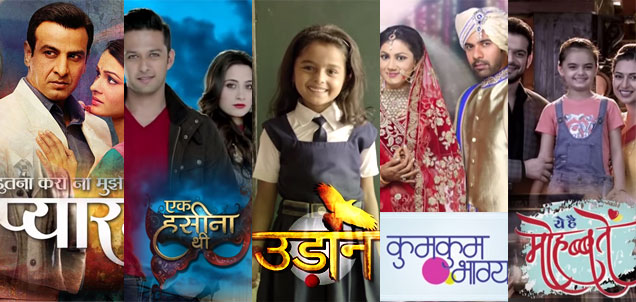
    5. Itna Karo Na Mujhe Pyaar

    In what was an otherwise forgettable year for Sony, the last quarter saw a mini-revival with the launch of Balaji Telefilms’ Itna Ka Karo Mujhe Pyaar. Mounted of familiar principles as Bade Achhe Lagte Hain (mature love story with a strong starcast), the show has emerged as one of the more ‘sticky’ show on primetime television today, albeit on a small audience base. Itna… looks very “written”, but its squeeze-the-emotion-out treatment and excellent use of obscure Bollywood songs as the background score makes it stand out. Let’s see if it emerges as the pivot around which Sony makes a comeback in 2015.


    4. Ek Hasina Thi

    Star Plus moved out of its comfort zone to dwell into the grey zone of a revenge thriller dished out in a soap format. Ek Hasina Thi was loosely based on the hit series ‘Revenge’. Though the show had a short lifespan of about eight months, it managed to catch the young audience’s fancy very early in this period.


    3. Udaan

    Colors revisited its roots, with child protagonist programming centred around a social issue (bonded labour this time), with Udaan. The show built a strong viewer base on the back of the growing popularity of its lead protagonist Chakor, who entered the list of Top 5 popular fiction characters on television within three months of launch. Udaan was also the prime reason why Colors managed to stay ahead of Zee TV in the second half of 2014.


    2. Kumkum Bhagya

    Balaji’s Kumkum Bhagya had a slow start, but gathered momentum once the story of its lead pair (SritiJha and Shabbir Ahluwalia) came into the forefront. This love story has been aided by great chemistry between its leads, aided by some good writing and treatment. Zee TV’s fate in early 2015 will hinge a lot on Kumkum Bhagya’s ability to keep the magic going.


    1. Yeh Hai Mohabbatein

    Launched in December 2013, this 11pm show is a mature inter-caste love story between a single father and a woman who can never become a mother. As it turns out, the potential of Yeh Hai Mohabbatein was considerably underestimated. Within weeks, it had opened up the 11pm slot, rating more than several shows airing in the thick of the primetime. Once Star Plus gave it the additional 7.30pm slot, Yeh Hai Mohabbatein found new wings, sailing over everything else, with combined ratings of the two airings making it the top show on television today. But for Yeh Hai Mohabbatein, Star Plus’ leadership position in 2014 would have been under considerably more threat.


    Another Balaji show (third on this list), Yeh Hai Mohabbatein has emerged as the quintessential all-in-one programme, that has good casting, performances, social messaging, family values, comedy etc., all rolled into it. But at the heart of it is a story of two cultures (Punjabi & Tamil in this case), a subject that would find increasing resonance with viewers in 2015-16, in both cinema and television.


  • Amazon India may start offering music, movie and video streaming services in India

    By Varun Sood


    Amazon India may start offering music, movie and video streaming services later this year besides debuting its Prime subscription service as it looks to expand offerings in the country, key to its global expansion strategy. The Jeff Bezos-led company is currently evaluating the feasibility of such services while building up a content library, which would be a critical element of Amazon Prime.


    The Indian unit of the Seattle-based ecommerce company has tasked Nitesh Kripalani, former executive vice president at Multi Screen Media – which runs Sony Entertainment Channels – to get access to “digital content”, according to a person familiar with the development.


    “We are working towards it… difficult to say by when as Nitesh has just been brought in… but he will soon start talks with content providers,” said a second executive aware of the discussions. “The biggest limitation is the slow Internet speeds. So, we are looking at how we can bridge this. Hopefully, we should have some of these offerings available sometime in the second half of the year.”


    Amazon India’s push into the entertainment space marks an important step in the fiercely competitive ecommerce space where participants are looking to position themselves as a central gateway for customers – from everyday purchases such as grocery and diapers to music, books and movies.


    The company is yet to appoint an executive who will roll out Prime in India, but it has started strengthening its logistics and shipping team and is expected to more than double this to 14,000 people by July from the current 6,000.


    Bengaluru-based Flipkart last year launched Flipkart First, an annual subscription service, and some industry watchers believe it will not be a surprise if Amazon India launches Prime in 2015. In the US, customers get free two-day shipping and get access to more than 15,000 movies and TV shows.


    Mr Kripalani, who was appointed head of digital content at Amazon India last month, is expected to start negotiations with some of the country’s largest music and movie companies, including Mumbai-based Yash Raj Films and Eros International Media as these production houses hold the rights to thousands of titles.


    Although details remain sketchy, multiple executives said Amazon India is looking to adopt the “streaming” option rather than letting subscribers “download” music and movies. This is unlike the model adopted by Flipkart, which allowed users to download music when it launched digital music store Flyte in February 2012. That shut a year-and-ahalf later after the service failed to find takers.


    An Amazon India spokeswoman said it doesn’t comment on future plans. Nonetheless, some experts urged caution as the country’s e-commerce market remains the smallest among emerging markets and what is being envisaged involves a high level of capital investment.


    “Only a few million of India’s one billion-plus people purchase online and the COD (cash on delivery) issue has made it extremely expensive to execute well,” said Sucharita Mulpuru-Kodali, retail analyst, who follows ecommerce for Forrester Research.


    “India is the smallest e-commerce market of the BRIC (Brazil, Russia, India, China) countries and frankly I’m not sure why Amazon is investing heavily in it… when the company has a number of other issues to contend with,” she said. “I don’t see Indian ecommerce being as significant as Chinese e-commerce anytime soon, and the bet they are making suggests that they think it could be the next China. I’m not sure that is a realistic expectation.” To be sure, Amazon has been unable to gain a foothold in the Chinese market, which is dominated by homegrown companies, hence the importance of the Indian market for the US e-commerce giant.


    Source:The Economic Times

    Copyright © 2015, Bennett, Coleman & Co. Ltd. All Rights Reserved

    Licensed to republish


  • BookMyShow owner Big Tree Entertainment looks to expand into content space

    By Madhav Chanchani


    Big Tree Entertainment, which owns BookMyShow, is looking to expand beyond online movie and events ticketing, offering videos and information on actors and films along with “some snappy content”. It plans to also provide a ticketing platform that organisers of small events can use for a fee.


    “We will now look to grow horizontally. We are just present in the ticket-buying experience in the entertainment life cycle, but there is a discovery side where we can be more relevant to consumers as well,” said Rajesh Balpande, co-founder of Mumbai-based Big Tree. It will look at hiring and acquisitions as it moves into these new segments, Mr Balpande said.


    The expansion comes after BookMyShow has built a dominant market share in the online entertainment-ticketing space.The company claims around 15 million users, with 60 per cent of its traffic and nearly half the transactions coming from mobile internet. It raised Rs 150 crore in June this year, valuing the company at more than Rs 1,000 crore. Investors in the company, include SAIF Partners, Accel Partners and Network18 Media, which is now owned by Reliance Industries.


    For expansion into content, BookMyShow will initially introduce the content service on its website which could be spun out later. It is planning to also launch a recommendation engine based on user history, like an exhibition or event near the movie hall a consumer frequents.


    Market experts believe that this will increase engagement with its existing user base. “The larger theme for mobile first marketplaces is that they are evolving into content, community and commerce integrated plays. BookMyShow has a great commerce leg, they are adding both content and community to create a platform that has higher discovery and stickiness of users,” said Vikram Vaidyanathan, managing director at venture-capital firm Matrix Partners India.


    The do-it-yourself ticketing platform, for events like New Year parties, is a key part of the expansion plan. “We can provide these services for smaller events where organisers don’t need managed services but can set up ticketing, invites and gate entries on their own,” said Balpande. The company plans to charge a 5-7% convenience fees on this service. It is similar to US-based Eventbrite, which was valued over $1 billion earlier this year.


    Source:The Economic Times

    Copyright © 2015, Bennett, Coleman & Co. Ltd. All Rights Reserved

    Licensed to republish


  • Ranjona Banerji: Should editors learn to handle owners, managers & staff?

    By Ranjona Banerji


    Rahul Pandita quits The Hindu as editor of the Op Ed page. And this time, unlike the exits from the venerable and respected newspaper in 2013, it is not because of pressure to do with political leanings and support or lack of for Narendra Modi. Instead, it is to do with real journalism stuff: the interference of owner-editors into the newsroom process. Here’s the letter: http://www.twitlonger.com/show/n_1sjlbdp


    The Kasturi family’s relationship with each other and with the newspaper is on its way to becoming a liability for such a venerable journal and here’s another unfortunate step along the way.


    On reading the letter, you might argue that Pandita should have been made of sterner stuff. That this is what senior journalists have to learn to cope with if they want the top jobs. That the challenges of running a newsroom include handling owners, managers and staff.


    You might and you would be right up to a point.


    Because you could also argue that editors should not have to tolerate constant interference. That editors and senior journalists should be allowed to do their jobs like the professionals they are. That if owners do not want professionals they should not hire them. Because it is this sort of interference that leads to a newspapers or journal losing value in the long run. How many editors and senior journalists do we all know that have turned into management lackeys because they didn’t have the courage to stand up for themselves?


    I am unable to comment on news television here because it appears to march to a very different drummer – in India at the moment at least.


    But in print, the over-interference of the owner/ manager has been disastrous. In the last newsroom I was part of, this was a daily affair and we had not one but two owners often with contradictory needs and demands. We also had an official plant with limited journalistic skills and experience who worked as a spy for one owner. I realised soon after joining that this was the way new journalism would function in India until editors took a stand.


    Many of us quit but I am uncertain how many of us took the sort of stand that Pandita has. Perhaps we felt there was no point. Perhaps we thought about the next job. Perhaps we thought simply about the pressures of making a living. Or perhaps we knew that owners who didn’t value professional skill while we were working there were not that interested in our opinion after we quit.


    If we’re lucky and you believe in symbolism then Pandita’s courage will be the stepping stone for the next year, where journalists will speak up for themselves and what they will and will not do.


    I am making an example of this resignation letter only because it delineates so many problems editors face but often do nothing about. Except fester… or drink it off… or take it out on family and friends. You take the job because you are addicted to challenge and pressure but this is the sort of pressure you can do without.


    **


    For the rest, what will 2015 bring us?


    More of the same I would imagine except that over time, the pro-government media lobby will shrink.


    That we will forget almost everything we did in 2014 and keep repeating it in 2015.


    And this one I am sure of: No more yearenders and forecasts after next week.


    Phew.