AOC India, that designs and manufactures a wide range of LED and LCD displays for global distribution, has created an innovative launch campaign for its smart-phones in India.
AOC India, which is foraying into tablet and smart-phone segment with its wide range of mobile phones/tablets, has initiated the first of its kind campaign on twitter under hashtag #Myaocmobile, where customers will get to choose the date of the launch on the basis of the buzz and comments around the product.
A dedicated micro-site has also been developed for the same, where a live ticker with a countdown and linked to Twitter will highlight when the product will be launched.
Commenting on this, Atul Jasra–Business Head, Mobile Phones & Tablets said, “Through this unique campaign, we are giving an opportunity to the customer to decide on the date of the launch. Since social media has increasing become the go to platform for companies to interact directly with the customers, we decided to use Twitter as part of our engagement drive. We hope to generate lot of excitement and interest regarding AOC’s wide range of smart phones and tablets, which will be yet another quality product with wide range of apps and customer friendly features.”
Following the enthusiastic response to the first edition of ‘CEO’s Got Talent’, FremantleMedia announced the second edition of the event. The contest will be held in New Delhi at the Taj Palace Hotel on Saturday, November 15, 2014, and will feature CEOs from India Inc. who will pit their unique talents against each other.
The first-of-its-kind event was created by FremantleMedia within its ‘Got Talent’ franchise to recognise the creativity and talent of CEOs and providing them with a platform to showcase a side to them that generally doesn’t come into view in their day-to-day business lives.
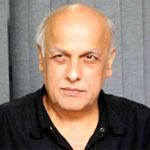
The initiative will see top CEOs from north India competing on a common stage for the coveted CEOs Got Talent trophy. The performances will be judged by three illustrious personalities from the entertainment business industry, Raj Nayak, CEO – Colors, critically acclaimed director Mahesh Bhatt and well known actor Neha Dhupia.
Proceeds from CEO’s Got Talent will go to Genesis Foundation, which provides financial support for life-saving and life-changing medical intervention for critically ill under-privileged children in the areas of cancer, cardiac disorder, post organ failure, thalassemia and extreme deformities.
After witnessing success in season one, dna has unveiled a fresh list of new Celebrity Columnists.The season two celebrity line-up comprises an eclectic group ranging from Bollywood to health & nutrition, and stand-up comics to personality consultants.
In 2013, dna launched the concept of “Celebrity Columnists†where popular personalities like Shah Rukh Khan, Twinkle Khanna, Suhel Seth were amongst many personalities from various walks of life who became dna After Hrs celebrity columnists.
The season two of dna Celebrity Columnists will feature actor Saif Ali Khan, actor Twinkle Khanna, Shweta Bachchan Nanda – daughter of Amitabh Bachchan, Niranjan Iyengar – screenwriter and lyricist, Aditi Mittal – an Indian stand-up comedian, actress and writer, Chhaya momaya – a renowned lifestyle expert and Nina Pillai – socialite and columnist.
The initiative will be extensively promoted with a 360-degree marketing campaign with the theme – “dna Celebrity Columnists†across print, digital and out of home.
Bangla music channel Fatafati has moved its revenue mandate to Helios Media with immediate effect. The channel that was launched last year has achieved the lead position among the youth of West Bengal.
Siddarth Misra, Promoter of the channel said “We created a unique position for Music F Fatafati by bringing in 3D animated characters and cartoon shorts as interstitials for the first time in the Bangla market. Our characters are extremely popular among the youth and has managed to dislodge the reigning channel Sangeet Bangla from its position this week. We are confident that our alignment with Helios Media will help FataFati in realising its full potential.â€
Bala Iyengar, COO Helios Media said, “Just like how in Hindi market, youth TG is addressed with music channels, the reflection of it in its regional counterparts is not appropriately valued. It is all generally clubbed under one umbrella called regional. With our proven track-record of building true-value for the channels we work with, we are confident that we will be in a position to raise the bar for Fatafati as well. In a similar space, MTunes HD is among the top 3 channels on commercial inventory week after week due to selling prowess of Helios Media.â€
Helios Media also handles revenue monetization of FoodFood, EPIC, Channel X and Fashion TV.
Starting this week, we will carry RAM ratings regularly for the four metros. We are starting with six stations, but from next time, we will carry of all the stations. Like in the case of TAM, these numbers are not provided by RAM, but we source it from one of the subscribers. We advise advertisers and media agencies to make their buying decisions after validating the numbers with authorised data.
Snapdeal, one of the country’s largest online retailers, did a Flipkart on Tuesday, failing to deliver on its promises of big discounts and speedy deliveries on its Savings Day sale. The mess-up evoked the ire of hundreds of online shoppers, who took to social media to accuse the e-tailer of cheating them in the name of a ‘big sale’.
“After spending crores to advertise for today’s sale, Snapdeal payment checkout page is not working,” tweeted Rohit Bhardwaj.
With bitter memories of cancelled orders, out-of-stock products and website crashes on Flipkart’s Big Billion Day sale, online shoppers were hoping that its rivals would have worked out a seamless strategy to handle surges in demand.
But at 7am on Tuesday, when Snapdeal started its sale, shoppers were confronted with numerous surprises including a blank site, discounted products that were conspicuous by their absence and checkout pages that did not work. It reminded them of Flipkart’s Big Billion Day sale when millions of online shoppers were left high and dry despite the e-tailer raking in Rs 600 crore in 10 hours. Later, Flipkart founders Sachin and Binny Bansal tendered a public apology for not meeting the expectations of their consumers.
“Snapdeal cannot get its site to open on their sale day. At least Flipkart got that right,” tweeted The Greater Fool.
While a Snapdeal spokesperson refused to comment on the day’s proceedings, industry leaders said that e-tailers in India and their logistics partners are not yet ready to handle huge spikes in demand that are usually witnessed during flash sales and festivals. “You cannot build so much of extra capacity that it will remain unused for the rest of the year,” said Praveen Sinha, co-founder of Jabong, an online fashion and lifestyle retailer.
Strengthening its mission towards self-regulation in advertising, Department of Consumer Affairs (DoCA), of the Ministry of Consumer Affairs, Food & Public Distribution has officially partnered with Advertising Standard Council of India (ASCI) to augment the efforts on stopping misleading advertisements. The collaboration will see joint efforts to evaluate and pass strictures against the violators. The six priority sectors that would be covered are:
:: Â Agriculture and food
:: Health
:: Education
:: Housing
:: Financial services
:: E-commerce
DoCA will redirect the complaints received by it to ASCI to avoid duplication of processing of complaints against advertisements that is already under process by ASCI. The complaints will be evaluated across media like print, packaging, internet, outdoor, wall paintings, posters, bill boards, etc.
Commenting on the partnership, G. Gurucharan, Additional Secretary, DoCA added, “The problem of misleading advertisements and the consequent unfair trade practices that arise is widespread – across sectors, mediums and geographies. DoCA’s effort is to build a coalition of stakeholders to combat this menace – partnering with ASCI is an important step”.
Narendra Ambwani, ASCI Chairman added, “It’s a moment of pride for ASCI to have received such support from DoCA. Earlier our work has been recognized by various government bodies like Ministry of Information and Broadcasting (MIB), Medical Council of India (MCI) etc. It’s highly motivating to see such developments and this partnership has widened ASCI’s scope for complaints.â€
While the operational aspects of this collaboration between DoCA and ASCI is being worked upon, DoCA has requested ASCI to flag off advertisements that are in clear violation of the law (e.g. claims regarding cure of diseases such as diabetes, cancer, sexual impotence, leucoderma (white spots), paralysis etc. covered under the Drugs and Magic Remedies Act. This would enable prompt action against such non-scrupulous advertisers and protect consumer interest.
This partnership will go a long way in ensuring that all ads released in the country are honest, decent, safe and fair to competition.
Sony Six has acquired the broadcasting rights for Champions Tennis League, a pan-India city-based tennis championship league set to take place from November 17 to November 26, 2014.
The television-friendly format of CTL lends itself to the taste and sensibilities of the Indian audience, who have been generally seen to enjoy watching fast-paced sports like the T20 cricket. The ‘each set is a match’ structure is already being talked about amongst national and international tennis fraternities alike. Also renowned names like Mark Woodforde, Louise Pleming, Luke Jensen and Prakash Amritraj will be seen keeping the viewers engaged with thier quick witted and insightful commentry on the game. Apart from the pacey and competitive tennis, the tournament will feature after-match parties, fashion shows and interactions with the fans on the rest days; thereby acting as a ‘carnival of tennis’ for both tennis fans and the general match-goers.
Commenting on the development, Prasana Krishnan, Business Head, Sony Six said, “The format for CTL is tailor made for television. The short and exciting structure of the matches will ensure that audiences are entertained and engaged throughout the course of the tournament. Also, with the entry of CTL, the viewership for tennis in our country should finally extend beyond the Grand Slams and select ATP and WTA tournaments.â€
With CTL, Sony Six will further add to its exciting mix of entertainment-based sports programming led by global phenomena such as the NBA, the FIFA, the Pepsi IPL and the Ultimate Fighting Championship among others. The inaugural CTL not only boasts of a first-of-its kind format but will also be the first international tennis tournament to be held in cities like Pune and Chandigarh, which have traditionally not been the bastions for the sport in the country.
1. Foreign Direct Investment (FDI) in Radio Broadcast Sector
Key Issues:
:: The current FDI limit in the radio broadcast sector is restricted to 26%.
:: In respect of television broadcasting sector, the FDI limits are as below:
Non-news content – FDI is permitted up to 100%; and
News & current affairs content – FDI has been restricted to 26%.
TRAI Recommendation:
:: TRAI on August 22, 2013 recommended that FDI limit for radio sector should be enhanced to 49%.
Requests:
:: There should be parity in the FDI limits for the television and radio broadcast industry.
:: For FM radio broadcasters airing news & current affairs, the FDI limit should be increased to 49%.
:: For all other FM radio broadcasters airing non-news content, the FDI limit should be increased to 100%.
2. Deferred payment mechanism for Non refundable One time Entry Fee (NOTEF) and Migration Fee
Key Issues:
:: Based on current guidelines the migration fee payable by existing players to migrate to new regime and NOTEF by successful Phase 3 bidders has to be paid upfront and in full.
:: It is estimated that the FM radio broadcasting sector will require additional capital investment of Rs. 3,000 crores or more for meeting the outgo on account of migration fees, Phase 3 auction license fees and capex for the creation of infrastructure.
:: This additional capital investment of Rs. 3,000 Crores amounts to 200% of the annual revenue of the radio industry.
:: The telecom industry which is much larger than the Radio Industry and which has an annual turnover of Rs. 3,00,000 Crores has already been allowed a deferred payment mechanism for the recent spectrum auction in 1800MHZ and 900 MHZ Bands. It is pertinent to note here that the total spectrum fee in the auctions was Rs. 61,000 Crores, which when compared to the annual turnover of Rs. 3,00,000 Crores, amounted to only 20% of their annual revenue.
Request:
:: On the lines of the recent spectrum auction polices for Telecom, we request a deferred payment mechanism for the migration fee and NOTEF as under:
Upfront – 25%
Moratorium – 2 years
Balance payment – Annually over the license period
3. Migration of Phase 2  to Phase 3 regime
Key Issue:
:: With licences of Phase 2 expiring from March 2015, the migration to Phase 3 is the critical concern of the Radio industry.
TRAI Recommendation:
:: TRAI on February 20, 2014 recommended that the policy of migration of existing operators to Phase 3.
Request:
:: We request that the Government accept TRAI’s recommendations and announce the migration policy at the earliest.
4. Channel Spacing
Key Issues:
:: Limited number of FM channels available in various cities and high license price makes it difficult to shift the focus away from mainstream film music. Consequently there is lack of content plurality thereby affecting radio listenership.
:: The additional capacity could provide a platform for special focus genres, regional/folk content, dedicated channels for sports and news, etc.
TRAI Recommendation:
:: TRAI on April 19, 2012 recommended that it is technically feasible to reduce the channel spacing to 400 KHz from the current 800 KHz and thereby, double the number frequencies in A/A+ and B category cities.
Requests:
:: TRAI’s recommendation of reducing channel spacing from 800 KHz to 400 KHz should be accepted.
:: The government should announce immediately the proposed number of additional frequencies that can be auctioned in A/A+ and B category cities and the associated time frame for their auctions.
:: This will enable industry players and incumbents to take informed decisions during Phase 3 bidding.
5. Reserve price for cities undergoing auction for the first time in Phase 3
Key Issues:
:: In Phase 3, 228 cities (707 frequencies) out of a total of 294 cities will be undergoing auction for the first time. The Ministry has proposed the following methodology to calculate reserve price for cities undergoing auctions for the first time as under:
>> Highest bid price received during FM Phase 2 for that category of cities in that region.
>> In case the benchmark from Phase 2 for a particular region is not available, then the lowest of the highest bid received in other regions for that category of cities may be taken as the reserve price
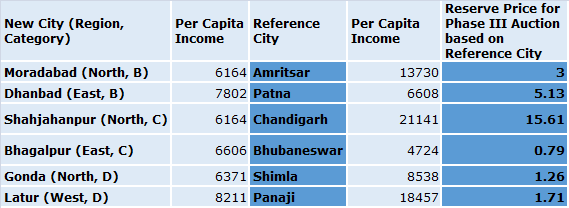
The table shows the reserve price in some of the cities based on the rules provided in Phase 3 guidelines:
Ministry of Information and Broadcasting; Census 2011
:: In view of the table above, it is unreasonable to expect, that the price set for Chandigarh, a C category city in North region and the city which received the highest bid of Rs. 15.61 Crores during Phase 2 auctions with per capita income of Rs. 21,141, is a fair reserve price for Shahjahanpur with per capita income of only Rs. 6,164.
:: Similarly, the reserve prices for most other fresh cities look unreasonable. For instance, Moradabad a B category city in North region with a per capita income of Rs. 6,164 cannot be compared with Amritsar, which received the highest bid of Rs. 3 Crores and which has a per capita income of Rs. 21,141.
TRAI Recommendation:
:: TRAI on February 20, 2014 recommended that the methodology for determining the reserve price for fresh cities in Phase 3 should be reconsidered.
Request:
:: In case of cities going for auction for the first time, the reserve price should be ‘Average bid across all regions in the country for the same category of city’. This will eliminate any outliers and e-auction will allow fair price discovery of each city.
6. Expedite Empanelment with DAVP (Directorate of Advertising & Visual Publicity) of some radio stations
Key Issues:
:: The revision of DAVP rates for FM has been pending since last 3 years
:: Empanelment of radio station of some radio broadcasters, which is pending since 2008.
Requests:
:: DAVP rates/policy be revised appropriately based on the growth of FM listenership across India
:: Expedite empanelment of radio station of some radio broadcasters to ensure fair allocation of funds by DAVP.
This is now reading like those weather reports which we get in the monsoons in Mumbai. There will be a few light showers or thundershowers and there will be no appreciable change in night temperature. LOL. So it’s the same old story. Star Plus rules. Colors has kept its #2 status on and Zee is #3. The rest is much of the same, with some extra leads and some downers.
Channels
Week 45
Week 44
Star Plus
609929
655006
Colors
485943
456912
Zee TV
393534
404561
Sab
284511
306976
Life OK
305403
305155
Sony Ent TV
245423
285145
Zee Anmol
89666
104793
Star Utsav
71556
80833
Big Magic
68547
56061
Rishtey
43676
49651
Zindagi
31475
31302
Pal
30710
31405
Sahara One
9653
9869
GVTs (000s)
Since TAM has been restrained from feeding the media with ratings numbers, we are forced to depend on subscribers to give us the same. We trust them to give us the correct numbers so we are publishing them. However, we urge advertisers and media agencies to make their own enquiries to get bona fide data.
Col Rajyavardhan Singh Rathore, Minister of State for Information and Broadcasting, has said that the success of Indian democracy owed much to the independent and responsible press which had played a crucial role in educating and empowering the masses. Journalists have acted like soldiers utilising the weapons of pen and newspaper columns. The Minister stated this while delivering his address at a function to commemorate National Press Day organized by Press Council of India in the capital on Sunday.
During his address, Mr Rathore reiterated the government’s commitment to protect, preserve and promote freedom of the press. The minister called upon the journalists to maintain professional integrity and ethical standards in their pursuit of truth. In the function, the minister also released a souvenir highlighting the role of Press Council of India in ensuring fair practices of journalism.
Also speaking on the occasion, Prakash Javadekar, Minister of State (IC) for Environment, Forests and Climate Change (and former I&B minister) said that freedom of the press was sacrosanct in a democracy and that this freedom came with responsibilities. The media has to facilitate active discussions and debates on various issues of national importance, the minister added. Justice Venkatachaliah, former Chief Justice of India, who was the chief guest of the function, said that press in India had a larger role to preserve, restore and propagate democratic and humanitarian values balancing them with changes in technology and perceptions of freedom.
The function also witnessed the conferring of National Awards in different categories on print journalists for their outstanding contributions in various fields. Justice Markandey Katju, Chairman, Press Council of India and Vibha Bhargava, Secretary, Press Council of India were also present on the occasion.
National Press Day marked the day of establishment of Press Council of India, PCI, as a statutory agency to ensure free and responsible press. This was the day on which the PCI started functioning as a moral watchdog to safeguard the independence of press in India.
Today is Children’s Day. Unlike many other branded days – such as Mother’s Day, Daughter’s Day, Father’s Day and, of course, Valentine’s Day – Children’s Day is an indigenous event, observed on the birth anniversary of Jawaharlal Nehru.
But like most festivals and special days, the genesis becomes less important over time, than the actual celebration. Children’s Day, however, suffers from both genesis and celebration issues.
Have you seen any significant TV commercial or print ad around Children’s Day? Or any special episodes of TV shows themed around this day? Some kids channels have planned specials of their existing shows, but those are destinations where every day is Children’s Day anyway.
We have all seen the media exploitation of Valentine’s Day, Mother’s Day and the likes over the last two decades. Brands have used these specials to peddle offers or simply communicate their brand message in a more contextual environment.
But with Children’s Day, very few such efforts are visible. There are at least 50 top brands in the country that target children actively. And the parent-child bond (especially the mother-child) is a part of many brand messages. Yet, Children’s Day finds no resonance.
Is it because over time, the awareness of this occasion has reduced amongst the children themselves? That, indeed, is one of the reasons. But it also begs the question, because if media can create awareness of non-existent properties (where was Father’s Day a decade ago?), it can surely revive a traditionally strong one.
I suspect this has something to do with the indigenous vs. foreign difference. In MNCs, brand plans are often made globally and then adapted for local execution. Children’s Day would never feature in such a plan. And if some key brands choose to ignore it, the momentum will never build enough to create the threshold the day needs to become ‘marketable’.
But there’s another aspect that could also be leading to this, and that’s the one that bothers me more. Indian entertainment businesses (both television and films) have always treated the children segment with a sense of tentativeness. It’s been the orphaned target group, left to find its entertainment in cartoons, while all the content innovation happens for the adults.
In India, a kid can watch animation content till the age of 12, and then graduate straight to a Saathiya or a Roadies. There is no in-between, barring an odd show like CID or Taarak Mehta. The only channels we research kids for are the kids channels. Everyone else is happy catering to 15+.
Much as this may seem ‘correct’, it creates an impact that is extremely worrying. Kids channels are heavily under-indexed on advertising revenues and hence cannot afford original live-action productions with any sense of scale. As a result, over the last two decades, Indian kids have little content variety on offer. Even as a housewife tries and balances as many as 10-12 shows in a day, her child has adjusted himself to just one or two shows, which he will now watch for the next three years, if not more. You don’t need to be a child psychologist to know that the long-term damage here can be fairly substantive in nature.
It’s time for the top GECs and film studios to challenges themselves. There is immense commercial opportunity too. But is there enough will to dip into it?


 Bangla music channel Fatafati has moved its revenue mandate to Helios Media with immediate effect. The channel that was launched last year has achieved the lead position among the youth of West Bengal.
 Sony Six has acquired the broadcasting rights for Champions Tennis League, a pan-India city-based tennis championship league set to take place from November 17 to November 26, 2014.


 Today is Children’s Day. Unlike many other branded days – such as Mother’s Day, Daughter’s Day, Father’s Day and, of course, Valentine’s Day – Children’s Day is an indigenous event, observed on the birth anniversary of Jawaharlal Nehru.