Category: MEDIA

  • Internet accessed most on mobile, says IAMAI report

    By a correspondent


    A report released by the Internet and Mobile Association of India has revealed that about 95 per cent of the mobile Internet users are using the internet to communicate online.


    With the phenomenal growth that mobile has seen in recent times, marketers have begun to adopt it as a one of the primary tools used to generate brand visibility and awareness. Leading marketers at the Internet and Mobile Association of India’s second Email Marketing Summit 2014 were of the view that mobile will be the key driver in coming times.


    Speaking at the Summit, Kalpit Jain, Chief Operating officer – netCORE Solutions, said, “India is expected to have 185 million mobile users by June 2014, and 35 per cent subscribers view their mails on mobile, which provides a huge opportunity to market your products.”


    Stressing on the importance of email marketing, Vivek Gaur, Chief Executive Officer- Yepme said, “With over 290 billion emails sent everyday you need to keep evolving your email marketing strategies accordingly. You have to understand what a consumer wants. People have reservations in getting promotional emails. Communication which goes to the consumer should be relevant.”


    Speaking on relevance of data in email marketing, Naveen Kukreja, CMO & Director- Non Insurance business- PolicyBazaar.com, said, “‘Data has become the buzzword for email marketers. Every brand is sitting on big data for marketing. The need of hour is to make maximum use of that data. Lesser the content and relevant the communication the better it is for marketers.”


  • Simplymarry.com engages RAPP

    By a correspondent


    Multichannel agency RAPP of DDB Mudra Group has been roped in to handle Simplymarry.com. RAPP India will be responsible for bringing the brands new proposition alive. RAPP’s mandate will cover the full service spectrum with the mainline as well as digital aspects of the campaign.


    Matrimonial portal SimplyMarry.com is promoted by The Times of India group and offers a superior matchmaking experience for prospective brides and grooms to meet and communicate with each other.


    On choosing RAPP, Sanjeev Kumar, Business Head, SimplyMarry.com said, The online matrimony space in India is quite challenging with many established and new players. Over the years, we have realized that although the space has a lot of big players, the value differentiator in this category hasn’t been cracked just yet. We are re-launching into this competitive market with an offering unlike any the market has witnessed yet. We were looking for an agency that would help us amplify this difference. RAPP, with its unique strategic and media agnostic approach seemed like a perfect fit.”


    Venkat Mallik, President, RAPP India said, “The SimplyMarry team has a strategy that is designed to change the convention among Matrimonial sites. A number of new innovations are planned that will change the rules of the game. To be able to disrupt the convention is a challenge that has always got us going. And we hope to do that with SimplyMarry.com.”


  • Farhad Wadia exits media, joins real estate

    By A Correspondent


    The man who introduced Independence Rock in the country, much much ahead of the likes of Sunburn, NH7 etc is disillusioned with the live acts business. “There’s no money in it… the newer players have messed up the business model with very low margins,” rues Farhad Wadia who quit Network 18 last month to join the Capricorn Group as Senior VP, Marketing and Sales.


    It’s crossing over to another industry altogether, Mr Wadia admits, but added that companies in the business of live events need to relook at their P/Ls. “Only Sunburn is making money and that too after going through losses for the first two-three years,” he explains. According to Mr Wadia, while keeping sponsors happy is fine, live act companies are selling the sponsorships very cheap making the business unviable.


    Mr Wadia joined the Network 18/TV 18 group in 2007 after a two-year stint with Hindustan Times. He has also worked with Channel 4 Networks in the UAE, his own company Power Productions and the now defunct Radio Star India.


    What Farhad Wadia is best known for though is Independence Rock, a 28-year-old live music acts property, that didn’t happen last year due to sponsorship issues but will definitely take place this year, the showman promises.


    Meanwhile, at Capricorn, which has a lot of real estate and runs some hotels (like in Pune, the Courtyard Marriott and Regency on Dhole Patil Road),  he hopes to use his sales and marketing expertise in selling dream, er, properties.


  • Billion dollar baby Flipkart crosses miletone faster than Amazon

    By Radhika P Nair


    Indian ecommerce flag bearer Flipkart has hit $1 billion in sales. This is a coming of age for Indian ecommerce as the market leader hits the target a year ahead of schedule. Global ecommerce giant Amazon reached the same target seven years after its launch. Flipkart, launched in October 2007, has achieved this milestone a few months faster.


    “We are really proud and excited to announce that we have hit a run rate of $1 billion GMV (gross merchandise value) one year before our target,” said co-founders Sachin Bansal and Binny Bansal, in a joint message. “In March 2011 we announced that by 2015 we wanted to hit $1bn in GMV. At that point in time our run rate was $10 million.”


    Flipkart, which started out as an online retailer of books, has raised over $550 million in risk capital funding. The company, which is backed by South African internet major Naspers and investments funds like Dragoneer Investment Group, Morgan Stanley Investment Management, Tiger Global and Accel Partners, was valued at $1.6 billion when they raised $360 million last year.


    The company, which started out as an inventory retailer, pivoted to an online marketplace in 2012. The company, which ships out over 1 lakh orders a day on an average, now has about 1,000 merchants on its platform.


    The Bengaluru-based firm, which has over 10,000 employees, has also grown beyond ecommerce. It spun out its payment solution PayZippy into a separate entity last year. This service is used by other internet companies like MakeMyTrip, Zansaar and Yepme. The company is also opening up its logistics arm, eKart, which supplies to 150 cities, to other online retailers.


    The company is also increasingly focusing on mobile commerce, as over 20% of its sales already comes from handheld devices. Sachin Bansal, in an earlier conversation, had said that in the near future Flipkart.com would be a m-commerce based marketplace.”


    Source:The Economic Times

    Copyright © 2014, Bennett, Coleman & Co. Ltd. All Rights Reserved

    Licensed to republish


  • Oh Womaniya: From Salma Sultan to Rakhi Sawant


    By Shailesh Kapoor


    It’s Women’s Day this Saturday. The importance of women characters on Indian television is well understood, especially over the last two decades. Last month, I wrote about our daily soaps being unfairly branded as “regressive” (Read here), especially because the lead women characters in these serials are, in fact, strong and progressive.


    But there’s a world of Indian television beyond the daily soaps and their characters. Here’s my list of five women who created a strong impact on Indian television. The list, presented in chronological order, does not include women whose impact largely came via specific characters they played. Also, it does not include women behind the scenes, which is perhaps a much easier list to generate, and a longer one too, albeit with Ekta Kapoor firmly on top.


    Salma Sultan: If you are old enough to have watched Indian television in the pre-satellite era, the image of Salma Sultan reading news on Doordarshan is likely to be still fresh in your mind. Doordarshan had many newsreaders, but Salma Sultan brought with her a combination of grace and glamour like no other. Her sense of style, marked by the rose and the saree drape, inspired fashion choices till at least the mid 90s. More importantly, she encouraged several young women to take up newsroom jobs in a conservative Indian back in the 80s.


    Neena Gupta: All other female actors, ranging from Smriti Irani to Sakshi Tanwar, are known for only one or two iconic characters. Neena Gupta, the only soap star in this list, broke that ceiling. Her identity today goes beyond any one or two serials she acted in. Ketaki in Khandaan or Priya in Saans or the reluctant host of Kamzor Kadi Kaun may eventually be forgotten, but the stamp of Neena Gupta on Indian television is indelible.


    Simi Garewal: The ‘Lady In White’ hosted a show that was loved and hated in equal measure. Celebrities sharing their deepest secrets and crying on Rendezvous With Simi Garewal was not an uncommon occurrence. Speak, so I can see your soul, the show’s theme song aptly said. With time, Garewal lost relevance, with the new generation audience looking for more spice than aspiration in celeb chats (a la Koffee With Karan). But till about a decade ago, her stature and her success were unmistakable, as apparent in the exclusive party she threw to celebrate 100 episodes of her show back in 2004 (Watch here).


    Rakhi Sawant: If there were a ranking on ‘class’, Simi Garewal and Rakhi Sawant would fall at the two ends. But with her inimitable style and a carefully cultivated art of sounding stupid, Rakhi Sawant managed to enthrall audience show after show. An episode in the first season of Bigg Boss, where she cried to the point of fainting because her ‘favorite mug’ was broken accidentally by another housemate, remains one of most dramatic Bigg Boss episodes till date. She could do crazy things like walk out of a reality show finale (Nach Baliye) if she did not win. Rakhi Ka Swayamwar remains the high point of her eventful TV career.


    Gauhar Khan: Gauhar Khan’s true impact on Indian television will be known in a few years’ time. But she makes it to this list for being topical. She exuded immense confidence and personal character in the recently concluded Bigg Boss season. She could take on Salman Khan and even come out as the more reasonable person in the argument. The shrill voice and non-stop chatter may have put off some viewers, but Gauhar Khan made an impact because she emerged as the face of the modern urban Indian woman in this digital generation. She remains the only Bigg Boss contestant across seasons to have crossed Salman Khan’s popularity (Source: Ormax Characters India Loves).


    TV Trails is a weekly column written by Shailesh Kapoor, founder and CEO of media insights firm Ormax Media. He spent nine years in the television industry before turning entrepreneur. The views expressed here are his own. He can be reached at his Twitter handle @shaileshkapoor


  • Week #9: Zee makes big leap to #2, Life OK back at #4

    By Our Research Associate


    Week 9 of 2014 saw Zee TV jumping back to the second slot amongst the Hindi GECs on the back of an excellent showing by the evergreen Dance India Dance Li’l Masters.


    Star Plus was at 637, Zee at 548 and Colors at 465. Life OK was back at No 4 with 341, Sony at 306 and Sab at 303. The number indicates viewership in million.


    The info that we have published is courtesy a friendly subscriber, but since the source is not TAM, the folks who (still) do the measurement, we would urge advertisers to not base their advertising investments based on this report alone. Call TAM, subscribe to the measurement numbers…


  • BJP ads to go on air soon, with Prasoon Joshi songs

    By Pritha Mitra Dasgupta


    The Bharatiya Janata Party, which has just unveiled the outdoor ad campaign for the Lok Sabha polls, will launch 10-15 TV commercials in the coming weeks. The films, which will explore several themes including anti-corruption and women’s safety, are at the script-level and awaiting Narendra Modi’s approval, a person aware of the party’s campaign plans said.


    A source in the BJP ad campaign team said that Sushil Goswami, national creative director of Graphisads, a small Delhi-based agency that handles BJP’s state-level ad campaigns, is also working with Soho Square on the television, radio and outdoor campaigns. When contacted, Samrat Bedi, head of office, Soho Square, refused to comment on the party’s plans stating, “We do not disclose any client’s strategy and plans.”


    The other agency in the running, McCann’s subsidiary TAG, presented three songs written by McCann executive chairman and lyricist Prasoon Joshi as part of its pitch, the person informed. “Prasoon has written a rousing song for Narendra Modi – Saugandh is mitti ki mein desh jhukne nahi doonga, Mein desh mitne nahi doonga.”


    Source:The Economic Times

    Copyright © 2014, Bennett, Coleman & Co. Ltd. All Rights Reserved

    Licensed to republish


  • Yahoo launches new homepage in India

    By A Correspondent


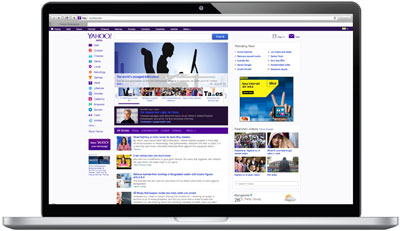
    Yahoo India has unveiled a brand new homepage delivering what it says is a “beautiful, modern, intuitive and personal experience”, available across smartphones, tablets and PCs. The new Yahoo Homepage, launched in 6 countries including Singapore, Malaysia, Indonesia, Philippines, Vietnam and India, makes it easier users to discover all the content they care about – right here on one page from any device of their choice, as per a communiqué.


    The navigation has been made simpler with an option of browsing top stories, checking mail, keeping tabs on stocks, checking one’s photos and the weather… all on the homepage.


  • Leveraging films by top guns on MTV


    By A Correspondent


    In a seemingly volatile broadcast scenario in India, it is a given that only ideas that are fresh and out-of-the-box manage to make a mark while the others face the possibility of being rejected. In a synergy that probably plans to change the way the genre has been approached until now, leading youth channel MTV has joined hands with FMCG major Hindustan Unilever to launch MTV Films.


    The idea germinated out of a casual conversation that MTV and HUL’s media buying and planning agency Mindshare had sometime last year. Convincing HUL was easy for Mindshare, and since then it’s getting all parts of the act together.


    The initiative would see six young and well-known directors known for their cutting edge film making styles making original movies just for television. Eminent movie directors including Anurag Basu, Abhinay Deo, Shoojit Sircar, Rohan Sippy, Nikhil Advani and Anurag Kashyap have been assigned the task of bringing the idea alive on television.


    What would make this initiative unique is that MTV Films would be a mixed bag of six movies based on brand philosophies of different HUL products that will be showcased every month.


    An initiative to provide film buffs a unique movie viewing experience in the comfort of their homes, MTV Films offers a mix of all the ingredients that connect with the youth instantly. These 60-minute movies are inspired by HUL’s brands like Sunsilk, Ponds, Tresemme, Close Up, Lakme and depict today’s generation’s perspective on love, friendship, family, responsibilities in a light hearted fashion.


    Speaking about this initiative, Aditya Swamy, EVP and Business Head of MTV said, “It’s been a treat to watch six very special people look at youth through such different lenses. This project has redefined the rules of television and branded content in so many ways. Everyone around the table today has dared to take risks and it’s that spirit that has made this an exciting journey for all of us. With a new film being released every month, MTV Films can become a very strong franchise.”


    Hemant Bakshi, Executive Director, Home & Personal Care, HUL, said, “HUL firmly believes in pioneering and creating newer ways of engaging consumers by leveraging popular culture. With the launch of MTV Movies, we will re-define the way in which brands tell their stories to consumers. This initiative will focus on communicating brand purpose and we are confident that it will resonate with our audience and build brand love.”


    The initiative will see Bollywood, television and the corporate world collaborate to give consumers content they can best relate to. While MTV India is seen as the channel that has its check on the pulse of today’s youth, the film-makers roped in for this initiative have already made waves with their art and have an increasingly large fan base in the younger generation. Their unique approach and cutting edge portrayal of different themes has made a lasting impact on many. It is befitting then, that Hindustan Unilever – known for their innovative touch in every initiative – imbibes these themes in their brand philosophy and make MTV Films the perfect platform to reinforce their connect with the youth of today.


    ‘For HUL, the films are beyond passive integration… more of active integration’
     

    Aditya Swamy
    Ravi Rao

    Q&A with Aditya Swamy, EVP and Business Head, MTV and Ravi Rao, Leader, Mindshare South Asia


    And we thought MTV was a music channel… has the basic positioning changed by this move of getting into movies?

    Aditya Swamy: MTV is about entertainment and if you see there is a strong music element to all of the stuff that we create. So there’s this film that we showcased at the preview where a bunch of girls coming together to run a radio station…similarly there is a strong musical element in all the films.


    But the core premise of the channel initially was just around music…

    Aditya Swamy: My sense is that the audience is changing. Twenty years ago when we were asked what music you listened there were a few names that came top of mind. But the times have changed today where the youth have a plethora of options to choose from. Right from the brands they wear or endorse they are getting defined by a lot of other factors. So as the audience is moving forward the only way to stay relevant is to move with them. Like I say, music is synonymous with creativity and creativity will always be the sole of MTV. That’s where we take this from; it’s storytelling.


    Would you elaborate on the cost aspect of the deal with HUL?

    Aditya Swamy: I wouldn’t be able to talk about the costs and budgets but I would say the challenge is going to be for partners to have deals that bring in good ROI for everyone concerned. If you see the films, they are not cheap or made on handheld camera they are films made by some big directors and have the latest technology to its credit. Moreover the audiences want a quality product and the directors are creating films which are mega in approach. I think the objective will be that when a viewer sees this he would not feel that these are films made specifically for television; the content rests seamlessly across different platforms and this platform happens to be the TV platform.


    Was it tough to get the creative folk to weave in brands in the stories?

    Aditya Swamy: For me the real cool thing has been getting these six directors together but the common thing that ties all of them together is that they are going to jump into a space that they haven’t done before. According to me, what excites creative people is taking up new challenges. Earlier they used to tell stories in two-and-half hours now they have to say it in 60 minutes. So it’s challenges such as these that excite these people. They’ve always been leading the charge that let’s do something beyond advertising. This idea was something that everybody quickly latched onto immediately.


    How involved or over-involved were brands with the project?

    Aditya Swamy: If you see the film it’s a new era in branded content. We’ve not needlessly pushed brands; it’s about the brand philosophy coming to life. Once they were onboard the philosophy then they would like to run.


    Ravi Rao: I’d like to add here by saying that when you do a product integration exercise, the emphasis is how do I ensure that it is not just passive integration but more of an active integration. In these films what we did was give a positioning line for a brand and told them to interpret the way they want. If you see the banners that we have got it has been completely imagined by the directors themselves.


    At Mindshare, you’ve handled spends across various platforms. How different was this exercise for you?

    Ravi Rao: Whether we like it or not, content has been an important storyline for a long time. It’s just that the canvas is the same but we have made it bigger with high production values and great directors onboard. Also, for example when you say a shampoo can clean your hair, there are a whole lot of other attributes that can come aboard because it’s to do with the person and his/her choice of using the shampoo. It was a good opportunity to go beyond the 30- or 50-seconder where you can tell a story in a much more fluent way. To that extent it is going away from mainstream and making it even more interesting.


    Would you be engaging in a high decibel cross-platform promotion for this initiative?

    Ravi Rao: I think you should wait and see because some of the promotional ideas that we have got on this is very unique. It won’t be like what you see the other movies doing. It will be different. Also, while television as a medium will be huge, we would be exploiting the digital platform too. If the word-of-mouth happens you will see audiences coming back towards it. The first movie is just the trigger; you will have to wait to see how fine the others shape up as well.


    For the last six years, Mindshare has been trying to do the content space differently. The team has done a fantastic job this time too. Here it is about how you generate impact; what is the right story that we need to do and what is the media that will be apt for the initiative. It is also about being flexible and doing things in a unique way.


    An FMCG company like HUL is known to be very tough on deliverables…

    Ravi Rao: They still are but they have been fair. It is also about their philosophies; on the one end, they are talking about getting great effectiveness but they also lay great emphasis on innovation. We have pushed our idea limits to see what more can we do. If the idea is strong enough for a brand to capitalise it works brilliantly and HUL gives a canvas to do it our way.


  • Rajesh Kamat elevated at CA Media

    By a correspondent


    Rajesh Kamat

    After successfully launching CA Media India, Rajesh Kamat has been elevated to Chief Operating Officer (COO) of CA Media, the Asian investment arm of The Chernin Group, LLC (TCG). In his new role, Kamat will relocate to Singapore and report into Paul Aiello, CA Media Group’s Hong Kong-based CEO. Core to his new responsibilities, Kamat will provide strategic guidance to the group’s existing portfolio investments in the region. He will also support Aiello in identifying and managing growth opportunities for CA Media in Asia.


    Both directly and through CA Media, TCG has made significant investments in the U.S., Europe and Asia. CA Media will continue to focus on supporting the growth of its existing portfolio of investments, while seeking to expand its position in India and other important emerging markets in Asia.


    Kamat will continue to oversee CA Media operations in India while the senior management team – Vivek Raicha and Rishi Negi – will continue to lead their respective domains, as Head of India Investments and Head of India Investee Operations.


    “Given what Rajesh has accomplished with CA Media in India, I am confident in his abilities to take on this expanded regional role for CA Media throughout Asia, we look forward to the contributions he will make.” said Paul Aiello, CEO CA Media Group


    “Moving from a country role to a region profile is both exciting as well as challenging given the diversity of the key Asian markets and our unique portfolio of assets. I look forward to the challenge ahead,” Kamat said.


    Over the last three years, CA Media India has built a strong portfolio of growth investments in the Indian media and entertainment space, including television and film production, live music events, youth media, digital content, intellectual property and graphic novels. In each investment, CA Media has worked with strong on-the-ground partners and local management teams.


    CA Media India’s current investments include strategic stakes in Endemol India, Only Much Louder (OML), Graphic India, and a wholly owned online influencer network, FLUENCE.


    Kamat will assume his new role and responsibilities in Singapore starting April 2014.


  • CNN’s Sumnima bags inaugural Women’s Empowerment Journalism Award

    By a correspondent


    CNN International’s Delhi-based correspondent Sumnima Udas has been awarded ‘Journalist of the Year’ at the inaugural Women’s Empowerment (WE) Journalism Awards for her sensitive and incisive reporting on gender issues including the December 2012 New Delhi gang-rape, the plight of acid attack victims in India and the courageous stance taken by young Indian women, fighting back to ensure the safety of women in their neighbourhoods.


    The Awards held in Singapore, honour outstanding achievements in reporting on women’s issues. Udas’ work was recognised amongst entries by distinguished journalists across Asia Pacific including Australia, Cambodia, China, India, Indonesia, Korea, Malaysia, Philippines, Singapore, Thailand, and Vietnam.


    Udas reported extensively on the aftermath of the December 2012 Delhi gang rape, explaining how the crime shook the nation and prompted a landmark change in how society handles violence against women. Her almost year-long reporting culminated in the documentary film ‘Nirbhaya: The Fearless One’ which featured in-depth interviews with the victim’s parents, who movingly reveal how their daughter was the pillar of strength for the family. Her reporting on related gender issues also featured first-hand interviews with Indian women on the streets, shedding insights onto the vulnerability of sexually abused women, victims of acid attacks and the horrific practice of female feticide in parts of India. She has also chronicled the courageous story of a group of brave adolescent women who have banded together to form ‘Red Brigades’, acting as foot patrols to increase the safety of females in their neighbourhood.


  • Modi, AAP exploiting digital in run-up to the General Elections 2014

    By a correspondent


    Ask anybody what’s different about the General Elections 2014 and the topmost reply would be the way political parties have migrated to the medium of digital to deliver them a miracle of sorts. A study undertaken by Prof. Kiran Thakur and Sagar Atre at the Pune-based FLAME School of Communication has revealed some interesting findings regarding the use of the digital medium by political parties.


    The study notes that while the Bharatiya Janata Party (www.bjp.org) and the Congress (www.inc.in), the principal rivals in the Indian political arena, are neck-to-neck in the cyber race, the BJP’s prime ministerial candidate Narendra Modi is ahead in terms of exploiting social media when compared to Congress’ vice presidential candidate Rahul Gandhi.


    In fact, Modi is the most aggressive user of the website and social media registering about 10 million Facebook likes, 3.47 million Twitter followers and 126969 YouTube subscribers. In comparison, Rahul Gandhi does not even have a Twitter, Facebook or YouTube account.


    The new entrant, Aam Aadmi Party (http://www.aamaadmiparty.org/), however, has stolen a march over all the six national parties in effectively exploiting websites and social media in the Lok Sabha election campaign.


    Political Party Website URL Facebook likes Twitter followers YouTube subscribers
    Bharatiya Janata Party www.bjp.org 2,544,235 375000 44500
    Indian National Congress www.inc.in 2,021,253 135000 5117
    Nationalist Congress Party http://www.ncp.org.in/ 208,808 12700 142
    Aam Aadmi Party www.aamaadmiparty.org/ 1,670,036 538000 40845
    CPI(M) http://www.cpim.org/ No official page 1574 55
    CPI http://www.communistparty.in/) No official page No official page No official page
    BSP http://www.bspindia.org/ 4909 364 10


    The study further notes that the websites of the BJP, Congress, Nationalist Congress Party, CPI, CPI (M) and Bahujan Samaj Party do not mention anything about the sources of their funding. The data of their websites and social media was recorded as part of a study on March 6, 2014, when the Election Commission of India announced the schedule for Lok Sabha poll.


    Though the BJP has a provision for online donation, the Congress expects its well wishers to write a cheque and send it to party headquarters in Delhi via a courier or through snail mail. The NCP, CPI (M), CPI, and BSP do not even appeal to the people for donations.  Only the AAP has an elaborate system to receive online donations, deliver online receipts and compute the data with names and addresses of donors.


    Of these parties only the CPI (M) informed the people how they spent its funds last year. It has put up an audited statement of the party accounts for the year 2013.


    The study further notes that the websites of BJP, Congress, NCP, and AAP are updated every day, sometimes several times in a day. These four parties have used these websites as platforms to inform, and educate the people on the topical issues, and stands of the respective organization on these issues.


    However, no party has ever mentioned anything about their electoral alliances and has explained why they had to enter into alliance in the past or for coming election. They do not have even a formal appeal to voters to vote for their allies.


    No party was able to upload its manifesto until the day the election dates were announced, because this important document was not ready for any of the six national parties. However, AAP has a unique feature. Its website mentions important issues of 70 constituencies in which its candidates will contest and how they will take these up.


    The FLAME School of Communication has planned to monitor these websites until the election results of all the constituencies are announced.