Category: MEDIA

  • FICCI-KPMG study indicates M&E sector bucking the slowdown trend


    (L-R) Jehil Thakkar, Uday Shankar, Ramesh Sippy

    By a correspondent


    While 2013 may have been a slowdown year for most sectors, an opposite trend was observed for the Indian Media & Entertainment (M&E) industry that registered growth of approximately 12 per cent, according to the FICCI-KPMG report.


    Overall growth remained muted, noted the study that was caused largely by the slowdown of the Indian economy. The economic slowdown impacted advertising revenue dependent sectors such as TV and print the depreciation in the rupee also affected print, cable and DTH companies adversely but helped export oriented sectors such as animation and VFX to some degree. At the same time, this was countered by the impact of continued digitization of media products and services, and growth in regional media.


    Digitization of cable saw progress of television industry moving in the right direction, with the mandatory Digital Access System (DAS) rollout almost complete in Phase II cities. The impact was felt to the extent that carriage fees saw a reduction of 15-20 per cent overall, however the anticipated increase in ARPUs and subscription revenues for broadcasters and MSOs (Multi System Operators) is expected to be realized only over the next 2-3 years. Other key highlights in 2013 were the inclusion of LC1 (less than class I) markets in TV ratings, the 12 minute advertising cap ruling and the shift from TRP to TVT ratings.


    The study also noted that the film industry recorded a double digit growth, albeit slower than in 2012, with multiple movies scoring big on box office collections. Approximately 90-95 per cent movie screens are now digitized in the country, with a shift in focus to tier II and III cities. Going forward, multiplex growth is expected to slow down, in line with the overall delays and future expectations for retail sector and commercial real estate development, impacting box office growth in the short term


    The print sector too continued to buck the global slowdown trend. The sector grew at a CAGR of 8.5 per cent this year to reach INR 243 billion. Regional markets performed exceedingly well on the back of steady advertiser spends, state election impact and new launches. However, with the validity of IRS data called into question by the industry majors, the sector in the short term suffers from the lack of a robust measurement system, critical for decisions on media planning and allocations.


    The total internet user base in India grew to approximately 214 million by end of the year with almost 130 million going online using mobile devices. Mobile Internet users dominated the total internet user base capturing an overall share of 61 percent. Digital media advertising in India grew faster than any other advertising category. Streaming and download services continued to see growth in the music industry, with the growth in mobiles, in particular smartphones, contributing significantly to increased consumption of music ‘on-the-go’. However, with the continued decline in physical sales, compounded by the significant fall in ringback tone revenues (following the backlash of TRAI guidelines issues in 2012), the sector saw an overall fall in size by 10 per cent in 2013. Going forward, digital revenues are expected to drive growth in the sector. Further, the vibrant live events sector is expected to continue its role as a catalyst for driving growth in artists’ fan-base, and public performance royalties.


    Uday Shankar, Chairman, FICCI M&E committee said, “2013 has been an extraordinary year for the media and entertainment sector – a year of challenges and significant change which saw the industry dealing with a host of issues. Television saw the implementation of the 10+2 advertising cap and significant progress in seeding of set top boxes in DAS 1 and II – setting the stage of revenue growth and expansion in genres. The film sector continued to mature on the back of multiplex expansion and a wide variety of content. Radio and print continue to defy global trends and await positive regulatory intervention that will take these sectors to greater heights. I am certain that the insights and findings from this report will provide a comprehensive and useful lens for all of us in the industry.”


    According to Jehil Thakkar, Head of Media and Entertainment, KPMG in India, “2013 was a year in which many parts of the M&E industry paused and took stock. Focus shifted from top line growth to bottom line growth with companies focusing on operations and efficiency. Inspite of a very challenging macro environment, the industry grew 12 per cent, a far better performance than many other industries. The structural changes taking place in the industry – especially in television and digital, continued to take the industry down the path of fulfilling its potential.”


    This year, the report highlights opportunities that could come from tapping international markets such as the US and Middle East, with a special feature on opportunities in South Africa and Nigeria.


    Going forward, there is need for continued positive regulatory intervention, such as implementation of Phase III for the radio sector. In an increasingly digitized media world, the ability to create compelling and targeted content across multiple channels, will be the bedrock for creating differentiation in a cluttered market, the report observed.

     

  • Ten Sports signs 7-year deal with Sri Lanka Cricket Board

    By a correspondent


    Sri Lanka Cricket Board (SLC) and TEN Sports have signed a seven year deal to broadcast SLC’s international cricket matches. The deal, which includes multi-platform media and sponsorship rights globally, will run through till March 2020.


    Through its network of international affiliates and other broadcasters worldwide, content will be distributed in over 100 countries, reaching millions of cricket lovers. Apart from English, TEN Sports will also be broadcasting the matches in Hindi and other regional languages.


    TEN Sports will be the host broadcaster for Sri Lanka Cricket and will be responsible for ensuring consistent and high level production. There will strong focus on digital engagement, branding and promotion of Sri Lanka cricket to improve the viewer experience.


    Rajesh Sethi, CEO Ten Sports said, “We are delighted to further extend our partnership with Sri Lanka Cricket Board, with whom we have shared a very strong relationship over the past decade. The exciting cricket action will be available during prime time making it a very interesting proposition for fans and advertisers alike.” He further added, “We will work closely with Sri Lanka Cricket Board and invest in production and marketing to ensure that Sri Lanka cricket reaches its full potential. As we have done with other rights, we will aim to innovate and create an exciting visual spectacle for international viewers.”


    TEN Sports currently holds rights for four cricket boards which includes South Africa, Sri Lanka, Zimbabwe and West Indies. It holds long-term rights for WWE, UEFA Champions League, French League 1, US Open Tennis, ATP & WTA, and Capital One Cup, European Tour & Asian Tour Golf among other exciting properties.


  • Second edition of Time Out Food Awards announced

    By a correspondent


    Paprika Media has announced the second edition of Time Out Food Awards that is scheduled to be held in March 2014. In its second edition, the awards will recognise the work of culinary masters of all kinds – contemporary, classic, fusion, traditional, experimental – in two separate categories, Critics’ Choice and People’s Choice.


    “We’ve maintained the central credo that informs the Food & Drink section of Time Out magazines the world over to decide the nominees, and winners, in the ten Critics’ Choice categories,” said Jaideep Giridhar, Editor-in-Chief, Time Out India. “We have attempted to maintain the same sense of objectivity and transparency in the judging process that we employ in our restaurant reviews.”


    But perhaps the most gruelling test of talent will present itself in the form of the 27 Peoples’ Choice categories, which cover seven Indian cities and span a wide range of cuisines and eating experiences. “The Food & Drink category is special for Time Out readers and globally we are known for our food reviews and recommendations. Encompassing smaller of cities and more categories in the People’s Choice was a conscious decision because we wanted to give a voice to the gourmands of India , that came from the lesser known parts of the country,” said Rajnish Rawat, the COO and Publisher of Time Out magazines in India.


    The awards show will be promoted through 360 degree media channels.


  • Mona Jain, Rahul Sharma join Zee

    Mona Jain

    By A Correspondent


    Zee Entertainment Enterprises Limited (ZEEL) has announced the appointment of Mona Jain as EVP-Cluster Head and Rahul Sharma as Senior VP-National Sales Head.


    Speaking on both appointments, Ashish Sehgal, Chief Sales Officer (CSO), Zee Entertainment Enterprises Limited (ZEEL) said, “We are extremely happy to have two media stalwarts join us from the industry. Mona brings with her an immense experience and understanding of the industry. She has been instrumental in key media launches and her knowledge will be really valuable in reinforcing our relationship with agencies & clients. Mona will play a key role in developing brand solutions, setting up a business model for geo-targeting & agency relationship management. She will also head the North region leading the Business Development team, new initiatives and niche channels. Rahul comes with a digital background, which will add a new dimension in selling traditional media. His proven skills in establishing start-up operations and successful launch of channel brands will play an integral role in helping the company achieve its business objectives.”


    Commenting on her joining, Ms Jain who was until recently CEO of VivaKi Exchange, said: “I am extremely pleased to be stepping into this position. Zee looks poised for huge growth and it will be very exciting to be a part of this journey.”


    Said Mr Sharma said, “I have been a part of television and I am excited to join ZEE and be a part of the biggest television network.”


    Both appointments are effective today (March 5).


  • Leagues to see big growth for sports in 2014

    Source – GroupM ESP


    By A Correspondent


    Well, India has just been knocked out of the ongoing Asia Cup tournament, thanks to a Shahid Afridi batting blitzkrieg that saw Pakistan nail hosts Bangladesh to make it to the finals. One would put the blame squarely on the Indian squad that failed to perform as a unit when it mattered the most. In fact, the men in blue may have given the media and critics another opportunity to go heavy on them after a spate of poor performances outside the continent including their recent Series loss to South Africa and New Zealand. But does this failure imply that sunny days for the sport in India may all but be over and that the popularity and revenues that it managed to rake until now could see a downward slide from here on?


    A report by GroupM ESP, the sports and entertainment arm of marketing services major Group M and sports business information resource SportzPower, may all but rubbish the above claim as it predicts that the best days are yet to come for the sport in India. In fact, the report goes on to add that a few more sports – as upcoming and promising as cricket – would be changing the sports dynamics in a country that has just about started to harness the benefits that non-cricket sports have to offer.


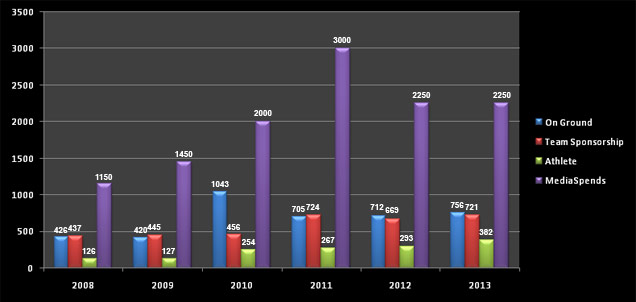
    The report notes that the sports marketing spends grew about 92 percent in the period between 2008-2013 reporting figures of Rs 41.1 billion in 2013 from the Rs 21.39 billion amount that was recorded in 2008.


    The report is the first of its kind in India that documents important events during these eventful years, including the emergence of league-format sports in India like the Indian Premier League (IPL), Hockey India League (HIL), and Indian Badminton League (IBL). To increase its utility to Rights Owners, Advertisers and Agencies, the report has been divided into four segments – On Ground Sponsorship, Team Sponsorship, Athlete Management and On Air.


    Elaborating on the future of sports marketing in India, CVL Srinivas, CEO, Group M, South Asia says, “This decade will be transformational for sports in India with a spectator base of over a billion people, a dozen sports television channels beaming content round the clock and a rapidly growing list of keen corporates and brands waiting to invest in cricket and other alternate sports. The next few years marketing investment in sports will no longer be peripheral, and it will be paralleled with that of entertainment and mainstream cinema.”


    Rise of non-cricket sports

    The report notes that while cricket will continue to remain popular, in the next few years the market is going to grow exponentially, with other sports complementing the cricket story. The report notes that the real opportunity lies in the number 2, 3, 4, 5… sports that are often under-leveraged and under-monetized, which otherwise have a sizeable target audience juicy enough for brands to associate with.


    It should serve as a wake-up call for all stakeholders in the sports sector that in the six-year time frame that the study covers, the highest share of On Ground revenue cricket has commanded in percentage terms was in 2009 – all of 79 per cent. And the lowest was just 52 per cent in 2010, which was also the year when New Delhi hosted the Commonwealth Games.


    The report notes that On Ground sponsorship has a direct linkage to stadium attendance. And therefore reflects active fan engagement. What this shows is that in the IPL era, it takes an event the size of the Commonwealth Games to significantly shift the needle. But that is not to say that the ground is not shifting as far as other sports are concerned. In 2012, the share of non-cricket On Ground sponsorship stood at 34.5 per cent, dipping to 32.8 per cent in 2013, ironically a year that saw the launch of two new IPL-style tournaments – the Hockey India League as well as the Indian Badminton League


    According to the study, football remains the problem child of Indian sport. There is a huge underlying potential here that is yet to translate into deliveries. What is clear though is that if and when football makes that big leap forward, its rise will be phenomenal. Proof of that is provided by the impact delivered by one-off events like the Argentina vs Venezuela friendly in 2011, which saw the world’s best player Lionel Messi strutting his stuff at the hallowed Salt Lake Stadium in Kolkata before an adoring and star-struck audience. Another being the Audi Football Summit played in January 2012 at the Jawaharlal Nehru Stadium in New Delhi between the Indian national team and German giants FC Bayern Munich.


    It is also a telling indictment of the people who administer the world’s most popular game that a niche sport like Golf and a mass participation one like the Marathon, both of which are presumed to be TV unfriendly, garner far higher numbers than football!


    Between 2008 and 2013, while On Ground sponsorship in football went up from Rs 85 million to Rs 142 million, in Marathons it rose from Rs 285 million to 420 million. Football clearly has a way to go before it can deliver numbers anywhere close to Distance Running in India, let alone Cricket. But at least it can lay claim to a steady, though extremely poor, increase year-on-year in the period under review.


    Not so golf, the report states. From Rs 327 million in 2008, after hitting a high of Rs 375 million in 2012, it was down to Rs 280 million in 2013 and will fall even further in 2014. Two of the three biggest professional golf events in India (Indian Open is the biggest) – Avantha Masters, and Gujarat Kensville Challenge – have been discontinued and will not be held this year onwards.


    Media dominance to continue…

    The report further notes that sports television broadcasting will continue to be dominated by cricket in the foreseeable future contributing about 80-85 per cent of sports media revenues. But the other sports such as football, hockey, badminton, motorsports, etc are also expected to perform well and bring good revenues to broadcasters.


    According to Thomas Abraham, co-founder, SportzPower, Indian sports TV broadcast was, is, and will continue to be dominated by cricket for the foreseeable future, contributing to 80 to 85 per cent of the total television sports media revenues. “However, other sports are also gaining prominence, especially Football, though interest remains predominantly for international leagues/tournaments,” he said.


    All in all, the report notes that 2014 has more upsides than down. While there will be no Indian Grand Prix next year, there will be more leagues where sports like basketball are making rapid strides, and the whole wellness and  fitness movement gaining ever increasing traction, which in turn means more interest in sport as a participation activity and not just as spectator engagement.


    Emphasizing on the key developments expected in 2014, Vinit Karnik, National Director, Sports & Live Events, GroupM ESP said: “Even though the IPL is off to a rough start this year, in the long run, accountability, better corporate governance, more transparency, are all good for not just the IPL, but the BCCI too. The successful launch of the hockey and badminton leagues has set the stage for an action-packed 2014 as far as franchise-based leagues are concerned in cricket, football, hockey, badminton, tennis, wrestling and kabaddi.”


  • Genesis delivers a Step Up

    By a correspondent


    Genesis Burson-Marsteller has announced the launch of a new initiative, Step Up that seeks to cater to the communication needs of two important stakeholders of the entrepreneurial ecosystem; the start-ups and investor networks.


    Designed to provide affordable and relevant service offerings spanning traditional as well as new digital formats, Step Up will help young companies and SMBs take the next leap in their journey to success, by not only narrating their story creatively but also by communicating on what impacts their business.


    Prema Sagar

    Prema Sagar, Principal and Founder, Genesis Burson-Marsteller said, “Step Up is our endeavour to go back to our roots. We know, feel and understand the challenges having been a start-up ourselves. With Step Up, we have already begun to partner with new and upcoming brands in their journey so as to take it to the next big thing. What differentiates Step Up from the rest is our strong understanding of the ecosystem and the changing media scape, the right talent and the ability to provide affordable services.”


    Step Up offers customised services from branding and partnerships to media engagement. The offering to start-ups have been created keeping in mind various challenges faced by early-stage ventures. These offerings aim to develop and device a compelling and effective communication strategy to narrate the story of the ventures in the most innnovative manner.


    Commenting on this new initiative, Atul Sharma, India Lead, Step Up said, “In the last few years, the Indian start-up environment has made a mark on the global entrepreneurial map by producing unique and globally relevant propositions. Being noticed by the right audience can make a great difference to a young company’s journey. This unique initiative by Genesis Burson-Marsteller, Step Up, aims at empowering these innovative start-ups to create a space for themselves in an otherwise cluttered market. We are looking to create the next ‘whatsapp’ story in India!”


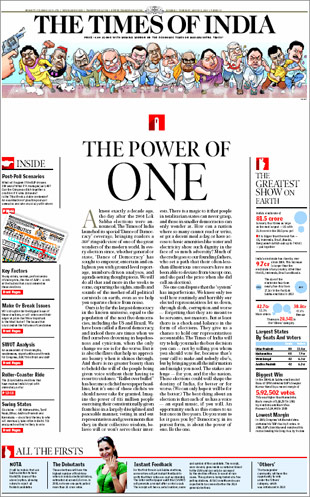
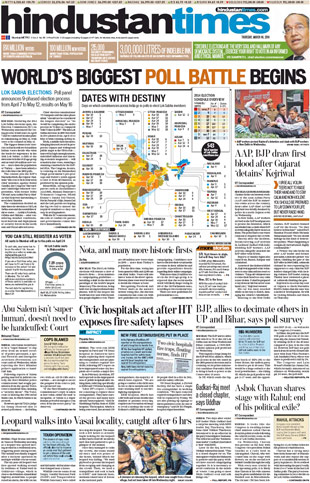
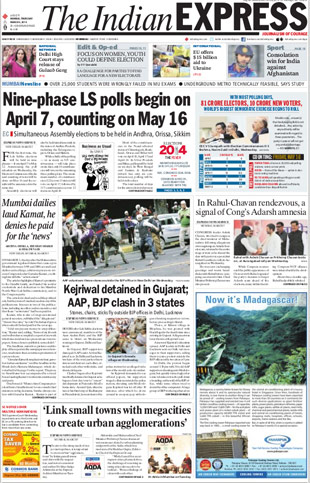
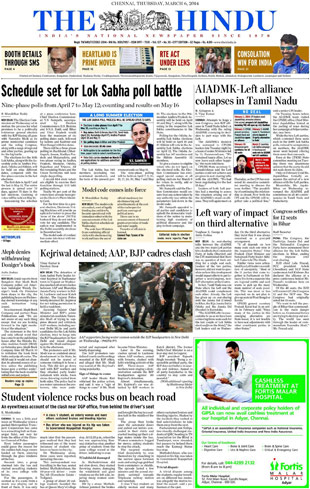
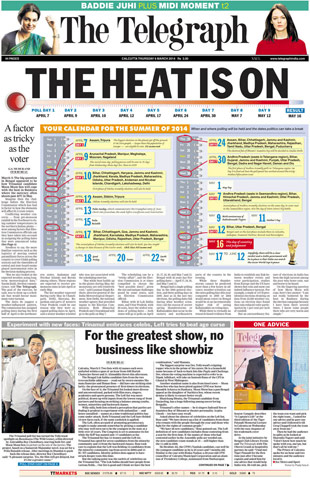
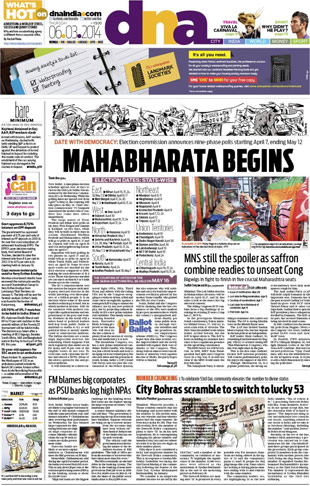
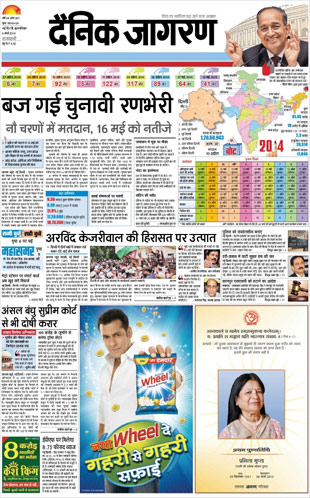
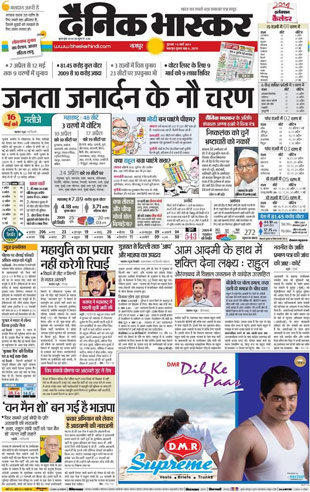
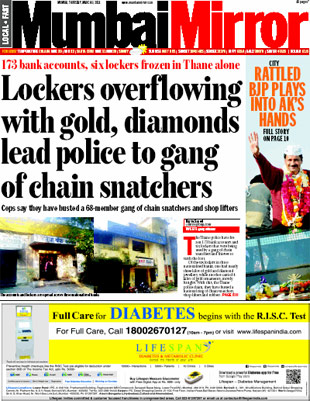
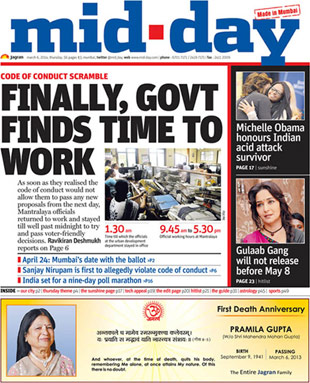
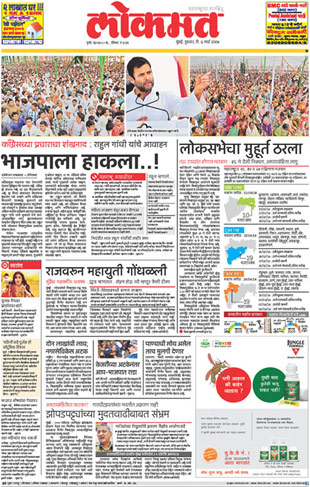
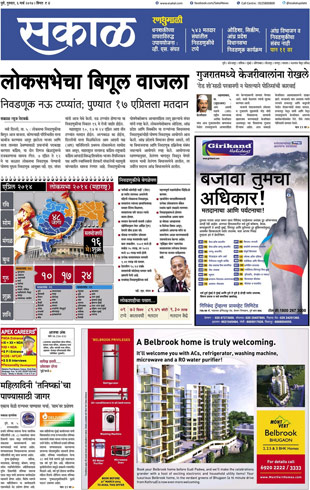
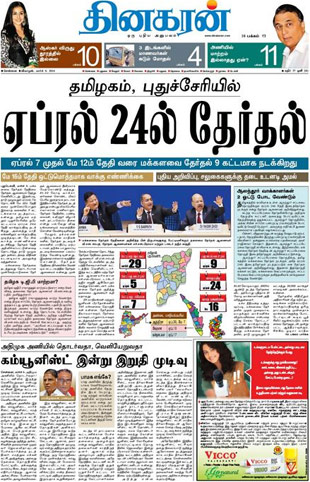
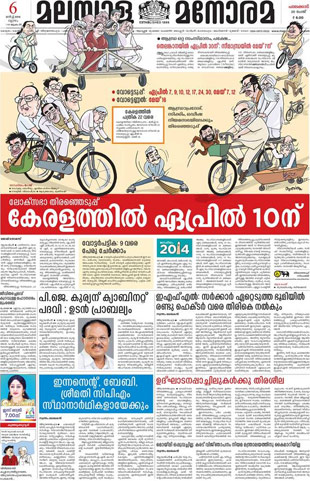
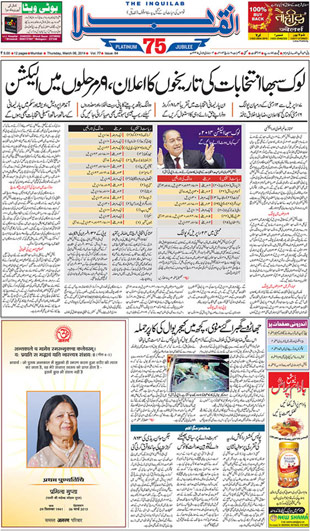
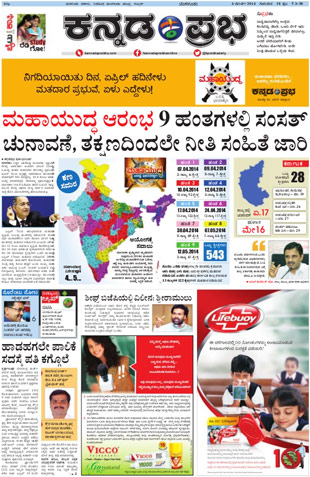
  • NewsStand: How some Page 1s announced the Polls

    We are back with the NewsStand scanning the frontpages of some of our national and regional dailies (note: some, not all). Very, very creative we must say. If you’d like your favourite newspaper’s Page 1 to be part of our next scan, inbox us at editor@mxmindia.com and if you have it handy, do send us the url of where the epaper is located. Else, we’ll locate it or write to the folks at the paper and ask for the url.


    Times Of India

    Hindustan Times

    Indian Express

    The Hindu

    The Telegraph

    dna

    Dainik Jagran

    Dainik Bhaskar

    Mumbai Mirror

    Mid-Day

    Lokmat

    Sakal

    Dinakaran

    Malayala Manorama

    Inquilab

    Kannadaprabha

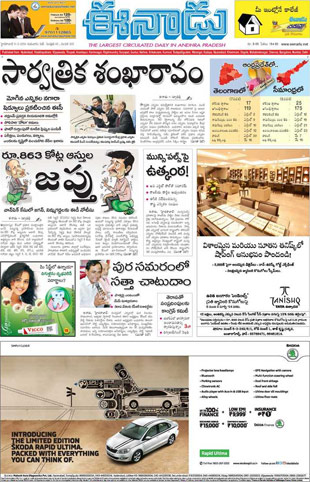
    Eenadu

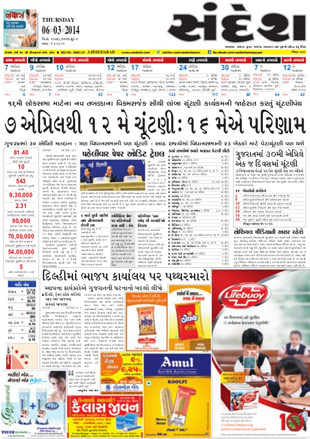
    Sandesh


  • Viber connects with ZenithOptimedia for media

    By A Correspondent


    ZenithOptimedia India has been appointed as the media planning and buying partner for Viber, the popular mobile and messaging service.  The business was won after a competitive pitch amongst five media agencies in New Delhi.


    Confirming ZenithOptimedia’s appointment, AnubhavNayyar, Country Manager India, Viber Ltd said, “We partnered with Zenithoptimedia Group as we really liked their thinking and strategic approach to our marketing challenges as well as their excellent track record of helping create new age brands like Micromax and OLX.”


    We are really excited to partner with a brand like Viber for their India ambition.The brand and the category gives us an even better opportunity to demonstrate our Live ROI proposition.”said SatyajitSen, CEO, ZenithOptimedia India.


  • Punit Goenka felicitated with ‘Entrepreneur of the Year’ award

    By a correspondent


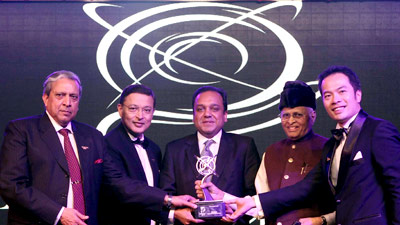
    Chief Election Commissioner Dr. GV Krishnamurthy presenting the award to Mr. Punit Goenka

    Punit Goenka, MD & CEO of Zee Entertainment Enterprises Limited (ZEEL) was conferred the ‘Entrepreneur of the Year’ award at the Asia Pacific Entrepreneurship Awards 2014 that was held in New Delhi recently.


    The prestigious Asia Pacific Entrepreneurship Awards (APEA) recognises and honours business leaders who have shown outstanding performance and tenacity in developing successful businesses within the region. Mr. Goenka was bestowed this award for leading an ever-growing media conglomerate with passion and determination.


    On receiving the award, Goenka said, “I accept this award on behalf of the entire ZEE Family, for it is the result of their hard work and dedication. Our visionary Chairman, Mr. Subhash Chandra, pioneered the private Satellite Television Industry way back in the year 1992, and has proven the importance of foreseeing the market demands well in advance, setting higher benchmarks of entrepreneurship for all of us at ZEE. With great pride, the entire ZEE Family aspires to take his vision forward.”


    Mr. Goenka further commented, “During the initial days of my career at ZEE, I came across this beautiful quote on ‘Entrepreneurship’ by Peter Drucker, which said that ‘A true entrepreneur always searches for change, responds to it, and exploits it as an opportunity.’  In my opinion, it is the best definition of a true entrepreneur in today’s era. An Entrepreneur in this era, has to be all ears to these ever-rising demands of today’s consumers across the globe, and has to satisfy the consumers, by proactively presenting them, the customized offerings. This evening, I believe is a celebration of this entrepreneurial spirit, across Asia Pacific, and I am glad to be a part of it.”


  • Get set for India’s Biggest Media Event


    By A Correspondent


    If you think some of the front page editors were at their creative best while designing the Page 1s of their newspapers, you’re possibly right. It’s General Election time. And we’ve just had the announcement.


    The elections to the Lok Sabha will be the biggest ever. But that’s a no-brainer. Every election is bigger than the previous one. But this time the stakes are higher.Much, much higher.


    But what’s changing the landscape in 2014 is a variety of things:

    1. 10 years of the same government. Loads of inefficiencies and cases of corruption being reported. New-found life in the BJP with Narendra Modi and the Arvind Kejriwal/AAP phenomenon


    2. A hyperactive television media. More than 150 superactive and successful news channels


    3. A more mature print media, but given the pressures from television, willing to get creative and take risks


    4. Social Media… Facebook and Twitter. It’s not just the traditional media that politicians need to reach out to, but it’s also influentials on Twitter and Facebook


    5. Direct access to the public. The social media affords. Mamata Banerjee was delighted to meet her Facebook friends last evening, many others reach out to their world via Twitter


    Various media agency chiefs have estimated elections-related spends. According to some estimates the promotional spends – on traditional and non-traditional media – will be in the region of Rs 7,500 crore.


    The number we think could even exceed that given that individual candidates will do their own independent campaigning and spends which can escape the Election Commission’s eyes.


    Meanwhile, the Election Commission press release has some very clear notings on media engagement. Here they go:

    1. Commission has always found media as an important ally in election management. Hence, in conduct of Lok Sabha election, an efficient structure for information dissemination to media has been created at the  Commission, State  and District levels. Commission will ensure timely and due access to election  related data and information by media. Authority Letters will be issued to all accredited Media for the polling day and the day of counting. Commission expects the media to play a positive and proactive role in supplementing election  management in delivery of a free, fair, transparent, peaceful and participative election.


    2. At the same time, Commission has created District and State level Media Certification and Monitoring Committees (MCMCs) to deal with the problem of Paid News and other media related violations, besides carrying out the existing provisions of pre-certification of political advertisements. Such mechanism will be at work for the first time in a Lok Sabha General election. Again, for the first time, the use of social media for election campaigning has been subjected to similar  conditions, as that applies to use of other electronic media.


    In Mumbai there have already been concerns over what appears to be a case of paid news. We can be sure that there will be many such cases and while the EC’s decision to set up MCMCs is welcome, one can’t be sure how effective they will be as most transactions on paid news is done via cash or indirect transactions.


    Be that as it may, the nine-phase elections and the frenzy before that which will culminate with the results on May 16 and the government formation therafter is boomtime for the media. There will be a fair amount of revenue coming in and there will be a fair amount of spends on content operations and newsgathering.


    Enjoy the heat.


  • Etailers make hay with poll merchandise

    By Harsimran Julka


    Several online retailers are cashing in on election fervour by selling a wide variety of political merchandise , helped along by the willingness of citizens to flaunt their political affiliations.


    They are hawking a range of personal accessories, home décor and utility items that are branded with images and logos of mainline political parties which will fight it out for the affection of voters this summer.


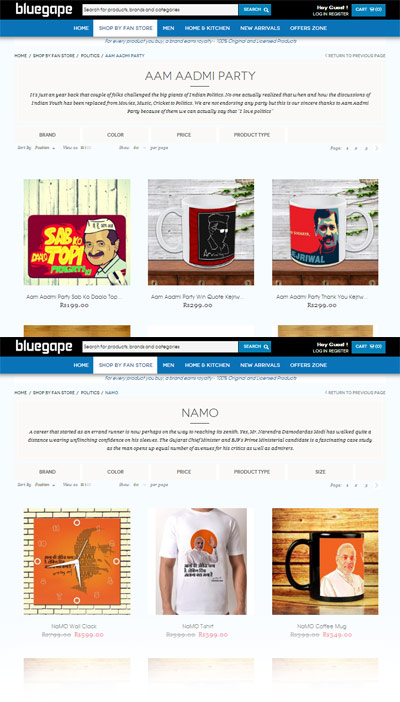
    “We just launched our political merchandise category three months ago and are already seeing 30% of daily orders coming from this category,” said Sahil Baghla, founder of merchandise portal BlueGape, who started the business in 2011 while still studying at the Indian Institute of Technology in Kanpur.


    “We capture the political messaging of a party and present in a glamorous fashion on a product just like we would do for a Bollywood movie star. It appeals to the youth instantly,” said Mr Baghla, 22, who raised Rs 1.5 crore for his venture last year.


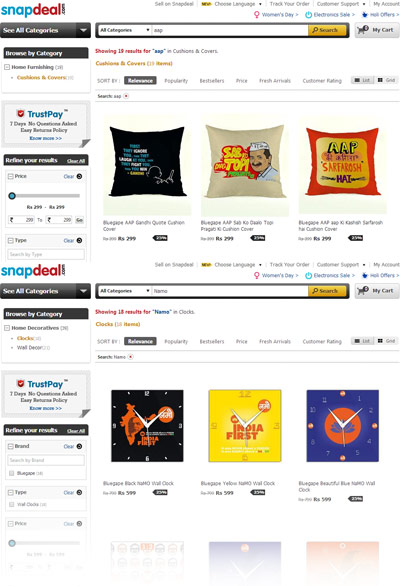
    Online marketplace Snapdeal that first launched the ‘NaMo’ brand of phones aimed at followers of the Bharatiya Janata Party’s prime ministerial candidate, Narendra Modi, now offers merchandise for followers of the Aam Aadmi Party which include wall clocks and covers for phones and tablets. For BlueGape, customers for Aam Aadmi Party’s caps and T-shirts come mostly from Delhi and Bangalore.


    Narendra Modi brand of mugs, shirts and clocks are popular amongst customers from Andhra Pradesh and Maharashtra. He added that products with Congress’ development theme or Rahul Gandhi as its ambassador are selling less, due to lack of a strong theme.
     

    “Other political parties such as Samajwadi have mixed messaging which makes it difficult to make a merchandise around a theme for them,” said Baghla, who is aiming for 5,000 orders per day by end of this year. Entrepreneurs said the increase in social media usage is leading to greater willingness amongst people to flaunt their political leanings, a dramatic shift from the reticence evident during even the previous general election in 2009.


    Tony Navin, vice president overseeing business development at Snapdeal, which raised $138 million from eBay last month, said sales of political merchandise have increased fourfold since last month. He said most customers for such merchandise are from tier 2 and tier 3 towns and cities, with an average age of 25- 40 years.


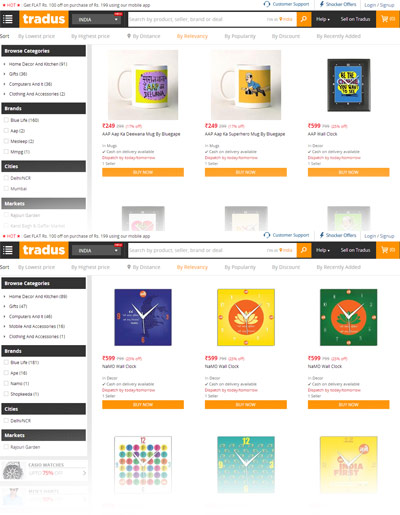
    The trigger for selling political merchandise peaked in January, when sellers on location-based marketplace Tradus started retailing Aam Aadmi Jhadus (brooms) for Rs 5 each.


    “The launch was an instant hit and we sold 2,000 brooms within two hours. Over three days, after the win of AAP in Delhi, about 6,000 brooms got sold on the platform,” said Mudit Khosla, CEO at Tradus, an online marketplace owned by South Africa’s Ibibo Group. With the maturing of Indian democracy, youth are now more open to flaunting their political affiliations, said Saurabh Kochar, founder of online portal Print-Venue , which is backed by German incubator Rocket Internet.


    “We are seeing demand even from individuals who are ordering shirts, caps and even decorative pieces for personal use and to gift to their party donors and members,” said Kochar, a graduate of IIT-Roorkee, who started the online portal in 2012. He is seeking ideas for design of such merchandise.


    Although this business is seasonal, entrepreneurs believe that with India’s large electorate of 81 crore voters, and heightened political activity, it will provide a strong stream of revenue. About 2.3 crore Indians are first-time voters, many of whom are hooked on to social media and will reach out for merchandise that proclaims their loyalties. “The youth now want to speak out about their identity,” said Mr Baghla of Bluegape.


    Source:The Economic Times

    Copyright © 2014, Bennett, Coleman & Co. Ltd. All Rights Reserved

    Licensed to republish


  • Respite for Kantar (and TAM) as Delhi High Court hearing adjourned till July 11

    By A Correspondent


    It’s an election gift from the government to the section of the broadcasting and media fraternity which didn’t want a ratings black-out.


    So after all the back-and-forth to the Courts, the much awaited verdict that we were awaiting today didn’t happen, because, yes, you heard it right, the government’s counsel wasn’t available for hearing.


    Now, the ball will be in the new government’s court as the hearing has been adjourned to July 11, 2014.This part of the news (and not the interpretation before) was confirmed to MxMIndia by Kantar Media’s advocate, Diya Kapur on the phone from New Delhi.


    This is of course some respite for all parties. For channels – especially those banking big on reality shows because there will be ratings around, for newer channels because they can prove to the world what they are worth, for special events like the IPL because they will need the support on viewership.


    For TAM of course because they’ve got a fresh lease of life and for BARC too, as in the absence of ratings dark period, they can do their work at their normal pace.


    The Delhi High Court has adjourned the hearing in the Kantar case till 11 July as the government’s counsel is not available for hearing. Kantar counsel Diya Kapur and News Broadcasters Association (NBA) counsel Anup Bhambhani confirmed the news to TelevisionPost.com. The adjournment means that the stay on the clauses related to cross-media holding in the Television Rating Agency Guidelines will continue till final orders. The HC bench comprising Justice Manmohan had on 12 February stayed four clauses in the ‘Policy Guidelines for Television Rating Agencies in India’ pertaining to cross-media ownership thereby preventing a rating blackout. Additionally, the bench had given more time to Kantar to comply with the remaining provisions of the guidelines. It asked Kantar to register itself within two weeks under the new policy guidelines. The bench also directed Kantar to upload a list of affiliated advertising companies on its website along with the list of its major clients.