VRL Media Ltd has announced the appointment of Sanjeev Kulkarni as Vice President for Sales and Marketing – Vijayavani. VRL Media’s Vijayavani daily has achieved a 56% increase in circulation as per ABC figures and has recently received a National Award for Excellence in Printing (NAEP).
Mr Kulkarni comes with over a decade of experience in ad sales and prior to joining VRL Media, he was General Manager – Ad Sales at Vijay Karnataka. He was heading the team for Mumbai and Western India including Maharashtra, Gujarat and Madhya Pradesh for the Karnataka daily.
On his 13-year stint at Vijay Karnataka, Mr Kulkarni said: “It has been a great journey for me paving the path for me to achieve my ultimate objective of being a successful professional.”
Since selling his 26 per cent stake in Dentsu India in 2011, former chairman of the company and adman Sandeep Goyal wrote the CAT exam at the age of 50 for admission into FMS, Delhi, launched a food channel on television with Sanjeev Kapoor and then floated Mogae Media for venturing into the nascent mobile marketing and advertising sector.
He has since raised Rs 100 crore from private equity players for the new venture.
In a conversation with, Mr Goyal said that his company is inventing ways to monetise the ubiquitous mobile phone and has come up with mobile-couponing or MoCoupons – the most direct way for brands to reach out to consumers without spending a bomb on advertising. Excerpts:
How does mobile couponing work?
Companies spend large amounts on TV and print media marketing campaigns to prompt customers to buy a product. Today, it can be done far easier, more cost effectively and time efficiently, using mobile phones. This is how it works: A brand sends out coupons to consumers using a telecom operator’s database. The operator knows where the telecom subscriber lives, works, his monthly ARPU, a good surrogate of spending, the type of handset owned, a good indicator of affluence, and hundreds of pieces of information.The coupon can be sent to all consumers in a specific geography, say NCR or just Gurgaon, or while the consumer is entering a mall using a geofenced solution that serves the coupon in real time based on location of the customer. The consumer then takes coupon to the participating merchant, gets an instant discount or gratification . The MoCoupon system reimburses the merchant on the brandowner’s behalf through the mobile money account.
How will it work in India where not everyone has a data connection?
Consumers don’t need a smartphone or data connection. Mobile coupons can be sent as an SMS or USSD (text message based interactive system) with an alpha-numeric code that merchants can authenticate.
What benefits do corporates see in associating with mobile couponing? Have you signed up any clients?
MoCoupons is an end-to-end couponing ecosystem that allows brands to access consumer base of the mobile phone company and target consumers by geography, time-of-day, location, ARPU, handset and a host of other tags. No such system of such magnitude and reach exists in India. For FMCG companies, this is a boon. We have signed up 1,500 grocers in Delhi, which will swell to 2,500-3,000 by end September across NCR (national capital region). By end of the year we will have 5,000 grocers, general merchants and above-the-counter pharmacies in the system. Post Diwali, we will reach out to the other metros. In 2014, we’re aiming for a base of 30,000 grocers in 20 cities.
How will customers benefit from mobile couponing? Please share some instances.
Customers (those who are not on DND) will receive offers or discounts from their favourite brands above and beyond those offered to other customers. Recently, a pizza brand used us to send out MoCoupons in a select business district of Gurgaon between 11 am and 12 30 pm, pre-lunch. Customers got a dessert free with the pizza. We are currently working with a large multinational bank for a promotion at Palladium Mall, Mumbai, where the bank’s credit card users get an extra 10-20per cent off at 40 participating outlets. But the big impact will come once we have a large enough base of grocers so that FMCG companies can run promotions on every day products. For instance, offering Rs 10 off on a toothpaste or Rs 20 off on (a bottle of) ketchup.
Does Mogae Media plan to reach out to a multi-operator base?
We are today forging many alliances that will allow us to reach out to different type of customers across geographies, as well as income strata. We are integrating with the point of sale systems of modern retail to allow seamless and quick couponing.
On behalf of Team MxM, a big Thank You to our dear readers, advertisers, well-wishers and friends.
It’s been one heady journey which we embarked upon around June 2011. There were several tasks on hand: get the content mix in order, get the right team, develop a cracker of a site, set up office…. all of these bearing top priority in our things to do list.
By the end of July, we were getting there, and on September 9 – the happy day of Onam that year, we were ready to roll.
The content mix was designed to be different. It was part news, part features, part commentary and some research and case studies. We are happy to report that save the case studies and research which we haven’t been able to achieve as desired, it’s been a good, satisfying journey.
Our content has been well-received. We’ve deliberately tried to duck the ‘breaking news’ and ‘account/people movements’ announcements. Though there have been times when we’ve sent out special updates, they have been few and far between.
Our columnists have complete freedom to write what they’ve been mandated to. In the two years, we’re happy to report that people regard us for our differentiated and bold content. We’ve taken a stand on issues where few others have dared to comment. We’ve not succumbed to pressures from lobbies on pan-industry issues.
What we didn’t factor in when we were setting up was the business environment. So while we’ve been fortunate to have the top names in the business backing us up with revenues, we’ve not been able to shore up our funds to put into action some of the things we had headed out to do. We have come up an Annual and a dozen-odd print booklets, but the print magazine that we had intended to launch still hasn’t happened.
In the next year, we hope to achieve it. As also a few marquee events.
We will do so with credibility and integrity. We have so far shown the industry that it’s possible to run a successful B2B publishing company without compromising on our core values.
**
While advertisers provide us the juice that keeps us going, our allegiance is first towards our readers. There have been times where people haven’t been too happy with what we’ve carried. Some biggies in the business have even wanted us to yank out content. We refused to do that, even at the cost of upsetting the bosses. But what everyone is aware is that we are completely neutral. We write, regardless of whether a company advertises with us. And we don’t necessarily about all those who advertise with us.
Yes, there are occasions when we get flexi and accommodate a press release, but without compromising on our editorial integrity. There is clearly no quid pro quo.
It is unfortunate that we need to specify these things. When the mighty news media entities don’t think twice about carrying paid content, it doesn’t speak too well about the times we operate in.
**
Our office meanwhile has relocated to the heart of India’s television entertainment district. It’s now at 39, Om Heera Panna Mall Complex, First Floor. Off New Link Road Extension, Andheri West, Oshiwara, Mumbai 400053. The telephone hasn’t been transferred yet, but we will send our a mailer once we are fully set up.
**
We are working on our Second Annual as I write this. In a few days, we will unveil the theme of the issue. Â Once again: a big thanks to all of you. Friends, well-wishers and business associates. Thanks also to MxMers who have been part of this journey including those who have moved on.
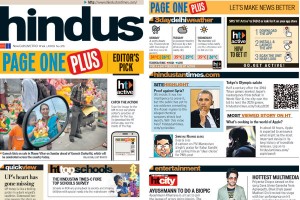
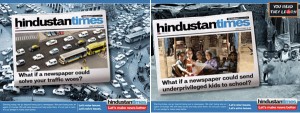
Hindustan Times has launched itself in a ‘Refresh’ed avatar in Delhi and Mumbai introducing an innovative ‘Page One Plus’ and a new brand campaign, ‘Let’s Make News Better’.
An industry-first concept, Page One Plus gives readers a quick snapshot of news and information. From all the top news on the front of the page, and a Quick Edit, to all the ‘news-you-can-use’ around the city- the events that readers can attend, the movies and the TV programmes that they can see. This comes as a tearaway sheet that readers can fold and keep, and use through the day.
Sanjoy Narayan
Said Sanjoy Narayan, Editor-in-Chief, Hindustan Times, “We’ve introduced several brand new features, a few design changes and planned a number of special editorial initiatives.  All of these have been done keeping our readers in mind. The new Hindustan Times will be a reflection of our relentless commitment to inform, analyse and explain. It will tirelessly work to make our readers’ lives better. We will pull out all stops to make our cities better; we will take up the issues that matter the most, pose tough questions to the administrators and drive resolution of our biggest problems.”
Rajiv Verma
This editorial vision will manifest itself in the form of the ‘Let’s Make News Better’ campaign. Said CEO Rajiv Verma, “In this ever-changing world, the newspaper has, over the years, continued to be the most trusted medium. Readers rely on the written word and strongly believe in the power of newspapers – from changing governments to lighting up dark streets. Hindustan Times has always been one of the most credible newspapers in India and has remained a paper for the people and of the people. The ‘Let’s Make News Better’ campaign is a statement of our vision, and is aimed at joining hands with our readers and impacting change around us.”
Shantanu Bhanja, Business Head and VP-Marketing added: “Research clearly confirms that our readers’ needs from the newspaper category are different from what they were, let’s say, even two years back. As younger readers come into the fold and older readers also increasingly access multiple sources of news and infotainment, the challenge is to strengthen affinity towards the newspaper, make their time spent most productive, and, of course, add
Shantanu Bhanja
more readers. In product terms, this refresh – through elements like the Page One Plus and HT Active – aims to do exactly this. Also, as a newsbrand, we continuously keep our finger on the pulse of our readers – and we know that today, they expect their newspaper to not just report news, but to take on their problems, and actively work with them to effect the change that they want to see.”
The high-decibel campaign will be driven by a mix of print, cinema, radio, outdoor and digital, a communique noted. The new, ‘refreshed’ Hindustan Times will offer new advertising opportunities with the advent of Page One Plus and many more windows for innovation, and interesting engagement opportunities for the advertiser through HT Active, its AR platform, as well as the capacity of printing more pages in the mainbook and supplements, the release added.
Media insights firm Ormax Media announced the launch of Ormax Brand Matrix (OBM), a viewership maximization tool. Broadcasters across categories can use OBM to identify a focused plan to increase viewership by upto 20% within six months, notes a communique, adding: The tool has been created using Ormax Media’s expertise in the area of television insights, built over more than five years, with an experience of working across 55 television channels in India.
Said Shailesh Kapoor, CEO, Ormax Media: “Channels make huge investments, both in terms of time and money, to increase their viewership. But it is well-known how difficult getting new viewers, or more time-spent from existing viewers, can be. Traditionally, viewers have been segmented by age, gender, markets, SEC and intensity of viewing, such as heavy and light viewers. In Ormax Brand Matrix, we have turned the idea of viewer segmentation on its head, and used a radically different approach – one that’s simple, intuitive and effective in equal measure.”
Mr Kapoor believes the real power of OBM lies in its construct. He added: “Brand research can be very high on good-to-know value but poor on actionability. While developing OBM, we were very conscious that the tool had to be completely action-oriented, with only one goal – viewership maximization. If an information need or data point is not going to help a channel increase their viewership, it’s not a part of OBM.”
An IAMAI-KPMG report “e-Commerce: Rhetoric, Reality and Opportunity” released on Tuesday has recommended that inventory-based e-commerce be opened to foreign direct investment (FDI). FDI in this format of e-retail is currently not allowed.
The report has suggested that disallowing FDI in this form of e-commerce is a curious policy not followed by many countries including US, China, Australia, Sri Lanka and Pakistan.
The report has established a direct co-relation between internet users, online buyers, value of e-commerce and openness to FDI in inventory-based e-commerce. The report found that India was the only one among a list of developed and developing economies that did not allow FDI in inventory based e-commerce.
The result of this policy may have a direct bearing on a) slowdown in the growth of internet users; b) proportionately low online buyers; and c) shrinking of the e-commerce business.
In the US, there are 245 million internet users and 156 million online buyers, while China has 538 million internet users with 270 million online buyers. Closer home, Sri Lanka, with 3.2 million internet users, has 2 million online buyers and Australia, which is a similar economy to India, has 20 million internet users with 11 million online buyers. Unfortunately, India, which is the 3rd largest in the world with 137 million internet users, has mere 25 million online buyers. It is evident that internet usage will grow much slower than expected if we do not increase online buyers.
Further, the report finds that online buyers and the size of consumer e-commerce industry are high in countries where FDI in inventory based e-commerce business is allowed. In the US, the size of the consumer e-commerce industry is US$224 billion, while in China, it is US$210 billion. In Sri Lanka, it is US$2 billion, while the size of the consumer e-commerce industry in Australia is US$30 billion. In India, with 25 million online buyers, the size of the industry is a mere US$13 billion. This co-relation is clear from the chart as collated in the report.
Salient Features Of e-Commerce in India, USA, China, Australia, Brazil, Sri Lanka and Pakistan
Source: Internet World Stats (2013); eMarketer (2013); Forrester McKinsey Global Institute (2013); Digital-Commerce, IAMAI-IMRB (2013); e-Commerce Disruption: A Global Theme, Morgan Stanley (2013)
Dr. Subho Ray
Commenting on the findings, Dr Subho Ray, President, IAMAI, said “On a larger canvas, we believe that inventory based e-commerce needs deep and sustained investments on technology and other back end operations, marketing and brand building areas where domestic investment is not forthcoming. Opening up of inventory based e-commerce would also take care of the current anomaly where FDI in multi-brand retail is allowed up to 51% whereas it is not allowed on inventory based e-commerce business.”
The report also makes other important recommendations such as more investments in innovation and customer servicing on part of the industry. According to the report, several issues exist on the demand side, supply side and government and regulatory side that need to be addressed to ensure rapid progress of e-Commerce industry in India. The relevant stakeholders would need to focus on some key solution areas to positively impact the e-Commerce industry and to put it on a transformational growth trajectory. These key solution focus areas have been identified as: a) Developing and building human capital; b) Adopting effective business practices; c) Strengthening the technology backbone; and d) Building a favorable yet controlled regulatory environment.
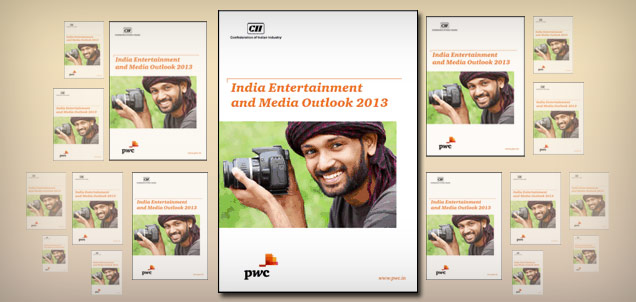
India’s media and entertainment sector is expected to grow steadily over the next five years as per CII-PwC’s latest report titled ‘India Entertainment & Media Outlook 2013’. The industry is expected to exceed INR 224,500 crore growing at a CAGR of 18% from 2012 to 2017. The CII-PwC report will be released on September 13 at the second edition of the CII Big Picture Summit in New Delhi.
The size of the Indian M&E sector increased from about Rs 805 billion in 2011 to almost Rs 965 billion in 2012 representing a year-on-year growth of 20%. This growth was achieved in spite of a relative slowdown in the broader economy, underlining the resilience of the sector. It is expected to grow at about 18% CAGR over 2012-2017 and reach revenues of about 2,245 billion INR in 2017.
“With increasing proliferation of digital platforms, industry participants will need to invest in constant innovation that encompasses products and services, business and operating models and most importantly, consumer experience and engagement. Innovation should be seen as an important enabler to get closer to consumers and profitably deliver relevant content and services,” noted Smita Jha, Leader – Entertainment & Media Practice, PwC India
“This growth is driven by the introduction of cable TV digitization, continued growth of regional media, continued strength of the filmed entertainment sector, fast increasing new media businesses and transparency,” said Chandrajit Banerjee, Director General, Confederation of Indian Industry. “We believe that innovation – faster, better, more efficient, thinking out of the box (and within the box) – would be one of the game changers in this space,” he added.
An entire chapter on ‘The Innovation Imperative in the rapidly evolving E&M sector’ has documented strategies for E&M companies in the CII-PwC report. Indian M&E businesses, like their peers abroad, will need to raise their game in operational agility and customer insight.
India’s television market grew at 13% with revenues increasing from 340 billion INR in 2011 to 383 billion INR in 2012. Filmed entertainment also demonstrated stellar growth in 2012 with sector revenues increasing by about 17% from Rs 96 billion in 2011 to Rs 112 billion in 2012. The print sector revenues are expected to increase at over 9% CAGR to reach Rs 331 billion in 2017 from Rs 212 billion in 2012.
Year-on-year sectors such as internet access (30%), internet advertising (29%), gaming (19%), and music (15%) are expected to continue on their high growth trajectory. The radio sector is also expected to receive a fillip with the successful conclusion of Phase 3 licence auctions and it is expected to grow at a robust CAGR of about 16%.
The rapid rise of internet usage, high penetration of smart phones, digital advertising, wireless broadband, digital content consumption, regulatory interventions have had a significant impact on the M&E sector.
The television and print sectors dominate the industry with about 40% and 22% contribution to industry revenues respectively in 2012. Internet access now commands about 18% share and films 12% of industry revenues.
However, in 2017, television will continue to lead the industry in terms of revenue contribution with 39% share, followed by internet access with 28% share. The share of print and films are likely to decrease 15%Â and 9% in 2017.
Today, if we take the E&M growth without taking internet access and internet advertising into account the size of the Indian M&E sector increased from about 690 billion INR in 2011 to almost 795 billion INR in 2012. It is expected to grow at about 15% CAGR over 2012-2017 and reach revenues of about 1,615 billion INR in 2017.
Overall, the Indian E&M industry is on the cusp of a strong phase of growth, backed by rising consumer payments and advertising revenues across all sectors.
The Telecom Regulatory Authority of India (TRAI) has released its guidelines for television rating agencies.
The Ministry of Information and Broadcasting (MIB) had asked requested TRAI to provide its recommendations on issues related to guidelines/ accreditation mechanism for accreditation of television rating agencies in the country.
Accordingly, TRAI issued a Consultation Paper on “Guidelines/Accreditation Mechanism for Television Rating Agencies in India” on April 17, 2013, seeking comments/views of the stakeholders. Open House discussions were also held on July 1, 2013. Based on comments received in the consultation process and its own analysis, the Authority has finalised its recommendations. The salient features of the recommendations are:
i. The Authority supports self-regulation of television ratings through an industry-led body like Broadcast Audience Research Council (BARC).
ii. To ensure that the shortcomings of the present system are addressed guidelines have been recommended.
iii. Any agency meeting the eligibility conditions can apply and get registered with MIB for doing the rating work.
iv. MIB to notify the guidelines for regulating the television rating agencies based on TRAI’s recommendations, within two months.
v. All rating agencies are required to comply with the guidelines.
vi. Guidelines to cover registration, eligibility norms, cross-holding, methodology, complaint redressal, sale & use of ratings, audit, disclosure, reporting requirements and penal provisions.
vii. The number of panel homes for collecting television viewership data will be a minimum of 20,000; to be set up within 6 months of the guidelines coming into force. Thereafter, the number of panel homes shall be increased by 10,000 every year until panel size reaches 50,000.
viii. The panel homes to be selected from a pool of households, selected through an establishment survey which shall be at least 10 times the number of panel homes for audience measurement.
ix. Voluntary code of conduct by the industry for maintaining secrecy and privacy of the panel homes.
x. Restrictions on ‘substantial equity holding of 10% or more’ between rating agencies and broadcasters/advertisers/ advertising agencies.
xi. The rating agency to set up an effective complaint redressal system.
xii. Data/reports generated by the rating agency to be made available, on paid basis, to all interested stakeholders in a transparent and equitable manner.
xiii. The rating agency to get its entire methodology/processes audited internally on quarterly basis and through an independent auditor annually. All audit reports to be put on the website of the rating agency.
xiv. Penal provisions for non-compliance of guidelines including financial penalty from Rs 10 lakh to Rs1 crore and cancellation of registration.
xv. Six months time given to the existing rating agency to comply with the guidelines.
The full text of the recommendations is available on TRAI’s website at:Â http://www.trai.gov.in/WriteReadData/Recommendation/ Documents/FINALReco%2011Sept2013.pdf
Brandscope India, the outdoor arm of Aegis Media’s Posterscope, has undertaken an interactive digitally-led campaign to promote a new music-based travel show ‘SoundTrek’ on Fox Traveller. The campaign happened in Mumbai and Delhi malls and was supported a flash mob, where a group of youngsters composed fun loving music by dancing over the virtual keys of piano in the mall.
Debarpita Banerjee
Said Debarpita Banerjee, Vice President – Marketing, Fox International Channels “With the increasing clutter in media and communication, there is also a rise in innovative ways of reaching out to one’s desired TG. Â Our show promises to be a visual and melodious treat for music and travel buffs alike. It is this value proposition that we thought of bringing alive through the activation and flash mob. Instead of a simple information dissemination, such initiatives compel involvement from the TG, and make for a more memorable message.”
Haresh Nayak
On the innovation, Haresh Nayak, Managing Director, Posterscope Group commented,”The changing out of home landscape calls for innovative ways of connecting with the consumer, as an agency that is at the forefront of innovation and technology we are glad to be associated with clients like Fox Traveler who understand and are willing to use technology in the OOH space to connect with consumers digitally & interestingly.”
It was my first day at work at the nation’s biggest newspaper house. I could hardly suppress my eagerness to see the famed old lady who had set sail in 1838 and had meandered into homes and lives across the country like no one else had. I expected to find the historic first issue befittingly holding pride of place in the Archives, probably in a temperature-controlled vault, safe and secure from man and nature.
I was stunned to find that no one knew where it was and no one particularly cared. It was going to be six months of playing Sherlock before I prised out from beneath mounds of newspaper bound volumes, this solid paper box, boxes in fact with those priceless original copies of what everyone knows as The Times of India the name which came about much later in 1861. At birth on November 3, 1838 the name was The Bombay Times & Journal of Commerce. The bi-weekly at Rs 30 per year turned daily in 1850. The history of the newspaper is what legends are made of and one could safely say that ensconced in the pages of this longest running chronicle lies the history of India.
Did I say history of India? I’ll add a rider – not chronicled always as it really happened. I will never forget the week spent going through the TOI of April 14, 1919 to a few days beyond. The issues had been preserved on microfilm and it was easy to roll from page to page, enlarging the tiny text and looking for Jalianwalla Bagh massacre (April 13, 1919) for a visiting researcher who had not found it. How could there be no coverage of the incident? We found it eventually – less than 100 words, lost amongst the other national news, saying there had been an incident of rioting in a public garden in Amritsar (!).
In talking about newspaper libraries, one often comes up against the metaphor of the “newspaper morgue.” I have often wondered on this choice of word and who or what led to its global usage. Was it apathy or lack of vision or perhaps both? As I see it, newspaper archives must have existed since the newspaper itself. Unless an effort was made to save a copy and put it into safe custody (the erstwhile morgue), the day’s edition would have been truly a ‘has been’ like its ephemeral nature. This effort by publishing houses the world over to build and maintain an archive of what is said to be “a chronicle of the times we live in” has ensured that the history and socio-political-economic development of people, thoughts, events, and nations did not get lost. This primary information rarely if ever gets into books that one could easily buy or borrow. If not collated and preserved, the news happenings around the world would be lost for good.
Several nations have their National Library as the depository (compulsory deposit of every issue of newspaper, book published) and the archive (ensuring preservation and access) of what is considered the nation’s heritage. Where nations failed, newspaper publishers have stepped in to preserve and share their news archives. The British Library’s newspaper collection comprises 52,000 titles from all over the world, dating back to the 16th century and is housed on nearly 50,000 km of shelving. Â The National Library of Australia has a collaborative programme named Australian Newspapers Digitization Program (ANDP) digitising historic Australian newspapers published between 1803 and 1954 and making them available online. It uses Web 2.0 technology and is truly innovative and unique as it allows users to interact, contribute and add value to the newspaper content – tag, add comments and correct the electronic translated text
Storage and access of newspaper archives has been a problem with every collection which was partly addressed by preserving on microfilm – high on long term integrity but low on search and retrieval, and in recent times as Digital Archives – high on ease of retrieval and dissemination but plagued with technology obsolescence issues. A mix is ideal if you have the budget.
Having handled print, microfilm and digital archives, I can say that news research is medium-agnostic and has much to do with the archivist’s research skills and passion to find answers. Every newspaper house that has a Library/Archive would have a recollection of a person/s who made that difference and added that value to the business of newspaper production. Mr Roy of Anand Bazaar Patrika, Ram Kolhatkar of The Times of India archives, and many others that scribes would remember.
News clippings, the most important source of reference and research in a news library at one time has been replaced now by Digital Archives, but the key to search and retrieval is still the indexing or in digital parlance – metadata. Else it will be as exhausting as Google. I often joke with my editorial colleagues that Google is not just exhaustive but exhausting – whether you admit it or not you rarely go beyond five pages of results and that’s when you are the diligent kind. What gets served therein rarely gets checked on authenticity let alone authoritativeness. How many bother about corroboration. Wikipedia has become the first and last stop for research, oblivious to its basic tenet of freely editable information. This makes it all the more critical for a newspaper house to develop and maintain its own authoritative and wholesome Archive and professional researchers.
A newspaper archive is an important repository of the history of the paper’s interaction with its community. It is also a reflection of the changing mores of the community and society as a whole. I have seen research studies on umpteen anthropological issues get addressed from the archives of newspapers. Say the matrimonial columns over the decades – terrific insights on values, religion-caste, education, aspirations. Interesting study when ads by parents started getting replaced by ads by the groom/bride and how tone and tenor of expectations changed.
Advertisements – the ever-changing creative sphere of communication between seller and buyer. Tracing back advertisements by say HLL, LIC, the colas or film releases through newspaper archives is like looking into a treasure trove and coming up trumps. You would be surprised to know that in the newspapers of yore, the front page was fully advertisements. Anything from a hat to a horse carriage found ad space. The creatives make for delightful reading of commerce in the 1800s and 1900s.
I remember a particularly impressive exhibition held by the Delhi Public Library to celebrate their 60th anniversary in 2010. They called it – The Newseum – a unique display of their newspaper archives, presenting a visual history of Hindi & English newspaper advertisements since 1951 as well as memorable photographs, cartoons, articles giving a telling insight on those decades.
At a conference held in February 2013 by the Association of Media Libraries and Archives (AMLA), a young research student of JNU Library shared his work on creating an Archive of Indian Newspaper Cartoons as a resource-base for socio-political economic research.
So are archives and archivists important in the media industry? Yes, of course, and more so in the days of unauthenticated internet content and with the advent of a Digital Archives Management System (DAMS). Add to that the instantaneous needs of 24×7 news delivery and new media. Morgue? It is time for a new metaphor, perhaps.
Anita Pujari was until recently Vice-President, Research Archives & Syndication at DNA and Head- Archives and Syndication of the Zee News cluster. She was head of the archives at The Times of India group
Getting news media top brass to take questions on their product isn’t easy – either they don’t trust media websites or other news journalists or just don’t think it’s critical for them to speak to journalists even though expect their own staffers to chase news stories. MxMIndia though has been fortunate to get many of them to speak on their moves – especially those from the mainline dailies.
Earlier this week, leading daily Hindustan Times introduced a refreshed look with some changes in the design, but most significantly an innovation in the form of a slim tearaway sheet on top of the Page 1 of the main paper called the ‘Page One Plus’. To coincide with the refresh (created by the HT Design team led by Anup Gupta), a new multiple media brand campaign by Lowe Lintas, New Delhi was unveiled.
In an extensive emailed interaction with Editor-in-Chief Sanjoy Narayan and Shantanu Bhanja, Business Head and Vice President – Marketing, the editor-marketer duo take questions on Page One Plus, the editorial direction and why paid content in the form of promotional features hasn’t gone away from the paper.
01. We’ve been hearing about the changes that have been introduced, but one had expected it to happen after your new managing editor Nicholas Dawes had settled in?
We have been working on the refresh for almost a year. No such big initiative is ever dependent on one individual; even here, it has been one big, multi-department project driven by the editorial, design and marketing teams. As for Nicholas, we are delighted to have him on board. His experience and expertise is going to further strengthen the product, as we seek to make continuous improvements day after day.
02. The use of the tearaway, slim jacket as an editorial add-on is interesting. Since HT also carries full ad jackets and full page ads on Page 1, how will the ‘Page One Plus’ be configured in the pagination (given the various full-page ads)
Page One Plus, which is an industry-first concept, is an integral part of the regular Page One, and research and preliminary findings point to very high likability because of the utility value. Ad jackets and full-page ads will continue the way they have been, giving advertisers the high impact they desire.
Any size restrictions for ads on Page One Plus?
We have put together a set of advertising norms for Page One Plus. The endeavour is to give readers sufficient news and information, while also giving the advertiser some additional premium advertising space which they have not had hitherto.
03. Can you take us through (the investments in) production facilities that led you to introduce the ‘Page One Plus’?
We have invested substantial amounts in our printing facility in Greater Noida, following on from our previous large investments in Mumbai printing facilities, to build significantly higher capacity both in terms of pagination and number of copies.
04. We notice that the ‘Page One Plus’ has been introduced only in Mumbai and Delhi. What about the other editions which have also gone in for a new look? Will we see a Page One Plus-like innovation also in Hindustan or Mint?
To begin with, Page One Plus has been launched in our Delhi-NCR and Mumbai editions. We are evaluating the option of taking it to other cities we are present in. Â At the moment, there is no plan for incorporating it in Hindustan or Mint.
05. Was the movement of business to the main paper in the Delhi edition caused by the addition of the ‘Page One Plus’?
Not really. In Delhi, we moved HT Business to the main book following reader requests over the last few years. Research indicated that readers preferred business and industry news to be part of the main newspaper; incidentally, it also helps advertisers who have been keen addressing readers of the Business section within the Main-book environment.
06. Could you give specifics on the new editorial features and columnists? Any new columns, any replaced/dropped?
We’ve introduced a number of new features and columnists as part of this refresh and you’ll see them soon. We continuously evaluate our list of columnists and try to ensure we have an eclectic mix of writers. We’ve also introduced a community column. For instance, we had a Delhi-based Maharashtrian writer contribute to the Delhi edition on the occasion of Ganesh Chaturthi.
07. Your last para notes: “…we want to change the depressing narrative of news around us. From corruption and inflation to crime against women, there’s so much negativity around us. Let’s come together to fight this”. What does the “change the depressing narrative of news around us” mean? On Day 1 of the new-look we’ve seen the Delhi edition leading with the UP story while Mumbai had Leander Paes taking pride of place on the top? So, will the new HT be a more, activisty paper in the civic sense rather than politics, corruption and government inefficiencies
News today is full of negativity – from stories of strewn garbage to crime against women and deaths due to bad roads to the state of education that continues to plague a 21st century India. HT’s approach will be to take this ‘bad news’ head on. We will put the spotlight on these issues — both local and national — that affect our readers, cover them relentlessly, partner citizens and impact change. We will, together, make news better. The ‘Let’s Make News Better’ campaign is a statement of our vision, and is aimed at joining hands with our readers and impacting change around us.
Therefore, HT will certainly focus on civic issues which impact readers, but also continue to report and follow up on all types of issues ranging from politics to corruption and government inefficiencies, which interest and affect the readers just as much.
08. With the rising dollar rate, there’s been a pressure on newsprint and production costs. HT too has dropped some pages over the months (in Mumbai at least, unsure about Delhi). In the refreshed paper, do we see the return of any of the features done away?
While the industry has been forced to cut columns, we have not dropped any special features, sections or columns. The refreshed paper will, in fact, see a few interesting additions.
09. Will we see any revision of cover price in the near future?
Price revisions will happen from time to time, depending on the economic situation, as indeed they have happened in the past when the cost increases necessitate that.
We have remained true to our editorial values, ensuring that we are carrying due disclaimers for our readers whenever there are promotional features in any section, and we will continue to do so.
Ogilvy & Mather announced it has agreed to acquire a majority stake in PennyWise Solutions Pvt Ltd, a leading digital technology and production company.
PennyWise will serve as the digital technology and production centre of excellence for Ogilvy& Mather in India. It will power best practice digital delivery for the agency’s India network as well as the O&M APAC network. The Hyderabad-based firm was established by current CEO Anand Morzaria in 2003, and has grown from a six-member start-up to 140+-staff leader in digital delivery.
Piyush Pandey
Said Piyush Pandey, Executive Chairman & Creative Director, Ogilvy South Asia: “Creative is the soul of Ogilvy. And digital is today’s opportunity for creative expression. Digital is a critical growth pillar for Ogilvy India. As we build digital services, talent and thinking across the organisation, we also need partners with different skills.PennyWise are, quite simply, the best digital technology and production professionals in the business. This is a strategic investment. It will combine the digital skills and services of both companies to deliver solutions for our clients across India and APAC.”
PennyWise has a global customer base, covering Europe and North America, as well as India. The current client portfolio includes Vodafone India, Johnson & Johnson and WPP Agencies including Ogilvy & Mather, Soho Square and a host of others.
Said Anand Morzaria, CEO, PennyWise Solutions: “This partnership will help us combine our deep and proven expertise in developing digital and new media technology solutions with Ogilvy’s own offerings for clients across India and other APAC markets.”
Kunal Jeswani
Kunal Jeswani, Chief Digital Officer, Ogilvy India added: “Ogilvy represents excellence in digital strategy and ideation. PennyWise represents excellence in digital technology and production. They are exactly the kind of partner we were looking for.
 VRL Media Ltd has announced the appointment of Sanjeev Kulkarni as Vice President for Sales and Marketing – Vijayavani. VRL Media’s Vijayavani daily has achieved a 56% increase in circulation as per ABC figures and has recently received a National Award for Excellence in Printing (NAEP).
 How does mobile couponing work?
 By A Correspondent
 An industry-first concept, Page One Plus gives readers a quick snapshot of news and information. From all the top news on the front of the page, and a Quick Edit, to all the ‘news-you-can-use’ around the city- the events that readers can attend, the movies and the TV programmes that they can see. This comes as a tearaway sheet that readers can fold and keep, and use through the day.


 Said Shailesh Kapoor, CEO, Ormax Media: “Channels make huge investments, both in terms of time and money, to increase their viewership. But it is well-known how difficult getting new viewers, or more time-spent from existing viewers, can be. Traditionally, viewers have been segmented by age, gender, markets, SEC and intensity of viewing, such as heavy and light viewers. In Ormax Brand Matrix, we have turned the idea of viewer segmentation on its head, and used a radically different approach – one that’s simple, intuitive and effective in equal measure.”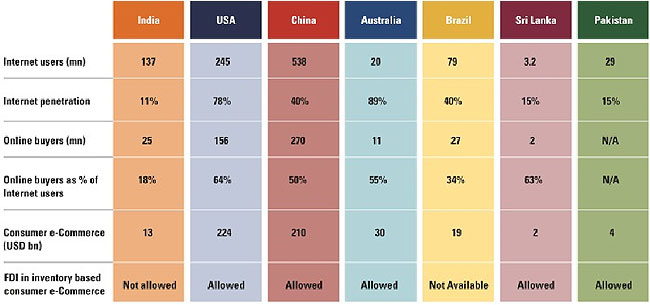



 It was my first day at work at the nation’s biggest newspaper house. I could hardly suppress my eagerness to see the famed old lady who had set sail in 1838 and had meandered into homes and lives across the country like no one else had. I expected to find the historic first issue befittingly holding pride of place in the Archives, probably in a temperature-controlled vault, safe and secure from man and nature.