Category: MEDIA

  • Nickelodeon targets Rs 250cr fm merchandising this yr

    By Ananya Saha


    Sandeep Dahiya

    Nickelodeon, the children’s channel from Viacom 18, began its merchandising journey five years ago. Merchandising became a critical part for Nick India to engage and interact with its young audience. While in the recent financial year-end, merchandising only contributed to high single-digit percentage towards the revenue, Nick India managed collective net retail sales of Rs 120-130 crore (of which 8-20% go towards paying royalties), according to Sandeep Dahiya, SVP & Business Head – Consumer Products, Viacom18.


    This financial year, Mr Dahiya hopes to garner revenues of Rs 250 crore through merchandising. And he is hopeful to achieve the target, given that Nick has partnered with Toy Triangle to bring an exclusive toy range of Teenage Mutant Ninja Turtles targeted towards young boys in India. The range will debut on May 1 at Hamleys. Post two weeks, it will be available at various big-box retailers and large format stores such as Shopper’s Stop, Hypercity and Reliance Timeout.


    The launch will be supported by a 360-degree marketing campaign across the nation. Mr Dahiya reasoned, “We could not have timed the launch better. The series has registered some great ratings across US, UK, Canada and Australia, and is now set to launch in India in early May, coinciding with the launch of the toy range.” He added that beginning with toys, Teenage Mutant Ninja Turtles will soon expand into other key categories – stationery, back-to-school, publishing and apparel.


    Syed Adil Qamar, Country Head, India, Toy Triangle says, “We are delighted to partner with Nickelodeon India on such a huge property, which is already creating waves internationally. We have already received an overwhelming response from retail buyers who believe that TMNT will re-invigorate the toy aisle in the action.”

     

  • Data reporting is complex as of now: Neeraj Vyas

    The start to the sixth edition of IPL couldn’t have been better. At 100 million, the week 1 numbers from the tournament has generally surpassed expectations. But the sentiment is not as cheerful for Neeraj Vyas, Business Head of SET Max. According to him, the viewership numbers could have been more than what was reported had the digitization exercise not been underway. Especially data being reported from LC1 towns, which is turning out to be problematic for broadcasters, according to Mr Vyas.

     

    Mr Vyas shares his viewership sentiments with Johnson Napier of MxMIndia, and what he expects from the tournament in the coming weeks.


    The opening week numbers for IPL 6 seem impressive. Has the outcome been along expected lines?

    We have reported 100 million viewers this year compared to 78 million in the first week last year. So in a way it is good. But given the fact that TAM’s reporting of numbers has undergone such a sea change since September 2012 when the DAS exercise kicked off…that is when a change was observed in the Universe size. That was also a time when the LC1 data started to be reported and the weightage again changing to 20-25 per cent of the total Universe…this suddenly resulted in ratings coming out of rural India out of nowhere. If you were to do an apple-to-apple comparison, all of this was not happening last year. Also when the IPL 6 started off was when the phase II of DAS was underway…so it’s a fairly complex data reporting environment right now where there could be a lot of abnormalities. I am not saying there are but there could be. So given all the flux in the market, the fact that we opened to these numbers goes to show that there is a massive appeal in the IPL and that through our efforts we have managed to get viewers to come and sample the property by large numbers again this year.


    But digitization in a sense has helped you to attain high viewership numbers, hasn’t it?

    Digitization has indeed helped; if you see the GRPs of SET Max it has jumped from 134 last week to 245 this week. We have virtually driven the growth with this property.


    Despite the rise in overall viewership, the average match ratings for the first week have remained steady compared to last year. Why haven’t the numbers seen a spike?

    As I said, the LC1 data from markets like MP, UP etc have an audience base of 0-50,000 which translates to very minute and small towns but these places will never give you high ratings because of the problems faced like power shortage for 7-8 hours etc…so television numbers for channels including GECs have only come down due to LC1. Also, the advertiser doesn’t buy a spot in the IPL to reach out to the LC1 audiences…so if you remove the LC1 audiences and compare it to what it was last year then there is a growth at an all-India level of 4.1 and in HSM markets at 4.5. So it’s a hugely successful story for us.


    Do you think you were able to achieve the 100-million mark primarily due to the marketing initiatives undertaken? Any other factors that helped propel you to get there?

    The marketing initiative has indeed worked well for us. The track is something that is being loved and imitated by audiences across age groups. It has helped lift the happiness factor among the masses and the marketing execution has only fuelled in it getting there.


    Does this feat prove wrong the notion that cricket is seeing a downfall in India in recent times?

    IPL is a brilliant mix of cricket and entertainment. The matches have been good so far and the intensity has been phenomenal. So the start has been excellent so far.


    With such a bumper start, what are your expectations from the rest of the tournament?

    It’s too early to predict. As I said, because of the DAS 2 issue there is always going to be a fluctuation in the numbers that get reported…some places digitization is happening in other places it is not..and we are talking about 38 cities here. Had it been any other year I could have given an estimate but that looks difficult right now with the DAS exercise underway.


  • Big CBS expands reach in 1mn+ HSMs

    By A Correspondent


    Riding on the back of digitization Phase II, the male-centred channel Big CBS Prime has expanded reach to more than a million towns across HSMs. The channel has inked deals with leading distribution platforms and will reach 30 million households across the markets of Gujarat, Punjab, Maharashtra, Madhya Pradesh, Uttar Pradesh, Rajasthan and eight metros.


    Key distribution deals across HSMs, which enhance the channel’s reach in the markets thereby increasing sampling opportunities as follows:


    Market Towns Distribution Platforms Penetration (%)
    Gujarat 1mn+ Ahmedabad, Surat, Rajkot, Vadodara GTPL 100%
    Punjab 1mn+ Amritsar, Jalandhar, Ludhiana Fastway 100%
    Punjab 0.1 to 1mn Chandigarh Fastway 100%
    Maharashtra Pune, Nashik, Nagpur, Aurangabad Hathway, IN Cable 75%
    Madhya Pradesh Bhopal, Indore, Jabalpur DigiCable, SITIcable 60%
    Rajasthan Jaipur, Jodhpur DigiCable, Den 60%
    Uttar Pradesh Agra, Kanpur, Allahabad, Lucknow, Meerut, Varanasi Digi Cable, Moon Cable, Sea cable, Silverline Partially


    Anand Chakravarthy

    Anand Chakravarthy, Business Head, Big CBS Networks, said, “With the launch of the Hindi language feed, BIG CBS PRIME now expands into 1mn+ HSMs in the country, expanding its audience base. The channel has seen very encouraging results over the last few weeks, since launch of the language feed in metros, and we expect to get an even better response in HSM’s. We are sure that the channel will build a strong viewer base ensuring better ROI for marketers and advertisers.”


    The channel, which is already available on all leading DTH platforms and national MSOs in metros, has now inked deals with regional MSOs as well, making its feed available to a larger cross-section of male audiences, showcasing the best international content in a dual feed.


    This expansion will also ride on Reliance Broadcast Network’s recently launched consumer awareness campaign called ‘Choose Your Set Top Box Wisely’ / ‘Samajdhari se Chune, Apna Set Top Box’. The 12-week campaign, launched April 1, has been designed to empower consumers with information on digitization. Simultaneously, it also offers distribution partners an excellent opportunity to strengthen brand equity.


  • Ormax to forecast Hindi GEC launch viewership

    By A Correspondent


    Media insights firm Ormax Media announced the launch of OWA, India’s first scientific launch viewership forecasting model for Hindi GECs. OWA stands for Opening Week Average. The model forecasts the opening week average viewership of all weekday launches across six Hindi GECs (Star Plus, Zee TV, Colors, Sony, SAB & Life OK) from two weeks before launch till the week of launch.


    The OWA model takes into account a series of input parameters. These include inputs from Ormax Media’s Hindi GEC awareness tracking tool Ormax Showbuzz, which tracks the performance of new Hindi GEC launches for more than four years now. Ormax Showbuzz covers 14 cities across India, with an annual sample size of over 42,000 Hindi GEC viewers. Other OWA model inputs include slot competition, audience profile and channel equity, on which normative data has been built by Ormax Media over the last five years.


    Shailesh Kapoor

    Speaking about OWA, Shailesh Kapoor, CEO, Ormax Media said: “The forecast will be available upto two weeks before launch, giving the broadcasters enough time to take corrective action in their creative and media strategies. The forecast model that has self-learning built into it, guaranteeing progressively better results with time.”


  • IAA launches webinar series, Google’s Rajan Anandan to address inaugural session on April 25

    By A Correspondent


    The International Association of Advertisers (India Chapter) has announced its next interesting initiative – the Face 2 Face series with the theme ‘World Goes Digital’.*


    Srinivasan Swamy

    Speaking on the new initiative, Srinivasan K Swamy, President, IAA India Chapter, said, “With digital media gaining prominence, an increasing number of advertisers are reaching out to consumers via the internet and mobile platforms. However, there is still a fair deal of inertia when it comes to embracing the interactive world. With the Face 2 Face webinar series, we hope to connect professional marketers and agencies with trends, ideas, strategies and success stories from the digital frontier.”


    Abhishek Karnani

    Abhishek Karnani, Director, Free Press Journal and Manish Advani, Head, Marketing & Public Relations, Mahindra Special Services Group, are co-chairing this IAA webinar series. “Our attempt is to build a platform where professionals can share knowledge and experience on the digital medium. The interface will allow a live interaction with each of the experts we will bring to the series,” said Mr Karnani.


    “We are using the Google Hangout platform for the interaction. And coincidentally, we have Mr Rajan Anandan, Managing Director, Google India, in our inaugural session on Wednesday, April 25 at 3pm,” said Mr Advani.


    In the last few months, the International Association of Advertisers (India Chapter) has conducted a series of activities – the IAA Leadership Awards, a unique Gender Sensitization Seminar, the IAA Olive Crown Awards, and the monthly “IAA Debates” on topical issues concerning the industry.


    *Disclosure: MxMIndia is partnering this IAA initiative


  • Web18 elevates Joyson Thomas, Rajan Srinivasan

    By A Correspondent


    Web18, the digital content arm of Network18, has strengthened its leadership structure by assigning new mandates to two senior executives – Joyson Thomas and Rajan Srinivasan. Mr Thomas who was earlier the COO at Web18 has now been entrusted the task of leading Moneycontrol.com as CEO. Mr Srinivasan who was serving as the head of sales and marketing at Web18 will now take charge as the CEO of ibnlive.com. This move is part of Web18’s progression towards a decentralized operating structure built around key strategic business units.


    Commenting on this development, Lakshmi Narasimhan, CEO, Web18 said, “At Web18, we have built some world-class digital brands, which enjoy deep engagement across communities and stakeholders. We are now well-positioned to scale up our leadership and this move is essential to achieving that objective. Moneycontrol has been central to our growth story and Joyson has been a force behind it since the beginning. His expertise will be critical in taking it to yet another benchmark in the financial space. Rajan has ably led our monetization and brand building effort and we’re confident that he will now steer the ibnlive and digital news operations based in Delhi onto new successes.”
    Speaking on his elevation, Mr Thomas said, “It’s been a momentous journey so far and my experience with Moneycontrol has been intense and enriching over the years. I hope to bring it to bear as we thrust ahead and further strengthen its leadership. I look forward to working with the team to ensure we add new dimensions to Moneycontrol’s growth path.”


    Said Mr Srinivasan, “Ibnlive has led from the front as general news has rapidly evolved in the context of social media and mobile growth. The brand is at a very exciting juncture in its journey and I look forward to working with the team to ensure we succeed on all fronts.”


    Mr Thomas has over two decades of experience in the financial media and advisory space. He was one of the founding members of the Moneycontrol team and has managed a variety of product and technology mandates at Web18 since 1999. Mr Srinivasan has 18 years of experience in the media industry, including nine in the digital space. Prior to joining Network18 in 2003, he has worked with the Indian Express, Sony Entertainment Television and BBC World.


  • Indiagames & Parle launch IPL Cricket Fever game

    By A Correspondent


    Disney UTV’s Indiagames has launched the official IPL season 6 mobile game, ‘IPL Cricket Fever 2013’. It has associated with the Parle brand, 20-20, within the game.


    The in-game branding includes mat branding, four branding (every time the player hits a four), cheerleader stand branding, in-stadia branding etc. Available on Android, the mobile game is close to the actual on-ground IPL match with all official 9 teams – Mumbai Indians, Chennai Superkings, Sunrisers Hyderabad, Delhi Daredevils, King XI Punjab, Kolkata Knight Riders, Rajasthan Royals, Royal Challengers Bangalore and Pune Warriors.


    Vishal Gondal

    Vishal Gondal, Managing Director – Digital, Disney UTV said, “We have been providing cricket enthusiasts with the official IPL mobile game year-on-year successfully since season 3. With the IPL frenzy growing with every passing year, we have witnessed millions of downloads of the game which has been growing exponentially.”


    This is the second time that Parle has associated itself with a mobile game. In 2011, Parle G featured in Ra.One’s official game.


    Pravin Kulkarni, General Manager, Marketing, Parle Products said, “India is a cricket loving nation and IPL is the current craze in the audience. The format of IPL, which is T20, fits perfectly well with our brand Parle 20-20 cookies.”


  • TV Street Maps increases reach by over 300%

    By A Correspondent


    TV channel distribution and connectivity monitoring system TV Street Maps (TSM) has announced an increased coverage in its geographical coverage. TSM’s footprint now stands at 2,200 cable head-ends and control rooms across more than 1,700 towns across the country. This is a massive increase from the 250-odd towns that TSM covered till last year.


    Given the continuous ground level changes that happen at the cable operator’s end in terms of channel availability and lineup, TSM delivers day-to-day TV channel monitoring by head-ends and towns to the TV industry. TSM also monitors Cable & DTH Channel Packs, Pack prices and EPG quality – all of which are mission critical for the TV industry in view of digitization.


    The quantum increase by TV Street Maps in coverage, from 700 head-ends last year to 2,200 already so far, translates into more robust and widespread distribution data collection. TSM Business Head Joydip Kapadia says, “We’ve seen tremendous support from broadcasters for our initiatives. They understand that in the fast evolving digital landscape, distribution, reach and quality play key roles. The consumer is spoilt for choice and the onus is on the broadcasters to ensure that their channel is readily available to viewers in the best possible quality. Last year, TSM promised the industry a huge expansion and we have delivered it.”


  • Into the all-new world of Facebook Home


    Mindshare’s “Original Thinker Series” is a series of thought pieces and PoVs from Mindshare on a range of subjects. These cover topics like digital trends, innovation and new platforms and products in the media and technology, to name a few. To subscribe or find out more, please mail Shruti Dixit at Mindshare (shruti.dixit@mindshareworld.com). Republished with permission.


    By Ciaran Norris


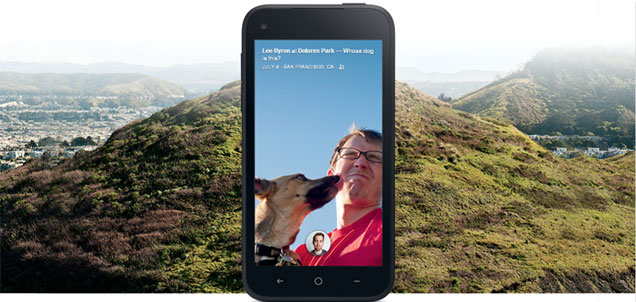
    After years of rumour, we finally saw the release of the Facebook phone a couple of weeks ago. Except it wasn’t a phone at all, rather a phone running Facebook Home, an application which changes many aspects of how the phone operates. Rather than get involved in a lengthy, and costly manufacturing and development battle with the likes of Apple, Android and all of the device manufacturers, Facebook has decided to take a shortcut in its attempt to rule the mobile web.


    Details

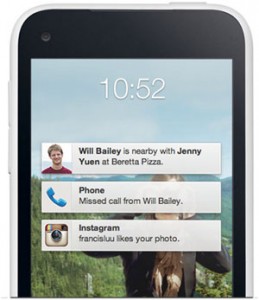
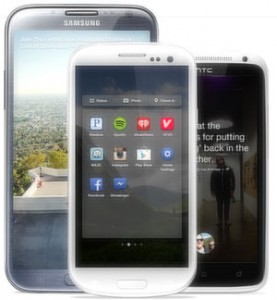
    The elements of Home that have generated the most comment are the Cover Feed and Chat Heads. The first swaps out a phone’s lock and home screens for live versions of the owner’s News Feed. Chat Heads allows people to use Facebook’s messaging services even when using another app. Both of these highlight how tightly integrated Facebook is in the new system, replacing or overlaying on top of previously core functions.


    Whilst the new system was previewed on a mid-priced new HTC Android phone, it will be released through Google Play and available on a wider variety of handsets overtime. Facebook clearly have designs on the hundreds of millions of Android handsets worldwide. There will be no Apple equivalent, as Apple would never allow such tinkering with its core products.


    Implications

    Facebook’s Mark Zuckerberg has claimed that Home will help sell more Android phones. However the fact that it was launched on a phone retailing at $99 suggests that in fact Facebook is using Android’s mass-market dominance as a Trojan Horse; this isn’t something aimed at the early-adopters – it’s for those for whom Facebook essentially is the Internet.


    This is a clear play by Facebook to try to replicate its dominance of the desktop web on mobile devices – many put its disappointing IPO down to the fact that it wasn’t adapting to mobile quickly enough. It’s certainly an ambitious and aggressive move, potentially building up its already massive data pools, and enabling it to create truly personalised ad opportunities with mobility at their core. Some have suggested that Apple will be forced to start to mimic the flexibility of the Android platform in order to allow people to download Facebook Home, but it could equally have the entirely opposite effect.
     

    The recent move to align Android and Chrome under one team, following the departure of founder Andy Rubin, could have many reasons. But one could be that it is starting to become hard to see how Android materially benefits Google’s bottom line. Samsung & Amazon barely mention Android anymore, China’s fastest growing mobile company uses it, yet most of Google’s services are banned or limited in that country, and now one of Google’s biggest competitors has launched a product that could well cut Google’s products out of the picture.


    Summary

    Facebook’s mobile strategy is now clear to see: try to dominate the platforms, rather than replicate or compete with them. For advertisers who have invested heavily in Facebook up till now, this could well offer opportunities to start to take their messages to everyday phone-owners as they go about their day-to-day.

     

    But equally Facebook’s ambitious attempt to take over the main parts of the mobile experience could well back-fire, whether due to consumer concerns about the amount of data Facebook will now have access to, or because Google decides it is no longer interested in building its competitors’ businesses as well as its own.


    Ciaran Norris is @ Digital Nation, Mindshare


    Photograph source: https://www.facebook.com/home


  • TRAI seeks views on TV ratings guidelines, accreditation

    By A Correspondent


    The Telecom Regulatory Authority of India (TRAI) has released a consultation paper on ‘Guidelines/Accreditation Mechanism for Television Rating Agencies in India’. The Minisgtry of Information and Broadcasting MIB has sought TRAI’s recommendations for laying down comprehensive guidelines and an accreditation mechanism for TRP (Television Rating Points) rating agencies in India to ensure transparency and accountability in the rating system.


    A release from the TRAI said that since TRP ratings indicate the popularity of a channel or a programme and assists advertisers, broadcasters and advertising agencies in making business decisions. Better ratings would promote a programme/channel while poor ratings will discourage a programme/channel or content. Incorrect ratings will lead to production of content which may not be really popular while good content and programmes may be left out. Therefore, there is a need to have an accurate measurement and representative television ratings for the programmes.


    The importance of a credible, transparent and representative television audience measurement system is recognized the world over. At present television rating in India is being done by only one agency and issues related to credibility and transparency of the ratings services in India has been raised by certain stakeholders.


    The key issues discussed in the consultation paper pertain to:

    Establishing an accreditation mechanism for the rating agency

    Methodology of audience measurement

    Sample size

    Secrecy of sample homes

    Cross holding between rating agencies and their users

    Complaint redressal

    Sale and use of ratings

    Disclosure and reporting requirement

    Audit competition in rating services


    Written comments are invited from the stakeholders by May 9, and counter-comments by May 16.


  • Razorfish acquires Neev; aims to be No 1 in 18 months

    By A Correspondent


    Publicis Groupe announced that it has signed an agreement to acquire Neev, one of India’s leading technology services providers specialising in eCommerce, SaaS (Software as a Service) and cloud applications across web, social and mobile. Neev will be aligned with Razorfish, one of the largest interactive marketing and technology companies in the world.


    The acquisition triggers the launch of the Razorfish brand in India, and the move follows a number of acquisitions recently announced by Publicis Groupe and further strengthens its digital leadership globally as well as its presence in India and the greater APAC region.


    Kanika Mathur

    Kanika Mathur, Managing Director for Razorfish and Digitas India said, “Neev is one of the leading technology services company specialising in e-commerce and cloud applications across social and mobile. It’s more like a mini-Razorfish in India and that was what was exciting about the venture when we spoke to each other. Razorfish is all about business transformation using technology. It’s about creating new business models for clients and about providing a brilliant experience to the consumer.”


    Srikant Sastri

    Srikant Sastri, VivaKi Country Chair for India, who is overseeing the acquisition of Neev, said, “With the acquisition of Neev, we have added cutting-edge tech capabilities. We are now twice as large as any other global network in terms of digital team-strength and revenues, and unparalleled in breadth and depth of digital skills.”


    Founded in 2005 and based in Bengaluru, Neev has aggressively grown and now employs a team of 250 specialists, of which over 220 are technologists, with experience and expertise in leveraging cloud and mobile technologies and promoting innovation that drives business success.


    Elaborating on the agency structure Ms Mathur said, “Neev is growing very aggressively and by the end of first quarter next year we think we’ll be about 450-odd people in India. I think digital marketing as well as digital technology is being adopted at a very fast pace in India and Asia Pacific, so we do feel that we are on a huge growth curve on that front. While our technology hub will be in Bengaluru, we will be present across New Delhi, Mumbai, Pune and Bengaluru.”


    When asked about the agency’s clientele in India, Ms Mathur said that they would initially be tapping global clients at Razorfish and have already started engaging with a few of them. “While we cannot disclose any names as yet but it would suffice to say that we will be moving very fast in the Indian market.”


    Explaining the market and how it has evolved over the years, Ms Mathur said that the space that Razorfish operates in is growing very rapidly. “But when we look at the market we tend to look only at media buyers. If you were to look at technology and using digital to enable new services and products, that’s really the space that we operate in. We can’t really say that the market is about media only. Media, creativity and technology – the intersection of this is where we are placed right now.”


    As for the anticipated growth story, Ms Mathur said Razorfish had a good growth in 2012-13 at about 40 per cent and would like to keep on doing better as they go forward. “While right now we are one of the top 3 players, the goal certainly is to be the No 1 player in the next 12-18 months.”


    The agency will operate as Razorfish Neev led by Neev CEO, Saurabh Chandra. He will report into Kanika Mathur with a direct connection to Ray Velez, Global CTO for Razorfish.