Category: MEDIA

  • DNA to launch Delhi edition on May 13


    By A Correspondent


    The six-edition Daily News & Analysis (DNA) is set to launch an edition in Delhi on Monday, May 13.


    May 13 is also Akshay Trittiya, a day normally considered auspicious for starting new projects or buying gold, automobiles or property. The editorial team at DNA is in place with Saikat Datta as Resident Editor. An aggressive marketing plan is scheduled give the newspaper prominence in a market dominated by Hindustan Times and The Times of India.


    In the last quarter, under the leadership of Dr Bhaskar Das, group CEO, News Cluster, DNA has gone in for a new look – in the paper as well as in the team bringing it out and running the company. The subscription offer has been withdrawn and the emphasis is on profitability without compromising on editorial quality.


    DNA is now owned and managed by the Zee group. With the Delhi launch, the newspaper will have editions in seven centres. Currently, while Mumbai, Bengaluru and Pune are managed by DNA, the Ahmedabad, Jaipur and Indore editions have been franchised to the Dainik Bhaskar group, which co-owned the paper until a few years back. The Delhi edition will be managed by the Zee-owned DNA.


  • Newspaper degrowth: Reason to worry?

    By Ananya Saha


    Is the print market looking at bad times ahead? The recent IRS figures do compel one to think on those lines. Most of the print categories, including national and regional publications, have registered declining AIRs. Print Media witnessed a growth of 0.8 percent CAGR from 2012 Q2 to 2012 Q4. Though an increase, it is the least when compared to other media during the same period: TV (5.2%), Cable and Satellite (8.9%), Radio (1.9%), Cinema (11.6%), and Internet (24.2%). The 0.8 percent growth seems much less when literacy has increased at 3.7 percent CAGR during the said period.


    What the IRS says

    Jagran and Dainik Bhaskar, the top two Hindi dailies to lead in the Top 10 publications, have lost AIRs, going from 16.47 lakh in Q3 to 16.37 lakh in Q4 and 14.49 lakh in Q3 to 14.41 lakh in Q4 respectively. The only AIR gainers in the category are Dainik Bhaskar, Hindustan, Malayala Manorama and Rajasthan Patrika. Of the Top 10 Hindi Dailies, six show a decline in readership. The publications that saw a dip in AIRs include Dainik Jagran (1.04 lakh AIRs), Dainik Bhaskar (75,000 AIR), Amar Ujala (1.02 lakh AIR), Punjab Kesari 41,000 (AIR), Navbharat Times (6,000 AIR) and Nai Dunia (1.95 lakh AIR).


    TOP 10 PUBLICATIONS

    Publication Language Periodicity 2012 Q3 2012 Q4
    DainikJagran Hin D 16474 16370
    DainikBhaskar Hin D 14491 14416
    Hindustan Hin D 12242 12246
    MalayalaManorama Mal D 9752 9760
    Amar Ujala Hin D 8536 8434
    The Times Of India Eng D 7653 7615
    Daily Thanthi Tam D 7417 7334
    Lokmat Mar D 7409 7313
    Rajasthan Patrika Hin D 6818 6837
    Mathrubhumi Mal D 6415 6334


    The Times of India maintained leads the Top 10 English Dailies category but has registered negative growth and lost 38,000 AIRs: from 76.53 lakh in Q3 2012 to 76.15 lkah in Q4. On the second position, Hindustan Times has added 34,000 readers going from 37.86 lakh to 38.20 lakh readers. While the third daily in the category The Hindu has lost numbers, The Telegraph at fourth position has added AIRs. DNA, Mumbai Mirror and The Tribune have added AIRs while Deccan Chronicle, The Economic Times and The New Indian Express have seen a dip in readership.


    Top 10 English Dailies(AIR numbers; All figures in ‘000)

    Publication 2012 Q3 2012 Q4
    The Times Of India 7653 7615
    Hindustan Times 3786 3820
    The Hindu 2258 2164
    The Telegraph 1254 1265
    Deccan Chronicle 1051 1020
    DNA 962 972
    Mumbai Mirror 807 819
    The Economic Times 753 735
    The Tribune 653 671
    The New Indian Express 664 652


    Top 10 Language Dailies (AIR numbers; All figures in ‘000)

    Publication Language 2012 Q3 2012 Q4
    MalayalaManorama Mal 9752 9760
    Daily Thanthi Tam 7417 7334
    Lokmat Mar 7409 7313
    Mathrubhumi Mal 6415 6334
    Eenadu Tel 5957 5972
    Ananda Bazar Patrika Ben 5788 5750
    Sakshi Tel 5343 5379
    Gujarat Samachar Guj 5153 5114
    Dinakaran Tam 4912 4816
    Daily Sakal Mar 4403 4469


    The cause

    Sundeep Nagpal, Founder-Director of Stratagem Media, blames the decline on new media. Unsurprised by the degrowth he said, “Time has caught up with print media. Not-so-young people have been hooked onto tablets since nobody sees value in print media. I am not surprised by the figures.”


    A S Raghunath, senior print media brand consultant based in New Delhi NCR, disagreed and said, “The degrowth that one interprets on the basis of a quarter is not right. There is always a seasonality associated with print, and hence one should not look only at quarterly figures. There are seasons like monsoons or June-July when readership drops since people travel due to school holidays, or during exams etc.” According to him, due to new publications in a certain language, the universe of readers does migrate or changes. “According to the CAGR of one year, print has grown by one percent, and this is good news.” The worry should only be when the readers of a certain language decrease.


    English dailies have added 3.38 lakh readers in the last one year, and smaller dailies that have entered new regions have gained readers. In the past one year, the reigning leader The Times of India has lost readers while Hindustan Times has added readers. Hindi dailies have added 9.70 lakh readers in the last one year. Assamese, Oriya, Tamil, Telugu, Kannada dailies have added readers to its universe. However, Malayalam has lost the biggest chunk of 8.44 lakh readers in the last one year. The Bengali market, which saw the entry of TOI’s regional paper Ei Samay and ABP’s Ei Bela, has lost 5.16 lakh readers. “The reason could be the entry of new players or disenchantment with the existing dailies. Once the IRS figures of Ei Samay are out, only then would the reason be ascertained,” reasoned Mr Raghunath.


    One can say that new publications make the readers migrate from one product to another in a certain language universe but the losing readers is definitely a cause to worry. “For regional newspapers, the newer generation is not adapting to it. For them, news is not to be found in print or language paper. Obviously, there is a problem,” remarked Mr Nagpal.


    But Mr Raghunath is positive despite the figures. He maintained, “Major languages are doing well. For the languages that are losing readers, it is because the readers are migrating to newer platforms. News consumption, per se, has not gone down. News media cannot be threatened, individual platforms can be threatened.”


    Are the advertisers losing interest?

    The traditional media of print and TV has always managed to catch the fancy of an advertiser. While we are questioning the advertisers’ interest in internet and other new media, the loyalties to traditional media might also be undergoing a shift. Mr Nagpal reasoned, “Advertisers are also simultaneously moving to new medium since readers are moving. On the internet, ad dosage can be course-corrected according to usage. B2C believes in TV as a medium, so print loses out. Lots of categories are more internet-oriented. Hardly any e-commerce site has advertised in print.”


    Targeting a certain TG on the internet might obviously seem more cost-efficient and would also deliver ROI than advertising in print, which costs much more. Also, with the penetration of new devices such as phablets, tablets, smartphone, the lure of advertising in print media is shifting. What also needs to be considered is, that most of the news and in-depth news analysis (similar to as seen in print) available over internet, is English-based, and the universe of regional and Hindi news sites is still very small.


    Going forward

    Can print media revert to the days of glory? When magazines and newpapers did not fear the onslaught of online media? When digital was not a challenge? “Whatever print media could do to resurrect itself it has done. Anything more does not have cost benefit attached to it. The print has done lots of new things such as circulation schemes et al but it has not resulted in anything positive, given that revenues for newspapers are ad-driven. I cannot imagine change how and why it would change,” said Mr Nagpal.


    As Mr Raghunath sees it, the challenge for print is how to make news stand out for existing consumers and it is also a challenge for conventional journalists. While the signs do say that print media is facing tough times, the newer print publications are keeping the hope alive. Only if the degrowth story stops, will the picture be brighter.


  • Social Access: Towards an equitable society

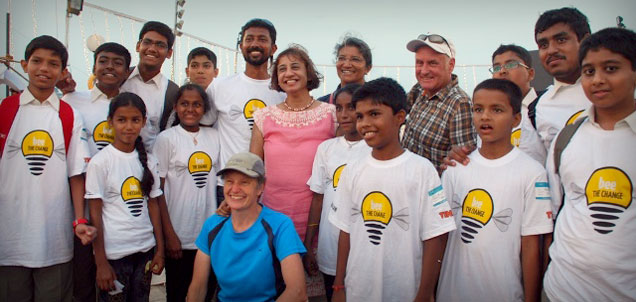
    On occasion of Launch of Social Access (Frm L to R) Abhilash Tomy, Lynn de Souza, Meenakshi Menon, Mark Inglis, Sarah Wilson (In sitting position) with children


    By Ritu Midha


    The launch of an organization or initiative is usually an event one dresses up for. So it was a surprise to see Meenakshi Menon at the Radio Club yesterday afternoon, abseiling. The occasion: The launch of Social Access, and the message, “bee the change”.


    Lynn de Souza
    Meenakshi Menon

    Social Access is an outcome of shared passion of two power media women: Lynn de Souza and Meenakshi Menon. The organization is being launched with the key objective “to use strategic communication and creative ideas” to re-orient society towards social sector by building channels among the four key players: NGOs, corporates, government bodies and society.


    The Social Access logo is bulb-shaped , created with the thought that “illumination is required to dispel darkness”. The organisation, say its founders, is inspired by the bee, and it symbolizes team work, acitivity, creativity and buzz. “Bee the change” is the Social Access tagline.


    States Ms Menon, “Our anthem is: Let’s do things because they must be done, and because we can do them.” It is based on a message from Lt Cdr Abhilash Tomy, the first Indian to circumvent the ocean solo, nonstop.


    She adds, “India has 4 percent of the world’s billionaires; however, when it comes to the giving index it stands 91st in an index of 153 nations. The total value of donations given in our country in 11-12 fiscal is Rs 5000 crore, which is a smaller amount than the brand value of a single brand, Parle G.”


    ‘Attitude overcomes limitations’
    The launch of Social Access was different, interesting and succeeded in driving home the message it set out to send. It was initiated with a few interesting activities: abseiling (under Sarah Wilson’s guidance), sailing with the kids, and cycling. 

    It was not only the two stakeholders in the organisation who interacted with the audience, but also LT Cdr Abhilash Tomy (the first Indian to circumnavigate the oceans solo, nonstop and assisted), Mark Inglis (the only double amputee in the world to scale Mount Everest & a Para Olympic silver medallist in cycling), Sarah Wilson (cancer and avalanche survivor engaged in teaching young women how to overcome fears through a riveting abseiling exercise.)


    Talking about his amputation and further victories in cycling and mountaineering Inglis stated, ‘To be the change one needs to remove limitations, and to overcome limitations you need to be a change maker, and that is what Social Access sets out to do.” He further stated, “Innovation, passion and commitment are equally important to achieve what you set out to achieve but the key thing is the attitude – attitude overcomes limitations.”


    An audio-visual took the audience through Tomy’s sailing experience. His beautiful lines about his adventure, sum up the journey of life in a way, “Sun shone and showed the path. Winds tested us, loved us, and egged us on. Waves sometimes angry and playful, and sometimes calming. We made lots of friends in the way. Every day added a new meaning to life.” His thoughts and ideas have been an inspiration for Social Access as it took shape.


    Interestingly, the entire event was put together without too much expense. Radio Mirchi was the key partner – they organised a contest on the radio for the event, helped with the venue and broadcast the event live. Other media major involved was National Geographic. Catalyst was the event partner.


    The organisation seeks to be the connect between the NGOs and organisations that can help them. Also, on the cards are communication solutions. As Ms de Souza says, “The intent is to provide the best solution – creative or otherwise, to the NGOs, depending upon their requirement.”


    Social Access has tied up with iVolunteer for easy facilitation of volunteers.


    The organization believes that it is about time Indians learnt to care and share more. Though impressed by the concept, one can’t help but wonder if India is ready for this kind of an initiative. States Lynn de Souza, “Of course it is ready. Many things are happening now…. Social media has stepped up awareness, charity and causes have found a voice. Corporations have realized that brand value goes up if you contribute to social causes. Society is more conscious now – and so are the government and local bodies. Media too is contributing. Another key thing is that awareness among youth is increasing, and they are coming forward.”


    The use of social media for raising awareness and mobilising people is one of the key areas Social Access intends focusing on. States Ms Menon, “Social media is giving voice to the dumb. We can use the power of media to help ideas travel across cultures, consumers, corporates, government bodies and more.”


    But will it really help in mobilizing people to get involved? Ms Menon and Ms de Souza believe that one cannot undermine the power of social media when it comes to mobilizing support for social causes. States Ms de Souza, “Social media will no doubt play a very important role in mobilising people. While social media per say has grown in the range of 90 percent, its usage for non-commercial purposes has increased close 190 percent.”


    The plan is not to make it a close-fisted organisation with a handful of employees. Anyone passionate about social causes can be involved . States Ms Menon, “It will be an open architecture society where anyone can contribute. We are building a community and providing a platform. Anybody can become a part of it.”


    Social Access has a two-pronged role – to get the corporates and other able organizations to support NGOs, and to get people to contribute in a myriad different ways. Concludes Ms de Souza, “We are focused on share of heart and mind, we are not looking at share of wallet. Our basic philosophy is that of equality. Everything must lead to an equitable society.”


  • Heineken leverages UEFA Champions League to build connect with consumers

    By A Correspondent


    As some of the best football teams in the world battle it out for the UEFA Champions League trophy, Heineken in India celebrated its association as global partner with the prestigious league. The occasion marked the announcement of the ‘Heineken Social Reporter’ who will fly to London and report on the UEFA Champions League final for the Heineken social media channels in India.


    The winner, Akhil Shah from Mumbai, was selected from over 400 applicants received on the brand’s Facebook app. Applicants went through a three-stage selection process both online and offline, that assessed their football knowledge and passion, apart from other softer attributes and personality traits.


    Heineken also unveiled its plans for leveraging its global sponsorship of the UEFA Champions League, as it does so for the first time in India. As part of the Global Campaign titled ‘The Road to the Final’, Heineken in India is activating the campaign via digital and on-ground channels.


    Samar Singh Sheikhawat

    Speaking at the event, Samar Singh Sheikhawat, Senior Vice-President Marketing, United Breweries Limited said, “Heineken has been associated with the UEFA Champions League for seven years now. Given the growing fan following that European football now enjoys in India, we decided to leverage our global partnership in India for the first time this year with a multi-pronged activation programme. We expect the campaign to make the brand more salient and desirable among young Indian consumers by leveraging a sport that they are increasingly relating to favourably.”


  • Rooted in the region worked for Big Magic: Sunil Kumaran

    It’s celebration time at the headquarters of Reliance Broadcast Network Limited (RBNL), also known as the Big TV network. Big Magic, the GEC which marked the entry of RBNL into the regional entertainment space, completed two years of existence last week. Positioned as a regional General Entertainment Channel (GEC) for the Hindi heartland of Uttar Pradesh, Madhya Pradesh, Bihar and Jharkhand, it features family dramas, crime shows, reality shows and weekend blockbuster movies. MxMIndia posed a few questions to Sunil Kumaran, Business Head, Regional Channels at RBNL to get a better idea of how Big Magic has done since its launch in 2011.


    Congratulations on Big Magic turning two. Two years for any media entity implies that it’s here to stay. Would you say that for Big Magic?

    The two-year journey has been stupendous and extremely encouraging. We started with the belief that there is an opportunity in the market for a regional player offering meaningful content which is relevant and has a deeper connect with consumers.


    This belief has been endorsed by our strong performance and consistent growth in the market. Over the last two years, we have launched some marquee shows like Big Bal Kalakaar, Police Files, Pyaar Ya Dehshat, Khul Ka Sim Sim, Big Memsaab and more, each of these resonating local sentiments and entertainment preferences.


    Encouraged by our success in this market, we have also ventured into launching Big Magic – Bihar and Jharkhand, with shows tailored to suit these markets.


    For those not in the know, could you tell us what have been the highs and lows for the channel?

    What worked for us was the localization of the shows and our radio network strength, which allowed us to amplify quickly and gave us speed to market.


    How is it managing in a world where the big GECs, big movie channels and big sporting events occupy mindspace. In that world how big Magic weave its magic?

    Big Magic’s unique proposition is the fact that it is rooted in the region. The programming team is based out of the region and has a much better understanding of the nuances of the local populace.


    GECs are challenged with their ability to provide relevant content for specific markets. For us, what works is that we are focused on a particular market and our ability to offer tailored content is significantly higher.


    How have advertisers taken to the channel?

    We have all the large national as well as regional/ local advertisers on the channel, ranging FMCG, consumer durables, auto, BFSI, SME’s and more…


    We’ve had channels like Dabbang already in existence before you came in… so do you think you’ve had a second mover advantage?

    There was no channel offering variety entertainment content in this space and most of the others operated in the infotainment space. We actually had the advantage to be the first to offer a holistic entertainment channel for the first time for the region.


    Khul Ja Sim Sim has been a huge success. There were hundreds of people who wrote to us at MxMIndia requesting for access to the show. You’ve said that it’s been the turning point for your channel… Talk us through how it has been the turning point? And life after that (for the channel?)

    KJSS was an adaptation of the popular international format Let’s Make a Deal. We bought the rights and adapted it for the region. The game show caters to the entire family and being the first of its kind for the region, the response received has been over-whelming. We brought in the original Indian host Aman Varma to host the show and we also invested in marketing the show aggressively across the state of Uttar Pradesh. This has managed to create a huge traction for the show and the channel.


    Have all the distribution hassles been eased? Would you say digitization in the Phase 2 will be of some help?

    We were very clear right from the beginning, that distribution, for a regional channel like ours is extremely critical and had ensured that we are available across all major platforms right from launch. With digitization, we are now available in all the regional digital platforms too.


    What plans for the year ahead?

    We will build on our franchises like Big Memsaab, KJSS, Big Fame Star and also venture strongly into the fiction space. You will hear of some exciting new announcements shortly.


  • Mitrajit Bhattacharya’s priceless tales of crazy things

    By A Correspondent


    His interest and expertise in the world of watches is now well-known. In fact he has used this to even co-own a consultancy firm called The Horologists. His full-time vocation though is that as Publisher and President of the Chitralekha Group. He also creates content for television and is an active vice-president of the Association of Indian Magazines. Meet Mitrajit Bhattacharya, now also a first-time author.


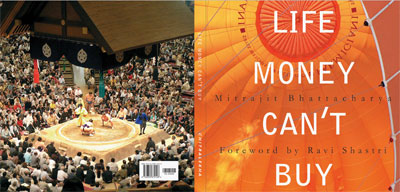
    Mr Bhattacharya has shared his experiences through various professional and personal engagements that transported him into worlds which would constitute, as the the title of his book tell us, Life Money Can’t Buy….


    The book is a compilation of voyages — from being enchanted by a mermaid frolicking around a yacht in the waters off the coast of Capri to flying a jet in Switzerland, from cheering on a game of polo with Maharajas for company to having his own ‘wonderland’ moment with the Great Wall of China as the backdrop.


    Obviously, this book is Mitrajit’s expression of the fascinating adventures he has encountered while pursuing his assignments.


    Cricket commentator and former India captain Ravi Shastri has written the foreword to the book, which will be released by actor Shabana Azmi at an event in Mumbai tomorrow (April 16).


    Excerpts from a short interview with Mr Bhattacharya:


    What prompted you to put your impressions in book form?

    Being closely associated with the luxe industry for over a decade now, I have led a life which has allowed me to do crazy things across the world.  One fine day last year it dawned on me that putting together these experiences will make a great read, hopefully. Hence the book.


    In many ways, the book’s title reminds one of the Mastercard ad. Which of these was, according to you, the most priceless?

    Most of these experiences are unique and very few in the world have access to. Hence all are priceless. Moreover, all journeys are different from each other and can’t be compared.


    If you were given an opportunity to relive one of these experiences, what would it be?

    I would like to undertake newer journeys, may be share those in my next book.


    The struggle and hesitation is max for the first book. Now that you have passed that, what next?

    We have just placed the book in key bookstores and the response so far has been positive. When I am ready with more to share, another book will follow.


  • Digitization Phase 2: TRAI releases draft tariff orders

    By A Correspondent


    The Telecom Regulatory Authority of India (TRAI) has released draft tariff orders prescribing a standard tariff package (STP) for Set Top Boxes (STBs) for Digital Addressable Cable TV Systems (DAS) and Consumer Premises Equipments (CPEs) for Direct to Home (DTH) services, seeking comments of the stakeholders.


    In Digital Addressable Systems, customers need a STB/ CPE to be connected with the TV set for reception of TV programmes as signal transmission is in digital and encrypted form. Since different technologies co-exist, within as well as across different platforms of Digital Addressable Systems, the STBs/CPEs deployed by one operator may not be fully compatible with the network of another operator, hampering effective migration of the customer from one service provider to another.


    To protect the interests of the consumers the TRAI has decided to prescribe Standard Tariff Packages for STB/CPE on rental basis, which are to be mandatorily offered by the service providers, ie DTH and cable operators. Written comments on the draft tariff orders are invited from the stakeholders by April 26.


    In another notification, Ministry of I&B has said that 15 of the 38 cities have achieved nearly 100 percent digitization and 85 percent of the digitization target achieved during Phase II of DAS has been implemented.


    In three states, Karnataka, Andhra Pradesh and Gujarat, stay orders have been given by High Courts on the switch-off of the analogue signals, till further orders. The process of digitization, however, in other cities is in full swing. MSOs have reported that there is huge demand for STBs which is being met by increased supply of STBs by air lifting of STBs.


    Nodal Officers have reported to the Ministry that in 5 states, Maharashtra, Punjab, Rajasthan, West Bengal, Haryana and Union Territory of Chandigarh, analogue signals have been completely switched off.


    In the last one month alone about 40 lakh STBs have been installed in Phase II cities.


    Separately, TRAI has been convening meetings of broadcasters, MSO and cable operators to sort out issues pertaining to agreements and service conditions.


    The objective of the entire exercise is to implement the process in a seamless, sustained yet sensitive manner that causes the least amount of disruption to the consumer. Further, the Ministry has advised MSOs to exercise utmost caution so that least amount of inconvenience is caused to subscribers/consumers. Wherever necessary the process has been implemented in a circumspect way so as to ensure that consumers can get access to STBs, said a release from the TRAI.


  • Viacom18 brings Ajit Andhare to head motion pictures biz

    By A Correspondent


    Ajit Andhare

    Viacom18 Media Pvt Ltd has announced the appointment of Ajit Andhare as Chief Operating Officer of its films business – Viacom18 Motion Pictures. Joining today (April 15), Mr Andhare will be responsible for the growth and profitability of Viacom18 Motion Pictures and will be reporting to Sudhanshu Vats, Group CEO – Viacom18 Media. In this role, he will also lead Viacom18 Motion Pictures’ distribution alliance with Paramount Pictures.


    Mr Andhare replaces Vikram Malhotra, who put in his papers, some time back, to pursue his entrepreneurial interests.


    Announcing the appointment, Mr Vats said, “In Ajit, we’ve found the right leader to drive Viacom18 Motion Pictures to the next level of growth & profitability. His passion for films coupled with his education and experience across varied fields like engineering, marketing and creative production give him the edge to build a Business that would become a benchmark in the industry.”


    With an experience of over 17 years in FMCG and Media, Mr Andhare has been the CEO of Colosceum Media Pvt Ltd since 2007, a venture that he founded, along with Capital18. Colosceum is today amongst the leading media content development & production companies, having produced some of the very successful TV franchises like MTV Roadies and MTV Splitsvilla & Jai Shri Krishna for Viacom18, Wheel Smart Shrimati for Unilever and Master Chef India series for Star India.


    Prior to setting up Colosceum, Mr Andhare worked with Unilever Plc. in India and Asia Pacific region for over 12 years across Sales, General Management and Marketing roles. He holds an MBA from the Indian School of Business & B Tech from REC Rourkela.


    Speaking on his appointment, Mr Andhare commented, “The fundamentals of the motion pictures business in India are improving with growth in digital distribution, multiplex screens, emerging digital platforms and above all success of high content cinema. It’s a great opportunity to lead one of country’s premier studios recognized for its distinguished work in this exciting context.”


  • Shaadi.com strikes a match with Havas for media

    By A Correspondent


    In what could be a swayamvar of sorts, Havas Media won the media mandate for Shaadi.com in a multi-agency pitch. The account will be handled by the agency’s Mumbai office.


    Gourav Rakshit, Chief Operating Officer, Shaadi.com said, “Shaadi.com is a pioneer in the online matrimonial space and is unanimously recognized as the world largest online matrimonial service. We were seeking a partner who not just understood what we do and how we do it, but also why we do it. In Havas Media we found a partner who reciprocated our needs with efficient ideas that positively reflect their understanding of the category and the brand. We believe they will significantly contribute to the growth of the brand in the future.”


    Anita Nayyar
    Mohit Joshi

    On the win, Anita Nayyar, CEO Havas Media Group, India and South Asia explained, “It is our endeavour to bring customised business solutions to our client brands and category taking from a deep understanding of people insights and analysis coupled with innovation. We are glad Shaadi thinks the same of us and look forward to working on the account.”


    “It has been an interesting year so far with a series of wins and Havas is indeed geared for the future of brand challenges to deliver insightful and meaningful brand solutions,” said Mohit Joshi, Managing Director, Havas Media India.


  • Is there room for DNA in Delhi and Mail Today in Mumbai?


    By Ananya Saha


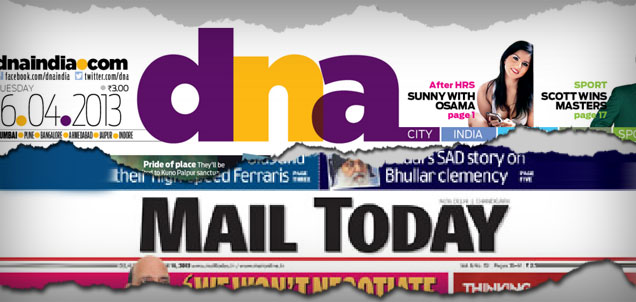
    Mumbai-based DNA is reportedly galloping ahead towards the capital. Launched on July 30, 2005, in Mumbai, DNA (short for Daily News & Analysis) is an English broadsheet daily owned by Diligent Media Corporation, now an Essel Group company. With presence in Mumbai, Bangalore, Pune, Ahmedabad, Jaipur and Indore, the recently refreshed daily is scheduled to be in Delhi on May 13. While NCR is seen as a battleground for the English heavyweights Times of India and Hindustan Times, many English dailies do not boast of good readership numbers in this market. Does the Delhi market need yet another English daily?
     

    Sundeep Nagpal

    “I don’t think there is too much room for another English daily in Delhi, at least in terms of readership,” says Sundeep Nagpal, Founder-Director of Stratagem Media, an independent media agency. “The English daily readership as a category, went up by about 5% around the turn of the last decade, but it’s back to the level that it was at, in 2008. However, what seems to be happening in most major markets, is that they seem to be able to absorb additional circulation to some extent. So, basically this suggests fragmentation,” Mr Nagpal adds.


    Anwesh Bose, Senior Vice President- Media, DDB Mudra is of the view that DNA is launching Delhi more with an image perspective in mind than revenues, for now. “With the Delhi launch they would be able to call themselves a national daily, finally,” he said. DNA has plans to eventually be present in all the four metros, and then launch its financial daily too in these markets. The Ahmedabad, Jaipur and Indore editions are franchised to the Dainik Bhaskar group, formerly joint venture partner of Zee in Diligent Media.

     

    Anwesh Bose

    But to capture readers and advertisers in Delhi, DNA would have to be aggressive in its positioning, and promotions, and adopt a push and pull strategy. As Mr Nagpal viewed it, DNA will have to create a market of its own and that would mostly happen in terms of a share of time spent on reading, and not as much in terms of new readers. Meanwhile, DNA has firmed up its team in Delhi with senior journalist Saikat Datta being appointed as the Resident Editor.


    Mr Bose said, “DNA would have to step into Delhi with deep pockets as they need to sustain for a long period of time before they can see profitability. Their strategy ideally should be of first of all establishing themselves as a brand that stands for something.” The new daily, according to him would have to come up with interesting ways of increasing their circulation, since the old methods of free gifting on long-term subscription does not hold any value anymore.


    While DNA is planning to enter Delhi, the capital’s compact daily newspaper – Mail Today – is getting set for a Mumbai launch this year. Mumbai has seen a reasonable healthy growth of 40 percent in readership of English dailies over the last six years, whereas Delhi has been at about 18 percent only, vis-a-vis 2005, asserts Mr Nagpal.


    Having launched in Chandigarh recently, Mail Today will have to compete with Mid-Day and Mumbai Mirror in Mumbai.
     

    AS Raghunath

    AS Raghunath, a senior print media brand consultant based in the capital, is of the view that Mail Today will be able to carve the niche in Mumbai. He said, “The Chandigarh and Delhi editions of Mail Today usually have a front ad jacket. So they do have a permanent source of revenue. Content-wise, Mail Today is a mixed bag and carries an ‘exclusive’, usually every day, which no other daily has. Even Twitter and Facebook communities quote Mail Today. Also, given the fact that Mumbai is a multi-newspaper market with English, Hindi, Telugu, Tamil, Gujarati dailies and publications, I am sure Mail Today will be able to carve a niche for itself.” He further added that while size will not be a challenge for Mail Today, any daily going in Mumbai would probably not add numerically to the market.


    On Mail Today’s stint in Delhi, Mr Bose remarked, “Mail Today is by no measure a success in Delhi… although, they have tried their best. It is bought more on relationship with the India Today Group than because of its content differentiation.” Mr Nagpal concurs that for a large cross-section of advertisers, Mail Today did not offer a unique/significant enough benefit.


    According to Mr Nagpal, “Mumbai Mirror (MM) has been able to create a huge dent in the market”. “It has stalled other competitors right where they were in their tracks and even eaten away their share considerably over the last five years, so I think MM is quite a success. But that does not mean that every new tabloid will do as well” he added. Mr Bose, however, holds a different view. He said, “Even with the might of TOI behind it, Mumbai Mirror could not make a huge dent, therefore it will be an uphill task for Mail Today to achieve success.” Mr Nagpal is of the view that Mumbai ought to be an easier market for Mail Today, for a whole lot of other reasons such as being more cosmopolitan, more adaptable, etc.


    The advertisers, obviously, would watch with interest as to the direction in which each of these publications grow in the respective markets. “It is sure that a lot of advertisers would get free space or space at a very marginal cost to begin with as the publications would want the advertisers to sample their product as well as it becomes a talking point with other advertisers for the publication. Also, there would be a lot of freebies during the circulation drive, so the consumer is going to make merry,” opined Mr Bose.


    Success or not, only time will tell. But it is sure a sign of healthy growth for the print sector. As Mr Bose concluded, “Print has seen a growth in 2012, where it grew by 9 percent compared to 2011. This year print would gain more as a lot of TV-friendly categories have shown interest in print, primarily to drive sales in a period of slowdown.”

     

  • NDTV honours Indians of the Year

    By A Correspondent


    Celebrating its silver jubilee, NDTV announced the winners of the sixth edition of its ‘Indians of the Year’ awards at a ceremony with Prime Minister Manmohan Singh as chief guest. The NDTV ‘Indian of the Year’ Awards are held annually to recognize Indians whose contributions to the country have strengthened the foundation of our society and helped build Brand India.


    Leader of the Opposition Sushma Swaraj was guest of honour. Others present included chief ministers Sheila Dikshit, Omar Abdullah and Dr Mukul Sangma; External Affairs Minister Salman Khurshid and I&B Minister Manish Tewari.


    Congratulating NDTV on turning 25 this year, Prime Minister Mannohan Singh said, “The period of 25 years that NDTV has been in business is also broadly the period of economic reforms in our country. I am also very happy that NDTV has taken up many campaigns on vital issues such as education, health and environment. I hope to see many more channels put in such efforts.”


    The awardees are:

    1. Daughter of India – Nirbhaya

    2. Justice for the Indian woman – Justice JS Verma the JS Verma Committee, Justice Leila Seth and Gopal Subramaniam

    3. Lifestyle Achievement Awards – Late Yash Raj Chopra, Late Pandit Ravi Shankar and Dr. C Pratap Reddy, Founder Chairperson, Apollo Hospital Group

    4. Sportspersons of the year – Gagan Narang and Yogeshwar Dutt

    5. Business Leader of the year – N Chandrashekaran, Tata Consulting Services

    6. Entertainer of the year – Sridevi

    7. Entertainer of the decade – Kareena Kapoor

    8. LIC Unsung Hero – Rajni Sekhri Sibal


    The awards ceremony was spiced up with a performance by Farhan Akhtar.


  • Mahindra makes people ‘ask’

    By Ananya Saha


    Mahindra Reva recently integrated outdoor medium with social media around the e2o launch and ‘Ask’ movement in a marketing strategy that clubbed the digital platform and out-of-home media.


    A select list of questions was displayed at regular intervals at Mumbai’s Mahim causeway, which is a busy arterial road. With every question being asked, the mnemonic of a hand goes up in the air, signifying the ‘Ask’ movement. The same mnemonic was being used to represent questions on the digital platform, press, TV and outdoor media. This integration of Social and Outdoor Media exemplifies the way both these communication channels can be innovatively used for marketing.


    The creative agency for this innovation is Strawberry Frog and the media agency is Percept OOH.


    Devendra Shinde

    Devendra Shinde, Head of Marketing & International Business, Mahindra Reva Electric Vehicles, stated the cause behind integrating the two mediums, “When one integrates digital media with other media, the effect gets amplified. Hence we have chosen to use more than one medium for this campaign.” Since the launch, the ‘Ask’ movement has gained momentum and Mahindra Reva has received more than 12,000 questions related to changes that people seek in their day-to-day life.


    “Digital is integral to our everyday lives. It is current and absolutely relevant to everything we do. The ‘Ask’ campaign is linked to engagement and integration with the consumers. Digital is the only platform that allows for this. Therefore integrating the digital and outdoor medium, allowed us to capture consumer sentiment and display it for further participating and feedback. The cross pollination between platforms, gave the campaign twice the reach than would have been normally possible,” said Raj Kamble, MD, Strawberry Frog.


    The brief to the agency was to amplify the campaign. The campaign was a ‘movement’ – created when people ask questions.


    According to the brand and agency, the response to the campaign has hit several milestones on Facebook and YouTube. “There are several advantages of using this medium for the task at hand. Our TG is indeed the curious kind, we expect them to be early adopters of technology. Hence we feel that the digital space and medium are a good way to reach them. Also the engagement quotient of this medium is far higher than most regular media vehicles,” reasoned Mr Shinde.


    According to Mr Kamble, the Ask campaign is linked to engagement and integration with the consumers. And integrating the digital and outdoor medium allowed them to capture consumer sentiment and display it for further participating and feedback. The cross-pollination between platforms, gave the campaign twice the reach than would have been normally possible. Since Mahindra is focussed on launching the e2o, electric car, a substantial chunk of brand investments has been done on this campaign. However, Mr Shinde did not divulge the figures.


    Focusing on the challenges that this innovation posed, Mr Kamble said, “We were asking questions to India, because until you ask question you can’t bring positive change. This was the first time in India where real-time Twitter updates have been combined with the OOH format. The originality of the idea about integrating real-time data posed enormous technical and logistical difficulties. It involved coordination with the brand team, the digital team, the OOH team and the Strawberry Frog team to bring this idea to life.”


    While there is a whole lot of work that has happened in the digital space for the Ask movement, Mr Shinde concluded, “You will soon see our TVC on air.” Till then, keep asking!