Category: MEDIA

  • BCCC conducts session on Portrayal of Women on TV


    By A Correspondent


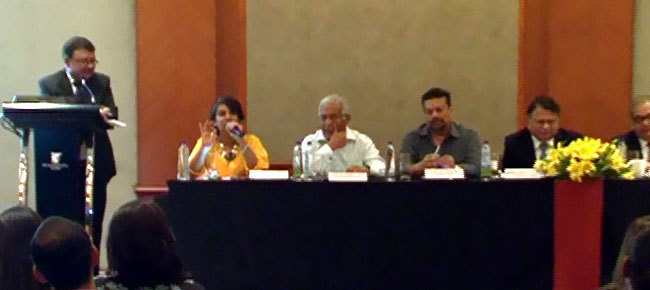
    Broadcasting Content Complaints Council (BCCC), the independent self-regulatory body for non-news general entertainment channels set up by the Indian Broadcasting Foundation (IBF), conducted an interactive session with the S&P/Creative/Programming teams of its member Channels to sensitise them about the ‘Portrayal of Women in Television Programmes’ recently in Mumbai.


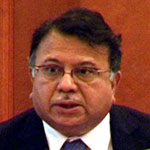
    A.P. Shah

    BCCC members and representatives of the channels discussed women-related thematic issues that ranged from sex, nudity, obscenity, stereotyping and violence.


    BCCC Chairman Justice (Retd.) A.P. Shah said, “Scenes of violence against women can have a damaging impact on all sections, especially children. For instance, such violent depiction can put a vulnerable section like women domestic help at high risk. Such scenes should be done in a subtle manner.”


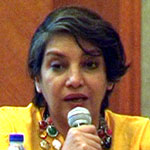
    Shabana Azmi

    BCCC Member Shabana Azmi said, “The business of camera is the business of images. If fragmented images of a woman’s body are shown, it is actually robbing the women of all autonomy and subjecting her to male gaze. If we objectify women, there will be a little chance that society will have great respect for them.”


    Talking about violence, Ms. Azmi said, “Violence may be necessary for the story. But mistreatment should not be glorified. It can be suggestive and creatively done. It can be done in a way that doesn’t reinforce violence against women. It is time to introspect how we can contribute to minimise violence against women.”


    Vir Sanghvi

    BCCC Member Vir Sanghvi said, “Our concern is with entertainment that promotes stereotyping of women in a situation where they are portrayed in a negative fashion and where they are consistently portrayed as victims who are to be enjoyed or to be mistreated. If mass media promotes that image, it will have horrific consequences.” Mr. Sanghvi said if content auditors look into the content as dispassionate viewers themselves, the chance of objectionable content being aired gets minimal.


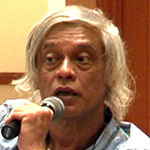
    Sudhir Mishra

    The Council also invited filmmaker Sudhir Mishra to interact with the Channel representatives on stereotyping of women. Mr Mishra said, “Stereotyping leads to tragic ends. If we are corroborating the stereotypes, then we are corroborating the idea of women needing protection and, in turn, corroborating awful things.”


    “If you project yourselves on screen the way you are, there will be no stereotyping,” Mr Mishra said.


    The BCCC members reiterated their intention of not curtailing artistic freedom of the content creators but only to sensitise them.


    Issues like portrayal of Children and stereotyping of Minorities in television programmes were also discussed at the interaction which was well attended by all general entertainment channels.


    Wajahat Habibullah, Chairman of National Commission for Minorities, and also a member of BCCC said, “Targeting a particular community can cause lot of damage to the psyche of that community. We need to develop practices that are constructive and are not curtailing creativity.”


    The session turned out to be a fruitful one for the broadcasters as they also got an opportunity to share their sensitivities and structural limitations regarding content that goes on air.


    In view of the increasing number of complaints pertaining to southern Channels, BCCC will conduct a similar session in Chennai/Hyderabad in the coming months.


  • Do journalists need to be qualified?


    By Ananya Saha and Meghna Sharma


    Press Council Chairman Justice Markandey Katju recently issued a press note that said, “Since the media has an important influence on the lives of the people, the time has now come when some qualification should be prescribed by law”. Justice Katju announced a committee mandated to “consider all aspects of the matter” and submit a report to him “suggesting the qualifications a person should have before he can be allowed to enter the profession of journalism”.


    The committee constituted by him, in addition to its mandate of recommending qualifications for journalists, will also recommend in what manner the Press Council can supervise and regulate the functioning of the institutions and departments of journalism in India so that high standards of imparting knowledge in journalism are maintained.


    MxMIndia spoke to senior journalists, academics and industry observers for their views on this (in alphabetical order of their last names).


    Prof Chandan Chatterjee, Director, Symbiosis Institute of Media & Communication

    The role of education in building a foundation for thinking as well as building an worldview is well-accepted. More so for professions that have an ability to shape the thinking and beliefs of a society


    Journalists are the scribes and opinion leaders of modern society and culture which can impact a nation’s destiny, or the adoption of a new way of doing things. Hence, journalists ought to have capabilities and skills of recording facts and events and also analyse and interpret their observations.


    The role of upgrading curriculum of post-graduate Journalism courses, to reflect the current trends and thinking becomes equally important. And, like most other professions, journalists too need to be re-skilled and upgraded in their specific areas, periodically.


    After all, every point of view has two sides. It takes a balanced and educated mind to get the breadth and depth of issues involved. Else, we will have to learn with just one point of view!

     

    Deepa Gahlot, Film Critic

    To be a journalist or a film critic one needs to have certain attributes – ability to write and passion for the medium. If one has aptitude for it then qualification only adds to it. Therefore, both training and education go hand-in-hand.


    Today, a lot of newspapers carry articles written by people who have nothing to do with journalism too. Having said that, I do believe that a degree will only help the person. Also, it depends on an organization, what are they looking for – someone with good skills but no degree or someone with a degree and good skills.


    I won’t say that Katju’s recommendations are harsh because even if one is passionate about law but he/she still can’t practice without a law degree, why not for journalism?


    Arati Jerath, Senior Journalist

    I think journalists need qualifications, which are not necessarily taught in journalism school. A good journalist should have the nose for news especially in a war or terrorist situation, extract right information, should be a sensitive human being when reporting on a rape case or terrorist attack. It cannot be taught in any institution. These are the values that they imbibe from their parents, schools, colleagues, mentors.


    Most media houses are very professional and hire talent based on their requirements. If the new hire does not perform, irrespective of their qualification, they are let go. A journalist needs to be a good reader, researcher but mostly, they learn on the job outside of the formalized structure.


    The Press Council’s role is of being an ombudsman and a watchdog in case media oversteps. Frankly, the council is trying to impose professional qualification on a person who wants to become a journalist.


    Chandramohan Puppala, Senior Journalist

    This is debatable. Yes, the basic qualification is necessary but not necessarily in journalism; it could be any basic qualification that would equip a person to make them capable of understanding situations or aspects. In my career, I have hired many new people as journalists who are far more knowledgeable and equipped than journalists who have spent years in journalism or have earned degrees in journalism. It is important, however, that a crime-beat reporter has orientation towards the subject. A reporter who covers economy will be more equipped if he has a degree in economics but it is not necessary that if they have a degree, they will turn out to be a good journalists!


    There are, in any case, very few specialized beats; journalists are all-rounders, and that happens over a period of time: during school, on field, the right sources, and is not dependent on a single qualification.
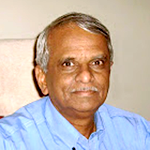
     

    Prof Dr Kiran Thakur, Journalist-turned media teacher

    Justice Markandey Katju’s plan to prescribe qualifications for journalists is absurd and Utopian. By his logic, politicians should be qualified in political science and NGO founders should be trained in social work. If he wants legal beat reporters to be law graduates, war correspondents will have to be trained in military science if not in warfare, health reporters in medicine, farm journalists in agriculture and so on.


    He will do well to realize that qualifications for reporters and sub-editors alone would not suffice. The owners of media houses, print and electronic, should also possess qualifications. The owners should be trained particularly in media ethics and their social responsibility. Justice Katju should recall the fate of the report of the Press Council committee on paid news. The representatives of owners in the Council opposed the committee and its recommendations.


    I do not understand why the PCI should be burdened with responsibilities to supervise and regulate media schools. There are bodies in the university system to look into these aspects. Let them discharge these responsibilities with efficiency. In the meantime, Justice Katju should find ways how the PCI can function effectively.
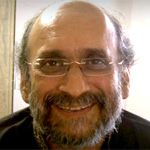
     

    Paranjoy Guha Thakurta, Independent Journalist and Educator

    The idea is ridiculous. It is like saying that if you want to become a politician, one must have a BA or a MA degree. The issue of lowering standards of journalism, values or journalism ethics becoming less important or declining quality is very separate. Mr Vinod Mehta himself said that he flunked his graduation exam, and look at him today. Pritish Nandy flunked his exams, and they were not even studying journalism, and look at them today. There is no dearth of examples of journalists who have succeeded without degrees much as journalists with degrees such as Dr Chandan Mitra. The ability to communicate, write or express articulately is nothing to do with a qualification in journalism.


    The Press Council should be concerned much more about its own role and duties than all of this.


  • Not just playing around: Angry Birds on Cartoon Network

    By A Correspondent


    Cartoon Network has partnered with Rovio Entertainment to bring Angry Birds Toons, an animated TV series based on the globally successful and trendsetting game, Angry Birds, to Indian children’s television. Premiered on Saturday, March 16, the weekly series will air in the mornings.


    The series is based on the life of the Angry Birds living on Piggy Island. Red and his fearless feathered companions, Chuck, Matilda, Bomb, Blues and Terence, must band together to protect their eggs – and their future – from the wily plotting of the Bad Piggies. With only their wit and determination to guide them, they must overcome the Piggies’ superior technology and seemingly insurmountable numbers. But they have one great edge…t he Piggies’ astounding stupidity! Angry Birds Toons brings to life the characters and adventures from the popular game, and reveals the fun and sneaky worlds of the Birds and their nemesis Piggies.


    “We’ve long wanted to tell our fans the story of the Angry Birds and the Bad Piggies, to introduce their personalities and their world in detail,” said Mikael Hed, CEO of Rovio. “We’re delighted to partner up with some of the best video-on-demand providers and TV networks across the world. It is an important milestone for us on our journey towards becoming a fully-fledged entertainment powerhouse.”


    “We’re delighted to introduce the Angry Birds and Bad Piggies characters and their world in more detail to our Indian fans. We combine the look and feel of cartoon classics with modern twists to slowly reveal a vast backstory. Our team has been working tremendously hard to once again delight our fans with a new way to experience these loveable characters”, said Nick Dorra, Head of Animation at Rovio Entertainment.


    Krishna Desai

    Krishna Desai, Senior Director and Head of Kids vertical, Turner International India Pvt. Ltd. said, “At Cartoon Network, we pride ourselves on understanding kids and delivering innovative and entertaining content to them. The Angry Birds games are a global phenomenon with kids and adults and we look forward to partnering with Rovio Entertainment as the broadcast partner for Angry Birds Toons animated series. We are certain that kids will be enthralled and excited to watch this adaptation of Angry Birds on Cartoon Network!”


    Angry Birds Toons will feature 52 episodes.


  • Mindshare announces Siddharth Sethi as Digital Leader

    By A Correspondent


    Mindshare, the flagship media agency of GroupM today announced the appointment of Siddharth Sethi as Leader, Digital for Mindshare India. In his new role, Mr Sethi will be responsible for boosting the agency’s full-service digital offerings geared towards actively pushing Adaptive Planning, Performance and Digital Analytics to the fore. Based out of Mumbai, Mr Sethi will report to Ravi Rao, Leader, Mindshare South Asia.


    Mr Sethi’s last stint was as Director, India for Xaxis, another GroupM company. As Director, he successfully started and built up the company operations in India.Xaxis is today delivering targeted digital media products that allow advertisers to reach and better understand their audiences at massive scale. Xaxis delivers these products through the expert use of consumer data, advertising technology and media relationships.


    Mr Sethi has over 12 years of experience in Media management, Marketing and Product Management. He has spent the last 7 years focused on helping digital start-up’s create products and revenue streams.


    An alumnus of Mudra Institute of Communications (Ahmedabad), Mr Sethi has also been through Nasper’s Harvard Program in Strategic Marketing. He began his career as a Media Planner at Madison, a Brand Manager at BenQ, and was last with IBIBO as VP.


    Welcoming Mr Sethi, Ravi Rao, Leader, Mindshare South Asia, said, “We are very fortunate to have someone with such integrated expertise at the helm of our digital offerings. Sid’s experience of having led Xaxis in India will be another factor in enhancing the overall digital offering as well his entrepreneurial culture will take Mindshare into a league of its own, well within the Original Thinking Framework for all brands. He is technologically savvy, understands the brand space and is performance driven.”


    On his move to Mindshare, Mr Sethi said, “I am delighted to be joining an agency with such an impressive digital portfolio. Over recent years Mindshare has really built a strong digital team with some really impressive digital and social media campaigns under its belt. I am really looking forward to building on this reputation.”


  • AdoRoi launches response-led media planning

    By A Correspondent


    Mumbai-based AdoRoi Marketing Science has introduced two new product offerings – Response Led Media Planning and Ad Insertion-to-Sales tracking.


    Amit Nevrekar

    Said Amit Nevrekar, Chief Operating Officer, AdoRoi, “It’s a scientific way to study the effectiveness of the media plan through Response per Spot (RPS) and Cost per Response (CPR)”. Explaining the concept, Mr Neverkar said: “The Ad exposure/ response are identified through unique Ad-Tracking codes for each media vehicles across TV, Print, Radio and Internet.” The response is analysed through a proprietary real time reporting software and Client Dashboard. The main advantage of this methodology is it provides Advertisement Exposure for a particular issue/insertion as against the current Media Vehicle Exposure based on Reach & Frequency model. The responses can further be analysed by media, creative, spot duration, placement, Ad-size, page no etc. The model, according to Mr Nevrekar, is beneficial for brands, which don’t just carry out brand awareness creation exercise but aggressively practise direct marketing for instant conversions through call for action or promotional offers.


    In this method, the dealer panel in PAN India Print campaign is replaced by AdoRoi’s unique Ad-Track tele code per media vehicle, thus saving the effort and also cost per sq cm. When any customer calls for an enquiry, his/her call is directly patched with the nearest dealer basis his Geo-position and the dealer database through our patented technology. Each customer enquiry is provided with a promo-code linked to media vehicle which can be tracked against sale. The responses generated per insertion across media vehicles can be analysed on real-time client dashboard. The learnings can be efficiently used for optimizing the media plan for better ROI by maximizing RPS and minimizing CPR.


  • Jaldi 5 with Robert Bakish & Sai Kumar: It’s fair to say that we have a pipeline

    Robert Bakish
    Sai Kumar

    Most of their broadcast products in India attained leadership position in the genre that they operate in. In recent years, some of them have managed to attain that in record time like the Hindi GEC Colors or English comedy channel Comedy Central.


    Viacom has had a fantastic innings in India thus far and much of that growth has been possible due to its win-win partnership with entertainment hotshop Network 18 in India.


    On the sidelines of FICCI Frames 2013, MxM India caught up with Robert Bakish, President & CEO, Viacom International Media Networks and Sai Kumar, Group CEO, Network 18 to find out what’s making the network surge ahead in India and what’s in store next. Excerpts:


    01.  With Viacom being a major player, what is your top-level view of the content business that exists in India?

    Robert Bakish: Like most things there are some common elements and there are some unique elements where content is concerned. Generally speaking, it’s about creating content that an Indian consumer is very engaged with. They could be watching their content anywhere, so in that sense the dynamics remain the same. The next end is funded partially through advertising and distribution and through consumer products. Now some of the specifics to India are different. Today everybody is talking about digitization and that’s a seismic shift in the television distribution marketplace in India, which quite frankly has been a long time coming. This has been a market where you have to pay for distribution where you really didn’t get paid. In most markets around the world on that basis they are making a lot of money from distribution. So we look forward to the day that happened in India and thankfully it’s happening now. So that’s one big unique element and that’s certainly to the benefit of leading content companies. So unless you have very strong content and brains you may not be able to do that and that’s what Viacom 18 is in a good position at.


    Another thing about this market is that there are many countries within India itself. These are still early days for exploitation by major content companies like us but there are tremendous opportunities ahead.


    In a sense you are going to have many countries in the Viacom 18 umbrella itself given Hindi and the various languages under ETV. So you do not have to look elsewhere for refashioning content in other languages…

    Robert Bakish: One of the advantages of Viacom 18 being a global company is that we can cast a very wide net for hit content in terms of format etc. But at the same time we can focus on the Indian market whether it is something that came out of our national set of services or may be some regional opportunity… or maybe from Eenadu with which we are still doing some regulatory diligence but there are already some national formats that are travelling to regional it’s only a matter of time before some regional format moves over to become national on Colors and maybe even exported to the US, the UK, Middle east etc. So there’s pretty broad opportunity that exists there.


    02.  Like you’ve said, Colors and the regional channels have had some successful content to their credit. Are you looking at taking that content and repurposing that for airing in international markets?

    Sai Kumar: That has already started whereby content from Colors is now available across 130 countries. That’s pure syndication. Now if you see, syndication is largely for the Indian market oversees. But if you look at the local market we have already started shipping formats. Uttaran has entered Africa as a format so it is going to be completely produced. Now that’s a green shoot that we have seen in the past two months. We are already having conversation around 3-4 of our soaps… so reverse migration has started. By which I don’t mean only syndication, I mean format migration which could be a very healthy revenue line for us.


    03.  In terms of revenues, what are the numbers you are expecting post-digitization?

    Sai Kumar: I’ll tell you what our wish-list is: two years down the line we will be happy if Viacom 18 gets about 45 per cent of its revenues from domestic distribution and about 10 per cent of revenues from international distribution…so a range of over 30-60 per cent is what we are looking at over the next two-four years which is something that will change our P&L dramatically. And I dare say that we are on track.


    04.  Comedy Central has been a big success in quick time. Are you looking at playing that content across other languages in India?

    Robert Bakish: Comedy Central is our third great global brand behind MTV and Nickelodeon. If you look at the last 12-18 months with Comedy Central, we have not only lit up India but also Russia, South East Asia, Africa, Latin America etc. So Comedy Central is a big deal for us. The brand obviously has a great ability to connect with the consumers all over the world, and obviously the services are different all over the world. So we will be launching additional services in India; we are not going to say what they are going to be but there will be more opportunities.


    05.  In terms of new offerings from the Viacom stable, can we look forward to more channel offerings…

    Robert Bakish: We are not here to announce any new products but it would be fair to say that we have a pipeline. From a Viacom standpoint, India is a very important market with a huge potential ahead of it. We know that part of accessing that potential will involve creating more products… we launched a couple of new national products last year including Comedy Central, Sonic etc and it’s safe to assume we will launch additional services in the future.


    Robert Bakish (pic source: blog.viacom.com)


  • Vikram Malhotra quits Viacom18 Motion Pictures

    By A Correspondent


    Vikram Malhotra, Chief Operating Officer at Viacom18 Motion Pictures, has resigned. Having spent a little over two years at Viacom18 Motion Pictures, Mr Malhotra is leaving to pursue his entrepreneurial aspirations. He will continue in his current capacity till July 2013, to ensure a smooth and seamless transition. He also headed the strategic distribution alliance with Paramount Pictures International.


    Sudhanshu Vats

    Announcing Mr Malhotra’s departure, Sudhanshu Vats, Group CEO, Viacom18 Media Networks, said, “Vikram has admirably led the reboot of this business to put Viacom18 Motion Pictures amongst the top players in the industry. Over the last two years, we have had tremendous success, stretched the envelope and redefined the rules of Hindi Cinema, making critically acclaimed films that were commercial successful as well. We have an impressive lineup ahead with movies like Chashmebadoor, Bhag Milka Bhag, Madras Cafe and Boss” He further added, “As he now ventures out to pursue his entrepreneurial dream, I wish him all success in his new venture.”


    Commenting on the development, Mr Malhotra said, “I have had a personally fulfilling and proud time at Viacom18 Motion Pictures and am privileged to have lead a talented team that redefined many a things in both production and distribution of Hindi as well as Hollywood films (marketing and distribution of Paramount movies).” He added further, “I am excited to now pursue my own dream and aspiration in the same space.”


  • Radio Mirchi felicitates the best of Marathi music

    By A Correspondent


    Radio Mirchi and P N Gadgil Constructions recognized and felicitated the best of the Marathi music at the first ever Mirchi Music Awards Marathi powered by Indus Health Plus.


    Prashant Panday

    Prashant Panday, CEO at ENIL said, “Music, Fun and Entertainment are what we provide our listeners with. Mirchi Music Awards Marathi Powered By Indus Health Plus proved to be one of the biggest musical extravaganza for the Marathi music industry. We have always believed in appreciating and encouraging talents and Mirchi Music Award Marathi is our way to thank everyone contributing to the Marathi music industry.”


    Hosted by Jeetendra Joshi and Pushkar Shrotri, the awards night included some stellar acts by musicians, actors and performers of the Marathi industry.


    Nitin Singh

    Nitin Singh, VP and Cluster Head, Rest of Maharashtra said, “At Radio Mirchi we believe in promoting and appreciating good music. Though in the first year, the P N Gadgil Constructions presents Mirchi Music Awards Marathi Powered by Indus Health Plus saw the creme-de-la-creme of the Marathi music industry come together and celebrate outstanding contribution to Marathi music. This presence and support has really contributed to our success tonight. We also appreciate the support shown by our sponsors in making this awards night a great success.”


    Agreeing with him, Ninad Sonawane, Cluster Programming Head, Rest of Maharashtra and Goa at Radio Mirchi – ENIL said, “Mirchi Music Awards is our way to thank, appreciate and support the illustrious Marathi music industry. It is a platform for everyone to come together and showcase their talent. Though in the first year, we have had the privilege to work with the most prestigious Jury. Their presence on the panel speaks volumes about the credibility of the awards ceremony.”


    On his association with the awards, Suresh Wadkar, Jury Chairperson, said, “It truly feels good to know that Radio Mirchi has taken this initiative to award the Marathi music industry. It is a tremendous platform for us to come together and raise a toast to good music. Such awards ceremony is an affirmation to our efforts & good music and we need to keep providing our fans and listeners with more foot tapping music. As a Jury Chairperson we were very cautious and careful in picking the categories. I have personally ensured fairness to the talent and be absolutely unbiased to any talents.”


    The awards recognized winners in 12 categories and 12 Listener’s choice awards – Album of the Year and Song of the Year. Besides these, the night saw 4 non-competing categories viz Life Time Achievement Award – Pt Hridaynath Mangeshkar, Special Contribution to Marathi Music – Sulochana Chavan, Best Album from the Golden Era – Lakhachi Goshta, and Jury Special Recognition – Enoch Daniel.


    The winners were decided by eminent jury. Suresh Wadkar, the Jury Chairperson shouldered the responsibility with the veteran Ashok Patki as the Head of the Jury. Some of the other names on the jury include Aarati Ankalikar, Abhijit Pohankar, Bela Shende, Kaushal Inamdar, Soumitra, Sadhana Sargam, Dr Salil Kulkarni, Sandeep Khare, Shridhar Phadke, Sudhir Moghe, Vaishali Samant and Vijay Dayal.


  • Guardian ed Alan Rusbridger’s 10 mantras of Open Journalism

    Alan Rusbridger

    By A Correspondent


    Digital first has been the maxim that the Guardian has adopted over the years and with only the Daily Mail and New York Times ahead of it in Comscore ratings, the gambit has paid off. The Guardian’s Chief Editor Alan Rusbridger was in Mumbai at the invitation of the Press Club en route to New Delhi for the Big Tent Activate Summit being organized by Google and Guardian with MediaGuru.


    Mr Rusbridger said while revenues from digital is still around a quarter of the overall revenues of the newspaper company embracing digital is the only way to go. Mr Rusbridger has been editor of the Guardian since 1995. He is editor-in-chief of Guardian News & Media, a member of the GNM and GMG Boards and a member of the Scott Trust, which owns the Guardian and the Observer newspapers.


    Talking on the subject ‘The Future of Journalism in a Digital Age’, Mr Rusbridger shared the 10 mantras or traits of ‘Open Journalism’ that the Guardian has been practising with much success.


    1. Open Journalism encourages participation and invites a response

    2. It is not an inert, us-to-them form of publishing

    3. Invokes others in the pre-publication processes

    4. Open journalism helps form communities of joint interest

    5. It’s open on the Web. It links to, collaborates with others

    6. It aggregates and curates the work of others

    7. It recognizes journalists are not the only voices of authority

    8. It aspires to achieve and reflect diversity

    9. With open journalism, publishing is the start of the journalistic process and not the end

    10. It’s transparent and open to challenge, it allows for corrections and clarifications


    The session at the Press Club Mumbai was organized as part of a monthly knowledge series and is sponsored by Concept Communications.


  • Havas Media to handle the Media Duties of Wonder Cement

    By A Correspondent


    Havas Media has won the media mandate for media duties for Wonder Cement in a multi-agency pitch including key industry players. The account size is valued at INR 25 to 30 crores.


    Wonder Cement is a part of R.K. Marble Group the leading name in the marble industry.


    Anita Nayyar
    Mohit Joshi

    Speaking on the appointment, Anita Nayyar, CEO Havas Media Group, India and South Asia said, “We are delighted on this win and eagerly look forward to working on the business. The year has started on a good note with a series of new business wins and this partnership will further add scale to our operations. With the new philosophy of ‘digital at the core’ at Havas Media, we are sure we will be able to leverage our global expertise on the business.”


    “It is a challenging category and we are geared up to take the challenge,” said Mohit Joshi, Managing Director, Havas Media India.


  • IPL ratings will look up: MEC forecast

    By A Correspondent


    Media buying and planning agency MEC, a founding partner of GroupM, has announced the findings of its IPL TV Rating Estimation Study, now in its fifth edition.


    A combination of primary research and high-end analytics, the study has achieved 100 percent accuracy in the past, including last year. The research was conducted in Mumbai, New Delhi, Kolkata, Chennai, Bengaluru, Hyderabad, Jaipur, Pune, Chandigarh and Ahmedabad. As in previous years, the study has been carried out in association with Meritus, WPP’s analytics company.


    Key findings of the study are:

    Average TV rating for the league stage is expected to go up from 3.8 last year to 3.9 – an increase of 2.6% (15+ years, Male/Female, SEC ABC)

    MI (4.5), KKR (4.2) and CSK (4.1) games to have the highest ratings

    Home team (84%), favorite team (79%) and Indian stars (64%) continue to be deciding factors to watch a match. Time of the match (49%) is also gaining importance.

    MI (23%), Chennai (19%) and KKR (14%) are the most popular teams. Support for Hyderabad has gone up by 200% (2% to 6%), Bangalore has dropped by 50% (12% to 8%)

    Sachin Tendulkar (80), MS Dhoni (79), Yuvraj Singh (76), Virat Kohli (74) and Virender Sehwag (73) are the most popular Indian players in the League; Chris Gayle (60), Ricky Ponting (55), Brett Lee (51) and Kevin Pietersen (50) are most popular foreign players


    T Gangadhar

    T Gangadhar, Managing Director, MEC India, said, “Our study suggests that IPL seems to have matured as a property. The study clearly establishes that ratings in the first phase (first 18 games) impact the fate of the entire league. With Pepsi activating their title sponsorship in a big way, the BCCI launching the IPL Fantasy League and India’s strong performance against Australia, the first stage of the league could get further momentum. We expect the IPL Fantasy League to become a key part of the live broadcast experience and as a result, social chatter around IPL could grow significantly,” he added.


    Sunder Muthuraman, Managing Partner, Meritus Analytics, also believes that the IPL brand is reflecting the behaviour of a typical mature consumer product. “Our proprietary survey, that is integral to the forecast, shows that there is a segment of audience who will watch more than last year (say, the loyalists) and another segment who will watch lesser (say, the rejecters). Given that the former segment is larger than the latter, the ratings are likely to be marginally higher than in 2012. Given our past successes, we hope our pioneering rating forecast methodology will be adopted by all broadcasters and advertisers,” Mr Sunder concluded.


  • R Jagannathan is Network18’s ed-in-chief for web & print

    By A Correspondent


    Network18 group has strengthened the editorial structure at its web and publishing arms by elevating veteran journalist R Jagannathan (“Jaggi”) as Editor-In-Chief. Mr Jagannathan will be responsible for leading editorial strategy and driving content synergies across a bouquet comprising some of the country’s leading news and special interest brands. This is part of the group’s progression towards an integrated publishing and digital editorial operation.


    This mandate includes Moneycontrol.com and Firstpost.com, Forbes India and Network18 Publishing, which spans a portfolio of 18 B2C and B2B titles such as Overdrive, Better Photography, Chip, T3, Entrepreneur, Search and Auto Monitor.


    Mr Jagannathan had taken charge of Moneycontrol.com and Firstpost.com at the time of joining Network18 in 2011. In this expanded role, he will be additionally responsible for Forbes India and Network18 Publishing. Editors at each of these brands will now report to him with immediate effect.


    With a career spanning over 36 years, Mr Jagannathan has been the editor of several print and digital publications across the general and business news space. Prior to joining Network18 Group in 2011, he was the Executive Editor at DNA. Earlier, he was the Executive Editor at Business Standard and he has also been the Editor at Financial Express, Indian Management and Business World. He was the founding Executive Editor of Business Today in the early 1990s and Business Editor of India Today before that. His first foray into the digital world came when he became Editor at Myiris.com at the height of the first dotcom boom.


    Raghav Bahl, Founder and Editor, Network18 said, “Platform neutrality in publishing is almost a truism now and as one of the country’s largest news and digital players, we’re best placed to lead this broadening trend. It’s critical that our brands access the best expertise across the group while they continue to fulfil their distinct content mandates and they do so through a structure which mirrors the new digital reality. We have entrusted the task of leading this effort in the able hands of Jaggi.”


    B Sai Kumar, Group CEO, Network18 said, “In Jaggi, we have one of the finest editorial minds in the industry with an unmatched breadth of experience and a proven track record, which includes the stellar performance of our digital brands under his command, Moneycontrol and Firstpost. We’re confident that in this expanded mandate, he will help us further enhance our editorial product and deepen audience engagement and market leadership.”


    Mr Jagannathan remarked, “Network18 has some of the country’s most loved brands which enjoy the highest levels of trust and credibility with audiences and each represents a unique editorial voice. I look forward to working with the teams to ensure that we strengthen our proposition across platforms.”