Category: MEDIA

  • iProspectCommunicate2 appoints Sayan Banerjee as VP – Biz Devpt

    Sayan Banerjee

    By A Correspondent


    iProspectCommunicate 2, a search and digital consulting agency, has roped in Mr. Sayan Banerjee as VP – Business Development, key client relationships, digital consulting for BFSI and other core verticals and to drive client engagement, planning and revenues for iProspectCommunicate 2.


    An alumnus of IIM Calcutta, Mr Banerjee comes in with over 11 years of work experience spanning across Digital Marketing, Strategic Planning and Product Management in Banking, Media and IT. Over the last few years, his primary focus has been in driving the overall digital strategy and the marketing programme implementation for Direct Channels at HSBC India and at Newscorp India. He has created several digital marketing success stories using Search, Display, Social, Web Analytics and award winning Emailer Campaigns. Mr Banerjee has also worked with companies like Hurix Systems and Bennett Coleman and Co. Ltd in the past.


    Vivek Bhargava, Managing Director iProspectCommunicate2 says in an official communique, “We intend to drive our leadership in digital consulting with this appointment. Sayan comes in with rich client end experience and as such is best suited to understand marketing rationale from a client perspective and provide digital solutions to such marketing opportunities.”


  • Jaldi 5 with Ashok Mansukhani: To achieve 100% digitization, govt must be a facilitator, not a schoolmaster

    Earlier this month, the government came up with a status report stating that 68 per cent of  the TV households in the four metros were digitized, a figure that was disputed by head of the Cable Operators Federation of India (COFI) Roop Sharma when we interviewed her yesterday (http://www.mxmindia.com/2012/09/jaldi-5-with-roop-sharma-govt-must-be-transparent-with-consumers-on-digitization/).

    We asked the very same questions to Ashok Mansukhani, President, MSO  Alliance about on-ground reality of digitization.


    We have a little over a month to go for digitization in the four metros. If the government estimates of last week were to be believed, by now over  70 per cent of Mumbai, Delhi, Kolkata and Chennai would be digitized. Is that the case?

    The information is the same as that of the government. However, 68 percent is not the national figure. It varies from city to city. With four weeks to go for the first phase of digitization, the question is about the rest of 30 per cent homes. Of course, it is not insurmountable. Lack of publicity from broadcasters is a problem. Then, there is no joint selling effort from  broadcaster and MSOs. The packages are yet to be announced. That is when the customers will begin to think of switching to digitization. Right now, they think DTH and cable is different.


    Are the lower income groups in these cities buying set-top boxes?

    The slums in Mumbai and Delhi sure have a television. But how do they know that from October 31 midnight, the analogue signals will stop? The digitization message says ‘box nahi to, TV bhool jaao’. One has to remember that digitization is a means to enable customer, not a retribution.


    The lower strata homes are being made used to use a set-top box and a remote. They have been told, ‘you see it, we will come and collect it later.’ Now this later will happen only when the packages are announced. The packages, however, have to be communicated door-to-door.


    There is a worry that there will be some piracy in the form of pilferage of signals after November 1.

    This is a rubbish claim that I have been hearing since long. The pilferage happens only when the broadcaster keeps his decoder ‘on’. Once that is switched off, there is no way that pilferage can happen. Yes, it can also happen if someone demodulates a cable signal. But the government has the power to take action against that person.


    What more would you like the government/others to do to ensure 100% digitization?

    The government needs to speed up the fiscal incentives, and should act as a facilitator. The fact is that it has become a schoolmaster instead. Since each city has different issues, which need to be tackled positively.


    The last mile which is managed by the local cable operators is the key to the implementation of Digitization. Are all cable operators working step-in-step with MSOs in the four metros about the implementation of the October 31 deadline?

    There is no issue with the cable operators. They have been pushing for DAS since 2000.


  • Anshuman Misra quits Turner

    By A Correspondent


    Turner International Asia Pacific announced today that Anshuman Misra, Senior Vice President and Managing Director of Networks and Content Distribution, has resigned from his position with effect from October 12.


    After almost 14 years with Turner in Asia, Hong Kong-based Mr Misra is to take time off before embarking on his next career move.


    Said Mr Misra, “After working without a real break for more than two decades, I look forward to taking a few months off before I start the next chapter of my work life. I hope it’s as exciting as the time I’ve had with Turner. I want to thank everyone at Turner for all the support and camaraderie. I walk out of the company very satisfied but also sad to leave such a great bunch of people.”


    Steve Marcopoto, President and MD Turner International Asia Pacific said, “On behalf of everyone at Turner in Asia, I’d like to thank Anshuman for his significant contribution to the company’s success since 1998. He has been a first class colleague and trusted business partner throughout and we wish him every success in the next stage of his career.”


    Prior to joining Turner, Mr Misra was General Manager, BBC World (India) where he managed the distribution and sales of the news and current affairs channel.


  • Vikatan group to launch weekly mag Timepass

    By Tuhina Anand


    Vikatan Group which publishes nine titles in Tamil is gearing up to launch its tenth title – Timepass. As the name suggests, the magazine will focus on entertainment and will cater to those young at heart. The offering is an aberration from Vikatan’s usual tone and tenor which is seen as a serious player and stays away from relying on any kind of controversy that magazines today rely on.


    The magazine is a weekly and will be available every Saturday starting October 6, 2012. Priced at mere Rs 5, it will have 64 pages plus 4 pages of cover and will be A5 size. Initial plan is to have a print run of 5 lac copies which will include both sample copies as well as sold ones. In 3-4 months’ time the idea is to consolidate this number to 2.5 to 3 lakh sold copies. It will be sold predominantly in Tamil Nadu.


    Explaining the idea behind the new magazine, Pravin Menon, National Head, Ad Sales, Vikatan Media Services, said, “This is entirely people driven product. At Vikatan, we have introduced a concept called Hello Vikatan where people can call and listen to few tips that is addressed in our magazines. Since its launch around 7 months back, the concept has become highly popular and we have 1.5 lac calls per month. Since we already had involved readers based on the info from the calls, we did a sample of six thousand people asking them what they would want from Vikatan. The response that we got was that they would like to read something irreverent and purely entertainer from us.”


    The content of the magazine and even the pricing is all decided by the readers. However, the low pricing raises few questions as print industry is already pressed with low pricing and pressure on margins plus the debate is whether even our daily newspapers should be charged more as the case in many countries.


    Mr Menon said, “At Vikatan we don’t rely only on advertising as source of revenue and we have various innovative ways to generate revenues.” The group’s publications also has a strong digital presence.


    The group plans to go all out to promote the product and will be spending approximately Rs 2.5 crore to market it taking television, print, OOH, mall activation, radio and even cinema theater. The tone of the advertising campaign will be irreverent in keeping with the tone of the magazine.


    Vikatan Group publishes Tamil titles including AnandVikatan, Aval Vikatan, Doctor Vikatan, Junior Vikatan, Chutti Vikatan, Shakti Vikatan, Pasumai Vikatan, Motor Vikatan, Naanayam Vikatan.


  • Do pre-release star appearances work?


    By Meghna Sharma


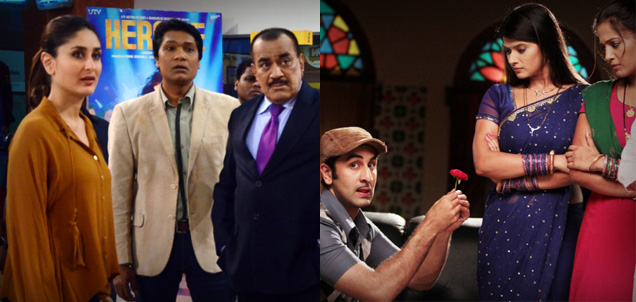
    What is common between Kareena Kapoor and Bipasha Basu? The answer is: CID. Yes, both the actors were rescued by none other than our very own team of ACP Pradyuman and his agents.


    Today, seeing actors on television is not a surprise. Most of them can be seen on the small screen as hosts or judges on reality shows. However, in the recent past one has seen them play a character or themselves in fictional shows where the plot of an episode is scripted around them. And the two actors are the latest to join the bandwagon of various other actors who have made a “special appearance” on the small screen to promote their upcoming film.


    Dinesh Rathore

    According to Dinesh Rathore, COO, Madison Media Omega, the difference between the big screen and the small screen faded away in the last decade as superstars entered the medium. “Actors making an appearance on television is a win-win situation for both. Television has vast reach so actors get to promote their films, and a channel can save money if the actor appears on their shows to promote his/her film.”


    He’s not alone, even broadcasters which are competing with each other to get the stars to their channel before others do also feel the same. Vivek Bahl, Chief Creative Director, Sony Entertainment Television says, “Big fiction shows with a dedicated & measurable viewer base is a great platform for an actor to promote his / her upcoming film with the show. And, for the show itself, one can always create buzz and sampling with the

    Vivek Bahl

    anticipation of a star appearance.”


    On the same note, Ajay Bhalwankar, ZEEL’s Content Head (Hindi GECs) feels that fiction shows are the staple diet of any General Entertainment Channel and the presence of a Bollywood celebrity is woven into the existing storyline of the fiction show, hence increasing the chances of a better recall. “As a medium TV cannot be ignored by marketers.”


    Prashaant Bhatt

    “Be it with a Jhalak Dikhhala Jaa or Madhubala, the audience for each show is varied and this is what works in favour of the movie that is promoted on the show,” explains Prashaant Bhatt, Weekday Programming Head of Colors, who believes that the trend is only going to move forward. “It is vital for any promotional activity to be present on all the mediums that helps them connect with the viewer. So, in the future, the trend could possibly be digital with the introduction of various apps etc, anywhere the audience/moviegoer is.”


    Shailesh Kapoor

    However, Shailesh Kapoor, CEO of Ormax Media feels that film star presence on fiction shows helps the films more than the channels. But the channels can use the stars in the promos and create buzz around it. It can give a viewership spike only if the star does something really interesting in the show. “In a recent study conducted by us, television emerged as the driver of both reach and appeal for film campaigns, way ahead of print and outdoor. I believe that channels should start charging film producers for such integrations, the way they charge advertisers.”


    Priti Murthy

    If both stars and broadcasters are winners here, Priti Murthy, National Director – Insights at Maxus India adds that viewers too don’t have much to lose out on. “I think even viewers win here as they get to see new faces or a new plot in their regular shows. Also, stars appearing on shows is a global phenomenon; in the west, stars appear on shows like Saturday Night Live.”


    It appears no one has anything to lose here!


  • Zee TV wins gold for DID mobile app at Smarties 2012

    By A Correspondent


    The Mobile Marketing Association (MMA) presented the first ever Smarties India 2012 Awards, which is a global awards programme dedicated exclusively to mobile marketing and recognizes local, regional and international campaigns in a global contest that showcases the ‘best of the best’ in the industry, across 15 categories in Delhi on September 21.


    The first edition of Smarties India 2012 awards winners were adjudged by a global jury of senior brand marketers and advertising executives.


    ZEE TV was the only broadcast client along with the agency, Mobilox, which won awards in two categories:-

    · Smarties 2012 Gold for the best mobile APP – DID

    · Smarties 2012 Bronze for the DID – missed call voting innovation


    The DID App aimed to provide an expression platform for the audience of Dance India Dance and enable a bi-lateral interaction between the audience and the show. The intention was to engage DID audiences on mobile and extend the 1 hour show format on TV to a 7 day format on Mobile. Till date there has been more than 5.6 lakh downloads of the app. The app also served as a common access point to popular social media Platforms. Live voting through the app was in sync with the show, thus helping boost the number of votes.


    Akash Chawla, Marketing Head, National Channels, ZEEL said, “It was very gratifying to know that at a time when ‘on-demand’ entertainment was the order of the day, we were able to provide our viewers with content that kept them engrossed and engaged. Reaching over 5.6 lakh downloads on four mobile platforms strengthens our conviction that technology engages consumers in ways that are addictive.”


  • Is there a market for radio plays and other non-Bollywood radio content?

    By Robin Thomas


    Tune into any radio station, chances are you would be listening to some offbeat programmes. Take for instance Big FM’s storytelling show – ‘Yaadon Ka Idiot Box with Neelesh Mishra’ which is already in its second season. What is even more interesting is the fact that it is aired during the primetime 9pm to 11pm, Monday through Friday. After the success of Ramayana, Fever FM launched a new radio play, Gandhi beginning March this year. Radio City only recently introduced ‘Freedom Hour’, a programme which plays only Indie music and aired every Saturday from 5 pm to 6pm across its 20 stations. These are just a few examples, even smaller stations like Radio Choklate and Tomato FM have been airing radio plays and other non-bollywood, non- music contents. While content on FM radio has been evolving ever since its existence, the question is whether the listener is listening to them or is there no scope for these contents on radio?


    According to Harshad Jain, Business Head, Radio and Entertainment – HT Media Ltd, the listener’s choice has been changing with the evolution of the radio industry. The radio industry is showing early signs of programming content that is beyond music. “Yes there is a market for non music / non Bollywood content in the FM radio space. Music has become a leveler for FM operators. The on-air treatment done through non- music based programming element like audio drama, sports, festival specials, are contents that differentiates any brand and Fever 104 FM is arguably the only station that has built a strong emotional connect with its listeners through these initiatives. Purely from an advertisers standpoint non-music content aims towards driving engagement and high interactivity.”


    Kartik Kalla, National Programming Head, Radio City believes that differentiating music is the need of the hour. “Music constitutes almost 75 per cent of the total airtime and hence it is the most important feature in programming. We have recently introduced ‘Freedom Hour’ on Saturdays between 5-6pm across all our 20 stations. This is an extension of the music that is played on ‘Freedom Radio’ on PlanetRadiocity.com. The listeners enjoy refreshing music which is a welcome change from the regular Bollywood music that’s played.”


    Besides playing Oriya music, every Sunday evening Radio Choklate is also said to air opera or plays called ‘Choklate Rangamancha’. Radio Choklate also airs a weekly interactive show wherein, letters from listeners are read out on- air and their questions answered. Monica Nayyar Patnaik, Joint Managing Director at Eastern Media Ltd was of the opinion that radio programming has been constantly evolving over the years. Earlier FM stations would play only songs, then they emphasized more on RJ talk, then they went onto non- stop music and so on. The response from listeners, particularly for offbeat radio programmes like radio plays have been very good, it also affirms that there is a market for non-music contents.


    R Venkata Subramanian, Senior Director-Investments, MPG India pointed out that while non music or non Bollywood programmes create differentiation, a listener however mainly tunes into radio for music. I believe that these shows will be able to build their properties for a longer period of time only when they are associated with brands. In addition to these, radio programmes also need to be more interactive and engaging which would click with the listeners.


    Industry players are of the opinion that while content in radio has been constantly evolving on radio, there is a market for non- music and non- Bollywood radio programmes, but it must be highly interactive and engaging with its listeners. Despite government restrictions, FM radio has been constantly finding newer ways to engage and interact with its listeners. FM Phase III rollout is expected to witness further innovation and differentiation in radio programming, especially with multiple frequencies which is expected to introduce new genres of FM radio.


  • Paritosh Joshi: An ‘Upfront’ season for India

    By Paritosh Joshi


    For seven years, I had the proud privilege of working for News Corporation. Now, while the visible face of any media company is the content that readers, viewers and listeners consume every day, the invisible aspect which converts all these consumers into revenue is every bit as important to their success and sustainability. You might win Pulitzers and Emmys faster than you can build cabinets to show them off in and yet go ti..(oops), belly up. Conversely, you may ignore those pyrrhic victories and go after what matters to the shareholders: a sensible return on their capital. Before you turn the ferocity of your righteous indignation upon me, reminding me of the social responsibilities that the Media bear, let me reassure you that we are of a mind. However, even for the successful performance of its magisterial role as the Fourth Estate, the Media first must be solvent. Friends again?


    Back to that Newscorp theme. In 2008, I decided to figure out how ‘Upfront markets’ actually function and to watch and learn, secured an invitation from the Fox Cable cousins in their lofty Manhattan perch at 1211, Avenue of the Americas. American television businesses work on an annual creative cycle that kicks off, right after the slow summer, in September. Content teams are ready with their lineups for the year to follow and advertising sales teams prepare to take their shiny new inventories to market. The exercise is conducted with much pomp and ceremony. Client and Media Agency grandees from across the country assemble for a week of hectic negotiation, and even more hectic partying, in the Big Apple. Fox, ABC, CBS, NBC and all the lesser siblings pull out all stops to showcase new offerings. And before the Upfront week is over, anywhere up to two-thirds of the available inventory for the next 12 months will have been sold, leaving the balance for ‘Scatter’ and ‘Make good’ requirements.


    How does a major network like Fox approach the exercise?


    Strategy teams collate the preceding year’s sales data to stack clients up by volume and value. The analysis teases out only the spends on Upfront buys and arranges all client accounts in diminishing order based on Yield (based on CPT). The stack is now broken up into quintiles. This is when things get really interesting. Accounts in the top quintile must be applauded for being staunch allies. Conversely, accounts in the bottom quintile must suffer penalty for being, well, cheapskates. This is easily done. When the ad sales team goes into a negotiation meeting with top quintile clients, it is armed with the authority to pass on discounts to them that will enable them to enjoy CPTs below what they paid in the previous year. These are typically medium sized clients with not much negotiating muscle but their analyses would have told them how they were shafted in the previous year. They will hold out for some relief, and will be well pleased when the broadcaster finally ‘yields’ and gives them a good deal. At the opposite end, the bottom quintile clients, usually the country’s biggest advertisers counting big FMCG, giant retail and mega auto among them, will be hit with a demand to raise CPTs at least to the fourth quintile or else get locked out of any Upfront deal. This will lead to noisy kicking and screaming frequently involving the Media AOR behemoths but, to use Bibi Netanyahu’s memorable phrase, it is a Red Line.


    By consistently sticking to this approach, the big four have steadily grown revenues in the high single digits, and sometimes even better, right through a period when network television in the US has actually seen shrinking audiences as it conceded more and more ground to cable.


    In the meanwhile, here in India, we add 1 Crore, yes, 10 Million new television homes year, or over 40 million new viewers in the C&S 4+ audience. And yet, an off-the-record chat with any network CEO in India will reveal flat or even declining CPRP, much less CPT (which we don’t compute anyway). Always, the explanation is the same- plaintive bleating about competitive intensity and how it is ruthlessly exploited by the extortionate M’s who shall not be named, to squeeze their prices down ’til there’s nothing left to speak of.


    Why does this ‘Upfront’ approach work in the US and not in India?


    Upfronts are not a divinely ordained ritual. Some clear thinking and creative minds in the American television industry came up with them as a way of securing the basic economics of the participants, one year at a time, and then persuaded all their peers to join. From time to time, someone will have second thoughts about whether it serves their individual interest best to be a part of this herd behaviour, and inevitably there are stragglers. Eventually, the long-term wisdom of staying together wins out and they return to this watering hole.


    In India, in stark contrast, the television industry has been defined more by rifts, suspicion and even open hostility. Broadcasters have been prepared to spite one another’s faces by cutting off their own noses. However, recent years have seen the apex body, Indian Broadcasting Foundation, learn to pull together and several baby steps have been taken in this new spirit of bonhomie. Witness, for example, the News and General Entertainment Content Self-Regulation bodies. Or a shared commitment to realizing the Broadcast Audience Research Council for overseeing future television audience measurement.


    The Upfront process offers big benefits:

    1. Broadcasters write in enough revenue to defray, broadly speaking, all variable costs for the year (and if they are doing very well, fixed costs as well). Scatter revenues will become the jam, the bread & butter having already been secured.


    2. Clients have to take decisions within a very tight timeframe. The ability to string out a negotiation endlessly until a broadcaster’s spirit is broken is summarily taken away.


    a. Big clients with large media inventory appetites cannot risk everything on buying Scatter as there may simply not be enough left on the table. Also, whatever is left will likely be offered in a seller’s market scenario.

    b. Clients get the opportunity to see how good the quality of the advice their Media AOR offers really is. A well chosen buy – sponsorships come to mind – will yield benefits like gangbusters and demonstrate the agency’s chops.

    c. Clients get to do ‘Comparison Shopping’. All the wares are at one place and one time.


    3. Broadcasters’ creative and sales teams are challenged to convert their glib talk into concrete action in a pressure cooker environment.


    Actually, I could riff on.


    The only question is: Will the broadcast industry man up?


    Paritosh Joshi was until recently CEO, Star CJ. He has been a marketer, a mediaperson and a key officebearer on industry bodies. He is Strategic Advisor, Ormax Media. He can reached via his Twitter handle @paritoshZero

     

  • Paritosh Joshi: Agency Commission – an anachronism that must be retired

    By Paritosh Joshi


    There is an advantage in writing in column that only you, my dear solitary reader, read. I can say well nigh anything, no matter how controversial and get away with it!


    The title is up there, you’ve read it and must now wonder what it is that I am really driving at. Fikar not, as an old uncle used to say, all will be clear.


    But first, a little history.


    The idea of a commission agent is old and well established in the annals of commerce and commercial law. A commission agent acts as an intermediary on behalf of a principal, buyer or seller of a good or service, and earns commission based on transactions concluded. Advertising agents emerged in 19th century USA to sell inventory on behalf of newspapers to businesses interested in placing advertising. This arrangement developed as newspapers had no other modality at hand to sell advertising space, their personnel being devoted principally to creating and publishing the product. Observe the nomenclature. Not brand or marketing agents but advertising agents. Advertising was a product on offer by the newspapers. While several advertisers crafted their own advertising communication, there were always those who did not have the creative flair to and sought the agent’s help. Creative execution that we identify as almost central to the advertising agency was, incredible as this sounds, a capability that arose to fill an extant gap. Considering that the agent would only earn commission on advertising actually published in the principal’s newspaper, there was a real incentive for the agent to do whatever it took to get a client in, including producing the creative material, at little or no cost to the advertiser, given that the main income was being derived from the newspaper.


    As advertising grew and the creative task expanded in scale and complexity, there was a progressive realignment in the role played by the agent, shifting its primacy from the seller- the newspaper, to the buyer- the advertiser. Strangely enough, the commission system worked so well that it wasn’t considered necessary to change it. Newspapers would bill advertisers an amount grossed up for the commission due to the agent. The agent, having collected against the invoice, would retain 15 percent as advertising commission and pay 85 percent to the newspaper.


    You might think that this “commission agent for advertising” arrangement belongs to some prehistoric period and that would be wrong. As late as the 1990s, many major newspaper groups, at least in India, did not have an in-house, advertising sales team.


    When media choices were few and advertising targeted local audiences, this arrangement worked commendably well. As brands began to grow across broader swathes of the market, audiences could no longer be covered by a single publication and agencies had to assemble plans involving multiple outlets or platforms.


    This is the world of marketing that we all know well. Multiple media options, brands and audiences that must be mutually matched to deliver optimal results for all the constituencies in an efficient, and effective, manner. Clients, who ultimately must pay the bills, took the agencies toward compensation systems driven more and more by actual in-market brand performance and less and less by standard commissions. The standard commission supposedly earned by agencies on media spends was seen as a large discount available as a right to advertisers who wasted no time in ignoring it completely and paying agencies just enough against media bills to actually settle up the media owners’ 85 percent, leaving little or nothing by way of commission. It was not exactly a state secret but – and this is surely not something that media owners should be proud of – they turned a nelson’s eye to a value destroying transaction happening beneath their very noses.


    The process is now complete. Agencies, which splintered into creative and media specialist entities over a decade ago, earn the bulk of their income from fees and incentives and almost nothing from media commission. And yet, the commission doesn’t stop.


    Time we gave it a decent burial.


    Paritosh Joshi has been a marketer, a mediaperson and a key officebearer on industry bodies. He is developing an independent media advisory practice. He can reached via his Twitter handle @paritoshZero


  • Ten Sports extends TV rights for ‘US Open Tennis Championships’ for four years

    By A Correspondent


    Ten Sports has extended the live and exclusive telecast rights for the US Open Tennis Championships for a period of four years, starting with the next edition in 2013. Ten Sports has been telecasting US Open since 2005 and has acquired the rights for India, Pakistan, Afghanistan, Maldives, Nepal, Sri Lanka, Bhutan and Bangladesh. The final Grand Slam of the year will add to the existing strong line-up of tennis programming on Te Sports.


    Comprehensive coverage from start to finish across a variety of platforms will result in more tennis for fans. In addition to the television rights Ten Sports has also acquired the rights mobile, internet and video-on-demand.


    Speaking on the acquisition, Atul Pande, CEO, Ten Sports said, “We are proud to be associated with the US Open, one of the biggest sporting events in the world. The conclusion of this agreement is of vital strategic importance as Ten Sports continues to deliver top-flight programming to our viewers.  Rights holders know we have the best distribution of any sports network in the South Asian Market and they appreciate the value we bring to their product not only through having the largest audience, but also the way we present their product, through scheduling, production and expert commentary.”


    Gordon Smith, Executive Director of the USTA commented, “We are very pleased that Ten Sports has agreed to continue their relationship with the US Open. Ten Sports has been a good partner of the US Open for many years and their support demonstrates the continuing appeal of the US Open to a worldwide audience.”


  • Sunfeast Suvarna Parivaar Awards to air on Sept 29, 30

    By A Correspondent


    Star Network’s Kannada general entertainment channel Suvarna will telecast its first Parivaar awards on September 29 and 30 at 6 pm.


    The event will feature performances by power star Puneeth Rajkumar with veteran stars like Bharathi Vishnuvardhan, Lakshmi, Hema Choudri and Ambika, as well as Suvarna stars.


    Channel business head Anup Chandrashekharan said, “For the past few years our audiences have enjoyed these artists in their individual shows; this event will showcase the combine talent of the Suvarna family and I hope all our viewers will enjoy it.”


  • CCI okays Star TV’s ESPN equity in ESPN Star Sports

    By A Correspondent


    The Competition Commission of India (CCI) has no objections to Star TV ATC Holiding Ltd acquiring international sports broadcaster ESPN’s equity in ESPN Star Sports. This will not lead to any monopoly as the CCI believes that the proposed switch from joint to sole control by an indirect wholly owned subsidiary of NewsCorp will not eliminate competitors.


    Earlier this year, Star and ESPN had announced the decision on the stake buy. ESPN Star Sports will be a 100 percent Star TV-owned entity after the formalities have been completed.

    The full order can be accessed at http://www.cci.gov.in/May2011/OrderOfCommission/CombinationOrders/C-2012-07-64.pdf