Category: MEDIA

  • Mobile ad platform Sprout is now InMobi Studio

    By A Correspondent


    InMobi, a mobile ad network company which acquired Sprout in August last year, has decided to rebrand the leading platform for creating mobile HTML5 rich media advertising. Sprout will now be called ‘InMobi Studio’ while the details about the rebranding were not available at the time of reporting, Sandeep Deshpande, Country General Manager, InMobi said, “We will be rebranding Sprout, a company we had acquired last year to InMobi Studio.” The company website however states that “InMobi Studio is a simple, yet tremendously powerful platform that empowers marketers to build, run, and measure mobile rich-media ads without compromise.”


    InMobi which is said to be the largest independent ad network company in the world claims to reach over 600 million mobile internet users worldwide. In India, the ad network company claims to reach over 85 per cent of mobile internet users. “About 85 per cent of the entire mobile internet users in India can be reached through our network (InMobi), worldwide however we reach over 600 million mobile internet users worldwide” pointed out Mr Deshpande.


    According to Mr Deshpande, by 2014 more people across the globe are expected to access internet on their mobile phones rather than their PC or laptop. As a result mobile advertising will become a very important medium for brands to reach out to and engage.


    InMobi is currently working with over 150 advertisers in India namely NDTV, Indian Express, NIIT, Levis etc. InMobi aims to offer significant opportunities for brands to connect and engage with its users by using its reach and super engaging creative solutions. Mr Deshpande was of the view that there is a need for evangalising the benefits of mobile advertising in India. He said, “These are still early days for mobile advertising in India and we are investing a significant energy as a team to build the momentum of mobile advertising in India. It will take time for advertisers to realize the benefits of this medium”


    InMobi is said to have a total of over 800 employees currently, and about half of them are expected to be based out of India. With the festive seasons approaching and a lot of cricket tournaments coming up, InMobi expects a big jump in its revenues this quarter as compared to the previous quarter.


  • Myntra, clicking faster

    By A Correspondent


    Myntra.com, an online retailer of fashion and lifestyle brands, has expanded its range of apparel to sarees this month. The online retailer of fashion offers 12 brands of sarees namely, FabIndia, Satya Paul, Satyavee Designs, Ambica Bridal Sarees to name a few. Myntra which is said to be witnessing consumer interest and traction in this category also expects to register daily sales average close to 1000 units within the next 30-45 days. In addition to these brands more brands and designs are expected to be added soon. While 65 per cent of its shoppers are males and 35 per cent are females, Myntra eyes an increase in female shoppers with its introduction to apparels like cosmetics and sarees.


    Myntra will be promoting these new categories across online platforms including Google ads, affiliates and social media platforms. On basis of its research findings, Myntra found that there is a huge demand for categories like sarees and cosmetics especially from tier 2 and 3 markets because of lack of choice and availability. Myntra aims to further strengthen is leadership position through its strong connect and high reach.


    Ashutosh Lawania

    In an email interaction with MxMIndia, Ashutosh Lawania, Co-Founder and Head – Sales and Marketing, Myntra.com said that Myntra is working on launching private labels in a few months time. These private labels will be Myntra’s own brand of clothing line. More details were however not available at the time of filing the report. “We are working towards launching our private labels which would go live in a couple of months,” said Mr Lawania.


    Footwear continues to be the most popular category on Myntra which is said to contribute approximately 45 to 50 per cent of its daily sales. Footwear is then closely followed by clothing for men, women and children, along with accessories such as jewelry, watches, glares, handbags, and so on.


    In addition to these developments, Mr Lawania also spoke about his mobile plans in the coming few months. “We believe that mobile will be the next big thing and that today it is only at a tipping point. We are working towards enabling our interface to make it ready to deliver the full Myntra experience across a plethora of handheld devices.”


    Speaking about the scope of e-commerce business in India and whether online buyers would increase their trust in online transactions, Mr Lawania said, “With the internet penetration currently at 120 million and expected to touch 300 million by 2015, we believe that ecommerce has a huge potential to grow over the years. We believe that CoD will play a huge role in the success of ecommerce in India. CoD is here to stay as we (India) are a huge cash economy and people are comfortable transacting in cash. Online retailers need to make this process of handling cash more efficient and cost effective.”


  • Sony Six all set for the fight!


    By Johnson Napier


    If all had gone as planned, then Sony Six, the much-hyped sports channel from Multi Screen Media, would have been the toast of sport-loving viewers in India by now. The single biggest property that was scheduled to be relayed on the channel – the IPL, was supposed to be the booster with which the channel was supposed to be flagged off in India. But that was not to be and Six was forced to launch itself in a manner that was meek by nature.


    A few months into its journey and with cricket taking a minor backseat for the network, the channel is back in action with a big-ticketing property to boast. Ultimate Fighting Championship (UFC), the world’s premier mixed martial arts organization has partnered with Sony Six to popularise the sport in India. Owned and operated by Zuffa, LLC, headquartered in Las Vegas, Nevada, and with offices in London, England, Toronto, Canada and Beijing, China, UFC programming is broadcast in over 150 countries and territories, to nearly one billion homes worldwide and is available in 20 different languages. It is known to produce more than 30 live events annually and is the largest Pay-Per-View event provider in the world.


    While the physical sport phenomena is not new to India – made famous by WWE on Ten Sports and properties like Bellator on BIG CBS Prime – UFC seeks to change all that is associated with Mixed Martial Arts (the format on which UFC is modelled around) and get in viewers to take a liking to the sport. It is the ‘real’ fights that will attract the viewers, say the promoters, and not ‘fake’ action that gets thrown across to them.


    The partnership will kick off in India with the production of an all-Indian edition of the Ultimate Fighter, the UFC’s long-running reality TV show where 16 of the most talented unsigned martial artists compete for a contract with the UFC. The schedule for the same will kick off around Diwali. The actual show will be telecast in India in 2013.


    On the sidelines of the launch, MxMIndia’s Johnson Napier got the chieftains of Multi Screen Media, CEO Man Jit Singh and COO NP Singh and also UFC Chairman and CEO Lorenzo Fertitta, to dwell on the gameplan for UFC in India and also what to expect from the channel Sony Six in the immediate future.


    We are aiming at being the No 2 sport in India after cricket: Lorenzo


    Lorenzzo Ferttita

    What would be your immediate operational plans for UFC in India?

    The immediate focus would be to work with Sony Six and ensure that the sport is on the right track in terms of attaining a foothold in India. In October we would be launching a massive ad campaign around UFC that would include mediums like print, radio, outdoor etc. We would also be looking at social media in a big way. A lot of our marketing activity would be focussed online on the youth in the 18-34 age bracket where the attempt would be to make them more aware of UFC and get them to be a part of our database. These would be largely centred on large metropolitan cities like Delhi, Mumbai, etc.


    The only other popular sport related to what UFC attempts to do in India is WWE. What are your plans to combat the popularity of WWE and get viewers accustomed to your sport?

    WWE is very different from UFC. The thing about WWE is that it is fake while UFC is real. While WWE has a large fan base but once we enter the market we expect our TG to migrate from there and become regular viewers of UFC. We follow what WWE does and we know that they have a large fan base here but we hope to attain a large market share with UFC.


    Sony Six has assured that UFC will draw in more viewership numbers compared to a popular market like the US. What is your assessment of the ratings that you wish to draw from India?

    I really cannot say much on that but we are relying on Sony’s expertise in the market to get us the viewership numbers. Obviously we know that we are going to be very successful here and we know that fighting dominates the sport scene and we are aiming at being the No 2 sport in India after cricket. We feel it is going to be a very successful business for us as it is very big in terms of the market.


    Did you scan the market for other potential buyers for your property? What was the motive behind shortlisting Sony Six for UFC?

    We spoke to every other sporting network in India and we shortlisted Sony Six because firstly, we share a pretty good relationship with Manjit Singh and we also like the fact that they broadcast the IPL, which has a huge following in India. So we liked having that connection. UFC is an important event for us. We didn’t want it to be on a general entertainment channel because the way our marketing and positioning is that we are a sport; we didn’t want to be on any other channel.


    Where do you plan to head next in your bid to expand in the Asia Pacific market?

    From an Asia point of view, our next stop is going to be Macau in greater China. Beyond that the focus is going to be in taking the live event to other major capitals like Shanghai, Taipei, Seoul, Kuala Lumpur and Singapore. So these are our next priority markets for Asia. We would be taking these events to these markets by 2013.


    Hope to see Sony Six among the top-3 players in India soon: Man Jit singh


    Man Jit singh

    Why the decision to invest behind a physical sport that is yet to find a foothold in this country?

    Our strategy is to target young India. What we have gathered is that young India is interested in new fast-pace sports and UFC is the epitome of a fast-pace sport. We have great expectations that over time we will be able to build the UFC brand and also build the audience for UFC. One has to remember that it is the fastest growing sport in the world today. In Brazil, where the sport was launched some time ago it has become a hugely successful show now. According to me, Brazil and India are similar by nature and we feel we will be able to attain a similar success in India too.


    What is the USP that UFC will offer its users compared to what is already being aired by properties like WWE, etc?

    It’s too premature to comment but you could take a look at the models of other fight sports that are around like WWE – it is the second-most watched sport in India after cricket. We expect to much exceed something like that because it is a real sport; it’s about real fight, there’s no pretence in what you will see the contestants doing. That’s what I feel is the core differentiator for us.


    A large percentage of the TG that you plan to target is transfixed around WWE. How do you plan to convert them to like your product?

    The TG for our show is youth that fall under the 18-34 year-old bracket. I feel once they get older they will migrate from make-belief to the real thing. It would be a natural progression that we hope to see happening in this space. We are already of the opinion that we have a natural base of fans that will migrate to us.


    Would it be okay if children below 14 take a liking to your sport? There is a tendency for them to go overboard in terms of aping stunts, etc?

    I do not see any issue with children below 14 years coming to our channel to watch the show. I have been to events where they have children even in the audience who are avid fans of the sport. Remember that it is a sport; it’s like you asking if children like to watch boxing, if they like to then why not?


    Did you engage in any research exercise before you finalised on bringing in a fighting sport in India?

    We had carried out research studies in the market last year where the focus was on finding out the interest levels among viewers on fight sports and the pride that our people have on the sportspersons in India. We can tell that wrestling is going to be a big thing in India because the athletes are performing well on the international platform. Also, Indians like seeing Indians do well internationally. That we feel was a natural fit for us. Our real expectations are that UFC be a very successful sport in India.


    Have you managed to arouse the curiosity levels of marketers for this property?

    We haven’t yet started out on advertising, sponsorships and stuff like that. We are waiting till around Diwali time to get this sport established, to get the channel fully established on all platforms and then we will go and talk to the advertisers. It will be a premium priced product though. It will be available on all platforms by October.


    What are the other big-ticket properties to expect from Sony Six?

    We are looking at properties like basketball, soccer, fight sports of all kinds, tennis, cycling etc.


    What is the gameplan you have for Sony Six in the coming one year?

    We hope to see Sony Six be among the top 3 sports channels in the country.


    Sony Six will become the home for new sports in India: NP Singh


    NP Singh

    What promise does an event like UFC hold for Sony Six in India?

    Traditionally, fight sports have always been popular in India. Through UFC the attempt is to get real fight sport made available on Indian television, which the youth too will be able to connect with. It would a good example for the youth to look up to a real sport like UFC and inspire them to face real life challenges. UFC holds a lot of promise for Sony Six and for the youth of the country.


    What’s the next step for UFC in India?

    The journey has just begun. We would be showcasing a lot of the UFC Talent hunt everyday on Sony Six. Getting the local talent to come and register for the ultimate fight will start soon.


    The buzz is that you plan to tap in the viewership from IPL and convert them to watch UFC. Do you think the attempt will fetch you high viewership for UFC?

    UFC in the US attracts a viewership of 20 million whereas for the last season of IPL the number was 163 million. So that’s the size that we are talking about. We hope to better the numbers that a big market like the US throws up for UFC. We have just launched our channel a few months ago but it is already being beamed across 30 million homes. Also, we have still not completed our distribution but by the time we are done it will be in double those homes. One should understand that our country has a high percentage of youth and of late they have started taking a liking to other sports like football, F1 etc. We believe that Sony Six will become the home for new sports in India. I am much more confident that we will manage to engage the youth much more than any other sports channel in India.


    Does India need a sport like UFC in the first place?

    Through UFC, we hope to establish Mixed Martial Arts (MMA) in the Indian market which I am sure will benefit everyone concerned.


    Sony Six was launched a few months ago but is yet to see traction in terms of viewers and properties. Your comments?

    We are first trying to establish the channel and within that the sport has to be established. Our efforts are on. UFC is one big step in that direction.


    The UFC deal seems to be heavy on investment. Would you be going all out to promote the event in India?

    As a network we have never stopped short of making investments in every new initiative that we take. Likewise would be the case with Sony Six and with UFC. Anything that we as a network do we do it big. UFC will too be in the big league for us. For one, we are positioning ourselves differently by calling ourselves a sports entertainment channel. Entertainment is in our DNA so everything and anything that we do will be garnished with a lot of entertainment.


  • Radio stations (except AIR & BIG FM) can’t commercially exploit T20 World Cup: ICC

    By A Correspondent


    Radio stations and brands planning to commercially exploit the T20 World Cup that starts in Sri Lanka next week (Sept 18-Oct 7) need to beware.


    According to an official communication sent by the International Cricket Council (ICC) to the Association of Radio Operators for India, the exclusive rights holders for radio/audio stream services across all mediums, including the internet in India are BIG FM and All India Radio (AIR).


    The biggest rider is that “member agencies (of Association of Radio Operators) may not undertake any unlicensed commercial exploitation or selective commercialization of ICC Proprietary Content through third party sponsorship and presentation of the same”.


    A point in the statement reads, “Other than International Management Group (IMG) and its licensees, BIG FM and AIR, no entity operating or making available radio/audio stream services is entitled to use ICC Names, ICC Marks and ICC Proprietary Content, claim official association or commercially associate in any other way, either expressly or impliedly, including through marketing promotions, contests, advertising, score updates or other commercial activity (including by monetizing any of the ICC Proprietary Content), with the ICC or the ICC World Twenty20 Sri Lanka 2012.’


    It further states, ‘Should your member agencies fail to adhere to the above, the ICC will engage with them to bring to their attention the permissible parameters of activity and work with them to resolve the matter. However, should such activities persist, your member agencies will be deemed to have knowingly breached the exclusive rights granted by the ICC to IMG and its licensees, BIG FM and AIR, and the ICC will have no other option but to initiate further action, including legal recourse.’


    Lauding the initiative, Tarun Katial, CEO, Reliance Broadcast Network said, “In an extremely encouraging move, ICC has decided to come down on anyone misusing content to offer packages to advertisers. As radio partners, we look forward to offer consumers the best possible entertainment package with exclusive and highly engaging content, while offering marketers an approved and ethical platform by which they can reach out to their audiences.”


    Strict action against channels which do not adhere to the stipulations laid down by the governing body will be taken this year.


    A source close to the development said that the ICC diktat doesn’t mind score updates interspersed in the programming, but radio stations can’t get these get sponsored.


  • Paritosh Joshi: We watch their CSI but do they watch our {insert name of randomly chosen Indian TV show}?

    By Paritosh Joshi


    Look at the infinite appetite the entire world shows for syndicating American content. Hollywood cinema kick started what has often been derisively labled Cocacolonization well nigh a century back. The flickering images of American silent films left millions around the planet dumbfounded with amazement from the very beginning of the 20th century. Decades later, as my generation was growing up with India’s limited TV choice in the 70s and 80s, we shared the world’s sentiment in acknowledging ‘I love Lucy‘ and still later, kids in the late 80s proudly held up toy plastic swords as they defended imaginary CastleGrayskulls shouting “I HAVE THE POWER” while ‘He Man and the Masters of the Universe‘ played on the box before them.


    Now while we have fair nostalgia about ‘Hum Log’ and the Sutradhar cameo that the venerable Ashok Kumar signed each episode off with, does anyone seriously believe that somewhere in some remote corner of the planet, a Creole family is settling down to watch the dipsomaniac Basesar Ram and anguished Bhagwanti go through their schmaltzy half an hour a day?


    This is not a rhetorical question but a very serious one. American TV executives know that the shelf life and ability to travel of a show make a huge difference to its economics. Indeed, that syndication is where the real money is. What do they do, guided by this simple but crucial insight? Are their any other TV markets that have learnt this lesson? Can we?


    Super size me

    These three weeks spent in various parts of the US was a reminder of the American obsession with BIG. It isn’t hard to see why. No matter where you travel into that country from, you will have been accustomed to life and landscape on a smaller scale than the immensity that is America. Grow up there and you have bigness hardwired into your DNA. American content producers have always erred on the side of big is beautiful, never mind Mr Schumacher. Think of the characters that the American content industry has immortalized. Tarzan, bringing to mind the massively muscled Johnny Weissmuller, showed a path that led fairly directly to a massively muscled Christian Bale as the Dark Knight over seven decades later. At the other end of the scale, only the American mind could super-size a rodent into a lovable character of animation and comic books. I mean if that hero of Steamboat Willie that we all grew up loving was real, we would have to imagine an animal about 4 feet tall. More Mickey Capybara, less Mickey Mouse.


    Now try if you will, to find a Jagya or Arnav or Om Agarwal, to fill those really big shoes.


    Too Big to Fail

    American creative minds wrap themselves around scales of production that would leave everyone else gasping for breath. A TV series such as Prison Break will have a 3 or 4 million dollar budget per episode. Let me put that into context for you. A big primetime fiction show on a Hindi GEC probably costs no more than Rs. 25 lakh, ~40 thousand dollars, or about 1% of that. Even the fantastically expensive versions of KBC probably cost no more than Rs. 2-3 crores per episode, ~ 0.7 million dollars, and the bulk of that goes to the star anchoring the show. Prison Break has no stars. Bulk of the cost is resides in the production values. And it is those production values exactly: sets, stunts, action sequences, special effects, CGI, cameras on giant jimmyjibs and airborne on helicopters; that the world can’t get enough of. Look at a more recent example of the American gift for razzmatazz. Did you see the Republican National Convention? Or the Democratic one? You were scarcely alone. Yes, those were not merely political rallies but designed to be global television extravaganzas attracting a billion strong audience.


    Here’s looking at you, kid

    Contrast the trials and tribulations of the apocryphal joint family that provides the stock in trade of an Indian daily soap with those faced by the protagonist of, say, Burn Notice, that has now gone six seasons with Michael Westen (Jeffrey Donovan) and just four or five other significant characters. Not only does this give the content makers the opportunity to etch out strong and credible characterisations, it ensures that audiences build enduring relationships and loyalties for them. Now while you might remember Prerna, Anurag and Komolika from Kasauti Zindagi Kay (sic!), can you name any of the 50 others who played big parts over its 1400 episodes?


    There is, however, a crucial ‘condition precedent’ that enables this to happen. A fiction idea won’t fly unless the story arc can be firmly anchored around a protagonist of epic proportions. Hey, they have complete theories on how to achieve this!


    Seasonal not perennial

    American television has a wonderful deciduousness to it. At the end of 13 weeks, more or less, the show sheds its leaves and comes back renewed and efflorescent a year later. Everyone gets a break. The actors go away to other roles. The directors pursue different projects. And the audience is free to build up its appetite for characters it misses on the screen until, when it is about to drift from ‘absence makes the heart grow fonder’ to ‘out of sight, out of mind’, they are back to woo them again.


    There’s a common thread that runs through doing TV the American way. The Hispanics in the beautiful city I recently visited have a term for it.


    They call it Cojones.


    p.s. Sorry for the missed episode last week, not that anyone missed it.


    Paritosh Joshi was until recently CEO, Star CJ. He has been a marketer, a mediaperson and on the Board/committees of various industry bodies. He can reached via his Twitter handle @paritoshZero


  • PIX goes all out for Tintin premiere

    By Meghna Sharma


    With numerous English movie channels trying their best to catch as many eyeballs as possible, merely showing the best and the latest movies won’t fulfil the agenda.


    Sony Pix which will showcase Tintin – The Secret of the Unicorn on the 16th of this month is going all out to make sure the audiences don’t miss out on the opportunity. The channel has planned a 360 degree – marketing and advertising – campaign around it.


    Speaking about the importance of a 360 degree campaign, Himmat Butalia, marketing head of the channel says, “In today’s day and age message ‘muddling’ can often prove to be a challenge for marketers. There are many similarities between rival brands and even channels, which can often lead to confusion in the minds of consumers. Our endeavour has always been to create a clear distinction between us and competition through interesting and unique touch points. A 360 degree campaign aids in escalating a campaign’s scale and spreading one message through many mediums such as print, television, radio, outdoor, BTL, on ground activation or digital.”


    The channel is using a number of mediums to create the right balance for the campaign around the film. It will focus not only on quantity but also quality of messages through the mediums like print, digital, television, radio, BTL or OOH. The outdoor creatives have been kept simple with key messages such as adventure, courage & mystery to connect with the audiences. Apart from hoardings, bus panels & bus shelters in key markets and Metro Station branding in Delhi. In terms of Below The Line activations, the channel has tied up with major malls as well as upped their presence in retail stores such as Spencers and Crossword across the country.


    In addition to this, Pix has also initiated two unique on ground activities for this film – Comic Con 2012 in Bangalore & an inter-college treasure hunt in tune with the theme of the film. “Comic Con has been a great success in directly creating touch points with fans of TINTIN as well as young movie buffs. The inter college treasure hunt held in Mumbai with over a dozen colleges participating. This initiative is a first of its kind in not just connecting with younger audiences but also in creating an extension of the premise of The Adventures of Tintin – The Secret of the Unicorn,” explains Mr Butalia.


    The digital space is also being utilized by the channel – through various social media engagements like Tintin games and advertising on sites like Yahoo, Google, YouTube. The channel believes that the new media is clearly the most potent weapon in every marketer’s arsenal today. “We recognized the scope of the digital space a couple of years back. And since then our digital presence and social media groups have grown by leaps and bounds. India has witnessed a significant traction towards social networking in the past to start conversations but today it has also become as significant tool for people to run their businesses. Unlike other mediums the digital space requires minimal investment. The number of connections and viewers reached through the online medium is the highest compared to all mediums since you can reach millions of people through one single post or advertisement. Another important attribute of using this medium is its quick turnover time. Websites and social media has minimized time lapse between a brand’s communication and its consumer’s response. At the moment, I would place digital mediums right on top of the marketing pecking order,” adds Mr Butalia.


    According to Mr Butalia, in his career so far, he has learnt one major lesson through various marketing activities – power of simplicity. “It’s something I learnt, that a simple yet effective touch point can do wonders for a brand.”


  • Anurradha Prasad re-elected AROI president for 2nd term

    By A Correspondent


    Anurradha Prasad

    The AROI (Associations of Radio Operators for India) has re-elected Ms Anurradha Prasad as its President for the second consecutive term. Ms Prasad was re-elected unopposed at the Governing Body Meeting of the AROI held earlier this week.


    Talking to MxMIndia about her immediate plans as President AROI, Ms Prasad said her basic agenda would be about brand building for the radio industry. “Radio in India is one medium that has been completely ignored,” she noted. The third phase of FM radio which is expected to kick-start shortly will also be among her key focus areas and part of her agenda. She further stated, “I will endeavour to placing the radio industry on the correct roadmap of the advertising world. We must evangelise and educate the advertisers about the benefits of using radio as a medium and how they can effectively reach out to their consumers.” Ms Prasad is also the Chairperson cum Managing Director, B.A.G Network.


    In addition to this development, AROI has also created four initiatives for further enhancing the future growth of the Indian radio industry.


    The ‘Self Regulation and Content Complaint Redressal’ initiative will be led by Apurva Purohit, CEO, Radio City.


    The second initiative which deals with the ‘Measurement System’ will be led by Tarun Katial, CEO, Reliance Broadcast Network.


    ‘Brand Building’ of the radio industry will be jointly led by Harrish Bhatia, CEO, MY FM and Harshad Jain, Business Head, Fever 104 FM.


    Prashant Panday, CEO and Executive Director, ENIL (Radio Mirchi) will be leading the setting up of ‘Outstanding Policy Initiative and Control Agency Accreditation’.


    AROI will also be forming an initiative which deals with the ‘Copyright and Music Royalty’ issues. This initiative is to be led by Rahul Gupta, Director, Radio Mantra.


  • TVs in 4 metros to go blank for 2 mins to stress need for viewers to go digital

    By Himanshi Dhawan


    Your TV set will go blank for two minutes on Friday, Saturday and Sunday. In a strategy to persuade viewers to shift to digital systems, all broadcasters will switch off transmission simultaneously at 7:58 pm, 8:58 pm and 9:58 pm for the next three days.


    All channels will stop programming to show a 30-second advertisement in Hindi and English informing viewers to change to digital set top boxes before October 31. The advertisement ends with the warning “Go digital or go blank” in English and “Set top box lagaye ya TV bhool jaye” in Hindi.


    The blackout has been planned for the four metros: Delhi, Mumbai, Kolkata and Chennai, where the first phase of digitization is expected to kick in from November 1. The move to phase out analogue addressable systems and shift to digital has been mooted by the information and broadcasting ministry. The deadline for shifting to digital was June 30 but it could not be met due to a several reasons, including a lack of set top boxes and other procedural problems.


    The number of TV households in India is estimated to be around 147 million. The cable industry has grown from 0.4 million cable homes in January 1992 to an estimated 94 million cable TV homes in 2011 with more than 800 registered channels. Of these around 160 are pay channels.


    There are a large number of channels which are transmitted as free channels. The rollout for digitization has been slow but industry experts say this is likely to pick up pace. In the four metros about 50,000 set top boxes are being seeded every week with Mumbai showing maximum progress. There are about 10-12 million TV homes in the four metros of which over 50% have been digitized so far.


    Source:The Economic Times

    Copyright © 2012, Bennett, Coleman & Co. Ltd. All Rights Reserved


  • Colors launches ‘alag’ ‘Bigg Boss 6’, celebrates country’s ‘hunar’ with ‘India’s Got Talent’

    By A Correspondent


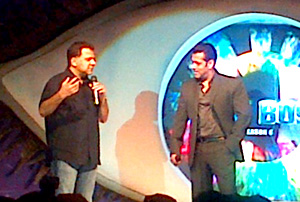
    Colors CEO Raj Nayak with Bigg Boss 6 host Salman Khan

    It was an action-packed weekend for leading Hindi GEC Colors. It launched ‘India’s Got Talent’ on Friday and on Sunday, its flagship reality show ‘Bigg Boss Season 6’.


    This year, the channel is set to erase all that Bigg Boss has earned a reputation for all these years: a popular show, but one that’s not quite meant for family viewing.


    ‘Alag Che’ or ‘It’s different’ is how it is being promoted to underscore the shift in content and treatment. For one, it will be aired at a full family-friendly (and hence ratings-friendly) time slot of 9pm on all seven days of the week. Then there’s raging Bollywood star Salman Khan in his inimitable style and two houseguests a parrot and a goldfish.


    While Bigg Boss kicks off on October 7, India’s Got Talent will start next week – on  September 22, to be precise. Bigg Boss is produced by Endemol India and India’s Got Talent by Fremantle Media.


    Raj Nayak, CEO – Colors said, “If Jhalak Dikhhla Jaa is Dancing with the Stars, Bigg Boss is Camping with the Stars. Every season we bring something innovative to the show and to add, to the twist this season, we have opened the doors of the Bigg Boss house to ‘aam aadmi’. With India’s Got Talent starting next week, we are quite excited about our line-up of programming.”


    Manisha Sharma, Weekend Programming Head, Colors added, “This season, Bigg Boss will be the perfect mix of emotion, drama, fun and entertainment. However, what won’t be changing is the fact that the contestants will be devoid of what we consider normal in everyday life. India’s Got Talent is a celebration of the diverse talent that India has to offer and we are proud to present another exciting season. This time, the platform will set a new benchmark in presentation and talent; we have in fact crossed all boundaries and have stepped outside of the studio to present some real edgy and engaging action from the spot.”


    India’s Got Talent turns four this season and will four and not three but four jury members on the panel – veteran actor Kirron Kher, celebrated director Karan Johar, dance diva Malaika Arora Khan and the versatile choreographer cum director turned actor Farah Khan. The show will air every Saturday and Sunday at 10 pm and will be emceed by Manish Paul and Cyrus Sahukar.


    Mr Nayak revealed that while Maruti Suzuki is the presenting sponsor of India’s Got Talent, discussions are on with sponsors for Bigg Boss which has seen a 20 percent increase in advertising rates.


  • The ‘Magic of Print’ is Usain Bolt of Media

    By A Correspondent


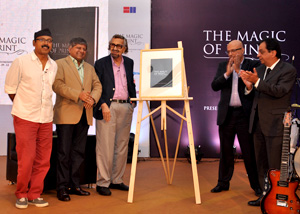
    From left to right: Josy Paul, Shashi Sinha, Alyque Padamsee, Vikram Sakhuja and Rajiv Verma at the unveiling of ‘The Magic of Print’

    We live in an era where technology is at the core of everything that we do. Whether it is about updating ourselves about new product launches or being abreast of the developments that transpire around the world, technology has enabled us to consume news at the quickest time possible – and without burning a hole in our pockets. Amidst this reality, it is the traditional mediums that seem to be taking the brunt of this newfound liking between consumers. From television to out-of-home and even print, mediums today are being threatened to put up a fight and adapt to this new truth or end up being relegated as the medium of yesteryears.


    Celebrating the creativity of print advertising, HT Media on Friday, September 14, 2012 launched a coffee table book on print advertising – ‘The Magic of Print’. The hardbound volume features contribution from prominent Indian advertising expert Mr Alyque Padamsee.  The book comes complete with a treasure trove of outstanding print advertisements of the last few decades from around the world as well as tips on how to create great print ads. The content is put together by Rajan Bhalla, Head Corporate Marketing and Magazines, HT Media and Mr John Thangaraj, Vice President, Planning, LOWE Lintas.


    Addressing a packed audience in Mumbai’s Taj Lands End, Rajiv Verma, CEO, HT Media Limited said that the best ads to remember are all print ads. In the earlier days, there was a certain charm to the print ads which you don’t find today. “I realise news and entertainment will be increasingly consumed on digital media, but print is nevertheless here to stay as long as the content is engaging, good and relevant.”


    A panel discussion was also held which delved on the various aspects of print, the impact of innovations, and the future of print advertising and so on. Print is one of the best reach building medium, and while television basically relies on emotions, print requires more brain power. With the literacy rate growing, newspapers will not decline in a hurry, reading newspaper has become a habit and to break this habit will take a really long time. These were some of the points made at the panel discussion. The panelists included veteran adperson Alyque Padamsee; Vikram Sakhuja, Global CEO, Maxus (and CEO, Group M India and South Asia); Josy Paul, Chairman and National Creative Director, BBDO India; and Shashi Sinha, CEO, Lodestar UM. The session was moderated by Sitaraman Shankar, Deputy Managing Editor, Hindustan Times.


    According to Mr Paul, the magic of print is a sudden impact; it is the Usain Bolt of the media industry.


    Mr Sakhuja pointed out that print is one of the best reach building medium and the top reason why most advertisers use print is for response, reach and editorial credibility.


    Mr Padamsee observed, “Television is basically reliable to emotions whereas print which also relies on emotions at the same time requires brain power. Print is a medium which remains with you and it has a mandate, and the mandate is that it is a very reliable medium. If print is going down today, it is because it is not responding to today’s needs. I don’t think print media even realises, it is an excellent medium for knowledge and education. Once it realises this, the swing will automatically go back to print.”


    So is there a success mantra for the growth of print? Will print die in the long run?


    Mr Josy Paul was of the view that print must not be isolated but integrated and its impact must be maximized. Today innovations is almost a loose word, it has become a bad word, in fact there is a lack of idea today. “Print is in your DNA, so it cannot die, it has been alive for over 800 years, it can only evolve.”


    Mr Vikram Sakhuja  explained, “Print won’t die in a hurry, it may be threatened by television or digital, but it won’t die in a hurry. There will a downward trend, starting with the metros, trickling down to smaller towns and villages, but it will certainly take some generations. In the long run however print will no longer be a mass medium as not many people will be consuming print.”


    Mr Alyque Padamsee was of the view that newspapers have a big advantage of analysing news which is not the case with television as television is a surface medium. “Innovation I believe is great, but some innovations are memorable, and some are clever. However innovations alone won’t sell anything, there is a lack of thinking today as far as print ads are concerned.” He further said, “Any medium will die until they reinvent. Radio would have died a long time ago had they continued the way they were. Yes, even print will die, but they must re-invent to survive and to thrive. Cinema was expected to die after television came in, but they re-invented. As long as print is desirable, it will be buyable.”


    While the panelists were of the view that print advertising needs to regain the charm it once had, there was a near unanimity among the panelists that print media is here to stay. However they were also of the view that if the medium was to die in the future, especially with the advent of digital, the death of the medium will be slow. The impact would first be witnessed in the metros which will trickle down to smaller towns and cities and in the long run, print will no longer remain a mass medium. Nonetheless as of today, the panelists were of the view that print advertising must not depend solely on innovation, that the medium must re-invent and make itself a desirable medium.


    Shortly after the panel discussion, the book -‘The Magic of Print’ was unveiled.


  • MxM Mondays: Is Radio perceived as a poor cousin to Print & TV?


    By Ananya Saha and Robin Thomas


    The onslaught of FM radio came as a breath of fresh air for listeners in India by the late nineties, and the success of FM Phase II launch further fuelled the FM growth story. According to industry estimates, radio’s overall advertising pie is around 4.5 per cent, and this is expected to growth even further with the FM Phase III launch. The medium promises reach, greater recall and marketing solutions that are cost-effective. With FM Phase III also expected to roll out soon, the radio industry gears up for another phase of growth which may see newer genres coming into play, differentiation in content, news, sports broadcasting and so on. However, despite these developments, why is radio perceived as a poor cousin to its traditional counterparts, particularly print and television? How do FM players, media planners and the advertisers view the medium?

    Comments in alphabetical order of last names

    What the radio industry has to say:


    Harrish M Bhatia

    Harrish M Bhatia, CEO, 94.3 MY FM:

    It is highly unfair to compare radio to print or television considering the policies associated with each medium and the length of time that the media have existed in the private sector. Restrictive governing policies have not allowed radio to diversify its product offering and showcase its true potential as a people’s medium. The private radio industry is still nascent and hasn’t been given the autonomy that television, or even for that matter online media, has enjoyed. Internationally, where markets are more evolved, radio enjoys about 8-10 percent of the advertising pie. Secondly, there is a lack of credible measurement systems to back the potential of radio. While dealing with the issues like long delays in Phase III implementation, music royalties and insufficient measurement tools, the radio industry has barely managed to consolidate resources and sustain itself. What is needed now is a strong mutual focus on solving these issues, hard-selling the medium and moving head-on into the third phase.


    Although it still does not address certain issues, Phase III should help open up the market for players to expand to newer markets and increase their radio footprint. What will be interesting to see is the change in dynamics that will come into play on account of the large number of non-metro stations that come up in the third phase, bringing radio on par with media like television. Advertisers will be able to benefit from this growth, leading to increased revenue potentials for radio. Moreover, with growth expected from smaller markets, the spends by national advertisers in these markets will also grow as no other medium offers reach like radio, in the fastest possible time, addressing challenges in a particular market and in their local language.


    Media spends by advertisers are not proportionately allocated to radio even though it has outgrown other media in time spent. As per the recent RAM research conducted in the four markets of Jaipur, Ahmedabad, Nagpur and Indore, average time spent listening to radio is 160 minutes as compared to IRS figures of 107 minutes watching TV, 85 minutes reading the newspaper and 30 minutes on the internet. If properly planned and used innovatively, the radio can do wonders for a particular brand. Hence, there is a need for enhancing the medium further to highlight its mammoth reach and effectiveness, which is what the radio industry as a whole should strive to do. Furthermore, radio needs to be bought on the strength or merit in particular target geography instead of as a network. Having said this, creative selling of radio has allowed greater inroads for some brands, especially in Tier II and Tier III markets, which are rapidly expanding.  Some of the key reasons have been the unique strengths of radio like customized communication to address local market needs, and ‘radio properties’ that contribute significantly in brand building.

     

    Sanjay Hemady

    Sanjay Hemady, Chief Operating Officer, HIT 95 FM,

    FM Radio is young, it has been evolving for 10 years and growing, adding value every single day to the listener and advertiser, its vast, extensive and unparalleled reach undoubtedly will take longer. Other mediums have taken long to establish, why should we compare with traditional mediums when there is no race, there is so much to achieve as a standalone medium. Radio broadcasters have been working towards creating their own territory, convincing clients, brands. The broadcaster is learning with day-to-day experience to give its best, by listening to the listener, by changing formats as necessary, positioning it differently, etc… it will take its own course, the time will come. We love objections and we solve them meaningfully.


    Expansion to newer markets will mean a bigger reach, we will get to entertain far more listeners than today, new formats will come in, fresh new talent gets identified, more jobs will get created, more brands will add radio as a definite medium. Give it some time, FM Phase III will subsequently open up a bigger offering for brands to reach out to more consumers.


    The top evolved brands across all mediums are convinced with radio, they have been consistently advertising since FM got privatized. Radio is a reminder medium, it scores on immediacy, it is about consistency and brands who have believed in the future of this medium have benefitted immensely. Brands who have worked closely to understand this medium and used it effectively are a happy partner. Going forward a collaborative approach will add more to this growth, and other extended avenues like Mobile Radio, Internet Radio, Radio Activation will also add revenue.


    Prashant Panday

    Prashant Panday, CEO and Executive Director, ENIL (Radio Mirchi):

    I disagree that it is a poor cousin of the other media! Each medium has its own relative size and one has to keep that in mind. A 48-kg lightweight boxer gets the same Gold medal in the Olympics as the 85-kg heavyweight winner gets! They are separate media and should not be compared. However, what is indeed correct is that even radio’s natural share has not yet been achieved. Worldwide, the share of radio is 8.5 percent, and this is just the average. In the countries where radio has developed well (US, NZ, Sri Lanka etc), radio’s overall advertising share is 12-13 percent. In India, radio’s advertising share is just 4.5 percent and the reason for this is that the government has simply not released enough frequencies. The share of radio will increase if 400 Khz separation is adopted by the Government as recommended by TRAI. That will increase supplies to 18-20 private channels per city.


    FM Phase 3 will only increase share from 4.5 per cent to 6 per cent or so. If we want to go to 8 percent or more, we have to release more spectrum in the major markets.


    Radio has become a “core” medium now. Every advertiser uses radio and they use it all the time. In fact, radio pricing is also quite strong. Did you know that Radio Mirchi is in the top 10 electronic media brands in the country after Star Plus, Zee, Colors, Sony, DD, Sun TV, 1-2 sports TV channels… It’s bigger than all music channels, all news channels, all regional channels, and all movie channels!


    Suresh Sanyasi

    Suresh Sanyasi, National Sales Director, Radio Indigo

    Yes, people consider radio a poor cousin. This has happened because of the endurance power of the medium. The people who do not understand the potential of the medium, cannot do much for it. Radio is and will remain a traditional mass medium. Radio works differently in different areas. Unlike television, this medium takes the demographic and area listenership into consideration. Radio as an advertising medium is harnessed largely by the retail sector and their ad spends on this medium is increasing. The medium provides immediate ROI, and is measurable.


    Regulatory issues are hampering the content creation on this medium. News and features get immediate audience. Once the regulations are eased, listenership might also increase.



    B Surender

    B Surender, Senior Vice President and National Sales Head, Red FM

    It is unfair to compare the growth and size of FM radio industry on equal terms with the print and television media here in India. To start with , FM radio was launched extremely late in India around 2002 with steep licence fees,  restriction on genres, frequencies, etc  making the business virtually unviable till the year 2005. It is only after phase two expansion with some policy corrections around 2005-06 that the industry started taking off. It has already grabbed an impressive 4.5 percent share of the media pie in India. If the Government frees FM radio further from its shackles through its phase three policies, one can expect terrific momentum in its growth.


    In my opinion, the  biggest roadblock for the industry’s progress currently is the most unreasonable restriction on entering newer genres like news and current affairs, live sports etc,  clubbed with issuing of multiple frequencies within a city. If the television industry was given the freedom to operate in these genres inspite of it being visually enabled, why not the FM radio industry?


    Phase three means a lot to our industry as it’ll considerably improve geographical coverage and reach, and enable content differentiation, to a reasonable extent, thanks to the provision for existing radio players to acquire multiple frequencies in the same city. It will consequently attract more categories of advertisers locally as well as nationally and more importantly, increase the depth of consumption of those advertising already. This in turn should take its share of the ad pie up to 7-8 percent. If they free up the news and current affairs genre, which is considered the second biggest genre on radio, properly, then the share of radio can potentially touch double digits over the next few years.


    The key word is ‘evangelising’. Industry players need to take up the task of promoting the enormous benefits of this amazing medium in such a manner that advertisers get a more holistic understanding. In India, listeners have lapped up the medium wholeheartedly across age groups. There is a clear case for radio players to pool their precious resources and launch a RAB (Radio Advertising Bureau) kind of initiative in India on the same lines as USA, UK, South Africa, etc to evangelise the medium among advertisers and ensure a substantial share of value in their minds.


    What advertisers and media agencies have to say:


    Anwesh Bose

    Anwesh Bose, Senior Vice President, DDB MudraMax

    The answer lies in the question itself. The argument today is why radio is the poor cousin. The entire eco-system of communication that is advertisers, agencies and the media owners are to blame for the condescending perception regarding the medium in our country. Before we answer the “why” we need to know the ‘what’s.


    The knowledge gap: most of the ‘professionals’ in the communication eco-system are not aware of the number of radio stations that exist in this country and a handful of them have ever seen a physical copy of the AIR rate card. An interesting fact is that the geographical coverage of radio is higher than that of any medium in this country and very few are aware of it.


    The information gap: Unlike TV and print, radio has very little data to prove its effectiveness and efficiency. In the times that we live in, most of the communication planners are data clerks; therefore for them radio is nothing but a ‘cheap’ medium that is local and low in reach therefore it is an option not an important component of a media plan.


    The perception gap: due to the lack of knowledge and information, the perception regarding the medium is dilute. Dilute perceptions lead to misplaced notions. The radio media owners have themselves done a lot of dis-service as well. There is an identity crisis among the radio brands because all of them are busy copying each other, as a result of which everyone is a ‘me-too’. Add to it the fact that it is a medium that has a one-time entry cost and no recurring costs, therefore the complete dependence on advertising revenues for sustenance. Anything that is ‘free’ is not valued.


    The ‘why’ will remain ‘why’ unless the ‘what’s are rectified. I would like to conclude by saying that it is imperative that the glaring gaps are closed and it is up to the stakeholders to do their bit. It calls for thought leadership – are we up to it?

     

    Abdul Khan

    Abdul Khan, Senior VP, Tata Teleservices

    I think poor cousin is an unfortunate phrase to be used for this medium. The current share of advertising pie that radio gets is about four percent. And, we only have ourselves are to blame for this. The problem is that the mode of distribution (airwaves) has been confused with medium. There exists woeful situation of lack of innovation, programming and talent in this industry. Radio is not in sync with the youth of the country, which is the biggest drawback given that youth is the TG for every other medium.


    The last remarkable property that one remembers on radio was Binaca Geet Mala. And radio now beams music when there lay enormous possibilities when it comes to programming. There is an enormous opportunity of delivering creativity through audio waves.


    Radio currently is not offering genuine value. Except for radio forums where issues and solution are discussed, there seems no sense of urgency from within the industry and the ecosystem. Even the discussions do not lead to reforms.


    Government regulation is not responsible for this situation. Yes, there have been regulations but other mediums also face regulations. What the ecosystem needs to understand is the fact that radio as a medium has enormous possibilities.


    Vivek Srivastava, Joint MD, Innocean Worldwide

    The perception of radio varies according to the advertiser’s profile. For the local advertisers, like retailers and jewellers, radio is a high-performance medium and a primary advertising medium at times. But for national and established advertisers, radio suffers from an image problem.


    Radio has been traditionally typecast as a low-preference medium. It has been treated as a transit medium, a medium that people listen to while they are driving or travelling. People believe that even with listeners accessing radio through their mobile phones, the listenership is actually percolating down.


    What is also hampering the growth of the medium is the fact that radio is a victim of current circumstances. There is hardly any money put in when it comes to producing for radio, even when huge budgets are allocated for production in print and television. Yes, we do see flashes of brilliance on this medium as well but it is only far and between. The whole ecosystem is responsible and should act towards making this medium more rich.


    Sanjay Tripathy

    Sanjay Tripathy, Executive Vice President-Head Marketing and Direct Channels, HDFC Life

    Radio is considered a very topical medium and advertisers can customize messages to geographies and city. While there is a great amount of flexibility that the medium offers but there are certain issues that the medium has:


    1. There is no channel or programming loyalty by consumers – Consumers listen to songs and not so much to content.


    2. It is still a medium (in larger cities) which is heard while concentrating on doing something else ie driving, cooking, etc. Therefore it becomes a medium that is on the background and not so much a primary entertainment medium as television.


    3. Radio Channel software ie Radio Jockeys have not been able to build loyalty with the consumers / listeners.


    Therefore, radio has become a support media to television or print, and is primarily used as a reminder medium.


    Radio industry is using qualitative / quantitative researches to convince marketers/advertisers but these are researches done by radio channels independently and marketers do not get a third party verified data.


    RAM, the measurement system for radio is not considered to be a credible system.
    Few of the reasons are:

    • Diary- entry method- whereby a selected person, maintains a diary of radio stations tuned into.
    • Coverage of just 13 cities including 4 metros.
    • Small sample size of 480 is used in metros to measure the effectiveness.

    Thus, advertisers and radio industry are concerned about accuracy, authenticity and relevance of RAM’s ratings. In my view, in order to be an efficient system, RAM must have higher sample sizes that are statistically significant, transparency in processes and electronic gathering of data.

     

  • Careers360 goes digital to help students looking abroad

    By A Correspondent


    Careers360 has taken the digital route to speed up its journey towards becoming the largest career counsellor in the country. After launching Careers360, the English magazine in 2009 and the Hindi edition in 2010, the company has now turned its attention to leverage the content, data and information, to reach out to the students through their Digital initiative.


    After launching a career counseling portal targeted at engineering college aspirants (www.engineering.careers360.com) in July 2012, the company announced the launch of a portal for student aspirants who wish to study abroad.


    The company is focusing to build a strong ecosystem involving various stakeholders for dedicated verticals; In Engineering portals, Careers360 launched one of its kind, innovative mock counselling engine. To help the various stakeholders, the engineering portal has unique features like a ‘Campus Ambassador Program’ which helps students contribute college reviews and stakeholders engage students in chat sessions, counselling sessions etc.


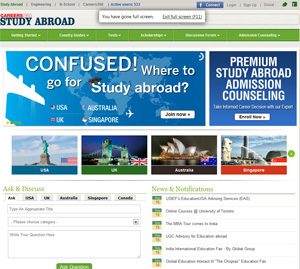
    The new portal www.studyabroad.careers360.com aims to be an unbiased counsellor helping the student make a well-informed decision. The country- and course-specific content for this portal would come from regulators, embassies councils and agencies supported by the respective governments. The portal would answer the how, why, when, where, what for students in a simple but comprehensive manner.


    Maheshwar Peri

    Commenting on the new product, Maheshwer Peri, chairman and publisher of Careers360, said “Career counselling on studying abroad is plagued by agents also doubling as counsellors, leading to mis-selling and misleading the students. The launch of our study abroad vertical will help student aspirants interact, engage and talk to us, the regulators, the trade authorities of various governments, and universities directly through our portal and take better decisions. Our features such as chats, discussion forum and counselling sessions would help students engage and interact with the right people. We would also be launching counseling products at nominal fees that would help the students get a deeper insight into the domain before committing themselves.”