Category: Digital

  • MxM Open Classroom: Day 3 of Digital Marketing by Bhuvi Gupta | 10 Commandments to Max TikTok

    By Bhuvi Gupta


    Bhuvi GuptaTikTok is a short video-sharing social networking service owned by ByteDance, a Beijing-based company founded in 2012. It is used to create short dance, lip-sync, comedy and talent videos. Its mission is to inspire creativity and bring joy. It can also be described as a bite-size version of YouTube, with videos ranging between five and 60 seconds in length. Users have access to an assortment of filters and effects, as well as a massive sound library with dialogues, popular songs, and other sounds.


    The app in the last one-year has seen massive growth in India. According to a report by data analytics firm App Annie, TikTok was the most engaging mobile application in India in 2019, and accounted for 44%, or 323 million, of Global TikTok downloads. As of December 2019, TikTok’s monthly active users were 81 million.


    That the app has taken over India’s mindshare is no exaggeration. The App Annie report also states that Indians spent 5.5 billion hours on the app, as compared to the 900 million hours in 2018.


    There are many reasons why TikTok has struck such a chord with people, across strata. Unlike other social media platforms like Instagram or Facebook, where you are expected to showcase your best self, TikTok encourages you to be whimsical and authentic. The content that is posted is short, and without possessing fancy video-editing skills, one can showcase their creativity due to the huge variety of augmented reality filters, and special effects. If being creative also takes too much effort, users can just lip-sync on a variety of trending videos to express themselves.


    Because of the sheer ease of using the app, it has been an equalising social media platform unlike Instagram & Facebook, which remained bastions of the urban communities in India.


    This stupendous growth which is a sign of things to come, means that brands should no longer ignore TikTok from their social media strategies. 10 Commandments to help brands navigate the platform are –


    Commandment 1 – Optimise your profile

    There are 6 key things to take care of when optimising your profile for a brand –


    User Name– TikTok has two fields where one must fill their user names – the profile name at the top of the page and the unique user name. As profiles are searchable using both these names, they both should ideally be your brand name for better discoverability

    Profile Pic– should be a bright logo or picture with high contrast. This is important as the profile pic, which is displayed in the middle of the right edge of every TikTok video, risks being missed unless it is eye-catching. The profile pic also has a small follow button on the post itself, so the more it stands out, the better it is.

    Profile Bio– TikTok gives you 80 characters, for a bio. Bio should either be informative, entertaining or inspiring or a combination of the three, so as to inspire action.

    Links– As TikTok allows direct links to Instagram & YouTube pages, hence these accounts should be linked. A robust YouTube or Instagram presence also gives credibility to brands new to TikTok.

    Account Verification– TikTok doesn’t have any official application procedure for getting verified. Account verification happens organically when TikTok staff see a need or want to reward users

    Pinned post– TikTok allows pages to pin upto 3 posts to their profile. These posts should be used to highlight videos that represent the brand or the latest brand campaign.


    Commandment 2 – Optimise Settings
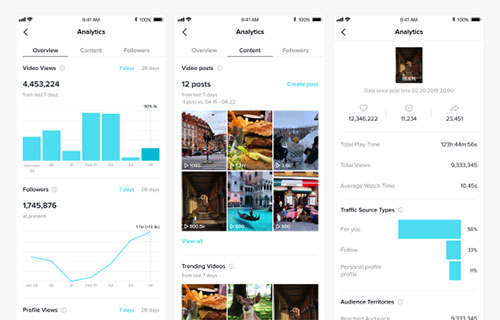
    Ensure that in your profile settings (Go to Manage Your Account), the setting is for a ‘Pro’ account, as that will give you access to analytics.

    Ensure that your account is not set to private so that people can discover your content organically (go to Privacy settings)

    Ensure that all the languages of regions aligned to the brand’s business objectives are selected (go to Content preferences). This is an important so that consumers in those markets can discover and engage with the brand.


    Commandment 3 – Engagement Hacking


    TikTok uses Artificial intelligence & Natural Language Processing (NLP) to understand the content and context of each post. This helps the platform to understand which users to serve the content to. Its algorithm has been lauded for its exceptional machine learning which has enabled its far-reaching success.


    It is widely understood that every time a video is posted, TikTok will show the video to a sample set of 200-300 users. From this chosen audience, the algorithm uses the rewatch rate, completion rate, comments, shares & likes, new users gained as key factors among others, to evaluate every post’s engagement ranking. On the basis of this engagement ranking it will choose whether the video should be shown to how many other users or not. However, it must be noted that it is impossible to know the weights assigned to these and how best content can be optimised because that is proprietary to the TikTok algorithm.  Best practices to increase engagement, are as follows –


    Completion rate & Rewatch rate are key metrics basis the current algorithm, and hence brands should create shorter but high quality videos, so that the completion rate metric is met and a viewer is motivated to rewatch the posted video, as it will barely take any time.

    Engage with viewers interacting with your content – Turn on post notifications so that you can be responsive to your followers who engage with your content.  Engaging with people who react to the post, within the first few hours of posting it, will also help to increase the post’s engagement rate. In layman’s terms, the higher the engagement, the more the post will be shown to other users, which in turn creates a virtuous circle for more engagement

    TikTok’s algorithm will down vote content which is extremely violent, dangerous, sexual, political or incendiary.  Accounts that frequently post such content also get shadow banned. In India, TikTok was banned for download, in early 2019, due to alleged pornographic content on it.


    Commandment 4 – Leverage the USP’s of TikTok


    Post frequently as on TikTok as accounts use compounded growth metrics (Likes & Views), and hence profile benefits from frequent posting.

    Brands should participate in some viral trends aligned to their brand, rather than only follow their marketing calendar to keep their TikTok community engaged.

    Make your content basis the analytics – this means its best to have a content strategy, which is responsive to the brand’s community, so as to create content, which will drive the most engagement. Hence, brands should post when their followers are active, in languages spoken by most followers, etc.

    Never delete content – Unlike other social media platforms, content on TikTok often enjoy what is knows as a ‘Delayed explosion’. This means, content posted on the platform may not go viral when its posted but see an upswing in discovery after weeks or even months.

    Follow popular trends – The short video format survives on content that is current. Hence, creating content around news stories, such as Covid, cultural events like festivals & current TikTok trending hashtags & sounds, helps in increasing discoverability

    Ensuring that content you post follows conventional how–tos of content marketing to create content with stickiness.


    Commandment 5 – Optimise Hashtags

    Ensuring that you keep the below n mind while using hashtags can help to increase the discoverability of your content –


    Use 5-6 hashtags per post – if too many hashtags are used on TikTok, then the caption moves up and the vertical frame looks crowded  & unaesthetic. If too few hashtags are used then it means decreased discoverability.

    :: Use hashtags relevant  & popular to posted content

    :: Use trending hashtags – TikTok shows the highest trending hashtags on its ‘Discover’ button. Hence, using relevant trending hashtags increases discoverability

    :: Use hashtags related to popular keywords for which your brand is discovered.

    :: Use long tail hashtags – a long tail keyword is a phrase that is longer and more specific to search queries. Long tail keywords get lesser traffic but have higher engagement, as they are so specific. For example #howtobakechocolatecake is a long tail keyword as compared to #baking, which is a general keyword

    •  Add hashtags relevant to your brand, for e.g. competitor’s hashtags to ‘Favourites’ so that you can monitor them


    Commandment 6 – Using TikTok Music


    TikTok allows you to use a variety of sounds in videos. These sounds can be songs, dialogues, and variety of other sounds, which can be used as background music or audio tracks to lip-sync to.


    Music is key to TikTok videos. The more times the algorithm sees people using a particular audio track, the more it’ll feed your song to new viewers, thereby creating a virtuous circle of virality.


    This chain reaction has helped lots of otherwise overlooked songs go viral on TikTok. Music labels are now releasing snippets of songs on TikTok alongside their release, as it helps drive massive discovery and virality for original music. For example, the Baadshah and Jacqueline Fernandes song, Genda Phool, released in March 2020, amassed 250+ million views on YouTube, in a month of release, helped in part by its massive reach on TikTok. Brands can use music in the following ways


    Use pre-existing and new audio tracks – As a brand, background scores, catchy brand jingles and witty repartee as dialogue form a key part of marketing communication. It is hence advisable to leveraging ads to create original content – Popular jingles & ads from the past, as well as new original audio tracks, when launching new campaigns. Creating engagement for the brand jingle can help to drive discovery for the campaign.

    Use trending sounds  – they are a way to get your content discovered as they have a proven track record of getting engagement. As they use sounds which are already trending your content has a higher probability of being on the ‘For You’ page of users which have engaged with the sound


    Commandment 8 – Be creative


    Ideas are central to the TikTok experience. Videos can be uploaded or created in-app with stop and start recording, timers, and other tools. Live streaming is also an option. Users can add visual filters, time effects, split screens, green screens, transitions, stickers, GIFs, emoji, and much more.


    TikTok which initially started as a lip-sync app has evolved to house content across industries – for fitness enthusiasts, bakers, photographers, salsa dancer et al


    Hence brands should create content strategies accordingly.

    Branded Hashtag Challenges 

    These campaigns encourage users to create videos around a specific hashtag, often using a specific song or set of dance moves. in 2019, Pepsi used TikTok as their primary platform for promoting their new brand anthem with the tagline ‘Har Ghoont mein Swag’. The campaign anthem was sung by 2019’s most popular Bollywood Punjabi singer, ‘Baadshah’ and the music video starred popular Bollywood youth icons & social media influencers, Tiger Shroff & Disha Patani. The campaign required users to recreate the trademark dance move of the song which was called the  #SwagStepChallenge. The campaign was a huge success, with 240+ million views and over 15,000 user-generated videos within 24 hours of its launch. The campaign also naturally spilled over to Instagram, where it received 20+ million views. The campaign remains one of TikTok’s most successful brand campaigns in India.


    Branded lenses

    Brands can partner with TikTok to create 2D and 3D lenses for users to “try on” and share. Doing so also lands companies in the Trending section of the Discover tab for 10 days. Pepsi used branded lens in a followup campaign to the #SwagStepChallenge called #SwagSeSolo


    Commandment 7 – Get inorganic reach via Ads & Influencers


    As the TikTok platform is relatively new and nascent, both the popular modes of getting inorganic reach i.e. Advertising & Influencer Marketing give better ROI than more mature social media platforms like Instagram, Facebook & YouTube.


    Influencer Marketing on TikTok

    Ensure the influencer’s audience demographics is aligned to you brand

    Use cloutmeter.com to assess profiles. Typically, a good engagement rate is upwards of 5%

    Influencers are relatively underpriced basis influencers with similar reach and followers on YouTube & Instagram, as the platform is still nascent

    Accounts which can be categorized as ‘Influencers’ differ basis social media platforms, i.e. an Influencer on Instagram may not enjoy similar reach on TikTok, and hence influencers should be defined basis the platform

    Leverage your existing PR & social media agencies for influencer marketing as many have started to offer these services as well. Specialist Influencer marketing agencies have also sprung up, but the industry us still nascent

    Beware of fake influencers –

    Likes to Followers ratio – On TikTok, as organic reach of quality content is a key feature of the app, the average Likes should always be a multiple of the Followers.

    Check for genuine followers – scan followers to check if they are genuine or bots (typically have with no profile pictures and followers, but will be following a lot of people)


    Commandment 8 – Use developed social media communities from other platforms to drive growth


    Most brands have been using social media on other platforms and have invested considerable energies in developing robust communities. Developing synergies across their content and community can help jumpstart reach on TikTok via –

    Repurpose content posted on other platforms – Brand having presence across multiple different social media platforms will already have a robust marketing calendar, and multiple pieces of original and quality content per platform. Repurposing the content o create short videos will help build a brand’s community on TikTok and utilize resources, effectively.

    Share original content created for TikTok on Instagram – TikTok allows accounts to share their posts on Instagram using TikTok’s built-in “Share to Instagram” feature. This moves the TikTok watermark and crops the frame of the video to make it suitable to the Instagram user interface. Resharing such posts can help make your community on Instagram also follow you on TikTok.


    Commandment 9 – Don’t confuse TikTok for Instagram


    • Content discovery is central – TikTok’s default screen is the ‘For You’ page of trending videos customized basis a users’ browsing habits. The platform is customized for discovery of ‘viral’ content. This is similar to Instagram’s second tab of ‘Search & Explore’

    • Allows you to be whimsical – Mainstream platforms like Instagram & Facebook have focused on presenting a curated image of your brand persona. TikTok allows and celebrates brands, truly with #NoFilter, allowing the brand to showcase more whimsical content.

    • TikTok helps to reach audiences in tier 3 and 4 cities – generating content and going viral is easier than other social media applications. Even if you’re a new user or an inexperienced video maker with a low-quality phone camera, the world of TikTok embraces you.

    • As the platform is still at a nascent stage, it allows for easier and more organic discoverability and reach


    Commandment 10 – Underused features of TikTok – Lives  & TikTok coins


    TikTok like Instagram, Twitter, Facebook & Youtube also offers pages the option of going ‘Live’. This feature is accessible only when an account gets 1000 followers. Brands will soon start to leverage TikTok Lives as well. Livestreams can be hosted by users are older than 16 years. Only those aged above 18 years can purchase, send, or receive virtual gifts.


    Lives on TikTok, have an interesting feature, where viewers are allowed to give virtual gifts to the page. These gifts can be purchased using TikTok Coins. The price for these coins at the user’s end is approximately INR 100 for 80 coins.  Diamonds are a measurement of the popularity of the relevant. On the basis of the gifts, Content Provider receives, Diamonds get accrued to the content creator’s account at a rate of conversion determined by TikTok.  Users cannot purchase Diamonds. These ‘Diamonds’ are exchangeable for currency.


    Pictures taken from public feeds of users on TikTok, TikTok Newsroom & pexel.com


    Bhuvi Gupta is a marketer with 10 years of work experience, of which the last 6 have been in the media & entertainment industry. She has been a part of many launch marketing campaigns with experiences at the Times of India group, Republic TV and the latest in marketing a Bollywood film.


  • MxM Open Classroom | Digital Marketing by Bhuvi Gupta | 10 Commandments of leveraging Facebook effectively

    Bhuvi GuptaBy Bhuvi Gupta


    Facebook, while not the first social media network, was the first social media network, which the world holistically adopted, because it evolved to keep itself relevant.


    Even today, with a plethora of new social media networks, Facebook with a subscriber base of over 2 billion users globally remains relevant and for marketers crucial to reach customers. In India, Facebook has, 300 million users, which means that which means that 60 percent of its online population (500 million) have a Facebook account. It remains the social media network with the highest subscriber base in India and the best platform for advertising (on social media networks) by far. Therefore, marketers cannot  and should not ignore Facebook.


    Most marketers would have used definitely Facebook both as a platform for content marketing  & for digital advertising.  Both have evolved considerably, due in part to the platform’s declining organic reach & changes in the product, over the last decade. Here are 10 Commandments for leveraging Facebook effectively in 2020 –


    Commandment 1 –Optimize your Profile


    The first commandment is necessary, as an optimized profile is the base for implementing strategy. Facebook allows brands considerable more space to detail information about their business, their objectives, mission, locations etc. These details often get missed on other social media networks, which focus on keeping profile bios short and sweet. Best practices are –

    Dharma Productions has  a business profile customized to its business of a film production house

    • Have an eye-catching profile picture & cover image or video, optimized for the correct sizes.

    • Create a Facebook Business page which helps  –

    :: Access to Facebook Audience Insights

    :: Running ads

    :: Allows page customization to suit business objectives i.e. you can shift or delete sections basis on what is important

    :: Allows you to create a shop front on the page

    • Fill out your profile with brand description, locations, visiting hours as applicable

    • Use ‘Call to Action Buttons’ aligned to business objectives.  This button shows on your page, right below the cover photo and is a trigger for A profile visitor to take action – ranging from browsing products, subscribing to updates, getting a discount code etc.

    • Pinned post– FB allows pages to pin 1 post to their profile. This post should be used to highlight any update, or the latest brand campaign.

    • Apply for page verification – on the ‘Settings’ tab

    • Link all other social media profiles to the page to benefit from cross promotion. This is especially beneficial for Instagram, and you can simultaneously post on Facebook & Instagram stories

    • Create a Vanity URL – Change the random URL assigned to you when you create a page to a URL, which is ideally your brand name and SEO friendly


    Commandment 2 – Create a FB Content & Community strategy

    Over the years Facebook has made considerable changes to its newsfeed algorithm. Today, Facebook prioritizes content from pages that enjoy high viewership, and quality engagement. Hence, focus on quality content, which inspires reaction.


    Organic reach on Facebook has reduced considerably, with posts reaching less than 5% of your page’s audience, earmarking budgets for boosting posts is necessary. Posts can also be geographically & demographically targeted so as to ensure effective reach.


    CONTENT

    • Use Facebook Page insights to understand the content has stickiness and the demographics of the followers who are returning to consume more content, so that you can create better and more engaging content

    • Diversify the content mix – images, videos, GIFs, polls, and User-Generated Content (UGC). FB prioritizes video over photos, and photos over status updates, hence that should be accounted for in the content mix

    • Adopt the 70-20-10 approaches: Post original material 70 percent of the time. Share existing content that’s relevant to your audience’s interests 20 percent of the time and -promotional content the remaining 10 percent of the time.


    COMMUNITY

    • Be responsive to people commenting on posts to increase engagement.

    • Don’t use ‘ Engagement bait’ as Facebook doesn’t count such posts as genuine engagement.  These are those posts that encourage responding with a single word or an emoji, or ask people to tag friends in the comments only to drive up engagement

    • Switch on profanity filters in Page Settings so that defamatory comments don’t show

    • Because of the sheer numbers of users and business pages on Facebook organic reach is low. Hence, it is important for Pages to ask followers to turn on post notifications so that they know every time the page posts. Before this request, pages should ensure that their page is active, with high quality and engaging posts so that followers are motivated to turn on post notifications.


    Commandment 3 – Leveraging Facebook Page Insights


    A snapshot of FB page insights


    Facebook offers very detailed page insights, as compared to other social media networks. Understanding these insights can help unlock the potential that Facebook with its large audience base has. Marketers should frequently use Page insights to help answer the following questions, and accordingly alter their page strategies-

    • What content performs best in terms of reach and engagement ?

    • What are the demographics of the people who interact with your page, and what time are they most active ?

    • What are the numbers of people interacting with your page and content and how is it relative to your competition?

    • What actions are people taking through your page; do they click the call to action button?


    Commandment 4– Granular targeting with Facebook Advertising


    Enough and more has been spoken about how advanced Facebook ad targeting is and it’s easy to measure and optimize campaigns to get the best possible ROI. Best practices are –

    • Use Custom Audiences (existing customers or followers) to retarget them with new products or updates

    • Use Lookalike Audiences to discover customers similar to people who have interacted or purchased products

    • A/B test ads to invest funds in better performing ads

    • Track ads performance regularly – Ads peak and then performance starts dropping, when the audience being targeted has been exhausted. Tracking ad performance can help marketers to pinpoint when this drop happens and modify the campaign accordingly

    • Different industries have different ad metrics and there is no average CPM or CPV, or CPA

    • Use Facebook audience insights – Facebook Audience Insights, (accessible from the Ads Manager) is a tool designed to help marketers gain better insights about their community, their custom audience (customers) and potential audiences, by studying aggregate information about geography, demographics, purchase behavior and more.


    Commandment 5 – Leverage Facebook Audience Network while Advertising

    An underused part of Facebook Advertising is the Facebook Advertising Network, (the Facebook equivalent of the Google Display Network). The FAN is a collection of websites and apps that allows advertisers to extend their Facebook and Instagram campaigns across their advertising real estate.


    The FAN is easy to use as using it uses the same targeting available for Facebook ads, including Custom Audiences, core audiences and lookalike audiences and features the same measurement tools marketers’ use for their Facebook ads. It takes only one additional click while creating ads.


    Basis a Facebook study, conversion rates were eight times higher amongst people who saw ads across Facebook, Instagram and Audience Network than people who only saw the ads on Facebook.


    Commandment 6 – Leverage Facebook Pixel to optimize ROI


    Using the Facebook Pixel is a piece of code used on your website (where customer conversions take place) to optimize ad delivery to an audience is more likely to take an action like a purchase checkout for an ecommerce website, a subscribe for a media website, etc.

    The Pixel allows you to track visitor activity on your website. This way,  brands can track when a customer took an action and after seeing which Facebook ad. Tracked conversions appear in the Facebook Ads Manager and in the Facebook Analytics dashboard, where they can be used to measure the ad effectiveness of your ads, dynamic ads campaigns, retargeting, and to analyze that effectiveness of your website’s conversion funnels. This is called conversion optimization.


    Commandment 7 – Don’t forget the Power of Facebook Groups

    In the macrocosm of Facebook, Facebook Groups are a relatively untapped opportunity for brands to create new and leverage existing communities.


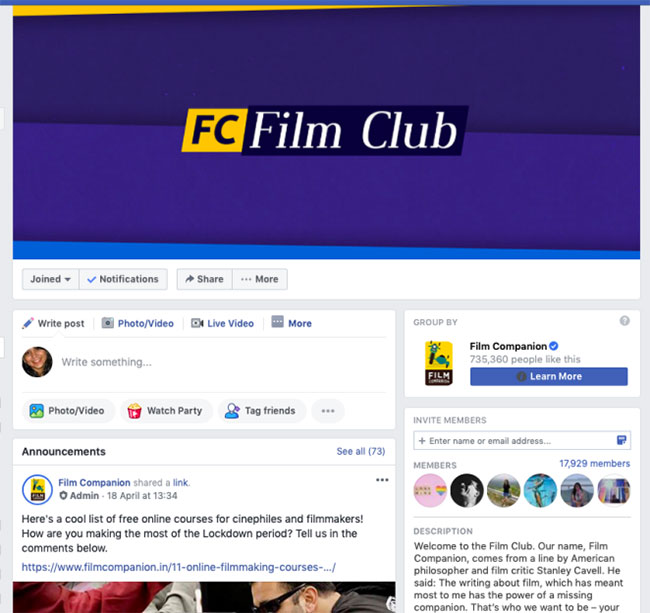
    Film Companion, a media company focused on reviewing content has their own FB group

    Groups, which  are a different asset to a FB page, are communities built around a certain common interest, and often geography. The format is that of a public forum, where members of the community are allowed to communicate with other members publically. The communication is managed by one or multiple Admins, who ensure that the group is communicating in line with rules defined by the Group owner.  Groups can be closed i.e. requiring approval to join or open.

    There are 2 ways to leverage FB Groups –

    1. Create a FB Group – Time consuming but a high quality community of brand loyalists will  be built. As groups offer communication even between followers, it will mean that a robust multi-way communication channel will get formed.  While this will require regular group management and even policing, this community is a high quality focus group that can be used in multiple ways

    2. Join Groups – relevant to your brand can help give access to a ready community that can then boost your page following, and even become customers. Ways of creating awareness in groups can be multiple, but must be done with prior Group Admin approval, as not all groups will be willing to let brands leverage them, but some may –

    • Content – sharing posts that utilize your brand rather than only promote it

    • Hosting exclusive competitions for group members which require using your products or services

    • Using the group’s real estate for advertising – this means the cover image, pinned post etc.


    Commandment 8 – Go Live on Facebook

    Facebook Live is a feature of that uses the camera on a computer or mobile device to broadcast real-time video to Facebook. Lives have become ubiquitous across social media. Since the launch of live in 2016, as per statistics shared by Facebook, more than two billion people have watched a Facebook Live video. Lives are a helpful tool and help brands to –

    • Provide access – Live streams of public events like press conferences and product launches

    • Provide engagement to the brand – The brand can respond to viewers in real time

    • Humanize the brand – showcase the behind-the-scenes functioning of the brand, your product, ad shoots, or the people behind your brand.

    Some best practices of using them –

    • Choose live topics on the basis of what your community wants more information on

    • Promote the date of you live for a few days, so that your community is aware of the Live taking place

    • Take questions and respond to comments from the viewers

    • Cross promote your Live on other social media

    • Ensure you post your Live as a video after the stream has ended, with an relevant description & video title

    • Ensure you data connection is strong, so that the video doesn’t lag or drop during the Live

    • Ensure you have a visible branding during the Live


    Commandment 9 – Consider using Chatbots on FB Messenger

    The chatbot launched by MyGovIndia to resolve queries on Corona virus


    Chatbots on Facebook messenger are a great tool to complement a Facebook page. Messaging enables businesses to pursue two-way conversations, which are personalized (users are greeted with their first name), customized (according to their purchase history or search history), simplified (only information relevant to the user’s query is given as opposed to a FAQ or a one-way post), responsive, (comments on Facebook posts can be responded to) fast, and documented.


    Hence, FB Messenger as a more intimate way to communicate with users for retargeting, customer sales support & communication, should be leveraged.


    As per a Facebook study, 79% of people in India say that being able to message a business helps them feel more confident about the brand

    While there are many companies which make Chatbots, popular companies include Mobile Monkey, ChatFuel, & ManyChat.


    Commandment 10 – Use360 Degree Photos & Videos

    The film Bhoot used 3D posters as a part of its marketing communicatons


    Facebook’s USP over other social media networks is that allows users to take, upload and view 360-degree photos. While Facebook supports 360-degree videos, they need to be shot using special cameras.


    3D photos can help create the wow factor, which can help brands to break the clutter – something which on Facebook is necessary.


    _______


    Facebook offers short and comprehensive courses and guides on how to use all their features. I recommend going through Facebook Blueprint, which is an e-learning platform that offers free, self-paced courses on Facebook and Instagram advertising for detailed guidance.


    Pictures taken from public feeds of users on  Facebook, Facebook newsroom & blog, hootsuite.com & pixabay.com


    Bhuvi Gupta is a marketer with 10 years of work experience, of which the last six have been in the media and entertainment industry. She has been a part of many launch marketing campaigns with experiences at the Times of India group, Republic TV and the latest in marketing a Bollywood film.
     

  • Is Gaming the Silver Bullet that can change Brand Marketing in 2021?

    Barack Obama used in-game advertising hoardings in the game Burnout Paradise among others, during his 2008 Presidential campaign


    By Bhuvi Gupta


    Bhuvi GuptaThis is the first time I am going on the record to admit that I have spent a lot of time playing online. Luckily though, these obsessions were recognised before they became addictions after an unhealthy time spent on Farmville, Angry Birds and lastly Candy Crush, before I admitted that I would not go down the slippery rabbit hole that can be gaming and have kept myself away since 2015.


    I am definitely the exception. In the last few years, driven by increased digital penetration and bandwidths, (and this year COVID-19) mobile gaming in India has exploded. As per a report from app intelligence firm Sensor Tower, Indians installed 7.3 billion games, nearly 17% of all worldwide downloads in the first nine months of 2020, beating countries like USA and Japan to the number one position.


    Basis the Google-KPMG Media Report 2020, the Indian gaming industry will cross USD 1.1 billion in 2021. With around 500 million people in India having smartphones (give or take a few million) and around 300 million+ gamers, there is no denying that this market is growing with the lockdown having helped accelerate the growth. The biggest USP of mobile gaming is the level of engagement that the audience has while playing a game. A GroupM- Mobile Marketing Association report (link – https://www.groupm.com/mobile-marketing-association-and-groupm-launch-mobile-ecosystem-report-2020/) highlighted that gamers are more than twice as likely to pay attention to advertisements placed in mobile games at 41 percent, as compared to ads placed on the internet at 17 percent, in magazines or on billboards at 15 percent each.

    This implies the inherent value of digital impressions becomes much higher.


    Marketing during gaming takes three forms primarily –

    :: Integrations – which are well-integrated into the narrative like branded ‘Virtual Real Estate’ like banners within the game, branded items like clothes or accessories worn by avatars, and fully branded modes or levels

    :: Advertisements for additional lives, etc. which can be typically purchased on ad exchanges

    :: Events such as e-sporting leagues


    Barack Obama used in-game advertising hoardings in the game Burnout Paradise among others, during his 2008 Presidential campaign


    Barack Obama used in-game advertising hoardings in the game Burnout Paradise among others, during his 2008 Presidential campaign.


    In India, Gaming in India can primarily be classified into four heads-

    :: Fantasy Gaming – which already has 100 million users with companies like Dream 11, Mobile Premier League dominating.

    :: Action games – such as PUBG and Fortnite. While Fortnite doesn’t have as many users in India it has been the front-runner in terms of brand integrations globally.

    :: Real Money Gaming – like online Rummy, Poker, and Ludo King. This comes under the purview of gambling and hence basis Indian law is subject to laws as dictated by states. While skill-based games such as Poker and Rummy are usually permitted, games of chance are prohibited. The recent PayTM First Games ban on the Google Play Store was also related to the definition of what constitutes ‘Gambling’

    :: Live Trivia apps – such as Pocket Aces owned Loco


    Why Gaming?


    With more people coming online there is ad fatigue that takes place due to the high number of ads users see. Many users also use ad blockers, and hence awareness and engagement with even well-targeted ads is low as the audience is just waiting to skip the ad.


    This is as opposed to the active audience that plays online games, where they are tuned to engage with the gaming platform to maximise scores. By using product integrations, or branded levels, brands can also help create immersive experiences for the target audience.


    Poco introduced their new launch, POCO M2 Pro via the game Tappy birds. A weeklong tournament called ‘Tappybird showdown’ was held where the mobile phones were placed inside the game, and players had to collect the phone to earn extra cookie points.

    Secondly, as the market is still nascent, brand integrations remain relatively unexplored. With 5G coming into India in the next 5 years, gaming will become immersive and hence technologies such as AR/VR will help create a value-added gaming environment, which is perfect for marketing.


    Poco introduced their new launch, POCO M2 Pro via the game Tappy birds. A weeklong tournament called ‘Tappybird showdown’ was held where the mobile phones were placed inside the game, and players had to collect the phone to earn extra cookie points.


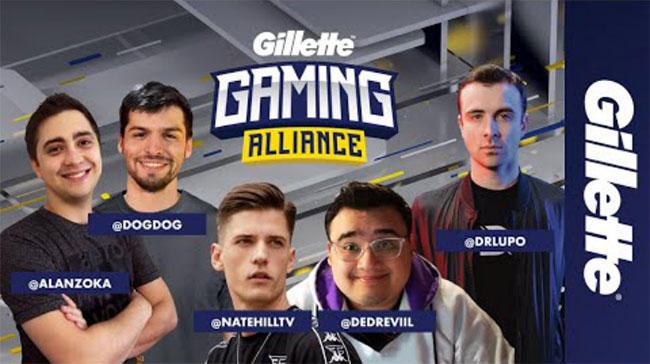
    Thirdly, emergence of e-sporting leagues and tournaments and live game streaming allows brands to leverage gaming influencers, do cause marketing, sponsorships etc. for a well-defined audience. The Google-owned YouTube has a vibrant community of gaming live streamers such as Tanmay Bhat, Gagandeep Singh (Sikh Warrior), Manasvi Dalvi (Manasvivi) etc. in India. Globally such campaigns are have already become common, for e.g. P&G’s Gillette has hosted the Gillette Gaming Alliance on Amazon-owned live streaming platform Twitch in 2019 and 2020 with a team of five Twitch influencers to create content for their fans, and highlight other campaigns and causes.


    Lastly, just like in digital advertising, brands can target users on the basis of demographics and geographies, which makes in game advertising all the more effective. There is also high prevalence of gamers in Tier2 and Tier 3 cities, which can be leveraged by brands.

    While it may seem that Gaming is more relevant for youth-focused brands, the 35+ age group has high usage in more traditional games such as LudoKing, Online rummy and Poker. Hence, depending on the target audience, brands should choose games online to create impact.


    The timing is right, the lockdown has helped accelerate user growth, and Indians brands must strike when the iron is hot to make the most of a relatively undiscovered avenue for advertising before it gets too crowded.


    Bhuvi Gupta is a marketer with over 10 years across industries, of which the last six have been in Media & Entertainment. She has been a part of many launch marketing campaigns – specifically at the Times of India group, Republic TV and the latest in marketing a Bollywood film. She will write on A&M (mostly marketing, but often on advertising too) every other Tuesday. Her views here are personal. She tweets at @bhuvigupta3


  • What ‘The Social Dilemma’ gets right, and what it misses by a mile


    By Bhuvi Gupta


    Bhuvi GuptaUnless you have been living under a rock the past month, you have probably watched, heard and discussed the Netflix documentary ‘The Social Dilemma’, which denounces the power that advertising-powered digital media today holds over connected audiences. That you may have read about the documentary’s impact on Facebook or/ and have watched it on Netflix is of course the irony that escapes none of the documentary’s proponents.


    The documentary covers how the objective of social media networks is to maximise the time spent by users on them so that they can better profile their users and serve their customers, i.e. advertisers with better audience targeting solutions, which are for sale to the highest bidder, irrespective of whether it is fake news or diet pills that is being advertised.


    The Internet and social media have dramatically changed our lives in the last decade. There is no denying how much positive change the internet has brought with it – reuniting families, facilitating blood transfusions and donations, and currently enabling a robust WFH culture which is allowing the global economy to function during a pandemic. However, the same connectivity that has been used to bring about positive impact has been exploited to bully individuals, spread propaganda, and win elections.


    The documentary does not make any big revelations. Since the 2016 US Elections, we have consistently heard how political parties have misused social media, specifically Facebook across the world to sway public opinion.  All ‘The Social Dilemma’ does is piece together much of what we already knew, in way that it created impact and will hopefully institute change.


    The Disruptive Power of digital advertising – pro for a marketer, con for humanity

    As a marketer, who has run too many Facebook and Google ad campaigns, my favourite tool to ensure a low CPM and high CTR are the LookAlike Audiences.  For the uninitiated, Facebook and Google allow you to target people similar to an audience that you share with them. All you have to do is list some demographic and interest based qualifiers or share a database of people who have visited your website to create a ‘Custom Audience’ and the platforms generate a Look Alike audience, which behaves just like your ‘Custom Audience’. The first time you use it and see your CPMs go down, it seems like magic. It is not.  It is the power of tracking audience behavior over long periods of time, which has helped classify audiences and behaviour patterns.


    As a marketer, the ability to find such audiences, and to be able remarket to them is a dream. Digital advertising has been a gamechanger for many businesses because of its measurability. Unlike traditional advertising, where you target the masses on Print or TV media and hence have massive spillage, digital ads are shown only to potential consumers, bettering the ROI.


    The flipside is that the ease in targeting audiences, which depict a certain behavior, is the same whether the intent is noble or malicious.  As the documentary explains, incendiary elements actually exploited Facebook’s algorithm to create a hoax scare called ‘PizzaGate’ amongst gullible audiences to successfully link the 2016 Democratic party Presidential candidate, Hillary Clinton with child trafficking, and hence, sway crucial vote banks.


    It has never been easier or cheaper to sway impressionable minds. Even those not so impressionable can get swayed when served fake news dressed-up to sound authentic.


    What The Social Dilemma missed – it’s not only Social Media

    The documentary solely focused on the power of social media networks driven by algorithms which work on a trifecta of engagement of users, growth of the network & increase in advertising revenues, it missed how other platforms which are not reliant on algorithms & ads such as WhatsApp, Reddit, 4Chan have also been leveraged to spread harm via fake news and doctored content.


    This problem is gargantuan, because it has transcended the level of doctored news whose veracity can be easily verified by a simple Google search to include Deepfakes. Deepfakes are synthetic videos in which the face of a pre-existing person is replaced by someone with a high likeness to them. The quality of Deepfakes is so advanced; today that it is very difficult to make out authentic videos from doctored ones.


    Reddit and WhatsApp have both facilitated the spread of fake news and deep fakes, which have been incendiary enough to incite rioting and lynch mobs in India.


    The Monopolistic Power of the FAANG

    FAANG or Facebook, Amazon, Apple, Netflix and Google together are synonymous with the Internet for most of the 4.5 billion people online today.  These companies own complementary parts of the ecosystem and often take advantage of this monopolistic ownership to prohibit competition. While countries in the EU and Australia are instituting regulations to protect their citizens, most countries, including India do not yet have strict regulations or competition laws to prohibit monopolies for digital companies like they do for other industries. As a result, FAANG continues to control what users see on the Internet to benefit their profit objectives. Last weekend, Google banned PayTM from the Google PlayStore claiming Paytm’s IPL promotion, which was offering scratch cards and cash backs was a form of ‘sports gambling’. 95% of India’s smartphones run on the Google owned Android operating system, and hence were shut out from Paytm.  It is ironic that such a ban was instituted when similar promotions have been used by Google Pay (a direct competitor of Paytm). While Paytm was reinstated after it removed the cash back feature, given that the ban was instituted without any warning sets a dangerous precedent for the monopolistic power wielded by Google.


    Hence, adequate regulations and competition laws are crucial to protect the online marketplace.


    Content Regulation

    Unlike rigorous procedures, which govern the licensing of traditional media companies i.e. Print TV and Radio, and industry bodies such as ASCI which monitor the veracity of ads shown in Indian media, digital media has no such eligibility criteria or monitoring to check the credentials of media owners or ‘content creators’.


    While many petitions are currently running against hate speech and defamation on TV news channels, the incendiary content on digital media is going ignored. Content posted online requires stringent checks including both govt. regulations and human monitoring to manage it. Currently, YouTube employs both Artificial Intelligence and human resources to protect copyrighted content. Similar checks and balances are required before any content is posted, as systems driven without human intervention cannot differentiate between fake news, sarcasm, exaggeration etc.


    Last week, former Facebook employee, Sophie Zhang who was employed as a Data scientist released a explosive memo (link – https://www.buzzfeednews.com/article/craigsilverman/facebook-ignore-political-manipulation-whistleblower-memo) on how Facebook did not attempt to stop coordinated campaigns by political parties to sway public opinions and incite civil unrest in countries ranging from Azerbaijan to Myanmar, because their attention was focused on markets which yielded higher revenues for them. The memo brought to the fore many of the problems highlighted by ‘The Social Dilemma’.


    While I do agree with ‘The Social Dilemma’ about individuals taking ownership and governments making regulations to monitor these platforms, I believe that the platforms themselves need to step up to regulate the content allowed on their platforms to both stem their misuse and ensure their long term survival.


    Bhuvi Gupta is a marketer with over 10 years across industries, of which the last six have been in Media & Entertainment. She has been a part of many launch marketing campaigns – specifically at the Times of India group, Republic TV and the latest in marketing a Bollywood film. She will write on A&M (mostly marketing, but often on advertising too) every other Tuesday. Her views here are personal. She tweets at @bhuvigupta3


  • Amp up your Communication Strategy through Easter eggs

    The Google T-Rex game helps pass the time while waiting for the internet to come back


    By Bhuvi Gupta


    Bhuvi GuptaAs I sat this Sunday morning, weighed down by the news that India had breached the 90,000 mark of daily Covid case reportage, I turned to my favourite hack to calm myself down – turn off my Wi-Fi to stop the notifications engage my mind with the T-Rex game on Google Chrome. As I used my cursors to miss the obstacles, I realised that Google’s communication strategy has used so many of these Easter Eggs over the decades, and how they have kept the user engaged so well.


    Easter Egg is a funny name for communication strategy and refers to the treasure hunt for children organised during Easter, where children hunt for the colorful and decorated chocolate eggs, hidden around the house by their parents. The eggs often contain surprises inside their chocolate exterior, making the experience of finding them, even better. Like its eponym, in business terms an Easter egg refers to brand communication hidden within your user interface. Originally, used by coders, to add quirk to what they felt was boring lines of code, it is now colloquially used to refer to any covert brand communication and is designed to humour the user and add personality to the brand, when discovered.  Due to their covert nature, Easter Eggs inherently generate word-of-mouth, which aids even more discovery and virality.


    In a crowded market where users are estimated to be bombarded with more than a thousand ads a day, (this number is debated, some research claims its more than 5000) an Easter egg is a great way to be memorable. However, Easter eggs are most effective for brands that have an established and growing audience, as the discovery of the communication is purely organic. Hence, for companies and products in beta, even if the idea of communication with zero spends seems attractive, deploying Easter eggs should be delayed until the product has an established consumer base.


    The Google search page actually does a barrel roll, when you search for ‘Do a barrel roll’ on Google


    On the Internet, the possibilities are endless – while most online businesses have caught on to having creative 404-pages, there is so much more potential to make an impression. Both Google and Apple have used Easter eggs as a communication strategy –  Google has used the T-Rex game,  Google Doodles and customised search results to drive conversation and engagement since its inception. The customised search results for ‘Do a barrel roll’, ‘Google gravity’ etc., also keep getting a new life every few years, when they are discovered by a new set of users.

    Apple generated far more organic word of mouth when Apple users discovered Siri’s sassy responses, than the traditional PR and marketing they did for the Apple assistants’ launch.


    Easter Eggs have gotten relatively under-utilised in India. A missed opportunity as the Indian marketplace for internet-based consumer businesses is growing and building a loyal user base is crucial for each player. For instance, every e-commerce site has mega sales every quarter, which are promoted through multi-crore ATL campaigns. Planting some Easter eggs on the app & website during these times of high traffic is a great way to enhance user experience, generate word of mouth and differentiate from the competition. Another great application is using an Easter egg to stem the irritation during a negative experience like a broken link or a product in your basket, which gets sold out before purchase.


    Easter eggs are possible on every product with an interface – be it product (via its packaging) or even content ( show credits, the set). My personal favourites include the messages on the bottom of Paper Boat pack and the vanity cards written by producer-director Chuck Lorre at the end of every Big Bang Theory episode, both of which make you feel closer to the product.


    It’s 2020 and people are tired of challenges and trends which ‘go viral’ on the back of generous advertising budgets and often end up losing their core message (Black and White photo challenge, anyone?). Easter Eggs are memorable because their playfulness helps them to become conversation starters, gain word of mouth, discovery and trial. Marketers, I request you to have some fun with your brand, add the personality that is missing, and watch as the organic love flows.


    Bhuvi Gupta is a marketer with over 10 years across industries, of which the last six have been in Media & Entertainment. She has been a part of many launch marketing campaigns – specifically at the Times of India group, Republic TV and the latest in marketing a Bollywood film. She will write on A&M (mostly marketing, but often on advertising too) every other Tuesday. Her views here are personal. She tweets at @bhuvigupta3


  • NatGeo now in Kannada

    By Our Staff


    National Geographic India has announced a Kannada feed with effect from January 31.

    Said Kevin Vaz, President  & Head – Infotainment, Kids & Regional Entertainment Channels, Star & Disney India:  “We have been constantly working towards making our relationship with our viewers more personal, relevant and connected through our localized efforts. Over the last years, we have seen a significant interest towards our authentic style of storytelling from our viewers in the regional market; including Karnataka. We saw this as a great opportunity to bring our storytelling in yet another language and wonderfully complement our successful and well-established portfolio of channels in these markets.”


  • PlayerzPot partners with Interactive Avenues for digital boost

    By Our Staff


    Interactive Avenues has bagged the account to expand and build digital presence and communications for PlayerzPot. This will include brand and communication development across social media and digital media channels and other key touchpoints.

    Said Sunil Yadav, Marketing Director at PlayerzPot: “We’re excited to be setting out on this journey, and starting 2021 with Interactive Avenues as our creative and digital partners. As an organisation, PlayerzPot is on a mission to radically change the world of fantasy sports and online skill gaming as a whole through disruptive innovation. Interactive Avenues is going to play a crucial role in helping us realize this goal with their creative and digital expertise.”

    Added Shantanu Mulay, Business Head – Creative, Interactive Avenues: “We are delighted to add Playerzpot, one of the most exciting fantasy gaming apps, to our marquee client portfolio. The brand wanted to onboard an agency, which would bring together creativity, analytics and marketing insights without losing the business goal. Interactive Avenues’ rich and diverse experience and understanding of the category and its business challenges, leveraged our partnership with Playerzpot. We will be using the most cutting-edge, specialised tools and media solutions, to build the brand in the mind of its TG in the dynamic, ever-growing and competitive gaming space”,


  • Voot Kids partners Green Gold for Bheem

    By Our Staff


    Voot Kids has tied up with Green Gold Animation for digital exclusive 21-movies of Bheem. The Voot Kids Moviethon – Bheem Special will debut exclusively on Voot Kids.

    Ashutosh Parekh
    Ashutosh Parekh

    Said Ashutosh Parekh, Head of Content, Voot Kids: “At Voot Kids, our endeavour has always been to create a content driven platform that brings forth best of fun and learn components, which is salient to every child’s screen time journey.  With over 200 characters across our diverse and expansive content library, we aim at creating a wholesome experience for our young viewers to enjoy their favourites at their will. From our launch, Bheem continues to trend in top characters, making it a strong, stable and lovable character that works well with our young users and their parents. This is definitely one of the biggest content driven initiative in the kids digital space ever, and we are excited and hopeful that our digital exclusive 21-movie partnership that bring so many different avatars of Bheem and significantly add diversity to our content slate. We will continue to invest in creative storytelling that our users will cherish”.

    Rajiv Chilaka
    Rajiv Chilaka

    Added Rajiv Chilaka, Founder & CEO, Green Gold Animation: “As the creator of Bheem, as a character has evolved over the last decade than any other IP, with a worldwide fan following. Our endeavour at Green Gold, has always been widen the franchise’s appeal and fan base, thus leading us to collaborate with India’s most inclusive kids’ platform Voot Kids, with a multi format offerings that makes it truly unique. Voot Kid’s content team’s global benchmarks for engagement and curation convinced us that the platform would be the perfect digital home for our characters and fans to build a deeper bond. The scale and the nature of this content partnership got us excited,  given it is one of a kind that the kids entertainment genre has seen till date.  The launch of 21 Bheem movies, latest and the biggest titles as digital exclusive on VOOT Kids underlines the platform’s commitment to keep their little consumers happy. As a committed parent who subscribes Voot Kids for my children VOOT Kids, it has successfully created a safer environment for kids to enjoy their favourite characters. These kinds of initiatives rewrite the rules of disruptive content strategy as we are thrilled to be a part of it.”


  • Lowe Lintas bags OLX Autos mandate

    By Our Staff


    OLX Autos has appointed Lowe Lintas Delhi as its agency. The agency’s scope primarily includes delivering offline and digital communication for the brand, amongst other responsibilities.

    Sapna Arora

    Commenting on its association with Lowe Lintas, Sapna Arora, Regional Head for OLX Autos Brand, CMO (India), Head Public Relations (India) said: “We are delighted to welcome Lowe Lintas on board OLX, especially as we expand our retail presence and online autos marketplace business across India to solidify OLX Autos as India’s leading omnichannel pre-owned automobile marketplace. The consumer-centric approach of Lowe Lintas will enable us to extend our connection with the existing consumer base while also tapping into a newer consumer base of first-time car owners. We look forward to delighting our consumers, dealer partners and automobile ecosystem with memorable brand campaigns that have made OLX a household brand across India.”

    Naveen Gaur

    Added Naveen Gaur, Deputy CEO, Lowe Lintas said: “OLX and Lowe Lintas have had a great relationship, and the work we did in past still resonates with people today. It is great to be on board with them again for their Autos business. They appreciate our skill set when it comes to understanding the Indian consumer, insights, strategy and expertise in a digital consumption world. We look forward to creating powerful work on OLX Autos in the coming year.”


  • Tut-tut, Twitter India

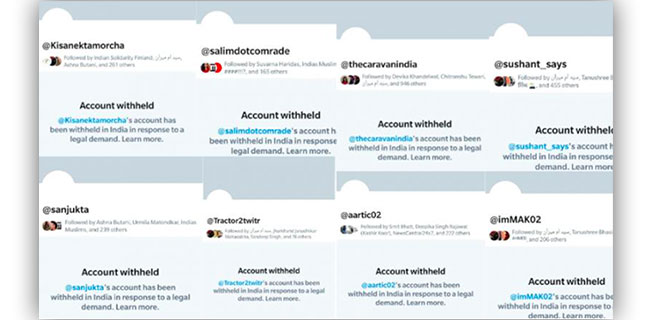
    Screenshots of the accounts that have been abruptly withheld by Twitter. Photos: Twitter/@zoo_bear. Courtesy The Wire


    By Ranjona Banerji


    On Monday, February 1, 2021 Twitter India “withheld” about 100 Twitter accounts and 150 tweets based on a complaint from the Ministry of Electronics and Information Technology, according to news reports.

    These accounts were connected to or had commented on the ongoing farmers’ protests. They included prominent farmers’ union accounts, news outlets, journalists and politicians. The government apparently decided that these accounts and their tweets of January 30 were “fake, intimidatory and provocative”.

    https://indianexpress.com/article/india/twitter-withholds-multiple-accounts-following-direction-from-it-ministry-7170134/

    That Twitter, which stood up to Donald Trump when he was still President of the United States but finds it difficult to find the same courage when it comes to the Government of India, only highlights how difficult it is to uphold freedom of speech in India.

    By Monday evening, the accounts were restored but whether that was because of the massive outrage or because Twitter India discovered some hidden reserve of courage, who knows?

    What we do know is that the reach of the state and its capacity to restrict voices it cannot tolerate is immeasurable and its position is vindictive. The FIRs admitted by police stations in UP and MP, against a number of journalists and politicians who questioned police reports that farmer Navreet Singh died from a tractor accident, already made this clear last week.

    Some of those who tweeted that Navreet Singh had died from a bullet wound or had accused the Delhi police of shooting him, like TV personality Rajdeep Sardesai, retracted their statements and deleted their tweets. But that was not enough for the Government of India. Hence, the sustained harassment.

    However, a number of publications all of last week and this week have continued to present the accusations of Navreet Singh’s family that the young farmer did indeed die of a bullet injury.

    The link below is from The Guardian, which also quotes a UK pathologist.

    https://www.theguardian.com/world/2021/feb/01/indian-journalists-face-criminal-charges-over-police-shooting-reports

    This is from The Times of India:

    https://timesofindia.indiatimes.com/india/dead-ryots-kin-say-he-was-shot-autopsy-finds-no-bullet-wound/articleshow/80490421.cms

    That journalists make mistakes is neither new nor always excusable. But that a police version of events cannot be questioned is unacceptable in a democracy, assuming we are still one.

    On that assumption of democracy. Twitter India’s seeming capitulation to government pressure is an indication of the dangers that democracy faces in India.

    Also on January 30, the anniversary of Mahatma Gandhi’s martyrdom, several pro-BJP, pro-Government, Hindutva Twitter handles tweeted praise for Gandhi’s assassin Nathuram Godse. Through the week several similar handles also called for a “return to 1984” and referenced former Prime Minister Indira Gandhi and Operation Blue Star. Some openly called for genocide against Sikhs, and “return to 1984” was a dog whistle reference to the pogrom against Sikhs after Indira Gandhi’s assassination.

    Obviously, these handles were not targeted either by the Government of India or by Twitter India.

    The double standard is clear.

    The tragedy is that Twitter has, for now, almost made itself indispensable to international discourse. It is a forum for connectivity, not just for sharing news and discussion. This gives it a greater responsibility on a global scale. Kowtowing or surrendering to government pressure of the sort it has demonstrated in India goes against that grain.

    **

    The arrest of freelance journalist Mandeep Punia for reporting on the farmers’ protests is one more highhanded action by the Government of India. There is no fig leaf here: independent voices have to be muzzled. That Punia has been sent to judicial custody also demonstrates how the legal system appears to have abandoned Article 19 of the Constitution of India.

    What hope now?

    Ranjona Banerji is a senior journalist and commentator. She writes on MxMIndia every Tuesday and Friday. Her views here are personal

  • Times Internet partners Twitter

    By Our Staff


    Times Internet Limited (TIL) has partnered with Twitter to ensure the best content from its leading online publications is available on the social network. This collaboration with Twitter, notes a communique, will also help TIL to introduce unique content-led solutions for advertisers like Sponsored Moments, Pools and other storytelling elements.


    Said Anushrav Gulati, Head – Indirect Revenues at Times Internet: “This strategic partnership with Twitter will enable us to effectively upscale brand-aligned content that will leverage our capabilities along with the combined reach and premium native content on Twitter. This would help us introduce new select and bespoke content partnerships with brand partners looking to associate with quality, premium content from market leaders such as The Times of India and Economic Times via video and LIVE as well as influencer-aligned content.”


    Added Amrita Tripathi, Head of News Partnerships – Twitter India: “This partnership was a natural progression, given the extraordinary breadth and depth of quality content that all the TIL properties bring to the table. It allows us to build on the revenue success we’ve seen with Business Insider India and Cricbuzz, to name a few opportunities, and we are excited to see what 2021 brings!”


  • Evolve Digitas wins mandate for GMR Aerocity

    By Our Staff


    Evolve Digitas has won the digital mandate for GMR Aerocity. The mandate includes digital creative strategy and social media for positioning GMR Aerocity as top commercial hub with its partner hotels and commercial establishments.

    Said Aparna Gupta, Managing Director, Evolve Digitas: “We’re excited and proud to partner with GMR Aerocity in their digital journey. With this mandate, we look forward in helping GMR Aerocity in engaging with the audience in the digital space and building their online footprint.”