Category: PRODUCTS

  • The ‘Man from Motilal Oswal’ emerges again with a new preachy campaign

    By A Correspondent


    In recent months, India has emerged as the world’s fastest growing market for mobile trading. On the NSE alone, the turnover of mobile transactions has increased by 130 per cent over the past year, from Rs 50,800 crore to Rs 116,186 crore.


    It is estimated that the number of people trading and investing in equity market through the mobile platform is likely to garner about 15-16 per cent of the total trade done on the stock exchanges in the next three years.


    To highlight this transition, Motilal Oswal Financial Services Ltd has unveiled a new campaign using the character from their popular ‘The Man from Motilal Oswal’ (MFMO) series. While the earlier commercials had the lead character portray a slightly serious role; giving advice to investors, in the new ad he has a relaxed demeneaour and helps clients use the Motilal Oswal Mobile Trading App to the best of its capabilities.


    Moving away from the template of the earlier ads which had a feel of a film trailer, the new ad packs in subtle humour derived out of the situations portrayed in the film. The screenplay of the film is also intriguing. The lead protagonist appears in unusual manner in every situation and helps his clients only for one to realize that he actually resides in the App. And that revelation happens with a punch when one of the characters in the end, innocently asks – ‘Button dabane se aap aajate hain’ and MFMO cheekily replies ‘App ki Kasam’. Overall, the film  make its point in an interesting manner.


  • Kinetic unveils new identity

    By A Correspondent


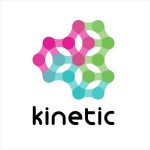
    Kinetic, the Out of Home specialist has decided to get quirky and stay connected to numerous client ideologies and millions of consumers in the outdoor space. It has created a logo that not only signifies movement and their innovative, creative, fun and bold spirit but also stand out as a perfect amalgamation of the properties put together.


    The new logo is designed on geometric patterns, symmetry and directional alignments formed with 3 forces of nature: Earth – Water – Air. The three forces put together create the ‘Kinetic energy’ and convert into ‘Moving Gears’. With this thought, the new Kinetic Logo in the form of gears not only portray Kinetic’s movement, but also convey the idea of connecting with each other.


    Similarly the 3 colors, Green – Turquoise – Pink symbolizes 5 pillars of Kinetic – Agile, Focused, Innovative, Passionate and Responsible. Kinetic connects consumers and brands in this increasingly interconnected world. The redesign is also a timely and effective symbol of our new programmatic offering.


  • Baba Ramdev’s Patanjali sets aside more than Rs 300cr for ads and promotion

    By Shambhavi Anand


    Yoga guru Baba Ramdev’s consumer goods company Patanjali was the third most advertised brand on television in India during the last week of November, behind Cadbury and Fair & Lovely.


    Patanjali’s TV commercials were telecast 12,969 times during November 21-27, according to data released by the Broadcast Audience Research Council (BARC) India, a joint industry body set up in 2012 by broadcasters, advertisers and advertising agencies to measure television audience.


    “There is a definite shift in gear (on Patanjali’s part) to make themselves more visible,” said Vandana Das, president DDB Mudra (north), an agency that handles advertising for Patanjali’s key products – noodles and ghee. “They take up some key products and go for full blast advertising depending on the demand and supply situation,” she said.


    According to media and advertising experts, the Rs 2,000 crore Patanjali Ayurved has set aside more than Rs 300 crore for advertising and promotion, and is set to step up its publicity campaign further. The company recently hired actor Hema Malini to endorse its biscuit brand.


    Cadbury, owned by Mondelez, has consistently been on top since the week starting October 10 with insertions – number of times a TV commercial is telecast on different channels across the country – ranging from 31,052 to 46,872 in different weeks. While e-commerce companies Flipkart, Amazon and Snapdeal followed the chocolate brand closer to the festive season, they have since disappeared from the top ten advertisers chart.


    BARC India has a reach of 153.5 million TV households, representing the entire country and all modes of signal. Of this 77.5 million are urban TV households and 76 million are rural TV households. This includes metro cities, towns with population of 10-75 lakh, and urban and rural areas with population of less than 10 lakh.


    Source:The Economic Times

    Copyright © 2015, Bennett, Coleman & Co. Ltd. All Rights Reserved

    Licensed to republish


  • DDB Mudra North and Patanjali create a campaign for Patanjali Ghee

    By A Correspondent


    Patanjali along with DDB Mudra North has created an engaging campaign featuring for the first time, acclaimed Indian Olympic freestyle wrestler- Sushil Kumar for their key product, Patanjali Ghee.


    The TVC has been ideated with an intent to highlight the health attributes of Patanjali Ghee and showcasing the goodness of nature with which the product is made. Starting off with a beautiful thought, ‘Rasoi mein sirf khana hi nahi banta, bante hain sapne’, the ad progresses; visually depicting the importance of Pure Ghee in gaining strength for being successful and becoming a champion. The storyboard has a parallel showcasing of the Sushil Kumar exercising hard towards becoming a champion and his mother, passionately cooking for him in the kitchen.


    The thought provoking background narrative of the ad draws a close relevance between home cooked food and success of a person, very rightly represented by Sushil Kumar. The ad signs off with the phrase ‘Champion Banney ki Taakat’


    Quoting on the campaign, Rakesh Sharma, VP-Marketing, Patanjali said, “Pure Ghee is an essential component of almost every Indian household. With Patanjali Ghee, we intend to provide an alternate to the consumers who seek purity and worth for their money with the product. Featuring Sushil Kumar for the ad has been great since he is the face of Indian wrestling today and epitomizes hard work and perseverance – an apt quotient for our product. We are glad to partner with DDB Mudra North in our journey to make Patanjali Ghee synonymous to home-made Ghee.”


    Sambit Mohanty

    Quoting on the campaign, Sambit Mohanty, Creative Head, DDB Mudra North said, “Pure Cow’s Desi Ghee is one of Patanjali’s best selling products. We wanted to give it back its rightful place in the kitchen by emphasising its benefits as a cooking medium. That’s how the thought of ‘Champion rasoi mein bante hain’ came about – it’s a great match with a brand ambassador like Sushil Kumar.”


  • Kotak unveils campaign to highlight mobile features

    By A Correspondent

    In today’s digital world, the mobile phone is fast becoming the focus of everybody’s attention. It empowers people to do what they want to do and need to do from wherever they are, whenever they want to. Banking is no exception. Kotak Mahindra Bank, on its part, has been a pioneer in digital banking.


    Over the last few months, Kotak has added several new innovative features, including message money, flight booking, buy a book via twitter, mobile and DTH recharge, internet-free mobile banking, and several other services. Today there are more than 77 different things a customer could do using the Kotak mobile banking app.


    The campaign builds on the hugely popular Kona Kona Kotak campaign that announced the coming together of Kotak Mahindra Bank and ING Vysya Bank. The multimedia campaign across TV, outdoor, and digital is built around the slogan “Phone Phone Mein Kotak”. It showcases how mobile banking using Kotak’s app and Hashtag Banking features has transformed the way people lead their lives, in simple and profound ways. Be it in large urban cities or in the smaller towns of our country.


    The campaign explores this change that is sweeping across India thanks to technology, innovation, and a customer orientation.


    The campaign pegs on three unique features of Kotak Mahindra’s Banking Experience on Mobile: Instant Money Transfer, Tweet to Buy a Book and Flight Booking to give viewers a perspective on the transactions they can do on their phone. It tries to communicate that with passage of time, the means of banking may be evolving but the emotions are just the same.


  • Cafe TC & Dentsu Webchutney launch Liquor Ticker

    By A Correspondent


    Cafe TC and Dentsu Webchutney have created Liquor Ticker – claimed to be the world’s first ad ticker on the popular messenger app. Cafe TC, earlier known as Turquoise Cottage, was looking for a low-budget campaign to promote its makeover targeting mainly its patrons. Executed by Dentsu Webchutney Innovation Lab, Liquor Ticker converted Cafe TC’s status into a running ticker and the profile pics into ever-changing GIFs (Graphics Interchange Format: an image format which animates) to show a vast variety of content – from its brand new logo to the new menu and a host of offers. Users could send a screenshot of an offer they liked to avail it at the bar.


    “Our brief was clear to the agency. Promote our revamp in a way never done before but of course in a limited budget!” says Gaurav Soral, Founder, Cafe TC. He adds, “When the agency told me that they plan to use WhatsApp, I was a bit skeptical since WhatsApp doesn’t offer any official ad space! And we’re not the kind of brand that would spam its users.”


    Gurbaksh Singh

    Says Gurbaksh Singh, Chief Creative Technologist, Dentsu Webchutney Innovation Lab, “We were toying with this idea for quite some time now but were looking for that perfect match. With a little play of technology, read modifying WhatsApp’s API (Application Program Interface), we created an ad space on a medium that doesn’t have any! Liquor Ticker might just open the floodgates of advertising on WhatsApp.”


    Last year, Cafe TC along with Dentsu Webchutney came up with the award-winning Happy Hours Rewind where users could turn back time and extend the happy hours by tweeting more and more.


  • ‘What’s your Torapanti’, asks Camlin in latest campaign

    By A Correspondent


    To announce the launch of its new pen variety, Camlin has unveiled a campaign that details the features of the new product – Tora. Considering the changing mind-set of youngsters, who generally use blue or black pens and are looking for a way to express themselves, Tora is available in a variety of colours that allows fun seeking youngsters to express creativity, and add fun to life. The objective of the commercial is to bring home these benefits.


    The TVC is a high energy rendering of crazy fun things one can do using the new Tora Pens from Camlin. The film shows the pen being used in different situations and on different surfaces where we see fun loving youth expressing themselves while capturing their emotions through its lyrics and imagery.


    Gautam Pandit, Sr. Partner & Executive Creative Director, RK Swamy BBDO said, “Youngsters have always believed in seeking fun and defying norms. As far as writing and drawing goes, Tora pens with their vibrant range of colours, resonate with their personality and identifies with their affinity for colour – be it in their choice of clothes, hair colour, accessories, shoes and so on. ‘Torapanti’ is a personifies this spirit as a coinage that brings together the brand name ‘Tora’ and ‘Panti’, which is the urge to do crazy fun things. The baseline ‘What’s your Torapanti?’further appeals to the youth to come forward and show their true fun colours.”


    Saumitra Prasad, CMO-Kokuyo Camlin said: “With the launch of Camlin Tora, we are looking at revolutionizing the pen market. This product is a result of extensive market research and Japanese engineering, and it enables the consumer to express with creativity. Our new TV campaign on Tora takes the consumer into the colourful and expressive world of Camlin Tora. I am sure that once our consumers use Camlin Tora pen, they would not like to use any other pen.”


  • JWT unveils new campaign for Horlicks

    By A Correspondent


    GSK Consumer Healthcare is re-launching the chocolate flavour of its flagship product Horlicks, in new packaging, making the improved offering crunchier, chocolatier and yummier in taste.


    The launch is supported by a 360 degree outreach programme including print and television campaigns.  It will also be supported by extensive on-ground activations and an exciting digital engagement programme.


    The new TVC for the campaign opens with two children (brothers) sitting across their dining table. When it is evident that they are not excited by their plain glass of milk, their mother replaces the old chocolate drink with the new and improved Chocolate Horlicks. As one brother gulps down the content of his glass in a few seconds, the other one begins drooling over it. He exclaims that new Horlicks is extremely chocolaty and then tries to snatch the second glass as well. The TVC ends by saying that with the chocolatier and best ever Chocolate Horlicks, the children will surely finish off their glass of milk (Doodh ka glass khallaas).


    Talking about the campaign, Prashant Pandey, EVP Marketing, GSK Consumer Healthcare says, “At GSK, our offerings are designed to cater to ever-changing and evolving consumer needs. Chocolate Horlicks is one of our most successful flavours and its taste enjoys high equity with children. The re-launch of the product is aimed to delight them – with not just the improved taste but also superior packaging.”


    Tanurupa Pal, VP and Executive Creative Director, J. Walter Thompson, added, “We have used a simple moment between two brothers to highlight the irresistible quality of the new Chocolate Horlicks. In the story, it becomes a tool in the mother’s hand to help her turn her milk-fussy kids into Chocolate Horlicks lovers.”


  • Dabur, Thums Up to be sponsors of the Pro-Wrestling League

    By Arka Bhattacharya


    After the successes of the IPL, the ISL and the Pro-Kabaddi League, corporates have queued up to become sponsors of the brand-new Pro-Wrestling League, scheduled to start on December 10.


    Kartik Sharma

    Kartikeya Sharma, CMD, Pro-Sportify Ltd, which started the PWL, says that they have four main sponsors for this year. The title sponsorship has been picked up Dabur Chawanprash while Thums Up is the ‘Powered By’ Sponsor. Other sponsors associated with the league this year are Jaguar Lighting and Dabur Red Toothpaste. The cumulative amount of sponsorship that has poured in is estimated to be around Rs 22 crore.


    Says Sharma, “When one of the largest brands, Coke has sponsored you, you know it is going to be big. Year-on-year, we’re looking increase the marketing spend and we’ll change the way brands derive ROI from sporting properties and the way they want to get value out of sports.”


    The success of the existing leagues in India has convinced the founders of the PWL that the league will be immensely successful in the years to come. Sharma said that the sponsorship for season 2 is already being planned and is estimated to show an 81% increase to Rs 40 crore.


    The net marketing spend for the league is upwards of Rs. 20 crore. Vishal Gurnani, Director, Pro-Sportify says that almost 70% of this budget has been poured into television media, and the rest mainly into radio, print and outdoor campaigns. Gurnani says that they have about 600,000 seconds of inventory footage for the promotion of the league and massive outdoor campaigns have been undertaken in Bombay, Delhi, Gurgaon, Ludhiana.


    When asked if the league would expand next year, Gurnani replied in the affirmative. He said, “The PWL might add two franchises next year. A lot of cities and a lot of corporates have shown interest this year, but due to logistical challenges, we decided to restrict the number of teams to six. We are looking ahead to next year, where we are expanding this to eight teams with the most likely cities being Ahmedabad and Hyderabad.”


    Pro-Sportify are also looking at introducing merchandising post the league’s completion. Gurnani said, “We’ll looking at building up the brand during the league and selling our merchandising at online platforms and airports afterwards. We’re coming up with interesting and quirky merchandising with lines like ‘Real Men deal with it on the mat’ and ‘Asli Mard Akhade Waala Baaki Sab Chauhare mein’.”


    The other partners of the league include the hospitality partner – Picadilly hotels, Radio partner – Big FM, Outdoor partner – Bright Outdoor and Ticketing partner – BookmyShow.


    Source:The Economic Times

    Copyright © 2015, Bennett, Coleman & Co. Ltd. All Rights Reserved

    Licensed to republish


  • DDB crafts new campaign for Patanjali Atta Noodles

    By A Correspondent


    DDB Mudra North and Patanjali Ayurveda have launched a fun themed, jingle based TVC led advertising campaign to promote Patanjali Ayurveda’s atta noodles.


    With the launch of healthy atta noodles, Patanjali wants to highlight the benefits of atta noodles with tasty masala (natural) and trust of Patanjali Ayurvedic legacy. This campaign also seeks to position Patanjali Atta Noodles as healthier and tastier noodles free from the worry of toxic additives.


    Exploring this unique proposition, DDB Mudra North crafted a catchy jingle based ad campaign showcasing the Atta noodles being enjoyed by the entire family, cutting across all age groups and preferences. The catchy jingle ‘Iss noodle mein kya hai?’ brings out the healthy attributes of the product. The ad closes with the punchline ‘Jhatpat Banao, Befikar Khao’ and with the promise of ‘Prakriti ka Aashirwad’ (Goodness of Nature)


    The pan-India campaign is led by television followed by radio. The main executional aim of the ad campaign was to capture a musical montage of kids, families, health conscious people enjoying Patanjali Atta Noodles without any worries, eating together and enjoying quality family time.


    Rakesh Sharma, VP – Marketing, Patanjali Ayurveda said, “With the burgeoning demand of fast food, we, at Patanjali Ayurveda, saw a clear need to provide a healthy, toxic free product in the noodles category. Patanjali’s promise of providing Healthy Goodness echoes in the launch of the Atta Noodles and we are truly thankful to have the creative driving force of DDB Mudra North for this.”


    Sambit Mohanty

    Quoting on the campaign, Sambit Mohanty, Creative Head, DDB Mudra North said, “When you have Patanjali Atta Noodles you have the assurance of wholesome goodness & health. That’s how we devised a catchy jingle of ‘Is noodle mein kya hai, kya hai!’ – to underline the fact that our Noodles have no harmful additives or anything of that sort.”


  • Kotak Life puts the focus on retirement with ‘Ab Meri Baari’

    By A Correspondent


    Kotak Life Insurance has rolled out a new digital campaign, ‘Ab Meri Baari’ for their latest Active Retirement plan. It has launched with an inspiring digital video commercial that speaks about the life of a layman and his dreams. The campaign is conceptualized by WATConsult, the full service digital agency from the Dentsu Aegis Network.


    The video starts with a college going boy convincing his mother to let him go on a bike trip to Ladakh. The mother doesn’t allow as she believes that the trip will ruin his studies and ultimately career. The boy has to give up on his passion for completing the classic life goals of a common man: education, career, marriage etc. However, the video ends on a happy note when it shows how the boy follows his passion after retirement by going on that bike trip. The message, in turn, enforcing the active retirement plan by Kotak Life Insurance.


    Elizabeth Venkataraman

    Elizabeth Venkataraman, Executive Vice-President & Head- Marketing, Kotak Mahindra Old Mutual Life Insurance Limited (KLI) said, “Through our #AbMeriBaari digital campaign, we want to motivate people to start planning early (35-40 years) for retirement. This will help ensure a better retirement corpus for individuals. Interests and passion are not tied to age as they once were. There is a growing focus on fitness and as a result people look and behave young and need money to fund that.  With technology and social media being as accessible to the ‘retired and retiring’ generation as it is to the youngsters, there is immense scope to connect with the audience online. We believe this video will connect with our audiences across the chosen platforms.”


    Rajiv Dingra

    Commenting on the campaign, Rajiv Dingra, Founder and CEO, WATConsult said, “Life after retirement is an important topic yet handled with a laidback attitude. With ‘Ab Meri Baari’ campaign we target those who aren’t following their passion due to the responsibility of earning livelihood. The campaign starting with a DVC (digital video commercial) is followed by a complete digital promotion with contests, social posts etc. We are sure to drive conversation around active retirement with the campaign.”


  • How Redesign can work for legacy brands!


    By Ashwini Deshpande


    Most often, we give less-than-due credit to iconic Indian brands. And there are quite a few, in every category of the FMCG sector. Tata Salt, Thums up, Parle G, Santoor, Good Knight, Britannia Marie Gold, Bisleri, Saffola, Real – the list goes on and on.


    These brands have a large market share. In most cases, they have remained in a leadership position despite the entry of competing international brands and changing consumer preferences. These brands can, therefore, be called ‘legacy brands’. They have managed to have loyal consumers for a sustained period; they are a part of their users’ lives, and they are irreplaceable for those who opt for them.


    Some Rebranding Challeng

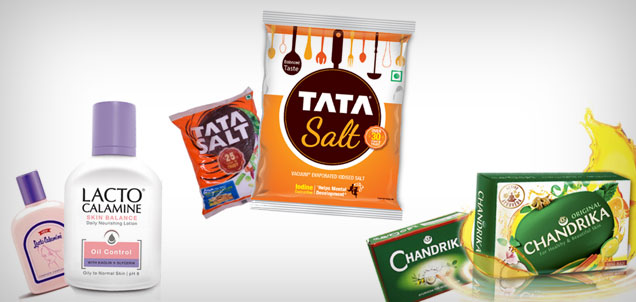
    1. While Lacto Calamine had established credence with the woman who equated beauty with simplicity, it was time to ladder up to a larger and aspirational space; It was time to connect with a ‘self-assured’ woman who makes informed decisions. The brand needed alignment with the new positioning, without losing its core of simplicity. The challenge for Elephant was to create packaging that carried forward the simplicity from the past, but also looked believable as an advanced skincare solutions expert with a growing portfolio.


    2. Chandrika has been a trusted Ayurvedic soap for generations in India. The brand needed to reach out to a younger audience, while staying true to Ayurveda as its core story. Here, the challenge was multi-fold. Ayurveda was not associated with a contemporary lifestyle. And, as a concept, has been dogged by several misconceptions, one of them being slower efficacy. ‘Active Ayurveda’ as a proposition, resolved some of these issues. Ingredients like neem, lemon oil, patchouli oil etc were showcased to help demystify Ayurveda. Colours were changed to a fresher, more natural palette.


    3. Tata Salt, an undisputed leader and pioneer in the category, was ready for change as the brand needed to align with the progressive homemaker. We set out to solve two major challenges. One was to take up the position of being a ‘friendly’ expert, and another was to shake off the ‘me-too’ players who had completely emulated all the codes of Tata Salt packaging over years. First, the typography of the word ‘salt’ was humanised to add a layer of warmth to the trusted Tata logo. To reiterate confidence of the leader, images of food, people and such were removed from the earlier packaging, and a fresh outlook of a modern lifestyle was depicted through visuals of a modern kitchen setting. The colour palette was made more vibrant, but in alignment with its earlier portfolio. Graphics and mnemonics were designed to communicate relevant benefits in a clean and contemporary manner. This has clearly been very well accepted, as is evident from the market success as well as rankings of a recent survey of Most Trusted Brands, where Tata Salt has gone from No 16 to No 2.


    Legacy brands tend to set the standards in the marketplace. They are the very benchmarks for quality because of their emotive communication, for the rich history they continue to build on and, more importantly, for the way they keep up with emerging consumer expectations. Well before “we broke the internet” became a thing, a chant among marketers, these brands invoked conversations and active consumer voices. Their stories become folklore in the world of advertising and marketing.


    What is rarely discussed, however, is the way these legacy brands transform their visual identity to align with young, progressive Indians and their high-lifestyle aspirations today. So how do they manage this alignment? How often do they change, and to what extent or degree?


    Packaging is the first moment of truth for any FMCG brand, and the transformation or alignment basically starts with visual identity and packaging change. It is a huge responsibility when legacy brands like Good Knight or Wagh Bakri tea ask us to redesign their brands’ packaging experience, so that they stay relevant to their existing and intended audience. In such cases, the migration needs to be evolutionary, perceptible and must conform to their leadership status. And then there are the legacy brands like Chandrika or Lacto Calamine, that need to transform themselves, either to get back in the reckoning or reach a completely new audience altogether, without alienating their loyalists.


    Packaging is the most crucial link of closing the loop between maintaining legacy and getting a new conversion going. However short, packaging lives its moment of glory. Great packaging design makes that moment meaningful and relevant to the consumer. It is very exciting to know that you might be reaching a billion hands if you do it right. Or you may just get discarded if the evolution is not based on relevant insights. The approach to packaging design is, therefore, always viewed through several lenses: That of users, of shoppers, of non-buyers, of trends, of technology and so on. Most importantly, discovering and defining what kind of dialogue the brand needs to have at that point in its existence, becomes the pivotal clause. A client once told me we must believe that every square millimeter on the pack can do the job of a billboard. How true!


    Whether you decide to add a message, icon, colour or image on every available surface, or you decide to leave breathing space, you land up communicating something one way or another. So one has to be extremely careful about adding or removing elements. Because what matters is the story you are telling.


    Great design aims to delight the user ahead of expectations. If we use a simple tool of three questions that need to be answered by packaging design — Who am I? What do I do? And how do I do it? — we are mostly home in terms of communication. We notice elements of packaging in the following order: Colour, shape, Illustration/ picture/ texture, and words. These really are the semiotic principles for designing any visual expression. We use these for adding sensorial layers to the basic communication.


    While on the one hand, the quest is to get more legacy brands to stay relevant, on the other it is to help more start-up brands like Paper Boat establish a legacy. Indeed, it gives you an amazing rush when you see carefully-crafted packaging find its rightful place – in the shopper’s basket!


    Ashwini Deshpande is an author and co-founder/Director of Elephant, a leading multidisciplinary design consultancy with offices in India and Singapore. A part of this article first appeared in dna of brands dated