Category: MARKETING

  • Wego unveils key travel trends across APAC & Middle East


    Wego, the leading travel search site in the Asia Pacific and Middle East, has shared the company’s top five most popular searches for 2014, as well as their regional market observations of travel trends during 2014, and key predictions for 2015.


    The survey notes that Malaysian travellers continue their love affair with their favourite holiday destinations throughout Asia, including Indonesia, Singapore and number one this year, Taipei.


    The country has a number of great options when it comes to homegrown destinations so it’s not surprising that Langkawi, Port Dickson, Penang, Kuching and the Genting Highlands are the most popular domestic picks.


    Similarly in the Philippines, the top five international destinations belong to Asian capitals, and, apart from Manila, domestic visits are centred on popular holiday locations such as Cebu, Davao, Puerto Princesa and Bacolod.


    Singapore remains the top international destination selection for Australia, and Bali moved up to second most popular search from number three last year. London too moved up from number ten to take the fifth spot this year, and Taipei is the fastest mover at third most searched destination, particularly interesting when the city didn’t even register in Australia’s top ten in 2013.


    Domestically, more people searched Sydney airfares this year as Melbourne slipped to number two, and both Brisbane and the Gold Coast nudged Perth down to number five.


    Bangkok again topped the list for international searches for Singaporeans, and Taipei, Hong Kong and Manila made the top five again this year. Jakarta slipped out of the top five and was replaced by Bali, indicating Singaporeans took full advantage of low-cost flights to escape the city and take time out during 2014.


    Thailand’s tourism industry has had a tumultuous year where demonstrations in the capital affected the choice of travellers, according to the Tourism Authority of Thailand (TAT) who predicted 28 million arrivals for 2014, however between January and August, arrivals sat at 15.7 million.


    On Wego, interest in Thailand remained high, with no obvious effects of the demonstrations with favourite visitors, Singaporeans, still choosing Bangkok as their top destination. Bangkok was also listed among the top five destination searches among Wego’s regional markets in Indonesia, China, India, MENA, Malaysia, Philippines and Australia over the past year.


    In 2015, the study notes that one can expect some aggressive marketing campaigns from TAT as the authority highlights new destinations within the country, with new promotions to stimulate fresh niche tourism opportunities.


    The MICE industry continues to play an important role in Thai tourism, with the UK and European markets among the top ten source markets for business events, rising 84 per cent over the first three quarters of 2014. The number is expected to increase in 2015 with a myriad of business events throughout the next 12 months.


  • Adlabs Imagica unveils 3rd campaign promoting theme park

    By A Correspondent


    Adlabs Imagica has launched their brand campaign using a series of human stories under the tagline ‘Kahaaniyan Banti Hain’. These films are aimed at establishing Imagica as a destination that has an impact on every visitor.  The campaign conveys the stories of people from all walks of life who visit the magical world of Imagica.


    The outdoor and indoor rides and attractions have been nicely woven into the script. The focus, however, is on human stories and moments with Imagica as the backdrop. These brand films are aired across national and regional television channels and will also be shared and showcased on Facebook, YouTube , cinemas and other OOH media.


    While Adlabs launched the first two TVCs as a part of the campaign series last month, they have now launched their third TVC for the viewers. Sticking to their brand promise of ‘Kahaniyaan Banti Hai’, the TVC showcases another story that people come across when they visit a theme park. This is something that everyone watching the ad film will instantly connect to.


    Commenting on the idea behind the campaign, Harjeet Chhabra, Chief Marketing Officer, Adlabs Entertainment, said, “These films establish the impact that Imagica has through human stories that happen here. We believe these stories will excite people who have not experienced and engaged with the brand so far and will also resonate well with more than a million people who have been to Imagica already and will help us re-engineer the word of mouth through them. There are very few brands who can claim to have an impact on the lives of people and we are happy to occupy that slot in the minds of our consumer through these films.”


  • Lowe Lintas unveils another marriage-centered campaign for Tanishq

    By A Correspondent


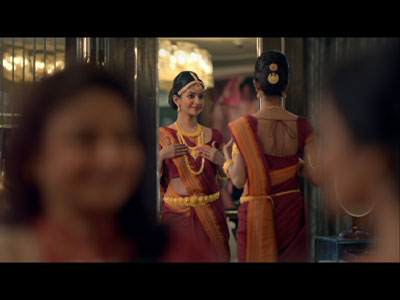
    Taking forward the thought of being the jewellery shop of choice for consumers, Lowe Lintas Bangalore has unveiled a new campaign for Tanishq that portrays the brand as being a jewellery destination for all communities. The campaign revolves around the core idea of ‘Whatever be the wedding, we are ready.’


    Weddings in India are an elaborate affair which makes it the single-most important buying occasion for most jewellery buyers across all cultures and communities. Thus while Tanishq offers wedding jewellery for various regions, there is a common misconception that the brand is more for North Indians and does not have a wide selection of traditional wedding jewellery for other communities.


    Sharing her thoughts on the new proposition that the brand decided to venture with, Deepika Tiwari, GM – Marketing, Tanishq said, “Being India’s leading jewellery brand, Tanishq is the preferred jeweller for many Indian families. The wedding season is the single largest jewellery buying occasion for most Indian families, across all cultures and communities. In our latest campaign, we wanted to showcase our region-specific collections and communicate the fact that ‘hum kisi bhi shaadi key liye tayaar hain‘. In true Tanishq style, we have done it by using a progressive grandmother as the protagonist to deliver this message. As a brand, we continue to be present across the length and breadth of India, winning the hearts of many.”


    The campaign begins with a Punjabi family visiting a Tanishq showroom to select some traditional wedding jewellery for their daughter. The Tanishq salesman asks them what kind of jewellery they would like to see – Tamilian, Bengali, Marathi – and the mother replies Punjabi. As the bride-to-be tries a beautiful wedding set of her choice, her grandmother notices a South-Indian bride trying on some traditional jewellery. The old lady is so mesmerized by her traditional bridal look, that she tells her granddaughter that she shouldn’t get married now. The whole family is stunned. The grandmother continues and tells the girl that since it’s a love marriage she shouldn’t get married to a Punjabi but a South-Indian boy. This way she would have had two types of weddings and two types of beautiful traditional jewellery. The whole family is amused and the Punjabi bride-to-be just laughs it off. She tells her grandmother that she still has ample to time to convince the younger sister about the same.


    Commenting on the creative approach taken for the campaign, Arun Iyer, National Creative Director, Lowe Lintas + Partners stated, “When people usually visit jewellery stores, there’s a pre-conceived notion they have about the origins of the jewellery, with the North Indian make being a top-of-mind recall on most occasions. The campaign showcases other options – from various regional settings – that are available for people to choose from and how Tanishq is a one-stop shop for jewellery shopping for any community.”


    The campaign has been launched across India and will span several touch-points on air, online, and on ground.


  • Two better than One?


    By Ishani Duttagupta


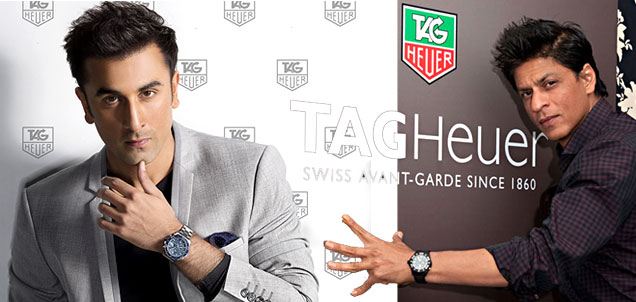
    Recently, Swiss luxury watch brand TAG Heuer roped in Bollywood heartthrob Ranbir Kapoor as its brand ambassador. Nothing unusual about that, considering Ranbir endorses major brands such as Panasonic and Nissan; and TAG is known for opting for the best of Hollywood and Bollywood to back its label. To be sure, the brand has had stars from Steve McQueen and Uma Thurman to Leonardo DiCaprio and Brad Pitt.


    Except that never has more than one film celebrity endorsed TAG at the same time. Currently, Cameron Diaz is the only actor on the brand’s endorsement list – the rest are largely sportspersons, including Cristiano Ronaldo and Maria Sharapova. TAG annually changes its ambassadors, replacing older ones with fresher faces. For example, before Diaz came on board in 2012, Leonardo DiCaprio was the Hollywood face of TAG.


    In Different Zone

    India, though, may be an aberration – at least as things stand now – with two Bollywood superstars promoting the Swiss luxury label. Along with the 32-year-old Ranbir, there’s also Shah Rukh Khan (SRK), now 49, who has been TAG’s ambassador since 2003. The obvious question then: is the brand ambassadors’ version of succession planning playing out at TAG in India? After all, it has happened in other categories; around five years back, Pepsi ended its decade-long associations with the likes of SRK and Sachin Tendulkar to bring on younger ambassadors. And, guess who led that youth brigade? Ranbir Kapoor!


    TAG Heuer, for its part, denies that it is going down the same road. “Bringing the two biggest stars of Bollywood together is not just the first for our segment, it’s also a first for us globally. As a company, it’s in our DNA to break the rules and we wanted to bring together both the biggest names in Bollywood today – SRK and Ranbir Kapoor – to communicate our leadership,” explains Puneet Sewra, marketing director, TAG Heuer.


    Mr Sewra adds that there are no plans to replace SRK, who has been a TAG brand ambassador for over a decade, with Ranbir, currently the hottest young gun of Bollywood. “Ranbir is not replacing SRK, and there’s no clash between the two. Through Ranbir Kapoor, we are reaching out to young consumers in the 18-25 age bracket; in many ways both our brand ambassadors represent the same kind of values in their Bollywood career, of doing things differently and both have played anti-hero roles. It’s about what differentiates the two of them and not about their age.”


    He also points out that the fact that India is the only country with two brand ambassadors from the film world points to the confidence TAG has in the Indian market. Brand gurus, however, are not as convinced, and find it difficult to concede that age has nothing to do with the brand appeal of a celebrity – even if the person in question is SRK.


    “There are indeed very subliminal but robust ways of putting succession planning into place in the brand-endorsement space and it’s a great thing to do really. In cases where the current brand ambassador was losing sheen in his/her space of work, be it cinema or cricket or whatever, a second and third face become a way of gradual succession planning,” brand consultant Harish Bijoor said.


    Happy Coexisting

    And how does the new ambassador on the block himself see the situation? “I have grown up watching Mr Shah Rukh Khan’s movies and his work has always inspired me. He was part of the TAG campaign for many years and it was so cool for me to wear a watch that he wears; and now to wear it with him is a dream come true,” Ranbir Kapoor told ET Magazine in an exclusive interview while launching the brand’s new campaign ‘Don’t Crack Under Pressure’.


    Ranbir adds that he is careful when choosing brands to associate with and has often rejected offers. “Like my movies, my brands are my identity and people start identifying me with them. I will only become the face of those products that I use and love in my own life. It’s important because the companies are talking to their target audience through me and I have to be sensitive to them.”


    Though TAG Heuer currently doesn’t have any plans of featuring both its brand ambassadors together in any of its promos, Ranbir says he would love to be in the same frame with SRK. “It would be a dream come true – to do something with both TAG Heuer and Mr Khan. In fact, to work together in any capacity with him would be a dream come true.” What’s clear is that today SRK and Ranbir are pretty much at the top of the heap in terms of star value. US consultancy American Appraisal, which recently conducted India’s first celebrity brand valuation study, found that amongst Bollywood stars only SRK and Ranbir have valuations north of $100 million.


    “While our analysis has not assessed the impact of celebrity endorsements on the brands they endorse, there is no doubt that a significant amount of associative credibility can be derived from having a top ranked celebrity brand ambassador. Both SRK and Ranbir Kapoor emerged as the two largest celebrity brands in our study and having them both as endorsers can only be a huge positive,” said Kapil Bellubi, vice-president, American Appraisal.


    American Appraisal’s assessment, which is based on the current rankings of celebrities (from a standpoint of popularity, credibility and endorsability, average endorsement fee rates, current number of annual endorsements and an applicable brand multiple), ranked SRK at No. 1 with a brand value of $164.9 million or Rs 1,011 crore; Ranbir Kapoor followed at $129.4 million or Rs 793 crore.


    Brand Appeal

    The study also found that the age of a celebrity plays a part in their potential to continue to endorse brands in future. “The exception though is SRK whose appeal across several age groups remains reasonably strong. Based on our study and research, the top two celebrities in India currently generate average annual endorsement fees ranging from `12 crore to Rs 17 crore per endorsement,” adds Mr Bellubi.


    Two ambassadors work as an effective hedge against risks of many hues, ageing being just one of them. “Gone will be the halcyon days of the solus brand ambassador. Brands will progressively use more than one face. Your brand ambassador is human after all,” Mr Bijoor explains.


    TAG Heuer, of course, is not the only brand using more than one celebrity as brand ambassador in India. French cosmetics group L’Oréal Paris has four celeb brand ambassadors in India: Aishwarya Rai Bachchan, Sonam Kapoor, Freida Pinto and most recently Katrina Kaif.


    “Our ambassadors in India are distinguished personalities in their own right and are well known across the country. Aishwarya is synonymous with L’Oréal Paris, and this is because she has been with us for more than 10 years,” says Manashi Guha, general manager, L’Oréal Paris, India.


    Garnier India, a cosmetics brand from the L’Oreal stable, too follows the policy of multiple Bollywood celebrities with different age profiles as brand endorsers and has Deepika Padukone, Alia Bhatt, John Abraham and Sushant Singh Rajput on board. The difference, though, is that each star endorses a different sub-brand. So if Deepika is the face for BB Cream and Fair Miracle, Alia Bhatt promotes Pure Active Neem Facewash and Fructis Triple Nutrition.


    Similarly, John Abraham endorses the Men Powerlight range and Sushant Singh Men Acnofight range. “Each of the sub-brands within the Garnier portfolio delivers a unique proposition to its consumers, and therefore is associated with a brand ambassador who best espouses the benefits associated with each product,” explains Rupika Raman, general manager, Garnier India.


    Regional Focus

    Emami, a Kolkata-based marketer of cosmetics and health products, too follows a policy of having multiple celebrity actors as brand endorsers. But that is probably more to do with cutting across geographies and demographics rather than succession planning. “By leveraging a celebrity’s regional appeal, we have more than one brand ambassador for some of our products where communication remains the same but only the celeb changes, explains says Harsha V Agarwal, director, Emami.


    For instance, southern superstar Jr NTR endorses Navratna Cool Oil in Andhra Pradesh, even as Amitabh Bachchan and SRK promote it nationally. Clearly, for some superstars, as long as they keep effectively planning their success, there’s little need to plan their successor.


    Source:The Economic Times

    Copyright © 2014, Bennett, Coleman & Co. Ltd. All Rights Reserved

    Licensed to republish

     

  • Sanjeev Kotnala: Letter from a Consumer to a Marketer: I am Promiscuous because you are a Flirt

    By Sanjeev Kotnala


    Dear Marketer,

    We have seen a lot many good days but it is becoming intolerable. You keep on playing tricks that no longer amuse, engage or involve me. The pressure of one-dimensional unilateral expectations you have is chocking me. In our society of MAC: Market, advertisers and communicators, the relationship between you, the marketer/ Brand and I the consumer/ customer has been evolving dynamically. Some say it has been deteriorating with time. How you look at depends what your stance is.


    I enjoyed the attention that you showered in past. That was the time you were curious. There was no cloud over your child-like innocence and passion. You were your own without Big Data guiding you. There was some magic.


    Now, I am surprised when you sit down and think about me, you forget your own experiences. You no longer see things rom my point of view.  Under pressure from Revenue, your devilish mind continuously tries to think of strategies, the next upgraded with newly revised lure to the consumer. For that you tend to intrude into my privacy. And the rouge you are, you do that under disguise of selective permission and notification from my side. Remember going for a movie and sitting on the corner seat is no invitation to things that are in your mind.


    I am wary of you. Many times, you have put me in awkward situations. You have lost the respect I had. You do not have a new trick/ thought/ emotion to interest me. Like an amateur magician, your tricks no longer amuse me. I am selective when I think of my future and it shows in our strained relationship.


    I am neither a moron nor your wife, what if Uncle Ogilvy thought so. You never wanted me as a girlfriend but always wanted me to commit and be your wife. Should the same rules not apply to you? Why should marketers have all the fun?


    Earlier, you showered me with lovely presents. Loyalty points, home delivery, extended warranty, CRM, Customer service enhancement, free upgrades and much more. As usual, you were late. The question of loyalty was dead and buried. I want the same freedom you enjoy as a brand owner. Why do you think that the brand belongs to you only!


    Today in the Supreme Court of an informed marketplace, the brand wants to side with me, it wants me to cuddle, shape and show him the future.  How does it feel when you no longer control the thing most dear to you?


    You have forgotten your own rules ‘nothing can be taken for granted’. I am not only promiscuous but I like this feeling of being empowered by my new powers and I do not hide them.


    Do you think there is any place for Loyalty in in our world of ‘free open marriage’ that thrilled you? It took you so long to understand my ploybrandous behaviour. The earlier you understand it, the better it would be for you. It is you, who repeatedly broke our unwritten code of engagement. Yet, you seek the mirage called loyalty from me.


    I am tired of calling you and listening to your mechanised bitch of a secretary: the IVR system. She has been working too much with your CRM but is no good. All she knows is numeric options and a mechanised brutal tone: ‘your call is important to us, please be on line…. Brand jingle… repeat.’ or ‘sorry we have not received a valid input’.  Do you think I give a F***.


    I always gave you another chance but you refused to learn. When I asked a simple question ‘is my data /details/ identity safe with you’ all I get is ‘your reference number 435673896 has been recorded and been forwarded to the concerned department. Someone will shortly revert to you in next 48 hours’. You know, it does not amuse me any longer. Come on, you take more time to come than even the old telephone ever did. This public forum stops me from using the language I would want to. You introduced and educated me about engagement and involvement.  Open society and social media. With friends like them, it is natural for you to forget that engagement happens in a running alive relationship.


    Now, do not beg me for another chance. I want to see a change in you.


    Bye, until you earn the lost trust


    I will be sharing more as I realized that ‘KISS AND TELL SELLS’


    No longer only yours,


    Consumer


    Sanjeev Kotnala is Head Catalyst at INTRADIA and believes that the best way forward for an Organization is to enhance the potential of  internal teams instead of depending on external resources. He is a management- marketing-media consultant and also conducts specialised workshops in the area of ‘Harvesting and LiberatingIdeas’ and Innovation.  To contact email netkot@yahoo.com or tweet at s_kotnala visit www.intradia.in  www.sanjeevkotnala.com


  • Sanjeev Kotnala: Blame it on the Publisher for decreasing Press Advertising

    By Sanjeev Kotnala


    The acid test of newspaper advertising is really Dhanteras, the festival where the one-has-to-buy mentality supersedes every economic parameter and pocket size. When retail, regional and corporate clients fight to fill up the prime sqcm in the leading newspapers. A period when the print salesperson feels a bit more wanted and in demand, a time when the newspaper used to be completely unreadable.


    This is not just another year. It is a special year.


    In this very first year of e-retailing crossfire, the newspapers along with retail have lost some shine.  The bottom of the pyramid has joined the top in e-buying the most socialistic democratic approach to buying. The RBI Governor is sounding positive and expecting things to be better.


    On the other side, in Metros and Tier-II towns, retailers are openly complaining of thinning traffic. Many brands are blaming e-retailers for selling at unheard prices and eroding their brand image. Malls are looking like deserted decade-old single screens. There is no festivity in the seller’s voice. The retailer in its attempt to remain in the system is trying to get hold of remaining money in so that he can pay financiers and lenders at the end of season. There are visible signs of future that are tough to negate. The future that is definitely not too distant.


    This Dhanteras, the mainline newspapers were of 32 to 56 pages, much lower than last year making them a bit manageable to hold. Surprisingly the advertisers, INS or the Ministry of Environment have never attempted to define the limit for maximum number of pages in a newspaper. Maybe this is also an area of self-regulation.


    It would be stupid to believe that additional pages are meant to balance the edit- ad ratio. The newspaper on such festival dates with uninspiring creative and traditionally-led media planning/ buying is not something a reader wants. It is maybe worth researching, if given a choice, would the reader not want to drop the newspaper on such days.


    ‘Multiple false front pages’ (ads) in newspaper is no longer an unheard phenomenon. Alarmingly, some of the well-known centers have gone without false front page! Time to introspect.


    In the titles that managed false front pages, brands have not advertised across editions. This clearly shows a positive shift towards buying of select editions. I am sure that media agencies have nothing to contribute in this change.


    Unexplained is the phenomenon of clients and agencies blindly buying into multiple front pages? There is a huge consumer apathy and immunity developed against such formats. They are worse than the inserts; at least inserts are picked up before being discarded.


    Inside the newspaper, you faced consecutive pages with little or no edit. Pages with multiple medium- and small-sized advertisements closely packed together. This is hardly conducive for easy reading or referring.


    The right hand ad placement continues. Result traditional wisdom blindly followed by clients and agencies and patronized by publications. Time to realize that the newspaper is neither held nor read like a magazine. What the clients should have been demanding is placement next to interesting content and news.


    Everything in newspaper advertising seems to defy logic. So, for the print to still hold its fort for a bit longer than predicted, few things must feature in its To-Do List.


    Instead of propagating digital, newspaper bodies like INMA, INS along with the MRUC, should have the courage to do primary free-to-circulate research. Identify individually the new best print practices for advertisers and publishers.  Rationalize the real impact of ad placement, multiple ad placement or multiplier effect with other medium.


    May be it’s time that full-page ads are banned and there is a diktat for a minimum 20% edit per page and 30% collectively. This is a must to increase print ROI and fight the growing reader apathy.


    Do a favour to advertisers and in turn to readers by pushing for solus 35*5 or 30*6 and charge special premium for surrounding it with interesting edit/ features/ news content. I am in no way suggesting paid news.


    Create an internal regulatory body that defines the advertisement-edit ratio, the maximum pages allowed for any publication and even not-more-than one false front page policy before a government regulatory body is created for just this purpose.  May be this will help revive interest in print more than pushing sales.


    I am sure that Print and TV will co-exist with Digital for a long time. But to co-exist happily, print must rejuvenate and recreate itself. May be time to realize ‘What got you here won’t take you there’

    NOTE: My reference material is yesterday’s e-papers of top titles. Times of India – Mumbai and Delhi, HT – Delhi and Mumbai, HH – Delhi- Ranchi and Patna, Dainik Bhaskar – Jaipur, Raipur, Bhopal, Chandigarh and  Ranchi, and Dainik Jagran – Lucknow, Kanpur and Patna. There are a few other  publications and their lead editions that have been considered. I must confess I have indulged in the back-of-envelope calculation and banked on an overall visual impression and my memories of the past years. I have stayed away from circulation revenue to compensate the ad revenue loss as that is another story and subject needing a second examination.


    Sanjeev Kotnala is Head Catalyst at INTRADIA and believes that the best way forward for an organization is to enhance internal teams potential. To contact e-mail netkot@yahoo.com or tweet at s_kotnala


  • This Dassera, Burn the Ravana Within


    KOTmartial/By Sanjeev Kotnala


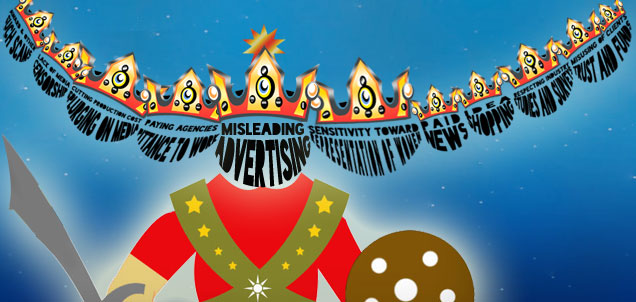
    On Friday,  we will celebrate Dassera, a festival of good prevailing over evil. This  day Rama killed Ravana, the demon with 10 heads, the most learned man of his time but a symbol of evil.


    Calling out the hidden professionals; the Rama within you to finish the new Ravana thriving in our industry. The power of trinity (Advertising, Marketing & Media) in consumer interface is amplified with rich insights, knowledge and deep consumer understanding. But, we the fallen ones, have been using it wrongly and have given birth to the new Ravana. This has been eroding the trust we enjoyed.


    This Dassera, let’s pledge to attempt decreasing Ravana’s influence if not finishing is not a possibility. Is that too much to ask?


    This is my List of 10 EVILs in MEDIA, COMMUNICATION & MARKETING


    1. MISLEADING ADVERTISING

    The biggest evil.  Guidelines have failed, may be we need legal and government intervention. Time that ASCI is reborn as ARAI (Advertising Regulatory Authority Of India).  Stop accepting briefs with unsupported claim.  Force the client to come clean on this subject. Stop misusing technology to create misleading communication. Just do not create ads that you don’t want your family to be influenced with.


    2. SENSITIVITY TOWARD REPRESENTATION OF WOMEN

    Women are more often than not props and item numbers. This is true for advertising in general. Respect women and take a stance against projecting them as a subject/ object of sexual desires and fantasies. Respect their privacy while reporting. Stop the cleavage and leg show. Stop using technology to enhance their sex appeal or creating unwarranted desires.


    3. PAID NEWS

    Media better watch, it has been violating the unwritten contract and exploiting the trust imposed by its audience. I am not against paid news. I am against hiding the fact that it is paid news.  Suggest come forward and acknowledge this good deal you been paddling with a industry defined clear loud format- maybe equal in weightage to the headline it carries!.


    4. IDEA SHOPPING

    Who is the culprit – one who calls for the pitch as a business role or the agencies standing in queue willing to sign on the dotted lines at a fee that is ridiculous? If agencies are willing to prostitute their assets (creative, strategic, consumer understanding and all of it) as an item number in the idea shopping carnival masquerading as pitches, why blame the client?!

    Okay, I understand you are weak and you can’t fight the system. But can you  start with asking for a decent pitch fee or at least make the client sign a strong contract that prevents it from exploiting innocently presented ideas?


    5. RESPECTING INDUSTRY STUDIES AND SURVEYS

    Raise your issues, scrutinizing the processes and ensure that the system is perfect, but do that before the results are out. The current scenario is hardly helping the industry. No measurement raises more doubts than solutions. Syndicated industry studies need to be better supported by stringent rules/ contracts that prevent participating media to complain about it. One of the biggest evil that it’s real tough to tame them.

    More so, all parties benefiting from the studies – media, advertisers and the agencies must share the cost of doing these studies. More paying stakeholders will strengthen the process commercially but also intellectually.


    6. MISUSING OF CLIENTS TRUST AND FUNDS

    The client imposes faith on the agencies to deliver the best results within the budget and other constraints. The agencies willingly do this at a fee that is illogical and which makes no business sense. But this does not give them reasons to create preferred media cartels, inefficient planning and execution, not passing the negotiated cost advantage to the client or overcharging on creative and media execution. Trust me, it is rampant within the industry and a media/ creative audit is a real good idea.


    7. PAYING AGENCIES PITTANCE TO WORK

    The current business model at agencies does not make it viable to hire the best of the talent forget retaining or nurturing them. Result:n clients deny themselves the best of inputs, strategy, execution and/or media intervention. Yet, they continue to have fantasies and hold unrealistic expectation.

    Time that clients really looked at their needs, demands and the fee they pay. Time to arrive at a win-win solution. This I know is true fantasy.


    8. CUTTING PRODUCTION COST SPLURGING ON MEDIA

    This is a process defect that has amplified with the separation of media and creative agencies along with the retainership fee model. This is something that defies logic. It is only forcing mediocrity.

    Follow the golden rule: ‘Better to have a good creative/solution/strategy with low media weights than a bad creative /solution/strategy with huge media support’


    9. LACK OF MEDIA CENSORSHIP

    Stop accepting and releasing ads that are misleading, promote regional and religious fervors, wrongly promotes superstition, violates rules and norms like Magical Remedy Act, Education and Fairness product guidelines or running ads banned by ASCI.

    Have I suddenly made few channels and newspaper commercially non-viable?


    10. AWARD AND OTHER SUCH SCAMS

    Someday someone like a Rama maybe in another era will have to fight the final battle on this front. Expecting this from industry is hoping for a miracle. But I believe miracles can be created. Blacklist individual professionals and the companies from future entries. Suggest get Cannes into loop on this front. And before that maybe come to an agreement nationally on entries and evaluation process for awards in India. What about a regulatory body to scrutinize and license any new or existing awards?


    May be time for ASCI to symbolically adopt Dassera,. May be on Friday, create your own Ravana of the industry. Just draw it and symbolically shared it to start with.


    It does not matter if you have a different list. Just  identify the evil in the industry and go for the kill.

    It is in the interest of the industry that each constituent across media, advertisers and agencies to focus on investing into training and enhancing capabilities of their teams. Do invest in teaching your teams to fish rather than serving them fish. In the long term it will create a distinct advantage for you. Trust building internal team for success and facilitating tapping their potential is the best thing you could do this year.


    Sanjeev Kotnala is Head catalyst with P1P2SOLUTIONS that believes in liberating ideas. Connect with him at netkot@yahoo.com or  send send him a tweet at @S_Kotnala


  • Carlton takes ‘The New Face of Business’ route in new campaign

    By A Correspondent


    Luggage brand Carlton has launched its new campaign ‘Carlton – The New Face of Business’. The campaign is designed to tap into new consumer bases and fortify its position in the business luggage category. A leading global luggage brand acquired by VIP Industries in 2004, Carlton reflects the very best of British design and innovation.
     

    Conceptualized by Whyness, the new campaign raises a tribute to the new generation of business leaders and their luggage of choice – Carlton. While retaining the charm of its British heritage, the new campaign subtly points out how business has evolved from the old order. Set against a rapidly shifting corporate environment, ‘The New Face of Business’ campaign showcases Carlton as the perfect travel partner for the new business maverick in his pursuit of the next big idea.


    Reflecting on the campaign, Ravi Deshpande, Founder, Whyness shared, “There’s a new breed of business leaders out there. Young, passionate, innovative and ready to rewrite the rules. For whom chasing profits isn’t as important as chasing the big idea. The new Carlton campaign is a celebration of this new business generation and positions Carlton as the luggage of “The new face of business”. We look at Carlton as being young, exciting, up-market and disruptive, vis-à-vis the staid competition.”


    Speaking on the campaign, Sudip Ghose, Vice President-Marketing, VIP Industries said, “Young, passionate and always-on-the-go, the new generation of business leaders have their finger on the pulse of business. With the ‘New Face of Business’ campaign, we are directly speaking to this daring new business generation as they make their way to success.”


    The Carlton ‘New Face of Business’ campaign is currently on air and will be extended across print, radio and social media platforms.


  • Titan Raga celebrates confidence of today’s woman in new TVC

    By A Correspondent


    Over the years, Titan Raga has carved out a special place for itself by celebrating feminine beauty and sensuality. The brand has showcased exquisite collections along with charming stories of the Raga woman. And these stories have served as markers in the journey of the Indian Woman from home and hearth to the outside world.


    The latest Raga film tells the story of one such woman and her chance meeting with a past love at an international airport lounge while both are travelling on business trips. They are genuinely happy to see each other. As they talk and catch up, the fissures of the earlier relationship are revealed. He had wanted her to stop working. She had refused. He still wanted her. After all these years, would she bend to his wishes?


    It is a film that is at once timely and timeless, celebrating her new self-assuredness and confidence as well as her enduring elegance and grace.


    Sharing his views on the commercial, Rajan Amba, GM, Titan Watches and Accessories, said “Raga is a reflection of the modern woman – progressive, confident and passionate. Over the years we have seen this woman evolve. She has unravelled different facets of her personality. And at every step of the way, Raga has evolved with her. Today, we are seeing a new side to this woman, where she is independent and free-spirited. And through this new film we are happy to reflect this new dimension that defines the woman of today. I’m sure this film will appeal to every modern woman because it captures their essence beautifully.”


    Joono Simon, Executive Creative Director, Ogilvy South, India, said that, “There was a time, not long ago, when Indian brands made a habit of perpetuating gender stereotypes from the past. Raga broke this stereotype with its consistent portrayal of a spirited woman with an air of sensual power.”


    In the new commercial, the brand steps up to portray a self-assured, assertive woman who reminds us that, as far as her life is concerned, she is firmly in charge and that she alone has the ability to decide what’s good for her. I’m sure the commercial would inspire many modern women to go out and grab her rightful place under the sun.”


  • Dynel LED Lights ropes in Bang in the Middle

    By A Correspondent


    Dynel, a home grown brand of LED lights is aggressively planning to build its franchise in India and has roped in Bang in the Middle as its communication partner. Dynel will launch a range of differentiated LED lamps across spectrum of residential and commercial applications. These lamps are extensively tested for Indian conditions and will offer a premium experience to the audience


    Prithvideep Singh

    Prithvideep Singh, Brand Lead Dynel said, “We have spent a long time perfecting the technology for Indian conditions and our range of products is very innovative. In Bang in the Middle we have found the partner that will help us in establishing our brand in this new emerging market.”


    Naresh Gupta, Managing Partner Bang in the Middle said, “LED lamps is the category of today, and we are thrilled to be on board with a brand that is future thinking. The challenge of creating an Indian brand in this fast expanding market is a great challenge to face. We hope to make Dynel the mainstream lighting solution brand.”


    The brand was awarded to Bang in the Middle following a review with handpicked agencies. Bang in the Middle will handle integrated duties across digital and traditional mediums.


  • Ogilvy unveils new campaign for IndiaProperty.com

    By A Correspondent


    Ogilvy India has unveiled a new campaign for IndiaProperty.com. With property search being a high involvement and complex task, the aim was to make the communication capture the psyche of a first-time home buyer, the fears, anxiety and the struggle he/she goes through while entering the home search maze and the role IndiaPropety.com plays in simplifyingthe experience.


    Ganesh Vasudevan, CEO IndiaProperty.com said, “We are very excited to announce our new brand identity, reflecting our promise of hand holding the user end to end in the home buying journey. For the campaign, we wanted to reflect the emotional state of a first time home buyer when he is making one of the biggest decisions of his lifetime. The creative team at O&M Mumbai got the brief perfectly and have moulded the idea that on one hand epitomises the first time home buyers hesitation and emotional state, while on the other hand addresses how our brand adds value to overcome a buyers fears through a combination of technology solutions and human touch.”


    Piyush Pandey

    Piyush Pandey, Executive Chairman & Creative Director O&M, South Asia said: “Buying a property is life’s biggest and toughest decision. Fear, anxiety, lack of clarity and trust are the emotions a property buyer goes through. They desperately seek assurance. The challenge was to think of a story, an idea that encapsulates this feeling best and is unique. The metaphor of a kid who is jumping into the pool as he doesn’t know swimming portrayed the emotions of the first time property buyer beautifully.”


  • Nestle India enters into an agreement with Magic Bus India Foundation

    By A Correspondent


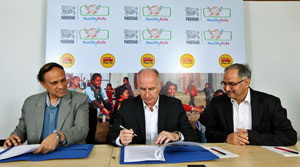
    Nestlé India has recently signed an agreement with Magic Bus India Foundation. This initiative is on the lines of the Nestlé Healthy Kids Global Programme that focuses on providing nutrition and health awareness to adolescents.


    The programme will reach out to 50,000 students aged between 10–17 years through government schools. The cities, where the programme will be running for a year, include Delhi, Mumbai, Chennai, Bangalore and Hyderabad. Magic Bus, which works on breaking the poverty cycle, one child at a time, will create a curriculum based on Sports for Development (S4D) approach, imparting knowledge about nutrition and a healthy, active lifestyle.


    Speaking on this occasion, Etienne Benet, Managing Director, Nestlé India Limited, said, “Being a leading Nutrition, Health and Wellness (NHW) company, Nestlé India intends to enhance the quality of life by creating awareness regarding nutritional health. In line with the already operational Nestlé Healthy Kids Global Programme, we intend to reach out to adolescents across metros in India.”


    The Nestlé Healthy Kids Global Programme is adapted in India to create and raise awareness regarding good nutritional practices. Added Benet, “The partnership between Nestlé India and Magic Bus, will promote healthy eating habits amongst children in government schools, basis food availability and accessibility in cities.”


    Commenting on the partnership, Sanjay Khajuria, Senior Vice President, Corporate Affairs, Nestlé India said, “In India, we have done an assessment of nutritional needs in the community and want to create and raise awareness regarding good nutritional practices amongst children and adolescents. Through the Magic Bus partnership, Nestlé India will reach out to over 50,000 less privileged children in five metros within the span of a year.”


    Pratik Kumar, CEO, Magic Bus India Foundation added, “There is a strong synergy in the commitment towards better health and wellness of both the partners. Along with sensitising parents and teachers, this program will steer adolescent children in marginalised communities towards a life with better awareness and improved life skills, in the journey from childhood to livelihood.”


    For the Nestlé Healthy Kids Programme, Magic Bus will create and customise its existing curriculum into three major buckets with the objective of raising awareness on ‘Nutrition and Health’, ‘Getting Active’ and ‘Hygiene and Sanitation’ amongst children in government schools. It will identify and train youth mentors who will be responsible for implementing the sessions in these schools and train them to deliver the curriculum on the ground. The programme also intends to ensure that girls and boys get equal opportunities to play and learn. An awareness drive for gender sensitisation will form an integral part of the programme.