Category: MARKETING

  • ACK enters merchandise biz with launch of figurines

    By A Correspondent


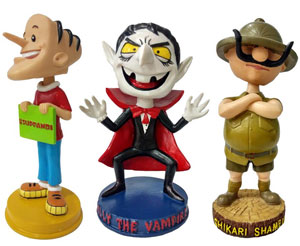
    Popular children’s magazine Tinkle is gearing up to surprise its fans with the launch of Tinkle Merchandise. Creating a new category in itself, the 33 year old brand launched its merchandise range with figurines of its renowned characters Suppandi, ShikariShambhu and Billy at ComicCon Hyderabad. The Tinkle merchandise will be available at all leading book stores, toy stores, premium retail chains, e-commerce sites including amarchitrakatha.com, at Rs. 999.


    “Over the years Tinkle has adapted to the changing mindsets of consumers without compromising on the quality of its products. By launching merchandise, the idea is to infuse life in to our most popular characters, so that they become a part of our Fans’ everyday existence. We will continue to delight Tinkle fans by constantly catering to their needs and aspirations”, said Prakash Batna, Sr. V P – Sales and Marketing, Amar Chitra Katha Pvt. Ltd. “Our first phase of merchandise has 3 bobbleheads. More products like Apparel (message t-shirts, caps), Mugs, Fridge Magnets, Posters, Badges, Mugs, Pen stands amongst others are in pipeline”, he further added.


    Tinkle Merchandise is a revolutionary program of a size and scope hitherto unseen in India.The launch of Tinkle figurines will enable Tinkle fans to enjoy the next level of interaction with their favourite characters.


  • Gionee unveils ‘Hello India’ festive brand campaign

    By A Correspondent


    Following the ‘7 seconds’ campaign, Gionee Smartphones has launched the second leg of their festive brand campaign ‘Hello India’. The campaign will run across India in over 80 channels and in 8 languages that includes English, Hindi, Tamil, Kannad, Telegu, Malayalam, Marathi, and Bengali. Gionee has had a wonderful start in the Indian market and in the last 18 months has been successful into becoming one of the major brands. Having sold 3 million phones till date, Gionee is welcoming users from all walks of life with the launch of its Festive Campaign – ‘Hello India’.


    The festive campaign is a greeting from the brand to all the real as well as aspiring users of Gionee. These are people with a new mindset for whom phones play a huge role in their lives. They are immersed in their phones spending most of their time with it, making the phones their primary companion. Considering the attachment with phones today, users are even willing to pay a premium and want the best of everything – design, speed, camera etc.


    Speaking of the launch of the brand campaign, Arvind vohra, India Head, Gionee smartphones said, “Gionee has had a great start in India and the brand has been received well by the Indian audience. With the new brand campaign we are looking at welcoming more users to be a part of the Gionee family. Phones have today become an extension of the personality and the campaign tries to capture these emotions and make a connect with the crowd thereby building a resonance with brand Gionee.”


  • FCB Ulka conceptualises new campaign for Hero ISL

    By A Correspondent


    Hero has unveiled a new campaign for ISL. With this new campaign, conceptualised by FCB Ulka, Hero aims to strike a chord with football fans and harp on the unbiased unity which the sport brings to the table.


    The idea was to break the notion that football is a boy’s game and to get girls to live the spirit of football. In order to set the idea in motion and establish connect with the youth, Hero Maestro and Hero Pleasure have been specifically highlighted. The quintessential boyish charm associated with Maestro and the norm-breaking, free-bird attitude of Pleasure have been brought to life to convey the message that football belongs to all. Ranbir Kapoor and Alia Bhatt will be depicting the two opposite attitudes.


    Set to a fast paced, peppy track, the commercial opens with Ranbir Kapoor and his gang of boys playing around with a football along with their Maestro scooters. The momentum of the game leads them to a place where they are confronted by Alia and her gang of girls with their Pleasure scooters. Here, the commercial breaks the notion that football is not just a boy’s game through a challenge – “let’s play”, thrown by Alia to Ranbir’s gang and they complement the challenge with some freestyle football tricks of their own. The boys state that football is “a boy thing” while Alia’s challenge delves into the saying “Why should boys have all the fun?” – thus resulting in making football bigger as a game than it’s actually perceived to be. The unblemished rivalry between the two sexes blends seamlessly with the football fever in this commercial.


    As the title sponsor of ISL, Hero aims to use the commercial to voice its involvement with the game and use this occasion to bring youth together to cheer for the game and break the notions of a stronger and weaker sex.


    Sanjay Sharma, Group Creative Director, FCB-Ulka Delhi, said, “We wanted to use football as an enabler of youth unification with a very lighthearted and playful approach, using brand Hero as a driver for this unification.”


  • Experience Commerce bags digital duties of Lenovo

    By A Correspondent


    Experience Commerce (EC) announced their recent win of digital & social marketing duties at Lenovo. Lenovo has mandated EC with the digital marketing campaign for the entire Lenovo portfolio of products including the latest social media campaign for the launch.


    Jump starting the relationship with an innovative launch of the new Yoga Tablet 2 on digital, #YoGa2bFree, the agency roped in four Twitter influencers, including actor Ashwin Mushran, gadget guru Ankit Vengurlekar, film reviewer Mihir Fadnavis and food blogger Kalyan Karmakar and trapped them in a box.


    “Gadgets such as tablets are designed to help us lead a more connected, productive and fun life; but take them out of the box and you often see yourself enslaved and tethered to these devices. This campaign is designed to raise awareness about how you can free your life from restrictive technology – discover a brand that promises to adapt to you,” said Sandip Maiti, CEO & Chief Creative Officer, Experience Commerce.


    This campaign uses large-scale interactive video-based story-telling on yoga2bfree.com where the four trapped Twitterati provide clues to the audience who attempt to free them up.


    “We have been active on Social Media since 2010, and were in the market for a new kind of agency who understands the digital born consumer and can help us craft an unique social voice for brand Lenovo. We look forward to a creative partnership with EC to tell the story of Lenovo for this millennial generation and build a strong community of advocates around its smartphones, tablets and laptop categories”, said Bhaskar Choudhuri, Director of Marketing, Lenovo India.


  • ‘Ehsaan Mat Lo, Discount Lo’, says Yatra.com in new TVC

    By A Correspondent


    Yatra.com has launched their new campaign that aims to create awareness amongst customers about the wide array of choices for hotel bookings. Titled, “Ehsaan Mat Lo, Discount Lo”, the underlying message in the commercial promises travellers the best stay at the best price wherever they go Yatra has the largest inventory of hotels in India and abroad and this commercial aims to apprise customers on the bouquet of offerings from yatra’s basket. The new campaign comprises two TVCs which have been on air across leading channels.


    Crafted by McCann Erickson India Ltd. under the creative direction of Kapil Batra, the new advertisements showcase how favours can be called upon, in any way possible. Where one ad opens with the protagonist unpacking at the acquaintances’ house, he overhears a conversation of the owners of the house and their plan to ask him to marry their daughter. Which in turn causes him to start packing right away, with the tagline being displayed – “Ehsaan mat lo, discount lo”.


    The second advertisement builds on the same premise that nothing in the world is free. The advertisement begins with the protagonist showing up at the doorstep of his relatives in the hope of a free stay; overhearing their conversation of being asked to donate a kidney for a relative in return for the hospitality provided, causes him to flee. The voice-over in the brand ambassador, Salman Khan’s voice says “Ehsaan mat lo, discount lo!”.


    Commenting on the launch of the new ad campaign, Sharat Dhall, President, Yatra.com said, “Yatra.com has always been at the helm of change; we are constantly reinventing and adapting ourselves to suit the sensibilities of our customers. The latest TVC’s by Yatra.com focuses on hotel and highlights the range of   offers/discounts that Yatra.com has on its assorted inventory of hotels. Based on our internal findings that 36% of our customers stay at their friends or relatives place instead of booking a hotel , the message ‘Ehsaan mat lo, discount lo’ aims to drive greater adoption of online hotel bookings with travellers.”


  • Saffolalife shifts focus to heart problems faced by women

    By A Correspondent


    This World Heart Day Saffolalife will drive awareness and action towards the cause of women’s heart health in India. Contrary to common belief that men are susceptible to heart health problems, recent studies show that as high as 3 out of every 5 women above the age of 35 develop a cholesterol problem, which puts them at a risk of heart diseases.


    This film is an endeavour to inspire people to re-evaluate the need to “Protect her heart”. The creative device of this film emanates from a very simple loving ritual that most Indians have grown up with. The ritual of putting a black dot, a ‘kaala teeka’ on the foreheads of our kids, so that they stay protected and healthy. By reversing the gesture and putting the Kaala Teeka on women, Saffolalife urges family members to protect the heart that has always cared so much for them, by taking them for the cholesterol test.


    Saffola has always talked to the woman, focussing on the man’s heart health. So when it came to light that 3 out of 5 women in the country are at heart risk, it was not only a startling piece of news to be communicated but also a big opportunity for the brand to shine a light on women’s heart health, which is taken for granted by families and the society at large. We have always lived with a feeling that ‘mom will always be there’, which is a perception out of love and ignorance and not the truth. From this emerged the thought of ‘who will care for the heart that cares for all’. The attempt this time was to put the ‘kaala teeka’ on the beautiful women in everybody’s lives as a symbol to protect their hearts.


  • Wills Lifestyle and Madison unveil ‘Rock the Ramp’

    By A Correspondent


    Wills Lifestyle and Madison Media has devised the concept of “Wills Rock the Ramp” a 360 degree Vine booth – a twist to the traditional twirl people do to show off what they’re wearing. Instead of doing the twirl, the cameras and modern technology does the twirling and the same could be shared on social networks.


    Users simply had to step into the booth and the revolving camera shoots a 4-6 second video, showing a 360 view of what they’re wearing to the Wills Lifestyle India Fashion Week. These videos are shared on the Wills Lifestyle Vine page and Wills Lifestyle Facebook and Twitter pages.


    Atul Chand, Divisional Chief Executive, ITC Lifestyle Retailing said, “Wills Lifestyle has always been at the forefront of innovation and driven the business of fashion in India with style. Being at the helm of creativity and novelty, we have integrated modern technology with fashion yet again this season, thereby creating 360 degree brand conversations. In this edition, Wills Lifestyle takes another leap with many firsts on the Indian fashion runway by introducing a 360-degree selfie booth.”


    Basabdatta Chowdhuri, CEO Platinum Media, says, “Our endeavour is to provide the best solutions to our clients irrespective of the platform. We want our brands to leverage new platforms and create high level engagements for consumers.”


  • PepsiCo India’s 7-plus-min #GharWaliDiwali film brings joy, sobs

    By A Correspondent


    It’s a film that’s going to make you smile and cry. PepsiCo has launched a special 7 minutes, 15 second #GharWaliDiwali film on its YouTube channel celebrating togetherness in the festival season. The heart-warming film has directed by Vikramadity Motwane of Udaan fame and features National Awardwinning actress Geetanjali Thapa.


    Said Rishi Dogra, PepsiCo India’s Head of Digital Marketing: “The joy of celebrating any occasion with your family is unmatched. With the film, which has been beautifully created by Vikramaditya Motwane, consumers are sure to experience some long lost nostalgic moments. We are also looking forward to consumers sharing these moments of #GharWaliDiwali and have planned some exciting surprises for those with the most engaging stories.”


    “India has become mobile and dynamic. We have moved out of homes and travelled the roads in quest of our dreams, our careers, ourlives. Technology has been an ally and have brought our families closer. We feel we are connected. Maybe sometimes, we start taking this for granted. Specially during Diwali. Nothing can replace the love and warmth of HomeComing. Over food, drinks and merrymaking. This is what this film is all about. It’s a calling to all of us to come home,” said Babita Baruah, Senior VP and Executive Business Director, JWT.


    “For me, this story has been an attempt to reconstruct an emotion that haunts me every diwali. It’s such an emotional festival because we’ve all grown up attaching all sorts of rituals to it but the way we celebrate it these days is so functional,  so convenient that it takes the joy away- leaving you feeling lonelier than ever. I just wanted people to make the effort, take the trouble to celebrate it like you remember it. At home, with your folks and not over the phonem” added Sonia Bhatnagar, Executive Creative Director, JWT.


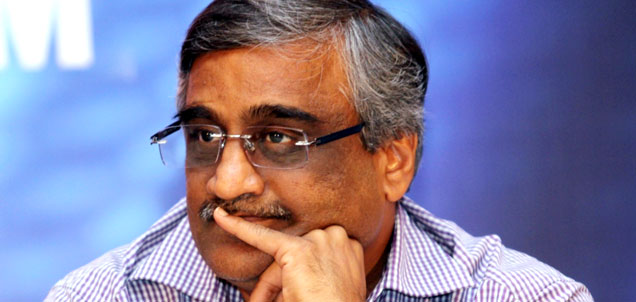
  • Raja of Retail reinvents himself


    By Malini Goyal


    I wouldn’t suggest we are an ideal organization, but I think we have made the beginning towards building one” Kishore Biyani, in his autobiography ‘It Happened in India’.


    Seven years after India’s Raja of Retail penned his entrepreneurial journey – and in the process convinced his elder daughter Ashni that he wasn’t writing it, as she feared, “too soon” – Kishore Biyani’s “ideal organization” is still a work in progress. By 2007 – 16 years after he opened his first store to sell apparel, Pantaloons – Biyani had done enough in the retail space, and more, to earn the Raja handle.


    His Future Group was selling food and groceries, apparel, footwear, furniture, consumer electronics, home products, books, medicines, mobiles et al through multiple formats like supermarkets, hypermarkets, malls, specialty stores – and, yes, an online portal too.


    Forays into the broader consumption space – restaurants, entertainment centres and even consumer finance and insurance – were all prongs of the group that hit revenues of just over Rs 5,000 crore in the year ended June 2008.


    Today, Biyani looks back at the no-holds-barred growth phase with mixed emotions. “Success is very heady. [But] difficult times humble you.”


    Those difficult times came courtesy of the global financial crisis of 2008.


    The Future Group found itself saddled with a debt of over Rs 4,000 crore even as liquidity dried up and consumers tightened their purse strings.


    The debt kept rising, peaking at Rs 7,800 crore in 2012. The post-2008 phase was of gritty survival, culminating in the sale of Pantaloon to the AV Birla group for Rs 1,600 crore in 2012; and a series of selloff deals are still in the pipeline.


    Over the next couple of years, rationalizing stores became the buzzword and, as things stand today, Reliance Retail is the largest organized retailer – the newly crowned ‘Raja’, if you will – and e-commerce giants Amazon, Flipkart, Snapdeal et al have captured the mind space of consumers and the moneybags of investors.


    Yesterday’s Raja of Retail, now 53, seemingly with a smaller fire in the belly, is watching the new kids on the block, happy that he wrote his tome at the right time – after all, wasn’t it Biyani himself who told an investor: “Retail is like riding a bicycle uphill, if you stop pedaling you will slide down?”


    Biyani hasn’t stopped pedalling. The only difference is that he now wants to ride a faster, larger cycle, a road bike perhaps, that traverses terrains beyond organized retailing and bunny-hops onto the track of food – processing it, marketing it and branding it.


    At the same time he wants to throw his hat once again in the ring in which he was one of the first to do so: e-commerce. Don’t forget he had set up Futurebazaar.com in 2007 – the same year Flipkart was born.


    “He [Biyani] is in the most exciting phase of his career. I have never seen him so engaged and committed,” says Shailesh Haribhakti, managing partner, Haribhakti & Co, an independent director of Future Lifestyle. On the board, Haribhakti has known Biyani for over two decades now.


    Food for Thought

    Last month, prime minister Narendra Modi inaugurated a 110-acre food park in Tumkur in Karnataka, Biyani’s first iron in the fire of foodprocessing.


    He plans to set up two more – one in Madhya Pradesh and West Bengal each – with the aim of fuelling the foods business into a Rs 20,000-crore behemoth by 2020, from just Rs 1,000 crore currently.


    The processed and packaged foods business in India is a gargantuan pie, at Rs 40,000 crore; however, it is fragmented and dominated by unorganized players. In 2012-13, Indian households are estimated to have spent Rs 11,00,000 crore on food.


    For his part, Biyani doesn’t see the food foray as a shift from the core business. “I have never looked at myself as just a retailer,” he says. “We have always been an FMCG company,” he adds.


    To be sure, group company Future Consumer Enterprises is present in over 60 product categories, and the plan is to make frozen foods, ready-to-eat and baked items at the food parks. “India does not have home-grown food products that cater to Indian tastes,” adds Biyani.


    Biyani wants to do to food what he did to retail in the 1990s. “Hopefully, we will be the largest food FMCG company in the country by 2020,” says Biyani. His vision is to make Future Group a Rs 1,00,000 crore entity by 2020, with food contributing a fifth of those revenues.


    When Biyani took the plunge into retail, Walmart founder Sam Walton was doubtless an inspiration – but not necessarily for the Walmart model. The Future Group CEO has been influenced by Walton’s desire to “rewrite rules”.


    Biyani reckons he’s done something similar by creating a unique retailing model in India that has the look and feel of mandis, and takes into account local tastes and cultures. The food venture will follow the similar principles of providing indigenous solutions.


    Twist in E-tail, too

    Biyani made headlines early this month when he squared off with trailblazing etailer Flipkart. After Flipkart’s big sale day, on which it claimed to have sold goods worth $100 million, Biyani slammed it. “How can someone sell products below the manufacturing price? This is not legal,” he told the media.


    A few days later, Biyani chose to collaborate with Flipkart’s rival Amazon to exclusively retail Future Group’s 45 private label brands on its platform. And there’s more to the deal, insists Biyani. “This is not a transactional tie-up. It is deeper and strategic.”


    “The deal is significant. It is the first time that Amazon India has entered such a strategic partnership with a big organized retailer,” avers Amit Agarwal, country manager, Amazon India.


    Arvind Singhal, chairman of Technopak Advisors, isn’t impressed. “People are misreading the alliance, which is not between two partners but a seller and a buyer. That is all it is.” Both Agarwal and Biyani disagree. “It’s a win-win partnership. They have great consumer insights [offline].


    We understand online customers well, in real time,” Agarwal says. The two partners will use each other’s strengths to woo consumers, explore product development and brands in new categories, collaborate in distribution and cross promotions. The alliance will later extend to food.


    “The partnership has etched out a certain guaranteed [level of ] sales, throughputs and margins,” says Biyani. Experts say fashion is one of the fastest growing segments in etailing due to its fatter margins (than in groceries) and also growing consumer demand.


    Amazon is not the only piece in the online play. Future Group is betting big on catering to customers using multiple online channels, or omni-channel retailing. It has invested heavily in the backend in terms of supply logistics and inventory to make servicing offline-online orders seamless. Soon, it will allow customers to place orders online and pick up delivery from one of its retail stores.


    In Tier II and III cities, last September it rolled out direct selling service Big Bazaar Direct that allows customers to place orders with appointed franchisees. Armed with a tablet preloaded with Big Bazaar product catalogues, these franchises can collect orders from consumers’ doorsteps and earn a commission.


    Biyani is no newbie to e-commerce, having set up an online portal in 2007 that went through various tweaks and experiments. He first set up information kiosks that displayed products and offered information to consumers.


    According to news reports, in six months in Uttar Pradesh alone, Biyani wanted to set up 37 such stores selling – along with books, apparels and movies – regional brands. It did not work. “We were ahead of the times,” is how Biyani explains it.


    In 2010, Biyani re-launched the digital platform with a target of garnering a tenth of the group’s projected revenues of Rs 30,000 crore in 4-5 years. The platform spanned e-commerce, m-commerce and teleshopping.


    By 2011, muted consumer response tempered the projections to daily sales of Rs 1 crore. A year later, the business-to-consumer model was tweaked to include business-to-business, with an eye on corporate gifting. That too hasn’t set the Ganges on fire. Futurebazaar. com did business worth just Rs 100 crore last year.


    The Idea Man and His Execution Problems

    Clearly Biyani, whose grandfather made the move to Mumbai from Nagaur district of Rajasthan in the mid-1930s, is one of those earthy Indian entrepreneurs who didn’t need to go to Ivy League B-schools to sniff out business opportunities. Perhaps the closest similarity to Biyani is the Hissar-born Subhash Chandra of the Essel group who was the first mover in businesses from flexible packaging and satellite television to a cricket league and direct-to-home television.


    Like in Chandra’s case, however, execution – and building professional teams that work seamlessly with the founder and his family over a reasonable period to help in execution – has proven to be harder.


    “Biyani’s biggest strength is ideation – you will see a steady flow of announcements and ideas, but not enough attention is paid to execution,” says a former senior executive who worked with Biyani. “I still think he is doing too many things,” adds Abhishek Ranganathan, vice-president, PhillipCapital, a financial services firm.


    Execution suffers because of a lack of strategic management bandwidth. It is not that Biyani does not realize the significance of getting smart professionals. According to media reports, he tried hard to hire Amazon India head Agarwal but could not.


    Around 2010, he went on a hiring spree. A 2010 media report says Biyani had hired over 30 senior executives from HUL, Pepsi and Coke for leadership positions in a four-year burst. In 2010 alone, he hired six of them, including V Vaidyanthan of ICICI, Vibha Paul Rishi of Pepsi and Sameer Sain from Goldman Sachs. But few of the high-profile honchos hung around for long.


    The absence of structures and processes in operations rattled many who were used to an MNC work culture. They found that often they did not have complete control over their department. “Imagine I am heading Big Bazaar. And then somebody has a marketing suggestion that KB loves. The next thing I know, without even consulting me, the idea has been approved,” says a senior executive who was in a leadership role with the group.


    At the other end, those responsible for mistakes were not being pulled up adequately. “KB is a brilliant visionary. He gives a long rope to make mistakes. But at the end, if you are not delivering then you have to be accountable. That accountability was often missing,” adds the senior executive. Explains Ranganathan of PhillipCapital: “Poor management bandwidth is also a function of objectives not being made very clear [to professionals].”


    The Succession Issue

    Those who have worked in the Future group – we spoke to over 10 such senior executives – say there is a bigger issue that the group must address: family and succession.


    The Future group has gone through three phases. In the first, till around 2008 or so, the group was KBdriven. “His word was gospel. And he called the shots. The organization was well aligned,” says a former executive. Then post-2008, Biyani hired a bunch of professionals to run the business and the family took a back seat. But by 2012, as the group stared at a debt crisis, the family was back with a bang, with cousin Rakesh Biyani playing a critical role in pushing for operational efficiencies.


    “We were buying sales, not earning them. We forgot the basics of retailing. We did not put enough effort to fix internal operations,” says Rakesh, director, Future Group. Last year, Future Group closed about 40% of its underperforming Food Bazaar stores. All other formats – from KB Fairprice to home furnishing chain Home-Town and Big Bazaar – are being scrutinized.


    Some 2 million sq ft of the 16 million sq ft retail space has been rationalized (after which the group has added 3 million sq ft). Higher margin products like in the fashion category are being given more space and display while in the low-margin food and grocery category, the thrust is to do more with less, points out Rajan Malhotra, president, retail strategy, Future Group.


    A Morgan Stanley report released early this month takes note of “a decisive shift in philosophy and strategy to focus on balance sheet restructuring, lower leverage, improved capital efficiency and high same-store sales growth vs unbridled space additions and investment in non-core businesses.”


    Future Group’s leverage crisis has taught Biyani many lessons. He now believes in the dictum “Big does not equal great and great does not equal big.” Creation with control rather than unbridled growth is a constant theme. He realizes that profit, balance sheets and stock market are important and keeps a close watch on the numbers. And the pioneer who leaned heavily on his gut to take decisions will also use science, technology and data analytics a lot to make business calls. “In the digital world, things are different,” he adds.


    Building for Growth

    On the back of this recalibration of the core business, Biyani is laying the foundation for the future with the food processing game plan. The food parks will have flour and rice mills, pasta plants, bakeries etc. The products will be sold through Future group’s retail chains (particularly the neighbourhood format KB Fairprice).


    Biyani’s upmarket food retail format, Foodhall, is a crucial piece of the food processing blueprint. The Mumbai outlet in the Palladium mall in Lower Parel is a far cry from the mandi imagery one associates with Big Bazaar, and has a fair slice of the high-spending consumer, many of them expats.


    “It is very profitable. We see this more as our food laboratory where we test our new products and recipes before going for mass production,” says Avni, Biyani’s younger daughter who steers this business. Biyani’s bet on food could prove a masterstroke. A recent Crisil report says that smaller tier II regional players have outpaced giants like HUL, ITC and Nestle in the Rs 1,20,000-crore food and beverages category.


    From 20% in 2008, their share has gone up to 30% in 2014 and by 2019 it is likely to touch 40%. The big marketers have found it difficult to operate in a segment that offers slim margins and requires a regional product focus in a country with varied food habits. For Future Group, food is a vertical integration from the retail business, presenting Biyani the opportunity to push his own private food labels (which offer higher margins).


    Like in the past, Biyani needs a seasoned team to execute his vision. “We have a good leadership team. We are working with Egon Zehnder and Ram Charan to further boost it,” says Biyani. Those who know the group well say the family is still deeply involved and the group lacks professional management bandwidth.


    While Biyani’s cousin Rakesh is operationally involved, his other brothers – Vijay, Anil and cousin Sunil – are directors in the group with no executive roles in listed firms. The second generation comprising Kishore’s daughters Avni and Ashni and his nephew Vivek (Vijay’s son) too have joined. “I see the group going through two big transitions – from one generation to the next, and from one business [retail] to another [food]. Doing both the transitions simultaneously won’t prove easy,” says a former executive at the group.


    Another is more candid: “Kishore needs to sort the palace once and for all. There can be only one king. When everybody is not pulling in one direction, the army does not work well.”


    The army also needs more colonels, majors and lieutenants. Biyani denies that hiring talent is an issue, and says it is an ongoing effort. A Mumbai-based headhunter who refused to be named says: “When I look at the group, I see that it has many doers who can manage the operations but no visible leaders. A family business has to look at long-term institution building.”


    In It Happened in India, Biyani makes a telling observation of his influence on the family: “I believe it was our generation and myself who were responsible for making the family look at things differently first about the social customs that were being practiced and, some years later, the way it did business.”


    Perhaps it’s time for Biyani to once again look at the way the family does business. Or is it time for the nextgen to show the way?


    Source:The Economic Times

    Copyright © 2014, Bennett, Coleman & Co. Ltd. All Rights Reserved

    Licensed to republish
     

  • VIP unveils sequel to ‘Life Leke Chal’ campaign

    By A Correspondent


    Following the success of ‘Life Leke Chal’, VIP Industries has unveiled their popular campaign yet again. Amplifying their reach, the campaign is engaging with the customers on multiple platforms like TV, social media, cinema and is being broadcasted on leading radio stations. Making the campaign more interactive, the brand is running live contests on social media and radio.

     

    Sudip Ghose, Vice President-Marketing, VIP Industries says, “Following the surge in sales and the immense positive feedback we got post the ‘Life Leke Chal’ campaign launched earlier this year, we decided to re-launch the campaign just before the onset of the festive season. With so many brands vying for the consumers’ attention during this period, we are confident that this highly addictive jingle will help us stand out and retain the customers’ attention.”


    Conceptualized by Prasoon Joshi the ‘Life Leke Chal’ campaign was built around three 20-second TVCs. Each TVC highlights three different bags with their unique features, from sturdy and durable bags, Teflon coated anti stain and water resistant bags to the lightest bag in the VIP Portfolio.


    Prasoon Joshi

    Prasoon Joshi, Chairman Asia Pacific, CEO & Chief Creative Officer India McCann Erickson Pvt Ltd said, “VIP is an iconic Indian brand which resides in the hearts of people, the whole team has kept this in mind while developing ‘Life Leke Chal’. I am happy that this communication has showcased VIP products range beautifully and people are humming the breezy music.”


  • Brash Brands, Tata Elxsi execute branding for Imperial Edge

    By A Correspondent


    Brash brands, a global brand consultancy and Tata Elxsi, India’s leading design company have developed the brand for Mumbai’s latest architectural landmark – The Imperial Edge, a new luxury residential development in the heart of South Mumbai. The collaborative effort involved creating a multi-faceted brand that covered brand strategy, brand identity, ad campaign and designing the customer experience at the sales centre.


    The Imperial Edge sets a new benchmark for luxury living in India, alongside SD Corp’s prestigious The Imperial Towers, which have remained at the pinnacle of fine living in Mumbai since launch.


    With India’s economy on the rise and a growth in high-end residential developments in the region, it was essential The Imperial Edge had to stand out in the market and communicate the unique differences and exclusivity of this luxury tower. Among the requirements was a ‘big idea’ for the brand, an identity and visual assets, corporate brochure and brand campaign, together with an experience centre and service design.


    Brash, in partnership with Tata Elxsi, developed ‘By Invitation Only’ as the guiding thought, which was executed across brand and print collaterals by Brash, and taken across the experience centre by the Tata Elxsi.


    The brand idea quickly establishes the exclusive nature of the brand and develops the notion that The Imperial Edge is not just a home; it is an extension of its resident’s lifestyle and a reflection of their personality.


    Kiran Gill, Business Development Director, Brash, explains, “At Brash, we have created brands for the worlds leading real estate developments and The Imperial Edge is amongst them. With an increasing number of luxury developments in South Mumbai, the need to create differentiation is even more pertinent, and hence brand has a very strong to play in ensuring the commercial success of the development.”


    Nick Talbot – Global Design Head, Tata Elxsi said “We are excited about developing brands that ultimately drives sales for our clients. I believe our collaborative efforts with Brash offer international brand expertise backed by our ability to take the brand across multiple customer touch points will ensure that clients get what is best for their brands and business.”


  • Farhan to endorse multiple features for IndusInd Bank

    By A Correspondent


    IndusInd Bank has signed up Bollywood personality Farhan Akhtar to endorse the brand. The association with the multi-talented actor kicks off with a new advertising campaign designed to communicate the bank’s latest innovative proposition ‘Video Branch’. The Bank has inked the deal with Farhan Akhtar as part of a well-structured brand strategy which intends to position the Bank as a ‘high street’ brand.


    The Bank will be adopting a 360 degree integrated marketing approach to propagate the service message. The new advertisement has been directed by Gajraj Rao, a noted ad film-maker. R K Swamy BBDO, New Delhi is the creative agency for the campaign and Lodestar UM, New Delhi is the media agency of the Bank. While television takes the main lead, there will be strong presence of campaign on digital channel including social media through interesting virals, video content and user generated posts. The advertisement will be on air for duration of 6-8 weeks. Estimated media spend for the campaign is around Rs. 15 crore.


    The launch of IndusInd Bank ‘Video Branch’ is in line with the bank’s ingrained theme of Responsive Innovation. Video Branch allows IndusInd Bank customers to perform banking transactions via a video call without visiting the branch. The service is a purely video-based channel connecting customers on mobiles and desktops to staff representatives for face-to-face communications. Currently Video Branch is available for Android (2.3 and higher) and Apple mobile devices (iOS 6, 7 and higher) in the respective App Stores.


    Commenting on the proposed campaign, SumantKathpalia, Head – Consumer Banking, IndusInd Bank said, “Video Branch is yet another extension of IndusInd bank’s theme of ‘Responsive Innovation’ and a further reinforcement of our commitment to offer best-of-class services and convenience to our customers. This service is an outcome of extensive consumer research and a clear need-gap that was identified over a period of time. Digitisation is the future of banking and we are hopeful that the new service will be immensely useful to our customers.”


    Commenting on the upcoming ad campaign, Mohit Ganju, Head, Marketing & Communications, IndusInd Bank said, “The latest advertisement campaign incorporates strong consumer insights and we have used interesting – a bit humorous situations to deliver the service message. Our association with Farhan as a brand endorser is set to strengthen the bank’s communication towards its core philosophy of Responsive Innovation, reinforcing the bank’s brand statement ‘You desire, We Deliver’. Farhan personifies sincerity, new-age thinking and dynamism and is a great fit to the brand. We look forward to synergizing with him in the bank’s journey to establish itself as a high street brand.”


    In the recent past, IndusInd Bank has launched a host of innovative services like My Account My Number, Choice Money ATMs, Check-on-Cheque, Cash-on-Mobile, Direct Connect, Quick Redeem Service and 365 Days Banking. All these unique services have been widely publicized and have been well appreciated by the customers.