
Category: MARKETING

  • V-Guard electronics launches digital film

    By Our Staff


    V-Guard Industries, the consumer electronics company, has released a digital film for Diwali. The film, conceptualised by Ralph&Das, illustrates how the hearts of the loved ones could be lit up during celebrations.


    Commenting on the ad film, Nandagopal Nair, Brand and Communication Head, V-Guard Industries said: “The festival of lights is a time when the family looks forward to coming together, bonding together and revelling in the festivities. This film celebrates the selfless, unconditional love that we have for our near and dear ones.”


    Added Anil Ralph Thomas, Chief Creative Officer, Ralph&Das: “If the isolation during the pandemic has reminded us of anything, it is the virtue of affirmation. That it is truly the ones we love and those who love us unselfishly are the ones we need to hold dear and near. This is what this film attempts to showcase”


  • Operand and Operant Resources and the Emergence of Service-Dominant Logic (SDL) Marketing


    By Ashoke Agarrwal


    Ashoke AgarrwalTraditionally, marketing as a discipline inherited a model of exchange from economics – the exchange of goods that is an exchange of tangible resources, embedded values and transactions. The core value marketing brought to the business table facilitated this transfer, as encapsulated in Philip Kotler’s 4P model.


    Businesses and marketers thought of service as an adjunct to physical goods as a residual that enhanced the value of the goods.


    As economies and societies developed, services like health care, education and public transport became competitive categories. And marketers needed to evolve marketing and sales strategies for products that were pure services, with tangible goods playing a secondary role.


    There are crucial differences in the exchange between selling physical goods and offering “pure” services. First, the sale of physical goods was a one-time make-and-sell operation. On the other hand, providing a service like health care and education requires a sense-and-respond process overlayed on a make-and-sell one.


    In the last few decades of the 20th century, marketing considered services like health care and education as a niche within the overall 4P model.


    However, as the computer, internet and mobile age matured and services of various kinds bloomed, marketing evolved a new approach.


    This approach went to the core of societies’ economic life regarding economic resources.


    Operand resources as resources on which an operation or act is performed to produce an effect. Operant resources are employed to act on operand resources (or other operant resources). For example, societies’ operand resources are land, animal, plant, mineral, and other natural resources.


    In the last decade of the 20th century and the first decade of the 21st century, marketing’s dominant logic shifted from exchanging goods to what is now known as Service-Dominant Logic (SDL). SDL applies to the marketing of all products, including goods and services.


    This shift is primarily in the outlook towards operand and operant resources:

    :: While traditionally, the primary unit of exchange is operand resources, in the SDL world, the exchange is to acquire the benefit of specialised competencies (knowledge and skills) or services, that is, operant resources.

    :: Even when the exchange involves operand resources, the marketing focus in the SLD paradigm is treating these operand resources as transmitters of operant resources (embedded technologies)

    :: In the SDL world, marketers view customers as operant resources as users in the value-creation process. In the SDL world, customers aren’t just value consumers but also value-creators. SDL marketing is a process of doing things with the customer.

    :: In traditional marketing, world value is determined by the producer. In the SDL world, value is determined and perceived by the consumer in terms of “value-in-use.” Firms can only make value propositions.

    :: Traditional marketing acts upon the customer as an operand resource. In SDL marketing, the customer is an operant resource in actively participating in relational exchange and co-production.

    :: Traditionally wealth is obtained from surplus tangible resources and goods. Wealth consists of owning, controlling, and producing operand resources. In SDL, wealth is acquired through applying and exchanging specialized knowledge and skills. It represents the right to the future use of operant resources.


    A realisation of the SDL world, even in traditional categories consisting chiefly of physical goods, is through the Brand-As-A-Service (BaaS) model. I wrote about this in my MxM India column dated March 17, 2022, titled “Like Saas, Is Baas the Future”.


    The SDL world also calls for a re-orientation of consumer research and CRM. Traditionally much attention in consumer research is paid to segmentation and further market penetration. In essence, an approach that treats the consumer as an operand resource that is acted upon by marketing. Instead, SDL calls for a research orientation that synergizes with CRM to facilitate the customer to be a co-creator.


    The coming of 5G and IoT will lead to a further explosion of Big Data. However, the traditional marketing paradigm would further distance the customer as an operand resource that is mined and exploited. In an SDL world, however, IoT-sourced Big Data combined with always-on digital communication can bring the customer closer as a co-creator of value.


    The other great advantage of the SDL perspective is that it is a world of abundant operant resources instead of the traditional Malthusian world of limited and depleting operand resources.


    For a detailed overview of the SDL approach, I suggest you read the white paper “Evolving to a New Dominant Logic for Marketing” by Stephen L. Cargo and Robert F. Lusch in the Journal of Marketing, Vol 58 (Jan 2004) 1-17.
     

  • L&T releases Diwali film

    By Our Staff


    Larsen & Toubro has released a Diwali film to encapsulate its role as ‘a builder to the nation’.


    Said Yuvraj Mehta, Head- Corporate Brand Management and Communications, Larsen & Toubro: “Mythologically speaking, Diwali signifies the fulfilment of the promise of homecoming. As India’s foremost construction, engineering solutions and technology services company, Larsen & Toubro has been keeping its promise to empower India through its very many offerings in infrastructure, energy and defence sectors. This film reaffirms that we will continue to live up to our promise so that every Indian too can keep the promises that they make to their loved ones.”


  • Vi launches campaign for its Jobs & Education division

    By Our Staff


    Telecom company Vi or Vodafone Idea Limited has launched a new campaign around its Jobs & Education proposition, during the ongoing T-20 Cricket World Cup.


    The campaign conceptualised by Ogilvy showcases Vi Jobs & Education as a one-stop solution for the Bharat Youth.


    Said Avneesh Khosla, Chief Marketing Officer, Vi: “At Vi, our vision is to create world class digital experiences to connect and inspire every Indian to build a better tomorrow. In line with this, our offerings and solutions are uniquely curated to address the needs of our customers and help them thrive in this digital era. Our approach of deep integrated partnerships helps us curate differentiated and relevant solutions for our customers. Our new campaign highlights Vi Jobs & Education proposition and reinforces our commitment to enable our customers unlock opportunities, gain a competitive edge and march ahead in life to meet their career aspirations.”


  • Luxmi Tea undergoes makeover

    By Our Staff


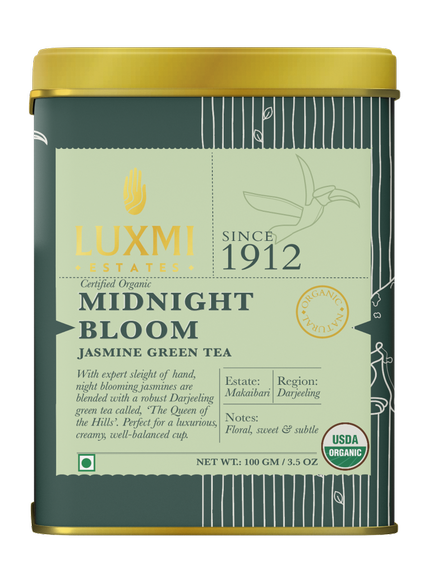
    Luxmi Tea, owned by the Chatterjees of Kolkata, gets a 360-degree makeover this year. With a new logo, new packaging and innovative new blends, the brand takes on a new avatar of Luxmi Estates for its products, and showcases the brand’s legacy, origin story and focus towards wellness.

     

    Speaking about this new avatar, Rudra Chatterjee, Managing Director, Luxmi Tea Group, said: “Change is the only constant, and to move onwards and upwards, evolution becomes imperative. We are grateful for the overwhelming love Luxmi Tea has received over the years, and we believe it to be our duty to upgrade into the best versions of ourselves for our consumers. Luxmi Estates has the essence of Luxmi Tea, along with an added flair of wellness, growth and abundance. This new avatar is here to spread our message of wellness far and wide and empower others to unlock their truest, healthiest selves. We are ecstatic to reveal this new version of us to the world and hope you will love it as much as we loved creating it.”


  • Emotion & Technology can go hand in hand


    With apologies to none at all

    By Vikas Mehta


    Vikas MehtaDiwali, IPL and World Cup cricket are the times when Indian marketers unveil new campaigns and this year the T20 World Cup coinciding with the Diwali season meant that a deluge of new campaigns could be expected. But now there is also technology into play and this means that the communication is well targeted and not necessarily mass. To this mix, throw in the long videos which advertisers hope will go viral through social media and it becomes more difficult to keep track of such new campaigns.


    This is also the time when brands attempt feel-good campaigns. Family bonding, celebrations, helping the needy, are the themes that become norm de rigueur. And many brands flaunt brand purpose at this time. Something which I highlighted in my last post (Festival Videos Article)


    It’s definitely a plus for the brands to leave one with a lump in the throat or a tear in the eye with such videos. But a greater impact can be created when brands actually do something which can make a difference in real life. Coke always has an interesting communication around getting together, family values etc. But they would not really do anything to highlight the same. On the other hand, I have seen HP actually do stuff like creating space for local artisans in HP stores to display their talent, bring alive the purpose of helping those who struggled to find space for display (HP Diwali).


    Predictably, Coke released an ad which was about not just wishing but meeting people for Diwali. Iss baar gale milke kaho Happy Diwali (say happy Diwali by hugging) was the thought. Watch it here Nice, cute and I thought that was it. So, imagine my surprise when I came across two more versions of the same thought but these used technology to make people actually meet up. Specially locked Coke bottles, which could be ordered using a QR code and unlocked only when the people met, with a code (Watch).


    It’s not that Coke has not done something similar in the past. I remember some Open Happiness videos of Coke in various countries where Coke installed phone booths to help migrant workers in the middle east connect back home or the valentine’s day free coke can if one kisses your partner in front of the specially designed vending machine in Europe; this was to me a very good example of taking a festival thought not just as a tagline of an ad but actually making it happen. The most important thing for me was the use of technology.


    In marketing and marketing communication, technology was all about either a product improvement or a media innovation. What Coke has achieved is significant as it has transcended the feel-good factor into actually making people experience the feel-good factor. It’s not just preaching about hugging people but enabling them to do so.


    And that brings me to the bigger issue. When the first murmurs of brand purpose broke out with the ex-Unilever CEO Paul Polman suggesting brand purpose as mandatory for all Unilever brands, there was lot of hue and cry and pessimism from investors. It exists today also with some pundits asking what could be the brand purpose for Walls Ice cream or Lux Soap. The same argument could be extended to a carbonated sweet drink like Coke. I am not suggesting that Coke has discovered brand purpose but it has shown that using technology any brand can make its promise come alive.  To me that’s as close to brand purpose than anything else.


    Till now most of the Diwali or festival ads were woke advertising. But Coke has demonstrated that using technology, one can take the leap to make the emotion come alive. I have no clue how many people actually got the locked Coke bottles and were the bottles easy available. To be honest, I did try to get a locked bottle by scanning the QR code but the message I got was that they have run out of bottles. This could well mean that the locked bottles were a sell out or maybe Coke did a very modest run of the locked bottles. Whatever, this is proof that using technology, brands can make their emotions, if not exactly the purpose, come alive. And that is sure to make the brands more attractive to its potential customers.


    Indeed, the brand which has been a pioneer in this field, at least in India has been Cadbury. More than two decades ago the brand came in with a gifting pack called Celebrations. It would be available during Diwali time and with deft and emotional communication the brand took off. Over the last two decades, the brand has become synonymous with gifting and is available through the year. I dare say, today the idea has actually become outdated as every tom dick and harry in confectionary or even Indian namkeens has a gift pack.


    Therefore, when Cadbury Celebrations used technology to promote small neighbourhood retailers by using pincodes and geo-location to highlight the name of the retailers in the particular pincode where the ad was played, it was a great breakthrough. This was 2020 when all small local retailers had taken a hit due to pandemic induced lockdowns. The brand reinvented itself by having a strong purpose of helping local retailers and brought its tagline of Kuch meetha ho jaye, kuch achha ho jaye (Have a sweet. Do some good) alive in real terms.


    In 2021 the brand went one step further. It used Artificial Intelligence and any retailer, through a website could get its own name endorsed in an ad by Shah Rukh Khan. The ad was then sent by Whatsapp to the retailer who could use it as he desired. And all this happened in almost real time. I helped a neighbourhood retailer in my city to download his personalised ad and he forwarded it to his customers. Many came in just out of curiosity to know how could he get SRK to endorse him.


    This year, the brand with QR code on the pack is helping hawkers to put their merchandising on a website and one can find a hawker in the neighbourhood through pincode (Cadbury 2022).


    We all talk about technology being an enabler. These examples are showing that in communication too, technology can be an active enabler. For brands which spend money on advertising or brand videos during festival season, the time has come to put the horse before the cart. Be clear on your purpose or on your promise. Decide what will the brand do on ground to make the promise come alive. Then think of the communication. The idea of the activity has to be bigger than the idea of the communication. And tap technology, both for the activity and also for the communication.


    The more brands use technology to bring alive its promise, the stronger will the emotional connect of the brand be. I see more such technology induced activities and communication during the festive season in the near future.


  • Dalmia Cement launches campaign

    By Our Staff


    Dalmia Cement (Bharat) Limited, a cement major and a subsidiary of Dalmia Bharat Limited, has successfully launched the ‘Shubh Shubh Banao’ campaign to leverage the festive season for building brand awareness and enhancing user engagement through online and offline initiatives. The core thought behind the campaign is to project Dalmia Cement’s expertise in the construction domain.


    Said Minal Srivastava, Deputy Executive Director, Dalmia Cement: “Building your own home is such a huge mix of all sorts of emotions for any consumer; it’s about a desire, a dream, a fantasy bordering on obsession at times. Mostly while any home builder is trying to make rational decisions in the entire process but at times there is a huge element of luck and auspiciousness that is playing in his mind which cannot be quantified or defined. Shubh Shubh Banao campaign tries to voice this element. It is a fresh approach towards looking at the entire process with a little bit of humour and ensuring that the end consumer engages and identifies with the content.”


  • Grapes bags digital AOR mandate for Faces Canada

    By Our Staff


    Grapes, an integrated marketing agency, has bagged the digital media mandate for Faces Canada cosmetic brand. The mandate will be handled by the agency’s Mumbai office.


    Said Shradha Agarwal, Co-Founder and CEO, Grapes: “We are really looking forward to work with Faces Canada. As a premium cosmetic brand, it is part of a niche industry and this brings to forefront our proficiency in leaving behind a strong recall value amongst the audience for the brand with the help of our ingenious campaigns”.


    Added Devkey Advani, Creative Director, Faces Canada: “We’re a brand that cares and we never compromise on quality, which can be seen in all our products; they’re good-for-skin AND high-performance. Just like our clutter-breaking products, we needed unique digital messaging to amplify visibility amongst the target audience. With content becoming massy and cluttered, it’s become imperative more than ever to stand apart from the noise. Grapes coming in with their expertise to efficiently lead the digital presence made it easy for use to choose them without any second thoughts. We look forward to reaching creative milestones together in the coming time.”


  • Global Creator Network wins digital media mandate of Ajio

    By Our Staff


    Ajio, the online fashion e-retailer and Reliance Retail’s digital commerce initiative, has recently given its social and content mandate to OML Entertainment’s branded content arm – Global Creator Network (GCN). As a part of the mandate, GCN will build a brand strategy, creative first social campaigns with IPs, creator activations and enable the brand to build a community of like-minded people across various social media platforms such as Facebook, YouTube, Twitter, and Instagram..


    Commenting on the win, Devarshi Shah, Senior Vice President – branded content,GCN, said, “As a team, we are excited to be associated with a popular and loved brand like Ajio. It would be interesting to build a fresh line of digital communication strategies that is futuristic yet relevant in today’s time. Our focus will be to create meaningful, innovative and fresh content strategies. The aim is to keep the brand ahead of the competition with campaigns that click.”


  • Swiggy unveils brand icon Gulab Jamun uncle in new campaign

    By Our Staff


    Swiggy, the food delivery app, released a short video ad to celebrate its Gulab Jamun Uncle. This follows Swiggy’s recent campaign ‘Why Is This A Swiggy Ad?’ through OOH, front-page print ads across metros and on social media. Created by Talented advertising agency, WITASA is a User-generated content (UGC) marketing campaign.


    The new 18-minute video announced winners to last week’s campaign. There are 10 winners in all who will take home Rs. 1 lakh Swiggy money. Who made the cut? Find out here:


    Said Ashish Lingameni, Head – Brand, Product Marketing and Sustainability at Swiggy: “Among our many objectives with WITASA, the biggest was conversations, share of Voice and engagement. Which this campaign has fulfilled beyond expectations. There’s also science to this madness. Swiggy food delivery, Instamart and Genie are all top of mind through just one campaign and that’s what defines the success of this campaign.”


    Added PG Aditiya, CCO and Co-founder, Talented: “No other brand could have done this campaign. It took a brand that had immense existing brand love, woven into our cities’ cultural fabric & with tons of personal memories for each user to qualify for something as absurd as this campaign. To us, WITASA is design-thinking & culture-marketing at its best. It also proved that Gen-Z has longer attention spans than we think. You, me, all of us – we all became Swiggy’s ad agency for a whole week. And while we’ve (kinda) answered the burning question… we won’t blame you for not being convinced. Maybe we’ll never know why it was a Swiggy ad. But as long as we keep thinking about it, we’re answering our own question.”


  • Bikano goes for Dabang at PKL 9

    By Our Staff


    Bikano, Bikanervala has decided to sponsor Team Dabang Delhi for Pro Kabaddi League Season 9. With this partnership, the Bikano logo will feature prominently on the right sleeves of Team Dabang Delhi’s competition t-shirts through the duration of this season. Also the logo will feature across all in-stadium branding collateral and across ATL-BTL and digital branding as well.
     

    Said Manish Aggarwal, Director, Bikano: “This has been a blessed year for brand Bikano as markets are open and people are back to spend on snacking after two years of Lockdown. In order to consolidate these good times, as a leading FMCG company, we are looking to spread awareness about our brand and products via diverse, aggressive marketing campaigns. And what could be better than being associated with Pro Kabaddi League and, specifically, the defending champions of the previous season – Team Dabang Delhi. Kabaddi is a beloved sport of India, and the league has managed to win the hearts of millions of people across the world so we decided to sponsor the original sport of India.”


  • Hrithik roped to endorse Probus

    By Our Staff


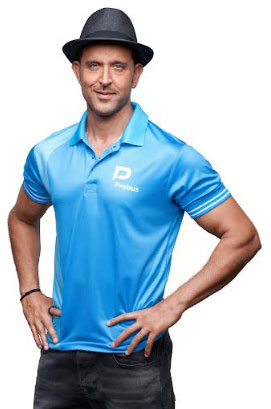
    Probus Insurance Broker has announced its association with actor Hrithik Roshan as its Brand Ambassador. With this partnership, Probus aims to take forward the brand narrative of #AapkaSaathiAapkaSaarthi.


    Speaking of the association, Rakesh Goyal, Director of Probus said: “We’re excited to partner with Hrithik as our brand ambassador as he exudes and resonates with the brand’s ethos of intelligence and dynamism. With his popularity among the masses and the youth, his appeal remains unrivaled. This association will  assist us in reaching consumers/end users across age groups, and enable us to instill trust and educate them on the importance of choosing  the right insurance partner. We are excited about the opportunities that our collaboration will provide.”