

Category: MARKETING

  • Is Gaming the Silver Bullet that can change Brand Marketing in 2021?

    Barack Obama used in-game advertising hoardings in the game Burnout Paradise among others, during his 2008 Presidential campaign


    By Bhuvi Gupta


    Bhuvi GuptaThis is the first time I am going on the record to admit that I have spent a lot of time playing online. Luckily though, these obsessions were recognised before they became addictions after an unhealthy time spent on Farmville, Angry Birds and lastly Candy Crush, before I admitted that I would not go down the slippery rabbit hole that can be gaming and have kept myself away since 2015.


    I am definitely the exception. In the last few years, driven by increased digital penetration and bandwidths, (and this year COVID-19) mobile gaming in India has exploded. As per a report from app intelligence firm Sensor Tower, Indians installed 7.3 billion games, nearly 17% of all worldwide downloads in the first nine months of 2020, beating countries like USA and Japan to the number one position.


    Basis the Google-KPMG Media Report 2020, the Indian gaming industry will cross USD 1.1 billion in 2021. With around 500 million people in India having smartphones (give or take a few million) and around 300 million+ gamers, there is no denying that this market is growing with the lockdown having helped accelerate the growth. The biggest USP of mobile gaming is the level of engagement that the audience has while playing a game. A GroupM- Mobile Marketing Association report (link – https://www.groupm.com/mobile-marketing-association-and-groupm-launch-mobile-ecosystem-report-2020/) highlighted that gamers are more than twice as likely to pay attention to advertisements placed in mobile games at 41 percent, as compared to ads placed on the internet at 17 percent, in magazines or on billboards at 15 percent each.

    This implies the inherent value of digital impressions becomes much higher.


    Marketing during gaming takes three forms primarily –

    :: Integrations – which are well-integrated into the narrative like branded ‘Virtual Real Estate’ like banners within the game, branded items like clothes or accessories worn by avatars, and fully branded modes or levels

    :: Advertisements for additional lives, etc. which can be typically purchased on ad exchanges

    :: Events such as e-sporting leagues

     

    Barack Obama used in-game advertising hoardings in the game Burnout Paradise among others, during his 2008 Presidential campaign


    Barack Obama used in-game advertising hoardings in the game Burnout Paradise among others, during his 2008 Presidential campaign.


    In India, Gaming in India can primarily be classified into four heads-

    :: Fantasy Gaming – which already has 100 million users with companies like Dream 11, Mobile Premier League dominating.

    :: Action games – such as PUBG and Fortnite. While Fortnite doesn’t have as many users in India it has been the front-runner in terms of brand integrations globally.

    :: Real Money Gaming – like online Rummy, Poker, and Ludo King. This comes under the purview of gambling and hence basis Indian law is subject to laws as dictated by states. While skill-based games such as Poker and Rummy are usually permitted, games of chance are prohibited. The recent PayTM First Games ban on the Google Play Store was also related to the definition of what constitutes ‘Gambling’

    :: Live Trivia apps – such as Pocket Aces owned Loco


    Why Gaming?


    With more people coming online there is ad fatigue that takes place due to the high number of ads users see. Many users also use ad blockers, and hence awareness and engagement with even well-targeted ads is low as the audience is just waiting to skip the ad.


    This is as opposed to the active audience that plays online games, where they are tuned to engage with the gaming platform to maximise scores. By using product integrations, or branded levels, brands can also help create immersive experiences for the target audience.

     

    Poco introduced their new launch, POCO M2 Pro via the game Tappy birds. A weeklong tournament called ‘Tappybird showdown’ was held where the mobile phones were placed inside the game, and players had to collect the phone to earn extra cookie points.

    Secondly, as the market is still nascent, brand integrations remain relatively unexplored. With 5G coming into India in the next 5 years, gaming will become immersive and hence technologies such as AR/VR will help create a value-added gaming environment, which is perfect for marketing.


    Poco introduced their new launch, POCO M2 Pro via the game Tappy birds. A weeklong tournament called ‘Tappybird showdown’ was held where the mobile phones were placed inside the game, and players had to collect the phone to earn extra cookie points.


    Thirdly, emergence of e-sporting leagues and tournaments and live game streaming allows brands to leverage gaming influencers, do cause marketing, sponsorships etc. for a well-defined audience. The Google-owned YouTube has a vibrant community of gaming live streamers such as Tanmay Bhat, Gagandeep Singh (Sikh Warrior), Manasvi Dalvi (Manasvivi) etc. in India. Globally such campaigns are have already become common, for e.g. P&G’s Gillette has hosted the Gillette Gaming Alliance on Amazon-owned live streaming platform Twitch in 2019 and 2020 with a team of five Twitch influencers to create content for their fans, and highlight other campaigns and causes.


    Lastly, just like in digital advertising, brands can target users on the basis of demographics and geographies, which makes in game advertising all the more effective. There is also high prevalence of gamers in Tier2 and Tier 3 cities, which can be leveraged by brands.
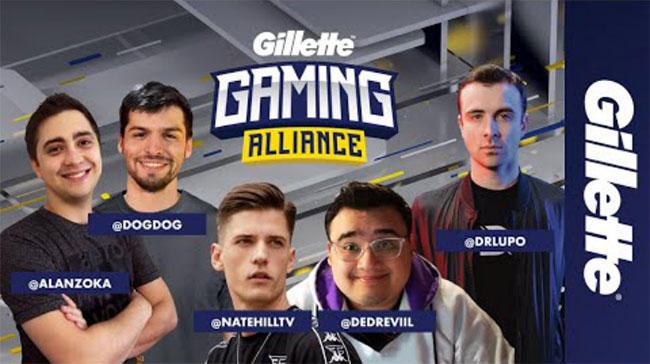
    While it may seem that Gaming is more relevant for youth-focused brands, the 35+ age group has high usage in more traditional games such as LudoKing, Online rummy and Poker. Hence, depending on the target audience, brands should choose games online to create impact.


    The timing is right, the lockdown has helped accelerate user growth, and Indians brands must strike when the iron is hot to make the most of a relatively undiscovered avenue for advertising before it gets too crowded.


    Bhuvi Gupta is a marketer with over 10 years across industries, of which the last six have been in Media & Entertainment. She has been a part of many launch marketing campaigns – specifically at the Times of India group, Republic TV and the latest in marketing a Bollywood film. She will write on A&M (mostly marketing, but often on advertising too) every other Tuesday. Her views here are personal. She tweets at @bhuvigupta3



  • Why Brands have a Responsibility to Step Up & Help in Economic Recovery


    By Bhuvi Gupta


    Bhuvi GuptaIndia has been under a full lockdown since March 24, 2020. After three subsequent extensions, a relatively unsuccessful Unlock 1.0 & 2.0 in June and July, spikes in positive cases are forcing many Indian cities to go under full lockdowns, again.


    As the economy degrows, unemployment rises and sales decreases and every subsequent FY21 GDP forecast is worse than the previous one, the future seems bleak and unlikely to bounce back soon.


    Basis a GroupM report released in June 2020, India’s GDP will contract by 3.7% and subsequently overall advertising spends will decline by more than 20% this year.  This follows, as advertising in current scenarios is an after-thought, with most companies focused on reviving production and distribution. The drop in advertising has led to unprecedented job losses in the ad-dependent media industry, so much so that industry body International Advertising Association (IAA) has been running a campaign, ‘Let’s Advertise’ to spur advertising, since June 2020.


    The campaign seems to have made some impact  – brands in the Health & Hygiene categories or those that can pivot their messaging to sound Covid-wise have started advertising. However, this is a small portion of the market, and for the economy to revive, brands which can afford to, should, play a bigger role in recovery.


    As Keynesian economics espouses, spending spurs consumption during times of economic downturns. If brands (which can) spend monies, this will spur demand, and the money will help the economy as a whole. In such pandemic times, the messaging of many brands is irrelevant, a great way to remain visible is by running Public Service Announcements (PSAs) campaigns.


    While a decade ago, PSAs were issued by govt bodies, with the advent of social media, brands regularly run socially relevant campaigns because they help the brand earn respect and hence brand equity while also doing social good. Due to their affirming messages, PSAs also have higher than average trend-worthiness, i.e. audiences share these ads more because it helps them feel good about themselves to do something socially relevant.


    With the notable exception of Mumbai Police PSAs, most PSAs released by government bodies in India, are pedagogical spiels, which are not engaging, even when starring celebrities.


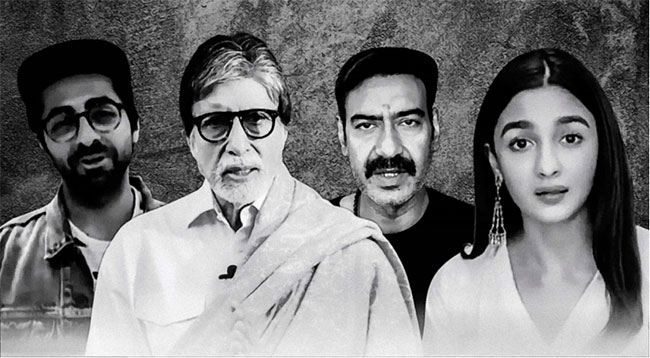
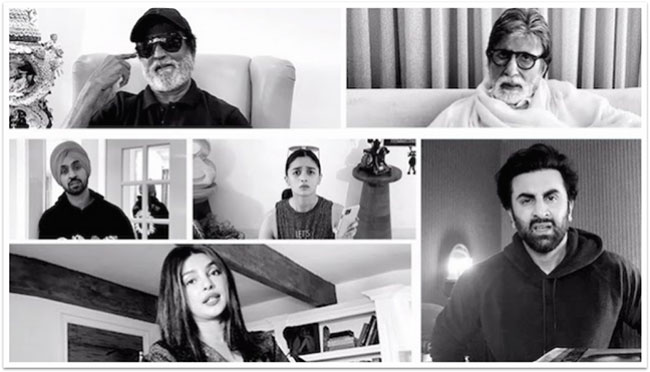
    In March 2020, just as the lockdown was announced, the Maharashtra government released a pedagogical PSA on Covid-19 headlined by the biggest stars of Bollywood including Amitabh Bachchan, Ranveer Singh, Ayushmann Khurrana, Alia Bhatt, Akshay Kumar etc. A month later, Sony launched a PSA with a similar Bollywood lineup but a much better storyline. (The PSA can be viewed here – https://www.youtube.com/watch?v=OQk0VrL2I-w


    Short film – ‘Family’, conceptualised and virtually directed by Prasoon Pandey for Sony Network starring celebs from across the country used storytelling creatively to communicate the importance of staying at home. It was telecast in April 2020. https://www.youtube.com/watch?v=ju7ku–S6F4


    Hence, in Covid-stricken times, effective PSAs can help brands kill many birds with one stone  – create brand equity, earn public goodwill, spur good behaviour, meet annual CSR target spends as mandated by Indian law and, most importantly, help the economy recover.  Earned goodwill will also spur trials for those whose loyalties lie with competitors.


    Budget-struck brands can collaborate with other brands; conduct digital-only campaigns to give the push to the economy to help its recovery.


    As brands with diverse target audiences release PSAs, different strata of society will get targeted which will help in overall compliance. This is backed by research conducted by 2019 Nobel laureates in Economics, Abhijit Banerjee and Esther Duflo. In a paper released last month, they have shown that frequent celebrity messaging, in addition to the existent large-scale government messaging on Covid-19, can positively impact behaviour by nudging people to follow best practices. The research also shows that there are spillovers of good behaviour in the entire community even when a few are targeted.

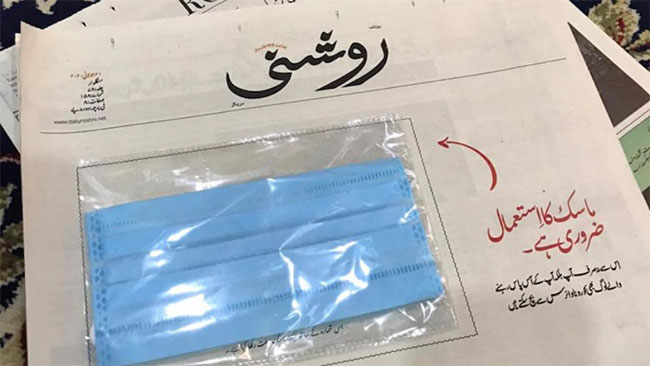
    In a CSR initiative, waiting to be replicated by national dailies, Kashmir ‘s Urdu newspaper Roshni, affixed a mask on the front page of the paper on July 20 to drive home the message about mask usage. Kashmir was under complete lockdown from 22-27 July, due to a rise in Covid cases.

    VIRALITY TO BEHAVIOURIAL CHANGE

    The challenge even for good PSAs is translating virality to behavioural change. The ease of communication brought on by social media has made armchair activists of the majority of the population. However, while these activists enable knowledge-sharing with other people they don’t bother much with acting upon the gained knowledge before moving on to the next trending topic. Which is why, despite the dangers of inobedience, many who wear a face mask, style it as a chin-guard.


    Hence, brands should be careful to create PSAs which are not just a retelling of facts, but facts communicated in way to appeal to their targeted audience, whether it is through high quality storytelling, a new ‘Hook Step’ or a ‘Challenge’ which is creative enough to warrant sharing.  Basis the research by Banerjee and Duflo, leveraging brand ambassadors signed on for lavish multi-year contracts will also help to drive behavioural change. So brands, any takers?


    Bhuvi Gupta is a marketer with over 10 years across industries, of which the last six have been in Media & Entertainment. She has been a part of many launch marketing campaigns – specifically at the Times of India group, Republic TV and the latest in marketing a Bollywood film. She will write on A&M (mostly marketing, but often on advertising too). Her views here are personal. She tweets at @bhuvigupta3


  • Pivot or Perish… Using your business moat to survive in the pandemic


    By Bhuvi Gupta


    Bhuvi GuptaAs a marketer for the last decade if there is one thing that I can attest to be true is that marketing jargon comes and goes with an average lifespan of a year or two. The jargon du jour is backed by stellar logic, often introduced by a book, or a widely respected businessperson, and has wide applications in the entire gamut of business strategy.


    The latest buzzword is the concept of the ‘moat’ as espoused by Warren Buffett. While he first shared this concept during a Berkshire Hathaway shareholder meet in 1995, it has seemed to catch on in pandemic. (Maybe, because being stuck at home is like a having a moat around you?). Mark my words, we are just at the beginning of the lifecycle of this jargon and you’ll see multiple applications in interviews, podcasts, CEO roundtables et al in the coming times. 


    What are economic moats?


    The usage comes from ancient times, when a moat was a water body built around a castle so as to give the king some time to plan his defense when attacked by an invader.  The concept itself is golden, as most espoused by Buffett are – An economic moat is a distinct competitive advantage a company has over its competitors, which allows it to protect its market share and profitability over the long term. Companies can build moats by strengthening their brands like Apple and Coca-Cola, achieving economies of scale like Amazon, or even lobbying for special status from the government like Patanjali.


    Economic moats have existed since commerce has, but in the digital age, using data, network effects, online marketplaces, search, and social networks can help create wider and longer-lasting moats.


    According to a report from CBInsights, moats can be classified into four types –


    Network Effect– those products whose value increases the more people who use it. All social media networks have network moats, which explains why a Telegram has not replaced WhatsApp despite offering some advantages

    Cost Moats– when users have a high sunk cost in the product or service (high one-time or recurring membership fee) which make them reluctant to switch

    Cultural Moats– when consumers buy into the product for the brand promise and the values it represents. For e.g. people consume Dove because it promotes ‘real beauty’, Coca-Cola due to its great emotional marketing which talks about happiness

    Resource Moats– due to patents or preferential treatment on account of a governing body. Typically why pharmaceutical companies have huge lobbying budgets


    How companies have used their moats in India to remain relevant in the pandemic


    The pandemic has been a death knell to the global economy – USA’s economy has contracted by a third, in its largest quarterly contraction since 1921. India is not expected to fare any better, when numbers release later this month.


    Companies are being forced to be agile and leverage their business moats, and pivot to newer consumer behaviors to remain afloat. Many companies have successfully pivoted their products, launched line and brand extensions to have new health and immunity claims, which is why we even have Chyawanprakash and Haldi ice-cream now (from Amul and Dairy Day Plus). This has come easier to the behemoths like ITC and Dabur, which have both Innovation teams sitting on years of research, and vacant factories to put into use.  As a result, in the last three months, ITC has launched six, and Dabur 15 new products. Such companies also have the business advantage of well-established supply chain and distribution channels.


    How companies which don’t have a moat can remain relevant in the pandemic


    A July 2020 McKinsey survey found that an overwhelming 91% of consumers reported trying a new shopping behavior in India due to the pandemic. Two key trends that stand out from the survey are an acceleration in the rate of digital adoption which has seen a 10+ percent growth in online customer base during the pandemic & a new DIY culture in the middle class which was reliant on household help or access to almost everything via a few taps on their mobile screens. New product categories for fruit & veggie wash, contactless dispensers, dishwashers which would have years of promotion and audience interactions have seen demand rise exponentially.


    These two are the life jackets for Indian companies that can help save them in the coming months.


    The pandemic has facilitated trials (often via e-commerce) as well as repeat buys in the 5+ months of its duration. This is one of the silver linings of the pandemic because categories and products, which would have taken companies years to launch and for consumers to adopt, especially in a value-conscious market like India, have launched overnight.


    Restaurants, which are arguably the worst hit, have started retailing recipe and ingredient kits and sauces. Pictured above are the ready-to-cook sauces, and gravies launched by Jubilant FoodWorks (which runs Domino’s Pizza and Dunkin’ Donuts in India)


    Indian companies, especially the beleaguered ones, must leverage this time to pivot, because even if some of these consumption shifts are pandemic specific, many new behaviours will stick because, getting consumer trials is one of the most difficult parts in a product’s lifecycle.


    Talking from personal experience, now that I have been forced to realise that I am not a half-bad cook, I have often wondered why was I so reluctant to cook earlier and why was I so dependent on my cook or ordering food in. If the rough survey of my social circle is to be believed, I know I am speaking for scores of us in the middle class. These cooking sauces and cheaper dishwashers are only helping to cement this new-found realisation into a resolve to be more independent.


    Bhuvi Gupta is a marketer with over 10 years across industries, of which the last six have been in Media & Entertainment. She has been a part of many launch marketing campaigns – specifically at the Times of India group, Republic TV and the latest in marketing a Bollywood film. She will write on A&M (mostly marketing, but often on advertising too) every other Tuesday. Her views here are personal. She tweets at @bhuvigupta3
     

  • Rediff’s TVC for Parle on R-Day

    By Our Staff


    Parle Products attempted to strike the patriotic cord with the launch of its ‘Swadeshi’ communication this Republic Day. The TVC talks about the ‘Made in India, Made by India’ concept which highlights Parle Products legacy and values while reflecting the brand’s philosophy. Conceptualised by Rediffusion, the film has been released on TV and social media platforms.

    Commenting on the campaign, Mayank Shah, Senior Category Head, Parle Products, said: “Parle Products is a proud Indian brand and we believe that it is our responsibility to evoke hope and positivity among the audience. This film is a humble tribute from Parle Products recognising the importance of its loyal customers and their strong association with the brand. We have always considered ourselves to be the ‘Son of the soil’ and with each passing day, Parle Products is evolving and adapting, just like our country. Serving through generations, Parle Products has always been on the forefront and a reliable brand since its inception who everyone trusts. This film encapsulates the values of the brand along with the immersive experiences, smaller benchmarks and acts of good-well that makes us who we are.”


  • In an AI-powered world, what’s the road ahead for Marketers?


    By Bhuvi Gupta


    Bhuvi GuptaAs another close friend launches a podcast in a bid to ‘network’ and the US’s renowed Venture Capital firm, Andreessen Horrowitz announced the launch of its media company (Link – https://a16z.com/2021/01/25/doubling-down-marketing-update-new-media/ ),  I am stating the obvious  when I say that today we are all content creators and marketers. But in a world where everyone is a marketer what happens to the full-time marketer?


    Last fortnight, we talked about the why of this marketing evolution and this fortnight we tackle how can a true-blue marketer deal with this evolution to ensure her or his relevance.  This change has been especially hard on marketers who are in middle management because their education and initial work experience are no longer relevant.  So what can marketers do to remain relevant ?


    Upskilling


    The obvious truth of remaining relevant in any evolving discipline is upskill oneself. While there is a lot changing, what is key is to keep oneself up-to-date with the latest trends, algorithmic changes to social media platforms, and new formats for content and advertising.  Hence the first diktat of upskilling is to understand Performance Marketing, even if one only has to work with an agency to execute campaigns. Despite it now having been around for the better part of a decade, there are still hangups and a lack of genuine understanding about it. Everyone knows they should but what and how much are still mysteries. These are heavy time investments but with the plethora of MOOCs and content on the internet finding the right course is easier than having the discipline to finish it. The importance of this cannot be underestimated. The landscape is consistently evolving and the evolution follows every previous step on the digital ladder. Even if your job doesn’t currently involve performance marketing, it is the elephant in the room, which is bound to become visible sooner than later.


    As detailed in my previous article, due to the revolution in communication brought about by the internet, there has been a drastic change in the customer life cycle. Information is now available to the consumer on her/his fingertips and s/he shares thoughts about the brand, the category and the brands’ competitors. Ignoring such a wealth of consumer input is almost a crime . But it happens more often than it should, because there is a stockpile of data and a dearth of skill on how to effectively mine it. Hence the second diktat of upskilling is to learn how to use data mining and sentiment analysis software such as SQL, HootSuite etc to help generate insights. These insights must be reviewed and responded to as regularly as can be.


    Creating a personal brand


    In 2021, creating a personal brand is important no matter what one’s profession and work experience, but it becomes even more important for marketers, because we are in the business of communication.  With the plethora of social media platforms available, building a personal brand will help increase visibility, gain knowledge, network with colleagues in the industry and hence generate opportunities. Today, not having curated and active presence online is akin to being invisible.


    Network


    Never before have existed opportunities to gain insight and interact with the greatest business minds, across the globe sitting right in the comfort of your own house and probably in your pyjamas! While I will assume that most of my readers will have crated Twitter feeds, today using apps like Clubhouse (link- https://www.joinclubhouse.com) can help marketers interact in real time with thought leaders across the world. Other apps to explore include Lunchclub (link – https://lunchclub.ai ), which allow 1:1 video meetups (currently virtual but pre-lockdown the meetups were in-person) basis career interests and goals. Because both apps curate their members the quality of connections is high and takeaways aplenty.


    ~ ~


    That the role of a marketer has transformed drastically is unquestionable.  All in all, it has been a tough decade to be a marketer, but the coming decade(s) will force out those who are unable to adapt. I would love to hear back thoughts from fellow marketers about how they are coping with the evolving landscape and any tips or tricks they use to keep themselves up to speed. Write to me c/o editor@mxmindia.com.


    Bhuvi Gupta is a marketer with over 10 years across industries, of which the last six have been in Media & Entertainment. She has been a part of many launch marketing campaigns – specifically at the Times of India group, Republic TV and the latest in marketing a Bollywood film. She writes on A&M (essentially on marketing, but often on advertising too) mostly every other Tuesday. Her views here are personal. She tweets at @bhuvigupta3
     

  • Glance unlocks power of lock screen-based content

    By Our Staff


    Glance has announced the launch of its multimedia campaign “Ye Glance Hai”. Made by DDB Mudra to communicate the exciting possibilities of content delivered on locked screen.

    Said Visnhu Srivatsav, Creative Director – DDB Mudra: “We wanted to keep it pithy. We wanted to entertain. And most importantly, we wanted to leave the name ‘Glance’ in the mind of consumers. We realised that a product as rich and varied as this (Glance) needed to be experienced. So, we decided to a simple, running gag that entertains every time and just leaves enough intrigue on the table for you to check out the product,” said Visnhu Srivatsav, Creative Director – DDB Mudra Group.

    Added Bikash Chowdhury, Chief of Marketing, Glance: “Just within two years of its launch, Glance has already positioned itself as the leading platform for content delivery with millions of happy users who are following favourite content almost every seconds and minutes. We wanted to further amplify this, by telling them how Glance can take them to their exciting worlds of content preferences through simple and crisp stories told by their favourable stars, truly living up to “Ye Glance Hai.”


  • Wondrlab rolls Big Bazaar’s R-Day campaign

    By  Our Staff

    Retail giant Big Bazaar unveiled its ‘Sabse Saste 6 Din’ campaign with an ad series titled ‘Bachat paane ki vaccine’, conceptualised and executed by Wondrlab.


    Speaking about the campaign, Pawan Sarda, Group CMO, Digital, Marketing & e-commerce – Future Group said: “#O2O Online to offline is a big initiative we have taken at #BigBazaar. It cannot get bigger than this during our most iconic Sale, Sabse Saste 6 Din #SS6D. Book your shopping online (shop.bigbazaar.com) and redeem it in-store with bigger discounts. The last year has been tougher than ever for most people especially households with people facing salary cuts, with some losing jobs and businesses facing a hit by the lockdown. Something nobody was prepared for. Big Bazaar has gone an extra mile and is offering more savings if you pre-pay for the shopping.”


    Added Amit Akali, Co-Founder and CCO, Wondrlab: “We are excited at having the opportunity to work on India’s biggest retail sale. Big Bazaar is one of India’s most iconic brands and ‘Sabse Saste Din’ is also a brand by itself. Consumers look forward to the sale each year, and more so in 2021, after the year they’ve had. It was important to cut through the clutter and do justice to a big annual property. More importantly, we wanted to be honest and call out the year that the consumer’s gone through, giving the sale as a solution. For instance, one lady speaks about how being locked in at home doesn’t stop kids from growing up, while you see her shopping for kids’ clothes. These are all real conversations that consumers are having and would relate to. The challenge of course was to have the conversation and land the sale in just 15 seconds. We’re pleased with the freshness and simplicity of the campaign, that brings marries the positive sentiment of the sale with that of the vaccine, seamlessly.”


  • FCB wins integrated mandate for Lakme & Elle 18

    By Our Staff


    FCB India has announced that it has been awarded the integrated communication mandate of Hindustan Unilever’s cosmetic brands Lakme & Elle 18 following a multi-agency pitch.


    Said Rohit Ohri, Group Chairman & CEO, FCB India: “We are proud to partner Lakme and Elle 18 in India. These iconic Indian brands are a symbol of and inspiration for ‘Make in India’. At FCB, we believe in creating ‘Never Finished’ stories for brands. We’re delighted to have this opportunity to write an exciting new chapter in the ‘Never Finished’ stories of Lakme and Elle 18.”


    Added Swati Bhattacharya, CCO of FCB: “Lakme is a brand that has witnessed the internal and external journeys of Indian women. To be a part of this brand’s voice, makes it an absolutely exciting opportunity for us.”


  • Salloni Arora to think up marketing ideas for Soch

    By Our Staff


    Bengaluru-headquartered ethnic wear brand Soch Apparels has appointed Salloni Arora Nanda as Head of Marketing. In her new role, Aror will be responsible for all marketing efforts for the brand, firmly establishing Soch in the women’s wear segment in India.

    Said Vinay Chatlani, MD and CEO of Soch:  “As we enter our next phase of growth, Salloni’s diverse experience in digital, fast fashion and deep understanding of the needs of today’s women will help propel Soch to greater heights. Under her marketing leadership we look forward to having a high-performance marketing engine which sets the bar for customer growth and media innovations. She will lead the task of brand building and to bring alive the true Soch experience at every touchpoint and forge deeper connections with our consumers.”


  • Another wake-up call this R-Day


    By Sanjeev Kotnala


    The Nation was celebrating its 72nd Republic day. Dressed in a kesaria kurta, I had returned from a drive to Bandra Band Stand. The taste of Jalebi-Dhokla-Vada Pav from Punjab Sweets at Pali Hill was still fresh. It was slowly getting subdued with the fresh cup of Society Masala chai. A heavy dose of customary patriotic songs over the radio stations during the drive had charged me. On return to my society, I had even stopped and shot the typical picture, saluting the National Flag. And I had just watched the Republic Day communication developed by Manish Bhatt and the team at Scarecrow M&C Saatchi for the client Ambuja Cement.


    For a change, the TV set tuned to NDTV I was watching the live parade telecast. In such a pleasant situation, dulled with everything will be right. The NCC cadets marching on Rajpath, the helicopters flying over the parade.


    I was jolted to reality.


    In between the parade coverage, the channel kept the viewers updated with visuals from the three alternate parades happening in the capital—the tractor rally of so-called protesting farmers.


    What one saw was disappointing. One felt ashamed for the fellow countrymen taking this solemn moment to act in the way they did. They have been playing cat and mouse game with the government for long. January 26 was just a culmination of ill intension most likely supported by outsiders. This time it was not as bad as the riots of 2020.


    One wished we were not a democracy. That the protesters had some fear of the law-and-order machinery. That the machinery was allowed a free hand to do what they are meant to do- maintain law and order. Hoped that they were amply supported with right weapons and intelligence. And when one saw the visuals from Lal Qila, one wished they allowed to shoot at sight, instead of allowing the hooligans to keep the city terrorised.


    The law-and-order machinery was never in the game. The Government was put into catch 22 situations. The Government was anyway getting called for not acting. And would be called if they did act. Charged with this confidence, the patriotic farmers were busy challenging the Government.


    The WhatsApp groups were full of typical armchair analyses if the situation. I was one of the vociferous participants. Whatever may be the Rajneeti, the politics of protest. Whoever may be supporting such a protest and gundagardi. If they were Nihangs or Jats. If they were on tractors or on foot. If they agreed or were protesting against a law that the elected representatives have crafted. And one that a large part if the country finds no problem with. None had the right to act the way they did. I go a step ahead; none should dare to act the way they did.


    There is an urgent need in this country to bring new laws and take hard actions. Bring the destructors and penalise them. And if that calls for an emergency type of situation, so be it. The Nation has a responsibility. The Government has responsibility and accountability. What about the citizens of the country? What should the country expect from them?


    I don’t know how, but we cannot afford such destructive protests. The Nation cannot be held to ransom. The laws are enacted by the elected representatives, and any question must be raised in the parliament. In my view, they should not even be challenged in the supreme court. At the worst case just like the president, the court can ask the Government to reconsider – but not force to amend a law duly enacted by an elected government. The battle has to be fought inside the parliament. If the regulations are anti-people, the people have the opportunity in the next election to reject the appeal.


    When one sees the Rajpath Parade, and the Protestors violent parade side by side on the TV screen one gets disoriented. When one views a highly emotive campaign by brands on such occasions, one tends to get disoriented. When one listens to those songs that charge you up, one is unsure which country they refer to.


    I know advertising cannot reflect this violent mood of the Nation. It will still continue to play on the emotions that you hold so dear. The campaigns will remain idealistic and the brands purpose-led. I am sure no brand will comment on what happened on January 26, 2021. Not sure, if they should. The taste has soured. The Ambuja Cement commercial was no longer making sense. What made sense is the MTV and  GoldMedal electricals ad.

    https://youtu.be/yMd29gMcJXQ


    What I am sure is that we, hopefully, feel the need to wake up and take a stance. Tell the government we are with them. The citizens do not need to be threatened and terrorized of such gundas. We have elected a Government to keep order. As citizens, we just want to go about our business in peace and have a good night sleep. The citizen wants no more such incidents.


    That the citizens feel about the Nation. They are patriotic enough not to raise questions if the Government acts decisively. The citizens feel charged when they see the patriotic campaigns not because it is not real-life. But because it is the Nation, they want to live in. And for it to happen, the citizens look at their elected government and the whole opposition to be constructive and decisive in action. Otherwise, none will be spared, and that is not being said figuratively.


    So, if you are still not up. Here is another to close the argument- this time from Adani. And I am happy to note that instead of mussy-mussy all for the Nation- Tera Hai Par Mera Hai feeling- some are raising the questions.


  • Tonic boosts Hiranandani digitally

    By Our Staff


    House of Hiranandani celebrated Republic Day with a digital campaign targeting its existing and prospective customers. Tonic Worldwide conceptualised and executed a campaign to create customised experiences for them reflecting the House of Hiranandani homes.

    Said Prashin Jhobalia, Vice President, Marketing Strategy, House of Hiranandani: “We always look to enhance customer experience, whether it is through the product or such innovative digital mediums. Delightful customer experiences go a long way in bridging robust relationships and encourage us to serve them better. Our aim was to tell our customers through the videos that they have the #RightToPerfectHome.”

  • Perrier announces comeback with campaign

    By Our Staff


    Perried has announced a comeback with a new campaign building a ‘pop culture’ around the brand.

    Said Chandni Kohli Dhall, CMO of Hindustan Liquids, the distributor of Perrier in India: “Perrier is one of the creative brands and its reinvention of the brand’s historic signature De l’eau, de l’air, la vie, which translates to “Water, Air, Life” has certainly made a dramatic comeback globally. However, in India with this campaign launch, we will be making the iconic brand relevant more than ever.”