Category: MARKETING

  • Star’s Hollywood Blockbusters aims to thrill

    By A Correspondent

    Star Movies, India’s leading English movie channel, presents Star Movies Hollywood Premieres; an initiative that brings exclusive screenings of Hollywood titles for their fans a day prior to their official theatrical release by leveraging the strength of their studio tie-ups.

    To be a part of this experience viewer will have to participate in a simple contest and answer questions that will be broadcasted on Star Movies and their India Facebook fan page. Lucky viewers will get a chance to attend the exclusive premier screening of the latest upcoming movie titles by Star Movies Hollywood Premieres. Star Movies kickstarts the initiative with its inaugural movie premiere of The Three Musketeers on October 14 at select theaters in Mumbai, Delhi, Bengaluru and Kolkata.

    The channel also holds the exclusive rights to premiere other Hollywood biggies like ‘In Time’, ‘Twilight Saga- Breaking Dawn’ and ‘The Darkest Hour among others.

  • Manza gets a dose of fashion

    By A Correspondent

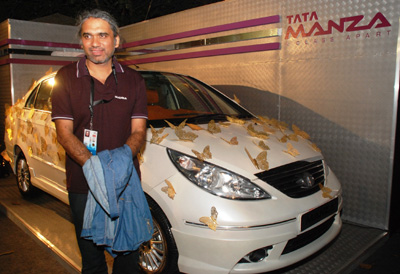
    Luxury sedan Tata Manza has associated with the most glamorous event in the country – the Wills India Fashion Week. In partnership with the world-renowned fashion designer, Rajesh Pratap Singh, Tata Motors showcased two specially accessorized Tata Manzas, at the show.

    The fashion maestro has designed an exclusive theme-based collection which was exhibited at the Wills India Fashion Week. The collection theme is inspired by a road trip which Rajesh undertook in the villages of Orissa. The show attempts to initiate a dialogue and thought process on what is the relevance of handloom in the country.

    Commenting on his collection, Mr Singh said, “Ikat is not a print, yet, worldwide there has been an attempt to replicate Ikat digitally or through a screen print. Through this collection, we would like to raise awareness and strike a healthy discussion on the relevance of an indigenous craft. Ikat is just one of the many rich possibilities every pocket in the country has to offer and we must cherish and encourage this rich heritage.”

    Focusing on ‘Ikat’ and handloom textile weaves, some of the experiments are part of this collection. This magical collection was showcased by famous models. The theme of Rajesh Pratap’s collection have been integrated on two specially accessorized Tata Manzas, which were the show-stoppers.  Interiors of the car have been inspired by Rajesh’s collection colour theme and the exterior of the car adorned butterflies with gears, which represented a true integration of style and engineering.

    In February 2011, Tata Motors introduced the newly refined Tata Manza series. The Tata Manza has been given a fresh new look with refined premium dual tone interiors & fabric seats and exterior make over, delivering class apart driving experience in the sedan market. At Tata Motors, product development and upgradation is a constant endeavour.

    Rajesh Pratap has partnered with Tata Motors’ styling team which operates from its state-of-the-art styling studio, at the car manufacturing plant in Pune. Rajesh Pratap’s rich experience in the fashion industry and thorough knowledge about design aesthetics will further help Tata Motors in enhancing the Tata Manza’s design. He will be helping the team to further enhance the design and stylise the interiors and exteriors of the Tata Manza.

    “It has been a pleasure and an honour for me to be associated with the Tata Group, a proud Indian brand with values that inspire everyone in the industry. Tata Motors have an exceptional and dynamic young team that is going to change the way India drives.  I am truly excited to be involved with this project”, added Rajesh.

    Rajesh Pratap’s attempt in the Tata Manza design project is to achieve an equilibrium between handmade and high-tech, where one enhances the other, providing real solutions, a pure aesthetic. Tata Motors will be developing 1,000 Tata Manzas, incorporating design inputs from Rajesh. The limited edition cars will be launch in 2012.


    About Mr. Rajesh Pratap Singh:

    Currently based in New Delhi, Rajesh Pratap Singh belongs to Rajasthan in India. Subsequent to his graduation from NIFT Delhi he worked in the Fashion Industry for two years in India and Italy before introducing his own line of men’s and women’s clothing in 1997.


    Rajesh has over the years created his unique signature style that subtly draws from his Indian roots to craft artisinal garments that stand apart due to their faultlessly clean lines, careful detailing and international silhouettes. His work epitomizes simplicity, yet on closer look reveals his obsessive attention to detail. Rajesh’s reserve reflects in his styling which combines the modern with the traditional in an understated design aesthetic, with a global appeal. He is also closely associated with Indian fabric mills and has had developmental and research based collaborations with several of them.


    About Tata Motors:

    Tata Motors is India’s largest automobile company, with consolidated revenues of Rs. 1,23,133 crores ($ 27 billion) in 2010-11. Through subsidiaries and associate companies, Tata Motors has operations in the UK, South Korea, Thailand, Spain and South Africa. Among them is Jaguar Land Rover, the business comprising the two iconic British brands. It also distributes Fiat cars in India, and has an industrial joint venture with Fiat in India.  With over 5.9 million Tata vehicles plying in India, Tata Motors is the country’s market leader in commercial vehicles and among the top three in passenger vehicles. It is also the world’s fourth largest truck manufacturer and the third largest bus manufacturer. Tata cars, buses and trucks are being marketed in several countries in Europe, Africa, the Middle East, South Asia, South East Asia and South America. (www.tatamotors.com)


    Issued by:

    Debasis Ray

    Head  (Corporate Communications)

    Tata Motors Limited

    Phone: 00 91 22 66657613; E-Mail: qv@tatamotors.com

    www.tatamotors.com

  • Michael Wolfe on getting more from your marketing $$$s

    By A Correspondent


    In today’s time there is an added pressure on justifying each and every paisa spent on marketing, thus making the return on investment (ROI) all the more critical. That’s where Rainman Consulting steps in. Their core expertise lies in making ‘profit from marketing effectiveness’.


    Rainman recently hosted Michael Wolfe, CEO, Bottom-Line Analytics LLC who gave insight into marketing effectiveness and talked about Marketing Optimization Modeling, focusing on retail marketing applications.


    Wolfe gave a peek into what they do, which includes measuring the impact of the marketing investments of each program and campaign at a time, besides giving the big picture. They also determine the ROI from the marketing spends and, most importantly, providing a plan that ensures a marketer get the most out of his or her marketing budget.


    Wolfe explained how they do this: “The plan helps in determining what works and what doesn’t and thus showing one how to move budget from less to more productive activities. This exercise usually nets a plan which will get you 4 to 8 per cent more sales revenue, all without spending an additional dime on marketing.”


    “We do this with a mathematical modelling, sometimes called econometrics. We call this Marketing Optimization Modelling,” added Wolfe, who later went on to show how they achieve this.


    As he explained, this is basically the application of advanced econometrics towards measuring marketing effectiveness and ROI and is done through collection of media, marketing plans and POS sales data. “We assemble and validate a predictive model which casually links each of your marketing activities to retail sales. From this exercise we are able to specifically quantify the impact of media and marketing on the retail sales and provide you with direct guidance on what is working well and what is not.”


    The session then explained in detail the models for marketing optimization and a case study where application of this model helped in turning around the business. The simulation exercise actually helps in moving funds from less to more productive activities leading even to achieve 5-10 per cent greater revenue with the existing marketing spends. This also helps in more effective deployments by media, message, promotional event and by market.


    Wolfe emphasized on modelling and marketing measurement that must break out and go beyond the silos. During the discussion, he also touched upon the topic of social media ROI and steps to navigate through it.


    The session concluded with few keys to success that included doing what no others can do, focusing on being strategic, understanding the client’s business, never ceasing to innovate, customizing, having passion and evangelise and most importantly loving what you are doing.


  • Big brands use TV stars to connect with masses

    By Rajiv Singh


    Now, Malhotras can raise a toast. After gulping down countless cups of tea during umpteen meetings over the last few months, this middle class family in North West Delhi has finally found a ‘perfect’ match for their son. Rashmi, their prospective daughter-in-law, is not only beautiful but also has a pet name ‘Toasty’ – something that instantly clicked with the Malhotras.


    Reason: The other Toasty they know is a lovable daughter-in-law, played by Aishwarya Sakhuja in Sony’s TV fiction Saas Bina Sasural, who keeps her family together. “I am sure Rashmi has similar qualities like Toasty,” said an elated Mrs Malhotra.


    Malhotras are not alone in getting influenced by serial characters. There are thousands of such people across the country. And several marketers are now waking up to the potential of small screen stars as brand endorsers.


    Over the last six months, a slew of brands including Cadbury, Emami, Hyundai, Maruti, Dulux, Red Label and Lux has roped in popular TV celebrities such as Sakhuja and Hussain Kuwajerwala who can connect well with people at a fraction of cost of hiring a popular Bollywood actor.


    “It’s a great strategic move by brands. The TV characters have a strong resonance with the viewers, especially the middle class that relates to the values shown in the serials,” said Prathap Suthan, an advertising industry veteran who created the government’s ‘India Shining’ and ‘Incredible India’ campaigns and is now the chief creative officer of iYogi, an online technical support services provider.


    Saurabh Uboweja, director of brand consulting firm Brands of Desire, said that by casting TV stars with successful running soaps, advertisers can have the dual advantage of both role and star endorsement for a sensible signing amount: “They get two candies for the price of one.”


    MONEY MATTERS

    While TV celebrities do have their own large fan following, their relatively lower endorsement fee is a huge plus for several companies in the present tough business environment where subdued consumer sentiments and rising costs have hit sales of several products.


    One such company is Maruti Suzuki, the country’s largest carmaker that has had a tough last year and expects its sales to fall 11 per cent in the year ending March.

    “In the current cost-cutting environment, it makes more sense to hire TV stars,” said Shashank Srivastava, Maruti Suzuki Chief General Manager (Marketing). The carmaker roped in TV celebrity Anita Hassanandini this month to feature in its Swift Dzire commercial. Last December, it signed Kavita Kaushik and Rajesh Kumar from SAB TV to endorse its multi-purpose vehicle, Eeco.


    “Selling a car is not like selling a Bournvita,” said Mr Srivastava. “So, there’s no point in shelling out fortune in having big Bollywood celebrities.” Big celebrities have not really worked for Maruti. Father-son duo of Amitabh and Abhishek Bachchan could not boost its Versa sales in 2000-2001. Maruti has also had actor-director Farhan Akhtar and actor R Madhavan to endorse A-Star and Wagon R, respectively, but with limited success.


    CLOSER TO LIFE

    Marketers also say it’s easier for people to relate to TV celebrities than big screen stars. “While a Bollywood celebrity projects an image which is aspirational and larger than life, TV celebrities relate closer to the real life of the viewers and are hence becoming extremely popular,” said Krishna Mohan, CEO of FMCG firm Emami, which signed Suhana of Star Plus’ serial Sasuraal Genda Phool aka Ragini Khanna in November last to endorse its moisturiser Vasocare.


    Unlike film stars, small screen celebrities are identified with the characters they portray in popular long-run serials. So people relate them to the values their characters hold, like a committed housewife, an ideal husband, a perfect daughter… ¦ It helps brands project a distinct identity by endorsing them.


    Late last year, paints brand Dulux rolled out a media innovation by tying up with three popular television serials to create vignettes that resonate with their thematic campaign, ‘Apne Rang Chalakne Do’. AkzoNobel’s brand showed the lead pairs from Star TV soaps Yeh Rishta Kya Kehlata Hai and Iss Pyar Ko Kya Naam Doon, and Sony’s Saas Bina Sasural in its commercial.


    “Since daily soaps are a big draw in India and the consumer follows their journey closely, the protagonists of the daily shows had the appeal that was needed to propel the idea,” said Pushkar Jain, marketing manager for Dulux at AkzoNobel India.


    However, there’s a flip side of using TV celebrities as well, said Mr Uboweja: “Brands want to capture these stars and their soaps when they are running hot. But the shelf life for both is fairly short”. “This ad strategy is a bit like instant noodles, good enough to fill the stomach but not enough to satiate the appetite,” he added.


    Source:The Economic Times

    Copyright © 2012, Bennett, Coleman & Co. Ltd. All Rights Reserved


  • Coke & Pepsi to sizzle summer with more drinks

    By: Ratna Bhushan


    Forget the Cola war; Coca-Cola and PepsiCo are heading for a high-pitched battle in the flavoured soft drinks segment this summer.


    Soon after reviving lemon drink Citra, Coca-Cola has decided to give fresh lease of life to orange drink Crush and tonic water Schweppes, said an industry official aware of the development.


    Rival PepsiCo, which has rolled out two variants of orange drink Mirinda and revived lemon drink Duke’s after a seven-year hiatus, plans to launch more flavours under its clear-lime brand 7Up, said trade insiders.


    Both are responding to the changes in consumption patterns in India’s Rs13,000-crore soft drinks market, said experts. “Flavours are growing faster than colas…heightened focus is recognition of the demand,” said Ravi Jaipuria, PepsiCo’s biggest bottler in South Asia.


    Crush For the Masses

    Coca-Cola plans to revive Crush and Schweppes, which it bought along with clear lemon Canada Dry as part of a global acquisition of Cadbury Schweppes soft drink business in 1999. Crush, like Citra, may target the low-income group with a lower price tag than Coca-Cola’s own Fanta orange drink, said an official familiar with the development. “That way, both brands can co-exist.”


    Schweppes tonic water and premium soda will be taken national across more than 10,000 outlets, and will be packaged in cans, the official says. Currently, Schweppes is available only in non-returnable glass bottles in a few restaurant channels and select modern trade stores.


    A Coca-Cola spokesman declined comment on the forthcoming launches of Crush and Schweppes, but said: “A combination of our ‘occasion, brand, pack, price, channel’ architecture along with brand activation plans and route to market focus will help us capitalise on the existing opportunity in the flavours segment.”


    Coca-Cola is already in the process of reviving Citra, which it had acquired from Ramesh Chauhan two decades ago, priced about 20 per cent cheaper than existing lime lemon drinks, Sprite and Limca, mainly to fight smaller regional B-brands.


    Unprecedented Rush

    Devendra Chawla, president of food and FMCG businesses at the country’s largest retailer Future Group, said launch of so many flavours and brands in one season is unprecedented in the industry. “While there would be some casualties among these by end-season, it’s good for the industry as India’s share of throat of soft drinks is minuscule; this engagement will grow consumption,” he added.


    Some experts say that a key factor that helped flavours outgrow colas is the widespread belief among Indian consumers that flavoured soft drinks are less harmful to the body than colas.


    Ruchira Jaitley, PepsiCo’s executive VP marketing, beverages (flavours), said flavours are growing in high double digits, without sharing exact numbers.


    But surprisingly, the new Mirinda flavours will be around only for three months and go off the shelves before peak season of May-June.


    Late last year, PepsiCo had relaunched its age-old Duke’s range of beverages, mainly as a regional brand in Mumbai, in lemon, raspberry and gingerale variants. It bought Duke & Sons in 1995. The rush for flavours is in the packaged juice segment as well.


    Source:The Economic Times
    Copyright © 2012, Bennett, Coleman & Co. Ltd. All Rights Reserved
  • ad:tech 2012 set to kick off today

    By Shruti Pushkarna


    The biggest digital marketing, media and advertising event is here. ad:tech 2012 kicks off in New Delhi today. The three-day event is being held at The Leela Kempinski, Gurgaon, Delhi NCR from February 22 to 24.


    This year’s event will have participation of over 70 digital marketing companies, more than 2500 delegates and experts from the digital marketing fraternity. (see Disclosure)


    Speaking to MxMIndia, Event Chairman, ad:tech India and Founder, CEO & Managing Director, Rammohan Sundaram said, “We have over 100 speakers this year and more than 3000 delegates, combined both in the expo and at the conference. We’ve grown more than 50 per cent from last year in terms of participation.”


    The event is set to showcase 7 ground breaking keynotes. A line-up of global thought leaders for 2012 edition includes, Mr. Shiv Singh, Global Head of Digital, Pepsico Beverages; Mr. Gian M Fulgoni, Executive Chairman & Co-Founder, comScore Inc.; Mr Arvind Rajan, Managing Director & Vice President, Asia Pacific and Japan, LinkedIn; Mr Kent Wertime, Chief Operating officer, Ogilvy Asia Pacific; Pete Blackshaw, Global Head of Digital Marketing and Social Media, Nestle; Satyan Gajwani, Director-New Media, BCCL; and Richard Dunmall, Vice President, Global Accounts & Agencies, Microsoft Advertising.


    The agenda includes two parallel tracks of insightful panel discussions with 18 sessions conducted by experts from advertising, marketing and media industry. There will be three panel tracks on Brand Strategy, Performance and Venture Capital.


    Mr Sundaram believes that the star attraction for ad:tech has always been its keynotes and marketing masters. But the expo this year will also be a huge attraction and expos he believes tend to create a vibrant atmosphere. He told MxMIndia, “The expo is going to see a lot of action this year. We have ten more participants this year, with over 15 international companies participating.”


    Talking of slow economic growth because of the severity in European markets, Mr Sundaram believes that there is rising pressure on marketers today. So participants, he feels, are looking forward to some smart gains at the event.


    Expectations of participants are also high, given the line-up of speakers and huge delegate turn-out. Speaking to MxMIndia, Karl Gomes, Co-Founder at AgencyDigi said, “I have high expectations… for me it’s about meeting people, listening to perspectives and maybe help and evangelize the medium.” ad:tech he believes, “…is a nice meeting place for like-minded people. Delegates and speakers get a chance to chat, evangelize. While it’s essentially about marketing and technology, but other mediums also come in. Digital is part of every medium today, TV has become digital, radio is anyway interactive…so digital can actually help other mediums.”


    As the largest gathering of online marketers, the event promises to showcase leading Indian and global brands, including, Pepsi, Coca Cola, Nestle, Hindustan Unilever Limited, Facebook, Dell, Ford India, IBM< Nokia, Sony Entertainment Television, Bharti Airtel, LG Electronics, MTV, LinkedIn, Homeshop 18, Godrej appliances, comScore, Ogilvy, Avaya, mydala.com, Yatra.com, Kotak Mahindra Group, Tata Teleservices, MotorExchange, IndiaMART.com and Domino’s Pizza.


    ad:tech 2012 has a lot in store, as Mr Sundaram said, “Marketers can expect intense and thought-provoking discussions on wide-ranging topics from industry veterans and thought leaders.”


    More details about the event are at http://www.ad-tech.com/newdelhi/.

    Disclosure: MxMIndia is a media partner of the event.


  • Retailers Mahindra group, Godrej Interio, Reliance Retail hire specialists to up sales

    By Writankar Mukherjee


    Whenever Mahindra Group decides to set up a new store for its speciality mother and child retail venture Mom & Me, it first looks out for ‘super moms and dads’ . These are experienced parents or grandparents who have the experience of raising a child and can offer customers, especially first-time parents, advice on choosing the right product and its usage.


    At last count, the Mahindras had appointed more than 60 super moms and dads across India, at a much higher salary than what its customer care executives earn. In the process, it is reaping huge business benefits. The conversion at the Mom & Me stores is more than 50 per cent, double the industry average.

    Conversion rate is the measure of the number of people who visit a shop making a purchase – a key indicator of a store’s success.


    “The last-mile service helps in increasing conversions, especially in tough times like this,” said Saloni Nangia, president of management consultancy Technopak Advisors. “The consumer experience also improves, and it builds a long lasting connect with them. In fact, such specialised talent will guide buyers to meet their specific requirements so that they are satisfied,” she added.


    In an emerging trend in the country’s Rs 20,000-crore organised retail sector, retailers are increasingly hiring specialists who can influence shoppers, provide personalised shopping advice and thereby increase conversion. As a result, shop floor jobs, earlier reserved for plus-two and general stream graduates, are now seeing a growing influx of specialized graduates or domain experts.


    Retailers see such specialised shop floor employees as critical to success in the current economic scenario, when consumer sentiments are down. Key retail categories like apparel, furniture and electronics are seeing far less trading, prompting retailers to spice up demand backed up by heavy discounts and promotions.


    Several studies have said consumer sentiments have been down for the past two to three quarters due to rising interest cost and inflation, though it improved in the urban markets from mid-January.


    Diamond jewellery chain, Orra, has started appointing designers at the shop floor to help customers in their purchase decision. The company has also started an extensive training programme for such designers on the various types of jewellery, gold and other precious stones.


    The company has hired one designer for each of its 33 stores. “The conversion rate has jumped by 10 per cent. We are now planning to increase the number of such specialised designers in the shop floor,” said CEO Vijay Jain. A 10per cent jump in conversion is no mean number, considering the per sq ft revenue in jewellery retailing is one of the highest in retail, as much as Rs20,000 per sq ft per month.


    Godrej Group’s furniture retailing arm, Godrej Interio has started training its existing shop floor employees on interior design and is also hiring specialised interior designers for its premium venture, U and Us, where consumers can design their own furniture.


    Hiring such specialists and training them is aimed at helping the sales force evolve as consultants, said COO Anil Mathur. Reliance Brands, a wholly-owned subsidiary of Mukesh Ambani’s Reliance Retail , which runs a chain of 55 premium stores for global brands like Diesel, Timberland, Ermenegildo Zegna, Paul & Shark and Steve Madden, has been hiring talent from fashion institutes to run the stores.


    This year, Reliance Brands hired 32 people from National Institute of Fashion Technology and three to four designers from London College of Fashion. The company refers to its store employees as ‘sales consultants’. Reliance Brands pays at least three times more salary to such employees compared with those in its other lifestyle formats. “We need such specialised talent, since a person buying a jeans for Rs15,000 at Diesel would require specialised knowledge on the product, design and far more engagement with the brand. Similarly, the average selling price at Paul & Shark is Rs24,000 and that at Ermenegildo Zegna is Rs 54,000. Selling such high-value products requires specialised skills,” said Reliance Brands president and CEO Darshan Mehta.


    The specialised hiring strategy also works for the employees as a second career opportunity. Mahindra Retail’s supermom and superdad concept, for instance , helps professionals coming from a break or as a post-retirement job opportunity . The super moms and dads have no sales targets either. The customer connect adds to the store’s sales; some of them end up dealing with sales worth as much as Rs 70,000, said Mahindra Retail CEO K Venkataraman.


    Architect Anjali Kar (name changed on request), joined Future Group’s furniture and home decor retail venture, Home Town in Kolkata, to gain experience in sales. “The selling experience and directly dealing with clients is a plus in career growth, more so if someone were to start up their own firm,” said Ms Kar.

    ‘Supermom’ Preeti Jhingran (46), joined Mahindra’s Mom & Me store in Bangalore after a stint with Genpact. She says the unique nature of the job impressed her. “I play the role of a mother to would-be parents,” she said. “In cities like Bangalore, where most young couples have nuclear families, all they need is some trustworthy advice which we provide by meeting their needs at the store,” she added.


    Similarly, pharma industry veteran Ganapathy Sankarnarayan (69), joined Mom & Me as a superdad, post-retirement . A soon-to-become grandfather with his children settled abroad, Sankarnarayan says he has already enjoyed being a grandfather at the store.


    Several new parents even leave their children with him while completing their shopping in the store. Retailers have started drawing career progression plans for specialised professionals . “The best way to dirty your hands in retail is on the shop floor. Such professionals can then move up the ladder,” said Mr Mehta. All in all, it’s a win-win for both.


    Source:The Economic Times
    Copyright © 2012, Bennett, Coleman & Co. Ltd. All Rights Reserved
  • Bridgestone is title sponsor of World Series Hockey

    By A Correspondent


    Bridgestone, the world’s largest tyre & rubber manufacturing company, has come on board as the ‘Title Sponsor’ of World Series Hockey (WSH), the biggest-ever hockey league in the world.


    The Bridgestone World Series Hockey will be held from February 29 to April 2, and will involve 200 leading players – Indian and international – who will showcase their talent in 59 matches and vie for the biggest prize money hockey tournament in the world.


    The 8 venues for the inaugural edition of the league are Bengaluru, Bhopal, Chandigarh, Chennai, Delhi, Jalandhar, Mumbai and Pune. Chandigarh Comets will face-off against Bhopal Badshahs in the first tie of the tournament on their home ground.


  • Big Bazaar brings new recipe to boost sales

    By Sarah Jacob


    Future Group’s Big Bazaar is making its biggest move into Indian households yet. The value retail chain is not just retailing grain, but grinding it, kneading the dough and even making chappatis for its consumers – at no extra cost.


    Such services, including de-seeding pomegranate, grating coconut as well as cutting pineapple and jackfruit on the spot, are presently offered only at its prototype Rajaji Nagar store in Bangalore, but will soon be rolled out in all the 12 family Big Bazaar outlets across the country.


    “The idea is to take care of all the pains of cooking, to reduce the negative labour that families do not typically reward the women for,” said Ashni Biyani, director of Future Ideas, the innovation and incubation cell of Future Group.


    “The consumer is familiar with modern retail and is willing to move to the next level,” added Future Group Founder and Group CEO Kishore Biyani’s only child.


    Industry watchers say the move will help Future Group, which launched value retailing a decade ago, win the loyalties of working women, students and singles with the new services. “This will help the company not just be relevant to consumers as international competition increases, but also in smaller cities such as Aurangabad, where the consumer may expect such services,” said Raghav Gupta, principal at management consulting firm Booz & Co.


    Big Bazaar has a team of ‘sevaks’ at the Rajaji Nagar store, which opened doors on Wednesday, to offer different kinds of additional services. If it’s vegetables, they can be diamond cut, in cubes, for salad or sambar as per choice and zipped into a bag or chutneys can be whipped up.


    With grain, the store allows the consumer to buy, for instance, a kg of multi-grain such as wheat, jowar and bajra. Once billed, the consumer has the option of getting it ground, kneaded into dough and even made into chappatis either for the full weight or in parts.


    The store also has a tailor to stitch curtains and a vendor to dry clean carpets and provide after sales services for electronics. Future Group has also opened an office for citizen service centre Bangalore One, which allows consumers to pay utility bills within the store


    Source:The Economic Times
    Copyright © 2012, Bennett, Coleman & Co. Ltd. All Rights Reserved
  • @ ad:tech: Go beyond clicks, marketers told


    Text and Video by Shruti Pushkarna


    ad:tech 2012 opened to a packed house today in the capital. The event boasted of digital experts not just from India but 15 other countries. Welcoming the delegates, Rammohan Sundaram, Event Chairman and Founder, CEO & Managing Director, Networkplay Media Pvt Ltd., said, “We promised to make this second edition of ad:tech in India bigger, better and bolder, and I’m excited to see such a huge turnout this year which is set to surpass our footfalls during the last ad:tech. This packed hall full of delegates, speakers and partners from so many different parts of the world, bringing in vast knowledge and experience, seems to have turned Delhi into the digital capital of the world!”


    Day 1 saw parallel panel sessions on brand strategy, performance marketing, retargeting and remarketing, branded content marketing, innovative technologies for improving brand engagement, advertising opportunities in online and social gaming, and video as a driver for user and advertiser engagement.


    Shiv Singh of Pepsico @ ad:tech 2012
    [youtube width=”400″ height=”250″]http://www.youtube.com/watch?v=xnh9V8wlMd8[/youtube]

    Real-time Marketing in a Hyper-connected Ecosystem

    Shiv Singh, Global Head of Digital, PepisoCo made the first keynote presentation of the day on real-time marketing. With 30 billion status updates published on Facebook every month and 250 million tweets published everyday, Mr Singh reiterated the scary times a marketer is living in today. With this crazy amount of penetration where none of these people care as much about brands, a marketer’s job only becomes tougher. So to fight this, Mr Singh believes, “…brands need to use their budgets not just for distribution but for creating content and then depending on their users for distribution of that content.”


    Mr Singh touched upon a few themes in his presentation, one of them being, real-time marketing. To explain real-time marketing, Mr Singh cited the example of Lady Gaga walking down Fifth Avenue in NY sipping a Pepsi. For real time marketing to happen, he would have to be there, smart enough to click a picture or make a video clip, send it to the Pepsi content studio, who would then rework and upload it for billions of fans in the next few minutes. That explains in a sense the power of real time marketing. Mr Singh admitted, “The entire marketing cycle from strategy and insight to execution takes months and months, and so how can one compete with a tweet or a Facebook status update which is published in seconds. That’s where real-time marketing comes in.” He added, “But for real time marketing to happen, six essentials are – real time insights, real time response, real time content studio, real time co-creation, real time distribution and real time engagement.”


    Mr Singh also stressed on the need to focus on connectedness in real-time marketing. Brands he believes need to go beyond the role of sponsorship and play the role of an observer, a curator and a creator. He said, “What happens in the digital is seeping and pervading into every other industry. TV ads become trailers for larger digital experience. There is a need to weave social media in everything you do.” He concluded by stating that the ultimate goal for every marketer or brand is to create ‘value’ and value comes from not just transactions but human connections.


    Brands are Now Publishers

    The session looked at the pressing issue of ‘what is the need for brands today to embrace content?’ The panel was moderated by Ravi Kiran, Co-Founder & Managing Partner, Friends of Ambition, and the panelists included- Wasim Basir, Director, Integrated Marketing Communications, Coca Cola India & South West Asia; Atit Mehta, Country Media Manager, Hindustan Unilever Limited; Nikhil Rungta, Country Marketing Head, Google India; Aditya Swamy, EVP & Business Head, MTV India.


    Ravi Kiran kicked off the debate with a fundamental question, “What is the compelling need for brands today to embrace content? What consumer behaviour change does one see that forces one to embrace content?” Mr Basir of Coca Cola had the answer ready when he said, “Consumers don’t need messages today. We have to tell them stories.” Mr Rungta echoed Mr Basir’s view when he admitted that consumers today are bombarded with so many messages that it is becoming increasingly important to tell a story to catch their attention. He said, “Marketing today needs to be inside the content. Users will go and find you if they have a need. The user today is saying to us, ‘don’t come knocking at my door’.”


    Atit Mehta also shared the worrying ad ignorance numbers that have gone up in the last two to three years. He said, “Advertisers today face a typical situation where they are spending more and reaching less.”


    The question to address seems, whether the consumer is ignoring the messages because of proliferation or whether the message is boring in itself. Mr Basir agreed that it is not like the earlier days when advertising was between content, rather today content is between advertising. So there is definitely a need to tell one’s message differently.


    The other point that was addressed in the session was if there is a need to create interactivity between consumers and brands. Mr Atit Mehta stated that interactivity is extremely critical today. He said, “I am spending on understanding and listening to the consumer. I want to know if the consumer understands what I am trying to tell him/her.” Mr Ravi Kiran asked the panelists of marketers are doing enough in India to embrace content. Mr Rungta replied, “Marketers are realising that this is important and if I don’t do this, I’ll not have a great feedback from my users. If your messaging is worthwhile, it will become content. Kolaveri video is a classic example in this sense, where an ad for a film turned into a viral on the internet.”


    Marketing Masters

    ‘Marketing Masters’ shared their learning, insights and best practices on the usage of digital for their brands, in this session. The session was moderated by Arun Tadanki, Managing Director, Yahoo India.


    Viral Oza, Marketing Director, Nokia shared his perspective on what’s the big deal about digital. Digital, he said, “…is a part of life and not a way of life. It’s neither offline nor online, but it’s both!” He also shared some data on the number of internet users in India. Out of the 100 million users, more than 75 percent of the internet usage is driven by youngsters. He reiterated the need for brands to ‘engage’ with consumers. Citing data, he said, “More than 30 percent consumers refer to internet for accessing information on brands and 40 percent of those consumers convert into referrals. 30 percent consumers recommend products to their peers based on their experience.” He added, “Marketers as we know it today are talking in a monologue- we don’t know if anyone is listening. Digital marketing means that we give the people the tools and a story and they will tell your story. The new communication mode is Dialogue.”


    Karthi Marshan, EVP & Head, Group Marketing, Kotak Mahindra Bank Ltd. chalked out the steps to transform digitally for a marketer. The underlying idea of his presentation was that a marketer need not be intimidated by technology, the real challenge is to convince the top leadership of the need for transformation.


    Virginia Sharma, Vice President, Marketing and Communications, India/South Asia, IBM India spoke about a corporate character that IBM enforces and stands for, and how digital will help shape a belief over the next 100 years. She said, “To keep a brand vibrant and growing, it needs to be relevant and relevance can be created if there’s something deeper in the brand.”


    Anurag Mehrotra, Vice President, Marketing, Ford India cited six trends in the market today in his presentation- i) increasing growth in reality television viewership ii) shift to ‘common man’ more pronounced than ever iii) growth in social media- 57 percent of people talk to people more online than they do in real life iv) growing influence of social media v) explosion In internet consumption vi) word of mouth is key.


    The trends indicate the need for integrated marketing campaigns. Mr Mehrotra said, “Ford has recognized the inherent power of reality voiced through the words, thoughts, feelings of consumers. Hence the Ford motto is- Real people, Real experiences.”


    Gian Fulgoni of comScore @ ad:tech 2012
    [youtube width=”400″ height=”250″]http://www.youtube.com/watch?v=OQkpiJxLufg[/youtube]

    All the presentations by the Marketing Masters seemed to underline one basic point, that of the need to integrate digital in everything you do, to build around platforms and not campaigns alone.


    State of the Global Internet with Lessons learned from Measurement of Online Advertising

    The last keynote of Day 1 was a presentation on the state of global internet by Gian Fulgoni, Executive Chairman and Co-Founder, comScore. In the session, Mr Fulgoni tried to provide a comprehensive understanding of how to best measure digital advertising effectiveness based on lessons learned from comScore’s extensive research.


    Some findings:


    i) Among various research points shared during the presentation, Mr Fulgoni stated that US was no longer the centre of the online universe. In 2011, US internet population versus the Rest of the World internet population was a 13 percent vs. 87 percent

    ii) Asia continues significant growth in the size of internet audience. Growth has slowed in North America and the European growth is mostly driven by Russia

    iii) Indian internet users are much younger than global average. 75 percent of audience is under 35 years compared to 52 percent of the world and 55 percent of the region

    iv) India’s internet usage is relatively low compared to similarly sized countries

    v) Young people drive internet consumption in India today, suggesting future overall usage will rise dramatically. India’s heaviest internet users are in the age group of 26 to 34 years


    Mr Fulgoni listed a few concluding points from the lessons learned from online advertising.


    i) The click is at best an incomplete and at worst a misleading metric

    ii) Display advertising is an efficient and effective way to build sales both online and offline

    iii) Accurate delivery of media plan is critical

    iv) Facebook is a very efficient way to amplify reach and persuasiveness


    Mr Fulgoni closed the session by stating, “Online advertising is effective both as a direct response and a branding strategy.” But he added that ad effectiveness needs to be measured beyond the ‘click’.
     

  • ‘Social media is an explosion’

    By A Correspondent

    Companies in India have gauged the might of social networking and are currently spending over Rs 1,200 crore with 30 to 40 per cent of marketing budget on digital media according to the findings of a study titled ‘Explosion of Social Media: Transforming The Corporate Business Scenario,’ by The Associated Chambers of Commerce and Industry of India (Assocham).


    Releasing the highlights, Assocham secretary general DS Rawat said, “Goods and services worth about Rs 23,000 crore are traded currently on the social networks across the world and the figure is likely to swell to about Rs 1.35 lakh crore by 2015 with India’s share likely to cross Rs 10,000 crore mark during the course of next three to four years.”


    It was observed that majority of start-ups, leading national and international companies operating in India are embracing the social media to enhance their business and on an average spending anywhere between Rs 2 lakh to Rs 50 lakh a year on social marketing campaigns.


    A large number of national and multi-national corporations in India are using the services of social media management companies that help small, large brands to manage, heighten their social network presence and maximise their exposure in the newsgroups and newsfeeds of the people logged on the social networks.


    “The significance of social media in the current scenario can be gauged from the fact that the department of information technology (DIT) has recently advised all government departments to make the most of social media in their day-to-day work and communicate with citizens effectively,” said Mr Rawat.


    Assocham interacted with about 1,400 directors, chief executive officers, chief financial officers, chairmen, managing directors, executive directors et al from sectors as diverse as BFSI (banking, financial services and insurance), auto, FMCG, manufacturing, IT, telecom, biotech, education, infrastructure, consumer packaged goods and healthcare to ascertain the extent of their spending on online activities and about 75 per cent of them said that they have doubled their spending on social media this year.


    “Companies both large and small are turning to social media platforms as the percentage of internet users on social networking sites continues to climb,” said Mr Rawat while releasing the survey that was carried out in Ahmedabad, Bangalore, Chennai, Delhi, Kolkata, Mumbai and Pune between April and August. “Brands today cannot afford to ignore the significance of social media as a key medium to target their identified customers and connect with them,” said Mr Rawat.


    Companies are taking advantage of social media to advertise, launch new products, study consumer behaviour pattern and communicating, interacting directly with their customers and wooing new clientele. Assocham interacted with 200 representatives of various companies in Delhi and about 60 per cent of them said that they have a dedicated staff who work round-the-clock and are constantly plugged into the web to monitor online traffic on their web portals.


    As many as 110 respondents said that they have hired employees specially for their social and interactive media cell who perform the task of tracking conversations, blogs, discussions, chats on social networks to ascertain the consumer preferences and perceptions towards their products and services. Nearly 40 per cent of respondents in the city said that started their campaigns on social networking websites with a tiny budget and clocked revenue of about three to four times their budget in a span of about five to six months terming it a successful venture.


    Almost all the respondents said that their dependency on traditional print media for advertisements has reduced drastically and people logged on social networks are their core target group and social media allows them to directly interact with consumers Currently, there are over six crore mobile internet users and about eight crore users using internet across India.


    Facebook, Twitter, YouTube, Google+, Linkedin, Orkut, Hi5, Friendster and BigAdda are certain popular social networks used by companies in Delhi to carry out their social media campaigns. “Low cost coupled with higher visibility and wider reach on social media is the grave reason behind this surge in number of companies cashing in on inevitable social media platform to reach young customers as highest number of active social media audience in the country is in the age group of 15 to 25 years,” the Assocham study emphasizes.


  • 10 takeaways from ad:tech 2012

    By Shruti Pushkarna


    ad:tech 2012 concluded in New Delhi on Feb 24, with the two-day conference witnessing invigorating keynote sessions and insightful panel discussions. MxMIndia takes a look at some of the major takeaways from the biggest digital marketing, media and advertising event.


    The world has gotten a lot more challenging for marketers- With 30 billion status updates published on Facebook every month, 250 million tweets published every day and 5.3 billion views in a 24-hour period on YouTube, marketers have a lot to compete against. With this kind of crazy amount of penetration, it’s a horrible time for marketers. Shiv Singh, Global Head of Digital, PepisoCo said, “From a marketer’s standpoint, from strategy and insight to execution takes a whole bunch of research, figuring out a creative, writing a script, it’s all a several months’ task. It’s so hard to compete with a tweet or a Facebook status update that is published in five seconds.” If Facebook were a country, it would be the 3rd largest in the world. With consumption patterns changing, it is important for marketers to take cognizance of where their customers are.


    Everyone’s a storyteller- In the changing digital world, the source of information has ceased to matter. Everyone is becoming a storyteller, a relevant owner of content. Marketers need to realise that consumers are also content creators for brands. Arun Tadanki, Managing Director, Yahoo India said, “The purchase cycle is far more complex because consumers are not simply recipients of your brand messages, they are curators of your brand message.” Anurag Mehrotra, Vice President, Marketing, Ford India said, “People want to co-create, the control of messaging is shifting and consumers are increasingly critical of manufacturer-speak.” Viral Oza, Marketing Director, Nokia said, “Give the people the tools and a message and they will tell your story.”


    Brands are now publishers– In a world where consumers are bombarded with messages, brands need to find a way of telling their message differently, they need to embrace the art of storytelling to engage users. Marketing needs to be inside the content. Nikhil Rungta, Country Marketing Head, Google India said, “Users will go and find you if they have a need. The user today is saying don’t come knocking at my door- users are beginning to ignore your message.” To fight this situation, marketers need to learn a new and better way of telling their message differently. They need to be content creators rather than just being content distributors. If they can create content, in a digital social world, the consumer will act as a vehicle to carry that content across. Therefore it is important for brands to understand the compelling need of enveloping their message in pure content form. Brands have to go beyond sponsorship, and become curators and creators of content.


    Growing influence of social media- Study says that 57 percent of people talk to people more online than they do in real life. 78 percent of people trust consumer opinions posted online. Gian Fulgoni, Executive Chairman and Co-Founder, comScore said, “Social networking has exploded globally. Nearly 1 in 5 minutes online is spent on social networking sites.” Brands need to take notice of the value of social in fundamental areas like connecting with people, finding long lost friends, sharing experiences. Personal connection on social can help brands connect and engage better with consumers. Digital is increasingly becoming a part of life and so marketers need to weave social media into everything they do.


    Listen, engage, transform- The new mode of communication is Dialogue. Brands need to first listen to their consumers and then engage them in a dialogue to transform and inspire their purchase intent. Viral Oza, Marketing Director, Nokia shared data stating, more than 30 percent of consumers refer to internet for accessing information on brands. 40 percent of those convert into referrals. 30 percent recommend products to their peers based on their experience. Therefore a marketer’s dilemma is really to adapt or die. With millions tweeting, it becomes important for the brands to listen in rather than throw out more messages at the increasingly bored consumer. Narasimha Jayakumar, COO, E-commerce, Homeshop18 shared that in their model of business, social media served more for listening to consumers and helping solve their issues. He said, “We use Facebook mainly to address consumer issues, problems with products etc. Once your consumer knows you are listening it is easier to start a dialogue.” Pete Blackshaw, Global Head of Digital Marketing and Social Media, Nestle said, “Three operating pillars of our roadmap at Nestle are “listening, engaging and transforming.”


    Technology matters less- An interesting point emerged from debates and discussion that it is the basics in the business that matter the most and technology should be looked at as a vehicle for delivering a powerful message. Technology enhances the message and the experience but marketers should not start with the technologies. They matter less, marketers need to focus more on user behaviours and the data they generate. Karthi Marshan, EVP & Head, Group Marketing, Kotak Mahindra Bank Ltd quoted Douglas Adams, “It’s technology if it was born after you.” The idea is to believe in the power of storytelling, believe that a strong narrative still helps engage and not be intimidated by technology.


    Shrink, Simplify, Serve- Small is the new Big. Marketers need to rethink digital in a world of smaller and smarter screens. Pete Blackshaw, Global Head of Digital Marketing and Social Media, Nestle said, “We need to think harder about simplifying our messaging and serving the consumer. We need to shrink, simplify and serve. Our screens are shrinking and so we need to simplify to serve better.” The future of shopping is small screens and the world is increasingly becoming contextual. Richard Dunmall, Vice President, Global Accounts & Agencies, Microsoft Advertising said, “Every surface can become a digital source of content in the future.” Marketers need to focus more on creating simpler messages that can reach consumers in any form.


    Youth driving internet consumption in India- Gian Fulgoni, Executive Chairman and Co-Founder, comScore shared data that indicates that young people drive internet consumption in India today which in turn suggests that future overall usage will rise dramatically. com Score’s extensive research on the state of global internet also indicates that Indian internet users are much younger than the global average. 75 percent of audience is under 35 years compared to 52 percent of the world and 55 percent of the region. India’s heaviest internet usage comes from people in the age group of 26 to 34 years.


    Move beyond the click- Gian Fulgoni shared some lessons learnt from online advertising in his presentation on the state of global internet. Research indicates that click is at best an ‘incomplete’ and at worst a ‘misleading’ metric. Clickers represent a small and declining segment of internet users. Global click ratio on individual campaigns are pitifully low. So, ad effectiveness needs to be measured beyond the click. Marketers need to go beyond the click and explore other ways of measurement. Mr Fulgoni said, “There are two other ways. One is that you measure the change in behaviour, so what we do in the case of comScore, we take the comScore panel, take the people who are exposed to the campaign and a group of people who weren’t exposed to the campaign and then measure how their behaviour changed. And that behaviour change could be, did they go and visit the brand website, did they conduct a search using the brand name, did they get information or did they buy the product, did they buy it online or offline. Those are all behavioural metrics. You can also see if you changed the attitudes. Did the awareness of the brand go up, did recall go up, did favourability go up, did purchase intent go up? But those are all kind of intervening attitudinal metrics and not hard behavioural ones. But both sets can be used and I think they are far better predictors of the effect of a campaign than a click.”


    ad:tech is here to stay: ad:tech has emerged as ‘the’ premier destination for digital media, advertising and marketing and the organisers announced that the next year’s congregation would also happen in New Delhi on Feb 20-23.